How to prioritize (not balance!) with Alexis Teichmiller
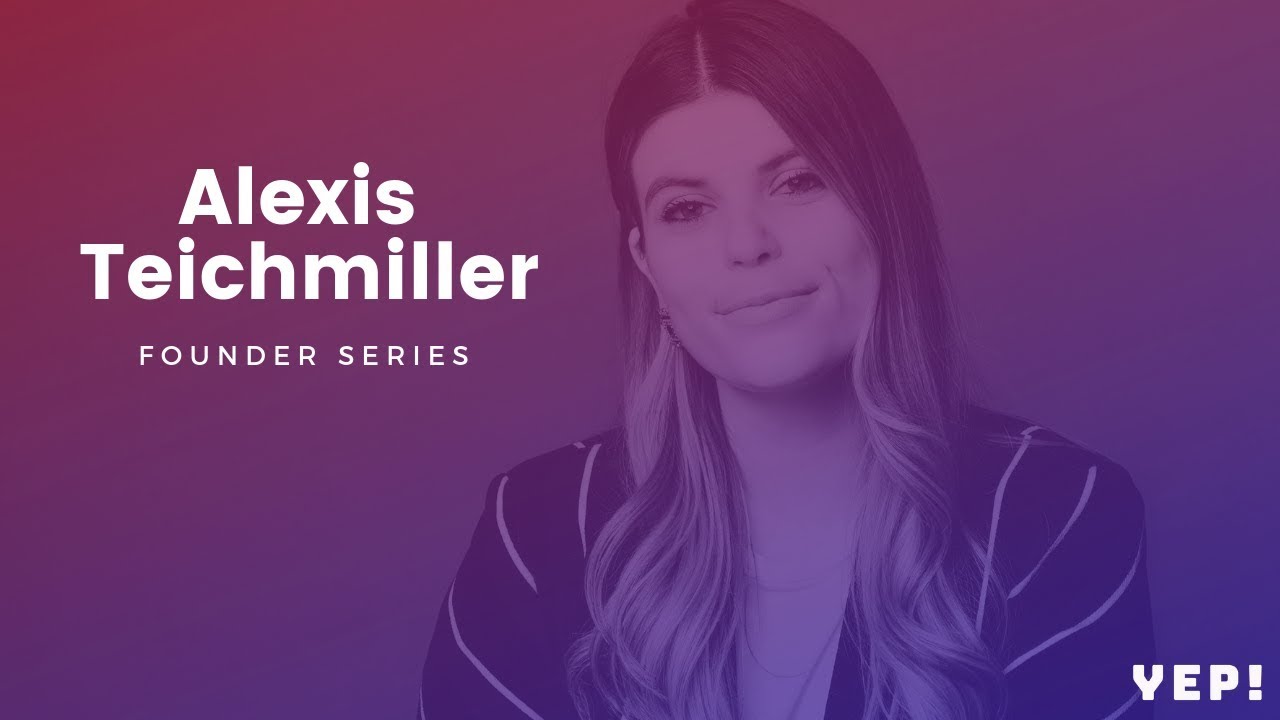
In this hour‑long conversation, hosts James Neaveen and Madeline Marchini interview entrepreneur Alexis Teichmiller about her path from a small‑town Illinois upbringing to founding a boutique clothing brand (AT Avenue), running a podcast (Laptop Lifestyle), and working at ConvertKit. Alexis shares how early exposure to entrepreneurship, mentorship, and a willingness to say “yes” to risky opportunities shaped her career. The core of the discussion revolves around the difference between prioritizing and balancing, the concept of treating life and projects as seasonal “integrations” rather than a static balance, and the importance of intentionally quitting when a venture no longer serves joy or purpose. She also talks about vulnerability—how solo founders can be authentic with audiences, the role of intentional listening, and practical tactics for managing a crowded plate (weekly priority lists, saying no, Marie‑Kondo‑style joy checks). The episode ends with advice for 17‑year‑old entrepreneurs: honor the current season, be present, and align future plans with present relationships. Alexis directs listeners to her Laptop Lifestyle podcast and Instagram.
Chapters
Entrepreneurship isn't all it's advertised. You don't immediately gain freedom and independence from the grind. You don't see all the payoff in the first few months, and you don't get support from all your friends and family right away.
Sometimes you might start a few businesses before truly finding out what you love doing. Alexis Teichmiller is a living, breathing example of that. Having started and scaled a boutique in college to almost 6 figures, recorded a podcast for 2 and a half years, and created content for brands like Blue Moon, Kempton, Airbnb, Coach, and many more.
Throughout her opportunities, she's learned to prioritize different aspects of her life to provide herself the most happiness, and sometimes that has meant making difficult decisions. Here's Alexis Teichmiller in a 1-hour special opener to the Founder Series. Starting a business is hard. Oh, we know. But you're not alone.
Think of us as your one-stop shop for all the tools you need.
Yep, relatable young founders share their stories, lessons, and advice to help you launch your own company. I'm James Neaveen.
And I'm Madeline Marchini. And this is the Young Entrepreneurs Project.
Kick it off. Hi, Alexis.
Hi, James. Hi, Madeline.
Hi.
How are you doing? Good. I'm so excited to be on your guys' podcast. It's such an honor.
We're excited to have you.
Yes.
So the first thing to kick off this whole podcast episode Is we want you to introduce yourself. We want you to share a brief overview of who you are and what you are, and for you to share your story as a creator, as an entrepreneur, and as a young entrepreneur maybe too.
All right, we only got 40 minutes here, so I'm gonna try to shorten this down as, as much as I can. Um, okay, if I were to give you a brief summary of my entire life in just a few minutes, Here are some of the highlights, like the SparkNotes version of my life would be that I— my name is Alexis Teichmiller. Nice to meet y'all. I am from a small town in Illinois called Dietrich, Illinois, of about 500 people. I went to the same school, pre-K through senior year of high school, in the same building. Very, very small, like grassroots, blue-collar farming environment. And that's where I learned a lot of like my character and my morals and my faith growing up in a small town. I think one of my favorite things about growing up in a small town, aside from everyone knowing your business, is that there's something about knowing your neighbors and knowing the people that have your back. And it's like if I were to knock on someone's door because my car was broken down, they would— I mean, it's just that kind of environment where everyone was just helping everyone.
Yeah.
Because that's how you survive. Like, if you, you know, that's how you are able to move forward in life is by helping other people when you don't have resources and assets like that coming from a smaller, a smaller town. I've always been very entrepreneurial, very adventurous. This is like, I'm just like thinking of all these random things that I am, or I used to collect bugs. I loved like collecting caterpillars and watching them turn into butterflies. I've just always been really interested in transformation. And seeing something from point 1 to point 2 or point A to point B. Just always been very interested in the way that we as people can change over time or how one pivotal moment or one pivotal decision can change that for you. So that's like a little bit of me growing up and I can definitely look back and see a lot of those dots connect. based on those curiosities as a child. I was just very curious about how does that work? Why does that work? So what really kicked that off was my senior year of high school. I took a class called Creating Entrepreneurial Opportunities, and it was a countywide class for 6 really small high schools. And it taught— I think there was 26 of us in the class.
Wow.
It taught us about entrepreneurship. So every single day from 7:30 to 9:00 my senior year of high school, I was touring businesses. Entrepreneurs were coming in and talking to me about the way that they founded their business and their failures and their successes. And so I think seeing that at 17 years old was really pivotal for me. And it kind of just like set me off on this really fast trajectory of, I'm going to be an entrepreneur. And here are all these people who've taught me how. I feel like I have all the tools in my toolbox and now I can go, you know, build something really, really special for people. So the first business I ever had was, well, the first business I've ever had was, this is illegal. I used to buy CDs and burn them and then sell them at school. Like Avril Lavigne, Shania Twain, like Backstreet Boys.
All the greats.
Yeah, literally all the greats. And then one day I got told by my teacher that I couldn't do it anymore. But hey, I was making some money to buy some candy. during lunchtime. So I've always just kind of been entrepreneurial, but that class in high school really set it off for me. And at the end of it, each student had to start a business. And so my first legitimate business was I wrote a book called Investing in Human Capital. And it was really a story about a girl, me, and her experience through growing through entrepreneurship and what she learned through that experience. It included interviews of mentors and What was really cool was that Creating Entrepreneurs class ended up being franchised all over the US and they needed someone to go show the product of the class, which was me and my book.
Wow.
So I got to travel around the Midwest and talk to, you know, fancy boards of education and say why the class is important to rural economic development, small town economic development. And so yeah, I got kind of started in speaking and doing that in college. In college, I studied marketing with a minor in creative nonfiction writing. I've always been passionate about writing. And then my junior year of college, I got a little bored. And I don't mean that in a flippant way. I just, I was so used to taking things I was learning in real time and applying it to something real. And so I started, my second business, which was called AT Avenue. And growing up in a small town, women's fashion was limited, to say the very least. And so I wanted to, I wanted to start a women's clothing boutique. And this was 6 years ago now. So this is kind of right on the cusp of blogging and social media and ecommerce. And really, as that started to take off, it was on, I would say it was kind of on that upward slope. As far as anyone could be their own boss and entrepreneur and make money by just starting something that was really starting to take off then. So I, I borrowed $2,000 from my grandma. And I got my Illinois state's business license. And I bought my first batch of inventory from a warehouse in LA. And I started doing trunk shows. So very similar to Pampered Chef, I would go into women's clothes and but it was all my money. Like there wasn't There wasn't anything funding it or like a separate organization that I was affiliated with. It was just AT Avenue, stood for Alexis Teichmiller and Avenue, 'cause I literally sold things out of my car and I was always on the go. And that ended up turning into a really successful business I ran my junior and senior year of college. The first year I did like 70 trunk shows in my— in like the Midwest and was working with— Wow. Sororities and doing like for sororities, I would host fashion shows for their philanthropy branch. So we would charge to— and then afterwards they would all buy the clothes that they saw. And then a percentage of my sales as well as sales from the door went to their philanthropy. So it was, it was just really fun. So I was learning all these things about marketing and business, applying it to, to that, and then I, somewhere around the last semester of college, I like sat down with myself and I was like, okay, Alexis, are you going to take this full time? Like, you're, you're 21 years old, you're, you're making money. Like, I think the first year I did around $65,000 or $70,000 in sales. Granted, I was taking all of that and putting that back into buying more inventory. And I was building a website, an ecommerce website. And I had a team helping with that. And so You know, I would like— when I say that, that sounds awesome, but every single penny was going back into the business.
Mm-hmm.
So it was like, could this sustain me? Is this what I want my first job out of college to be, uh, was me running my own thing? And, um, I even looked at physical locations, like actually putting up a store in my, in my hometown area. And then something kind of clicked in me that was like, no, Alexis, you've always You've always wanted to go to Nashville. You've always wanted to go to this creative city since you were a little girl. And I think like now is the time, if ever, for you to do that. And so I said to myself, this is the age where anyone— this is so much longer than 3 minutes, but anyways.
It's valuable.
It was something along the lines of like, I thought to myself, this is the time where If I'm running an online store, I can run that online store whether I'm in rural Illinois or whether I'm living in Nashville. So at that time, I had an ecommerce store. And I had my web company that I was working with. I contracted them to also create me a blog. Because I was like, this is kind of when blogging was becoming more popular. I said, yeah, you know what, just throw me up a WordPress site at alexisteichmiller.com. We'll just see where it goes. And so in that same season, I also reached out to a mentor of mine who took my senior pictures. She'd been in my life for a long time, but she was a New York Times bestselling author. And I was like, hey, if there's anyone or any contact you have with anybody in Nashville, can you just let me know? I'll do all the work. I just need—
Was that just a cold email, Alexis?
No, because I had been friends and she had been my mentor for years. So It was like cold in the sense of I haven't talked to you in a couple months, but it— I— it was an ask. You know, I think like you with relationships, you build so much like trust and connection over time. And then sometimes in relationships, there comes a time where you have to ask for something. And that was definitely that moment where I was like, hey, I— this is a big ask. And I know that you might be risking something. professionally, but could you connect me with anyone that you know in Nashville? I think that's what mentors are for too, is for that connection. So she did. She connected me with a guy named Rory Vaden, and he was a New York Times bestselling author and had, you know, he was pretty young. This is 4 years ago now, but he was like in his late— I think he had just turned 30. And I was like, man, this is— this guy's, you know, just 10 years older than me. This is exactly what I want to do. I want to write books. I want to build a company like this is, this is who I could learn from. So I had 5 interviews and I ended up getting the job, moving down to Nashville, moving AT Avenue down with me. That job was— it taught me so much about email marketing, about branding, about podcasting. I ended up managing his podcast, his blog, his social media, and helping him build email marketing campaigns. Which is what got me into the email marketing space. About 6 months in living in Nashville, and I was so lonely, y'all. Like, had no friends, didn't know anyone here. This was right when it was becoming like sort of socially acceptable to like DM people on Instagram and be like, hey, you want to go to coffee? Or what's your number on the Enneagram? Like, you just didn't talk to people like you do now. Like, social media is so fluid. Like, if I didn't know you, Madeline, and I was interested in learning about you, I would probably just DM you and say like, hey, like, I want to learn more about what you do. Like, would you want to go to coffee if we lived in the same city? Back then it was just a little bit, it was just kind of becoming more normal. And I also realized my blog was starting to take off because I started to write more on my blog and I was more passionate about the words I was writing and the people I was connecting with online. Over the clothes I was trying to sell. Also, overhead and inventory is very hard to manage. And I was doing trunk shows, so I was selling in person most of the time. And then I had completely shifted my business model to now being just a solely online ecommerce store. And that was really difficult. I had to learn a lot and I ended up just shutting the business down, sold off my existing inventory to another boutique. And I didn't come out in the red, which was exciting to me. It was a solid like 3 and a half, no, 2 and a half to 3 years of running AT Avenue. I learned so much and that was awesome. Then about a year into my job with Rory, I met my now CEO of ConvertKit, which is an email marketing service provider for creators, at a conference. We hit it off and after like a couple of days, he was like, hey, It was him and another guy named Darryl. Thank you, Darryl, if you're listening to this. They both, we just all had a really good connection and they wanted to know if I was interested in a different job. I said yes. Couple months later, I was working at ConvertKit and now I've been at ConvertKit for almost 3 years and I run their affiliate marketing program. But as far as who I am as a human, like, I think it's so easy when someone's like, Who are you? Tell me about yourself.
Yeah.
You run to, here are the things I've accomplished. And granted, that is a huge part of my foundation. Like all the things I just shared with you is part of who I am. But if you were to strip all that away and you were to say, who are you as a person? I would say that, you know, I'm curious, I'm adventurous, I'm a frequent flyer. I love, you know, experiencing new places, new cultures. I've really been interested in social activism a lot more and equality as I dig more into my adulthood and I see a lot of the injustices in the world. Like, I'm someone that really craves justice and I want to see people win in the right ways that they should win. And yeah, I love creating. I'm also a procrastinator. And I like to make excuses and I sometimes let doubt get into my head. So, I mean, there's a lot of things. on the good side and on the side that obviously we also need to work on. So that was a very, very long-winded answer. But I hope that was helpful. And I hopefully taught and added a little bit of value in sharing parts of my story.
Yes, you've done a million and one things. That's incredible.
Congratulations on all the success you've had.
Thank you. Thank you. I think one thing I, I realized is The importance of using your voice. I think as an entrepreneur, especially as a solo entrepreneur, as you're founding something, it's so easy to get caught up in the business side of things that you lose the opportunity to really connect with other people and the mission behind why you're doing what you're doing. And I think as I was building the blog and I started at ConvertKit, I realized there was this niche of people who were hungry for connection online. Because they were entrepreneurs, but they didn't have people to connect with in person. And so that's why I started the Laptop Lifestyle Podcast and ran that for 2 and a half years. And then this past December, December of 2018, I ended that project. And we can talk about that too later, because I know we're gonna talk about quitting things and the importance of quitting.
Madeline, I know you had one big question for Alexis.
Yes. So this is something we're going to be asking every founder in this series, but we believe a lot in pivots and taking changes and taking new opportunities. So we want to know, what did you say yep to that changed your life? And that could be personally or professionally.
Yeah. Can I give you 2? One that is professional and one that is personal. More personal. I would say the the professional yep was or yup depending on how you pronounce it was saying yes to this job at ConvertKit. It ConvertKit was a startup at the time with about fifteen employees. I'd never heard of it. It was a huge risk. I mean, if you think about it, coming from You know, working with a notable author and all the things that I could have learned or stayed there, or I could have played the even safer route, um, and got a more corporate job. And I think taking, taking the risk to work at ConvertKit has been one of the most challenging and one of the most rewarding things I've ever done with my life so far. Um, and who I've become here has been amazing. So I think if, if you have an opportunity to grow, as a professional in a personal way that actually changes your life of the way that you think about everything, like ConvertKit has been for me, I would take it. Even if it is risky, even if it is a pay cut or you have to move or whatever that situation is for you, if you really think that on the other side of that experience, you could be a different and better person than where you are right now, I would take it. So that was a big, a big pivot for me. So then personally, I would say a big pivot was deciding, making the decision to stop hiding behind societal pressures or the societal path. I think it's very easy as young adults, as young founders, Or just as humans in general to want to follow this traditional path of life. And I think in the past couple years we've seen a huge resistance to that. But it's okay, you, you get good grades, you do all the extracurriculars, you get into college, you get the good grades, you get the job, you finally get the job. So then you climb the ladder and then you get married and then you have children and, and there's this like very straight and narrow path. And there's not a lot of wiggle room. And so we find a lot of our confidence in accomplishments. And instead of finding confidence in just who we are as people and what we believe and who, like, who we actually are, not the path that society has placed us on. And so I think about 3 years ago, I, I don't even remember exactly where I was, but I kind of had this internal shift or internal pivot. Where I was like, I don't want to be on that path anymore. I don't want to make decisions based on climbing a ladder. I don't want to make decisions based on this specific path that everyone's supposed to be on. Like, I'm on my own path. And I respect that. And I need to respect people that are on their own path without us all being the same. And I think that it's so easy to compare your— where you are on your journey to someone else. And I think it was kind of that moment where as my career started to take off and I was doing different side hustles and my, my path looked different than the path of my friends. And I was comparing like, am I wrong? Is, are the decisions I'm making wrong because they might look less stable or they might look less consistent? Um, it's like, well, no, they're not wrong. They're just different. Um, and different isn't better. Different is just different. And so like really acknowledging that and, and like living that out.
Yeah. So like rejecting those traditional expectations of a career or a college career is really what you wanted to do instead of doing what everybody else was doing. You did exactly what you wanted to do.
Yeah.
And not in like a selfish way. Like, yeah, I'm going to do what I'm going to do regardless of like how it affects other people. It was more of like, I can be so much more value to the world and to my community If I'm living in my zone of genius, and my zone of genius is not traditional decisions. So I just thought I could, I could be more help to people if I was actually living out my specific truth. That's such a millennial thing to say. But I do think it's actually really important. I know it's over, over said, but like, figure out what your core, like, character is and your core truth is, and then follow that out. I think we're always trying to figure out like, okay, what's your truth? And I'm going to live that truth because then I don't have to worry or think about mine. But I think like spending some time to really figure out what it is that you truly want, what you want your life to look like, those decisions, and that comes so much quicker because you're like, oh yeah, that does feel— that feels good to me. That feels right to me. So yeah.
So going somewhat along those lines, I know we talked a few weeks ago about Balance and priorities, because I know I've struggled with that. Madeline, I know you've struggled, but I don't want to speak for you, but I know you have.
I have.
With prioritizing and balancing all these different fields in your life, whether it be your school career, your side hustle, your full-time job, or your internship. It's really tough for kids our age to do that. And taking that leap of faith, doing that pivot, saying yep to something in life is sometimes really hard because of that reason. If they can't measure their time out or if they can't see the light at the end of the tunnel because they just have so much on their plate, it's really hard. And I think that's what keeps a lot of people from doing things.
I agree.
Do you have any advice for people who are trying to balance these different areas of their lives, whether it be social, professional, or otherwise?
Yeah, such a good question. And I think it's something that is so relevant to anyone regardless of what stage of life they're in. I think the first thing that I had to do a couple of years ago was remove the word balance from the equation. Because balance infers that there's going to be something— something's always going to be equal to the other aspect. So if you were to look at the pie chart, balance infers that each part has a specific percentage and it's all the same and everything's just in tandem. And I don't believe in that. I don't think that in any given season of your life that your life can be And I think it's a lie that we've been sold that we can be balanced human beings. And I think when you play into that lie, you're then like, you feel imbalanced and you're like, I'm supposed to be balanced and I'm not. So something's wrong with me and the way I'm living life. So then it just creates this cycle of doubt and shame of like, well, I'm not doing things right because I'm a mess. So I think something I had to do was think of it more like integration. I have all these aspects of my life. And here's how they integrate with each other. And here's how they complement each other. And here's where they don't complement each other. And so as my plate got bigger, like actually got bigger, and then there was more things being put on it, I had to decide what was being taken off. And I also recently have decided to make my plate much smaller because I realized that the bigger my plate got and the more I put on it, the less happier I was as well as the less productive, and my performance and the quality of what I was creating decreased. And so again, with the lie of being balanced, we also think that we can do it all and have it all. And I'm not here— sorry, it just thundered a little bit. I'm not here to discourage anyone. I want you to follow your dreams and chase after that thing that's in your heart and those desires. But at the same time, I think You have to be aware of the sacrifices it really takes to get what you want. And if you're not willing to put in the sacrifices, don't start the journey. Like, I think that might sound a little harsh, but if you can really take a step back and like 30,000-foot view your life and figure out, okay, like, I'm probably gonna have to stop this. I'm not gonna be able to do intramurals anymore. I'm gonna have to stop meeting with my friends on Thursday nights. I'm gonna have to stop like, All the things that you want to start, make an equal list of things that you're going to stop doing because like that time, it's nothing. The more you add to your plate, no more time in the day is being added. Still 24 hours. So as you add more, you have to subtract more. I don't know if this is, if this is helpful, but something that I've done is at the beginning of my week, I make a list of the most important things I have to do. And then I prioritize them by day. So the most important thing I have to do for the week, and then, okay, what do I have to do first? My friend Jessica always says, what's the next right thing? And I think we look at this long list of 30 things, but it's like just asking yourself, what's the next right thing to do? Like, what's the next step? And like, just focus on that one task that you need to do. And then also, if you are close to burnout, The reason that you're close to burnout is because you have not accurately prioritized things in your life like self-care, sleep, diet, social interaction. So put those things back in. Because I think you, you approach burnout quicker when you deny yourself of your like needs. Like, I need sleep, I need healthy food, I need social interaction, I want to do things for fun just because And when you are a high-performing, ambitious human, sometimes those things are the first thing to get cut from your list. And so I would definitely encourage you to prioritize those because the goal is sustainability. And I think a lot of times we don't think about life as, how can I make my life sustainable and fun and enjoyable? And I want to do this for a long time. So what am I going to need to do today? What processes do I need to do today to make sure that it actually is? sustainable versus something that in 6 months from now I'm probably going to want to quit because I didn't put the accurate processes in place to make it happen long-term.
That's really terrific advice. We hear a lot of people as young entrepreneurs saying, say no. Well, we hear both sides of it. Say yes to literally everything so you have all these different opportunities, or you hear people say, Say no to everything so you can focus on just what makes you happy. And that's kind of about what you're talking about. But you also have to say yes to those things on the side that make you happy. You can't just say yes to one thing and do solely that.
For sure. For sure. And something like that I've started to, to put back in my diet of life is reading. It was the first thing that got cut. Didn't have time for it. I don't have time. Saying you don't have time for something is saying that it's not a priority to you. So it's saying learning is not a priority to me. Oh, I can't go to the gym because I don't have time. That's just you saying my health is not a priority to me. Like if you were to reframe, it's not a priority to— or sorry, if you were to reframe I don't have time to it's not a priority, and feeling that come out of your mouth, my health is not a priority to me right now. That doesn't feel good. So maybe you would shift some of your decisions based on reframing that.
Wow, I absolutely love that. That's something I have struggled with a lot, especially being like a new grad, and I take on a lot because I get excited about everything. I have shiny new object syndrome, but I've never heard someone refer to it not as balance and instead integration. That's— that is a huge mind shift. So with that, I have questions. I feel like— I feel this very real in my life right now. I think I've taken on too much and I don't know how to step back or even like what to think about when entering that. Like, I like the idea of saying, is this a priority? But sometimes everything can feel like that. Like, I want to say yes to health. I want to say yes to helping others, volunteering. So what kind of reflection do you go through when analyzing that?
I love that question. It's like, okay, now let's take this a step deeper. And I totally feel you. And like that feel of, I'm a new grad, I have all these opportunities, I wanna say yes to everything because it could lead to something more. I empathize with that so much. I think in order for that energy and that excitement to stay up post-graduation, like you said, saying no and like having better integration with your time and prioritizing that will help. So something I always ask myself when I get asked, Even if it's to coffee, like if it's to coffee, because another thing is people take up your time and you want to give it. You want to help people. You want to connect. But at the same time, it can conflict with other priorities that might actually be more important. So when it comes to saying yes to things, I, I don't immediately answer. So like if we're together right now in person and you were to ask me something, I used to say yes immediately.
Yeah.
Like, oh yeah, like, let's figure out a date. Like, let's put it on the calendar right now. Like, let's make it happen. I stopped doing that because I realized that it was— I was sacrificing all of my time by being too impulsive, by saying yes to things because I was in the moment. So I said, you know what, let me check my calendar. Let me, let me check out some of the different projects I have going on right now. And let me, let me get back to you because that's fine. You don't, you don't, you don't owe them anything. Like just saying that I need some time to think about it or give me some time to get back to you. That's very normal. Um, when it comes to terms of, I've always already said yes, and now I want to say no, cause I've started doing this a lot more where I got in that moment, I said yes to something, um, or I planned an idea or a project and now I have to actually step down. That's very hard.
Yeah.
It's like really humbling to have to say no to something that you already said yes to. I do think it depends on how far down the line you're in. Like if you're committed and you're, you're a head or manager of something, of a project, like you need to like follow it through. But if you're in the early stages of something, I think that it's okay to actually take a step back because that project is actually gonna be more valuable 'cause you're not weighing it down with your desire to not be a part of it.
Yeah.
I worked on a potential photography project with someone. We had a great idea. We had all the partnerships of who we wanted to reach out to lined out. She reached out to me. I was going through a really difficult time. I did not have the emotional energy or the creativity to put into that project, nor did I wanna actually be in a space Or I was in a season where I didn't wanna commit to anything. I just needed to take some time for me. So I said that. I said, hey, I just, I wanna be really honest with you right now. I'm actually in a pretty difficult season of my life and I need to take some time where I'm actually not taking on any new projects. And all the projects that are in the movement right now, I'm actually saying no to. So I hope that you understand. I feel really terrible and maybe in a different season, We can work on this together again. Maybe that's not your reasoning. That was mine in this, in this case. But being honest with people of saying, hey, I overcommitted, I'm really sorry. But I have to step back. That's been one of the most helpful— it's you're giving yourself permission to take care of yourself and to also do that person the service of removing yourself. because you aren't going to be, you know, an added value because you've got so many other things going on. So those are 2 ways that have really helped me. But just being honest, you don't have to give them all the details. But yeah, you don't want to also seem flaky or like you're blowing people off. You know, like, you want to give them enough to make, to make it be like, this is real, and I need to step back versus like, oh yeah, I forgot about that. Sorry, I can't do it. Like, you don't ever want to be that person. So. Just wanted to caveat that.
Yes, that's phenomenal advice. Thank you.
From what you just said, Alexis, it sounds like prioritizing has a very positive connotation, but it also sounds like it has aspects of quitting too. Once you get into a project and you have to step back a little bit, people might call that quitting. And that gets such a bad rap. It gets such a bad rap. But lately you've been starting to hear online that knowing when to quit is actually one of the most important traits out there.
For sure.
And I know you have a very personal story about this. But first, what is the difference between prioritizing and quitting?
Well, I would say, Prioritizing is the action in which you decide when you're going to do something. Quitting is deciding, do I ever even want to do it again?
Hmm.
You know, like it's the flip side of prioritizing. Sometimes when a task pops up in your priority list, it's a gut check of, do I still want to do this thing? Like go to the gym, record a podcast. Write a blog post, whatever it whatever it is. So in my case, I had done the podcast. Like I have quit several things in my life because the season was over, and I think we don't give ourselves permission to live in seasons. Like we think that we're just going to be the same person, want the same things, the same things are going to bring us joy. We have the same ambitions, the same dreams for our whole life. Like that is so unrealistic, and I don't know. I Makes me laugh because I am that in my head. You know, I start something and I'm like, and I'm going to do this forever. And then I don't. Um, so when I start something now, I give myself time and space to, to, um, deliver it in seasons. And I also am like, and I'll probably do this for X amount of time. Um, like AT Avenue, it was at the end of its season. I had left my hometown. I left all my resources, all the people I was hosting truck shows with. It was getting more and more difficult. And as other aspects of my life started to take off and it was weighing me down. So I needed to let it go. The podcast, I, so it's called The Laptop Lifestyle. And I interviewed a lot of creators on it who were sharing all the aspects of how they live a laptop lifestyle, how they make money, how they build an audience, how they deal with loneliness, like all the aspects of being a solo entrepreneur. And also a lot of aspects of my day job. Are very entrepreneurship-focused. And I got to this kind of crossroads where, um, you know, I had, I had recently this fall, I had lost a best friend of mine and it put me in this interesting season where I was really questioning a lot of, you know, if today was my last day, what, how would I spend it? Who would I be with? What, what kind of actions would I want to be doing? You know, she was 25 when she passed away. I'm 25. Like time is limited, and I know that we say that, and we say that, and we say that, and we say that. But it's like, do we actually live like that? Like, do we actually live like we're creating our ideal life that if today were our last day, we would be happy with how it ended, and we would be having the impact on people that we want to have? You know, and I think that we get so caught up in our routines and in our what we're supposed to do and the societal pressures and the path and all the things that we like. forget to gut check. Am I in the place I want to be? Like, who am I? Am I becoming who I want to become? And I think that losing her and going through that season— and I'm still, to be honest with you, I'm still in that season of kind of mourning slash figuring out my next steps and trying to figure out, you know, how do I want to create the most meaningful, valuable life that impacts other people and that serves my family and my community really well? How do I do that? And, and I don't know. I don't know the answer to that question. And that's okay. And I think we want to jump to having the answers all the time. And it's okay to not. It's okay to sit in that season for like a little bit. Sitting and staying in something to feel it through so that you can find the answer is different than being stuck. Like, I'm not stuck right now because I've chosen to be here because I want to get to the other side of this. And I know that I'm going to grow into something even stronger because of this season. And I think quitting the podcast was kind of that like last thing that was tying me to projects I didn't want to do anymore and topics I didn't want to talk about anymore. I'm so much more passionate about the things we're talking about now. Yes, business, but like the real life stuff, you know, like Time management, but like for real humans, not like you do X and then you plus Y and you multiply it by five and then you get productivity. You know, like I want to talk about real things. I want to talk about anxiety. I want to talk about self care. I want to talk about vulnerability. I want to talk about these things that are really hard, and I'm not in a place right now where I can talk about it without talk about it all without crying or without like I want to be my most healthy self. When I have these discussions, I'm not right now, and that's okay. So I think to quit something, you need to ask yourself: Does this still bring me joy? And have I done everything I can for this, for this to come to fruition? And it wasn't bringing me joy anymore. And I had done, you know, I had over 100,000 downloads with 75 episodes. I had done everything I could. And I was really proud of that project and it came to an end. And the reason I say project is because the idea of a project is it gives you the permission to have a beginning, middle, and end. And I learned this from Seth Godin, who's an incredible writer. If you guys—
Oh, we know.
So good. But he spoke at an event called Craft and Commerce, which is a conference that ConvertKit hosts. He spoke at the first conference. And he's shared a little bit about his philosophy of projects and how he runs his life in projects, beginning, middle, and end. He doesn't want to get in this cycle of having to do the same thing, this obligation to do the same thing every day for 7 years. So I've started to kind of shift my mindset and the things I create in terms of seasons and how they are a body of work. You know, like if you look at a resume, It's kind of like your body of work. But now when it comes to my personal brand, I'm building my own body of work. Hopefully by the end of this year, I'll have a separate podcast called Deeper Life coming out, which is really exciting.
Yeah.
And that'll be a part of my body of work. And I wanna start writing some ebooks and some physical books and coming out with some more assets on mindset and vulnerability and helping people get deeper into their relationships with people. And so I know those are things that I have desires to create. I'm also not in a space where I can give that my full attention and my full just emotional energy that it's going to take to create that. So, and a couple of things, don't jump in too soon if you, if your plate's already so full that you're never going to be able to actually give it your all. And then in that case, when you do jump in too soon, Don't be afraid of the stigma of quitting. Like, there are so many bloggers. Like, there are so many fashion bloggers, travel bloggers, photography bloggers, like so many bloggers. And I can count on one hand how many I have actually seen publicly quit blogging. It's like this thing that you have to keep up. You know, this is a specific example. And it's like, I don't want to have to keep up something just for the sake of keeping it up if it's not serving anyone. And the podcast was serving a lot of people, but at the end of the day, it wasn't really serving me and my mission for where I saw my personal brand, kind of the direction I saw it pivoting. So I needed to make a change, and that's okay.
I'm just curious, have you— are you familiar with Marie Kondo. She wrote like The Art of— okay, she talks about—
okay.
I love her.
I Marie Kondo'd my whole house in January. Yeah, I watched, I watched Tidying Up on Netflix. And then I would watch one episode and then I would go start a project. And then I would watch another episode and I would start another project. So my house is now Marie Kondo'd.
Yeah, my drawers are all the Clothes are folded totally different. It does change your life. But it does. Yeah, it really does. And I was listening to actually another podcast this morning. They talked about the same thing that you kind of were talking about, that like choosing— like think about everything because that's how she thinks. Does this item bring me joy? But like you can do it with everything in your life. Like does this project, does this job, does whatever bring me joy? Yeah. Yeah.
Does this relationship bring me joy? You know, and I, I think that there's a healthy kind of joy and there's an unhealthy kind of joy too.
Mm-hmm.
There's a kind of joy that feeds to a side of you that's like, yeah, eating an entire pint of Ben& Jerry's brings me a heck of a lot of joy, but it's not good for me, you know? So like, just acknowledging there are good— there are things that might bring you short-term joy versus long-term joy. Does this bring me long-term joy? And if the answer is no, then don't do it. If the answer is yes, you know, do it if you want to do it. Yeah.
I think that's a really important notion that you made about— so if you have this audience and they're getting the value, they're getting the value, they're benefiting from what you're putting out there. But you're miserable. That's really difficult to— I don't want to say the word, but balance the value that you're providing them and the happiness that you're not getting from that. Do you have any advice on that, Alexis?
Yeah, I would just say that like you're not a martyr. Having your own business shouldn't feel like your death of thyself in service of someone else. If that means that your life isn't sustainable, your relationships are probably suffering because you're unhappy, your physical and mental health might be suffering because you're unhappy. So then you have to look at, again, kind of that long-term effect of, yes, I might be serving a lot of people and this podcast might be helping a lot of people, but think of how much more value I could be if my whole self was actually in it. You know, and at the end of the day, it wasn't. And so it was just the— I just, I always come back to the word permission. You know, as you get older, and as you move into adulthood, and as you move into, you know, marriage and relationships, I think a lot of times we look for someone else to be like, am I okay? Is this okay? Am I on the right path? Am I making the right decisions? And like, sometimes you don't have an answer. Because there's no, like, you're not with your parents anymore. Like, you're an adult. You got to make your own decisions. You're growing up. You're making, you know, tougher decisions that impact your life. And for decisions that come to like taking care of me, I've come back to like, hey Alexis, like, you have permission to say no. You have permission to not be around people that don't make you feel good about yourself. You have permission to stop disliking your body because of what you see on in media. Like, you have permission. I'm giving you permission. Like, will you take it? That's up to you. But like, like extending that internal permission of like, hey, I see that you're struggling. Like, you have permission to not. Like, I'm going to give that to you. Um, like that's there for you if you want it. Um, but I think like having that inner dialogue of like really being tuned in, like being tuned in with your heart and, um, Having that intuition and that gut check is really helpful when it comes to making difficult decisions.
I think that's incredible advice. I had one other question that kind of goes along those same lines. If you are an entrepreneur, a solo entrepreneur, I think it's a lot more easy to be vulnerable with your audience than it is if you are representing a company.
For sure.
And you're not the face of that company or you're not in a position where you're always reaching out to people. But is there a difference between being alone and by yourself and being a solo entrepreneur and being vulnerable with your audience and trying to do that same thing if you're inside a company or an intrapreneur?
Yeah. Yeah. Intrapreneur versus entrepreneur. Switched it there. Yeah, I think there is a big difference. I think that there is a line that can be crossed. So like, I'm— let's just separate that. So as a solopreneur, I'm sometimes more vulnerable with my online audience and on stories and sharing than I am my own family sometimes. Like, it's easier for me to just write about what I'm going through and what's in my head than it is sometimes to speak it to someone that has a face. Like, does that make sense? So it's like, sometimes it's just easier to be like, Yeah. This is really hard and I'm really struggling and this was my day and, and I'm struggling with anxiety or whatever that might be, um, than it is sometimes to verbalize that to people that, you know, in real life. Um, so I think that in the context of vulnerability on both sides, a personal brand and inside of a company, ask yourself your intention for sharing. This is always something I come back to, back, back to. I've had so many people reach out to me and be like, I want to be more vulnerable. I want to share more of my story and I want to share more of my life and I want to get it out there, you know. And sometimes I'm like, maybe the answer is therapy. Because if you are desiring to process parts of your life by sharing, because sometimes unloading or verbally processing is a way that we're able to heal, I would suggest therapy for that. Unloading your life story on social media or to someone who can't give you any kind of healing or any kind of answers is about you. You're sharing for you and in service of you. Anything I share online that is vulnerable, it is because it is— I mean, fingers crossed, like, I usually have good intentions with, like, Gut Checks. It's in service of other people. Like, even if it just helps one person feel like they're not alone. or feel like they're okay today, or feel like they can get out of bed because someone else is struggling with the same thing. Like, that's my whole mission. Like, that's my intention. So in that same vein, if you're being vulnerable at work, what is your intention? Is it for the goodness of the community? Is it for the goodness of the conversation and the decision that needs to be made, or that you're stressed and this is how it's affecting your workload? Then yes, that's important. But if you're being vulnerable for the sake of being vulnerable, To show off, to get attention. I would say that you might need to go to therapy instead, and that's a great option. Like there's no stigma around getting help around processing different things that have happened in your life, or maybe you see some behavior that's coming out and you're like, "I don't. I don't like how I handled that. I wonder why I act like that. Why don't I go get some help and get that figured out so that I don't have to do that anymore?" I think there's there's a line. It's like at ConvertKit. I am vulnerable with my colleagues. I am vulnerable with my team so that it helps us make better decisions. It helps us feel connected. It helps us feel like family. Some of my best friends are at ConvertKit because of the way that we're able to share, you know, person to person. Now, when I run the affiliate program, I'm not sending out an email showcasing what's going on in my life.
Exactly.
Because that situation is not about me. It's about serving them. So I'm not—
That's not valuable to them.
It's not valuable. So I think it's— I want to be careful not to commoditize or like monetize vulnerability, like value. When you think, well, that's not valuable to them. It's just in the context, like in the context of a professional setting, it's just not relevant to them. It's not important to them because there's no, you know, personal connection. Whereas inside of a work setting with a few colleagues, if we're sharing about something that's going on in life, that feels a little safer. That feels like my intentions are pure. I'm trying to, you know, encourage an environment of authenticity. Whereas in a personal brand, sometimes I see people being vulnerable for the sake of being vulnerable, and it's not necessarily with a lot of authenticity behind it. And no judgment on that. I'm glad that you're sharing. I think my question would be why and what is your core intention? And if it's to help other people, then girlfriend, keep on doing it because like you are and the world needs more of that. But if your intention is to showcase something a little bit more selfish, then— and I've done it, like I'm not speaking from like a high and mighty up on a hill. Like I've done it, I've done it for the wrong reasons and it always feels gross after. And so I'm like, I don't want to do that anymore. Like that doesn't feel good. I want to do it so that I get comments back that I can actually DM them and help them or pray for them or like take the conversation a step further. So I hope that answers your question. But I think that's a— there's a fine line. And I think that, you know, you sometimes step over it and sometimes you can be way far back from the line. You need to get a little bit closer. So.
Yeah. So I have a question going off of that. How are some ways that you practice vulnerability, big and small, in your day-to-day? Like, how can I or anybody else listening incorporate that into their life?
Yeah, I love this question. I see— people see vulnerability as a lot of different things. I think at its core, vulnerability is a bridge builder between 2 people. Like, it is one of the core ways that you can connect with people on a very real and emotional level that allows you to become friends, build trust, make a safe environment for someone else to share. Like a lot of times I have lowered walls, shared something very personal, and then someone has then in turn shared something personal. So it's a way that you're able to build a bridge between 2 people. As far as day-to-day vulnerability, in order to like get a level deeper, like I think a lot of us live up on the surface. How are you? My day was good. Oh, how's—
How's—
How was your weekend? Oh, it was great. Like, we're very quick to just jump to generalities of like—
Superficial.
Superficial. Like, it was fine. I think that if you take that a step deeper with people you trust, this is the caveat. Vulnerability is incredible, an incredible tool in the context of trust and in the context of with people that you feel like you can actually trust. Um, not everyone deserves your vulnerability either. Like, not everyone is— can have that honor of you sharing something very personal with them. So I think it really needs to— depending on the material you're sharing as well, it should be with people you trust. But something I've done, even with people that I'm not that close with, is share how I'm really doing. Like, just share. That's one step closer to being like, well, actually, I'm sick right now. And I've been sick for the last week and a half and I just haven't been sleeping very well. Like, gosh, have you, have you ever struggled with that? Like, what do you do? Do you take NyQuil? Like, you're just like starting a conversation below I'm fine and you're moving into task, like movement. Like you're moving into like, I want to get work done. Um, that's helpful. And then also being very aware of your environment. So if you see someone be like acting really quiet, If you see someone who, like, I think a huge aspect of vulnerability and bridge building is you reaching out to someone who needs it. And so a lot of the times I've had my most meaningful conversations is when I've been like, hey, is everything okay? Like, you seem down today. Like, can I help you with something? Do you want to talk about anything? Like, if not, that's okay. I just want to let you know that I'm here. Like, just extending that is so meaningful. I don't know if you guys have ever had that in life where like someone notices that something's up with you and they ask you about it or they extend a hand. That's a huge way to open a safe place for sharing and for vulnerability. But I think at, at its core, we share because we seek, we seek community and we seek connection. And so if you're able to do that in a way that is, you know, just one step below surface level, I think that's a great place to start. Does that help?
That's incredibly helpful. I love that you gave 2 advice. I feel like so often everyone says like, how are you doing today? And then you always give that, I'm fine, good. You never like really tell what you're truly feeling. And then also you gave kind of the counter of that. That like how you create opportunities to like let people be vulnerable to you. So, and I've had bosses in my life, I've been really blessed with leadership in my company and they do do that. Like if they notice like the tiniest thing, you're not smiling as much as normal. And that's something I honestly don't practice enough. And yeah, that's amazing advice.
I'm definitely the same way. I definitely do not practice it the same way that you do, Alexis. I think that's a little bit tougher for males just because of— I mean, that might be a stereotypical way to say that, but I think it is a little bit tougher for males to reach out that grapevine or to be vulnerable even on the internet. That's like a step above. But would you have any advice for males in short?
Yeah, I think I'm glad that you, that you brought that up because, James, I think that men— there's a really good— okay, one thing, side note. There's a really good book called The Mask of Masculinity written by Lewis Howes. And it's all about men struggling with shame and not being able to actually step into their true selves because society has really put a lot of limitations and shame on vulnerability for men. So like, there's a book about this that might be helpful. And I'm not going to have all the answers. Like, that book has a lot of really great tools and examples. But I think that's something that's important is just removing the walls and the bravado of masculinity. Like, you're less approachable when you have visible walls up And you're like, yeah, I'm doing great. How are you? Like, just your tone can be like, you can change, you can bring down walls in the terms of tone, in the terms of the questions you ask other people. If you feel like you're in a good environment to do that, ask other questions and you invite that vulnerability back into you. I think that in terms of vulnerability, sometimes we expect people to ask us, or we expect all the right scenarios or circumstances to line up for us to be vulnerable. And I think that we have to take that first step. And so for men, um, I think just being open to sharing a little bit more when you do speak, um, or when you are asked your opinion, you bring it back to like maybe even a little bit more of an emotional side of like, well, this is how If— and this is in the context of work, but I think that if, if we were to make this decision, here's how I would feel about that. And I wouldn't feel very good about it. Here's why. Like, I think just like using words like feel and, you know, here's how this would— here's how my viewpoint is on this. I think that creates the language too that's helpful. And then like inviting that back in. So that when you ask a question to, let's say, a woman about like, how was your weekend? Like, tell me, like, how are you feeling about the way that situation was handled? Or, hey, I overheard your conversation with so-and-so. Are you okay? Like, inviting that in, like, you have to be aware in order to ask the right questions. So a lot of the times you just need to listen more and be like really tuned in to how can I you know, create a space for someone to be vulnerable today? Well, it's in— you have to be open to it. Like, they have to— I always like think about a lot of things with, you know, is my palm open or is my palm open or closed to that? Like, I ask that a lot to myself. And in order for a vulnerable conversation to happen, the palms have to be open or someone's not going to open up to you. Like, if you're closed off and your tone, your body language is very you know, hunched in, closed off, stern, you have a stern tone, then no, that's not inviting. So that applies to both men and women. But I think a lot of times men that have intimidated me the most in the work setting have been because of their tone and because of their body language. And if you're able to shift that a little bit and make that feel a little bit more of an open environment, especially for a woman to then share her emotions with that man, there needs to be that even Like the emotional even playing ground of, okay, we're in a safe place, we have light tones, we have good body language. So then it opens that up. Does that help?
Yes. Oh my God, that's so helpful. I think it's really important that you brought up listening because toward the end of 2018, I had already been working with Madeline for a couple of months and I've had a girlfriend for a couple of months. And I realized that I wasn't listening as best as I could because I was a little bit more closed than being open like you're saying. So once I open my ears and actually listen to what they're saying, and it doesn't have to be women, it could be males too, that really opens up my brain to this whole different perspective. And it's not so much about me even responding. It's just about taking all that information in and processing it and letting that process for a couple of hours or for a couple of days or for a couple of weeks and trying to help as best as I can. So I think that's really, really important that you brought up listening. And that's actually my power word for 2019. Hey.
Yeah. I like that though. Power word. Your power word. That's a good distinction. Um, no, in that same vein, James, of listening and, and really taking the time to take things in, a piece of advice my mentor gave me that I will never forget and think about all the time is he always said, take it all in and sort it out later.
Hmm.
Like, take it all in right now and sort it out later. So often we want to jump to, like, we're not listening because we're jumping to what we want to say next. We're not listening because we want to jump to our decision, what we want to do. Like, we're very inward focused. And it's hard to be outward focused when you're not listening, when you don't have your palms out and your ears turned in so that you can actually take in the information. And there have been— this advice has helped me so much in meetings. It's helped me process things better. It's helped my relationships because I want to jump in and be like, this is what I think. And like, I want to be a part of the decision-making. Um, but I am actually some— I'm a better decision-maker when I give myself time to marinate, to process it, to really sit in it and giving myself permission to take it all in and not have an answer and then sort it out later and process it and then make a decision. I have made some of the best decisions of my life because I took the time to not make impulsive, you know, like jump in and make impulsive decisions or say something impulsive in a meeting without really giving myself time to think about it.
Yeah. And I'm sure that's helped you leaps and bounds, not only in your personal life, but also on your side hustles and with ConvertKit. All right, Madeline.
Yeah. And as a young founder, I think that's amazing advice because, and even if you work in a startup, 'Cause I think so often we're like, go, go, go. And it's funny you bring that up, that even like listening in a meeting and allowing time for people to think. 'Cause I was just in a meeting last week and we needed to make a decision on something. And somebody's like, I need 24 hours. And other people in the meeting were like, that's not how we work. We're a startup. Let's go. And in the moment, I honestly kind of agreed with that. I was like, we are supposed to move fast. We're supposed to break things. That's Facebook's whole thing. But sometimes not, because if you take that extra 24 hours, you could have made so such a better decision. And I don't think, yeah, I think as entrepreneurs, a lot of times we don't give ourselves time or the people who work with us time to really just sit and think.
Yeah. There's a good book that at ConvertKit we do book club, which has been one of the coolest things because you get to see a lot of different perspectives based on the same content you're reading. We read a book a couple of years ago called Predictable Success. And I think it would be really helpful for young entrepreneurs to read because it really walks through what stage of business you're in. And there for a while, and we're just kind of getting out of it, there's a stage, there's these stages of business like that a business goes through. And there's a specific one called whitewater where you're like literally in an inner tube in whitewater rapids, like going down and just getting stuff thrown at you. People are flying out. James isn't even in the canoe anymore. Like, you know, you just, you lose people, people come in, you're like, have, it's a very high intensity. And sometimes it's so exciting that you miss all the chaos that's happening in front of you and behind you because you're so focused on what's right in front of you.
Yeah.
And we realized that we needed to put better processes in place. So people were speaking up and saying something was broken, or we need to work on this. But it's not that people weren't listening, it's just that we were so focused on where we were right then and what we needed to do and what we needed to accomplish that we weren't thinking about, okay, 6 months, 12 months, 18 months, 24 months from now, what process could we have in place that would make this easier? So same thing goes with like the art of listening is really taking the time to process and think about, okay, I'm taking this in. Okay, I agree on this, disagree on this. Here's what I would do different. But you're giving yourself time to really have like better informed opinions too, because you're not that person that just speaks up in a meeting all the time. Like you're that person that when you speak, people listen because you've given— you're well thought out. You've given yourself time to really come up with a well-formed opinion. Um, it's not always about being the squeaky, the squeaky wheel. It's about being— I don't know what the other analogy would be, but it's about being the non-squeaky wheel. I don't know. But yeah, just giving yourself time to think and listen is very helpful. Hard to do, but important.
Yes.
So finally, Alexis, we kind of want to leave young entrepreneurs with some final parting advice. So at what age did you say you started your first project? Was that 17 or 18?
17. Yeah.
17. What advice in 1 or 2 sentences or 3 sentences would you give your— did you say 17-year-old?
Yeah.
Your 17-year-old entrepreneurial self.
Oh, okay. This is going to be 2 sentences.
That's fine.
Way to limit me. I'm kidding. James and I, for context, James and I had a conversation a couple weeks ago just about life, and we're talking about career stuff. And I kind of said this to you at the end of that meeting, was there's something about appreciating and honoring the season of life that you're in. And if you're 17, 21, like you're you're figuring out those important aspects of life and where you wanna go, you can fill your plate so much that you miss where you're at. Like, you're so busy doing the next thing that you can't even enjoy the friends that you have right now who won't be there. You'll move away, the environment of life that you're in right now will shift. It always changes. That's one thing that you can count on is consistent change. So I would say for a young entrepreneur, Even though you're ambitious and even though you want to be the most successful and have the most impact, I think it's really important to take a step back and really acknowledge the season of life you're in, 'cause you'll never ever go back to that season. You can never recreate it. The friends and the people and the community that are around you right now will probably change in the next 5 to 10 years. Soak that in. Like, if you can give yourself that awareness and that wisdom, to be aware and present in the season while also looking forward at the same time. That's a great skill. That's a great place to live. I'm just kind of now learning that at 25 of like, oh, I can be present in the moment and also have future plans and they don't have to conflict with each other. For so long I lived in the present or sorry, no, for so long I lived in the future. I was always like, and this is my plans and here's where I'm going. And I was just so future-oriented. That I let a lot of years go by that I could have probably had built more meaningful relationships, made better memories, because I was honoring where I was. So that's probably not a very popular opinion, but it's one I've experienced. And I've also seen a lot of other entrepreneurs feel that, honestly, that regret of, man, I wish that when I was building this thing, I wouldn't have neglected my partner. My relationships, my friendships, my health. So like honoring where you're at is really important.
Well, thank you, Alexis. That's powerful stuff. The final thing we want to leave you with is where can people find you? And I know you have this new project coming out toward the end of the year. So how can people hear about that? And how can people hear more about you after this episode is live?
Well, the Laptop Lifestyle Podcast Especially since this is a podcast for entrepreneurs, that podcast still lives on iTunes. There are 75 incredible episodes with 75 creators that I think would still be very helpful for you. So you can check out the Laptop Lifestyle podcast on iTunes, or I'm— my jam right now is Instagram. So that's where I share a lot of just writing and projects I'm working on and travel. I love to travel. I travel quite a bit. So You can follow me on that. It's just Alexis Teichmiller on Instagram. And I hope that you link that up because my last name's harder to spell.
Yes, we will. Your Instagram is incredible too. And your stories, you're always sharing so many cool advice and books. So definitely everyone give that a follow.
Thank you.
Thank you, Alexis, again for everything. This has been amazing. I've learned so much. I feel like I need to just go and think now and just reflect.
I get it.
Well, thank you for having me on. Like, I think that what you two are creating for young entrepreneurs is so incredible, and there needs to be more people like you out in the world. So I think that this podcast is a way that really sparks inspiration for a lot of people. So thanks for the work and the time and the long hours and the grind that you guys have put into this podcast, because it's important and it's, it's helping change people's lives.
We hope so. We hope so. Again, this has been Alexis Teichmiller on the Young Entrepreneurs Project cast. Thank you so much, Alexis, and we'll stay in touch for sure. Thank you.
More from Alexis


Interview with Alexis Teichmiller | Finding your calling, trusting intuition, & involving community