Affiliate SEO: How to Develop and Optimize Affiliate Websites
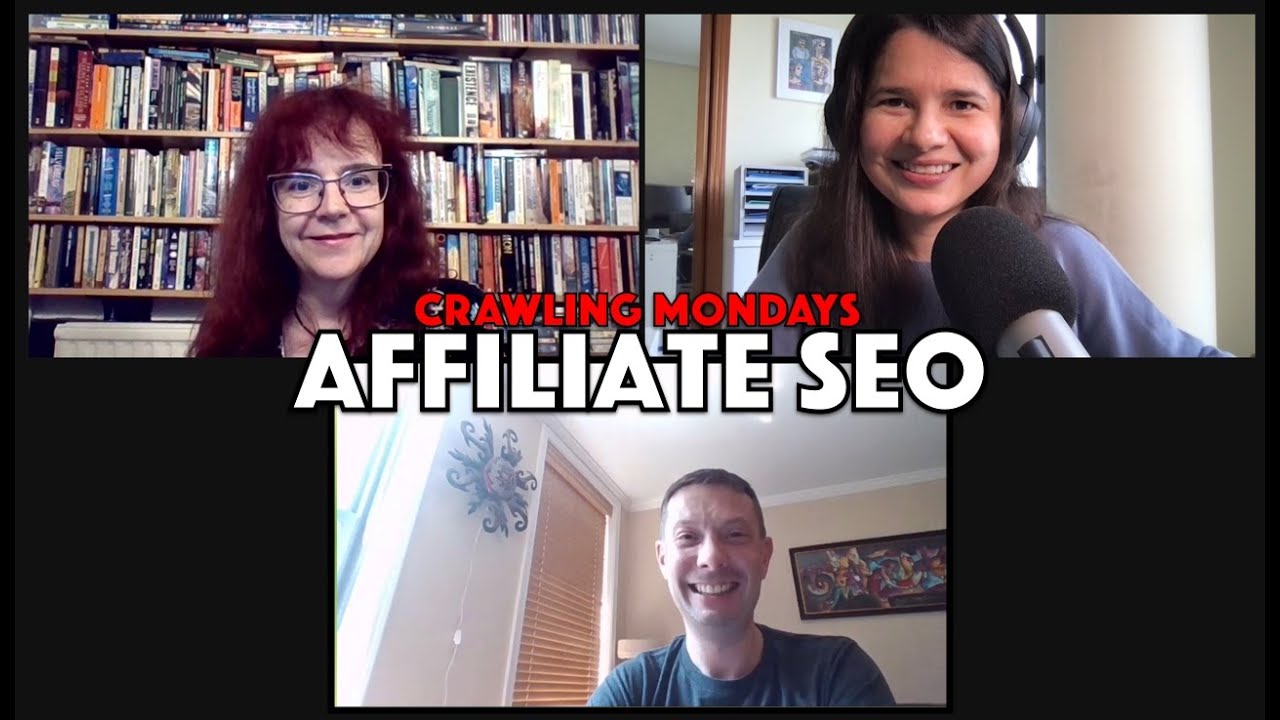
Sue Dawson and Adam Riemer discuss building affiliate websites that solve real problems instead of just pushing sales. They stress high-quality content, niche selection based on intent not just volume, and diversifying revenue beyond commissions. Case studies include noagering.com, Wirecutter, and TripAdvisor.
Chapters
Welcome to a new edition of Crawling Mondays. And in this edition, we're going to talk about SEO for affiliate websites. I know that many of you would like to start doing a little bit of affiliate. For that, I have a couple of SEOs who are highly, highly focused on affiliate websites. So we can have this conversation about which are the worst mistakes, things to avoid. And for that, I invited on one hand, amazing Sue Dawson. Sue is Head of Content at FTD Digital. And on the other hand, I have Adam Riemer. He's an SEO and affiliate marketer. Wait a bit. Before moving forward with today's conversation, I want to thank ContentKing, real-time SEO auditing and monitoring platform that is sponsoring today's Scrolling Mondays. And if you still don't know ContentKing, take a look at the link below with a very special offer for you. And now we're ready to move on with today's conversation. To start a little bit the conversation, one of the reasons of why I wanted to do this edition of Holy Monday is that I have found that whenever you research affiliate SEO or SEO for affiliate websites, there's a much higher share of advice that has more to do with black hat SEO. So I wanted to ask you, for those SEOs who are just starting to work with affiliate websites, Which are the most common mistakes that you see? We also know that Google has announced that they are going to release this new link spam update. And there is like an important mention there of how they want those that have sponsored links to tag them, specify them to be sponsored. And we know that this is some of those scenarios that affiliates' websites need to pay attention. An affiliate link shouldn't pass value, shouldn't be followed. Are there any other type of mistakes?
I come from gambling affiliate marketing, and one of the mistakes that people make there is not researching and planning their site. So they're not thinking about what problem am I trying to solve with this site, I mean a user problem, and how is this site going to solve that problem better than any existing competition does. And this is all about serving search intent, and I think that in affiliate marketing, search intent is really, really important. Because you've got to get at the type of intent where people actually want to buy something. And it needs to be something that you can find enough of to sell to them as well.
This is very important. Google is taking into consideration fulfilling the user need, E-A-T signals related to content quality. It cannot be as if it was like 10 or 15 years ago. Let's generate content that doesn't necessarily solve an issue, solve an actual problem to the user, and let's try to rank and make the user buy through us. There should be some unique value for this type of website. And which reminds me a little bit of another release that happened not so very long ago for products websites, which I see them targeted to affiliates rather than direct sellers, right? Like, what was the quality of the information regarding the product that was featured? If there was a comprehensive assessment Or validation of the features of the products and the clarity of the information of the products, rather than just an ad to try to incentivize the user to buy.
The issue that I see people starting out with is they'll just start doing a review of a product, or they'll do a product review and then add in a section for coupons and other things. Well, the issue here is there's always going to be people in much more powerful sites doing reviews that will replace you. So it's not sustainable. And if you're going to review a lamp and then you're going to review a monitor and this, You're not creating any consistency, something for someone to come back to and trust. You're never going to be consumer reviews or like a government agency that actually does qualify things or Trustpilot or something. So instead you need to build something that's a destination. And instead of sitting there, this kettlebell is great and doing kettlebell exercises, for example, well, someone that's looking for kettlebell exercises already has the kettlebell. So you don't need to use your kettlebell affiliate links there. Kettlebells don't break very often. What you do need there and what can work is something to protect the floor below you for as you increase and drop the kettlebell. So a mat is the perfect way to protect it and cross-sell. I was speaking at a porn conference last week or 2 weeks ago and I was like, well, you use a lot of devices in your live streams. I was like, well, guess what? This is your opportunity to make money as an affiliate after because you have to clean those tools. So there's a certain toy for men that has 550,000 searches a month. People already have that. What they need to know is, how do I clean this? How do I do that? And that's safe for YouTube. That's safe for a blog post. And you can cross-promote the cleaning materials created by the brand. You can also cross-promote where to find them. And now what you've done is you provided a resource for people that sells, here's the products to complete the solution. If you're talking about fixing something in your house, people already have the washing machine. Yes, they may need one. So you might want to link off of a washing machine. You know what they don't have on hand that they will need is a tool to do it or a replacement part and you helping them source it with next-day shipping or for order online and then pick up in the store. As long as the transaction takes place on the website, you should get a commission. This is how you make it. And if you keep your channel focused, then you've built something people can return to. And that's how you build sustainable affiliate and not get stuck in that rut that a lot of other people do.
There you've actually sold them something that they didn't know they wanted. As soon as they saw it, oh, that's what I need, which is just perfect.
I think that because affiliate SEO tends to be perceived as something very transactional, like the final outcome of it is to make the user purchase through you. But realistically, it is what happens with ecommerce SEO. You cannot only create content that targets the final step of the conversion, of the purchase, right? You need to establish your authority. As the destination that the user needs to trust and can trust in order to get the proper advice and see which is the type of solution that they need for their problem. And that won't be achieved only by creating a few blog posts to try to rank for the final query or the final keyword, but to establish content and develop content that will connect with the way that the people search through the customer journey, develop resources and content to rank for very broad informational type of queries in that industry, in that market to solve their issues at that point. Start establishing authorities, gain links, establish yourself as the go-to source, and do the same with mid of the funnel and bottom of the funnel queries to cover the whole journey of the user. And this is the thing, I think that it's what happened also with ecommerce websites too. Even if you end up ranking in the first position, For a very commercially driven query that can be very profitable, even if the user ends up going to your page and destination because you're in the first position, it's very unlikely that they are going to purchase or buy through you if they don't know you at all, or if, if you don't give credible references for your authority to purchase through you. We have focused a lot on the issues or problems, but I would like now to hear your advice of Must-do steps whenever you want to tackle from scratch a new niche as a completely fresh new affiliate? What would you recommend people to do?
The first thing that I do if I'm going to start a new niche, which I do regularly, is I outline, can I write at least 50 different things on this topic? And which ad platforms will let you run across that niche? Because like Google Ads, you're not gonna make your money off just affiliate links alone. You can make millions of dollars, But you need to diversify your income streams too, 'cause programs close. Sometimes merchants decide not to pay. So I do that first. Then I say, are there breakoffs here? Then I look for clean affiliate programs. What I mean is they don't work with coupon sites or voucher sites, which is very rare because they're gonna swoop in at the very last minute and steal your commission from you if they can. I'm gonna look for, are there responsive affiliate managers? I write to every affiliate manager. I give them 48 hours to write back to me with an actual response. And if 2 or 3 of the 5 or 6 programs I write to do respond back, I know there's at least somebody there. So that way, if there's a problem, they're going to be able to respond back to me. And then I try to see, okay, what's the room for improvement and expansions? And is there a way to branch out into other categories? So talking to a dog groomer in the UK, and she was starting up an affiliate site, and her initial reaction was to monetize with some dog toys and everything. I was like, actually, I have a really good idea for you. Why don't we set up sort of like a shopping portal and solutions for your clients? And one of them that's converting really well for her, it's like $40 to a couple hundred dollars per sale in commissions, is image hosting. And it sounds weird, like why would a regular consumer and why would a dog groomer make money as an, as a hosting affiliate? The reality is pet owners, you both just met my cat, we're obsessed with them and we are crazy about our animals. And we want to never have to delete another picture of our cat or our dog or our horse or whatever we have. And so we created content about preserving the memories and about other things that you'll need. How do you calm them down before the dog grooming and stuff like that? And now she's making sales almost every couple days with hosting, which is a massive payout. And she's not doing hosting reviews. She's not sitting there writing about who's the best host for this. She's providing a solution for pet parents. Take your photos and never get out of space on my phone again by buying a hosting package here. And there's a lot of platforms out there that are cheaper than iCloud and Google. You have SmugMug, you have Flickr, you have all these other brands. And so this is where she's now starting to make money.
I love how you can take an angle that is completely different. to what you will think of to sell a solution, but you're taking a solution for a particular challenge that also you can talk a lot about, especially if you are like particularly into that, right? So that is very important. And if you see that there's enough search volume, like there is an actual demand for that particular problem, I love it.
My kind of affiliate marketing is much more about listings of products, listings of offers. So in gambling or in something like insurance, if you wanted to move into a new area or a new vertical, you would start with the keyword research. You would find out what people were looking for and you would look at the volume, but that isn't enough because you've also got to look at the underlying intent. In gambling, you've got these very, very high volume search keywords, which are brand names. And actually you can't make any money out of those with a gambling affiliate website because they're all navigational searches. Somebody types in Paddy Power Bingo, they want to go to Paddy Power Bingo. They've already got an account there. That's not something that's worth trying to rank for because you're not going to make any money.
Yes, search volume is important, but validate that the search itself is aligned with your business goals and you can actually make a conversion out of it. You realize there might be like many more of those types of searches here for which realistically you won't be able to compete with the actual websites or with so many different players are in this space. And for that, I actually wanted to ask you, what are the best ways to identify those affiliate opportunities that are not already like crazily competitive, that there's no way for a new website to take a relatively good share of that? So for example, in my case, I have a remote working website. And one of the ways that we monetize the website is through certain affiliate programs. Related to travel insurance for digital nomads or health insurance for remote workers. And it tends to work well because it is aligned to what we provide— resources for remote websites. We have a remote job board. We have tons of information about remote in general. So it was very straightforward for us to even include the links to an already existing guide that we already have. So it was not even something that we created just for that. But I think that we were already pretty lucky because we knew already That this was a market that we were in any case developing our presence for, and affiliate was a good way for us to diversify the income stream, not to focus on it. But I can see how it is much harder when you're starting from scratch and affiliate will be the main income stream. How would you recommend people to use platforms for that? What would you suggest?
My knowledge is really mostly in gambling. And recently, in recent years, what people have done is not even started with a website. They started on social media and just posted links on social media. Now in gambling, they're not allowed to do that anymore, but I know that in other spheres, people are doing that. Influencers use that as a step towards before you build the website.
To test the waters, to see if there's potential.
Interesting.
I haven't actually seen a niche or industry you don't have room to move into. It's more, it's harder to manage the programs and recruit the established sites. But if I was going to do something in Sue's niches, which are the gambling niche, for example, I wouldn't— just like she said about going after the bingo parlor or something, I would instead create— how do I create predictive text? How do I create a product that can be subscribed to where I'm giving what we're predicting is going to work? Where you can take all the results that happened over the last 4 weeks, for example, with bingo. You can take the most popular numbers, you can watch how they're being populated, and then people can join your newsletter and subscribe to your product for $10 a week or $10 a month, and then you can And then you can send them what's gonna happen. Like just use JavaScript to piece it together and put the probabilities of these numbers. Then if the card you get, for example, has those numbers, here's your probability of winning. And that way, you know, to buy a new card or, you know, I don't really have to pay that much attention. And then you can even set up if it's legal within your area to do your own little version of the gambling and the win based off of how many people are subscribing that week to what you think the winning numbers will be based off of previous, cuz other people aren't gonna do that. But as a coder, you have the ability to do it in pretty darn simple at this point to build some scrapers to go out off the winning numbers, which are all published publicly and create something that people can subscribe to. And that's where you're really going to make your money. Then you could do your newsletters. You can do, here's the ones that we sponsor or support the most in your author box after each one. There's so many different things. There's really no shortage of ways to enter into any niche at this point.
Which are the websites that you're actually seeing that are doing great affiliate SEO? Any websites that you will say, For someone who's starting to want to really see how good players are doing, like check out a little bit of benchmark too.
I want to talk about a small website in the gambling niche. It's actually a competitor of ours. What they've done is taken a very, very small niche topic in gambling and made a huge success of it. They rank number 1 for all the associated keywords. They're called nowagering.com. So they built a small site. They've made it very mobile-friendly, which is really important. And that was another thing, people designing a beautiful website and totally forgetting about mobile. So they've got a lot of supporting content, which helps them build up their credibility and authority with users, as well as with Google. They're writing a lot about slot games. They wrote very topically about slot games when the Euro football tournament was on. They reviewed a whole load of Football-based slot games, which people really engage with. Posts about relevant current events, which are relevant to their subject area, which again helps them establish authority, trustworthiness, and expertise. I thought it was interesting because it's not a huge enterprise. It's a couple of guys. Amazing.
That is the type of stories and references that we want to definitely feature so people can connect more with.
So I'm not going to share any private sites or any of my publisher sites, but I will share some mainstream examples that are just doing smart things. So if you go and book anything international, we were just talking about travel, for example, Expedia, Travelocity, TripAdvisor, any of them, if you're going to book travel through them, so one, the first initial draw is the fact that they're going to find deals that are available exclusively through them, and most of those are going to be through an affiliate-type relationship. Expedia, for example, some of the things that they do that are really smart Is if you're booking international travel, they say, do you need a visa for this and this? And if it checks out yes, you end up on a white-labeled system. It's something you're gonna need either way. When you travel overseas, certain places need a visa. They're providing extra value and an extra service for you and making commissions off of all of that.
Yep.
So it's, it's just a really smart way to do it. Before the call, you had mentioned New York Times launched Wirecutter or bought Wirecutter and then incorporated it in as a subfolder. Which was smart, but you also have CNN, which has Underscored. It's featured on their homepage. And you have BuzzFeed too, where it's fully a pay-to-play model. You pay a certain amount of money, BuzzFeed features you on the top of their listicles, and they know for a fact it's gonna rank because Google likes it. Here's where the real good value comes from. I've seen this both with CNN and BuzzFeed. If they want more money from you, so there's the links off of CNN's homepage into Underscored to feed traffic in, but they'll run ads to their own listicles. To drive extra volume and extra sales and extra traffic and sales in. And most of it does happen to be shopping traffic because they're not stupid. They know which keywords are driving into their site and producing revenue. And so that's also what's good. The other smart thing that I stole from BuzzFeed and I'm applying it into all my sites and all my partner sites is just one of the most obvious things you could do. They put, here's our top 3 featured products from this list of 25 at the top. And then you could use an anchor link to drop down and read the review part, or you can shop direct. that's just crushing it. Once you have that top traffic and the top rankings for the big product term, now you're going to make money off those top 3 or 5 featured out of your massive list. I like to stalk them a little bit because they do do some really cool tests.
That is awesome to hear. Actually, this is a good time, I think, to mention this, that many people don't realize that most of the biggest media websites out there This is a very important source of revenue for them, right? Affiliates. And mostly they will have this whole section dedicated to review products, leveraging their existing authority and popularity and ability to rank pretty much for any competitive query. So definitely take a look. Of course, they have tons of resources that most of us wouldn't necessarily have at the start, but you can have a really good reference from the content side of things and a few Functionalities that, as Aida mentioned before, that you can pay attention to. So to start wrapping up a little bit the conversation, I wanted to ask you for a last tip, something that we haven't yet covered, like any particular tool, any particular resource, anything that we haven't yet mentioned in today's episode that you can think can be helpful.
For an established SEO, use your keyword tools and your topic tools. So for example, look for gifts for Mother's Day. You're gonna see that's already taken in a million things, but there's a million niches underneath that say, is this, is this, is this, or like stepmothers or mothers over 50. You're gonna find some pretty substantial search volumes and you could focus on that 'cause there's not as many people writing for that niche, so it's easier to rank. And you can also look up different queries people have about stores, like I wanna order and pick up. And nobody's really writing how to do that or tips to save if you're going to order online and you can't see the in-store deals. So, and there's going to be search queries for that too. And just use your keyword search volumes for that to figure out where you can actually monetize based on who you already have a relationship with.
Search analytics for sheets. So downloading in bulk pages which you've already got ranking, downloading all the information from Google Search Console in bulk so you can Look at it by the query, look at it by the page, and find out things that are getting an insanely high conversion rate that you didn't even know people were looking for. We had a page that was about bingo offers, and I discovered that the majority of search queries that were generating clicks were actually for slots offers, not bingo at all. So we were able to modify the page and make more money out of it just by seeing what people really wanted and was Converting so well.
Can I throw one more thing on top of that?
Go, please.
One of my other favorite things to do is download the same type of data Sue just mentioned, except I also go into the demographics inside Google Ads and I go inside Analytics. And then I ask each of the affiliate managers without sharing what my demographics are at that current time. I ask them, who is your customer? And if they just tell me it's people between 30 and 50, okay, bullshit. No, I want women or men. I want single, I want this, let me know immediately. And then I match my traffic to their offers in priority. And what you're doing is you're creating an audience match to the experience that converts that specific audience. And it can and will change as seasons change. So you constantly shift and shuffle your offers, and then you are able to negotiate better commissions next year as that same season comes around. And you could really— we have this information. You can also take your email list Upload it into Facebook. Facebook's gonna look at, okay, well, what's the demographics of this? And now you actually know as well, even if Google Analytics is wrong, and you can compare across platforms. And now you actually have real data you can take to match to the merchant or the offer.
That is really great advice. Thank you very much for your tips. They are certainly useful, and hopefully they will help any SEO out there who are starting in affiliates to accelerate. Accelerate the process. So thank you, thank you very much for your time, Sue and Adam. Thank you for watching Crawling Mondays. Remember, if you still haven't subscribed to the channel, do it now. Don't miss the next episodes. And thanks again to ContentKing, the real-time SEO auditing and monitoring platform that has sponsored today's episode. Until the next one, bye-bye.
More from Aleyda



How to Communicate and Sell AI Search Optimization (GEO, AEO, LLMO) to Decision Makers



AI Search Optimization (GEO, AEO): What is it, Common Errors & How to Optimize AI for Success



OpenAI has introduced shopping research in ChatGPT - #SEOFOMO TL;DR December 1st, 2025

OpenAI announces Instant Checkout and the Agentic Commerce Protocol - #SEOFOMO TL;DR Oct 6, 2025

Google's August 2025 Spam Update Finished Rolling Out - #SEOFOMO TL;DR September 29, 2025