How to Develop Successful SEO Audits: Avoiding Top Issues & Challenges
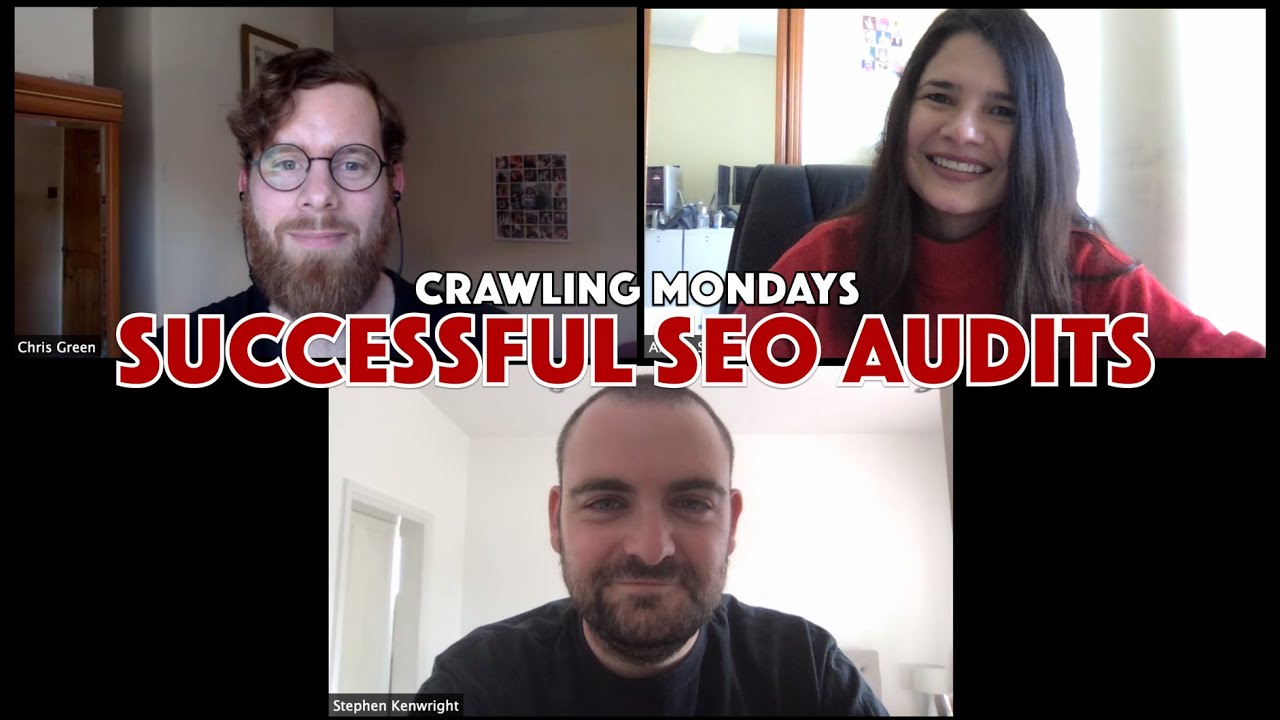
Stephen Kenwright and Chris Green explain why most SEO audits fail and how to fix them. They recommend a two-document approach with a PIE score framework to prioritize fixes, tailoring deliverables to each client's workflow instead of sending static reports. An audit should start with business goals, involve developers early, and become an ongoing partnership, not a one-off checklist.
Chapters
Welcome to a new special edition of Crawling Mondays. Today I have a couple of very special guests with whom I will discuss one of my favorite topics, SEO audits. What are the main challenges of SEO audits? Why are they not implemented? What can we do about it? For this conversation, I have invited Stephen, who's the founder and director at Rise at 7. Hello, Stephen.
Hi, Aleyda.
How are you?
Hey Aleyda, I'm good. How are you?
Very good, thank you. Thank you for joining us today. And then I also have Chris Green who has a very exotic position that I need to actually read. Head of Marketing Innovation at Footprint Digital. Chris, how are you?
I'm alright. How's it going?
A few people think of SEO audits as a big checklist of validations that we end up doing in SEO processes at the start of the process. Process to identify potential issues, potential challenges, opportunities. For a lot of people, the final outcome of the SEO audit is the document that is delivered to the client. We see huge documents of 200 pages sometimes. For me, SEO audits, the outcome should be to make them impactful and that they end up really driving the SEO process for success, right? But there are still tons of challenges. So for you, which are the main challenges that you have seen? Which are the main issues that you have identified with SEO audits and how you will change them?
So I'd say that one of the biggest problems, you've pretty much hit the nail on the head where it's everything has to be a checklist, everything has to be an action. And I think that one of the main issues that I see with audits generally is that people are proposing actions without really understanding either the consequences or why things are the way that they are. So it's very much a case of, here is a problem, here is the solution because it's in the developer documentation that Google put out. That must be the solution. It's very important. Go and do it. And I think that the challenge that a lot of SEOs don't really get is who's it going to? If it's going to developers, then maybe don't tell them how to be developers. They probably have a way of doing things that works already. And I think that it kind of plays into the whole issue being that a lot of the reason that things are broken on a website is because someone broke them. And sometimes that's intentional. And even if it's not intentional, it's a consequence of something else that was.
Mm-hmm.
So when you're telling people to do something completely differently, that's impacting workflow somewhere else. That's impacting the dev team, the UX team. It's impacting someone who's told things to be the way that they are. most of the time. And I think that the biggest miss in SEO audits generally is people just don't understand the bigger picture of what goes on in a client's organisation.
The context where the issue happens and why it was there, what caused the issue in the first place.
Yeah, I think that's a great point. What we find is you may be auditing the website, but actually what you're auditing quite often is the whole structure of the web team, the decision-making process that's got the infrastructure to where it is. So To actually make sure those recommendations get implemented, you've got to unpick that whole scenario. And I think actually the SEO audit that's removed from the technical implementation or actually seeing the recommendations through is going to be the worst audit for whatever reason. I think a technical SEO, the best ones that I work with, are used to getting changes implemented, whatever it kind of takes. Whereas I'll often see a one-off audit proposed and the it's come in via sales. It says the client just wants this as an artifact and go and give it to them. Okay, great. But if you're not invested in the fixing of that, your recommendations aren't going to be very good because firstly, you're not going to invest lots of time sitting with them to understand how to fix it because that takes weeks and months. So I think actually being invested in it working is kind of critical.
100%. In fact, as a consultant, when I always validate the viability of a client, I ask, you want an SEO analysis and recommendations, but will you be able to implement them? Do you have the resources? Do you have the flexibility? And if so, why don't we make a follow-up process to make sure that those recommendations are actually doable first, that are assessed together and are implemented together afterwards to see the actual results? Because this is the thing, many times when we do indeed the analysis, the audit, the recommendations, even if we interact with the client, we request feedback and input to take as much as possible the context into consideration. This is an evergreen document. It's alive, right? It doesn't finish when you deliver it to the client. Some of these recommendations, because of unforeseeable circumstances, even if you have validated well with the client, maybe some of these don't make sense anymore. Like for example, a pandemic comes, they won't make sense anymore, so they need to change. So for me, it's also make sure that you are not stuck on seeing a document that is delivered. It's not the same type of audit that you will do when you are validating or supporting a web migration than an audit that you will be doing when you are launching a new website from scratch or an audit for an ongoing SEO process where the goal, the final goal, is to have at the end of the year X percentage of growth, right? So the context here, not only business-wise, technical platform-wise matters, but also the type of SEO process the maturity of the company in SEO. It's not the same to do an SEO process with a company that doesn't have an in-house SEO and it's the first process ever that they do than another one that, yeah, they have like an SEO team in-house and so you shouldn't be needing to explain so much, right, in a document. So based on all this, which are, from your experience, those specific actions that you have taken in your audits that you have seen that have really paid off the most to tackle these usual issues, context challenges, or the lack of connection?
I think some of the things that have been really successful from my point of view, one would be an audit in a lot of senses isn't one document, it's 2. And that really is a list of issues, so everything that's going wrong, and a list of solutions, and they They can be disconnected in a way. Because what tends to happen when we're getting audits actually implemented is we have a list of issues, but then we have a conversation before we propose any solutions. So we've got everything that is relatively straightforward and a lot of SEOs are very good at spotting what the issues are because you've got so many crawlers and tools and everything that will give you—
Absolutely.
Here is a problem. And you can as an SEO with some experience say how big a problem it probably is. But then actually in terms of a solution, that's a very different thing. And the solutions are really where experience comes into play as an SEO, where you actually have to have those conversations. Because what you can do and the path that you can be led down that isn't necessarily the right one is you see an issue that you know, you've read, you've seen the impact before where it's a big issue and you'll get a lot for fixing it. But if you do fix it, that probably costs £1 million to do.
Mm-hmm.
And actually, there is 2 or 3 things that are much easier to fix that would have a bigger impact overall because it wouldn't cost so much money to do. So I think the first thing that we've done quite successfully is have— we treat audits as a list of issues, as a starting point, as a conversation starter, so that the final document has all of the supporting information that it needs and it has a conversation with developers to begin with. And when we're prioritizing things, because most clients do want some sort of priority order on these audits, instead of something really kind of arbitrary like red, amber, green— this is a big problem or this isn't— we actually use something like a PIE score where we can estimate what's the potential and what's the impact and how much does it cost, how easy is it. You can't estimate the ease of implementing an action until you've had a conversation with the person who's actually going to do it.
100%. One of the things is what you expect that, for example, changing the canonicalization of a website should be, that in general, ideally, this should be pretty straightforward, but depending on the platform restrictions, that might not necessarily be something trivial within many organizations necessarily. So you won't be able to find out sometimes, even if you have conversations and validation with the developers, sometimes things are complicated. Configurations or aspects that are, you know, it's very difficult to assess until you indeed deliver and share the outcomes with the client and you're able to validate and verify to actually set a final priority for those actions that you have said that don't take only into consideration the potential but also how feasible the investment that it's requiring.
Because at the end of the day, what you want is a positive ROI, a net Yeah, I think a lot of times with that, I think that there's a big differentiating factor though that can work on that, and that is the size of the client and the scale of the infrastructure on there. I think, you know, some of the best circumstances you can be in are sort of often in the sort of SME space where actually, you know, there isn't a kind of a big structural hierarchy and the pipeline isn't fixed and, you know, there's maybe one developer, not a team of 6, and it's not bogged down. So, and actually I think that Very often that process is, as Stephen's saying, actually having that conversation with the developers. How feasible is it to run this fix? I've actually found quite often it's— well, so very often you go, you need to fix this, and they go, we can't. And that will be end of, for various reasons. And actually, the best answer is, have you tried doing X, Y, and Z? You know, have you tried this? Have you tried— and kind of being a solutions kind of person in that process makes all of the difference. And very often Actually, you know what? Canonicalization, as critical as it is, that's not— no, it's not worth it. In the vast majority of cases, and I don't want to paint too broad a stroke here, but actually, if the client sorts out their content, then actually that can override a lot of the other bigger problems. But until you see that, it's hard to say. I was auditing a site the other day that was circling over a million pages, and actually, if they've got a canonicalization issue across all of those, you can't write content for a million pages. really quickly. So you've got to— there is— it's got to be on balance with those other angles. But I think very often it's the questions you ask in the early stages. For example, server access logs, bits and pieces like that. Some of the biggest, most effective audit recommendations have come out of Magento sites that have an entire copy of the store elsewhere that you would never see. It's not in the index, but Google's spending 80% of its time on somehow, even if it's disregarding it. And bits and pieces like that you wouldn't even look at. And I don't know about you guys, but asking people to get access to log files is probably one of the hardest SEO challenges I think ever, short of explaining to elderly relatives what I do for a day job. They're the hardest things an SEO can do, but they can make all the difference. But would I lose sleep over that battle on a 1,000-page website? No, probably not. I don't know what other people think, but there are certain times where the scale of the problem needs that kind of solution.
Mm-hmm.
And the answer is always it depends, isn't it?
Yeah. What have you found are the keys in the long run to make the SEO audits and recommendations that you give to clients to be implemented?
I think in my experience, I think one of the first things that you always have to bear in mind when you're doing an audit is who your client is. Because, you know, there is a huge amount of content out there about how SEOs can work better with developers and how that conversation can be improved. But I've never met a developer who's paid my invoice. So actually, that's not the person who is the stakeholder in this conversation. Now, you obviously want to be empathetic. You want to understand what the cause of that problem was. A lot of the time, and I think we kind of give developers a bit of a bad name, but I've seen plenty of SEO audits that have had implement this instead of that because of this reason. Like someone's read that 410s are better than 404s. So now everything 410s.
Right.
And then they've migrated a website and everything's gone to a 410 page and disappeared off the face of the earth forever. So this kind of thing, you know, it's not just developers who do it. But in terms of making it actionable, it's really about understanding what are the real objectives of the person that you're going to do this audit on behalf of rather than who you're going to do this audit and give it to. And, you know, one of the examples that you were giving earlier, Aleyda, I used to work with a bank and And their website was www1.bank.com/1/1. They also had www2.bank.com/1/1 and /1/2 and several others. And they'd been given 3 or 4 at least SEO audits over the years that said maybe just have one website that is just www.bank.com. And the reason that they couldn't do this was because the website was on a load balancer. So To make any changes to the website at all, they had to take one version down offline and change it and put it back up and send all the traffic to that version and take the other version down and change it in the exact same way and put it back up. So the actual physical cost of making that change would be somewhere in the region of £2 million because of the amount of business that they would lose. And to be fair, the developers knew exactly how to do it. So it's not a conversation with how do we get this recommendation physically implemented? It's do you, my client, have the authority to cost your business £2 million to be able to make this change? And the answer is absolutely not. The KPI of the person that I'm talking to is we want to improve traffic by 5% this year, not we want to improve traffic by 5% at the expense of absolutely no traffic for 3 days while we take the thing down. So I think in terms of making it actionable, it's about firstly understanding what the overall KPIs of you as a consultant or as an agency are. We want to improve this thing, we want to improve this thing, we want to improve this thing. We have an issue with crawl optimization, for example, so all of the audit deals with this problem. We've got pages that are excluded in Search Console in the wrong way. We've got redirect chains. We've got all of these things that are causing these crawl issues. We also have an issue with site speed, so we want to do these things, but it's really trying to put that into perspective for a client of saying, your priorities for the year, you've told us it's these couple of things. Maybe we think it's also this thing. Do you agree? Let's only talk about those things. Because if you— if we suggest this thing might be a big SEO win if we actually get it sorted, but it's not on your radar and therefore it's not on your boss's radar, the chances are even if we actually make some money out of it, it's nowhere near top priority because it's not the thing they promised.
I love what you mentioned right now because it's the way how it positions SEO that at the end of the day we're in the marketing business. We recommend in a certain spectrum and area of it but the final goal of our work is to make a positive ROI.
I think actually one of the ways of making the best audits quite often are— so we spoke before about the audit is the deliverable. It's the document that shakes the table when you drop it and Stephen, you said that in your world, they're 2 documents, they're 2 kind of different parts. And actually, I think one of the key parts of this is making sure that the delivery of the audit is not the end of that engagement, even if it's not going to go into a retained kind of model, because actually it stops at exactly that wrong point in the process. And, you know, how we define an audit, how we structure the process, kind of makes a lot of difference. And very often that's tough if the client or whoever you're speaking with expects a document and that's the end. But I recently especially been speaking to people who have had 2, 3, 4 audits and not acted on a single one. And they've said, oh, well, your audit's gonna just be the same. It's like, well, what have you done with your old audits? And they go quiet and they don't make eye contact at that point. And then that's when you kind of realize and understand that there's never been that investment or willingness to carry on. So that helps, I think, from the client perspective. But equally, I found that Certainly the best SEOs I've worked with have had a stake in fixing the problems. But the worst technical audits I've ever read are of people who knew they would never see that website again. Or they might do as a consulting gig 6 months on. And I don't know about you, but I don't think I've ever given recommendations to someone and said, go implement them, tell me, come back in 6 months and let me know how it's going on, where they've come back and you're like, actually, yeah, you've done everything exactly right.
Yeah.
Now obviously I know there's no such thing as exactly right, but it just doesn't happen. Maybe your explanation is not good enough. Maybe, as Stephen said, It's wrong for a reason. They couldn't make it right in the way that we'd anticipated, and they'd read some documents and done— so I think you've got to be careful how you sell an audit. If you say, actually, look, this isn't the end, I'm actually— my audit document is being delivered halfway through, and then you're effectively paying for however many hours of my time after. But, you know, if you don't tell someone during that kind of sales process, that expectation setting, that actually, you know what, if I was to give you that document, walk away, you'd get a worse product for it. And that's— you've got to be a little brave because you've got to tell people buying from you that what they think they want, they don't want. It's not actually good for them. And us as an industry have, well, kind of taught clients to have rubbish expectations. One-click audits or automated audits or— I mean, Christ, if you ask 10 SEOs what an audit is, what would they say? Would we agree?
Thank you very much because I was actually going to that point, right? There are some SEO tools that at this point today they say, oh, you don't even need an SEO, right? We automate it all. There has been an impressive level of automation lately coming from tools that really facilitate our analysis. But realistically, how do you view this type of solution? How do you work with those? How do you explain also to your clients?
I think like my favourite crawler is Sitebulb and Sitebulb is wonderful because It does. It calls things hints. It's kind of what they are. It's a hint that this is a problem, but not an actual solution to a problem.
Mm-hmm.
And I do think that if, let's say, if everyone had the same automated SEO software and you're all, you know, you're ranking 20th for something and everyone who is above you, the top 19, also automate everything in the exact same way, then you'll remain in the exact same order because you solve all the same problems in the exact same method. And all that those tools really do is make sure that there are— there's as little as possible wrong with the website. And I view the job of an SEO nowadays as make more things right with a website. So as opposed to just fixing problems, that's where, that's where things were when I started in SEO, you know, 10 years ago. It was, here's a checklist of stuff, fix as much of it as possible, and then throw a lot of links at it and it'll rank. And that's kind of the job of a tech SEO. Fix the things and then get some links in. Whereas now I see it as you know fix the things. That's maybe a third of your job as a starting point, and then your next third of a job is let's make the UX better. Let's make the website faster. Let's do all of these things that are above and beyond what anyone else in the market is doing. So the idea that a tool can automate this that makes it better than everyone else's product—that. clearly isn't possible because otherwise everyone would use it. I would say when you talk about best practice, I've always said that really just means standard practice. So if you're following standard practice, then you only ever get to standard and everyone is just standard.
The easiest part about SEO— we've already touched on this— the easy part is finding out actually what looks wrong, what looks the most wrong on this website. And all things being equal, if everyone was on the same platform and everyone did things in the same fashion, Then the fixes would all be the same. But actually the crucial part is, and it comes back to what we're saying, is that knowledge and the understanding of the order of how you kind of fix things. And the text site bulb gives the hints. Semrush might call it an error or whatever tools may call it. I mean, that's the distance. Something that Ian at Portent said, the distance from perfect, you know, reducing the friction. And all we can do is, you know, we're reducing friction as long as we can from the tech perspective. But if that wasn't the thing that stopped you from ranking in the first place, then you really aren't fixing anything at all. I think the most frequent audits I do are site launch audits. So you're actually looking more at the migration and you're like, you know, the new site will launch and there are no 404 errors, all of the internal linking is correct. But if that didn't stop you ranking in the first place, then it's not gonna make a blind bit of difference. If your content's still rubbish, then it still won't rank. So I think that some of these AI come tools. And there are tools out there that are starting to teach and work out, well, you know, on these, I don't know, 50, 100,000 websites, these errors are more wrong than others, and these errors lead to greater fixes. So I think it's possible that that approach could be valid. But actually, the key is still, well, which order do you fix it in? How much budget do you put into that? How brave is the person making the decision on the client side to actually invest in that. So I do kind of welcome those tools because actually I want to spend far less time on an audit identifying how many crawl errors there are, and I want to be talking about, well, actually, how does the architecture need to change? How does— you know, and it's, you know, it's as Stephen said, this age of SEO is just actually making websites better broadly. And that sounds a bit naive depending on who you speak to, but my job's more interesting when I'm making a website better. I remember Auditing checklist, tick, tick, tick, fire links, boom. And there was a simplicity about it, but it was kind of crap, wasn't it?
But at the end of the day, you make a really good point of, yeah, the checklist or the tool will point out sort of things that can be critical per se in SEO, but these are tied to tactics, right? If this is not driven by higher-level type of strategy that really fulfils an actual bigger goal that is much more meaningful for that particular business. It wasn't what was really breaking the business in the first place, potentially. So it won't really pay off that much to fix those. To finish, what are those aspects, those recommendations you will give before finishing that you think that we haven't covered yet but are critical to make your SEO audits and recommendations successful?
I'd say the— I'll give 2. So my first one is start with the conversation before you start with an audit. And I ask a few questions. First one is, what have you done recently about SEO? What have you tried previously? What's the last few things that have been implemented from an SEO point of view? And also what's in the queue? So if the things that the previous agency has mentioned are the things that you've mentioned as the client, what is upcoming that has an SEO tag on it in your system. And the second thing is, what format do you want this thing in? Because do you want a very visual PowerPoint presentation where we say, here's the problem, here's the solution, here's an example of it? Do you want a spreadsheet where we're saying this is the specific action? Or actually, do you just want us to create some Jira tickets for you and you can just stick them in? Because if you're going to copy the recommendation out of an audit and into a system like Jira, then we can save you a whole bunch of time by just putting it in there in the first place for you or giving the actions in that format.
Perfect. I love that very specific actionable advice and eliminating friction at the end of the day.
One of the things that we're doing much, much more of, and it's mainly because a lot of the audits I deliver aren't exclusively SEO, they'll have other kind of elements and services in as well, is actually taking the audit as the opportunity to to really kind of work out, well, actually, is this website, is this business the best at what they do in that area? And I know that again, that sounds a little fluffy, but the best clients I've ever had to do SEO campaigns on are the best at what they do or are good at it. And actually part of the audit and the audit findings focusing on that too. So actually, are you the market leader genuinely, or what do you have? What can you show that is better than the competition? And I think it's something that A lot of people are quite cautious or don't want to challenge people on because if the answer is no or varying shades of no, we're not very good, that can be a difficult one, especially if you want to have an onward conversation and you don't want to step on too many toes. So actually, I think bringing that into the process and the way that we'd usually frame that is saying, well, look, our jobs as SEOs now is essentially showing Google, giving you the means to show Google you're the best. And it's integrating that part. And actually, I think everything else that you can recommend— I tend to actually limit the amount of recommendations we give in the first volley. We tend to show them only what we feel is needed, and that's not because we want them to come back and spend more money. It's just because too much— if the internal teams focus on the wrong things or get too fixated on X, Y, and Z, it's a question of, well, actually just fix these things, because actually everything else might be ruled out or made redundant by these actions anyway. And I think that's the importance of The audit conversation is not one that just has a hard stop.
For me, it has been super useful to have my own website too. As a builder, is this something that I will actually put money on, my tight resources on, if it was in my own website, right? So that makes all the difference at the end of the day. If it is something that you will recommend it to yourself when you will be the one putting the money on those type of changes, right? If it is going to be as meaningful or not. So thank you very much for this amazing actionable tip. If you have any questions regarding SEO audits, if you have any doubts, please leave them below in the comments. I'll make sure to tag both Chris and Stephen so he can follow up and answer any questions too. And of course, if you liked the video, like the video. If you want to continue watching more videos like this, this is me being a YouTuber here, subscribe to the channel too. And very looking forward to see you again here in the next Crawling Mondays edition. Thank you. Bye-bye.
Crawling Mondays.
More from Aleyda



How to Communicate and Sell AI Search Optimization (GEO, AEO, LLMO) to Decision Makers



AI Search Optimization (GEO, AEO): What is it, Common Errors & How to Optimize AI for Success



OpenAI has introduced shopping research in ChatGPT - #SEOFOMO TL;DR December 1st, 2025

OpenAI announces Instant Checkout and the Agentic Commerce Protocol - #SEOFOMO TL;DR Oct 6, 2025

Google's August 2025 Spam Update Finished Rolling Out - #SEOFOMO TL;DR September 29, 2025