How to do Local SEO Today: Top Do's and Dont's, Tools, and Guide to Grow
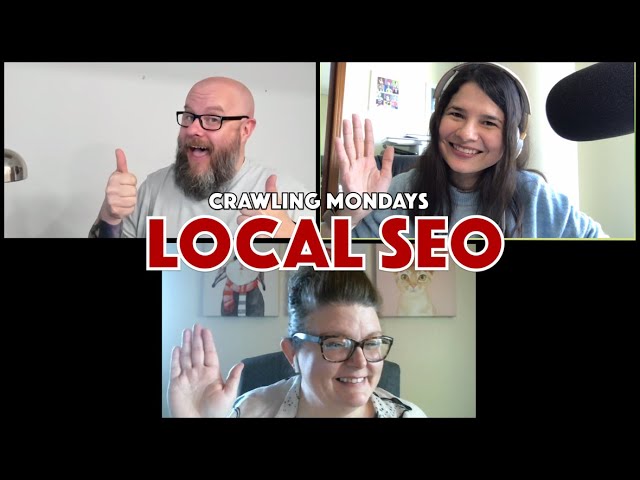
In this episode of Crawling Mondays, host Aleyda Solis interviews local‑search experts Greg Gifford (VP of Search at Searchlove) and Cary Hill (Local Search Analyst at Local University). The conversation maps out the core components of local SEO, starting with the classic “triangle” of Google My Business (GMB), reviews, and a well‑optimized website, and expands it into a “square” that adds content and link‑building as distinct pillars. They discuss practical ways to generate authentic reviews—primarily by simply asking customers and using platforms like GatherUp—while emphasizing timing and tone. The panel reviews their go‑to toolset, highlighting PlaceScout as indispensable, alongside Whitespark, BrightLocal, SEMrush, Ahrefs, Sitebulb, and others for rank tracking, citation management, and technical audits. Common audit failures are identified: missing city or service terms on the site, incomplete GMB profiles, and lack of structured location signals. For link building, they stress community‑based outreach, sponsorships, and leveraging existing local activities rather than traditional PR campaigns. Measurement tactics include call‑tracking, UTM tagging of GMB website links, monitoring branded search in Search Console, and manual screenshot comparisons. Spam and fake listings are flagged as a persistent problem, with spammers creating exact‑match‑keyword names and PO‑box listings at scale; the experts describe reporting processes and the challenges of department‑listing bugs for industries like car dealerships. The episode closes with actionable takeaways: put the business name and purpose on every page, be persistent and seek community help, fully optimize GMB (categories, photos, Q&A, posts, UTM), and ensure website copy is uniquely tailored to the business and location.
Chapters
Welcome to a new and very special edition, the local SEO edition of Crawling Mondays with 2 of the top SEO specialists out there about this topic. So I am super excited because I also haven't done much of local SEO in the last years. So I am actually very looking forward to also learn in today's episode. So on one hand, I have Greg Gifford.
Hi.
who's the VP of Search at Searchlove. On the other hand, I have Cary Hill, who is a local search analyst and CM at Local University. Hello, hello, how are you?
Hey, happy to be here. I'm awesome. I'm excited to not be just in my office by myself and talking to people.
Well, this is a great opportunity to do that, for sure, for sure. Well, thank you very much for joining me today, and the first question that I can imagine that you tend to get asked a lot too. I dislike the term ranking factors in general, right? But if I have to ask you what are the most top, most fundamental type of configurations, areas, aspects that any local business needs to do in order to have a reasonable, good type of rankings in local search, which would you say these are?
At the moment, meta keywords.
Well, I'm sure that I haven't done SEO for for a while, but really, and we're done.
Yeah, best episode ever.
So I think it's a triangle actually. If you if you really think about it, it's it's a little bit of well, it's Google My Business. And making sure that your profile is as filled out as you could possibly get it with as many products, services, your hours, you know, get it as updated, great photos. All of those pieces really need to work together. You have to get reviews. I think reviews is a huge part of local search. And if you're— you don't— you aren't actively cultivating reviews, and not just at Google, at other third-party sites as well, you're really kind of missing the boat on local search. And the third part of my triangle is website. If you have a good, really good GMB, you're cultivating good reviews, and you've got a well-structured optimized website for what you do and where you do it, you've really got kind of the trifecta, the good triangle to build the foundation of a good local search opportunity. But I think those are like the 3 big parts. For me.
You know what's really funny is you started right off by saying, I think of it as a triangle, and I'm like, oh my gosh, they talk about it the same way we do, but our triangle is different. So we count, we count reviews as part of GMB. So one side of the triangle is GMB, one side of the triangle is content, and the other side is link building.
Sure.
Because for us, yeah, I mean, because for us, we stress link building a lot because I think in local And I've done presentations about this a lot, that local link building is so different than what you kind of conceive of traditional link building to be. So you go to the sessions at conferences about traditional link building and it's about making some piece of content and going to PR and getting mentions in Huffington Post and all these massive things where it's really about agencies going, look, we had a $5 million budget and we got a bunch of links. That's not really sustainable in the real world. And you know how, I mean, Carrie, you know how it is in local SEO. It's super easy to get links if you're involved in the community and it's just a completely different scale and different tactics. So that's why whenever we're talking about it, either out at conferences or on our blog or talking to potential clients, we really want to stress the link building side of things because it's so important.
And I think your triangle is probably a bit more accurate than mine. I like to think of reviews as a side because I don't look at just Google reviews. I think that reviews need to be a little bit more spread out for your brand image. But I mean, I would totally agree with that triangle as well. I don't think that one's better than the other, but links are uber important for sure.
We make it a square because I like the separation of reviews because reviews have— well, because reviews have become so much more important in the last couple of years and so much more weighted that I like pulling that out separately too. Smart.
Interesting. So speaking about reviews, you optimize your presence directly in Google My Business, you have access to do that, relevant description, titles, etc. But the reviews, this needs to be earned from your customers, right? Which would you say are your top recommendations to increase the reviews in a way that is also natural, not manipulative, and that tends to work well at scale? Because this is the other challenge that businesses tend to have, right?
Well, you just have to ask for them. I mean, I think that's the biggest mistake that most businesses make is they just don't ask for reviews. And human nature is if you have a bad experience, you're pretty motivated to go leave a review and say, hey, this guy sucks and here's why. And if you have a great experience, you're happy and you had a great experience, but your first thought isn't, oh, I need to go leave a review and tell everybody how awesome this place was. But if you're happy and they say, hey, you know, you're obviously really happy about your experience with us, would you mind leaving us a review? At that point, you almost feel obligated. And so you have to overcome that kind of bias towards, I'm only gonna leave a review for a bad situation, by just asking everybody.
Right, and I think unless you're a sole proprietor, like you are your own thing, you only do things for yourself, You really have to have a system in place for your employees, for your technicians. Like, this is how we work that ask into our business process. And I'm a really big fan of GatherUp. That's no secret. I think if you're gonna, if you're gonna go for reviews and build this into your process, you need to have a platform that supports you. And I think they're great. GatherUp. Yeah, gatherup.com. That's Aaron Wyke, Mike Blumenthal. And what I like about that, about their approach, and I parrot this a lot, is it's more of a listening and feedback system than generating reviews. They don't really just go after, hey, you need all these stars. That's not the point. And I think that that helps business owners build it into their process so that that ask becomes a part of how they do business. And, and then crafting the ask, the right ways and the wrong ways and the right time to ask. is really important as well. Like, when should I ask for a review? When we're all done? You know, at the end of it? Do I use the review ask as a way to continue our relationship and cultivate that back and forth? Which I think is a great plan because beyond the transaction, if a consumer feels like the company cares about them after they've paid for the thing, that's building that relationship that can just grow into word-of-mouth referrals, future business, you know, all of those pieces that come together. And that is so important to a local business. If you are a local business and you have a bad reputation, you might as well just close up shop. Yeah, like, because people are going to talk about it. They're going to talk about your bad reputation locally.
Well, that's really, that's really important for sure, how reviews at the end of the day are connected with the quality of your service and the reputation that you end up getting because of that. Another question, right? You mentioned a platform to gather reviews. What are the top tools you will consider to be the must-use at this point? I remember when I was many, many, many years ago and still a local SEO, right? WhiteSpark was already there and was super useful. RightLocal too, I used to love it. Are these still the top tools to use? Which other tools would you recommend that you find super useful and not necessarily that popular?
You know, the one that I just can't live without, that I'm always surprised when I'm asked this question that most people out there in local don't use it or haven't heard of it, is Place Scout. Place Scout is awesome. And we just, you know, I've been using Place Scout for years and we just, we can't live without it. Like, that's my one, like, if I had to pick one tool that I had to have, that would probably be it. But yeah, Whitespark's still awesome. Whitespark's got a really cool local rank tracker. We actually use Stat for our rank tracker because there's a lot of features that it has that Whitespark doesn't. But Whitespark's tool is really— I mean, they've been doing some cool stuff with it and just the visual way that you can see your position, it's really, it's a cool tool. And then yeah, BrightLocal is still awesome. Love using them. Those are really kind of our Our top 3 really kind of go-to, like we have to have these tools on almost a daily basis.
Yeah, I would add in like, because I kind of look at things on a more technical side than a lot of local SEOs, so I use a lot of Ahrefs or Sitebulb as well. I think, you know, just from a how are things structured, how are things related within the website kind of viewpoint, I like those as well. But we're big Placescout fans. We use those every day. We use it every day at Sterling Sky. And yeah, for sure, Whitespark. And I think that when we talk about tools for local search, it really helps— the companies that seem to float to the top are the ones that had local in mind from the start.
Yeah.
The ones that just kind of tried to add, oh, and you can do this local thing, they're okay. But the ones that really thought about local as they built their platform— Whitespark, BrightLocal, They are way better, Place Scout, way better right now than the other tools that might have a local component.
Yeah, 100%. I think that this happens a lot, right? Nowadays, when tools tend to grow in general, they try to provide a little bit of all types of functionalities, but then you tend to stick to those that you know that they were born with this in mind and had a core. feature that you can rely on and is in general much more mature, right? Yes, Greg.
Well, it's not necessarily a local SEO tool, but we like SEMrush a lot. There's a lot of stuff that we do with SEMrush for competitive intelligence and initial audit and keyword research. So it's not a tool that we would use on an account all the time, but it's definitely one of our go-to tools when we onboard a client. It's an absolute necessity when we're onboarding a client. There's a lot of information that we can get there that you can get from other tools, but just the way that it's structured between auditing the site, doing keyword research and competitive intelligence, it's just really easy to pop in there and get all that from one tool really quickly.
Moving forward with what you actually find when you do the analysis, the audits, when you start digging into what's the optimisation status of websites, which are the most common errors, issues, problems that you tend to find again and again and again in most of the websites that you analyze?
Lack of optimization, just in general.
They don't actually put where they do business on their website anywhere.
They literally do not mention the city that they're in anywhere on their website. When we're at conferences together and I'm always talking about here's how to optimize for local, I still go back to Include your location phrase in your title tag and your H1 and your content and your meta description and your URL and your alt text and all these places. At Sterling Sky, we work with a lot of smaller businesses, and so we'll get in with a business that, they may have had a website for 5 or 6 years, but they've never done SEO. And sometimes they'll be like, I don't understand why I don't show up for this phrase. And you look at their site, they don't even mention that phrase on their site. And like Carrie said a minute ago, they don't even have that content on their site. At all. So it's a basic, you know, error, but it's just omission. It's just we don't have location anywhere on our site and we don't have content that needs to be there to show up for the phrases we need to show for. I think by far that's the biggest. And then I think second biggest is probably just errors on GMB, just not optimizing GMB well and not having the right information there.
Okay.
Yeah, I would agree with that. I think that there's like a— there's the enterprise local And they kind of have their own box because they've got budget. And so they've been looking at, at marketing and search for a long time. And those are not like Greg said, we don't deal with that side of things. We deal with mom and pop businesses in a lot of cases, started from the ground up, probably in their dining room table. You know, they've got an office or a couple offices now, their nephew built their website. 4 years ago, and they're like, we need more leads to grow our business. And it's not because they're dumb or got bad advice. For the most part, it's just they have been busy running their business, not marketing. And so we have to come in and fix all of these things and clean things up. A lot of cleanup, a lot of content reorganization, a lot of new content writing. I think that, you know, when they're not—
In their own website directly, not, not only in GMB, right? Because there's a lot of people when they think about local SEO, they think it's like everything happens directly in the GMB profile and you optimize all there, the photos are there, the comments, description, everything is there. But no, all this should be tied also with the usual traditional SEO work that you will do on their own websites, right?
You can make a business rank without a website. Like you could use their Google My Business and maybe use the Google website that comes from Google My Business and if it's not a high competition area and a high competition, you know, niche, then you can make them show up without a website. But that's kind of a utopia we don't live in. Like, who doesn't have competition in their area, right? So I think that, you know, that organic component is the piece. And you're right, people don't think that, oh, you mean I need to do all this stuff on my website too? They just think we're going to be messing around in their Google My Business and that's it.
Interesting. Well, I want to cover also an aspect that for me again is in general also in SEO, traditional SEO, is I have to say some of the most complex activities that we might end up doing. Link building, although indeed it's a different type of link building in this case. And you mentioned, Greg, before how different in nature this link building was because it was very focus on the local aspect of the community, of your customers, small shops type of customers. What would you say are the top mistakes that you see in those regards and easy ways to start building links as local businesses?
Well, I mean, by far the biggest mistake again is just omission. Because again, with the types of businesses that we deal with, and again, I think Carrie kind of works in the same kind of area as we do as far as size of business, I think these people just don't even understand that link building is out there. They don't even know what it is. They think, I can do my GMB and I can have a little website and cool, I should show up in Google. And they don't understand all of the other aspects, so they've just never done link building. Maybe they've gotten a few links just naturally off of the things that they've done, but they're just not actively thinking, I need to get links to my site. And so I think that's the biggest problem. And then the people that do know that they need to get links are out reading blog posts or watching videos about link building. And it's the traditional link building like I mentioned earlier. And it's like, you got to go create this piece of content and use a PR firm and do all this. And it's just so overwhelming where in reality, you know, being involved in the community and doing things in the community makes it super easy to get links. You know, we do a lot of stuff. You know, we kind of— our core 3 for us is car dealerships, jewelers, and attorneys. And so not as much the jewelers, but the car dealerships and attorneys tend to already be involved in the community and already be fairly philanthropic. And so for us, a lot of times it's, it's not, hey, you need to start doing link building. It's look at all these things that you're already doing in the community. These are all opportunities to get links. We just need to add that extra question of, hey, I just sponsored your Little League team. Can I get a link on your site? Or hey, I just did this thing. Can we get a link from that? So a lot of businesses are already doing the things that they need to do to be able to get links. They just don't understand that link building is a necessity and they don't know to ask that extra question of, hey, as part of this partnership or this thing that I'm doing with you, can I get a link on your site?
Or they have passion projects in their private life away from their business, like they volunteer at the animal shelter or they, you know, do tutoring, law book tutoring or something like that for literacy. And if they could just take that extra step and tie that into their brand and get that brand recognition, they're already doing it. They already have a passion for that work they're doing. If they can tie that into a sponsorship and get a link from it, that's great. And we've even seen unstructured, like no link, but those brand mentions have powerful impact as well because, you know, Google is the new phone book, right? So people are searching brands all the time in Google. And what comes up is your new homepage. Misty's Coffee Shop is the little joint down the street. Her phone number, because I need to call and see what her hours are today or whatever. But her job as a business owner is to make sure that everything I see on that page is good. And if that's a mention in the newspaper or on a local blog or in a magazine or a good review profile at Yelp, or super pages or wherever, whatever happens to be ranking for her brand name, she's responsible for making sure that that best foot is put forward. We do a lot of that brand optimization because a lot of people Google brands, their local brands. Hey, how do I get ahold of you?
I was just gonna say, that's another thing that I didn't think to mention earlier too, is not necessarily a mistake, but a wrong way of thinking that a lot of business owners have is they just assume that They really just need to worry about their website because if you need your— if you need to call them, you're going to go to the website to call them. Or if you need directions, you're going to go to the website to get the address. Or if you've got a question to ask, go to the website and look for an FAQ page. But, you know, she mentioned the phrase your new homepage. That's something that Mike Blumenthal coined a bit back, that Google My Business is your new homepage because there's such a wealth of information available in Google My Business now. If I need a phone number, I don't have to go to your website anymore. If I need your address, I don't have to go to your website. If I want to look at pictures of your business, I don't have to go to your website. If I want to read frequently asked questions, I don't have to go to your website. I want to read testimonials, I don't have to go to your website. So you've got to make sure that you have a really robust, well-optimized Google My Business profile. And like Carrie said, make sure that all those other things that show up when you search for your brand are well optimized and have the right information, because it's really likely, depending on the business, but for a lot of businesses, you won't have to go to that business's website anymore.
One question regarding that, because I do think that that is critical to understand, that if at the end, for example, it's not a click for the website, it's not traffic that you refer to the website, but it's a user that ends up being influenced by the type of information that they are seeing about your business in the Google My Business presence, right? How do you measure that? How do you communicate or are able to track that influence of your job? Because that is also part of the influence and results of your job with your clients.
Call tracking. I think it's critical, honestly, and using your call tracking in your Google My Business listing, I think, is a huge piece of how we justify the business impact we can have. I also think you have to really watch your branded search and your Search Console account to watch increases in that and try and align that with conversions if you can. But yeah, a lot of people are just going to make a phone call from, from that query. And so if you're not using call tracking in your Google My Business, you're missing out on a lot of information and Google My Business Insights, I'm sorry, it's crap. It's not very accurate and it's really hard to base anything measurable on what they tell you in their insights section.
And we also add UTM tracking to the website link in Google My Business because analytics attribution is broken a lot of the times, especially with clicks that go to your Google My Business website link from mobile devices. A lot of times get reported as direct traffic in analytics. So if you use UTM codes, And there's, there's debate. Some people say you still call it source and medium of Google and organic and then add a campaign to say Google My Business. We like to make the source Google My Business and the medium organic. So it still shows in the organic channel, but when you're looking at the various sources of referral traffic, you can separate, this was a click that came from Google organic, or this is a click that came from Google My Business, whether it was a brand search and they see your knowledge panel, or whether it's a click in a map pack or a click in Google Maps. And for a lot of clients, we've done that where we've come in and they weren't previously doing that, and we make that change and add that UTM tracking, and it looks like they sometimes have like a 20% lift in organic traffic immediately. And it's not really that that changed their organic visibility, it's that there was 20% of their traffic getting reported incorrectly in the past.
Mm-hmm.
So that's another really big way that you want to make sure that You want to take credit for everything that you're doing for your client. So make sure you're getting credit for all those organic clicks and make sure you're getting that phone tracking number in there.
Well, and I think, you know, using your brain and good old-fashioned screenshots is amazing. Like, you know, when we onboard a client, first thing we do, branded search, screenshot what shows up on that whole page, the whole page. And that gets compared over time. You know, what are we bringing onto this page? What are we moving off of this page? Are you getting the reviews pulled into your Google My Business listing? How do your photos look for your products? You know, are you taking advantage of the new attributes that are available? And are they showing up in your panel? Like all those little changes that improve your visibility and not only improve your traffic, but, you know, improve the way the sentiment associated with your business, right?
Right.
And I think sentiment in local business is a huge factor that's not really measurable. It's not something you can say, oh, your sentiment value is 6.5. You know, like, what is that? You know, but I think that it helps. Every little piece that you can improve for that branded search helps. And branded search is huge in local search. You can't like, yeah, we want to separate it for sure, but you can't say, oh, that's branded. Like, that's— you can't dismiss it.
Well, I love that you covered that point because realistically, sometimes when I think about local search too, and I have to say, you see that from time to time you see those articles about crazy stuff that you see in local search still, right? And then for me it's like taking a little bit of a time machine and going back to the early 2000s because you still see sometimes GMB entries naming their shops with the exact match keyword like best SEO company.
Well, that's the elephant in the room. Right? Spam. Spam is hideous in local search. It's really bad. I would say that's, you know, if we went— what's a 5-sided polygon? Like, from a square to a polygon. Spam's like a really important piece of what we do. We report a ton of spam just because, like, if we look at a client's competitor profile in Maps, a lot of times, especially for lawyers like PI lawyers and stuff like that, a lot of it's And so if we can take 5 spammy listings out of contention, our client just went from, you know, 7 to 2.
How hard is it nowadays, for example, to create a fake listing with a PO box or something like that? It's like, it's still easy.
Spammers do it at scale. They do them 1,000 at a time. I mean, it's, it's not hard. It's not hard. Google does not make it hard. Let's put the blame where the blame belongs. They don't— they haven't done anything with it because they consider it a 1% problem. It doesn't impact a global number of people. And so they don't put very much monetary effort towards stopping them before they start. So now they rely on us to do their job and report all this spam and gather all the proof and show them, hey, this is not a real business, and then they'll nuke it. But they just nuke that one thing and the spammers come around behind you and develop— the next day they make a new one.
Yeah, the spammers— for the spammers, it's worth it to just sit there and be on that hamster wheel and just keep churning out fake listings because as quickly as we get them taken down, they get new ones put up. So in certain verticals, it's just— it's tough. I mean, we've got a client in Chicago that does auto insurance and it's just All spam. Like, there's probably 5 legitimate results in the top 100 results that show up on the Local Finder page or on Maps, and everything else is spam. And you fight it all day long, but new ones just keep appearing. It's, it's frustrating a lot of times.
It is really. And then there's, there's like 2 categories, right? There's the nasty spammers that, that put fake listings up, but it's all lead gen, right? They just want you to call that phone number on the listing because they're selling that lead to somebody. And they'll do it for drug rehab, they'll do it for anything, they don't care. And then there's the people who just maybe don't understand Google's rules.
Yeah.
And they put that exact match keyword in their, in their name, which is against the terms of service. If it's not your business name, it's not supposed to be there. And so we do some reporting of those as well, just from a, hey, let's level the playing field, play by the rules here. And that's not an effort to get them taken down, it's just an effort to You know, we're following the rules, our clients using their exact business name, you should be using yours as well because Google has made that a factor. Google lets those exact match keywords influence where they rank and so people do it.
And then the business changes their name to Best Lawyer in Central Chicago or something like that.
Well, that's actually a strategy instead of just law office. Office of, it's, you know, so-and-so personal injury and accident lawyer. And that's a strategy to change a business name. If it's going to be a factor in where you rank, people are going to do it. And Google has the power to say this is not a factor anymore and turn the dial down on that. They won't do it.
Indeed, it's a little bit like a parallel universe déjà vu from traditional search, indeed. But yeah, the level of sophistication of The algorithm and the type of filters that are applied are not yet quite there, isn't it?
Well, and then there's other problems too. Like they've made a lot of updates in the last year or so specifically for car dealerships, things that car dealerships can do in Google My Business that other businesses can't, kind of like hotels can do things that other businesses can't. And one of the things they did for car dealerships is they rolled out department listings, kind of like big box stores. So you can have, instead of just one listing for the dealership, you can have a listing for the dealership, then you can have a listing for your service department and parts department. And if you sell different brands, like most Chrysler dealerships are Chrysler, Dodge, Jeep, Ram, so now they can have a Chrysler listing, a Dodge Jeep, a Dodge listing, a Jeep listing, and a Ram listing. So they can have 5, 6 departments underneath the main listing that get nested. So when you're on the main listing, it lists here's all the departments. If you're on one of the departments, it says located inside of the main listing. And that's a really cool feature that they rolled out, and it's actually beneficial because for car dealerships, each department has different hours. And in the past, you had one listing, so the hours were never correct. So it was a big problem. But then there's a bug in the system now where you can Google the exact name of a dealership and one of their department listings shows up instead of the main listing. And Google is pointing the finger at local search, the local algorithm, saying, hey, it's, it's a GMB problem. And GMB is saying it's not our problem, it's Google Search problem. So Google can't even fix it. And then, uh, you know, Joy was talking to Danny Sullivan about it and he said, oh yeah, thanks for the evidence you sent. We made an update that fixed all these. It's not happening anymore, but it still happens all the time. In fact, I just pointed it out to him the other day that here's another dealership, and sometimes it has to do with the way things are named. And I did a video about how to fix it, but this one followed all the instructions and is doing everything right, and their service listing still shows up instead. And Google's kind of like, meh, I don't know, but it's really hurting that business.
So things like that are really unfortunate. Yeah, it's a 1%, like less than 1%, a fraction of a percent problem from Google. And so they don't want to put any effort towards it. But it's hugely impactful for the individual business. And local is a huge problem with that.
finish today's episode, what you will say which will be the top tip that you want to leave, something potentially overlooked, something that you think that businesses are not paying enough attention to, or that you would like to share with the audience as a last message?
Put who you are and what you do on every page of your website. That's my number one tip because it's not there. I guarantee you I could look at 15 websites right now And 1 or 2 might have it on every page, maybe a small percentage. That's my number 1 tip. My number 2 tip is to be persistent. And if you get stuck, ask for help. The Local Search Community, we're very open, we're educators, and we want to share the information. So you can go to the Local Search Forums. The Local U Forums are a premium forum within the Local Search Forums. If you have privacy-sensitive information, you can join there and, and we can help you there. The Google My Business forums will help you escalate or find answers to things. Tweet us. You know, there's a lot of different ways to get educated if you're stuck in local search. We're not closed-mouthed and we don't do that. Well, I'll send you an invoice and give me—
Yeah.
Then I'll solve your problem kind of thing. There's a lot of ways to find information. You have to be persistent and go search for it.
So mine would be, I have 2 things as well. First, optimize the hell out of Google My Business, like everything that you can possibly do in Google My Business, do it. Now that doesn't mean, you know, you've got 10 categories you can fill out. It doesn't mean throw 10 categories just to have 10. Obviously, only pick the categories that matter, but have the right categories, have the right phone number, put your UTM tracking in, preload questions into Q&A and answer them, have awesome photos, use Google Posts, do everything you can Like Carrie said, to put your best foot out there for the best first impression because that's your new homepage. Second one, again, like, kind of piggybacks off her thing about content. Most website content out there for local businesses is really boilerplate and generic. So the 2 tips that I have about content that I always tell people is, A, read your content out loud. Does it sound conversational? Because most of the time it doesn't. You're writing and trying to stuff keywords. So Everything on your site should sound like something that you would say to a customer that walked in the front door. So if you read it out loud, you can hear those things. And then the second one is a test that we use. Take your About Us content or your homepage content or your product or service content, change the name of your business, change the city name if it appears, and would that content work on a similar business's website, on a website that's across the country that you're not even competing with? So, you know, you're in Dallas, Could I change the name of the business and the website and change it to Denver, or the name of the business and the city, and change it to Denver and a business in Denver? Does that content still work? If it does, then it doesn't have what she was just talking about, that about you and what you do and why you're awesome. So your content should only work on your site, even if you change your business name and city. So those are like kind of my most important big things that we fight for.
Love it. That is amazing. So thank you. Thank you very much to both of you. It has been wonderful. Thank you for your advice, the actionable tips. I think that many of the people who are watching will be much more clear of where they should start, what should be prioritized. But in case you have any questions or any doubts, please leave your comments below, leave your questions below. I'll make sure to follow up also with Greg and Carrie so they can answer any question here and within YouTube in the video on one hand. And then on the other hand, of course, if— You liked the video, remember, like the video, subscribe to the channel. There will be more awesome interviews. And please follow Greg, follow Kari. As you, as you have seen, they are amazing. Thank you very much again for your time, and until the next Crawling Mondays.
Bye-bye.
Crawling Mondays.
More from Aleyda



How to Communicate and Sell AI Search Optimization (GEO, AEO, LLMO) to Decision Makers



AI Search Optimization (GEO, AEO): What is it, Common Errors & How to Optimize AI for Success



OpenAI has introduced shopping research in ChatGPT - #SEOFOMO TL;DR December 1st, 2025

OpenAI announces Instant Checkout and the Agentic Commerce Protocol - #SEOFOMO TL;DR Oct 6, 2025

Google's August 2025 Spam Update Finished Rolling Out - #SEOFOMO TL;DR September 29, 2025