How to Increase your Link Building Campaigns Outreach Emails Open Rates & Success
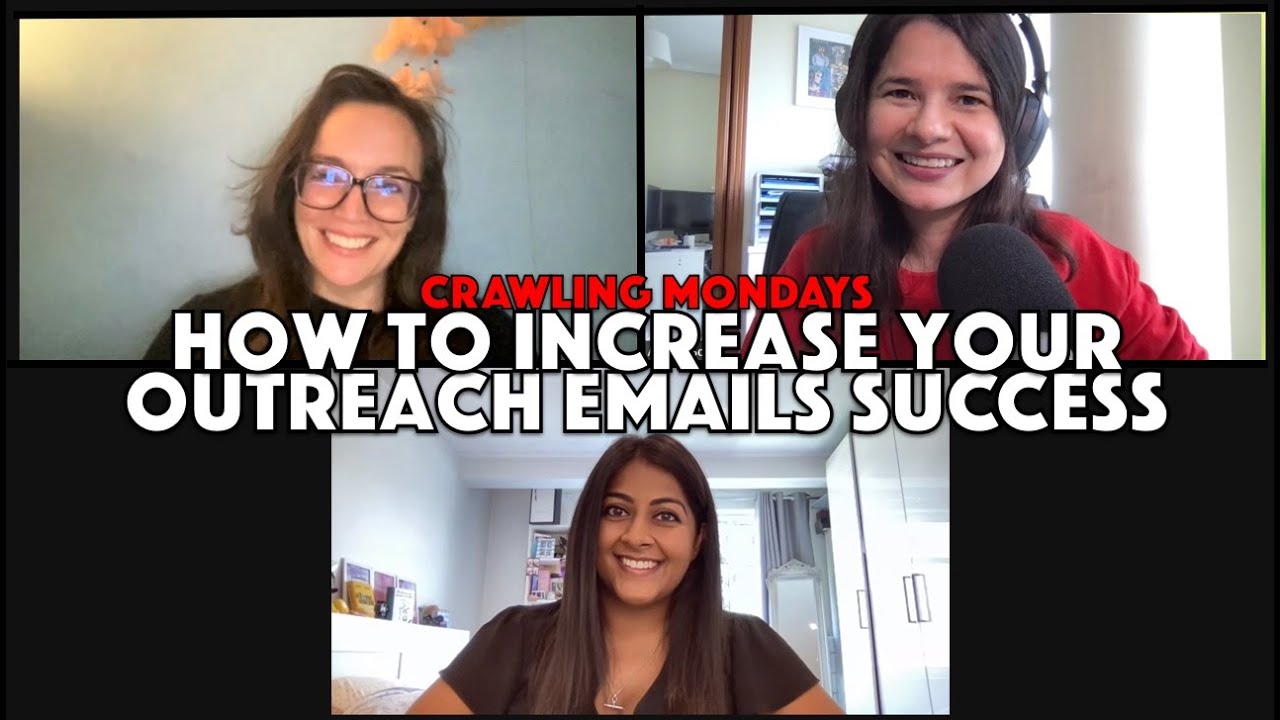
Aleyda Solis, Serena Chanda, and Bibi discuss why outreach emails fail and how to fix them. Subject lines should be 10-12 words with a clear story, not clickbait. Win rate matters most, and deep prospecting beats spray-and-pray tactics. BuzzStream and PitchBox help track metrics and A/B test.
Chapters
Welcome to a new edition of ProLink Mondays dedicated to a hard topic. How do you make your outreach emails to get open all the time? Well, not all the time, most of the time, hopefully. And today to tackle this particular challenge in link building processes, I have invited 2 people who are highly experienced specialists in this area. On one hand, I have Sarena Chanda. She's a freelance copywriter, but also a link builder in disguise. And on the other hand, I have Bibi, the link builder. She's the founder of Bibi Boss. Thank you very much for joining me today. Outreach emails that are sent like in thousands sometimes, and that we tend to get all the time. Every website owner, right? Like even ourselves with our own blogs. We get them and we don't necessarily open them, or if we open them, most of the time is to delete them and say, oh, it goes to spam, right? So what are the main challenges that you see in this area and what is realistic to expect on this type of campaign?
So I would say generally, like one of the main mistakes that people make is I've— the link building I've done is to like news publications. And you're pitching journalists every single day. While you— but the sort of problem is you can get caught up not thinking like a journalist at all. So you're just thinking, I have this campaign, I want coverage, I think this is interesting, so I'm going to send this pitch out. The problem is, is when you're not thinking like a journalist, you're not necessarily going to tick all their boxes. So what we may think is a really cool idea and a really fun campaign and a great angle, a journalist might— they might not find it interesting in the slightest, or even if they do, as a former journalist, I was measured on views. So my main KPI was get 1.2 million views a month for my stories. And if I'm getting a story that a few people might think, oh yeah, that's cool, okay, this is the happiest town in Britain, that's nice, it's not going to be enough to push me as a journalist to be like, okay, I need to take this hour out of my day to write this story up, put it together, put the images together, get the quotes, and put that out to my audience? Because if it's only going to cause a little blip in the publication's analytics, that's absolutely pointless. And the other issue, which you pretty much highlighted when you were talking about it, is prospecting. Poor prospecting is so damaging. One, because you're going to annoy potential prospects who could be good for future campaigns because you've already annoyed them by constantly pitching them sort of useless campaigns for them. And the other thing is like you could be missing out on fantastic coverage opportunities because you're not focusing on the right people and taking the time to do that research. The whole spray and pray approach where you just think, you know, if I get it out to 1,000 people, it's fine, at least it will land with a few. Whereas if you take the time to understand the people that you're pitching properly and you take the time to fully understand the sector, the way they write, what sort of stories they cover, the subjects and everything, then you're more likely to build better campaigns and better pitch emails in my opinion. So I think those are the main mistakes I see.
In terms of metrics of success, what do you often see?
I think you usually see like it's open rates, you know. We do look at that and we look at the amount of times a journalist will look at our email as soon as we send it out. And Obviously, the higher the number, the better. But even if you've got, say, 30% open rate, those people who have opened it end up writing up the story. It shows that you've targeted well in one part, and you just need to look over the other load of prospects and start working with that and looking for better people to email potentially. Or A/B testing subject lines. So making sure that you're all— you're not getting complacent. You don't think, right, the first subject line I sent out was perfect. Let's see. And then you get open rates and you're like, okay, well, this had like a 10% open rate. This is awful. Don't feel like the campaign's a flop. Play with the subject line. Play with the intro. Play with the like data that you're giving or the angle entirely. Like I think those are the main things to sort of keep an eye on in terms of success and metrics really.
I think Soena said things that are super important. So the quality of prospecting and the quality of your pitch. But when I think about metrics, it's actually like 4 metrics. Sometimes you can make a newbie mistake by not looking at your deliverability. So a person can think, oh, the campaign is a flop and they completely didn't check their deliverability. I've done that where I was like, oh, nobody's replying to my pitch. But yeah, the emails weren't getting there. The other one is the open rates and then there's the response rate and then there's the win rate. So like Serena also said, if nobody's opening your email, it could be email deliverability, but it could also be the subject line. So when nobody's opening it, you look at the subject line. When nobody's responding to it, you look at the pitch. And when you don't get your links out of it, you look at the campaign as a whole. So every metric counts for different parts of the campaign. But if I had to choose one metric, it's win rate. Because I've had campaigns where I had 80% open and there are no links coming out of it, you know? So that's, that's to me is an unsuccessful campaign.
Of course, because at the end of the day, if the outreach is done for link building purposes, what you actually want will be that link placed in a very relevant authoritative website. And indeed what you mentioned regarding campaigns that are not open at all. Okay. It's really the subject line. Something is definitely not working well. But then it can be even worse when it is actually like not following up after the first response.
Yeah.
Because that means that, well, even if they took the initial time to answer that first email, something was off later on in the process, right? So to start like with all of these ideas of things that can go wrong, that can end up damaging those KPIs and those goals, let's talk about the top errors you see that affect these steps in the outreach process, especially those that hurt the first step, right? How do you make people open your email in the first place? For me, even as a person who sends newsletters every week, newsletter software, they will say, add a favicon to your subject line or something catchy, or don't make it too long because people won't see it in the previews, to try to recommend you to build something attractive or catchy. What have you seen that really ends up damaging because of this sort of automated recommendations?
I think the key one is subject lines. And I say this over and over again, like a poor subject line, you could, you could have spent tens of thousands of dollars or pounds on a campaign, a poor subject line will make or break that. So there's 10 to 12 words and they have so much power. And I always advise like 10 to 12 words max because a journalist is quickly skimming through an inbox that is piling up by the minute. And I think if you're not going to get to the point of the story quickly, and you're not going to tell them the gist of what they're going to expect in there from those 10 to 12 lines, you could have immediately blown it. And then as soon as you get to your like intro and stuff, that's where you can really dig into things. But those 10 to 12 words are crucial. And the other thing, if you're going to try and clickbait a journalist, That's not really going to work. They can clickbait their readers all they want, but they're time poor. If you're not including the crux of the story within that, you're going to lose their interest very quickly if they have to dig for anything. So that's one of the main mistakes I see people making. And then within that, you go to the first line of the email. And if it's something like, hi, how are you? I hope you're having a lovely day. The weather's nice. This and that. They don't have the patience or time. Get to the point, because it's not that we're mean and we're miserable. It's just that we've got an editor breathing down our neck to get those 8 to 10 stories out per day. If we're having to dig for the story, then it's going to make things stressful and harder for us. And we know that PRs have the best intentions at heart or link builders. It's just, it's better to just get to the point as quickly as possible.
And I think another thing about being very precise in your subject line is that you filter out the people who aren't interested. So that's, you think always with subject line, you need people to open it, but you also need to filter out people. Because if you aren't clear in your subject line and the wrong person opens it and they just hate your email, they might flag you as spam and that messes up your whole campaign. So that's something that we also do. So I'm on the other side. I reach more out to bloggers and editors of websites. And there they often do like to be charmed into things. So I might open up with a joke or actually a charming intro. But it does have to sound authentic. You can't be like, oh, I'm such a fan of your blog, blah, blah, blah, because that's everything they heard. So I always tell my link builders to pitch like a copywriter because all the blog owner or editor cares about is their content, right? So if you can prove that you have quality content to pitch, whether that's a linkable asset or a guest post, that needs to be the center of your email. But as far as subject lines goes, Editors get outreach a lot. So one of the first things I want to do is make the subject line jump out, but without it being clickbait, it's a way to disrupt their brain. So whatever all the other link builders are doing, you shouldn't be doing that. So if you've seen templates around, just don't do that.
Or, you know what, realistically, one of the things that I dislike the most from the business owner's side of things with Remoters, right? That we get tons of pitches for guest posts, for example, a typical tactic, that I so dislike to get is like, if the email was an answer of something that I had previously sent, the RE whatever, it's like, oh, I know very well that I had never sent you an email.
Don't try.
And then the actual email content is like, I would like to follow up about our conversation. What do you say based on your experience? Are these types of tactics actually pay out at some point.
We see so many like sneaky, like not great link building tactics where it's like, please open this email or like, yeah, RE like you said. And I think that obviously is going to annoy a journalist or editor of a blog or whatever, because you're trying to undermine them. But I think, Bibi, you probably had a similar experience where like a lot of magic happens with follow-ups like that one nut. Yeah, and suddenly they're like, oh right, okay, yeah, the story's done, written up, and you're like, wow, if I hadn't sent that. Yeah, but then keep it to 1 or 2, like please don't—
Yeah, you should spend as much time on your follow-ups as you do on your first email. So your follow-ups need to be good as well.
Yeah, 100%, and you need to be making it so quick and snappy for them, just like, this is the best bits and my highlight reel from my first email. So Yeah.
But what would you say are the most common of these sort of like don'ts that you see around that you will advise against to the people who are new doing it?
One really funny one that I heard at the beginning of the pandemic, and it's something that I've never understood why PRs do, is all capitals in the subject line. And the journalist was saying like, look, we're just at the beginning of pandemic and we've got these shouty capital letters in our inbox and we're already quite stressed out. So please don't shout at us in our inbox. Another one I would say is just like really tacky gimmicky type things like, this email is going to change your life, or if you don't open this, you know, you're missing out on something huge. Things like that. The sort of things that you wouldn't find cool in a normal conversation either. I just think don't try and trick editors and journalists.
You just reminded me of one that I got. I get pitches all the time to try to place links on my blog posts or whatever. Sometimes like, we want to work with you. Or something like that. And because you're a consultant, you will tend to open because people do get in touch with you to work and to hire you. But then you realize it's a pitch. It's like, why do you make me waste my time going to spam?
Yeah, that's also so important. I always tell people when I give feedback on their emails, right? I tell, don't beg, don't pressure, don't lie.
Let's focus the conversation on the good side. What would you say are the building blocks on getting your outreach emails opened? What are the steps that you tend to follow and what you will advise to whoever starts to do this?
I would say really take time. I know people are sick of me talking about it, but take time to craft that subject line because that's the first impression you're gonna make. Some of the best advice I had— I used to work for Verbsearch and my former boss, Alex Kastner, said. And it's something I tell people now and I make them do it on the spot. Your subject line, right? You've run up a hill, you're out of breath, you've got about 2 breaths to just get your story out. You're like, you won't believe what's happened, blah blah blah, this is my campaign. And make them do it. Be like, you've run up a hill, you've got 2 breaths, tell me exactly what your campaign is. Tell me what the main angle and story is. And with that pressure, they're suddenly gonna blurt out the most interesting thing that stuck out to them. So that's a starting point for your subject line. Rewriting it, I used to also be made to rewrite it like 10, 15, 20 times and it's exhausting, but you really have to start getting creative by about the 10th time. So you start thinking of new ways to word it. Sometimes you might pull a stat out that really stuck in your head. That's another thing that really helped. Being concise with your pitch as well. So So, hi blah blah blah, this is my story, this is why I've created the story, this is why I thought this was interesting for you, and this is why we've conducted the research, and then how, and then the strongest angle, and credit any information with a link to whatever the campaign page or the blog post is the way I generally conduct emails. In terms of like imagery, journalists don't tend to have massive inboxes, so try and keep imagery low res. Attach it in like Dropbox or Google Photo Drive links and stuff. It sounds so obvious, but think like a journalist. Look at— you should— half your job is pitching journalists and creating the campaign. The other half should be reading and keeping up to date with how the news agenda is changing and how journalists are like reconsidering the way they cover things or the topics that they cover. Be on social media and see what topics are gaining traction. What's like, you know, what could be a story. Be ahead of the game. Like, yeah, it's great to have these massive campaigns and outreach strategies and stuff, but you should also be being reactive and finding different ways to get your clients in these publications. So even something as simple as, and I always give this example, but journalists are always looking for like wellness articles, like how do you avoid burnout, how do you keep yourself motivated. Pitch your client, get them to just give 5 tips on how they start their day. Like whether it's the like chief marketing officer or the CEO CEO, get them involved in that way. So try and always be agile and like just be thinking like a journalist really. Those are my top tips.
One question, because you speak about also following and being active on social media to identify trends, patterns, and I think that I have heard many times people saying build a relationship with those that you want to build links for you. Does that actually work for you? Do you follow journalists on social media and tag them whatever you have to say? Sporty to cover, or?
It's such a weird one for me because I was a journalist, so I have friends in the industry and stuff. It didn't help me at all. Like, there was a handful of times where I'd reach out and I'd be like, hi, blah blah blah, because we worked together. I'd be like, hi, how have you been? And they're like, hey love, so great to hear from you. Um, oh, this looks perfect for my desk, I'll write it up. There have been times I've pitched like really close friends and it's just not been for them. But what I would say is keep it organic if you do want to build relationships. It hasn't helped me either way when I was in digital PR. If you do want to build that relationship, keep it organic, follow them, interact with their tweets, not with an end goal in mind, but with the fact that you're getting to know them as a person. And if you like their article, retweet it, share it, tell them you think it was amazing because you genuinely think it was. Journalists can see through when you're just trying to, you know, use them. And then yeah, of course, if you've been conversing, your name is going to stick out to them in the inbox a little bit. But unless you've really targeted well, it's going to be useless. They could be the, you know, the loveliest friend, but if your lifestyle campaign is about, I don't know, TV and they only write about films and music, it's going to be hopeless. So it's not an essential and I don't believe in the whole you have to have relationships with journalists, like PRs tend to think. It's a bonus, it's not necessary.
That's a great clarification.
The building relationships thing, I think it can work really well, but it does require a lot of time and effort and it's a tricky It's a tricky path, right? Like you say, I don't think I've ever started a relationship with the intention of getting a link. And sometimes people just come at me and they say, we know you provide quality, can you write an article or whatever? But what I do think is good to switch from relationship to connection. So if you can find a way to make an instant connection with somebody, that could work very well. And that you can do that with cold email. So, Serena, you were talking about prospecting. And this is also my tip for getting your emails opened apart from the subject line is that when you segment your list in very tight topics or niches or interests that people have, then you can theme your email. And when you're, so let's say you're, you're reaching out to lifestyle bloggers, but then you niche them down to a vegan lifestyle or something like that. Then you can theme your subject line, but also your whole email according to what they talk about there. the jargon that they're using, the jokes that they make, the interests that they have. And that way you're still cold emailing, but you're making an instant personal connection or connection with their interest. And I think the same goes for PR journalists or journalists is that you make a connection with their interests, right? Or their beats.
And they appreciate it because you're going that step further.
Yes. It's very much about putting just And it's only 5% more attention and effort than all the other link builders are doing. They're so sucky. You don't have to do— you don't have to be amazing or epic or write your life's biography to them. Just be that little bit more. And yeah, that's already a world's difference.
That's the good part that the base is very low, right? So you will say to set a little bit of more like a rule of thumb. So even like the process, right? You, when you start the outreach process, you will start prospecting and then segmenting to create different groups of type of websites to be able to then get in touch with them in the most personalized way that will better connect with that group of people as much as possible.
Yeah, exactly. So pretend that you're going to a party and they're all accountants, you know, you're gonna have a horrible time if you have no idea what they're talking about. But if you If you Google around and you spend like 30 minutes getting a little bit into the topics, at least you can say something or ask a good question or whatever. And that way you can have your door slightly more open to make a connection with somebody there.
Perfect. So regarding the resources and tools that are useful for you to do all of this from prospecting to segmenting to sending at scale and measuring the click rate and open rates and to be able to track the follow-up through different email exchanges? What tools do you use? What resources would you recommend people who are starting to be able to see what works well? Also, if you do anything for A/B testing the subject lines, for example, or the body messages of the emails, what do you use?
I pretty much found BuzzStream to be one of the key tools. So like that allowed me to A/B A/B test subject lines allowed me to see the open rates. And then I could also make like multiple folders like as Bibi was saying just now where you have like categorized things. So it could be like template 1 for this, template 2 for these sorts of people. And that's something I found really helpful to use.
Yeah.
So I use PitchBox and you can measure all the same stuff. But I have to say that I've done so many projects that, and, and they're all so different. And also on campaign level, the results are so different that I find it really hard to make a very pure test. So I basically go by rough metrics. You know, if the response rate falls below 20%, I'm worried. If the win rate falls below 10%, I'm worried, but it's been up and down. You know, some campaigns they have 80%, other campaigns have 6%. So that's—
Yeah.
The thing I've struggled with is that I don't have had the time to sit down and really devise a really good test.
I think, do you have the same thing where like sometimes campaigns you think are going to do amazingly well, they just flop, and then other ones you're like, that's going to be rubbish, and suddenly it's the most popular campaign? You're like—
Have you found situations or scenarios in which you only change like minor changes, like a couple of words or the wording of the exact same thing Just slightly and it worked vastly better or no, it takes more than that?
With me, the prospecting was the biggest part. If I tweaked the prospecting, even the keywords with which I was finding people, that made all the difference. For instance, if you look at design app, you know, somebody used that word, but it was way too broad. So we got interior design and we got wireframe design. So I think for me, the prospecting really made a difference.
I would say it's just, yeah, playing around with the subject. Like, I can't think of a specific incident where I changed something tiny. I changed the angle, that made a huge difference. But in terms of a tiny bit of wording, yeah, like there was one campaign where everyone had had a stab at it. And I finally got— they were like, oh, yeah, you can have a go. And I was like, oh my god, what do I do with this thing now? And it was myth-busting, like these common sort of health-related myths. And it was things like, if you go outside with wet hair, you could catch a cold. If you, um, you shouldn't swim for 4 hours after eating and other things. And everyone had done health, they'd done lifestyle, they'd done food. And then I looked at it for a while and there are about 6 or 7 of these 30 that could be like parenting type things. So like things you tell your kids. So I turned in like, turned the whole angle into parenting. Instantly like saw results and got links on like HuffPost and stuff. But I think, yeah, it takes a bit of just stepping back, rethinking, because you can get so involved in whatever you're working on. Even as writers, like we can get so involved that one person takes a look from the outside and they're like, why don't you just do that? So I think that's cool.
That is an amazing example. So to start wrapping up, is there anything else that you would like to mention to finish today's episode? A recommendation, advice, or a warning, something that we haven't talked About yet.
If you get stuck in your link building, carve out some time to write 10 bespoke emails. So bespoke emails means that you don't use a template and you write an email that's— that you could only write to one person. So pick out 10 journalists or 10 editors and then write something that's— that shows that you paid so much attention to them, you know exactly what they're about. It has to be genuine. And you will see that your win rate will go up. It will, it will be maybe like 80% if you, if you do it well. The thing is that bespoke emails of course aren't scalable, but it will teach you so much about templates and actually looking at people's content that, that will change everything for you. So if you suck at link building, write 10 bespoke emails.
The other thing I found is like just getting someone Stanley to look at a campaign with you if you're really stuck and going through it. Because I remember a few months into my time at Verve, I was getting— I was on this campaign and it wasn't doing anything at all. And I just had my head down in it. And I thought one day, I was like, I spoke to my colleague opposite me. I was like, hi, Andrew, like, look, I'm really struggling with this campaign. And he took 5 minutes to look at me and he was like, why don't you just do a road trip angle to this? And since then, I think that's been one of the most useful things I've learned. You know, usually in agencies, you're working with teams. Even though people are busy, they'll usually be happy to give like 5 minutes of time to you. And no matter how experienced you think you are, you can always be asking someone else for input and advice. And you'll be amazed at like how much you learn from them.
Yeah, we do that as well. We call it project clinics. So if a project is struggling, we schedule a project clinic and then everybody in the company from, you know, the person that does the data entry to the person that does the link negotiation, whatever, get together and we look at the campaigns and it's amazing. Also because you see the talents of people that you didn't think were there.
That's it, that's it, definitely. That's such a good way of working though, like getting every single person involved. I think that must be fascinating.
Amazing. Imagine like the data entry person because has seen so much the patterns that stories have or the information has, they can even provide like additional insights. of something there that can be leveraged for—
Absolutely. I'm— and I will be the first person to say I'm hopeless with data. Like, it scares me. Initially, when I get a campaign and all the data's there, I'm like, oh my God, I don't know what to do with this. So I will sit down and have a chat with the data person. I'll be like, look, can you break this down? Are there any angles that you thought stood out after I've had a quick look at it? But like, yeah, I think just getting all these inputs like is invaluable.
Amazing. Yeah. And I don't know, just to finish, right? I don't know if at some point you even have gotten to a point in which literally the outreach was not the one that was necessarily bad or hurting the success of the campaign, but it was actually the original idea, content idea. I know that sometimes it's the actual content that is a little bit of a fluff, right? And the one that hurts. And it is you who needs to get that feedback and say, look, there is no way, or look, all the feedback that I get from journalists is about with lack of this, so they cannot cover it or something like that. Can you please give a little bit of more insights of those scenarios and how to handle them?
Sometimes it's just not what a journalist wants. It's not what the agenda's like focusing on. You could have had poor timing in terms of like a massive news event like the pandemic threw a million campaigns out the water. So many people with so many great ideas lost out because coronavirus took center stage. Or like it's just a generally not great idea and it was a case of one person getting too in their head thinking this is cool. let's make it, and it just getting too far down the line to turn back. And I think you've just got to accept that and learn from it really. And some of the best people have that experience in like digital PR and campaign creation. So it's not something to beat yourself up on. You just learn from it and make sure not to do the same thing again.
Yeah, I've had that a lot too. And I think it's all about when you're starting with the linkable asset, for instance, If it's guest posts, it doesn't really matter because you can always get the links. But if it's a linkable asset, it's really hard because it depends on the linkable asset itself and the timing as well. And I've talked to PR link builders and they say that half of their campaign flops, half of their campaigns. And one of them actually tells clients before that. So I think you have to manage expectations of your clients that this might flop. You know, and I think that's the important thing that you're not, that the disappointment is going to, is not going to be that huge because, you know, there's a chance that it could flop. But I've, I had that all the time. And especially like you said before, sometimes where I thought it was going to be amazing and then everybody was like, meh.
It tends to happen. But what is important is that we learn from those scenarios to refine even further if there's still the opportunity. So thank you. Thank you very much. For sharing your wisdom and experience today. I really appreciate it. And if, as you have seen, they have tons of knowledge, tons of experience, if you want to ask any questions, please make sure to leave them here below and follow Bibi, follow Serena. Thank you very much both for joining and see you next in Crawling Mondays. Bye-bye.
Crawling Mondays.
More from Aleyda



How to Communicate and Sell AI Search Optimization (GEO, AEO, LLMO) to Decision Makers



AI Search Optimization (GEO, AEO): What is it, Common Errors & How to Optimize AI for Success



OpenAI has introduced shopping research in ChatGPT - #SEOFOMO TL;DR December 1st, 2025

OpenAI announces Instant Checkout and the Agentic Commerce Protocol - #SEOFOMO TL;DR Oct 6, 2025

Google's August 2025 Spam Update Finished Rolling Out - #SEOFOMO TL;DR September 29, 2025