How to Set A Winning SEO Strategy: Concepts, Steps, Do's & Dont's and Mistakes to Avoid
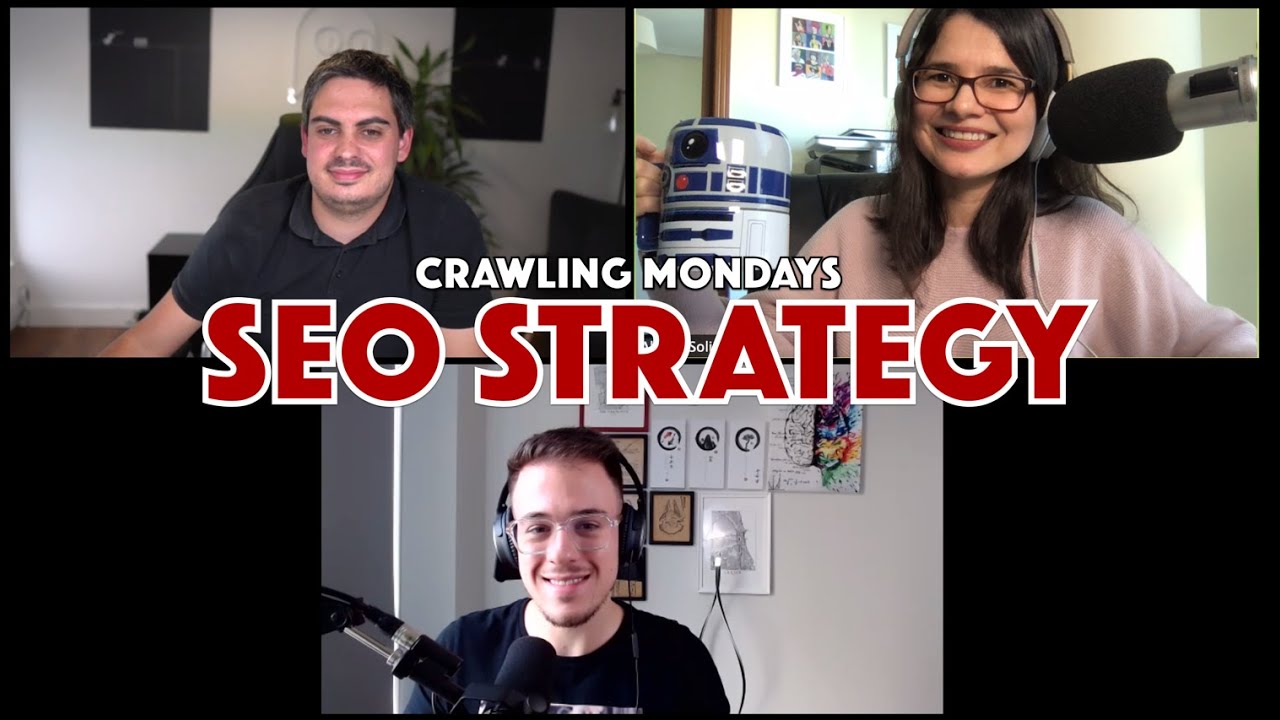
In this episode of Crawling Mondays, host Aleyda Solis moderates a conversation with SEO leaders Kevin Indig (VP of SEO & Content at G2) and James Brockbank (Managing Director at Digital Loft) about what constitutes a true SEO strategy versus a collection of tactics. They outline the most common pitfalls—such as treating SEO as a one‑size‑fits‑all checklist, measuring the wrong metrics (e.g., number of indexed URLs), and failing to align SEO work with business goals. The panel then presents the essential building blocks of a robust strategy: clear business objectives, a deep understanding of the competitive environment, an inventory of resources, and a concrete roadmap with milestones, responsibilities, and metrics. They stress the critical role of cross‑team alignment and senior‑level buy‑in, illustrating the point with case studies of successful campaigns (a UK car‑insurance client, G2’s internal “big bets” process) and failed attempts (over‑indexing pages, focusing on a narrow set of keywords). Practical frameworks are shared, including a competitor‑strength/weakness quadrant, the “5 Whys” root‑cause tool, clustering existing tactics to reveal strategic gaps, and adding a “business‑why” column to SEO action plans. The episode closes with concise, actionable advice: prioritize growth drivers, limit execution to the three most impactful tasks, document the strategy in narrative form, and learn from the strategic moves of large tech companies. The discussion provides a roadmap for SEOs to move from tactical execution to long‑term, business‑aligned strategy.
Chapters
Welcome to a new edition of Crawling Mondays. Today we are going to talk about SEO strategy, which I have to say is a topic that is not as well covered as it should be. Sometimes we see guides or articles that they say that is about SEO strategy, but they are actually tactics. And today we are going to discuss why it is critical to set a sound online strategy in SEO, Typical mistakes and how you can establish easily one with the tips and advice of a couple of guests that I have invited today because they have a lot of experience setting and establishing winning SEO strategies. On one hand, I have Kevin Indig, VP of SEO and Content at G2. Hello Kevin, how are you?
Good, good. Pleasure to be on. I'm a fan.
Thank you, Kevin. And then on the other hand, James Brockband, Managing Director at Digital Loft. Thank you very much for coming, James.
No worries. Thank you for having me. Really excited to be here. And yeah, looking forward to sharing hopefully some insights on how the viewers can create a great strategy.
Excellent. So let's start. Which are the most common issues, mistakes, the top errors that you see SEOs do again and again with their own strategies? Beyond that, sometimes there isn't even a strategy in the first place.
No, I mean, I think my number one, you know, the most common mistake that I see time and time again is sort of assuming the SEO strategy that you can take a one-size-fits-all approach. You know, there is, you know, you take 2 sites, you take 5 sites, and the strategy that you use across those sites and that you put in place should not be the same. SEO is not a checklist. And I think, you know, as you said a moment ago, you know, there's so many tactics that are used in place of a strategy. And to me, you know, it's always a case that strategy has to be what you want to achieve, tactics are how you're going to do it. So why so many times SEO marketers are going, okay, well, we're going to do this, we're going to do that. They're talking tactically, but if you're not aligning that with a strategy, then you're just working to checklists and that's not how you drive success. You know, you take 2 sites and the issues that exist, the business, you know, how SEO integrates into the wider marketing mix, it's not going to be the same. And that's where strategy comes in.
Yeah, I very much agree to that. And I think that most people know that strategy is somewhat important, but most people are also not able to define what a strategy actually is. We heard these examples of skyscraper and keyword research, link building, and none of these are strategies. They're not even tactics. They're just things that we do. A strategy looks like something as in localize content into 5 languages to go to market in tier 1 EMEA markets. Or convert 30% of freemium signups into paid users with an email drip campaign. Those are strategies. And so to quickly explain the difference between tactics and strategies, a strategy is all about the macro. Tactics are about the micro. Strategies are about the long-term. Tactics are about the short-term. Many tactics can form a strategy if you tie them together.
Absolutely.
But the strategy is really about the how to get there. The tactic is what to do. And what also is often missed by people is that they don't feed their strategies with a lot of data evidence and research. A strategy takes time. This is not something, as you mentioned, James, that you can just copy paste from somewhere on the internet or even from another company. Every company is unique, has a unique go-to-market strategy, and that means they need unique strategies.
is because every company has its own goals, its own business and marketing goals, and your SEO strategies need to be connected and aligned to make them happen, to support and achieve those marketing and business goals, right? And 100% regarding how to see strategies versus tactics, because a lot of times indeed there is this misunderstanding between one and the other. And this is why again sometimes I see people saying, oh, why all this effort in my SEO process doesn't pay off? And sometimes it's because they are just following a checklist, as James mentioned, without being aligned or connected in a way that they will fulfill an actual business goal.
Or even know why you're doing that.
Indeed.
You don't even know why you're doing it.
It's because it's a best practice and that's it. No, it shouldn't be because it has best practices because You should want to achieve something out of that, that you should be able to measure at the end of the day.
Excellent. The reality is that tactics can work in the short term. And I think that's why a lot of people hang on to them and are so fascinated because you see some results. But what often happens is that after a while, you don't know what to do next. You see stagnation. And then the big question is, what other tactic can I put on top of my current tactic? And it's a vicious circle that gets you nowhere in the long term. And that's what you see over and over again from winning companies. They have a clear and good strategy.
Yeah, absolutely. And I think, you know, to me as well, you know, it's understanding that you can have specific strategies within a wider strategy, you know, just simply identifying that you need to build links. That is not a strategy. You then need to have a link building strategy. You need a content strategy. And these should work together to produce a larger SEO strategy.
every type I think of SEO action, like yeah, build links or optimize your metadata, right? Or create content. But yeah, like the content or the metadata and the links, they should point somewhere and they should be prioritized in the right place to rank for something that is actually meaningful business-wise too.
Absolutely.
And this is the thing, the strategy is how those tactics are prioritized or focused. Yes, absolutely.
Yeah. I mean, you know, I see this all the time, you know, I mean, it's no secret that as an agency, a lot of what we do is digital PR for link building. And, you know, I see this all the time, link building without a strategy. And you are, you know, where SEOs, where businesses are building links blind and they are just wasting efforts, wasting resources because there is no clear strategy. And I think, you know, to me it's understanding how strategies for link building, for content, for technical SEO, how they fit into your SEO strategy. And again, there isn't a checklist. Even with Intact Core approach.
It is when you identify like what type of links do you actually need. Do you need a lot of diversity of highly authoritative domains or only a few ones that target this particular set of pages that are the ones that actually need more links? This type of thing, 100%. So these are the most typical mistakes. Like which would you say that are the building blocks? Which are those steps that you think that every SEO should consider following to make sure that their SEO strategy is sound?
Yeah, that's a really good question. Before we jump into the specifics, I just want to put strategy itself into a greater context. So from a business perspective, it is usually vision, strategy, tactics, right? The strategy leads up to a vision, which is a picture of the future and what you want to achieve as a whole. And then from there, you set up the strategies that lead you to that vision. And you then define the tactics that feed the strategies. So there are 3 things that I think make up the most important building blocks of a good strategy. The first one is to know the goal. You have to know the outcome you want to achieve, which then means you can measure how effective your strategy is. Number 2 is you need to know your environment. So you need to know your competitors, your market, your target audience. And it's not as simple as just looking at a couple of keywords and saying, oh, these are the other sites that are ranking for it. There's a lot of conversation and everybody who has ever worked in a larger enterprise company understands that there's often disconnect between the perceived competitors and the actual competitors and the SERPs and so on and so on. So you need to have that conversation. It's often a mix. And then number 3 is you need to know your resources. What tools do you have? What people do you have? How many? What domains do you have? What content assets? All these can then be tied together into a strategy. And then from there, you make a plan. You prioritize, you set milestones, you assign responsibilities, delegate the work. And the plan often comes in a format of a roadmap, right? It's in a very simple form. It's a table with all your objectives, with timings, responsibilities, metrics, and then you have the tactics there. Then you define what do you want to apply specifically to get to a certain outcome. And last point I want to make is that I just wanted to give a couple of examples where strategies are being applied. So for example, domains is a field where you often need different strategies, especially when it comes to internationalization or globalization. Content is a field where we need strategies, page templates or product features, site hygiene, um, backlinks. Uh, but it's not as simple as just saying we do link building, right? There has to be a lot of work.
The way a lot of people think about SEO audits and recommendations, you see right there is a list of actions that are unconnected necessarily between them. And whenever I talk about how winning SEO recommendations should be established in the first place is that they should be connected to a larger strategy. The context should be taken into consideration from a goal perspective, business requirements, constraints, technical requirements, constraints, and of course the resources that are available to you. So you can actually establish actions and steps that make sense and can be actually successful. It sometimes is hard because I think it requires a little bit more level of influence also from a consultant perspective, more maturity, and seeing SEO not isolated but as part or a core part of the marketing overall strategy and also business one too.
I think one of the things in terms of building blocks to establish a strategy is know where you can and can't compete. You know, if you're working with a startup, I mean, I see this all the time, you know, we're working with startups who say, we want to drive, you know, their perceived strategy in their head from search is that we want to outrank this competitor or that competitor. Well, in many instances, they've been going 10 years, they've been going 15 years, they've been investing in SEO for a long time. And I think that, you know, the very foundations of building a strategy is knowing where you can and can't compete. in a timeframe. And I think, you know, it's knowing— one of the things that we put a lot of time into is knowing competitors' weaknesses, knowing their strengths. Again, knowing where you can compete and where you can't compete. Understanding that the weaknesses of a competitor may be their speed of getting things done. And, you know, if we're working with a startup, you know, one of the things that we often try and prioritise with them is you can get things done a lot faster than your competitors who are large corporation enterprise organizations, but also know their strengths or understand where, if they are, in many cases, I know Kevin, this is something you've spoken about a lot. It's when companies get to a stage where they're building links naturally because of building great products, engineering link building as part of their wider marketing strategy. If they're their strengths, no short-term link building strategy is going to see you compete there. So know where you can compete, know where you can't compete right now, and build into your strategy how you can get onto, you know, get to be that, be into that position where at some stage you can compete.
This is important that you mentioned, and I think that it should be brought up more whenever we discuss how small companies can beat big ones, and it's because of this type of vision, right? That you need to analyze and identify the strengths, the opportunities, the weaknesses of competitors in order also to prioritize your own actions too. Yes.
You can use a very simple tool of like a quadrant, right? 2 axes. What are my strengths and weaknesses? What are my competitors' strengths and weaknesses? And that's a very strategic approach to then define what should we invest in. It comes from a completely different perspective than doing a keyword analysis and seeing what are they ranking for and whatnot. So I really like her approach here, James.
Yeah, no, it's, but I think that's again, something that people don't do and it's really important to do. Again, it's thinking strategically. We, you know, every, you know, people are so quick to jump straight into tactics. They turn straight to keyword research. They jump straight to keyword gap analysis to try and identify where the competitors are ranking. But if you realistically don't have the authority, don't have the content, if you're not realistically going to be able to compete for that, then your strategy needs to define how you're going to get there.
Absolutely. And this is important because I call this the resistance, right? As a consultant and even as an in-house marketing person, you need to get over the initial resistance because you often have a client or somebody from upper management who wants to see fast results, who has maybe an imperfect view. Mostly it's like, we wanna rank for these keywords, right? And then, you know, that's gonna push you into a corner where you become very tactical very quickly, but you miss the strategy. And so, some of the best consultants and marketers that I've seen are able to get over that resistance.
But you know what? This is realistically why you need someone in a certain level or within a certain level of seniority to be able to go, you know, have the support also, to be able to go to this type of decision makers and say, look, well, if I do that, Okay, perfect. That is possible, or no, that is not possible at all given the resources that I have, or yes, I can do that given the resources that I have. But then there is always a trade-off. I won't be able to do this, this, and this, and this because the type of SEO processes that I work with companies, they most of them they do have their own in-house SEO teams, and my role is of indeed an advisor, a consultant, a strategist. For certain specific scenarios and challenges that they have, and sometimes I need to help build cases and show and validate all the other ones. And then sometimes I think about how I will have done this ten years ago or even five years ago, and then I realized that I am I am able to do what I do right now because I have certain level of seniority and and experience. Experience that allows me to connect all these dots that I am able to connect right now and to have the capacity to be able to say no or to reject something or to propose something or alternatives and to be able to craft also cases for this. And unfortunately, I think that with this appeal of agencies in general to try to make clients happy all the time, and say yes and win accounts, this type of thing. Sometimes, and also having SEOs that are like the first touch with the account are not necessarily that seniors also, that they don't have the capacity to do this. Sometimes unfortunately is how this ends up happening, like being cornered into an area that is not possible to develop winning SEO process because of a lack of strategy or a strategy will go wrong because of all of these influences that many people messing around or doing requests, right? I think that we have covered in general like the main issues on one hand, then on the other hand what you should actually try to do, like the building blocks, the best criteria. Can you please share those SEO strategies that you've seen that have been amazing, that you are whether you are proud to have been part of or that you have even seen other people do that you have been quite impressed by them on one hand. And then on the other hand, we can maybe also discuss those SEO processes where a lack of strategy or a completely bad strategy has messed things up in a really bad way.
Absolutely. Yeah, so I mean, a great strategy that I've been involved in and sort of overseeing over the past 2 years or so is with a client in the UK who's competing in the car insurance space. And I think really why that's been a great strategy is because we've, as an agency, we've worked with the client and their internal team and we've been able to compete. You know, this was a brand new domain that hit top 3 ranking positions in about 9 or 10 months for very, very competitive keywords. And actually, yeah, we could talk about the tactics, we could talk about what we did, but the real reason that was successful is because we built trust from day one. There was trust between the agency and the individual parties, and we were briefing in recommendations, yes, from a technical perspective, from a content perspective, and putting in place link building strategies. And actually where this was so successful is that it joined up. There was an agency, you know, there was us as the agency and there was internal teams across PR and content. who were working together. There was the trust there between all 3 parties to get things done in a speedy manner. You know, things were acting quickly, but we were also in a position to be able to, as I said before, identify weaknesses in the competition and work those in. And why this, you know, why to me, the most successful strategies are where multiple departments are working together. A successful strategy is not going to be executed by one individual or even one individual team. You need to have buy-in from developers, from PRs, from content creators, from those who are signing off the strategy in the first place. And I think to me, you know, in terms of a strategy that I've been involved in, that I'm proud to be, proud to have been involved in, it's this one, you know what? Yes, one, because of the results, but also that the results didn't just come from the tactics that we used. It came from a strategy that had buy-in from all parties involved and everyone knew their place in that strategy.
Yeah, that buy-in is so important.
It is so important. And it's amazing how much— what a difference it makes to results when there is that buy-in. You know, I mean, you know, we can work with clients where there is, you know, perhaps one party internally, often developers who are pushing back and back and back. And it just adds, as you said, it adds a lot of friction. And it adds resistance. And it's overcoming that resistance, and it's getting things done. I know working for agency side that the time we spend debating with developers going back and forward, yes, use data to justify things, back up your justification with other examples why this should be done. In 9 out of 10 instances, these recommendations get implemented in the end, but you go down 3 months of justifying. If you can work together and build that trust and understand that whether it's an agency, whether it's in-house, everybody's working together to the same goal, And when they're aligned on that strategy, it ensures that everyone's working towards that.
Alignment and support from other areas is fundamental, is critical. And then also the attitude. That is why I think it is so important to communicate yourself well and your intent. So, you know, just to not rub in a bad way other people who are also— they also have their own goals, right? And they are also working on their own priorities too. So that is why it becomes critical. And I can totally see that what you mean, James, that yeah, a strategy can look beautiful on paper, but once, if you try to implement it and then you realise that the developer, every time that you request something, there's always a problem, there's always a challenge, even they double question stuff that, you know, you can end up then building cases for 6 months instead of implementing the actual actions to see results. That makes all the difference.
So identify these potential problems at the start, you know, when you're producing that strategy, have everybody on the same page. And then from there, you can go down tactical implementation.
Excellent.
Yeah, let's not forget that SEO is a highly dependent discipline on other teams, right? Designers, developers, writers. It's almost like this layer that you put on top of other things. So some of the best strategies that I have seen in this space from other companies is, for example, at Home2Go, Airbnb competitor, Pinterest, Policygenius, Credit Karma, Wayfair, and of course Atlassian. And, you know, not to toot my own horn, but I saw it firsthand when I worked at Atlassian. I'm also very proud of how we do it at G2. And this is something that I have been, you know, where I have my own journey from going from individual contributor to now a manager who kind of fights these battles with upper management. And I'm very proud of how much internal alignment we now have with other big organizations within the company, like sales, like marketing, like products. We have common and shared goals. That's one of the easiest ways to align a whole company is just give them the same goal and then they figure out how to get there. And to make that a bit more tactical, every half year, every 6 months, we define a list of big bets. These are kind of our investments as a company that we make into SEO. And And those bets could be product features, content, or all sorts of other optimizations. And then we tie them together into a set of bets. And from there, we define the tactics and plan the execution. We publish that in an internal wiki where we clearly outline and describe what we're planning to do, by when, and who does it. And then we add— we ask other companies— sorry, other teams to ask questions, to refine our points, to add new points. So we really try to make this bulletproof. And I think that's really important for us because we operate across so many categories. You have thousands of software categories, and all of these are slightly different verticals that sometimes need a different emphasis or different focus. So that's how we do it at G2, but you can see it at these other companies that I mentioned. You can feel the alignment from the outside when you look at their performance?
Yeah, I have to say regarding the alignment, not only with all of the areas, but also with a final business or marketing type of outcome, and especially if you want to win the support of other areas, it's critical also to align with the goals that these other areas already have. So, for example, one of the— some of the best strategies that I have seen has been, for example, when a client had too many requests via their help desk system and they wanted to double down on the online support documentation that they already had, but it was like a black box there and they had little flexibility, so they were willing to rebuild the whole thing, make sure to rank the first because they had a lot of branded queries regarding this type of questions, to be there whenever their customers search for anything pre-buy, like pre-sales type of support and post-sales type of support. And then we work in a way with flexibility, with resources, but of course there was this high need of, oh, we cannot handle this number of requests. and through all help desks because this is worth money, right? And then at the end, everybody was willing to support and after a few months, everybody was happy. Of course, I was super happy because there was this increase on traffic, conversions. We were also given flexibility to connect these pages to the other money-making ones. So it actually also helped to achieve all the goals from a business perspective too, not only from a from a support perspective. So it's a win-win-win-win when you are able to align everything together and works well. And then on the other hand, unfortunately, many years ago when I was working in-house, I faced some of the worst experiences that I have had as an SEO because the strategy didn't match. There was no way to match it with the business model of the company at that point, 10 years ago, 2011 or so. It was a typical wedding website that charged companies to be listed there, you know, very old-school type of directory still mindset and business model. And of course, the typical native web type of website came listing all of the companies in the sector and with all of content, content, content, also being able to rank for everything. So unless the company will change their business model or will have changed the business model at that point, There was no way for them to compete with these other players, right? So at that point, when I faced that and I presented the point like, well, we need to start listing everybody. You cannot charge for listing. Let's differentiate the listings, the pro, premium type of model. But there was resistance. And unfortunately, well, I was able to move on, of course, to another position when I saw that at that point I got a no, no, no, no, no. There was no way. But unfortunately, that company ended up dying.
Yeah.
And not only because of that, of course there were other reasons, but you could see how their business model at that point, what they were trying to sell became a commodity and they were not able to keep up and evolve with the change. And an easy way to see that straight away was how it ended up like being a disconnect between what they were doing and being able to grow from an organic perspective. And that would have been a huge Like red alert right there at all levels, at a business level too.
As you pointed out, you know, almost the successes and the, you know, and the bad strategies that we see, you know, they're a flip of each other. You know, we were working with a client end of last year and their previous agency, their strategy was to— and I kid you not— their strategy was to index as many pages as possible because they believed that that would make them look better to Google. Now, one, that's not a strategy, but we ended up with— I mean, I think now we have something like 7,000 URLs indexed. They had about 1.8 million URLs indexed, and the agency kept sending the client screenshots from Search Console going, look how many pages we've got indexed. That was their strategy. They were actively looking at how they could roll out more faster navigation, more filters to expand the indexed URLs, and to them that was a strategy, and that their success was They were measuring their own success on how many indexed URLs were being indexed. And that's not a strategy, but I think it's—
I would say if it's not tied to a business goal or a marketing goal, it is not, right?
That's the number one mistake. And when we see bad strategies, it is, as you say, there is no connect between what the business is trying to achieve. SEO on its own should fit into the wider marketing mix. It should fit into the wider business strategy. And when they align, but when they don't, ultimately SEO isn't a secret weapon. Simply having a strategy document that goes, we want to index 2 million URLs, why? And I think I often ask, one of the things I often ask is why? Why do you want to do that? We're approached all the time with potential clients, businesses saying we want to build 100 links or 1,000 links. And my first question to them will be, why? Why? And it's— the answers often differ significantly, but one, it will be because one of our competitors has 2,000 links, we have a link gap. Okay. When you dig down into it, I'll say, well, what is the real link gap? Because once you filter out low-quality links, scraper sites, that sort of thing, it's never what people think it is. And the other one is still because the more links, the better. You know, we are in 2020, and I think it's— I think we have this issue where SEO strategy was very different even 5 or 6 years ago to where it is now. And I think, you know, we still see a lot of marketers that are almost set in their own ways, that they don't truly understand what a strategy should look like today. And yes, we all know things worked back in 2010 that don't— that we would never do today. But if we look at what strategies looked like then, they probably were a lot more tactical. because you could get away with doing that. And they're typically the bad strategies that I see are those that are misinformed based on miseducation.
Yeah. And that's actually a good reminder on one of my earlier days in SEO. I actually paid my dues on the agency side for the first half of my career. And I was very lucky to get into enterprise consulting relatively early on. And so I was exposed to a couple of big name companies. And that reminds me of this story where I encountered this one company that I'm not gonna name right now, but everybody knows their name. And their SEO strategy was focused around 30 keywords that they wanted to rank number 1 for. And that was their strategy. And it's often because there is either like a, you know, a young kid that has no experience in this area and was just like, is now the dedicated SEO, or there's some, someone in management who doesn't have a lot of time and now has responsibility to come up with some sort of an SEO strategy. And so they read a couple of articles and then they're like, oh yeah, okay, sure, that's, that's what we want to to do. And then obviously, we discussed enough how that is not a long-term play and how that's not really a great strategy. So nobody really asked that company, like, what is the 12-month play? What business goal does that support? And that brings me to the deeper problem that I see, and that is clarity.
Yes.
So we often don't invest enough time into making things crystal clear. And one good tool that I like to use that's very simple, is the 5 Whys. So like a 6-year-old kid, you simply ask yourself 5 times, why are we doing that? And if after the first 1 or 2 or maybe even 3 times you don't have a great answer, that's an issue, right?
Yeah, absolutely.
The 5 Whys tool brings you to the root cause.
Yes.
That will also help you to make your strategies really good and really bulletproof. Another way to do that is to present your strategy to peers or colleagues which by the way, why it's important to have a strong network, and ask them to rip it apart. And it's very humbling. Not every ego can take it, but it's a great thing to discover questions that you might not have a good answer to and to really come up with a great long-term strategy.
As we start wrapping up, I wanted to ask you about actionable tips, advice that you think could be powerful and important for SEOs out there. who are still struggling in this, right? Like, what advice would you give to them? And if there's any sort of overlooked type of tip that you will—
Yeah, I mean, I think to me, I mean, other than the things we've discussed, I mean, one of the things that I sort of instill in my team is identifying what the growth drivers are in a strategy against what just puts you on a level playing field. You know, I think it's all too common that when we put a strategy together, you know, I see this all the time where Well, you look at that strategy and you go, okay, but actually that's not going to drive growth. You know, are those tactics actually going to drive growth? And of course every strategy needs, you know, your hygiene tasks as well as your growth drivers. But if you truly are trying to drive growth as the strategy, what are those growth drivers? What's going to contribute to that growth? And, you know, when we come to putting tactics into a strategy, one of the things I ask is if you could only execute 3 tasks, what would they be and why? When you start thinking like that, you start to prioritize and you start to really focus. How can we meet, how can we deliver on this strategy? And that's a good way to think. And yeah, tip that I think people can take a lot from.
Yeah. I'd love to close up with 3 small things. So one trick that I learned is if you have a really hard time coming up with a strategy, one thing you can do is to look at all the tactics that you're executing and cluster them into groups. You basically tie them together And that can help you to then see the long-term play and where it's going. And then you can recalibrate and say, is this really leading me to where I want? Or am I just like hunting one best practice or one short-term goal after the other? A second thing you can do is to write your strategy out. Lots of great companies are doing this like Google and Amazon. They have documents of several pages where they write down their strategy and what they're trying to accomplish. And that gets you away from a spreadsheet or from a list Which helps you to think about your strategy in a more coherent and concise way. And then the last thing is, even though you don't want to copy strategies from other companies, you can learn from the strategies of other companies. I'm actually pretty passionate about that myself. And I write a lot about that in my blog, my newsletter. And I dissect how big companies set up and design their strategies, right? Like Google, for example, bringing their platforms together like Gmail, YouTube, and Discover. That is a strategy. Apple charging for services and going away from hardware, that is a strategy. Or Spotify getting into podcasts and buying the Joe Rogan Show for $100 million. That is also part of a strategy. And then you can think about how does it apply to your field? How does it inspire you and help you think about what you do and applying it to your case? I want to leave you with one great little document or evidence of strategy, which is an article from Ben Ben Gomes, the head of search at Google, that he wrote in 2018 that is called Improving Search for the Next 20 Years. And I cite that over and over again in different contexts, but that is a perfect example of a strategy and it's public, it's out there. So I encourage you to take a look at that and see how can you approach or apply those ways to think of it to your company.
Amazing, amazing tips right there to be easily applied. And then I will say, if in case that you already implementing an SEO process, right? And then after seeing this video, you realize, oh, I don't have a proper strategy. A good way, I will say, to do a little bit of reverse engineering and try to identify if you are actually lacking a strategy is that to those actions that you already have in your SEO action plan, you add like an additional layer and an additional column to your action rows Asking why and trying to come up with an answer that is not technical, that is not SEO connected, but business connected.
Why?
And then another column potentially is like, what will happen if this is not done? And if you cannot come up with a reason business-wise, also not technical, oh, we won't be able to crawl more or index more. No. Why? Oh, because we won't be able to have the pages that are meant to to attract this type of traffic and conversions and to be able to reach these goals from a conversion perspective? These are the type of questions that your actions should address. And straightforward, you can see like this if they are actually connected with an actual business goal. So hopefully all of this will help. So thank you very much for your time, James, Kevin.
Thank you.
If you have any question, if you have any comment, please leave them below. And you can also, of course, follow James, follow Kevin. They are continuously sharing lots of good stuff at conferences, even online ones now, and also over Twitter and within their blogs and newsletters. You can follow them there too. And of course, if you like this video and want to see much more like this, make sure to subscribe to Crawling Mondays in case you haven't and like this video too in case you like it too. Be able to see much more like this too. So thank you very much again for your time, and see you in— thank you very much for having me.
Bye-bye.
More from Aleyda



How to Communicate and Sell AI Search Optimization (GEO, AEO, LLMO) to Decision Makers



AI Search Optimization (GEO, AEO): What is it, Common Errors & How to Optimize AI for Success



OpenAI has introduced shopping research in ChatGPT - #SEOFOMO TL;DR December 1st, 2025

OpenAI announces Instant Checkout and the Agentic Commerce Protocol - #SEOFOMO TL;DR Oct 6, 2025

Google's August 2025 Spam Update Finished Rolling Out - #SEOFOMO TL;DR September 29, 2025