Keyword Research for SEO Today: Guide, Steps, Tips, Tools, Mistakes and more!
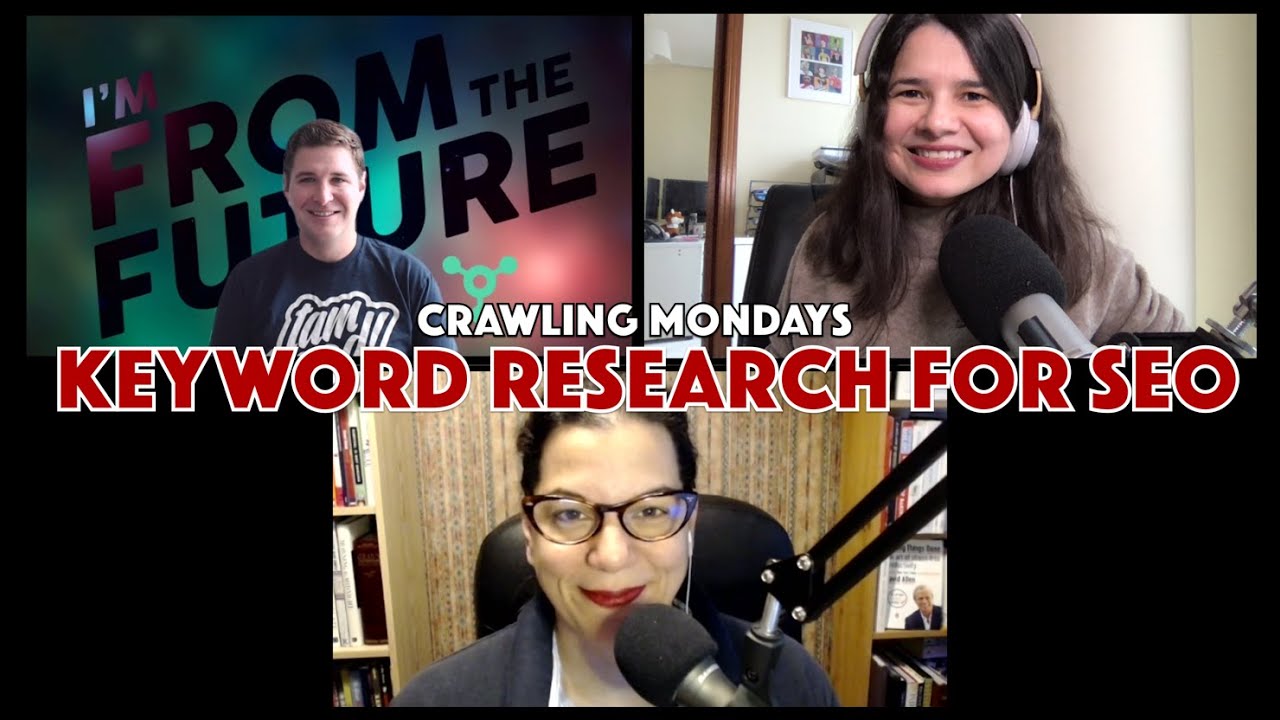
Aleyda Solis talks with SEO experts Judith Lewis and Nick Eubanks about keyword research misconceptions and workflows. They cover competitor audits, a Total Addressable Market approach that starts with massive keyword sets, and tools like Semrush and Ahrefs. Focus on clicks over volume, analyze click-through rates and SERP features, and validate data continuously.
Chapters
Welcome to a new very special edition of Crawling Mondays, a very important topic that somehow we hadn't covered but is critical in an SEO process: keyword research. And I have to say that this is a topic that is usually very overlooked and misunderstood, and a lot of people think it's pretty basic. So today I have with me 2 people who have mastered this area of the SEO process and who— with whom I would like to share and have an in-depth conversation about it to identify how you can maximize and make the most and do successful keyword researches that will allow you to win your SEO process, to establish the right direction or strategy right away, right? And with me today, I have Judith Lewis, founder of the Kavit Consultancy. How are you?
Hi, I'm fine, thank you very much.
Thank you. And I have Nick Eubanks. He's founder of From the Future and partner of Hello, Nick. How are you?
I'm good, Aleyda. Thanks for having me.
Thank you for coming. So to start a little bit of conversation, right, which you will say are the typical ways that you see that SEOs and marketers in general misunderstand? Which are the most common issues or mistakes or misunderstandings that you see that exist in our industry?
Probably The first and most obvious one is that we talk about keywords, but what we actually should be talking about is topics. So we research keywords, we research words that people we assume have put into a search engine. But what it really is about is the topic that this person is researching, that the searcher is looking for. They're not looking for red shoes, women's, they're what are the best red shoes for women, or what are the best shoes, or what are the best ladies' shoes, or whatever. Shoes are a popular example on Google too. And we research keywords, and sometimes we get stuck in that, you know, optimize a page for a keyword, optimize another page for a keyword. And I'm working with a publisher right now, and there are, I think, 6 articles targeting about the same keyword on the same topic. And they've worked really hard to make it unique content, but it's the same thing 6 times. And it's because we think in keywords as an industry and we don't think in topics. Still need to do the keyword research, but it's about topicality, not keywords.
Excellent. Uh, Nick, in your case?
Um, I think the biggest, uh, biggest, most common, um, sort of misconception or misunderstanding is, uh, people pay a lot of attention to Volume. How many times is this keyword searched per month? And you know, in the advent of user behavior becoming so normalized around search, where you know Googling has become a Google has become a verb, and and it's baked into everyday life for most human beings at this point. And because of that, the way that search is used and and the the user behaviors that are displayed within the sort of the search universe have have evolved significantly. It's not. Even the way it was, it's vastly different from 10 years ago, crazy different from 5 years ago. It's not even the same way it was probably 18 months ago, and let alone like just the past, whatever, 9 months of the pandemic. In that more and more searches, I mean, Rand was the first person to put a— to come out with a big, like a big presentation on, you know, the rise of zero clicks, of searches with zero clicks. So the first thing I think is moving away from the idea of looking at volume and instead paying attention to clicks. I really like that Ahrefs reports on CPS, average clicks per search. As an immediate follow-on to that though, that I really like to think of as a caveat where I think there's massive opportunity that a lot of SEOs don't consider, or they just don't know, they haven't gone deep enough with their keyword research to consider this, but the return rate or the refinement rate, which Ahrefs also reports on as a metric. So RR, refinement rate, the rate at which those queries are being refined. So if you may find, you know, if topic that has the head term, has massive, huge search volume and almost no clicks. Let's say the CPS is like 20%. Paying attention to those refinements and actually going down that rabbit hole to look at like, all right, there's almost no clicks on this search, on this query, but when that query gets refined and these modifiers get introduced, whether these are prefix or suffix modifiers and they're changing the topicality and the intent, like going down to find those refinements actually become more qualified along the way. So finding searches that have a high CPS and that have a high refinement rate, but then trying to identify what those refinements are so you can put yourself in the mind of the user, of the searcher, and you can actually begin to think on their behavior, which is like, all right, at which point down that refinement rabbit hole are clicks starting to happen? That's where I need to be first. I need to make sure I'm showing up and I'm acquiring those clicks first. The ranking for terms with big volume alone is not going to move the needle.
I also like that zero-click mention because, you know, that feeds straight into branding. If you're not getting the click, you want to make sure that your URL or your brand name is standing out in the search result where people are able to read it. And I think this is another thing with working with a publisher that isn't well known, especially in the UK. We're working so hard that if we don't get the click and so unfortunately don't sell the ad space, we at least want to be recognized as a trusted source of information. And that's branding. And branding is so important. And Google's been banging that drum for a while too.
Thank you very much, because this brings me to what I think is one of the biggest mistakes and misunderstanding and how and why it is so important to tie your keyword research with your SEO strategy at the end of the day. Because what is your goal, right? Your goal can be pretty much, pretty well, right? Establish or improve your branding presence. In the SERPs and your visibility through the SERPs, not necessarily even to get the click or to get sales, or it might be one of them.
Yeah, creating the mindshare.
Indeed, indeed, 100%. And then on the other hand, thank you very much for bringing the intent factor to the table, Nick, because I think that that is also one of the main misunderstandings that I see happening more and more. We know indeed that Google has become much more sophisticated and much better to identify what is the the intent of the user with very similar queries that might look or seem as synonyms sometimes, right? And I see so many times getting into SEO processes that have been already happening for a while and going to analyze results of clients already ranking pretty much already well for certain terms. And they are stuck in position 8, position 9, And then realizing it's like, why are they not ranking better if they have more content or enough content and lots of backlinks going to these pages? And then I realized it's the format of the content, the intent of the page that is not necessarily the best potential one to realistically fulfill the query of the need of the user, right? Or then I had a case the other day of a of a client telling me, oh, Aleyda, but don't we want to rank with transactional pages or categories for this type of queries that are very, very broad, right? And I was like, can you please go and take a look which are the 2 pages ranking in the top 10 for this query right now? You will see that there's no category page, no transactional page. These are all help pages or long how-tos, et cetera, because— It's all informational content.
The users aren't giving Google any intent, so Google doesn't know what. So they need to, you know, they need to aggregate all that quantitative data to attempt to put forth a qualitative result that they can confirm with clicks, right? So no, it's so— that idea is so spot on, which is like, you don't— the idea of using keyword research as a lever to identify content type. So content type is a broadly known, broadly discussed idea. What we've been start— what we've started talking about in the past 12 months or so that I personally love and can riff on for hours is the idea of content patterns. So when you look at the content that's ranking, what are the patterns within those pages that show you that Google expects the content to be aggregated or formatted that way? It's not as simple as videos and images. It could be tables. It could be certain datasets within those tables. So if you're in a finance SERP, Google probably expects not only for there to be structured data on those pages, but for them to follow a specific pattern that's going to list the interest rate, the APR, the payback period, average credit score, like all of these metrics that check those boxes to fulfill, to match the content to the actual query intent, back to your original point.
And it's user behavior as well. If they pogo stick, then that's not what they wanted. So Google learns this. And oftentimes, it's if a user expects the information in that, in that format, then Google's going to give it to them in that format. So it's not just that somehow magically they've decided this. It's user behavior that's decided it.
Indeed, indeed, 100%. So going back a little bit, so we have already mentioned a few of the top mistakes and misunderstandings and errors. So to avoid this, which would you say are the basics, fundamental steps that you will tend to take every time as a roadmap, right? Or principles to drive a keyword research process? That you think that are fundamental that you cannot overlook?
So I will always do a competitor audit. So I tend to use Semrush as opposed to Ahrefs, but they're both excellent tools. And so in Semrush, I will put the client in and see if they're ranking against people that they would expect to. If not, it's— and I've just had a client come through like this. They just don't match. There are no matches. zero overlap with their perceived competition. And there's a huge content issue with what's going on on their site. So I look at that first. Second of all, I do a content gap analysis. So how many keywords are they ranking for? How many keywords are the competitors ranking for? Where is the gap? And I do that in Semrush. And Semrush enables me to see the search results for the search query. It enables me to see what keywords are missing. They have something called Untapped, which is like if I put 4 other people in, If one person at least is ranking for it and you're not, then it gives you that. But missing is where all everybody else ranks for this. And you, damn it, man, you're just, you're missing out because you're invisible against what everybody else is being seen for. Doesn't make it right, but it does make it something that you should be taking an interest in. So I start there. I start with just checking the competition and the competitive landscape to make sure that the content doesn't need utterly, like this one client, Utterly rethinking.
I love what you mentioned of the gap functionality in Semrush. I love it to also find initial opportunities and of course like starting point where you are ranking versus your competition. And then I take that as a source for the Keyword Magic Tool to generate even more queries type of ideas to identify common patterns and see how I can target or if it makes sense based on my own offering. So I love how all these functionalities like connect together too. They are pretty cool indeed. Absolutely.
In your case? We— I approach it a little bit differently in terms of like, what do we— what's the fundamental, the very first thing we do? So whenever we're doing, we're building out our initial— I'm actually— this was on purpose. So our process of keyword research, we call it doing a total addressable market analysis. So I'm wearing my very corny FTF TAM good.
Damn good.
Yeah, total addressable market. Anyway, so it's some damn good. It's a very inside and super nerdy joke now that you know. But so as part of building out our total addressable market, we do a competitor analysis, but we do it almost entirely within Google and using and just scraping. So taking the base set of terms the site's ranking for, querying Google for all of them, scraping the first 100 results for every one of them and then going and running each of those at the domain level through downloading all their keywords. So we start with this massive universe, right? So tens of thousands, hundreds of thousands of terms, and all we're trying to do there is then categorize them. And most of that categorization is done based on modifiers. So we want to identify the modifiers and then map those modifiers to an intent stage and figure out again, like the, like what's the user journey that fits into the audience segment that's actually going to make sense for for the target website, for the client's website. So most of that universe is not gonna be relevant. We wanna zero in on like, who's the exact audience and what's the search behavior, you know, using essentially an objective data source. Like, what's the search behavior for our ideal audience? And the best part about that is usually when we dial in on the audience, we're able to be like, all right, this audience is here and this is the known known. What that gives us the insight into is what are the known unknowns? So suddenly we're like, all right, this audience has additional interests. This audience is also probably looking for things within this like separate topical universe. So like we wouldn't capture them just by doing this alone. It's having to like back out into like the psychographics and be like, all right, if you live in the country on 15 acres and you cut your own grass and you get your food delivered and you have a farmhouse and you are a great fit for this specific product as somebody who lives in a rural area with a bunch of land, there's all these other stipulations that you fall into as an individual when you zoom back out on the audience. It's like, all right, like this people, like there's a high likelihood that they have a family. They probably don't do much traveling. They probably have like, you can, you can go into all of these shopping behaviors that you can then extrapolate out to find additional queries. Just so like suddenly like the idea of a total addressable market becomes like a really helpful approach because you're starting with the shotgun effect, you're zooming all the way in. And once you've zoomed in to define the audience, you can then zoom back out to find other places, other cohorts that that audience would potentially be a part of.
Yes, that is a great approach. How do you prioritize also and connect it with the, well, so-called personas, right? I dislike the term persona per se, but it totally makes sense to identify the different profiles of and situations of how you want to connect with a different type of audience at the different stages of the customer journey. So you have actually referred to something before that I think is very important and is a recurrent topic from time to time in our industry, that is the reliability of metrics and different data sources and how do we align those, right? Like it was the other day, I think that someone was sharing a screenshot over Twitter of a completely new site that had zero actual rankings or anything realistically. It was a completely new site and you could see every Sunday Oh, I did see that.
Yeah, because it was the red cross.
A spike in the Search Console performance report because of, yeah, tools out there scrapping for information and, yes, generating queries and not necessarily real searches for actual—
Well, it's a perfect example, right? Because that screenshot showed volume and 0 clicks, right? Like, it's, you know, that would be— hopefully that would get immediately, you know, discarded in the qualification process for building a term sheet.
100%. Indeed. And then we also have, on the other hand, these poltergeist cases. The other day was a person showing how, because they were ranking because of a tweet that they had done about a random topic, all of a sudden a huge spike because they talk about PlayStation or PS5. And all of a sudden they were ranking in the top position for for that query and everybody's searching for PS5 right now. So it completely took out of proportion the impressions that they get in the Google Search Console.
Yeah.
But of course, this is nothing relevant at all. So again, it's not only third-party tools, but also it's the very reliable direct Google source with the Google Search Console where we can find this happening. So how do you handle this? How do you How do you filter out? How do you prioritize? And what criteria do you think is important to take into consideration due to this lack of completely 100% accuracy of tools and metrics? How do you handle those? And I would also like for you to show which are the tools that you also use in the process.
You actually reminded me about a tool that is interesting. I don't use it because I don't do too much ecommerce, but there is a tool out there that's a machine learning tool That will actually categorize masses of keywords for you when you give it a learning set of a website. So how is the website structured? You know, women's, women's trousers, women's trousers blue, etc. And you, you give it a learning set, then you give it its million keywords, and it will automatically break things into various different verticals.
There is one that is called MeaningCloud that is really, really good, and it has a Google Sheets extension that is great for that, to categorize topics.
Exactly. It's perfect when you've got your huge dataset of keywords to break them down into those topic chunks for you so that you don't have to go through a million keywords and do it all by hand because we would all go crazy. So yeah, I really love Semrush as far as a tool for keyword research. Why? Because Google Ads Which is what a lot of us used for many years. I remember using Overture data. That's how old I am.
Hardcore, old school. Go, go.
Exact numbers. They were the truth. They told us the truth Google never has. So much as I love Google Ads and the keyword search volumes for Google Ads and whatnot, I, I don't like using that as a tool. I really like using Semrush because it groups everything for me using Keyword Magic. It gives me all the visibility of what I need to do. But I work heavily in B2B and very large blue chips. So I'm either working on massive, like, large companies that don't actually sell directly to the public, or I'm working on B2B companies, and oftentimes it's like a 90-day lead time. So we, we really don't need that e-commerce immediate sale kind of keyword utilization for tools. So I've, I've used Semrush, I've used Ahrefs, which the content copywriters love for mining for content. Also asked.com. I like using that for refinement and giving me content to write about. But yeah, there are so many tools out there that you could be leveraging. The Sheets plugin. There are just— there's tons and nothing really replaces your brain. You can't automate keyword research. So nothing replaces you, or Nick, or Aleyda, or myself, or whoever's doing the keyword research. You can't replace the human brain, but you can at least get it 90% of the way there before you have to muck about with it too much. And I use a scatter graph in Google Spreadsheet— not Google, sorry, normal Excel spreadsheets. I don't think Google has a scatter graph yet, but you just have— I use Semrush data, so I have like how many people are competing for it, which is the competition, how many searches are per month, and Semrush does hold that. So as we lose it from Google Ads, Semrush still has it. And then the keyword, and I map it out on a scatter graph based on topics. And it tells me what I can target easily and rank for easily versus what will be hard.
So we use a scatter graph in our audit deliverable, but the axes are very different. It's level of difficulty versus level of impact. But same, it's still like that, the concept of the scatter graph here makes a ton of sense, right? Because you can very quickly be like, anything in this quadrant, these are the golden nuggets we can go pick up right away. My answer is going to be really boring on the tool side, but I think the why is probably not as boring, but the what is definitely a little boring. So we enrich all of our organic data whenever possible. We're one of like, if companies come to us for SEO and they're not running paid ads, they're not using AdWords yet, the first thing we're gonna do is like, you need to run AdWords. And based on the size of your TAM, you're going to have to spend X thousands of dollars. We need it for at least 3 months. Consider this an investment in data. Even if you don't make a single sale, we need this to learn from. So we enrich all of our organic data with data from the AdWords API. So you can get access to the AdWords API for free for up to 1 million queries per day by writing a simple app. Like, you have to fill out an application. It's worth anybody doing who wants to do data collection at scale and not have to worry about the data engineering component. But so we enrich all of it with the paid search data. It gives us all that visibility into— because I still like— AdWords is a phenomenal data source, right, for affirming commercial viability. So whether you're an e-com store or you're e-com or you're a SaaS product or you're selling subscriptions to a publication, I don't care what it is, you being able to have like that actual empirical data that's like, this is how many impressions this query set got. like in the PLAs or in the impressions you've gotten in AdWords. This is the actual number of clicks. This is the value of those clicks. So advertisers are telling you that, you know, this is— they're willing to pay this much per click. So like there is some correlation there, like at least the keyword level. So, you know, going— moving away from the topic discussion, which I completely agree with emphatically, but going back to like the individual keyword level, like being able to attribute specific commercial value and put like a potential revenue dollar attached to that. So like we have one big client in the travel space and they've got 50 keywords they care about. That's all they care about. And it's because historical data over the past 10 years has shown like those are the keywords that directly drive sales. So like they'll spend whatever they have to spend on the paid search side. And if they can get clicks, ideally, you know, for any of those keywords on the organic side, so then they can remarket and ideally spend less money on, you know, by targeting those folks, by acquiring that, you know, being able to drop the pixel organically and then going after them on the paid side. Is one. And then the second tool is also equally as boring, and it's— this may surprise you— is Keyword Planner. And there's a piece of functionality in Keyword Planner that I don't think a lot of people know about, which is if you paste in 100,000 keywords into Keyword Planner, you might have to use the API. Again, we don't use many of the tools in the interfaces anymore, but Keyword Planner will automatically syntactically group terms together for you. So like, you don't have to guess, like, we think these 30 keywords can all be targeted with one page that really just goes after this parent topic, this parent keyword. Google will do that for you. You don't even need a paid tool to do it. And that is phenomenally helpful at taking those giant lists of keywords and getting them down to like, what's the actual representative topic that we need to be going after?
That is very cool. I actually didn't know about that particular feature.
I didn't either. One of my team members found it out like 3 years ago. And we literally, it was such a helpful addition to the process because it cuts down so much of that manual mucking about trying to infer, uh, syntactics.
But what, 100%, what you mentioned, uh, leveraging Google Ads to be, I, you know, I literally don't do PPC, but what I actually do, uh, whenever I have the chance and a client has PPC running is to request for the data, get the data also to see what are the the ones that are better converting, more accuracy regarding search volumes on the other hand. And then for those for which I don't have necessarily the data, yeah, have a little ad, whatever, running to get a little bit more accurate numbers in the Google Keyword Tool directly. And then the Google Keyword Tool also has this very interesting device segmentation option configuration that, well, this is the thing, right? I work a lot with B2B, sometimes SaaS-oriented tools for which somehow they are not still mobile-first necessarily, but they are very split. And the search behavior changes also sometimes in a non-trivial way per device. It's crazy. So that allows me to better segment and prioritize and establish a much more personalized—
Another, just to ride the coattail on that concept, the idea also even of having that paid data for dayparting, Like if you're doing dayparting for bids, so you're only having your ads show and collect data on specific windows of time throughout the day, you can infer a lot about the behavior of your target audience from seeing which ads perform best which parts of the day. And that's data you're just not going to get from organic.
Yeah, that is awesome. I think that it is similar web that has it. Like I haven't seen yet that many tools, keyword tools saying, oh, this is the split of search volume across different devices, for example. Things like that.
Yeah.
At that level of granularity. The other day there was a post regarding an analysis that someone did taking the same keyword data and running it across Ahrefs, Semrush, the Moz Keyword Tool, and a few others and comparing search volumes and how they were all different, right? And then going to the impressions data for these actual keywords for which this person was already ranking in the top 10 position.
Number 1.
Yeah. So he had the impressions data from the Google Search Console and it was different from all of the other third-party tools, right? So this is how it is important also, I will say, to try to double verify with Google, with the Ads data source, or even trying to run a few campaigns just to get a more level of accuracy. I try to not be necessarily as purist on this. I try to take search volumes as a reference. As far as they are consistent with the popularity, I won't over-obsess about the specific search volume accuracy, right? The problem is like when there is not consistency at all. Okay, to start wrapping up a little bit, and I know that you have already share quite a few tips that are not necessarily very well known, but just to finish, do you have any particular highly overlooked, ideally, type of tip or advice of something that you think that people should do more or not do at all anymore? Something that you would like to finish with that you think that might be Super valuable to the audience.
One of the things that I think that people overlook a lot is that getting the sitelinks in organic search results is often keyword research based. And I use jump-to links on my pages based on what I've seen in People Also Ask and alsoask.com, as well as keyword research in Semrush includes questions. So I'll often utilize that long-tail, so to speak, data to help me grab more real estate in the search result for a particular keyword search. Because, you know, when you're writing on one topic, you can get those jump-to links as sitelinks in the search results. But don't everybody do that, because then it won't work as well for me if you're all doing it. So, but think— I mean, planning, planning, planning is always my big thing. I bang on about strategy and planning. all the time. And you can only do something like that if you've done your research, because you've planned things out in advance, and you know what you're doing. If you slap stuff up at the last minute, you're all— if you fail to plan, plan to fail, as my dad says. So plan, think, research, execute, and, and think about those jump-to links on page to give yourself the sitelinks based on keyword research.
Awesome. Excellent. Great tip.
If you're running WordPress, you can install TOC Plus, the TOC Plus plugin for free, and it automates that. Your headers are well constructed based on keywords. Anyway, great tip. I would probably say that paying more attention to content types and realizing that there are other ways, there's other ways to rank for terms and on topics that are really important that may not include ranking your website. I wrote this article that one of my team members resurfaced a couple of weeks ago, like funny enough, and I'd forgotten about it. I wrote it in 2012. It was called Do You Deserve a First Page Ranking? And it's the concept behind it is like back before we got all this clarity over the past 8 years into content types and content patterns and understanding how the algorithm almost works on a modifier basis. So like there's query classes and query modifiers. And I feel like there's almost individual algorithms. I used to think that the algo was more vertical-based, like there would be different permutations of the algorithm that would sort of refine themselves based on the user heuristics of like an individual niche or vertical market. And what I've now learned is I think based on— I think the algorithm actually operates more like an individual modifier basis. Like the algorithm has these inputs and outputs for this query class, a set of query classes. And then if you modify it with any of these sets of modifiers, it changes the underlying intent. and the algorithm itself has different inputs and outputs. That's my hunch.
This is great. And brings me— thank you very much for reminding me because I think that I actually have a tip too based on what you mentioned regarding ranking with all the formats of content, right? And it is that a lot of people also in the keyword research, and we also do this, but you will see why you want to validate, is to see for which queries, for which terms there are opportunities to be included in SERP features, right? To identify opportunities for videos, for FAQs, and then you want to prioritize, for example—
That's the monopoly strategy.
Indeed, it's visibility. It's maximizing your visibility. It's not about ranking position X or Y, right? It's maximizing as much as you can. But then again, I don't know if you have noticed, but the tools, the keyword tools that I have verified, third-party tools, they tell you, yes, you are included in a SERP for this query that includes a carousel for recipes or for FAQs or whatever, or you are not included in this and your competitors are. The problem is that if you take a double look, they take also into consideration for those queries for which the carousel or whatever SERP feature is shown in the 2nd page or the 3rd page or the 4th or whatever page. And sorry, I don't care about those. I mean, we need to prioritize for the sake of resources here. So what I do is that I take those as an input, yes, but I double-check them by scrapping the SERPs and actually checking only the top 10, the first page of search results. For example, you can do this with ImportXML or ImportWeb. There is an add-on sheet that allows you to scrap even more for Google Sheets. And then you can literally validate it very easily if there is actually a carousel of this or X or Y type in the actual first page of results. Because otherwise you will be investing in implementing schema or whatever efforts for the SERP features and they are shown in position 4th or 2nd or 3rd.
And we've lost a lot of featured snippets as well. In one vertical I've been working in, we lost over 50%. Of the available featured snippets. So across, I think it was 512, I think, if I'm remembering correctly, we had 512 opportunities. So, you know, Semrush. And then all of a sudden you see the graph just go down and down. And it went down to, I think, 182 or something like that. And it's just crazy how many featured snippets and etc. on the rich results. We've lost, and this is a retailer, it's the only ecommerce person I work with, and in the run-up to Christmas. So we're losing valuable, I think valuable real estate, which is being promoted to the number 1 position in an ecommerce vertical in the run-up to Christmas.
So there's a lot of volatility with them and Google is testing all the time. And also, now that you mentioned seasonality and Christmas, a lot of the search change With seasonality?
Seasonality, I mean, completely, completely flipped. Like, like the, I mean, stuff around Black Friday, Halloween costumes, like the, the, I mean, the whole ranking sets completely changed. Um, and the topic of featured snippet, you just hit on something that just reminded me too. Something that's been wild to sort of ride the wave of over the past 12 months has been the inventory of featured snippets suddenly increasing and decreasing. Like, like, like literally like, oh, like there's a featured snippet. Like, why did we get a 300% increase in traffic on, you know, for that term? Oh, there's, we have a featured snippet now that wasn't there. 3 weeks later, it's gone. What happened? We didn't lose the featured snippet. Google is no longer displaying a featured snippet for that query or that modifier set. The volatility of even the inventory is one of the things I think that causes major reporting headaches for every SEO.
100%. And then the impact in click-through rate, even if you're still there, right, but not that level of visibility.
Even if you rank number 1, but if you don't have the snippet, you're probably seeing a 20 or 30% reduction in clicks that like, like to Judith's point, your only hope is to try to really whatever you can do to the pixels you have to stand out to try to pick up your CTR. That's, that's the best work you can do.
Yeah, that is really a great recommendation. And just to finish that, this is the bad thing, right? We start talking and then we all start getting ideas just to actually really, really, really decide finishing. You reminded me there is this tool SEOZoom that was literally only focused on the Italian market, but now also supports English-speaking markets. They have a version of their in-depth index for the UK and are releasing many more markets in the following months or so, from what I have been told. But in any case, they have this super useful report where they directly tell you or segment or filters show you the topics in your industry or whatever that you are tracking per seasonality, per month. So I can see right now which are the ones that will have the highest peak of seasonality in December or in January, whatever. So Well, this is— well, you can also segment that yourself, but the time that they save you—
We use Keyword Keg to get all the seasonality data.
This is super useful because it saved me a lot of time just clicking there. I am shown those keywords already, like what I can expect in February directly. So I can already more or less do a really good content editorial type of planning. So that is very useful.
I love SEO Monitor for that because all their groupings that they've got as well, They'll give you seasonality for that group. So they'll actually look at seasonality on grouping. So they'll say, actually—
I need to use that tool. I've been— I've like, I have friends that use it. I've just—
I've never—
I highly recommend it. I use it more for tracking rather than discovering new terms. But indeed, for tracking, it's amazing because they integrate with Google Search Console, Google Analytics. They also have this forecasting functionality. Updating all the search volumes after COVID. So they are very proactive in that sense. They are very smart on that. So yeah, highly recommend it.
Yeah, they do have a keyword discovery module, but they've hidden it. So it's not really obvious in the main search.
In the main interface. This is a recommendation for Cosmin. Cosmin, please update that. Anyway, so thank you both very much for sharing so much today. Really appreciate it. I think that There are quite a few handy tips and I hope that this makes many people realize that there's so much more to do with keyword research, so much opportunity out there that this is definitely not something because this is one thing, right? It's a typical task that I have seen across some agencies to delegate to interns or to complete automatically.
Yeah, to the lowest level analyst. Whatever.
No, you have to, you need to have enough understanding of the SEO strategies, the actual goals, the business model, the impact on the bottom line of the business, and they intend a real understanding of the audience too. So yes, hopefully this will help open the eyes of many decision makers out there. So thank you very much. And of course, if you want to learn more about this, Nick even had a keyword research course in the past, right?
I had 2 courses. They're both free now. So yeah.
Amazing. Go and take a look at Nick's course, of course. And Judith, you can also follow Judith. You're writing all the time and doing webinars. You have your own YouTube channel too now, Judith. So please—
The SERP Show.
You can also follow Judith for sure. So if you have enjoyed today's video, please like the video, subscribe to the channel. And if you have any questions for Nick and for Judith, please leave them below here. I'll make sure to ping them so they can come back and answer any doubt that you may have. So thank you very much and see you in the next Crawling Mondays.
More from Aleyda



How to Communicate and Sell AI Search Optimization (GEO, AEO, LLMO) to Decision Makers



AI Search Optimization (GEO, AEO): What is it, Common Errors & How to Optimize AI for Success



OpenAI has introduced shopping research in ChatGPT - #SEOFOMO TL;DR December 1st, 2025

OpenAI announces Instant Checkout and the Agentic Commerce Protocol - #SEOFOMO TL;DR Oct 6, 2025

Google's August 2025 Spam Update Finished Rolling Out - #SEOFOMO TL;DR September 29, 2025