Ali Partovi (Code.org, iLike, LinkExchange) at Startup Grind San Francisco
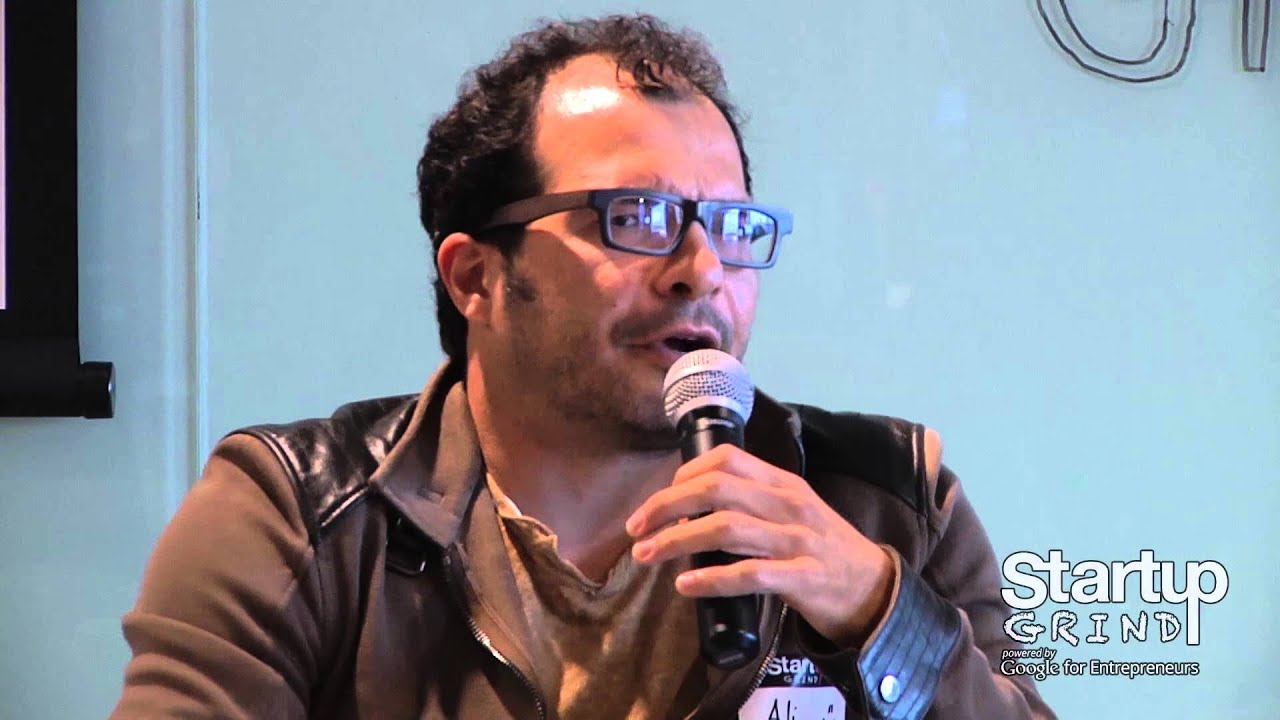
Ali Partovi, who co-founded LinkExchange with Tony Hsieh and sold it to Microsoft, talks about building the first ad server, his early angel bets on Zappos and Dropbox, and his push to get 10 million students to learn code through Code.org.
Chapters
Welcome to Startup Grind.
On behalf of Startup Grind, we'd like to warmly welcome our guest for tonight, Ali Partovi. Ali is here based in San Francisco. I've actually known Ali since before he became internet famous. He was basically co-founder of— with Tony Hsieh of LinkExchange, which was acquired by Microsoft back in the late '90s. He then went on to co-found iLike, which was also bought by MySpace. And he's been a serial entrepreneur, angel investor, and advisor to companies like Facebook, Dropbox, Opower, and many others. So we thank him for his time tonight.
Thank you.
Give me a warm welcome for Ali Partovi.
Thank you. Thank you for the warm welcome. You can stop clapping now.
So Ali, it's good to see you. It's been a long time.
Likewise, likewise. Good to see you, Denise.
Things are going well, I take it?
Yeah, yeah.
So tell us a little bit— we like to kick these off as sort of fireside chat format, get to know you as a person and really understand your background for how you came upon the entrepreneurial path. So tell us a little bit about where you were born, about your parents, your background, your childhood.
Yeah, so I'm an immigrant. Is that me? Hello? I came from— I was born in Iran and I moved to America when I was about 20. in 1984. And like a lot of immigrants, my— one of my biggest sort of stresses in life was frankly that we didn't have very much money and my parents didn't have any retirement. And so I always felt somewhat responsible that once I grow up, I need to be able to take care of my own parents as well as myself.
And after—
After considering a lot of different career paths, you know, I think I wanted to be a doctor when I was young and all the way through college I was considering medical school. I had the good fortune to run a very sort of small startup type company while I was in college. This was not something that was going anywhere, but it gave me a taste of entrepreneurship. And so I knew from that point on that what I really wanted to do was to be an entrepreneur.
Thank you.
I had majored in computer science, and so I was a good programmer, but I already felt like I didn't want to just be a programmer all my life. I wanted to do something that involved business and marketing. So my first 2 or 3 years out after college, I was working at other companies such as Oracle, but I was constantly thinking of new ideas. I was— I had a group of friends that we would exchange email We would have a discussion group about potential new startup ideas and evaluate different concepts every week. This was, by the way, this was in 1994 or '95, which is like before most people even knew what email was. And so the fact that I had an email discussion group was like really advanced at the time. So, so yeah, so by 1996 I had You know, even I was 23, but I had probably, with this group of friends, systematically vetted at least 50, maybe 100 different ideas. And so when I came across LinkExchange, which Tony Hsieh had already started, but he was inviting me to be a co-founder, it was instantly I knew this was the one just because it was so much better than all the other ideas that I had been looking at. And it was already going and already had some momentum. And so I remember, I mean, I talked to him by phone. I was on the East Coast. And I was like, okay, let's get together. I was flying back and I landed at 10 PM in SFO, went to his place, which was a condo, which was also where the business was running out of his condo. He picked me up from the airport. I think we talked until 3 AM. And then at 9 AM the next day, I went in and just told the company I was at that I'm out of here. Like, I'm not coming to work today. Like, I literally, the next morning, I started, you know, I joined Tony. So, but the motivation for me was definitely, when it started, it was, I thought this was a great way to make money. I, you know, that's definitely not the best motivation. And for me, it really changed within between 6 to 12 months later. I really sort of no longer cared as much about money and cared more about the sense of impact and, you know, what we were accomplishing and the feeling that people depended on us or were impacted by us.
So how did you know at that point that that would be, you know, the rocket ship that it became?
How did I—
Yeah, when you first got involved with Sony.
When I first—
yeah. That was still early. Was that before Mike Moritz came on board as—
Oh yeah, yeah. It was basically a handful of guys working out of a condo. And yeah, it had already built a little bit of early traction. And I think maybe had 50,000 users. But more importantly, I could tell— LinkExchange, most people have forgotten what it was. It's a service that catered to the small business or small individual website owner who needed more traffic. And this was in the days before AdWords, or really, there was just no other service out there for you to use to get more traffic. It was the only possible thing to do. And there were a lot of business ideas around how to help people build a website or infrastructure and so on, but absolutely nobody catering to the idea of how to drive traffic to your website or just how to advertise on the web. This was entirely kind of a nonexistent market at the time. The banner ad had maybe been invented like 5 months earlier or something. And LinkExchange actually— we developed the first ad server. In fact, that was what I did the day I started. It was, We had to rewrite the ad server. It was originally written on a single machine. And literally, it was like, there's the ad server in the condo. And it was heating up. And it wasn't scalable. And we needed to rewrite the whole architecture to be—
There was no Amazon Web Services.
There were no Amazon Web Services. I have to stop moving my neck because something's— oh, is it that? Okay. Yeah, so the— I guess what— I think what immediately appealed to me was that LinkExchange was a service that people who used it, it gave them hope. Basically, businesses— when you're pitching something to a business, and that was our customer, businesses who want traffic. You can either pitch them based on, we will help you save costs, or we will help you make more money. And a lot of technology companies lead with the save cost principle of like, oh, you know, our product costs less, or our product will reduce your such and such costs. Whereas— and that's good. People— businesses do need to save costs. But if you're running a small business, you can't save your way to rich. You have to make money to become rich. And small businesses are trying to grow. They don't want to remain small. They want to become rich. And our pitch was, hey, this will help you build your business. This will help you grow your traffic, grow your sales, grow your revenue. And it's a much easier— it's emotionally, actually, I think, a much more appealing thing to be pitching to a small business. So you're saying that the So that was what attracted me, in particular because many of the other business ideas that I had been vetting for, you know, for like a year had to do with how to reduce the costs of something or other on the internet.
So talk to us about that early stage. How did you get from essentially 3 guys in a condo, Tony's condo, to get Mike Moritz to invest in you? What was that process like in terms of early pitching and trying to call on VCs and many of them, I would assume, turned you down?
Yeah. Well, the first part was just ourselves learning what that even meant. So I had some knowledge of capital structures and raising money, but the other 2 guys, Tony and the 3rd co-founder, Sanjay, didn't really. And in fact, when I joined, you know, they gave me X percent of the company, but it was like a handshake. there was no paperwork. And there were other people with all sorts of weird handshakes. Like one guy who they had offered, I think, you know, 1% a month. And I was like, what? Like, that doesn't really work. You'll run out after 100 months. So, I mean, it was like so early stage. I think this guy was supposed to only work for a few months, but he had He was kind of happy and wanted to stay. And so it was like, we've got to figure out some new arrangement here. So, and there were, I mean, even the concept of a multiple or a valuation, these were things like, the whole startup culture wasn't nearly the way it is now.
There were no angels back then, really.
Yeah. And I mean, we were all Harvard grads. But I remember clearly sitting down and sort of teaching the other 2 guys what valuation meant and that, you know, if our revenue could get to $1 million, our valuation in theory could be more than that. Like a multiple of that. The word multiple was kind of a new concept. And I clearly remember sitting down, I think the very first night of our conversation, saying, guys, we could someday be worth $10 million. And they were like, are you serious? And it was kind of like this crazy, like, huge number. You could never possibly see a path to that. And 6 months later, Yahoo had offered us $20 million to acquire the company. So very quickly we learned this stuff, you know, and I would say by that point we turned down that offer because by that point we had already kind of in very short order kind of become addicted to something much more exciting than making money, which was the feeling that People's lives are impacted by what we do. People love what we do or they hate what we do and they want us to fix it and something's broken and it's hurting people. That was a much stronger drive for us. But yeah, the fundraising was— it was a challenge because we were all 22 or 23 and that wasn't— that was really young. It's frankly, it's young even today, but it was really young then for entrepreneurs to raise money at that age.
How did you get Mike Moritz to believe in you?
So, um, so the path was I, I really wanted to bring on advisors who had some kind of connections. And so there was a guy named Ariel Poler that was at the time a high-profile, seemingly much more successful guy who was running his own company, iPro. It was an internet measuring company. So I nervously cold-called him and I was like, would you please consider meeting with us and so on. And he took a liking to us and we made him a board member. And he then helped introduce us to a number of VCs, most of whom scratched their heads. I mean, the VCs I remember clearly would ask questions like, Why would a website owner want more traffic? That was like— I would say half the VCs rejected us on the basis of like they don't see that. They didn't understand the internet. Yeah, like just that fundamental premise of what we purported to offer. They were like, why would a website owner want that? And we're like, okay, you're probably not the right investor for us. And along the way, Ariel also introduced us to Jerry Yang, who was chief Yahoo of Yahoo. And Yahoo immediately saw the value. And so they actually— they put a— they made an effort to acquire us. As part of the acquisition, their lead investor, Mike Moritz, came to meet with us to do sort of due diligence, to kind of check us out. And they would need his, you know, his vote for the deal. So, for the acquisition to happen. Yahoo was still pretty small at the time. And Mike Moritz came and met with us. It wasn't— I don't think it would have been a very impressive meeting because I remember at least 2 out of the 3 of the cofounders had worked all night and were asleep under our desks. So I actually remember—
I remember that.
Yeah, I think— were you working as well?
Yeah.
Yeah, Denise actually worked for us.
Sleeping bags under our desks.
Yeah. Denise worked for us during these, these years. She joined us, I think, in '99, if I remember correctly. But—
'97.
'97? Oh, sorry, yes. Sorry, I'm time shifting a few years. We were acquired by '99. But yeah, I remember one of the other engineers, like, stirring me and saying, Ali, there's someone here to see you. And I was like, oh, what time is it? And, you know, Mike Moritz was down, like, leaning against the wall, kind of wondering who's going to meet him. And this engineer was literally waking up me and the other 2 co-founders to be like, your meeting's here. So during our meeting with Mike Moritz, Sanjay actually fell asleep. So it was really— I think he was mainly impressed that we were working so hard that we couldn't stay awake through the meeting.
But Sorry.
I mean, what he reported back to Yahoo at the time was that these guys are a— they're cut from the same cloth. At the time, mind you, Yahoo was a very, very competitive and agile company. Hard to imagine, but it was the equivalent of what maybe Dropbox today is, or Google, you know, 8 or 9 years ago. And yeah, and so I think he kind of— he told the Yahoo guys, yeah, these guys are Yahoo-caliber people, which was a compliment. And yeah, so after we turned down Yahoo, we got another call from him saying, well, I heard you turned down the acquisition offer. I've asked Yahoo for permission as to whether we could, you know, whether Sequoia could invest in you. And Yahoo said okay, and so, you know, he said, let's talk.
So you actually came on board as acting CEO for a while.
What was that like? Yeah, so Mike Moritz invested in us. It was a super fast conversation. I mean, compared to other VCs where we had many meetings and then ultimately a rejection, with Moritz, the— actually, I remember his email was— his email to us was simply, In the words of Joan Rivers, let's talk. That's what it was. And so we had a meeting, and at the meeting he said, we want to invest, and you guys talk amongst yourselves, decide if you're in and how much money exactly you need. And we prize people who move fast. So the faster you can get back to us, the better. And we said, okay. We left. We were walking down the stairs back to our car, and we were like, why don't we just decide right now? And we literally conferred and went right back in and said, yes, we want to do it. And so we did have to negotiate, which took, you know, maybe a few weeks, but it was pretty much done between us and him that this was going to happen. The one thing that they said was important is they wanted to bring on an experienced CEO, which was kind of the norm at the time. Yahoo had brought in an outside CEO. We wanted a new CEO because We were all 23, and we knew we had something valuable. We didn't want to fuck it up by being too young to know what we're doing.
Smart.
Yeah, perhaps. But it was very hard because for the same reason a lot of VCs had not understood what we do, a lot of the CEO candidates in 1997 didn't really understand. Again, the question was like, why would somebody want more traffic to their website?
It was like, So talk to us about the hiring process. How does one hire— go about hiring an outside CEO to run your company?
Well, for me, watching Mike Moritz evaluate CEO candidates was an enormous instruction in actually how to evaluate and hire candidates in general. He was pretty scathing, frankly. He would, you know, we'd have a pile of resumes that our recruiting firm had pulled together. It was like, these are the best CEO candidates. And he totally, just looking through the resume, ripped them apart and be like, this guy went from this company to that. Poor decision, poor decision. His whole career is a string of bad decisions. We definitely don't want this guy, and so on. And he would say, when someone's young and makes one or two bad decisions, that's okay because young people aren't necessarily good at choosing their career path. But when someone is 40 years old and the last 5 companies they've worked at were all unimpressive, at that point you have to kind of chalk that up to they're just not very smart. And yeah, so Mike Moritz really taught me the sort of merits of having a very high bar starting with the resume, but then the, you know, in the interview as well. Like, there'd be a lot of candidates where we felt like, oh, they seemed okay, like, why not? And the candidate would leave and Moritz would be like, we're absolutely not considering that guy. And, you know, just reject, reject, reject. And then after months and months, we finally asked him if he would consider being our interim CEO, which he did. He agreed. He was very hands-on and he started He basically for something like 8 months was our CEO while we were continuing to search for a new CEO. He worked 4 days a week rather than 5 or 6 or 7 as the rest of it, as I was. But he actually came to the office every day and was running the company for us. So it was, in hindsight, obviously given where he is today, it was an amazing experience. Amazing.
Yeah. So take us through then, you turned down a few offers from Yahoo. Yahoo's knocking on your door. OK, now it's this much. Talk us through to the point where you get a call from Microsoft, who ultimately—
Yeah, so I mean, I could sort of fast forward. The company was— our fundamentals were doing really well. I mean, our traffic, our user base, our reach was growing almost exponentially.
So why sell?
We— What was the difference? That's a good question. So, you know, we had been offered $20 million, I think, in early '97. By early '98, we got an offer from Yahoo for about $125 million. By late '98, the real big thing that had changed is that we had hired a new CEO. And I don't think this guy was good at all. Like, basically, we had settled for somebody not right. largely because we hadn't been able to find somebody right. And as Tony Hsieh has kind of sort of famously profiled in his book, the culture really went south.
Sure.
And there were a lot of very— well, you probably remember that.
I remember.
A lot of very specific, very weird things that changed. It just kind of overnight went from being a very fun startup culture to being very bureaucratic and buttoned up and You know, just not fun to work for.
You get to a point where you don't want your own company.
Yeah, exactly. So all of us were— exactly— didn't really enjoy coming to work anymore. But I would also say significantly, in my case, just doubted the capability of that company to succeed under that management. There were other people brought on board who were, you know, bad people hire worse people, essentially. And so a bad CEO had brought in a bad CFO and a bad VP of marketing. And it just all felt like this is gonna be—
Kind of unraveling.
Yeah, exactly. And, you know, so our alternative was to go public. And this was right around when eBay was going public. In fact, we were preparing our S-1. We were getting ready to file. But we would sit around, you know, like, you know, myself and the other 2 co-founders saying, We're not sure we would want to buy this stock if it was public because of this management team. And, yeah, and so I had been, you know, running conversations all along with everybody from Netscape to Yahoo to Microsoft. I was actually pitching a new business idea that we had been developing. The idea— What was that idea? The idea was to sell search advertising, which at the time did not exist, ironically. So we were calling on Yahoo saying, you could monetize your search results by selling ads at the top of it. And they were like, no, no, no, we'd never do that. So then I was like calling Excite, which was a big search engine at the time, and AltaVista. And Microsoft also had a search engine, so they were one of the people I was pitching this to. And ironically, Microsoft really got it. They were like, wow, this could be a huge business model. It's like the Yellow Pages of the web. And they essentially, because of that, said they wanted to acquire the company. And we sold the company to them. Ironically, the person who got the vision then left Microsoft. And the people who stayed behind—
He went to Google?
I don't remember. But yeah. The people who stayed behind didn't seem to get the vision as well. And yeah, we launched our product within Microsoft. It was called Keywords. And within the first few weeks, it began to threaten the Microsoft ad sales team. And so the sales guys complained that this could cannibalize their business, which I would say was an accurate observation. And so Microsoft's decision was therefore let's shut it down. You know, we don't want to cannibalize the sales team. God forbid an automated service makes more money than—
Than salespeople calling online.
Exactly. Yeah, so it was a pretty frustrating time period, as you might imagine.
Sure. So then you eventually became part of Microsoft. You kind of, you know, stayed long enough to— I think if I remember, you turned off the lights, right? I mean, you stayed long enough—
Not exactly, but I stayed long enough to vest.
To vest.
Those who are even still there, believe it or not.
Still there, I know. So take us now up and up, lead us up into sort of your next startup and sort of what did you learn along that way and how did you get into sort of your position now, which is an advisor to some of the best startups around right now, Dropbox, Facebook, you know, none of those companies existed back then. And your journey, you know, post, sort of post-Microsoft.
Well, first of all, I think it would be very vain to claim that I'm an advisor to Facebook today.
Jesus.
It would be vain to claim that I'm giving Facebook any advice today. I'm still friends with a lot of people there. I was involved with Facebook really when it was super early, like 10 or 20 people. But the most important learning for me— should I just take this off maybe?
Yeah, just take it off.
So much nicer. I can just do this instead. Yeah, so as I alluded earlier, I'd say the single most important lesson I learned from my first startup was the importance of people. Both the value of good people and the negative value of bad people. And it's not just good and bad. Someone who's in the wrong role might be very good at some other role or might be incredible at some other company. But having a— I basically decided that the single most important talent that I wanted to hone was the ability to Evaluate people accurately and quickly. And actually, when my twin brother was starting his first startup, he asked me for— he said, what are the 3 most important things that I, you know, lessons that you could tell me, advice? And I said, oh, easy. Number 1, hire great people. Number 2, hire great people. Number 3, hire great people. So like, if you just hire great people, you don't need to worry about anything else. They'll worry about everything else for you. And so I started applying this philosophy to whatever I did next, which included investing. So when Tony Hsieh came to me and asked for money for Zappos, it was because it was Tony who I already knew. I had worked with him for years. Frankly, we, we butt heads a lot. So it's not— I didn't want to work with him again. But I was definitely not gonna reject investing in him. And I very much believed in Tony. I didn't actually believe that much— yeah, selling shoes on the internet was a real long shot. I mean—
Well, and they were like a closet in 1000 MS.
Literally selling shoeboxes.
Yeah. Yeah. Yeah.
It was— Yeah, they actually had a physical shoe store as well.
Right.
Like on Van Ness Ave. Because some of the suppliers would only give them shoes if they had a shoe store, the brick and mortar. But this was the day and age when companies like Pets.com and Drugs.com were the laughingstock. And Zappos didn't even have a good name. It was like those guys except with a worse domain name. And who would buy shoes without trying them on? I mean, it was just fundamentally there were a lot of issues. So I was not investing in Zappos because I loved the idea of selling shoes on the internet. It's because I loved the idea of investing in Tony. So, and my first few angel investment successes generally had to do with following the smart people that I already knew from LinkExchange.
Scott.
Yeah, so there's a brilliant guy named Scott Bannister, and he had actually recruited a young contractor named Max Levchin, who was working for us at LinkExchange. Scott convinced Max to leave and start PayPal. I unfortunately didn't invest in PayPal, but I did stay close to them, and as a result, stayed close to a number of people at PayPal. That was ultimately indirectly what led to the connection to Facebook. But Scott Bannister himself started a company called Ironport, and I invested in that. And that was a very successful— it's an infrastructure company, so you might not have heard of it, but it was acquired by Cisco for about $1 billion. And then, you know, some of my favorite stories though are ones where It was people I didn't already know. Because if I already knew them from before, you know, that's kind of like investing in your friends, I guess. It's not that much skill, I suppose. But I invested in a company called EduSoft because the 2 co-founders just became— impressed me immensely just with their tenacity. These 2 guys were young students.
19.
They actually started reaching out to me while they were still students at Harvard and wanted me to just meet with them and give them advice. And I kept rejecting them because I wasn't interested in just meeting random students every day. Then they said they'd started a company and they wanted me to advise them in their company. And I again rejected them because it was— I didn't believe in the business idea. They then had stopped that and were starting a new one. And they were just, you know, Very persistent.
Smart.
Yeah, they wouldn't give up. And they were smart. It wasn't like they were idiots. And their new idea was actually like Zappos, fairly counterintuitive. It was an education service on the internet. And the timing was also pretty terrible. It was right after September 11th. So not only had the dot-bomb bubble burst and then September 11th had happened, no one was investing in anything, let alone in the internet. let alone education on the internet, which is kind of like, you know, this was like the worst, least attractive sector of all. But I was really impressed with the 2 guys based on having had at this point, you know, a lot of interaction with them, mostly in the form of me rejecting them. But I— Don't be too harsh. Yeah, I guess I don't wanna draw too much Too much tenacity can also be bad. But I invested in EduSoft. I did well. Not incredibly well. I think the company was acquired for like $35 million. So I think all the investors made 5x on their investment. But more importantly, I got to really know Dan and Jay very, very well. And the 2 entrepreneurs. And They each took some time off and then they each started new companies. I invested in both of those even though they had nothing to do with my field of expertise. So one started a company that was going to be in the energy space, helping reduce energy costs and energy bills using information. And when he was pitching it to me, he didn't have a name for the company. It's now called Opower, but at the time it was just an idea. And I remember I wrote him a check and I left it blank as to whom because the company didn't have a name yet. So I said, like, once you have a name and a bank account, you can cash my check and you let me know what the terms are going to be. It was like a complete blank check. It was like, I'm in. I don't know anything about energy, but like, I'm investing in you. And Opower is now perhaps the most valuable, certainly one of the top most valuable green tech companies. Green tech as a sector isn't the best sector, but Opower is really a software company and it's doing incredibly well. So that investment has paid off. I mean, it hasn't cashed out yet, but it's definitely one of my most successful investments ever, really. The other guy— Yeah, I'll get to Dropbox, but the other guy, Jay, also started a company even more extreme. His company is based in Africa, in Kenya, and it's a network of low-cost private schools for low-income people in Africa. So it's education, actually running schools, for-profit, low-cost private schools. Pretty crazy idea. But because it was Jay, I invested in it. Today, it's the largest chain of private schools in the entire continent of Africa. And they're opening up a new school every 3 days, literally. So they're— and there are schools across their entire network of schools. I think they have 200 schools now. And they have across the board higher education accomplishments than the average African school. So he's like reeducating the whole continent of Africa basically and making money profitably. It's pretty crazy.
So profit and social good are not at odds?
Definitely not, no.
Money is what you mentioned before.
Yeah, yeah. So both of these companies were also appealing to me because of the impact because of the— you know, they were doing something that had a social good to it. And yeah, as I've told Denise many times, I do care about money, but I care about money as a way of keeping score for how much impact you've had. Obviously, it's possible to make money without doing good, and it is possible to do good without making money, but I generally view for-profit enterprise as a way of helping the world as a way of making things that people want, offering services, or doing things that help people. And making money in the process is a way of keeping score for how much you've helped people. So my favorite quotation is the Beatles lyric, the love you take is equal to the love you make. And so that's how I view whether my own companies or investing, I measure how much impact I've had. And to me, money is a proxy for that. Anyway, you asked about Dropbox. Tell us the story about, you know, you're these 2 students from MIT. How did you get involved? Yeah, so the story of how I got involved with Dropbox is again the same theme. I was running iLike with my twin brother. We were like 6 or 7 people or so, and we were trying to recruit this MIT— this senior at MIT who was looking for his first job out of college. We were trying to get him to join us, and he was saying, oh, well, you know, my parents want me to join a more established company, like maybe a 100 or 200 person company like Facebook. And, you know, I'm not sure about joining a 6 or 7 person startup. And I remember thinking, So my brother Hadi said to him, you know what, you should follow your heart. I can, you know, I can help you with Facebook since my brother and I are advisors there. In return, you tell me who the smartest kids at MIT are in your graduating class. And he said, well, that's easy. This guy Arash Ferdowsi, but you're not going to be able to hire him either because he's running a new startup called Dropbox. And so Hadi said, that's okay, introduce me to him anyway. At the time, he was still in college, and we flew the two of them out from Boston to the West Coast and checked out their prototype and grilled them. Part of how my brother and I invest in companies is we put the founder through a technical interview as if we were hiring them for a job, basically. So we were attracted to Dropbox because we knew the space was enormous. But there had been like 5 or 10 companies that had already failed in that space. So it wasn't just because it was a huge space, but it was their prototype was really solid. But most importantly, the 2 guys were really, really good engineers. And basically the first criteria for us as investors is the caliber of the people. And they nailed that. And— but it was in this case also, we knew this was a huge, huge space. I think it had been years that we'd been talking to each other that the next really big paradigm shift in computing is going to be the concept of a virtual file system, which is something Unix has had for a very long time, but average consumers haven't had. And, you know, if you look at the progression of computing, you know, we went from the floppy disk to, you know, essentially over time operating systems have improved to make storage more and more convenient and less and less manual. So there used to be a time where you had to keep track of you're running out of RAM, close some windows because your computer is running out of memory. And you no longer have to do that because the computer automatically—
It knows.
you know, shuttle stuff off of RAM and onto the hard drive. And most people don't even know the difference at this point between RAM and the hard drive. It's just, you know, and similarly, we now live in a world where we occasionally run out of disk space on our phones or computers. I think that I just can't imagine that 20 years from now humans will have to bother themselves with that concept. You know, just something will automatically take care of saving stuff to the cloud for you, and you won't have to worry about how much storage the device you happen to have has. So we believed in the space, but the reason we invested in Dropbox rather than Box or the, you know, half dozen other players in the space was because of the people.
So— So with the crowd here all aspiring entrepreneurs, What's the key lesson that you would impart upon either a new or seasoned entrepreneur? What one takeaway would you have?
Well, yeah, I mean, if I have only one lesson, it'd certainly be what I said earlier. It's that, you know, evaluating people and focusing on hiring great people, likewise firing people if they're not working out, whether because they're not great or they might be great but they're just not a good fit. That's definitely, you know, if I look back to every successful thing, whether in my own companies or in my investments, they always lead back to somebody who was a, you know, high-caliber person that I bet on. And likewise, every failure had to do with somebody who was a weak link. Yeah. So if I can give 2 lessons though, if I'm allowed, the other big lesson I've learned, And this is really from, frankly, from my own failures, is that I think it's— I think one of the hardest things as an entrepreneur is that you have to basically every day you have to wake up and face risk. And risk is scary. And you have to basically face fear. And what I found in myself, it's human nature, is basically to be afraid of risk and to try to look for ways to hedge your risk. to have a safety net or to diversify. And it's sort of the common knowledge or the business school advice is you should have multiple revenue streams, diversify so that you, you know, so you don't have too much risk. And I think that's all good if you are already rich and you have something to lose. If you're an investor, you should have a diverse portfolio. But I've come to realize that if you're a startup, you should not diversify. And I actually think the advice to don't put all your eggs in one basket, that really only makes sense if you have a lot of eggs. Like, if you only have like a dozen eggs, do put them in one basket. Like, don't be retarded and carry around 3 baskets with 4 eggs in each.
No, seriously.
image, but it really is relevant to if you're running a startup and you have, you know, whether it's 5 people or even 25 people, you can't afford to have more than one revenue stream. You can't afford to have more than one customer segment or more than one service you offer. It's just so defocusing. It's, you know, if you look at the real successful companies out there, they all could describe what they did not just in one sentence, but in like one paragraph. One or two words. You know, Google, search. eBay, auctions. Dropbox, storage. You almost, you know, maybe you could add a few words. But my own company, LinkExchange, was fairly simple when it started, but we kept being afraid as to whether what we did was good enough. So we kept launching other services and became this kind of umbrella of services. And really, you know, we diversified our way into becoming much less powerful than what we could have been. And my second company I like even more so. And it was definitely out of fear. We had built a really, really successful Facebook app. It was the number one app on Facebook for a long time. But then Facebook platform kept changing the terms on us and basically was making us bend over and, you know, You know, we were— we felt like we were totally fucked. And frankly, maybe we were. But we, you know, what we did was pivot into 10 different things and try to do them all at once, hoping that one of them would stick. And, you know, essentially what we did was we diversified our way into oblivion. We, you know, we survived for 2 or 3 years, but we never achieved greatness.
And—
I would say, you know, had we failed earlier, it would probably have been actually better on a lot of metrics. I mean, maybe we wouldn't have returned money to investors, but having 3 years of your life to do something else is actually very valuable if you're an entrepreneur. As an entrepreneur, I would encourage you to diversify over time, meaning if your first effort fails, you know, the next one might succeed.
Yeah.
And it seems counterintuitive to diversify that way, but you're much better off putting all your eggs into one basket, as far as meaning all your focus on one thing. And if that bet doesn't pay off, then bet on something else. And so it's not easy advice to follow because it's scary. And I myself have failed at this. I would say failure is not good, but I would advise you to take— if you're going to fail, it's better to fail fast.
It's—
if you're faced with a decision and one route is, well, this— one route seems safer, less chance of failure, and the other route seems, well, this could have a huge payoff or we could fail, I would almost always suggest take the riskier path. Partly also because big companies won't take that path. So risk is actually your advantage against the big guys. The big guys always do the safe thing. The big guys have to diversify. The big guys have a lot of eggs, you know, so they don't want to take risks. As a startup, risk is actually your competitive advantage because you can go and do things that the big guys are afraid to do. So it's counterintuitive and it's definitely scary, but this is what I would advise to entrepreneurs is not to be afraid of risk.
Are there any themes that you want to leave us with in terms of your investment focus now? You know, besides finding amazing people who just believe in the person, so no matter what their idea is. Are there certain things that you're looking at in terms of from an angel investing perspective?
I don't right now have a specific theme in tech. I have been spending a lot of time on a sort of a new area of passion of mine, which is sustainable agriculture. And I have made some angel investments in sustainable agriculture. I don't imagine that a lot of people here care about food and agriculture, but if you do, I share your passion. But so, yeah, I've made a number of investments there, and it's partly because of the impact, but also because I think there's a huge shift that's going to happen, and I think there's tremendous amount of money that's going to change hands as part of that shift. I think there's a disruption opportunity, as with many other disruptions. It'll take longer, but it's, you know, food is a— it's like the biggest industry. So— and really, food is energy. And just as energy, the way it's been run is unsustainable, food, the way it's being produced today is just simply not sustainable. And so it will have to change. So yeah, so that's an area that I'm personally passionate about. And I believe there's a lot of money to be made in. But within tech, I don't have a focus per se. I think I'm personally stronger at consumer and mobile than at enterprise tech. But I think that's a great question. I think the things that to me are appealing are, I like tech businesses that are— that have horizontal potential rather than vertical niche. So, although with exceptions, obviously, Zappos was very much of a vertical. But, you know, Dropbox has the appeal that it's really, you know, it's not tied to a specific industry or vertical. It's just a completely new— disruption kind of in computing as a more primitive thing. And companies that have that kind of potential, even if it's a very specific sort of narrow horizontal thing— Twitter is a good example. I'm not involved in Twitter, but Twitter horizontally offered a service that a lot of people were trying to do in vertical. within a specific industry. So yeah, so that's one of my criteria for tech. And then the other thing I really love is when there's a founding team that is themselves building something that they wish they had for their own use. That's more common for consumer tech because the founder is a consumer himself. But In enterprise software companies, or when somebody has themselves been on the other side in a big enterprise and they wished something existed and then they left to start that themselves, generally that's appealing to me because the feedback loop from customer to programmer is, well, they're the same person, so they don't need to have focus groups or, you know, like different divisions for them to figure out what to build. They're just building something out of intuition and out of passion. And so they can be more efficient. So—
Can you tell us—
can you sort of end on what you're doing with Code.org and how they might be able to launch that?
Yeah.
Code.org is a nonprofit that my brother and I launched in March. How many people— raise your hand if you've seen the video that we launched with Mark Zuckerberg and Bill Gates. Talking about the importance of programming? Okay, a decent number of people. So this video— so the premise of Code.org was to spread the message that learning to program is easier than you might think, it's more fun than you might think, and it's more impactful than you might think. And our ambition was to have a million views, which for a nonprofit launch, you know, video was really ambitious. We knew we had hit something with potential when we hit 2.3 million views in our first day and 20 million in our first week. So we actually— it became the number one video on YouTube the day after its launch. So we've been struggling for what to do to top that now. But to give you a sense, The— I assume most people here either are programmers themselves, or even if they're not a programmer, they recognize that programmers have value in Silicon Valley. Most companies you talk to can't hire enough programmers. It's— that's not something that the rest of the world is aware of. If, you know, the rest of America, parents are still telling their children to go become a doctor because that's a prestigious career.
Yeah.
career. And today in America, there are fewer students studying computer science than there were in 2003. Fewer students studying it, fewer teachers teaching it, fewer schools offering it. Entire universities have shut down their computer science departments in the past 10 years. It's completely— like, it makes no sense at all. And there are— it's a systematic problem, and there are some specific reasons behind it that we're trying to reverse. And Code.org's new mission, after having blown away our goal with that launch video, we're working towards this December. The second week of December is Computer Science Education Week, which I'm sure none of you have heard of before, but you're going to hear about it this year. We are trying to— our goal is to get 10 million students to study, to learn 1 hour of code in the second week of December. And so we're calling on schools to pledge to have their entire student body and their entire teacher body all spend 1 hour learning to code. We're hoping to get 10,000 schools, 100,000 teachers, and 10 million students to learn how to code this December. And we've been talking to everybody from, you know, audiences like this, which I encourage everybody to go to code.org and register now so that we can have you be part of our army. We're talking to major celebrities and even the White House. My goal is to have President Obama spend 1 hour learning how to code. Obviously not because the President needs to be coding, but to send the message that this is something that really can change lives across America. Learning how to program, I think, is the single most empowering thing anyone could be doing for their career as a young person. It's an amazing equalizer and an amazing opportunity to change someone's, you know, life path. It certainly changed mine. And, you know, I think it's really unfair that it's not available in 90% of America's schools. And generally it's the underprivileged schools.
Thank you.
that don't have computer science offered. And so today we are systematically denying this amazing, you know, almost American dream opportunity to 90% of our youth. And, you know, at least offering it so that they have an option of learning it, I think, is kind of a bare minimum. In China, computer science is required for graduation. So every boy and girl who graduates from high school has learned to program a computer.
Thank you.
In America, 90% of schools don't even offer it. So it's not even an option. So anyway, so that's my nonprofit effort. I hope you guys sign up for— I mean, frankly, pull out your smartphone and sign up now for Code.org. We are going to be doing a really big push in December, actually starting in a couple months, starting in September, October. And we need— How many people are as much help as we can getting the word out to get America to update its education system and elevate computer science.
Thank you, Ali.
So I think we have time maybe for 1 or 2 questions from the audience.
Go ahead. I was wondering if you could speak a bit about the sustainable agriculture.
Sure.
The question was asked about sustainable agriculture.
The—
well, I'll say what struck me about— I started learning about food 3 or 4 years ago and I realized that a lot of the causes I already cared about sort of were impacted dramatically by food. So global warming is something that I had obviously cared about, but most people don't realize that the single biggest component of global warming is agriculture and the food you eat makes it— has a bigger carbon footprint than the car you drive or the lights in your house. And so I felt like here was an area that had enormous impact yet didn't have all the smartest minds working on it or talking about it, didn't have the same level of celebrity attention or so on that climate change has even though it's the single biggest contributor to climate change. It also obviously impacts health and, you know, nutrition and diet are the single biggest determinant of health and wellness. And I think something like 80% of America's healthcare costs are on treating diseases that are preventable via better diet. So these are the things that got me interested in it, both in terms of how to make it more sustainable, but also trying to figure out why is the food America is eating so bad for us. And there are political problems that are, you know, can't just be overcome necessarily with an entrepreneurial endeavor. The subsidy regime and just generally the regulations in the food world make it— it's not a free market. And so farmers aren't planting the food that people necessarily want to eat. So vegetables are therefore artificially overpriced because the regulatory framework discourages planting vegetables in most of America. And junk food and sugar and so on is artificially underpriced because the government subsidizes it. So there are political parts, but there are also just straight-up for-profit opportunities where— I'll give you 2 examples. One company I've invested in is called BrightFarms, And they're focused mainly on the East Coast. They build greenhouses on the roofs of supermarkets. And if you buy a tomato in Philadelphia or New Jersey, more than half the money you're spending is to pay for that tomato to be shipped from Mexico or California in a refrigerated truck. And the energy cost of the refrigeration and the transportation, that's what you're paying for. And like I said earlier, food is energy. And if a greenhouse on the roof of that supermarket can capture the sun's energy and turn it into food and then just transport it downstairs, you're saving a lot of money and a lot of energy. It's just inherently more efficient and therefore more profitable.
And fresher.
And fresher, yes. And that's the other thing. You can plant breeds of tomatoes that are selected for their taste and color and deliciousness rather than for their shelf life. The other area, example, isn't exactly a venture per se, but just has to do with the vast majority of crops in America are not fed to humans. They're fed to livestock. And it turns out that on 1 acre of land, on the same acre of land, Today we're generally growing corn or soy, which we're then feeding to cattle, which we're then feeding to humans. On a per-acre basis, you could actually raise more beef just putting the animal on the land, having it eat grass, than planting corn, which requires tractors, fossil fuel-based fertilizers, pesticides, entails a lot of nitrogen emissions from the fertilizer into the air. Tremendous both environmental costs and real input costs. Like the farmer has to buy all this stuff to plant the corn and the final product is less beef than if he just had grass and let the animal fertilize the land for him. And so that's just a crazy example of how the subsidies have created a system that is inherently not only environmentally less sustainable but— economically makes less sense. And there's ventures that have basically figured out that there is profit in changing the system. It is more profitable to do it the right way. And so I'm looking into ways to try to help make that scale.
So— I'm very excited about the call you just had for I actually just launched a very similar service today as part of the Secret Service. I had a lot of— I do YouTube videos, I have a brother contact me and say, you know what, how can I get my son engaged with that? And you think the frankly normal step would go, we'll do, you know, I thought I'd go down to police school with my 10-month-year-old son. But then it just hit me, there's a great opportunity here to do 2 birds with one stone. Why don't you just make a father-son, let's build that together. And this extends to my belief in myself having fathers on Father's Day, Mother's Day, hackathons, and meetups, and so on and so forth. So I think there's a great opportunity in those books that bypass the schools. Those books raise your head and say, fathers on Mother's Day, coding camps, and so forth.
Yeah, I actually agree, by the way. I speak about schools because to me that's the most kind of obvious kind of failure. And a lot of times when you talk about a cause, it's easier to talk about the problem. And yes, the problem is that we're not teaching it in our schools, but the solution may very well be have people learning it on their own at home, parents teaching their kids. And we are going to be having a— when I talked about trying to get 10 million students to pledge to spend an hour learning to code, we're aiming to get parents as well. So we're— I should have even mentioned parents. We're trying to get parents to pledge to spend an hour learning to code. We're trying to get— I think we're saying the goal is students, but we want to make the biggest splash possible. I mean, frankly, if I had my way, I'd have every child and adult in America spend 1 hour learning how to code. It wouldn't hurt them. And yeah, and I think several of the celebrities I'm talking to, I'm trying to encourage them to do it with their child. You know, so Bono learning to code is not necessarily as inspirational as Bono learning with his son. So I completely agree. There's somebody in the back who kept raising his hand. I feel like I don't want to—
sure.
You said that that's important for a lot of companies.
So what's your view on some of the big tech companies that might be What would you say?
That's a very good question. It's a tough question. First of all, what I said earlier, obviously you can't just apply it without thinking. But I would say generally the more you can simplify, the better. And yeah, so my personal view, I love marketplace-type startups. I was not an early investor in eBay, but I was an early friend of theirs because LinkExchange and eBay were Started at the same time. eBay actually was our biggest user in terms of the small websites that we helped them build traffic. eBay was one of them. And so they, you know, they knew us well. They had— they used LinkExchange very profitably. And I've invested in a company called Thumbtack, which is still, you know, still very much a startup, but is trying to build a Marketplace for services, sort of like a better Craigslist than Craigslist. I'm an investor in Airbnb, which I think is perhaps the best example of this kind of marketplace opportunity. So I am a big believer in marketplaces. What I would say though is it still helps to figure out— it still helps to focus, and, you know, it doesn't matter which where you focus, but I would say it helps to figure out where your DNA is as an entrepreneur or as a company. Figure out your identity and then pursue that in as pure a way as you can. So, you know, if you really have 2 very diverse groups, I mean, in some cases you view one as your supplier and the other as your customer. So Airbnb, the hosts are the suppliers and the guests are the customers. But I feel that Airbnb actually focuses more on the hosts. Their kind of cultural DNA— I mean, a lot of those hosts then become parts of this— members of the Airbnb community. They hire their own hosts into their customer support team. Like, their international— Airbnb's customer support team is very diverse and very widespread, and it's literally former Airbnb hosts. who became part of the community and then became employees. And now their full-time income is being a support person. So Airbnb obviously does make its money from the traveler, but I think they have sort of figured out where they identify with more and spend more time focusing on one side. In these marketplace cases, you can't just forget one. It's chicken and egg. You have to have both. But I'd say it still helps to figure out one. One other example, just to give you a sense of how I think about things. And this might be incorrect. But there was a company that I was looking at that was actually similar. It was Airbnb-esque, not for a place to stay, but for finding a travel guide. I'm going to Rome for the first time. I don't want to just go see the Colosseum and all the touristy things. I want to find an authentic Italian person who knows the neighborhood gems, like the restaurant that the locals go to, the local music, somebody who will show me around the city in a very authentic way. The idea was to have a service where you could find people like that and where people like that could offer their services. But they were then saying that they wanted this to be a free service, like the local person is using it as a way to meet people or something, and that it would be paid for by advertising. And they thought it would be hard to get the traveler to pay money for a tour guide who has no experience, who's just a random person. And That might have made sense, but what I encouraged them was charge for the service. If you're afraid of what to charge, find some way to relax that. I encouraged to do a tip-based payment. So, you know, the payment is optional, but make money by charging for the service that your customer is actually coming to you for, not for advertising, which is kind of a secondary benefit. secondary, you know, because the advertisers are completely different. It's a third segment. You know, you have the tour guides and you have the travelers. That's enough. Don't involve yet another market group that you have to cater to. Yeah, I need to run. I'm so sorry. I have a dinner.
More from Ali


Microsoft Chairman and CEO Satya Nadella on Empathy and Lessons He Learned the Hard Way

Uber CEO Dara Khosrowshahi on Leaving Iran, Hitting Rock Bottom, and a Costly Mistake at Expedia