Alisa Cohn - IBM GROW Livestream - 7.23.19
Live presentation by executive coach Alisa Cohn (recorded Dec 4, 2019) for IBM GROW about leading with influence. Cohn defines influence as a learnable skill, lays out practical tactics for building a personal brand and narrative, expanding networks (moving into organizational center), cultivating mentors vs. sponsors, doing favors and reciprocity, handling workplace enemies, demonstrating expertise and storytelling, and building resilience and ‘developed luck.’ The talk mixes examples and client case studies and concludes with audience Q&A focused on remote teams, coaching within IBM, and assessing risk/failure.
Chapters
All right, I think we're going to get started. Good morning, good afternoon, good evening, and thank you for joining our livestream. We are here from Raleigh, North Carolina. My name is Jeanine Sneed and this is probably our 15th live stream for Grow. You know, when I was thinking a little bit about functions, there really is no function, whether it be a developer, an architect, marketing, sales, tech sales, a designer that doesn't require some form of collaboration. We live in a world now where almost anything and everything we do requires us to work with different teams. We see it in elementary school, right all the way through college with special projects and team building projects. But when you think about it, we may not always own the resources to get the job done. And a big part of it is how do you work your team? How do you work your network? How do you influence others and pull them along to help you reach your business goals? What skills and talents do you have that you can offer to give back to a group project or to a team? And so in search with Linda Brown here, we were looking through executive coaches and speakers on this topic of being able to lead through influence. And it's not like you have to be an executive or you have to be a manager to do this. It really comes down to individual contribution as well. So we brought in an amazing executive coach and speaker, Alyssa Cohen. So Alyssa coaches senior executives and managers and teams to help them create permanent positive shifts in their leadership impact and results they achieve. She also is a coach and founder of CEOs and startups and other high growth companies to help them lead for scale. And I think that's a big point, right, because it's one thing to do one project, it's another thing to be able to take that project and scale it out. And that's really where influence comes. Inc. Magazine named Alyssa one of the top 100 leadership speakers. She was selected as one of the top 10 coaches by women's Business, which called her absolutely brilliant and a superhero. Alyssa was selected by Marshall Goldsmith into the first cohort of his 100 coaches project. Alyssa has worked with many companies. They include Dell, Google, IBM, emc, Dow, Pfizer, Johnson and Johnson and so forth. And she's a regular invited lecturer at at Harvard University and Cornell University. So I would like to welcome Alyssa. She's gonna come up, she's gonna talk to you a little bit about leading with influence. And I ask you all to please join our Slack channel, which is Grow Dash Women. If you've got questions and we're gonna open it up later for questions on slack as well as for in the room. And with that, Alyssa. Thank you.
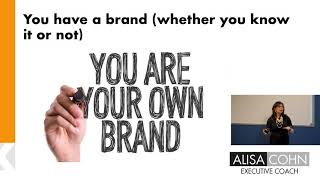
Thank you so much, Jeanine. Thank you everybody. Hi, it's Gwen. Great to be here with you all and especially since I had this four hour delay in New York City last night with all the other flights canceled. So just as my miraculous flight made it to Raleigh Durham, so I'm like thrilled to be here. It feels like a miracle to be here. And while I was waiting, you know how it is, you're waiting in the airport, what do you do? You call your brother. So I called my brother. I said, yeah, I'm waiting to the airport, hope I get to make it. I'm flying to Raleigh Durham. Why are you going there? I'm giving a talk. What are you giving a talk on? I said, influence. How to lead with influence. He said, that makes complete sense. I said, what do you mean? He said, you've always been committed to getting your own way. And it's true, I have to say, guilty as charged. As a kid, I was very interested in how to influence other people, certainly my parents and my teachers. And then as I got older and built a career, I certainly got very interested as a solopreneur in how to influence other people and also how to help my clients gain. Gain influence. Right. So I have now spoken all around the world. I've spoken with lots of different organizations. I've spoken with boards of directors, with CEOs, vice presidents, you know, sort of middle managers, even executive assistants. I've spoken at large public companies. I've spoken at little bitty startups, nonprofits, family businesses. And I've even written articles, you know, many articles actually, on influence. And the reason I write about this and speak about this so much is because influence is the number one tool that you can use to catapult your career. Basically, the way to building the skills to learn to work with and through others and get things done with and through others is the rocket ship, the rocket fuel for your career. So it's actually very, very meaningful for people to be able to learn the skills of influence. And like, what I'm hoping for for you, like having waited in the airport for so long and feeling it's a mir to be here, is that you all will think about how you're going to build your own skills and actually land at the end of this session with something really significant in your pocket that you didn't already know. Because I'm going to tell you the sad truth. The sad truth is that nobody anymore is Convinced by the brilliance of your idea. The brilliance of your idea is kind of the booby prize. Like, you might be right, but in a noisy world, increasingly decentralized, increasingly remote, increasingly sort of with all these generations in the workforce and people working in different ways, it is a noisy world out there. Ideas are more and more prevalent. There's more and more noise out there. There's more and more ideas and noise. And then also think about your own experience. MIT did a study and they found that the average professional. The average professional gets 121 emails per day. It's a lot of email that. Also, MIT found that people sit in and think about this for yourselves, three to five meetings per day. Now, if you're like my clients, that's ridiculous because they sit into eight meetings per day, right? I know you wish. You wish you were only three to five. That'd be like relaxing and you get some work done, right? I know, yes. Not only that, but MIT did not mention all the slack messages we get, all the text messages we get. Why do we get slack in text? Because you're not reading your email because you're getting too many emails. So they gotta text you and they gotta slack you and et cetera, et cetera. So if your life is like this now, put yourself in their shoes. Their life is like this, too. They are not waiting for your brilliant idea to come across the transom, right? So you need to think about, how do I penetrate? How can I penetrate in this noisy world? So the way to do is to build your skills. And I get the good. There's the good news and the bad news, right? So the bad news is that the world at times feels impenetrable. And the good news is that you're not. You're not born with influence, right? You can build it like a skill. And someone recently said, I think of influence as like a trait. No, if it's a trait, then it's kind of innate to you. If it's a skill, then it's a set of tools and mindsets and behaviors that you personally can build. So I'm going to give you an example of how this kind of plays out. I was working probably five or six years ago with the chief audit executive of a large public company, Eleanor. So I loved Eleanor. Eleanor got along really great. She was super smart, very nice, and somebody who actually, for an auditor especially, had like, a very wide view of the world. Commercial oriented, even strategic. But sadly, Eleanor was not really allowed to give her full greatness to work. She was cut out of meetings all the time. You know, the auditor, don't bother inviting her. She only got to do focused on compliance projects, focused on compliance, straight audit. Just check the facts, ma'. Am. Her team, of course, only got to do those kinds of jobs. And ultimately her team kind of felt all shriveled up and it felt like there was no opportunity to grow within Internal Audit, which is obviously the group that she ran. So sadly, Internal Audit became known as the place careers went to die. Not a good brand for anybody, right? So we built the tools of influence. We worked for about a year together to build these specific tools. And over time, it was amazing. What happened to Eleanor was that she suddenly was able to know people in the organization. I used to walk the halls with her. And what I noticed is that when I first met her, nobody said hi to her. They almost like looked away. And as we walked together down the halls towards the end of our process, people were saying, hi, Eleanor. Oh, Eleanor, do you have a minute? Can I ask you about this thing? They would bring her into things. She was brought into meetings more often, especially MA meetings, which actually, if you're the internal auditor, you kind of need to know about what's going on with the M and A activity. She was brought into those meetings, she was given and she was able to convince others to let her do and her team do more interesting, more strategic projects, which was amazing over time. This is a few years in the making. Over time, people in her group got to do more interesting things. They stayed longer, and when they left, they were able to go do much more high status, interesting activities at the same company or at different companies. So Internal Audit became known as the place careers go to flourish. Quite a difference, right? Not only that, but two years after all that, her team won the President's Award for the most innovative idea of the year. So that's quite a difference that the simple tools of influence can make. So it's amazing to think about, and I ask you to think about this, you all today, you guys in the live stream, everybody here today, think about what building tools of influence could do for your career and for the people around you, the people that you lead and manage, you're in some way responsible for. And think about today's talk in light of one or two specific tools that you're committed to building, you can actually commit to building that will help you make a real difference in your own influence skills between now and the end of the year. I love that we're doing the live stream in the sense that I'm talking to you guys too, right? Make sure that you take something specific away from this talk that's going to really propel your own career forward. So the first thing we're going to talk about is building your brand. So we all know what a brand is. Companies have brands. It's a promise, it's a marker. It's the idea of the promotion of consistency. But I guess I would ask you if you are thinking about yourself as a brand. So I think that now there's kind of a thing out there that you are a brand. We all kind of know that. And at the same time, some people are a little funny about that, a little squeamish about that. Like, I'm not a brand. I don't do good at that corporate politics stuff. I don't want to think about my brand. But I would invite you to think about it this way. Your brand is your reputation. They're thinking about you or they're not thinking about you. Even worse, right? If you're in the meeting or if you're not in the meeting before you show up on the phone, in the meeting, in the email, whatever it is, there's a reputation that precedes you and it's either positive or it's negative or it's zero. They don't know you yet. And that's your brand. And you need, we all need to manage our brands in order to be successful because how they view you is actually pretty significant. So the way to, like, think about, how do I. How do I manage my brand? Step one, what's my brand? So it's, like, interesting to think about this because people sort of think, oh, I think I know what my brand is. You don't necessarily know what your brand is. The way to find out what your brand is is to ask people what your brand is. Like, wow, why would I do that? Here's a way to do this. You could actually ask people around you, people you trust, people you feel close to, people who you can kind of set this up with. That's a little weird, right? This email says, I am asking you because your opinion matters and I know you will tell me the truth. What are the three words you think about when you think about me? That's a little provocative. So I just want to say every single person in this room, every person on the live stream, stream can say, I heard this coach talk about this thing and she told us to do this. I don't want to do it, but she told me that I should do it. Right? So I Invite you to use me as an excuse. I promise you you can always blame me and say I'm trying to get some insight on my brand. Will you answer this question? So I did this with my client Chris. He was the senior director of a large public technology company and he wanted to get to vice president, of course. And he also had this whole idea about things that he wanted to sort of put forward projects he wanted to do. And he was blocked at every move. Well, that's weird. Why? He's a smart guy, very smart guy, very experienced, and there's no reason that the things that he is doing keeps getting blocked. So part of the first thing I did was I helped him get inside on his brand. His brand turned out to be. His brand turned out to be, I'm sorry to say, bean counter, practical, scary. Okay. Bean counter practical, scary. I don't know much, but I know it's not a great brand. Okay. So we kind of dove into that and it turned out Chris, he's a senior director in finance, he cared a lot about cost control. That's good, right? Who doesn't want to care about cost control? It turned out the company was very focused on building their innovation portfolio and on being strategic. So innovation and strategic. So he's focused on cost cutting, not breaking any federal laws, however, not quite in keeping with the brand he wants to build to be effective. So like everybody, he got defensive. We cried tears together and then he got himself together and decided, fine, I'm going to pull myself together and do something about this. What Chris did was he took every course in the corporate. You guys have a corporate university, probably they had a corporate university. He took every class on strategy and innovation. He went so far as to take a class, an actual like MBA level six week program at a local university about innovation and design thinking. So then he thought, well, this is pretty good. I mean, like, you can't say it's not good, this is good. He decided that he would create like a 90 minute brown bag session and he brought it back to his department. Well, you know, the material that he learned there, well, people heard about that and so they asked him, will you do the brown bag session for us? Will you do it for us? So he became known, listen to that reputation. He became known as a person who could deliver something that was like innovative and strategic as content. Not only that, but he specifically thought before meetings, what am I going to contribute here? Which is going to be seen as strategic. Okay, he thought about that. Now through all of this, he got more well known young people would come to him. He actually twice did a session to mentor young people on their careers. And after all of this, I retested his brand and he became known as Strategic Accessible Leader. Strategic Accessible Leader in less than one year. Now note. Right? Right. Wow. Right? Notice that he worked at it. It was purposeful and intentional. It didn't just happen. So I invite you to recognize that you can always alter and change your brand, but then you don't always know what brand to change. So part of what you want to do is to find your sweet spot. All of us have things, natural talents and gifts that we bring to the table. So you want to have a good sense of your self assessment. What am I bringing to the table? What are the qualities? What do I do with your skills and experiences I can bring to the table. But that's the ven. You need to also think about the Venn diagram between what you bring to the table and what the company needs. Right. So that's what the sweet spot is because the company's also looking for your specific skills in a certain way. So I'll tell you, my client, Erica. Erica left a pretty high power, high status, high paid, high priced, right? Consulting firm, strategy consulting firm, and she joined a media company. It was great for her. It's fantastic. They loved her. They loved her strategy, loved her intelligence. It's really great. And she loved the pace and frankly the topic. She's kind of a media addict, so she loves the topic. That's great. So she's doing really well there, except that she feels just out of step. Well, when I tested her brand and kind of got an understanding there of what sweet spot she's supposed to bring to the table. And she's bringing strategy, that's great. She's bringing intelligence, that's great. But she's also bringing impatience and drive and a sense of like urgency, which you think would be great, but it's a little too much for this media company to really digest. And so it's getting in her way. So I'm not telling you. Okay, Jeanine. I'm not telling them to lose their drive. Just to be clear, right? I want to be clear. The message is not, do not have drive. Drive is good. And I'm asking you to be situationally aware about what's the sweet spot between what do you bring to the table and what the company is asking you for. To be kind of attuned to that. Because we put blockages of influence in our way when we're not attuned. To that. So in light of that, you've also got to take control of your own narrative. In all this noisy world, nobody is waiting to connect the dots for you. You've got to connect the dots for other people and so they can understand what you bring to the table. Your narrative is something that you understand in terms of the way your career, you know, sort of the way your career has gone to get you to where you are now and earning you the right to influence now and helping you move forward and getting other people to pick up your ideas and run with them along with you, as well as moving into levels of more authority with where you can again influence more. So an example of this is my client Francesca. Francesca works for the New York Times. She runs one of their video sections there and she's great, she's got this great background for it. And what they did, they did was a reorg over there and they couldn't find a home for the data team. Well, it's obvious she runs the video team. Really, the video team comes down to a whole bunch of data. It's kind of obvious, right? Not only that, but before she ran the video team she was like a data nerd, like a self described data nerd. So it's sort of obvious that what they should do is put her in charge of the data team. She has the qualifications and also it's like a seamless experience. Like they actually, they're symbiotic together. That makes sense. Well, that makes sense to her and it makes sense to us. However, the folks that made the decision, that making the decision making are editorial people. They don't really understand the connection between data and video. They're not really up to speed on what it means to run video or to run data. Now that may not be right. They should know, but they don't know. So what she had to do was she had to figure this out. And go figure out, first of all, who are the decision makers. It's not like a clump of people, it's like one or two or three decision makers. She found the three decision makers and she went one by one and gave them the narrative of why her experience is exactly right to take over this data team. And so she was able to make that case by taking control of the narrative. They put the data group underneath her, was going to go someplace else. They put it underneath her and now she's able to manage the whole group together. So thinking about who is missing your narrative and do you need to control it differently, but just recognizing most Importantly, that folks are not connecting the dots for you, you have to connect the dots for them. Now that all said, part of the way you do that is putting yourself in the middle, becoming indispensable. So this is based on research out of the University of Chicago by Ron Burton. So he is a guy, if you can even believe this, people have, like, subject matters. His expertise is in social network analysis. That's like a thing. Okay. So basically he found out that the people who are most successful in companies. Let me step back actually and tell you, most people in companies are kind of at the margins here. On the outside of the network. At the outside of the network. So what that means is that think about your own experience. Who do you naturally talk to day to day? You talk to your boss, you talk to your colleague that you're close with in your everyday work, folks who you work on projects with. And if you think about it, you may be talking to whoever they are, the same people every day. Right. Day after day after day. There's nothing wrong with that, by the way. But what that means is that you're in one of these silos. And if you think about it, large companies, and from what I understand, IBM is kind of a large company. Is that about right? Yeah, large companies naturally go into silos and because all people do is what the natural rhythm and gravity of their work lives tell them to do. Talk to the same people every day. So what Ron Burton says is what you need to do is get out of that silo. You need to put yourself in the middle. That makes you indispensable. You learn what other folks in the company are doing. You can share best practices, you can connect other people. Like, hey, those guys are working on something very similar as those guys. I'm going to connect them together and really grease the skids of social discourse within companies. What's powerful about that is that you develop a reputation for being in the know, for being indispensable. And that over time is something that helps build your career success. So a good example, like a perfect example of this is my client Beth. She's. She's now the president or the president and GM of a major division of a large tech firm. I started working with her eight years ago, eight years ago when she was a senior director in engineering. Senior director in engineering. And she knew, Beth knew that she was an introvert and she knew that she needed to get out more. She only talked to the same people every day, people who knew her. She had tight relationships with them, but she only knew A very small number of people. So we together put together a plan, and she was going to decide, by the way, just to stop and ask you a quiz question. Do you have a lot of time, a lot of extra time in your day? Right. No, most people do not have a lot of extra time in their day. Right. They don't. So it's like, how do I fit this in? Right. And also, I just want to be clear. Beth was an introvert, Right. Which means that she was not seeking out large groups of people and learning how to work a room. That was not Beth. So she decided that what she would do was devote 30 minutes twice a week for coffee. 30 minutes twice a week. Coffee with somebody new every single week. So what that did. Right. She would. By the way, how do you find people to have coffee with? I mean, after the first few. Right. How do you then, like, what do you do? People that she didn't know, she'd reach out to them. You and I have kind of, like, crossed paths, but haven't gotten to know each other. Let's have coffee and people in a meeting. Nice to meet you. We don't really know each other. Let's have coffee. People on the phone that she never actually met in person. We've never met in person. Let's have coffee. Set up the dates and have coffee with all these people 30 minutes, twice a week, year after year. Right. Month after month and year after year. So just to say I wanted to talk about this experience. Was she, like, excited about saying, want to have coffee? I've never met you before? No. Was she a little uncomfortable? What are we going to talk about? Yes. Did she have some pretty bad, awkward coffees? Yes, she did. Did people stand her up? Yes, they did. Right. Did she always make a lifelong loving connection? No. But after a year, she began to know more people in two years. And you can see how this adds up. She would then see people in the halls. Right. That she had coffee with. And you know what it's like when you don't know anybody and you know the person who had coffee. Oh, we had coffee. We're like best friends, right. And, hi, how you doing? The kids and this and that, and they have a little, like, social discourse together. Great. So as I mentioned, eight years later, eight years later, the company was looking for the new president GM of this organization. Why'd they pick Beth? They picked Beth because everybody knew her and everybody was rooting for her. And that cannot be said for most large political environments. Right. So think about that two times a week, 30 minutes, coffee for eight years, then gets her to this kind of place where she can be. So I want you to think about that from the point of view of how could you build your network in a simple way that's going to fit in with who you are and the amount of time that you have, because ultimately the benefits pay off. But not tomorrow and not next week. So making it a process. We'll talk about that later. Making it a process is important. So as part of that, you got to get out of your lane. Getting out of your lane socially and professionally, but also you have to get out of your lane from the point of view of what you want to build. So we all take courses or train ourselves in areas that are, like, right in our lane, our sweet spot. However, you could think about building adjacent skills. So there's somebody in New York, his name is Lenny. He's the head of communications for a hospital in New York City. And it's like, you meet him and you think, oh, you're supposed to be like, you went to school for communications or you were an investor relations guy. No, the guy's a nurse. Okay? He was a nurse, and he built his skills as a nurse and walking around being a nurse. And you know what? He had an interest on the side in, like, social media, and he built not one, but two apps and put them in the App Store. Now, he's not a coder, so he figured out how to get someone to code it for him and to make it for him. His ideas, put them in the App Store. That's great. Well, when they were looking for someone to run sort of the digital communications aspect, they weren't looking at Lenny. He took control of his narrative. He told them the things he had done to get out of his lane. He. And wouldn't you know it, they were thrilled. A guy with that kind of digital experience who's also a nurse, who's been in the trenches with everybody, that's like, perfect. They put him in that role, and soon enough he was promoted to all overseeing all communications for that hospital. So thinking about how do you get out of your lane with adjacent skills helps you think more differently about how to move up in your career. And again, when I talk about this notion of getting promoted, I just want to say getting promoted is great. You've got to influence people to get promoted. As you move up the hierarchy, you have more capacity to set the direction of the things that you think are right and also to influence at a larger scale. I think it's just Very helpful to think about these as examples. But getting promoted is not the only outcome of influence, right? Just to be clear about that. So part of what you also want to do as part of putting yourself inside of a network is to do favors for other people. Do favors for other people. Like, look, Robert Cialdini, who's one of the fathers really of influence, he actually wrote a book called Influence, right? So he literally wrote the book on influence. He talks about doing favors for other people as being primally wired in us. I do you a favor, you feel you have to return the favor. Now what kind of favor should you do for other people? Right. I don't have any budget, I can't do them a favor. They okay, you can offer to be a sounding board. You can give them input on some project they're working on. You can help them out by supporting them in a meeting. There are many different ways that you can. Sometimes, by the way, I would add, just giving a positive word is like doing them a favor. We have a lot of currencies that we trade at work. So thinking about what can you do for others and how are you building your favorite bank? So one of my clients, Pete, he's in sales and he does this all the time. What kind of articles can I send to other people? What kind of articles? How can I make more and more connections? So people now know that he knows everybody. When they need a favor, they ask him, well, when he wants a favor, he's able to get that. And when he needs people to do stuff for him inside the organization real quick and outside of process or whatnot, he's able to find people to do that. That's the power of doing favors for others. Now the thing you need to do as you sort of think about all these different landscapes together to nourish your relationships over time. And the way to do that is to think about how do I sort of form my network. So here are some of the folks that you need to form your network. Obviously you need allies, right? People who are going to support your point of view. And obviously you need thought leaders and subject matter experts. The reason is because they can refresh your thinking. If you've got a question and you have someone like that in your network, you can make a quick call and they can give you the answer from the point of view of the thought leadership answer or the subject matter expertise answer. And also it helps build your brand when you're connected to well known people. So thinking about that, you also have your cross functional peers, of course Connectors and mentors and sponsors. So connectors help you connect into the organization. The more connectors you have in your network, the kind of more frankly, span you have. And when you think about mentors and sponsors, who's recently heard about the distinction between mentors and sponsors, is that like, I know. Yeah, sponsors are like a thing. And like, mentors are like a thing. Okay. I know that you're thinking silently to yourself, yes, Alyssa, that's exactly what I have heard recently. So sponsors will put you into situations that maybe make you uncomfortable and even when you're not in the room, will put you up for new projects that will stretch you and grow you and give you more kind of visibility. Mentors, also good, will help who have trod the path before you. So what they will help you do is, like, understand and think about how to navigate in your career. So, Hattie, I'm going to talk about mentors and sponsors a little bit more in a minute, but I want to say this. How do you keep track is a question that people ask me all the time. It's like, first of all, I already know that whatever I've given you already is like, a lot of stuff. It's a lot of information. And how do you keep track of any of this? Well, I would say build a spreadsheet and keep track of the people and the important contacts in your world and in your professional life. Okay. The reason to do that is think about your own calendar. The only reason you get to any. The only reason you're here is because it was in your calendar. The only reason we do anything is because it's in our calendar or somehow in our existence system. The same is true with networking. The cautionary tale on this is I just did a talk like this for a large professional services firm. This was in April of this year. So I was catching up with my contact there. Her name is Carol. And I was talking to her and she said, I said, oh, did you follow up on the networking things we talked about? No, I got busy. Look, fine with me. But the reason we don't do it is because it's not in front of our face. And putting it like on a spreadsheet like this puts it in front of your face. And don't be embarrassed to do that, because if you don't do that, you're going to be telling me in three months, oh, no, I got busy. So I really want to encourage you to do that. Now I want to talk a little bit more about mentors and sponsors as, like, a Subset of all these groups. We always think of mentors as having to be these old, wiser people, probably with a beard that pretty much looks like everyone's mentor. Right? Or a crazy serial killer. Either or both. I just want all of you to recognize that mentors can come in all shapes and sizes. Right? Mentors and sponsors can be this sort of traditional old wise person or this younger person who may not look like you. I really want to encourage you to think about that. So an example is that I was one time teaching a leadership program at a corporate university, and this older leader, very experienced leader, she was complaining about how I get so frustrated. Well, they won't do the thing that I want them to do. And it's so frustrating how I hold them accountable. And there was a very young new manager in the back of the room. And he said really calmly, you know, when I recognize that someone's not doing what I want them to do, I don't let them off the hook. But the first thing I think about is what's going on with them. Why aren't they wanting to sign on to my idea? And as I think about that, it kind of gives me some more insight in how to maybe engage with them. Well, the more senior leader was like, wow, that is brilliant. I never thought of that. And they had a great conversation. Over time, they actually began to meet monthly and they began to co mentor each other. She called him her empathy mentor, which I love. And he of course got a lot out of her in terms of her ability to navigate an organization. So look, do not shut someone down as the idea of being a mentor just because they don't look like your image of who a mentor should be. Then I would say, why stop at one? Create a personal board. Board of directors. A personal advisory board. That's my personal board of directors. We meet on the beach on a regular basis. Right. It doesn't have to be formal. It can just be fun. And the idea is that people all over you will be sort of having a stake all over your life will have a stake in you if you create that context for them. So it's a little weird. Like, will you be on my advisory board? Will you be on my advisory board? It's like a little bit of a strange request. However, as you get to know people, really, you could say, could we have a relationship where we kind of bounce things off of each other and even like co mentor each other? And once you have enough of those folks, you can really think about having your own board of advisors. So My friend Sejal, she has done this brilliantly. She told me about this like four years ago. Like, I have a personal board of directors and they help me with everything, with my finances, with my career, with my dating life. Like every single thing. I said, well, that's great. So how this works is that she very recently was really trying to figure out what to do with my life and thinking about how do I get out of financial services or build something more exciting within financial services. And her mentor said, listen, you keep looking for that next job that's not really working for you anymore. You need to start your own thing. So she was like terrified. I can't start my own thing. I'm so scared. But she got it in her head she should start her own thing. Okay, well, about six months later, she met somebody who was starting a hedge fund in Singapore and she up and moved to join this person as a co founder in Singapore at this hedge fund, right? And started her own hedge fund. And she would never, she told me, I just was emailing with her. She told me she would never have had the courage to do that unless her mentor encouraged her to do it, showed her how she could do it, and kind of gave her a picture of who she was that she didn't personally have. Like a self portrait of herself that she didn't already have. So thinking about that, how do you build into your life? Folks who are around you will give you, tell you the truth and give you a self portrait of who you are and encouragement even to do things you're scared of. So I wanted to talk about one more stakeholder in the workforce, one more connection in the workforce. Some people have enemies. Now, I know nobody in this room has enemies and nobody on the live stream has enemies. I'm just saying some people have enemies. You have to deal with the reality that you have enemies. Or some people have enemies in the workforce and you have to deal with their enemies, people who are actively engaged against you. So thinking about this, I'll go back to my client, Eleanor, who is the chief audit executive of this large company. So I told you she had to build the skills of influence. One thing that was true for her is that she had a very powerful enemy. I'm sorry to tell you this. He was the chief legal counsel, okay. And he really didn't like her. He was actively against her. And some of the reasons why she wasn't in those meetings is because. Is because she. Because he wouldn't let her in those meetings. Okay. Boy, that's upsetting again. We cried tears together. And then she decided to swallow her pride and get over it. And she just said to Paul, let's have coffee. She'd never done it before, let's have coffee. Okay. She found out more about Paul and she found out more importantly about his goals, his pet project that he was working on that he was not getting any traction in. And she has a cross functional view of the company. Well, she knew there was a group who had funding to help support his project. She connected them. Sure enough, they were able to give him some small funds just to help his project. He was eternally grateful. And it was night and day. Suddenly, Eleanor was his best friend. Suddenly Eleanor was like really on the good side. And he invited her to meetings all the time and wanted to spend more time with Eleanor, but who wouldn't want to spend more time with Eleanor at that point? So the point is that I'm sorry to tell you that enemies are reality at times. And you need to deal with that and figure out, how do I deal with enemies? How do I just engage with them so they don't get in my way? Now, one other way to think about this organizationally is because when you have an enemy, you can sometimes have somebody who's close to them and close to you put a good word in for you. I would add that research has proven, I'm thinking, who the researcher is, Jeffrey Pfeffer, who's the author of a book called Power. What he says is if you say great things about yourself, then people don't like it. They think you're like, oh, you're a bragger, you're self promotional. When other people say good things about you, they think, wow, she's so amazing, right? She does great things. So find somebody that you can partner with who will say good things about you and that you can also make a pact that you'll say good things about you. So when you're in a meeting, you say good things about her and about how great she is. And when she's in a meeting, she will say great things about you. So that's kind of the pact you can make with other people. It builds both of your brands together, building and demonstrating expertise. Now, I'm going to pause for a second. Janine. I know I'm a little bit longer than expected. Should I keep going?
Yeah. Folks are chatting on slack.
Okay, good. Okay, fantastic. Okay, good. If anything changes, let me know. Just give me the high sign. Okay, good.
Open it up to questions. So sorry. So we'll open it up to questions in about five minutes.
Perfect. We'll make it. Because I want to tell you this story about building and demonstrating expertise. So again, back to Robert Cialdini. He is like the premier godfather of influence. And what he has isolated is that another way to build your influence is to be seen as an expert. Sure. So that makes sense to me. Right. But how do you really do that? So it reminds me of when I was a strategy consultant. I was, like, very new. I was on this case with. We were doing a strategy for a tech company. So Eduardo was my partner. We flew to D.C. and we sat with the folks in the tech company. And the person we were sitting with, he was so excited about technology. On the whiteboard, he explained the whole guts of the system. Like, I'm a journalism major and I'm a strategy consultant. Like, I don't. That's not my thing. So I, in the nicest way, tuned it out. Not Eduardo. He grabbed his notebook and he drew what that guy was drawing on the whiteboard. Why is he bothering to do that? What a waste of time. All right, we go back to Boston. I was living in Boston at the time, and we're presenting to the case team, and Eduardo jumps up, pulls his notebook out, and writes on the whiteboard the way the system works. Well, like it or not like it, Eduardo became the expert on that engagement. And I never forgot that understanding what was going on and demonstrating expertise was extremely influential, as is storytelling. As is storytelling, because when you tell stories, first of all, you're more likely to get your message across. You're actually 75% more likely to get your message across. And also, people see you as an expert. She's telling all these stories about it. She must know what she's talking about. So thinking about how do you build your repertoire to tell stories? Stories don't just happen to you. You plan it in advance to tell stories, and then you practice your stories. Okay, so all of these things. Actually, I'm going to talk about developing your luck in a second. But all of these things are uncomfortable, right? All of these things are uncomfortable. And if you practice them, they get more comfortable. And we'll talk about resilience in a minute, but I first want to talk about developing your luck. So Richard Weissman is a psychologist and an author who's done a lot of studying on luck. So it's not like, you know, you sort of think about luck like, oh, you either have it or you don't. From the point of view of. From the point of view of, can I guarantee you're going to win the lottery tomorrow. Not that kind of luck. Okay, that's like chance. But what he found is that if you are more open, more humble by not knowing and asking more and more questions, and this is important, take more action. You can develop your luck. You run into more people. You'll spend longer asking questions in the conversation. And so you will learn more things, and they will learn more about you than you would have, than you would have prior to that. So building your luck is kind of an important way of also influence. But the way I see that is really getting out of your comfort zone. So part of getting out of your comfort zone is being able to be comfortable out of your comfort zone. So you really have to build your resilience. This, again is Jeffrey Pfeffer, author of Power, which I love that book. And he said the single most important skill to develop for building influence is the ability to respond to and overcome setbacks and failures. So that's what I tell you. Everything we did in our careers so far, and I'm just giving you notice, every single thing you've done so far has already been easy. Everything you're now going to build in your career is going to take discomfort. And so being able to be resilient is going to be important. So I'm just going to quickly talk about the fact that you can actually build your resilience. Again. It's the same thing. It's not a skill that you have it or you don't. It's something you can build every day. And the first step is to accept that it's a part of life. Change and discomfort are part of life. That's Tony Robbins, who actually jumps into ice water every day that he can or plunge into a cold bath. I know you can't believe it, right? Like, why would you do that? Well, he likes it, but I think in part it's to remind himself that change and discomfort are parts of life. So I want to give you three skills of resilience you can't believe. Like, oh, I can't get over the ice water. I can't get over the ice water. That's right. So gaining perspective, what I tell my clients is this. Watch it like it's a movie. Watch it like it's happening to somebody else outside. That's going to give you perspective. So in my world, I'm just telling you that there are often times. I know you never do this. In my world, professionals sometimes yell at other professionals. I'm sure you've never been in that room before. However it does happen. So the best way to handle that someone's yelling at you, you watch it like it's a movie. Like, wow, that's really happening. Helps you gain perspective in the moment. And most importantly, not to take it personally. Taking it personally is the anti resilience. So it's really about having perspective and back to not taking it personally. Reframing setbacks. Setbacks happen. They are data. And so either if you're trying a new skill, it's either working or you're learning. Those are the only two choices. So if you think about reframing setbacks for yourself, it's really about how do I not take this personally, not give in to the upset this is causing me and reframing it. So I understand that, number one, I've learned something. And number two, there is a gift in here somewhere. Look for the gift. Look for the gift. And then the last thing to say is that next step, thinking is the only way to get out of it. Don't stay stuck. Think about what is the next tool that I can use, what is the next thing I can try. That didn't work. That's okay. Try, try again. That's going to help you continue to try new things. And what Tom Peter says is the person who tries the most things wins. So I offer you that today. So I want to say thank you. Sort of on time, more or less. Yeah. Thank you. And feel free to get in touch with me. Thank you. And I look forward to your questions. Please.
We've got some questions that came in from the live stream, actually, some good ones. I'm actually going to hit the one about failure.
Okay.
Space to recover.
Yeah.
Because this came up last week.
Okay.
In the innovation session and it's coming up again. So there's a lot of notions and we were just talking about growth, hacking and being able to fail and feeling like it's okay to fail, but sometimes you can't afford to fail.
That's true.
So how do you balance being able to take some calculated risks and put yourself out there and do some influence when you don't know what the outcome is going to be? How do you best assess that?
Yeah, we could do a whole master class on that because that's also about decision making. Right. How do I decide if it's okay or not? But some quick analysis for you to think about is how high are the stakes? How high are the stakes? If this is a do or die, if this is a must win, that's not the time to try. New skills, that's the time to try. Tried and true. And however, if it's a must win and you know, for example, you're trying to influence something and get something across the goal line and you don't have the right people on your team, sort of right people in your influence network to do that. Sometimes it's a point of like Hail Mary, as in, we've never met. I am sure we're going to become lifelong friends. I need you to support this thing for me. Can you do that? And at the same time, if it's something that you've assessed is lower stakes, use it as an opportunity to learn. But Janine, the last thing I would say is that you don't always get to choose. You know, I'm working with a company and last week they had something really bad happen, like they lost a major client. Nothing was going wrong. They didn't try to do something new. They just lost a major client. You don't have a choice when that happens, but you still have to react to it. So reframing that is still quite important. And for it specifically, they said, we've learned something now that we will never forget because sometimes failure teaches you. And. And we figured out who in the sales team has leadership capacity that we're now going to build. So we still got a gift out of it. But no, it still hurts. I think that's important just to realize too.
So another question. This session is wonderful.
Well, thank you.
Where would I find coaching like this within IBM? Maybe this is a question for Terry and Linda, because it's an IBM question, I believe I have an informal sponsor and I do have a technical mentor. How would I explore executive coaching and personal brand development?
It's a great question.
How can they get.
So the whole next. Sure.
So the grow session in August is.
Actually going to be all about this. And I've got a whole set of resources that I'm going to make available.
For everybody to use to be able to tap into mentors, understand the difference between mentoring sponsors, coaches, and what you can do within IBM to help nurture that.
So.
So join next month.
Yes. Yeah, exactly. Exactly.
Thank you. Another point on here is a comment on here. Maybe you can add, because I think a lot of us probably felt this way when you were talking about asking a colleague.
Yeah, for three words.
I know I had a couple slacks on that. Personal slacks and it on the channel. Some of us feel more comfortable asking family, okay. They may be kinder. And it's harder to ask a colleague, how do you get over that. And how do you kind of digest it if it's not really something you want to hear?
Oh, it's such a fabulous question. Again, life is full of setbacks and we hear things we don't want to hear. So make peace with that. If you don't know, if you don't know, you can't do anything about it. So it's good to get the so called bad news if you need it in order to rebuild your brand. That said, you've got to be kind to yourself and to your point, process it. So I would say think right this second of the kindest, most compassionate, most insightful colleague or friend that you have, right? Think of that person and kind of buddy up with that person and say, I'm going to do this really scary hard thing. Will you support me? And so that person will be able to process it with you and probably also kind of knows you pretty well and so can help you make sense of it. And then I would say, you know my. I work out with a strength coach three days a week, four days a week. And just to say, I've learned a lot about life and coaching from him and he says to me, when I'm dawdling, put your hand on the weight. Thinking about it is not helping you. Doing it helps you. Don't think about it too much. Do it be really powerful for all of you. Send me an email and tell me what you find out.
Another question. I have a team member who's on the other side of the country, so going for coffee isn't doable.
Yep.
He doesn't seem to be interested in being part of the team and it seems a little rogue which impacts our team negatively. How can I try to change that since dynamic coffee isn't right?
Yep, it's a good question. We live in a remote environment, so we have to find remote tools to help support us. There's no question. So I don't. I love to ask this person questions. Have you tried video? Best practices to work with someone remotely are to see them in person at least once. And so if that's possible in the context of your life and your budget and your expenses and all that, helpful to go see this person in person. Definitely. If you're the manager or if you're somehow responsible for this team environment, it's really helpful to say like we need to have a heart to heart talk either on video or on the phone and because your attitude is affecting our team. So I want to try to find out more about you and find out if we can build more rapport. And also I need you to know that I just support the team a little differently. Those are some ideas I have. I would just add, you know, like when you run into somebody, it's like you run into them in the kitchen or wherever you are. When you chat with someone, it can be like that remotely. Like using chat and using different video ways of connecting. Those are helpful ways to sort of mimic the in person environment.
Can I put you on the spot, Eric, what you did with your team? Absolutely. So I'm gonna. Eric Anderson.
Great. We have a case study.
He's got a virtual team and I think he did something pretty cool.
Yeah. So as Janine said, I have a completely virtual team. I think at most we have two people in one city, but everyone else doesn't. Folks are all remote. And so when I first became a manager in the middle of last year, I went through all of the manager training that IBM has, which is actually pretty good. And I found out about this management empowerment fund that IBM has and is reading through the details and trying to make sure I didn't go to IBM jail. I realized that I have a little bit of flexibility to do this. So I talked to my team and said, hey, would you guys be interested in getting together remotely? And so I talked to each one of them, ordered pizza that showed up at their house at the same time, which was a logistical nightmare. It turned out to be a lot of fun and we all turned on our videos so we could see each other via webex.
It's beautiful.
And it really was such a fun event that we've now done it, I think three times. And for the launch of one of our projects, the bigger team did it. So it's not as ideal as getting together for coffee, but it was something that did work out really well.
Can we clap for you? That was fantastic. I want to add about that. That's so, so powerful and so great. And like notice what a built. What a great brand you built by doing just so much trouble and so much design. And then who's not telling stories about that at home right when they get their pizza at midnight or whatever. Right. That's amazing. Yeah, Beautiful.
Another question here. So with enemies, it's not, it's not easy when they choose not to engage or have.
I know, I know, I know.
Doesn't have an interest in the team approach. Some are intimidated by a woman with expertise. Sorry to say. So how do we handle that? We're trying to get them bought in.
Yeah.
I'm an expert. I don't want to come across as a know it all.
Yeah.
And there's a gender factor in here that individual's concerned about. How do you handle this?
Yeah, complicated, right? Like, that's a coaching question to me, not like a question question how. Because there's like a more to sort of understand, like, what have you tried and what's this person like? However, that said, we have to accept our reality, as in, like, this is what's given to us and decide, I'm not going to let this get in my way. As in, you're my enemy, as God is my witness, we're become best friends by the end of the year. Like, I have declared that to be true. That's an attitude you could take. Now, one way to engage with that person if they won't engage with you is to figure out who knows them well, that you have a reasonable relationship with. Not a great relationship with, but not a terrible relationship who knows them well. And can you take that person out for coffee or lunch or do a video call or do a call and say, tell me about this person. What's the best way to sort of get to this person and find out more about them? If they will have a meeting with you? Don't make it about business. Find out about them. They have a life just like you. Building rapport and this notion of likability. And that's a. Likability is like a personal word, a professional context that looks like rapport and sort of the ability to sort of have a social capital together and to be able to have an organic conversation when you need to. That is the starting point of influence. It's a starting point of winning someone over. So it's about going step by step and having a strategy and figuring out who around you can engage to get more ideas about this person. One last thing. What's in it for them? So you're the expert. You're the expert. But you can't really show your expertise until you've demonstrated your value. There's a difference between expertise and value. So how can you add value to them? By the way? Is that fair? No, that's not fair. But that's the world I live in. I think it's probably the world you live in too. So think about how do I get what I need and if it means swallowing my pride or trying a few different things that like, oh, I wish I didn't have to try, that is what it means. Hope that's helpful. Yes.
Okay, so those are all questions. Anybody have anything in the room before we wrap up? Okay, so, Alyssa, I want to thank you.
Thank you. So fun.
Have the replay posted, probably by tomorrow. Thank you.
More from Alisa

128: Ken Davenport Produces Broadway Hits. Here's the Startup Playbook Behind Them


The Library of Minds Podcast | Top Startup Coach: The New Hiring Rule for the AI Era | Alisa Cohn


124: Alex Lieberman Built Morning Brew to $75M. But That Was Just the Start [ENCORE]

123: GiaNina Paolantonio Has Millions of Followers. Here’s the Business Behind Them

122: The Kettle & Fire Founder Is Fixing How America Pays for Health | Justin Mares, Co-Founder a...

121: Founder Mode on Bitcoin: Double the Volatility, Double the Stakes | Will Reeves, Co-Founder ...

120: Miro's Founder on Reinventing a 100-Million-User Company | Andrey Khusid, Founder of Miro

119: Eric Ries, Author of The Lean Startup, The Corporate Governance Crisis No One Wants to Admit

118: Josh Reeves, Co-Founder and CEO of Gusto, The 3-Part Alignment Framework Every Founder Needs...