Building Your Influence
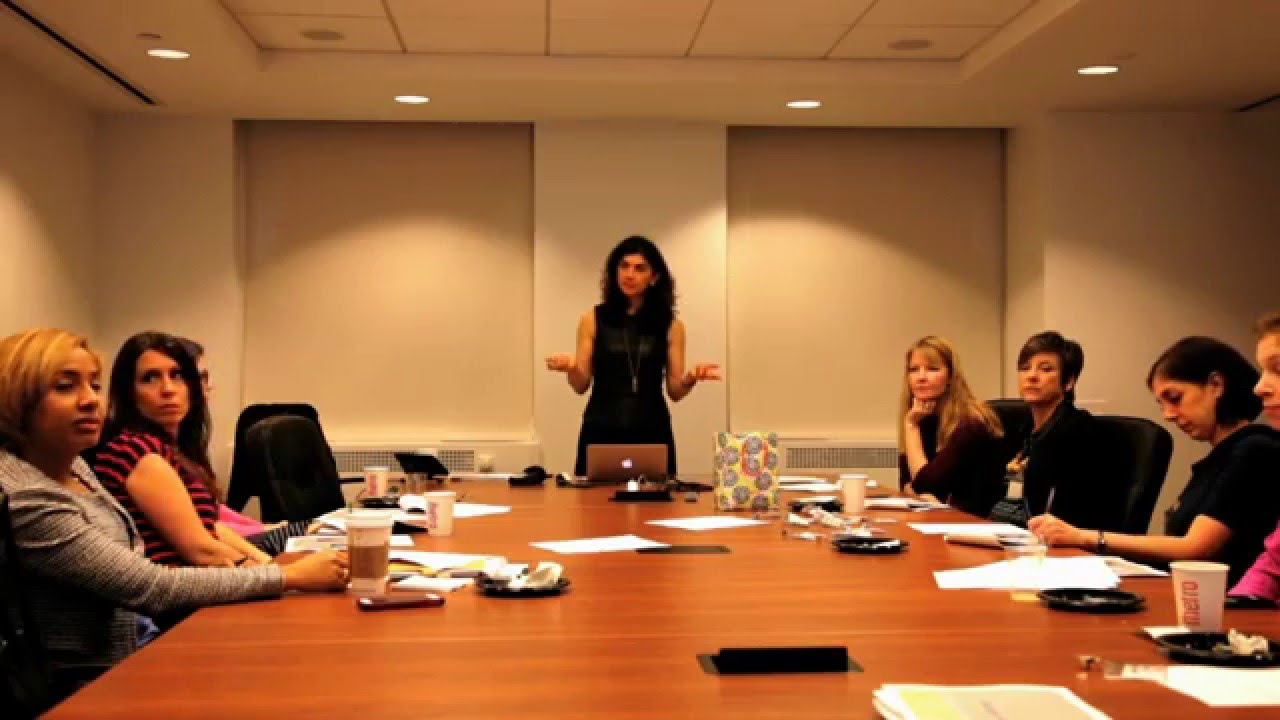
Alisa Cohn teaches how to build influence without formal power, using Robert Cialdini's principles: likability, reciprocity, social proof, scarcity, consistency, and authority. She covers practical tactics like mirroring body language, offering small gestures, and creating scarcity through confidence.
Chapters
And just by way of sort of starting us off, I will share this. I was talking to my brother on the phone last night and I said, "I gotta go, I gotta be up early, crack of dawn this morning to do a talk." He said, "What's the talk on?" I said, "Talk is on building your influence." He said, "That makes complete sense." I said, "What do you mean?" He said, "You know, Alisa, you've always enjoyed getting your way." And I have to admit, it is 100% true. I do like getting my way. I really do. And I have now spent over 15 years, probably 20 years, looking at the science of getting your way, which is what really you think about when you think about influence. So I'd love in a few minutes, I'd love to kind of know what you think when you think about influence. And we have a very small group, and I absolutely want— I'm going to actually insist that we sort of do this session workshop style, because I don't just want to talk. I really want to engage with you and understand why are you here today, and why is influence so important for you? So I am going to ask you that in a minute and have a few folks sort of share what do they think about when they think about influence. But just to kind of nail the topic, it's not just about getting your own way, right? It's about swaying an outcome. It's about affecting something. Now, I focus, as Melissa said, I focus on the areas of certainly executive presence and corporate politics. But when it comes to influence, really, and the sort of the epicenter of corporate politics and executive presence has to do with the notion of power, influence, and charisma. It's really how to use your personal style to affect outcomes positively, hopefully positively for you and your career and also for the company, right? You're driving forward something in the company. This is not about sort of getting ahead at all costs. This is about really understanding what needs to happen and then pulling people around you to drive forward those outcomes. So when we think about power, power has a lot to do with the use of influence and it has a lot to do with sort of the formal use of influence. So the best example of this is that if you are the boss, if you manage a whole bunch of people, right, to some extent you have power. You have the power to hire and fire, you have the power to make their lives better or worse, right? So the higher up you are in an organization, the more power you have from a formal perspective. But increasingly, increasingly, formal power, even if you have it, is not enough anymore because we have a lot of different elements at play. We have a lot of workforce trends that mean that influence is more important. So first of all, you know, we're sort of, and certainly in this country, we've just become more enlightened in the workplace and less autocratic and much more so-called authentic and genuine and getting people to want to follow you, not because they have to follow you. That's different of the workplace, you know, sort of 25 years ago and certainly 50 years ago. You know, in addition, we have the millennials coming in. And their expectation of being involved and collaborating together to get outcomes, not just being told what to do. Then I would add that, and I'm sure that you can relate to all this, the remote nature of today's workforce, the flexibility, all requires you to be able to know people and be able to get done what you need to get done with others and through others and collaborating with others without necessarily being there at the same time. So really, the sort of building that set of relationships up So you have an influence network to get done what you need to get done. So I hope I've made the case about why this is so important in the workplace. And for me, influence is getting more important, not less important. And I really devote a lot of time and energy thinking a lot about influence. And with my clients, absolutely with my clients who are sort of craving to understand what, what do I need to do to be more influential? Because it's not working anymore to say you need to do this and then people don't do that. It's like, okay, I don't have any more tools. Well, today we're going to help you build tools. So I'm gonna stop there for a second and I'm just gonna ask you, why are you all here today? I know that this is part of your program, so I'm aware that you, like I, woke up early in the morning to get here, not just to eat muffins, and you're welcome to have a few muffins, right? But it's part of your program. But if you think about influence, what's in it for you? I think it's important to have something at stake before we do a workshop. What's in it for you? Who can share?
Well, I mean, I'm in sales, so obviously— And your name again? Amy Darnell.
Amy, okay, yeah.
So I'm constantly negotiating huge contracts, and influence not only comes in handy during negotiation process, but just in sales itself. You're trying, you're constantly trying to convince people to work with you, or understand your value, and so I think from a work perspective, certainly there, but then on a personal note, I am going to be a new mother at the end of the year.
Oh, congratulations!
So I think influence just in that manner with the person and then later on will also be really valuable.
Yeah, you want to sell it in at home, right? You want things you gotta— yeah, got it. Listen, that's life, absolutely, right? Okay, good, thank you. One more thought about why influence is so important? Yeah, Stephanie. I think also a big piece of it is getting buy-in, especially when you have a lot of cross-functional relationships and partnerships at work, it's important, especially like in my role where I might work with technology but also work with like our field and stuff to get their buy-in on an idea or a concept or a vendor that I'm working with or something like that. So being able to clearly articulate why this is important, you know, why I think this is the right decision, and so having that influence on them. That's excellent, that's excellent. The whole notion of nobody operates by themselves, nobody, doesn't matter who you are. We all operate cross-functionally with people who do not have to do what we want them to do and have their own opinions. I was just working with a leadership team of a hospital, and there was sort of the site head of this one particular site in Las Vegas, and then there was sort of the chief medical officer. And so there was a discussion about a vendor, right? Who are we gonna pick? And what it turned out was, you know, there was no decision, there was no sort of decision that they made together about how they were going to decide and how they were going to collaborate together. And at the end of the day, there was a sense from the board of like one person, sort of the chief medical officer, having the vote and not handling it with the site, with the site head of Las Vegas. And there was frankly open warfare between the two of those. So working together was no longer an option because they hadn't really collaborated together to make decisions together. It was sort of one person using power. That ultimately he didn't really have. So he didn't get that buy-in, and then bad things happened from that. So it's critically important to develop buy-in and make sure that you are somebody who is thinking about buy-in sort of beginning, middle, and end, right? Buy-in and influence, and really everything in the corporate world, is not an event. It's a process. And you've got to sort of set up your stakes and set up your plays so that you understand, how am I running a process here? Here. So that's really good. Now what I am going to do is I'm going to pass out these handouts. Can I ask you to pass those out? That's great. There will be extra, not unlike earlier. Um, what was her name? Melanie. Melanie, not unlike Melanie. Okay, so I'm— the reason I'm passing out the text is not so you can look ahead, which you should not do, okay? It is so that you can take notes as you go if you'd like to. And also so you have it as a takeaway, so you don't have to furiously write notes, right, when we sort of talk. But I wanna sort of start by talking to you just quickly as an overview about the influence tools that we're gonna talk about. So these come from— I mean, this is a beautiful book. I do love books, and I do have my favorite books. It's a beautiful book. There's a book out there by Robert Cialdini called The Science of Influence. Influence. And he's written several books, in my opinion they're all the same, and they all have to do with his own study and obsession of influence. He started in the 1970s studying influence and it started with a simple anecdote, a simple story. A Girl Scout solicited him to buy Girl Scout cookies. And it was something like she said, "Will you buy 10 boxes of Girl Scout cookies?" And he said, "No, absolutely not." And then she said, "Will you buy one box of Girl Scout cookies?" And he said, "All right." And he bought the damn cookies. And why do I say he bought the damn cookies? Because he doesn't like Girl Scout cookies! So he's saying to himself, "How did I get here? What happened that had me buy these cookies that I don't even want and don't even like?" Right? What was influential here? So he went off on a journey, like a decade, multi-decade long journey to understand really what are the key drivers of influence. So earlier Stephanie talked about knowing your facts and being able to explain your story. Knowing your facts and being able to explain your story is excellent and important and certainly table stakes for anything you want to get done. But there are a set of factors, it turns out, around knowing your facts that are actually the most influential in driving influence. And they're here on this board, and we're going to talk about them one by one. But they start with rapport and likability, the notion of being able to just start and have a relationship with people. Reciprocity, right, the notion of trading favors and having an exchange. I know we think of that as transactional, but that's actually just part of being human. These are sort of all primal, one way or the other these are all primal characteristics that really come from our humanity. So that's why, and that's why they're the essence of influence in a way. They're really thinking about how do we live as humans. Social proof. We behave the way others teach us is appropriate to behave. And so social proof becomes really important when it comes to trying to in— getting others to do what you want them to do, to influence them. Scarcity. A lot of people understand scarcity. A lot of people understand that it definitely is, it's a driver that we sometimes feel afraid. We take action based on thinking there's not gonna be enough. Scarcity. And then consistency. We actually want to behave in a manner that feels consistent with who we believe ourselves to be. So consistency is an internal state as well as an external state, and we'll talk a lot about that. And then authority, right? And authority actually, Stephanie, goes back to a part of also what you were saying. Having your facts and figures portrays you as an authority, and authority can be very influential. But it's interesting to see what we think of when we think about authority. So those are the areas we're going to cover today. And again, I really want to ask you for sure to interrupt me with questions and to talk about your own specific topics. I'll make sure I have my iPhone out only to make sure I manage the time. So I'm only going to use this to manage the time, but I do want to make sure that we get at least a few little moments of what I would sort of call mini-coaching so you find this very valuable. Whenever I do a program, also, I say to everybody, you know, take a nugget. Make sure you take something out of this relevant. You know, you woke up this early in the morning to get something today, so don't leave here until you get something that you don't already have, okay? So I want to start with the notion of mental preparation. You see here we have a swimmer, we have an Olympic athlete, we have Josh Bell, who's a world-class violinist, and we have Alan Mulally, he's a corporate CEO, he's the CEO of Ford. And I tell you this because visualization and mental preparation is really the most powerful planning tool that you can use. It's not just sort of running through your presentation, it's not just kind of running through the, you know, the deck or even the meeting about what you want to cover. It's actually getting into the space of what is the outcome that I want to achieve and thinking about achieving that outcome. I don't mean, you should have thought about your tactics, there's no question, you have to think about your tactics, but mental preparation actually has to do with you getting into the mental state and the emotional state, and therefore the physical state of having already achieved it. So when you're in a meeting and you want to have a successful outcome, absolutely should run through your script, you should. Absolutely should run through your tactics. By the way, it's not just influence, not just influence. Anything you want to get done personally or professionally, you spend a few moments visualizing it, it helps you get into the state to sort of be ready to get that. Okay, so we can talk about the meat now. And this starts with likability as the first tool of influence. Likability, the first tool of influence. In fact, it turns out it is the most powerful reason that anyone will do anything for you. It's 'cause they like you. Crazy, right? And I think, I just wanna say, as women, I think that likability is a complicated topic. There's no question. And there's nuances and nuances and layers and layers and layers and layers of likability. And we could have a whole debate We do a whole half-day workshop on likability for women. We're not gonna do that, okay? But keep in mind that when you think about sort of executive presence and commanding the room and being sort of a presence in the room, that's not the moment that you have to be quote unquote likable, okay? That's not what we're talking about. But when you're trying to influence people, the truth is that when they like you and when they think you're a good egg, And when they think that you're somebody sort of worth supporting and you're not like, if I can put it this way, a jerk, and you don't send kind of flaming emails and you don't sort of, you know, you're not brusque and abrasive like plenty of people are in the workplace, you know, women and men, right? You have a better shot at influencing people because I just want to come down, the most important reason people will do stuff for you is because they like you. And so then it's sort of like interesting, like okay, so how do you be likable? So, you know, there are some people in the world who have natural social skills. I am not one of those people, right? I've had to really learn what does that mean to have rapport with people, and what does that mean to be likable? We think it's like love, you know, there's like some magic sort of chemistry that happens. That happens sometimes, but in fact there are ways that you can drive likability. I'm gonna show you a picture of Presidents Clinton and Reagan.. And can we agree that they are known to be sort of these likable individuals? In fact, President Clinton had a 67% approval rating while being impeached by Congress, right? And there are plenty of people who still to this day miss President Clinton, right? Despite all the, you know, sort of nonsense from his administration. And certainly Ronald Reagan, who's an arch-conservative, had a lot of friends across the aisles. And there's actually these great stories of Ronald Reagan and Tip O'Neill, who were enemies politically but actually very close friends personally. So the idea is that having that likability is important, and the way to have that likability, the most important thing that will help you with likability is similarity. So I'm now gonna make the case for something that people don't like. Is everything okay out there? I know, we can see you even though you can't see us. Okay, she was just checking to see who was in here in the secret room. Exactly, okay, here we are in the secret room. Okay, so I'm now gonna say something controversial, okay? So listen up, everybody. I love small talk. I love small talk. You know how everybody says, "Oh, I hate small talk," right? No, I love small talk because small talk is a way to find that similarity. We all think, "I hate small talk. I hate networking events. I hate small talk. It's not substantial." What do you expect? You meet somebody, you're gonna have a deep, intense conversation with them? No. You're gonna talk about what you have in common. What do we have in common? I'm really going to ask you, like what are some of the kinds of things that we have in common?
Working women in New York City.
Working women in New York City, that's fantastic. What else? Desire to improve professionally. Great, desire to improve professionally. That's a little deep. That's a little— that's not super— that's right, very good. That's right, it's early, that's excellent. It's early. Oh, it's so early. Oh no, it's earlier for me than for you. Right, it's early. Yeah, exactly. Exactly, which brings me to my favorite topic, the weather. I love the weather. It's cold, huh? Yeah, oh, very cold. Spring's here, isn't that great? Yeah, spring's here, it's great, right? It kind of puts you on this foundation, right? And what's important again is that you're not looking, you know, for likability, you're looking to find similarity. And all of you have things. Actually, I was just with a colleague last night and he was saying, "I just don't know what to say to people." That's right, we don't know what to say to people. It's a little awkward when you're meeting somebody for the first time, especially outside outside of a work context, a networking event or someplace else. If you're in a work context, you've got work to talk about, right? But if you don't, come on in. If you— if—
hi.
Hi, Marie. If you don't have work to talk about, you've got to find something else to talk about so you can ask a whole bunch of questions. So I'm giving you what I think is sort of obvious, obvious in terms of, you know, some of the things that you have in common, like where do you live, hot weather, cold weather, right? Where do you go to school? Where do your kids go to school? I don't have kids, but I'm so jealous of all the people who have kids. Because they're like constantly comparing, oh my kid this, my kid that, oh the college thing this, the college thing that, the preschool, all these things they have in common, it's so beautiful. So I have to borrow my friends' kids, oh yeah my friend, my friend has a kid that goes to Allen Stevenson or whatever, whatever it is they go to, right? So that you can find, participate in the conversation. So I want to really make the case and I want to, if nothing else, I want to empower you to walk out the door certified in small talk and recognizing it's actually a way to warm up. It's a way to create that commonality with somebody that then drives the notion of likability and then ultimately drives an influence conversation or influence situation. Okay, so there's that similarity, and I wanna also make the case for nonverbal similarity. So this is a little bit now, I think, a thing that people understand, the notion of mirroring. Have you heard of that? Who knows what mirroring is? Who can explain what mirroring is? Yeah?
It's basically trying to create the same sort of posture or body language that the person across from you is using because the person then sees something of themselves in you.
Excellent, excellent. And then what's good about that? It's—
I feel like it immediately— I don't know, for me at least, it immediately places puts me at ease and makes me think, "Oh, I like this person." Exactly.
"They're standing the way I'm standing." They're just like me. They're just like me. Yeah, exactly, right. They're standing like this, they're just like me. Exactly. That's exactly right. So the notion of mirroring helps actually put the other person at ease, and it actually helps somebody be comfortable. So there's a lot of different ways of mirroring. Certainly mirroring body language is one way to mirror. Also, I came into a workshop one time, and it was, you know, like now, early, And people— it was actually a much older crowd. And people were very low-key. And you know me, I'm kind of energetic. So I realized quickly that it was not working, right? Because I was almost too energetic for that audience in that way. And I was trying to up the energy, but it was sort of backfiring. So what I had to do was to calm down and meet people where they are. So a lot of times what we have in our world is, I gotta be me. I gotta be me. I'm high energy. Well, not really. There's a lot of yous. You are multifaceted. I am multifaceted. We all have a lot of yous inside of us or mes inside of me. And I would encourage you to think about, how can I meet you where you are? How can I meet you where you are to be more influential? Oh, by the way, it's almost like a service. Like, we think about— sometimes I think about influence and people say, oh, is that manipulation or influence? And that's another whole day workshop that we can get into. But what I think about is you're trying to get on people's teams to be helpful to them and also so ultimately they'll be helpful to you in service of a good outcome. So when you meet them where they are, it helps them calm down. Everyone's walking around with all this anxiety. It helps them calm down. And you can be someone who's a force for helping people calm down and sort of get things done. So I really want to encourage you to think more about mirroring. And I'll just also share with you, you know, long ago, before the credit card industry was so— they're so sophisticated now, they give credit cards to your newborn. I'm sure we issued a credit card as soon as he or she was born. But it didn't used to be like that. You know that. Certainly when I was in college, it was not normal for kids to have credit cards. I think it is more normal now. So what happened was they just started pitching. American Express was just starting the process of pitching to students on college campuses. And they sent their American Express agents out to college campuses wearing their suits and their ties, being 20 years older than these people. And it was OK. It was OK. But then they realized, wait a minute. We're going to try to do a better job of fitting in. People want to buy from someone they can relate to. So those same people dressed casually. They wore their jeans. They wore their casual shirts.. And they went out and wouldn't you know it, they got a better response because the students felt more comfortable with them when they weren't, you know, they weren't in that sort of intimidating clothing, they were in casual clothing. And they thought, well now wait a minute, and they actually then recruited students, recruited students to go out and sell those credit cards and they were off the charts successful because people do want to buy and they're influenced by people who feel like them, who look like them. And that is another way to think about mirroring. So when you think about, you know, the notion of like dress for the position you want to be in or dress for the meeting, again, it's the same thing. Looking the part turns out to be important. It's also an important way just to be, to mirror people and to sort of be accepted from that perspective. So that's all about similarity and building rapport and likability. There's worlds and worlds to say about that, but I hope that's a good start. And by the way, I'd like all of you to think about a takeaway. So at the end, we'll sort of say, what are your specific takeaways? So like, what can you do? I love having good conversations. I love that. I love insight. I love like, oh, it's so interesting. But really what I love is action. The notion of what can you do at 10 o'clock this morning that's going to be different, that's going to help propel you forward. OK, so yeah. Do you feel that if you mirror too much that you lose your identity? Oh, that's interesting. What do you mean? Like, if, you know, obviously if you're having a meeting with your manager, you should present yourself a certain way. Yeah. But if you try to do too much mirroring with too many people, do you lose a sense of who you are professionally if you're always trying to cater towards the person you're speaking to? Ah, I think that's a great question. And there's also that nuance, right? Because there is a solid person. Like, I know for me, when I tend to be direct and fairly bold, at times to a fault, okay, at times to a fault, but that's kind of me. And when I try to be overly diplomatic, it doesn't really work. So I'm trying to mirror, and it just doesn't ultimately— it's not that much in my range. And I think that what you're asking is, you know, it's a profound question. Am I supposed to be catering to everybody around me and therefore not have my own point of view? And I would say Absolutely, it's important to have your own point of view. In fact, when we talk about influence, you're trying to influence an outcome. So you really need to have a point of view. And you need to sort of notice and be aware. And I guess I would just say situational awareness is what's important here. Notice and be aware of their energy. Notice and be aware of their words they use. Notice and talk about what you have in common to break the ice. Find points of agreement. But ultimately, If you're sort of just placating every single person, no, that's not effective. Right, so that's a very good point. Is that helpful? Are there more questions? Yeah.
How different is mirroring from social styles, which is what usually, you know, in this industry you get taught first?
Right, social styles. When you say how different— Well, because it feels like when you're taught social styles, you're told to study a room when you come in.
And understand how a person likes to work or how a person likes to communicate to be able to address their needs and get down to a level where they feel comfortable giving you the response you want.
How different is social styles from mirroring? I think they're cousins. I think a lot of— there's a body of knowledge, a large body of knowledge about how to be effective with people, how to be successful with people. People. Figuring that out and sort of, I would say, having flexibility for that will ultimately help make you more likable, break the ice, build more rapport, and create a set of sort of a relationship process beneath you, I should say, foundation beneath you. That's a good question. Do you have a question?
What's your name? It's Marie.
Hi, Marie.
Hi, I work here at AccuWeather. I'm the head of sales.
Oh, great.
So this is a sales organization, and just an observation that I had made working here is that there seems to be two different camps, very divided, in terms of the social styles and the nonverbal similarities. So half of my team will dress like the kids that they're calling on, like the 25-year-olds, they're wearing the jeans.
Right, digital.
Yes, they're wearing the jeans. And some of them are successful, and then the other half is dressing up and wearing the Rolex, and because they want to look like they're successful so that they're communicating to them that, hey, people who advertise with me are doing really well because that makes me— I'm doing really well because look at what I've got on. Right. And it's so interesting to me because both camps are successful.
Oh, that's interesting.
Yeah, it's very interesting. And I sit back and I'm like, I don't know what side of the fence I'm on. So depending on who I actually meet with, yeah, will determine how I dress. So today I'm dressed like I'm meeting a 25-year-old. At least in my mind I am.
Well, it's funny because I have a lot of startup clients, and so I always feel over— I always feel overdressed. Doesn't matter what I wear, I feel like, who brought the mom? Sometimes, yeah. That's complicated and that gets into, again, much more than just mirroring. It also gets into the notion of, we'll talk about it later, authority and are you really exhibiting authority, right? And then what do they want? So it's also, here's what I really think. What I really think is people say, I do this for this reason. I dress for success, I dress in sort of more upscale clothing so they'll think that I'm successful and people around me are successful. And I'm like, "Well, does it work?" And they have no idea, right? They just say they've never tested it. They've never tested it.
Now that's—
by the way, that's a legitimate point of view. But if, like, in your shoes, right, what I always think about is you gotta test it. Is it working or not? Is it working the way you want to? Now, how do you test it? Again, that's another— that's a masterclass we'll do. It's not easy. It's test and learn. It's making adjustments. But it's also— it comes back to situational awareness.
Everything—
this is the secret to of life, everything in life comes down to situational awareness and adjusting yourself for the situation. If you can do that more often than not, you'll probably have a happy life, okay? So, now we're gonna talk about the next, so likability and rapport and breaking the ice, the most important driver of influence. Here's the second most important driver of influence, reciprocity, reciprocity, favor exchange, We are primarily wired to not be in debt, so we are primarily wired to pay back. So there was a beautiful experiment done, actually by my alma mater, by Cornell, Dennis Regan in the '70s. And this is a beautiful experiment. The group put people in a room, 2 people in the room, and they said, this is an experiment about art appreciation. We're gonna have you rate these paintings. Two people in the room rate the paintings. They had a collaborator, right? There's someone who was like on the in, who knew the joke, and his name, let's say, was Joe. And so they put the two people in the room, and then Joe excused himself for whatever reason as they were kind of waiting around, and he went out of the room, and he came back in the room, and he had a Coke. He had two Cokes, actually. And he said something really simple to the guy next to him. He said, you know, They, um, they said, I went out of the room and I wanted to get a Coke and they said it was okay, so I brought you one too. And he handed the Coke to the guy, right? And that was the whole thing, and then they rated the paintings. Oh, by the way, at the end of the experiment, Joe said, will you buy some raffle tickets for me? Okay, so the control was Joe left the room, came back with nothing, and that was it. Joe left the room, came back with two Cokes, and said, they told me I could get a Coke and I brought you one too. How many more raffle tickets do you think he sold, right, when he gave them the Coke? How many? A lot more. 2 times, right? 2 times, really. So it's like— can you imagine? It's double. You can get double what you want. How much was the Coke, do you think? You don't have to answer that question. It was the '70s. I know, like pennies. It goes without saying. The takeaway, his reaping of reward with the raffle tickets far exceeded the cost of the Coke. Far exceeded the cost of the Coke. It has nothing to do with cost. It has to do with a gesture. People feel like they're in your debt when you do something for them. Now this is really, I know this, when I say this it always sounds kind of manipulative. So you want to do it in a way that does feel sincere to you. But then people say, "Well, what do I have to offer?" Right? Actually, I'll tell this story. I used to be at PricewaterhouseCoopers, and I was going to an event with a partner there. And so we're driving along, I'm following her in my car. This is in Boston. And she's driving and I'm driving, and we go through the toll, and I see her hand the guy whatever it was in those days, a buck or whatever, it was a 50-cent toll, and then she does this with her hand. I could see her do this with her hand, but I didn't quite know what it meant. And I got behind her and he said, "Oh, she paid your toll for you." Right? Now that's really sweet. 50 cents! 50 cents, right? But it made me feel so good, right? She bought me the toll. So sweet. So it's like really very small gestures, but then you can also think, well, I can't always just walk around buying people donuts or whatever, right? No, I know, it's a problem. So what kinds of currencies do you have? I'm gonna ask you, you can feel free to use this as a cheat sheet, but think about it. What do you have to offer? It goes without saying that if you have the power— go back to power— to let somebody hire, to give somebody a raise, to give somebody something really tangible, really tangible, hey, it goes without saying that's gonna be repaid. Absolutely, it's gonna really win you some social capital. But what if you don't have that? What other currencies do you have by way of reciprocity? Who knows? Helping someone with their timeline if it's like an urgent deadline for them, but maybe you have more time. Great. Chipping in on a pro— fantastic. That's beautiful. What else? With my team, with my staff, making sure I teach them.
That's a way of giving to them.
Great. And you want to position it that way. Sometimes it feels like—
No, no.
Right. You want to sort of say, I'm giving you this.
Yeah.
That's excellent. Very good. What else?
Making my boss look good.
Great. Fantastic. How do you give someone more powerful than you? You make them look good. Fantastic. What else?
Taking an interest in somebody's— —or sending them a book that you think that they would like, a recommendation.
Excellent. Excellent. Sending them books, sending them articles, keeping in touch, checking in, listening to them, caring about them. We don't get cared about in the workplace, and we don't get listened to in the workplace. And if you're the kind of person who's giving the gift of listening and your attention, believe me, that gets noticed over time. And by the way, these things all drive likability too. It goes without saying. Right? Did you have one more?
Well, it was kind of along the same lines, like just dropping a thank you note or sending an email in recognition of someone who's gone above and beyond.
Right. Excellent. Complimenting people for their accomplishments, making sure you recognize what people are doing. Right. Right. Has anyone seen this work? Does anyone have a story themselves about reciprocity?
I have a question. Yeah, please. For a while I worked for a woman and she had a big presentation to do in front of the president of our network and I helped her work on it and then she gave the presentation and the first thing— and she was by phone— the first thing I did was go back to my office and call her and say, "I think that went really well, like from how the room read and everything." She was like, "Thank you," and she had gotten some different feedback from other people in the room that wasn't as positive, but because the first thing she had heard was my feedback, I think she was able to think through that a little bit better.
Oh, wow.
And now she comes to me at the beginning of projects and we work through them. So I get more visibility into what she's doing. We work together better, and so it just set a good vibe, because I knew she'd be getting all sorts of feedback, so I decided it's not really my place to be like, here's right and wrong. I'm just gonna say, I know you were nervous for this, and I think it was well received.
That's really great. But I worked for her, so— You worked for her? Yeah, I did. Okay, great. So you don't work for her anymore, that was the past, okay. But now we have a good working relationship. Right. So that's the whole thing, and I also wanna say, very often, people in higher positions, the folks who report into them, or the folks who are quote unquote lower on the totem pole, one way or the other, feel a little nervous about approaching them, feel nervous about giving that kind of feedback. And so what they're greeted with is like crickets. No one mentions it, right? So you do a presentation, leave the room, you go to a different meeting, and then it's like, y'all were in the room with that presentation and no one's saying anything, right? That's weird. Okay, so it's uncomfortable for that person, but we don't think of it that way. You know, we have this relationship, I think, in the workplace. It's like a familiar relationship, like sometimes our bosses and also our bosses' bosses feel like our parents in a way. And we never worried about our— when we were 8 years old, we didn't think about our parents, right, and their experience of life. Even people use that language. People talk about their boss and they talk about the big boss, right? Have you heard that before? I just think it's so funny, right? Because it's really— we're talking about the grand boss. We're talking about a family relationship if you think about it. And I think that sometimes we get stuck in that place of like a family family relationship that you don't wanna, you know, bring it up to your mom or your dad. But I would encourage you to remember that to some extent, to every extent, we're all colleagues here. And people who are more senior than you need encouragement and support just like you. And it doesn't matter your role in the hierarchy. They are appreciative of your encouragement and support. By the way, you're a good critical thinker too. By the way, you were in the presentation too, and you got something out of it too, and it worked for you too, right? So even if you're not sort of a senior exec person, you're still, you're legitimately giving your point of view. And that comes back to, I guess, sort of a little sidebar, my other sort of favorite topic, which is executive presence. When you are junior and you feel comfortable giving that kind of feedback to someone who's more senior than you, that shows confidence. And confidence is one of the harbingers, really the foundation points of executive presence. Like, I dared to give you that feedback. And just positive feedback. It's not even negative feedback, right? But I really, I was comfortable stepping up and I felt confident to give my point of view. When we talk about women in the workplace, there's a notion of asking for permission. Is it okay if I? Is it okay? Right? No. It's not like that. I'm going to give you some feedback. And positive feedback. Very safe. This is very comfortable and very safe. By the way, being specific— bless you— being specific about it, again, gives you this notion of confidence and authority helps build your own credibility and your own sense of yourself of not having to ask for permission, but being able to really deliver something in a confident and calm way that sets you apart. And it's as simple as something that you were just mentioning. And oh, by the way, you do that a couple of times, they— it's not about them owing you something, it's about them recognizing that you're an ally. Really, reciprocity has to do not so much with owing and being in debt, although primarily it does come from that. It has more to do with establishing the kind of relationship where we trade favors in order to help each other. That's fantastic. You want a lot, a lot of those in the workplace, more rather than fewer of those in the workplace. Social proof. We, um, people, we look to other people to tell us how to behave, and we think we don't do that, but actually We do that, right? So I'm going to show you a video. Okay, now we haven't— I feel like we're a little bit right on the net here. Okay. Oh boy. Okay, so here is this great video. Can you hear it? So here we go, a lone nut dancing, a friend joining him, and look at these embracing the sex second follower. You've got a crazy guy who started dancing and you've got a crazy guy who decided to join him who's now calling to his friends, right, to continue to sort of build a little bit of credibility for this movement that they're building, right? Now it's kind of uncomfortable to do that by yourself, but if we're looking at these people, we're thinking, you know, that's kind of Oh, that looks fun. And maybe we have permission to dance. So now he has permission to dance as well. And then— oh, I love this part. And so now you've got 3 people, this dancing movement, who's showing people it's safe and comfortable to dance even though you're on this lawn all day. Now suddenly it becomes the cool thing to do. What we're supposed to be doing here is dancing. So everyone kind of wants to jump on board the big dance before it becomes, you know, like only white exclusive. That's not the end of the video. So what we take away from that is you have some people Okay, good. Okay, you have some people who are comfortable starting. So this, this doesn't always play out necessarily at the Sasquatch Music Festival, although it does play at the Sasquatch Music Festival. It plays out in meetings. So the best example of how it plays out in meetings is a plate of cookies in the middle of the room, right? Or it's over in the corner and they're Saran wrapped and everyone's like, I don't notice the cookies, I don't know. And then one person's like, hey look, cookies! They rip off the ceramic, they take a cookie, and what happens? Everybody takes a cookie, right? That's social proof. Senior executives especially have too much information, and they themselves don't have the time or energy to vet ideas. So if Nancy thought it was a good idea, and Tom thought it was a good idea, and Mike thought it was a good idea, well, he believed in their thinking. And he knew the research that they would go to, so if they agreed, He knew it was a good idea and he could get on board with it. So when you're thinking about how do I use this tool, it's really thinking about who influences this person that I'm trying to get buy-in from? And also, what are the factors that go into building in this buy-in from the point of view of who else is influential or what other ideas are influential? Does that make sense? So that's social proof. Are there questions on that or comments or— Any other examples? No? Okay, good. So the next one has to do with scarcity, right? I love this one because it's so human, right? Act now before it's too late, or it's a sense of one day, one day only. And this is obviously, those of you in sales, you know this is a very effective sales tactic. Like, we're closing the doors on this. You're only gonna be able to have this offer for 24 hours or whatever. Now again, the experiment on this is which is amazing, these are all primally baked into our humanity. They did an experiment with babies, pre-toddler, like 6 or 7-month-old babies who just started crawling and kind of moving around. And they, you know, how do you do this as an experimenter, right? You pick 2 toys equally attractive to 6-month-olds, equally attractive, right? And they put one behind glass so you couldn't get it and one right there on the floor and they set the kid loose and like 85% of the time, the kid went to the one behind the glass and wanted the one behind the glass. We tend to want what we can't have. And so we have to just understand that and sort of embrace our humanity around that. So I'm gonna ask you, how can you use that in your workplace? Do you have ideas on that? Or have you seen that used in your workplace? Yeah? We do use this a lot. Oh, do you? Look at how I'm going to— oh, admit it.
Though. Yeah, like, here's a great example. So in Q1, I used like, hey, this offer to get this contract done was only good. Yeah, through Q1. And we gave a lot of concessions during the negotiation, right? Customer sent me the contract on April 2nd, knowing that, okay, she's not going to rescind this offer, right? So, but it still works, right? Exactly, exactly.
Right, okay.
But on the flip side, when you're in a negotiation, to be able to always be in a position of walking away, willing to walk away, willing to lose, puts you in a position of strength. I tell my team anyway. And it's amazing how often we get the upper hand because we are willing to walk away.
Right, which is a form of scarcity. Like, we're confident. Really, scarcity comes from confidence, right? So I had a client who used this. This is definitely not for the faint of heart. I'll repeat, do not try this at home, okay? But he wanted to get the SVP title. He was a VP, he wanted to get the SVP title, and he was very vocal about it, and it wasn't working. It wasn't working for him, so he just thought, fine, I'm gonna find another offer, right? And by the way, I tell all my clients, if you don't like this deal, go out and get a better deal. Not because you're gonna be a jerk, which I do think is kind of a jerk to be like, I'm using this offer just to get another offer, but to test your market value. And also because if you don't like this, go find out what you do like. And guess what? If you can't find something else better, maybe you like this actually, right? I just think it's very clarifying, right? So okay, he went out and got another offer. So what he did, well, he didn't actually get another offer. What he did was he started the process. So a headhunter called him, he returned the call, and ultimately, and this was in Boston, so a well-known financial services firm was interested in him.. And so they had an initial screen on the phone. And he didn't tell anybody. Oh, he did. He told one person. He told the one office gossip, right? So that she told everybody and everybody knew quickly that he was interviewing under the radar screen, hush-hush, with this financial services firm. So his boss was sweating because he's a very valuable player and they didn't want to give him the SVP title because of all these different reasons, right? And all these different balancing things. Fine. However, they did ultimately, so he was meeting with his boss and his boss knew about it and his boss was kind of sweating, they did wanna keep him. So wouldn't you know it, again, you can't plan this sometimes, his iPhone was on the table and wouldn't you know it, they called to schedule the second interview right there and then and the name of the firm flashed on the iPhone and we all saw it and it was right there, I wasn't there but like they both saw it And it was right there, and so it just validated, he's really interviewing, oh my God, right? So they ultimately quickly gave him the SVP title, gave him a bunch of stock, and he was happy. He was happy as a clam. Oh, by the way, that call was to tell them they were not proceeding with the candidacy, right? You know, like again, do not try this at home. It was a risky move, but he made it work for him, and he really, he gave, he sort of portrayed scarcity, portrayed scarcity.
More from Alisa

128: Ken Davenport Produces Broadway Hits. Here's the Startup Playbook Behind Them


The Library of Minds Podcast | Top Startup Coach: The New Hiring Rule for the AI Era | Alisa Cohn


124: Alex Lieberman Built Morning Brew to $75M. But That Was Just the Start [ENCORE]

123: GiaNina Paolantonio Has Millions of Followers. Here’s the Business Behind Them

122: The Kettle & Fire Founder Is Fixing How America Pays for Health | Justin Mares, Co-Founder a...

121: Founder Mode on Bitcoin: Double the Volatility, Double the Stakes | Will Reeves, Co-Founder ...

120: Miro's Founder on Reinventing a 100-Million-User Company | Andrey Khusid, Founder of Miro

119: Eric Ries, Author of The Lean Startup, The Corporate Governance Crisis No One Wants to Admit

118: Josh Reeves, Co-Founder and CEO of Gusto, The 3-Part Alignment Framework Every Founder Needs...