How to Grow Your Coaching Business with Marshall Goldsmith, Dorie Clark & Alisa Cohn
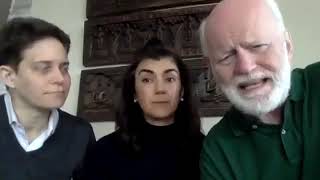
Marshall Goldsmith, Dorie Clark, and Alisa Cohn discuss building a coaching practice. They cover getting corporate clients, setting value-based fees, using LinkedIn and newsletters, creating products, and choosing a focus area.
Chapters
So welcome everybody to the second in our webinar series about starting and then building your coaching practice. It is such a delight to be here. I'm first going to introduce my good friend, my incredible colleague, Dori Clark. Dori is a three time author. Dorie is a speaker around the world. Dorie is also a teacher at the Russian School of Business. Very exciting. As well as Duke Fuqua, the FUPA School of Business. And Dori is an amazing colleague and also the sort of convener of the recognized, recognized expert program. She's the number one communications coach in the world, Dori Clark. Thanks for joining us today. Yay. Dory Clark. And then I have my amazing friend, colleague, mentor, Marshall Goldsmith. Marshall is well known to everybody. He's the author of multiple books including recently the last three. What got you here won't get you there. Mojo and triggers. Writing a new book now. Number one best selling author, speaker, the really thought leader of thought leaders, the guru of gurus about to be inducted into Thinkers 50 hall of Fame. Welcome the Dr. Reverend Marshall Goldsmith. Thank you very much. The number one coach in the world. And part of what Marshall has done is he's convened the MG100 and we are here together to help pay it forward. So the marshalls of 100 is a number of 100 coaches and we are all convened to help pay it forward. And part of this webinar series is to help you be the best you can be at driving your coaching practice.
That's wonderful. Thanks Alyssa. And of course it would not be complete without introducing my colleague, Alyssa Cohn. Yay Alyssa. Thank you for facilitating today. Alyssa is a contributor to four Forbes, to Worth and to Inc. Magazines and she's the number one startup coach in the world. She has worked for many talented prominent startups. You probably use them or heard of them, Etsy and Foursquare and Venmo and she is a powerhouse and also my business partner investing in Broadway shows. So Alyssa, thank you so much for facilitating today.
Thank you both for being here. It's very exciting that we're here and we're again here to pay it forward to answer your questions. So asking you to put in the chat box we see, oh we have like over 1,000 people joining us and we see in the chat box that people are beginning to chat. That's good. Keep chatting. And specifically we ask you to bring your biggest challenges in building your coaching practice as a business, your business challenges that we're going to try to answer today. So we have some questions that we have already Gathered from a lot of you. And I'm going to start by asking what Danielle asked us. Danielle says, I have a few clients at some great companies. Congratulations, Danielle. Neil, that's very good. But I don't know how to get more clients at these companies. So it's a question about how to get more clients at these companies. Marshall, you want us to take a crack at that?
My suggestion is this. Sometimes we're hesitant when we do good work to ask people for recommendations. And from my experience, if you do good work afterwards, say, you know, look, were you happy with what we did together? Was it useful to you? And then just ask, would you be willing to write a recommendation for me? I mean, if you read my book, Triggers, 27 major CEOs basically did promotions for me on that book. And they didn't mind. They didn't mind. I mean, they were my friends. I did good work. I asked them. They're happy to do it. So that would be my suggestion. And then when you go to people, you don't have this awkward phone call thing. You've got things in writing, little small blurbs. If they want to follow up, they can. But at least you've got something in writing you can take with you.
That's fantastic. Thanks, Marshall.
Dori, what do you have to add?
Yeah, I think that's a great point, Marshall. And I'll also say one thing that you can often do is to seize opportunistic moments, because I think sometimes we have a moment and we let it fade. So, for instance, you might have an instance where a client actually proactively compliments you or sends you an email saying, oh, wow, Alyssa, that was a great session. I learned so much. That was so amazing.
And.
And oftentimes what we do is we just say thanks and move on. But what you often can do is say, oh, wow, that was so meaningful. Thank you. Would you be willing to write that as a LinkedIn testimonial? Or is it okay if we use a variation of that on the website with your permission? And 9 times out of 10, 99 times out of 100, the person will say, yes, absolutely, do that.
Yes, I agree with both those things. And I would add just one more thing. When you're at companies, what you often do is run into other folks at the company. Remember, build your network at that corporate client, Danielle. And that will help you get to know more people, and they will naturally, for you, to other folks. Marshall, do you have a question?
Yeah. I noticed one of the most common themes coming in from the Comments is people having issues with self promotion. Now, I wrote a book with Sally Helges and she was a lead author called How Women Rise. And it's one of the things we talk about, especially for women, is getting over this self promotion phobia. Many of us have this weird belief of my good work should speak for itself. And my advice is let go of it. God has better things to do this week than fly out of the sky and recognize your good work. If that were true, no company would need a marketing function. So first thing, just psychologically is get over this sort of self promotion phobia. And look at it this way. If you believe in the product, don't be ashamed to promote it. If you think you're doing a great job and you're helping people, you're doing the world a favor by making it more visible. So, you know, and by the way, as long as you say, that's just the way I am, that's just the way you're gonna be, you know, I'm no good at that. Well, just, you gotta quit thinking that way. You can say, I used to be no good at that. I can change. This is all learnable stuff. I mean, people get better at marketing. That's what this whole thing is about.
Yeah, that's, that's great. I just want to chime in, Alyssa, if you don't mind. I see it. A follow up point or a follow up came in related to one of the comments. Rajesh said, Do LinkedIn testimonials really matter? Isn't it going to be always positively biased? And the answer is yes, of course. That's the point, Rajesh. Yes. I mean, you know, because of course on LinkedIn you have the ability, if for some reason you don't like the testimonial, you could just have it not be displayed. So, yes, it is only the positive ones. But it still matters, of course, that someone, a client, a CEO, whoever it is, is willing to stand up and publicly say, I think Marshall is great, or Alyssa really helped me. And so the fact that they're doing that actually really does matter in terms of providing social proof and making potential future clients feel more confident in hiring you because they see that you've helped other people.
Yeah, looks like a couple people have audio problems.
Any ideas about audio problems?
We're doing our best. We'll lean in. Exactly. Thanks, Sheryl Sandberg. We're doing it.
We're talking louder.
That's right. I have another question here from Robert. Robert asks, I have a pretty standard rate for coaching. And now I'm being asked to lead off sites. Nice brand extension, nice extension of work. Robert, how should I think about charging for off sites? Dori, do you have thoughts on that?
Yeah, absolutely. So in terms of charging for off sites, Robert, one of the things, this is a place where I think there's especially valuable insights to be had. If you look at some of Alan Weiss's work, he's done a lot of writing about how so called value based fees. And so you could for instance for an off site say, oh, you know, I have, I have a daily rate. Here's my daily rate. That's a fine thing to do. However, it often is useful in terms of the value based fee concept to really think about, well, what is the point of the off site? What are the clients going to get out of it? Because if you are working with a major corporation and you are helping them set strategy for the next five years, that's enormously valuable. And if your daily rate is X amount of money, that may not actually properly convey the value of helping them guide their corporate strategy for the next few years. So really understanding what it is that's going to be accomplished and working backwards from there can be useful.
Yeah.
Excellent.
Marshall, anything to add? I thought that was great. Okay, fantastic. You know, Ellen asks, how can I get corporate engagements? I currently get my corporate engagements as a contractor to coaching companies. That's one way to get business. Absolutely. And all my attempts to reach out to HR coach or talent development have been unsuccessful. I don't have contacts that would connect me. So everything is cold calling. What should she do?
I have one suggestion that is to me, my entire career has been based largely on relationships with other people. Paul Hersey got me started in the business. Ken Blanchard and Warren Bennis and Peter Drucker, great people that helped me. And I was able to use the word we in association with them, which I would highly recommend to all of you. I mean it's one good thing about our 100 coaches project. We have a very large group you can use. We help each other. Well, to me, you know, Paul Hersey, I worked for him and he said, well, he wanted me to work with him. I said, how could I sell anything? Nobody knows who I am. He said, use the word we. Well, we was 99% Paul Hersey and 1% me. On the other hand, it worked. It worked because it was we. So I would really, especially earlier in your career, I mean I was not ashamed to carry the bags and you know, do the grunt work because you know, it's good to know your place when you get started here. Early in my career, I was more than happy to do that, and he paid me back by helping me. So I would say don't be hesitant to talk to people that are reasonably high up the food chain who may have too much business and see if you can help them.
Yep, excellent. I would just add, Ellen, you say that you have no contacts. Well, I really disagree. I would suggest you have contacts who have contacts, who have contacts. Work that network. Don't think about necessarily which events you should go to. Work that network so that you can understand who in your network knows.
Other people. Other people.
Other people. That's how you get to influencers. Dori, I'm sure you have something to add on that.
Sure, absolutely. Ellen, one of the things that I've found that has been most helpful in terms of enabling people to seek you out specifically is really aggressively embarking on a content creator strategy, because essentially, right now it sounds like you're operating as a subcontractor. So they're not. They want particular skills, but they don't necessarily want Ellen. And so what we want is to change the balance of power so that they are saying, I want Ellen. So if you are creating a lot of content around your area of expertise, if you're blogging, if you're writing articles, if you're speaking, if you're doing webinars, they're going to see it and they're going to say, that woman is brilliant. We want her. And that enables them to ask for you specifically.
Yeah, that's great.
You know, I have a suggestion about social media. It's very hard, and you just have to face that coming in. It's very hard, and it's hard to get started. And it can be kind of frustrating because the reality is, when you send out those first blogs, nobody's reading them, or almost nobody's reading them. And so right now, unfortunately, I have over 1.3 million followers on LinkedIn. I didn't start with 1.3 million followers. I started out with one follower like everybody else did. And the more you get, the more you get. And it is frustrating. I know how hard it is because it's very hard to get from zero to a thousand. The point is, you can't get started any younger, and you just need to face it. You either do or do not want to make this part of your life. And if you do, as Alyssa and Doria told you, you've got to get content out there, and you've got to do a lot of content, get your friends to help you over and over and over. And then slowly you begin to build up that social media presence.
Yep, that's great. And I think similarly, Catalyn has a question. I will transfer soon my base to another country. How do I build up more online coaching business? I think it's very similar. Dori, how would you suggest she handle that? Transfer to another country?
Yes, for sure. So, Katalyn, I would say that a great starting place, of course, and hopefully you're already doing this, is to ask the people you're working with currently and your existing contacts who they know in the new market that they'd be willing to introduce you to. In my book, Entrepreneurial you, I actually profiled One of our MG100 colleagues, Michael Bungay Stanier, and he told a great story about how when he moved to Toronto and was trying to start his coaching business, he originally didn't know anyone there. So he asked his existing contacts, who do you know in Toronto? It was, you know, at first it was very scattershot, but one person introduced him to another person, introduced him to another person, who eventually was an HR director who came to one of his sessions, was impressed, and immediately offered him a contract for his services. So I think just the person to person networking can be quite valuable early on.
Yep.
Excellent. Marcia, do you need to add.
I just want to reinforce. This is hard. We're giving you ideas that are easy to talk about and hard to execute. And it takes year after year after year after year. I mean, you know, I remember years ago, I was in my library and I'm sitting there at 36 books, and these three young men come over getting their PhDs and they said, I said, we want to talk to you. They said, we want to do what you do when we graduate. I said, what do you mean? We want to coach CEOs. You know, that's nice. I tried to be polite, but I'm thinking, you know, you don't have 11 million frequent flyer models. You haven't worked with 150 CEOs. You didn't write 36 books. So you want to be me, you got to kind of work at it. Those 36 books didn't write themselves. You gotta put in some effort here. And you don't start at the top. You know, like I said, I started carrying bags and literally carrying bags and cleaning up the room and whatever it took. That's what you gotta do.
Yeah.
One foot in front of the other. We have a lot of questions. Both coming in on the chat and also that we collected in advance about pricing. So, you know, Sarah asked, and there's another question online. I am at the stage of having a more or less steady stream of clients. How do I start charging more? Dori, you and I have written a lot together on pricing. What do you think that you should start charging more?
Yeah. Thank you, Alyssa. And I'll also give a. Give a special shout out. Marshall and Alyssa and I all did a piece together in August for the Harvard Business Review about how to price your services as a coach or consultant. And so if any of you guys can Google it, it's available for free on the Harvard Business Review website, so you can check that out. But when it comes to pricing your services, Sarah, one of the things that I would recommend, it's certainly not impossible, but it's harder to raise your prices with existing clients. So I would think about it in terms of new clients and new prospects that are coming to you. Just, you know, when they inquire and they say, well, how much do you charge, Sarah? You know, flip the switch mentally. And instead of saying the thing you've always said, try, you know, x amount more, 10% more, 20% more, and test the waters and hopefully you can begin to expand it with those new clients who say, oh, wow, we've heard so much about you. That seems like a bargain to us.
Yep. And I like what Dori said. She said, test it out. And think of all these things as experiments that you're running. When you experiment, you're getting information. It's not about failing or not working. It's about getting more information about what the market is for you right now. Marshall, do you anything to add?
I have very profound advice. The amount you should charge is the maximum amount you can get. And if you charge more, they refuse to harbor whatever that number is. And it's as goofy as that sounds, there's a certain logic to it. This is not an exact science. Yes, we're guessing. It is just a guess. I mean, you know, people say, where did I get this number? I charge people, I make it up. I mean, God's not flying out of this guy giving me some number here. You just make it up, you know, and all of a sudden you, you know, by the way, one thing, never brag about having too much business. People say, well, I'm over committed. I have too much business. You know what that shows you didn't charge enough. You raise your fees. You can solve that problem with too much business. Just keep raising that Fee and you know, all of a sudden you won't have so much business but you make more money. So you know, if you're over committed, that's a guideline. Some of you out there said I'm over committed. Well, if you're over committed, I'm going to help you. You're not charging enough money. Charge more.
That's right. This is a marker, by the way. Thank you, Glenn, so much. Glenn posted the link to the article on HBR that Dori referenced so than.
To take a look at it. Thanks a lot. Thanks, Glenn.
Yep. Now Brian asked I have started to be asked to speak at certain events and I want to do it. Yay, Brian. That is a great marker of success. I want to do it, but I'm not sure how to pull a good talk together. What suggestions do you have? Marshall, you are the speaker of speakers.
How do you pull a good talk? Let me give you just a couple of simple advice. One, we tend early on, you get lost in content. You worry about details, 1754 and having every word correct. They're not going to remember every word anyway. A couple of months ago I gave a talk in Russia in front of 20,000 people. I had 50,000 people last week, 20,000 people. I've never spoken in front of 20,000 people before. And I thought maybe I'll get nervous. I never get nervous, but I thought maybe I'd get nervous, you know, I decided I had one goal. Be happy. That's all. I said, I cannot control these thousands of people who don't speak English. But there's only one person on the stage I can control. That's me. I said, I am going to be happy. They loved it. You know what the most common feedback was? This guy loves his work. So my advice, when you get up there, realize don't get lost in the content. Really focus on the process. I mean, Sally Helgeson in our book How Women Rise is a great example. She did a program with me. I forgot my pants. I had cut off blue jeans. I forgot my pants.
This is a true story.
Yeah, I fell down, I bashed myself. Blood is running all out of. And I forgot when I was supposed to leave. Yet still. And then she prepared everything perfectly. But the people like me more than her. She said, what's that about? Well, the reason is I was having fun. She was way too serious and buttoned up and she didn't come across as human. So don't worry about being human. It's okay to be human. Have fun, enjoy yourself, care about the customers and realize, you know, this is just as much about the process as it is about the content.
Profound words, Marshall.
Dori, what do you have to offer? I think that's perfect.
Mindy asks. I have a number of people asking me if I have a newsletter.
I love these questions.
There's a demand going on here. That's great, Mindy. I don't. Should I create one? And how? Well, Marshall says yes, create a newsletter. Hallelujah. We all have newsletters.
I'll do it.
Why not?
Jori, how do you suggest that Mindy create a newsletter?
Yes, great, great question, Mindy. A newsletter is really important. One major reason why it is important to start building it now is that as you probably extrapolated, social media is a pretty unreliable way to meet, to connect with your audience. I mean, you know, they keep changing the algorithms, right? So even if they are your fan or your follower, you don't know that you can necessarily reach them starting tomorrow. And so an email newsletter that they've opted into is really important because it is the guaranteed way that you can get across and reach them. So the best way to start building it is to create a so called lead magnet, which is some kind of a free giveaway that incentivizes people to sign up for your email list. It could be a short ebook, it could be access to a recording of a webinar that's very desirable to your target audience. There's a variety of things that you could do, but by opting in, you want the lead magnet to tied very closely to what kind of services you offer so that the right person, the exact right kind of customer says, oh my gosh, this is exactly what I need. And they will sign up and you can build an opt in list of folks that are very interested in what you do.
What do you think, Elissa?
Well, I would add, I would certainly reinforce all this. Yes to the newsletter. I will tell you that many years ago I was still living in Boston and I felt like I was reliant on one client and I'm sorry, set and upset and upset. And I would run and run and run thinking about this and it always ended the same way. I need to create a newsletter that is going to help me get my recognition out there, attract more people. It's true. I always got tons of positive feedback so I found it hard to do to get started. But once I got started, it was incredibly rewarding. So it's rewarding for all the business reasons you guys just talked about, but it's also just Personally, very validating to have the positive feedback coming back from your.
You know, here's one that I.
Thanks, Stever.
Here's what I really like and see what would be the case for collaborating with other coaches and why are there so many individual coaches? That's a great question. I don't really think there is much of a coaching business out there that anyone has. Why? Coaching is a very individual process. Yeah, it's not like you're buying McKinsey Consultants in a corporation. It's a very individual process. That's why I am such a believer in networks, you see, because most great coaches don't want to have a boss anyway. That's why they went into coaching. You wanted to work for a corporation, you would. Right. And most great coaches don't really want to have a boss and they would like to be individuals. Yet it's good to have a network. So that's why I'm such a believer in coaching as a network phenomenon more than coaching as a business with a bunch of people who all work under the same banner. And because you can't just ram coaches at clients, they don't have to say, yes.
Joy, you want to add to that you are also a big believer in networks and community?
Yeah, absolutely. I mean, ultimately, this is how you can get additional clients. It's also how you raise your profile overall. People are looking out for you. If you are, you know, early on in our businesses, we may feel like, oh my gosh, I need business. I'm going to take any kind of client doing anything and, you know, it's fine up to a point because you can, you can practice and build your skills. And as long as you think you're legitimately able to be helpful, it's great. But over time, you are probably, if you're going to be successful, you are probably going to need to specialize a little bit more so you can continue leveling up the type of advice and services that you offer. That's why Alyssa is the number one startup coach, for instance, is that she's really good at that. And so ultimately, if I run across someone that needs a startup coach, I'm going to send them to her because that's not my area of expertise. I mean, I could help them a little bit, but she could help them a lot. And I know that.
Yeah. Now, a lot of the things a lot of people are asking questions about, I'm doing work for free. Yes. Sometimes it's a starting way to get things done. And I'm getting testimonials how do I turn them into paying clients? Of course we need paying clients. Absolutely. Marshall, do you have something to say about that?
Yeah, I do ton of volunteer work, and a lot of my career is indirectly based on having done good deeds. Frances Hesselline, I work with the Girl Scouts. She introduced me to Peter Drucker, which really totally made my career. Well, I'm a great believer in volunteer work because volunteers have boards of directors, and these are often for profit people. And this is just a great opportunity to meet very high end people who are on the boards of volunteer organizations.
Good. Dori, have anything else to say?
Oh, I think that's terrific.
Yeah. And I think I would just say to all of you, it's a way to build your skills. And when the question is, how do I then turn into pricing? Say a price, see what happens. Keep saying a price, someone's gonna hire you eventually. Now, Rob in here said, how do you differentiate yourself to stand up for the crowd? And actually, my high school buddy, Carol Loncampos. Hi, Carol. Hope you're out there. She asked the same question. How do we differentiate ourselves in an increasingly crowded marketplace? Dori, you have a lot to say about this.
Yeah, thank you, Alyssa. My book Standout is very much about this topic. And so ultimately we were talking earlier about content. I think that that is a key piece of it because when you are promulgating original ideas, it gives people a reason to. To choose you. I mean, it's very easy to just retweet a tweet. It's very easy to, like, take a picture on Instagram. And some people think that is, quote, unquote, doing content. Yeah, it's not. What you need to be doing is creating long form content that actually shares your ideas. And when you do that, that enables people to say, oh, I like how she thinks. That is exactly the kind of solution that I need. And it gives people a reason to pick you. Now, you may not necessarily know your big idea right up front. That's okay. You can learn it and iterate around it. By creating that content, it's like sort of feeling around the elephant and saying, okay, I'm gonna write this piece and this piece and this piece. And it enables you to triangulate around what your unique value proposition is.
Yep, that's excellent.
You know, I have a suggestion. You see, many years ago, I said, I'm gonna be the world's authority on helping successful leaders achieve positive, long term change in behavior. I am going to be the world's authority on this topic. Well, back then no one was doing that. Sounds obvious now. No one was doing it. Do a Google search. Helping successful leaders in quotes. First 500 hits, 450 are me. I am the world service expert on the topic. Well, I had a clear goal, as Dori said, very focused. I didn't try to be everything. I said, I'm going to be the world's expert at this. I'm not an expert at communications, I'm not an expert at startups. You know, I'm an expert at this one thing. Well, that made my career. So I think it's really good to be focused and say you have to answer this question. I am the world's expert at. What's the answer?
It's a great point. And as you're finding that answer, please don't let it stop you from creating content. Just as last week alone BBC News, World World News reached out to me, New York Post reached out to me. I got an invitation to speak at a conference a few weeks ago because of my content that I'm creating. And that takes a long time to get that to happen. Start today. That's the key. Kevin asks, should I create products and if so, what kind? Can you answer that as a starting point?
Sure, absolutely. Should I create products? So products are a great thing to create under certain circumstances. So the reason why you might want to create products is that of course they are things that you can sell when you are not actively working. And that's a great thing for a coach because oftentimes we are very tied to the delivery of our services. You know, you're schlepping around, you're flying, you're doing things and if you get sick, if you get double booked, you're not able to do it. And so having a way to diversify your income streams, which is what I write about in my book Entrepreneurial, you, it's very powerful because it enables you to scale in a way that the kind of one to one coaching doesn't. Now the trick is there's a lot of coaches that have spent a lot of time and sometimes a lot of money creating products. You know, let's call them an online course or something like that. And then they don't have anyone to sell them to and it becomes no distribution network. Exactly. And it becomes a waste ultimately because it's just like, okay, I have this great thing but no one's buying it. And so the key is really thinking, thinking that question through. It's not something you figure out afterwards, it's something you Figure out before who is going to buy it. And so I would suggest either that you strike a deal with a corporate client so that you have that in advance. You know that XYZ company is going to buy 100 seats in your online course, whatever, you can pilot it with them, or you need to build up that email list that we were talking about so that you have an individual distribution network and you can sell it B2C or business to consumer.
You know, another way to look at it is I give almost everything away. All my material, make, copy, share, download, duplicate, all my intellectual property. You can use anyone you want. And you might say, well, gee, couldn't I make money from that? Well, I guess I could. On the other hand, millions of people know who I am.
It's true.
And so I mean, I figure, number one, it's a nice thing to do. And number two, people know you. So you know, I think building product is good for a couple reasons. One, what you said is very important if you want to use it. And it's not a good or bad. It's just a personal strategy choice that can be a very good strategy for income generation. Or mine is a different strategy which is basically just give it all away.
That's great. Now Andy asked an interesting question in the first webinar. Yes, we had a first webinar. Check it out on YouTube and LinkedIn. Alyssa talked about adding value in 20 minutes. Yes, I did. Can you tell us more about that? Yes, I have a lot to say about that when I approach a prospect. And by the way, some of the questions in the chat have been how do I describe it and how do I think about it? I don't describe it. I don't think about it. The best way to learn about what it's like to be do coaching with Alyssa is to do coaching with Alyssa and then you will get it. And then when I'm focused on that little vignette that we do together, focus on three things. Number one, listening deeply. People do not get listened to enough in the corporate workplace. Listen without interrupting. Number two, asking good and provocative and interesting questions that is very rare for them to take time and reflect and that really catalyzes thinking. Number three, offer a unique or interesting or insightful observation about how they're coming across. People find all of that very valuable, especially when compressed in 10 or 20 minutes. Anything to add, either of you?
Thank you.
Tim asks, I am thinking about doing a mid level professional mastermind group. A mid level professional mastermind group as a pilot activity. What is the best way to approach this. Very interesting. Do you want to take that first?
Sure.
Thanks, Alyssa. So I'm assuming, Tim, with your question that this is a paid mastermind. The first question, just to sort of parse the answer, is that sometimes we do masterminds that are free, that we run just because we want to participate in them. It could be a way of gathering like minded people together so that we can learn from each other. So that's always a great thing to do so that we can continue to raise our game. But sometimes a mastermind can be an actual business activity that we run and we are the facilitator and the convener of it. People pay us for it. So in terms of running a mastermind, that's actually something that I do as well. I have a year long mastermind program that I, that I do every year that people pay for. And one of the things that has been very helpful to me is you can imagine, right, people signing up for a year long mastermind. It's a big commitment, it's a big financial commitment, a big time commitment. They often understandably want to somehow see what it is like, but it's hard to do that. So what I ended up doing for a couple of years prior to launching my paid year long mastermind is I did one day masterminds and then weekend long masterminds so that people could get a little taste of it. And it was low risk. Obviously it's less money, it's less time. They feel like, you know what, I'll try it for a day. How bad could it be? And when they discover they really like it, they say, yes, I want more of this. And that's how you can build a pool of people who may be able to sign up for a longer term commitment.
Excellent.
That's great.
Marshall, anything to add on that?
I like that.
That's very good. Now I see a few follow up questions about how to build your focus. So Bernard asked that earlier how to be more visible and then Steve was asking that too. How do you think about building your focus, Marshall, let's ask you first and then Jori, I know you've written about this extensively.
Yeah, I would say you experiment and it takes courage. Because when you say I'm an expert at X, you're also saying, I'm really not an expert at Y. So it is a matter of experimentation and I would just pick a path, start down the path. Now, if the path needs revising, you can revise it. But if you wait forever, you're Never going to pick a path. So I would just say pick that path. Say I'm going to be the world's expert at X, really focus on X. Then I would meet what I call parallel experts. So like the three of us, we're all kind of parallel experts. I don't do what Lissa does, I don't do what Dory does. We're all kind of related, but we're not competitors. We're not competing with each other, we're friends. So really find parallel experts who are in fields that are kind of related to yours, but not the same. For example, I try to help successful leaders get better. David Allen helps people get organized. So I go to Holland and I speak in front of all these people to help David Allen. We're not competitors, we're friends. So find parallel experts who can be your friends and help each other.
Yep, excellent. I would just add one thing and I'm going to ask Dori just one thing. It's a point about experimenting and also ask people around you what they find most useful about what you are doing for them, the kinds of conversations you have, what do they find most useful. And that's going to help you think about what your area of focus. Dori, what would you add?
That's great. I do have some thoughts about that. I just wanted to respond to a couple of follow up points that came in through the questions. Yeah, Chris just had a question. She wanted to know or he. I'm actually not sure. Hi Chris. Do I charge for my one day masterminds? The answer is yes, I do. Although if you're literally just starting out and you're looking to build a base, you also could do a free one day MasterCard just to give people a sense of what you do. You can determine what seems appropriate for the market. Personally I do, but you could do it either way. And Marcy just had a nice comment. She said she did my year long mastermind. Hey, Marcia. Yes, thank you. She said I found great value in it. He was that you assembled great people. And I want to emphasize that point because ultimately the biggest concern around people who are in a mastermind is who else is in the mastermind. It will not be good if you have somebody that is too aggressive or too quiet and they never say anything or somehow is disruptive. And so you need to be very active of a curator in order to make it good. You have to screen people so that you can get the right mix. So I just wanted to mention those points.
I see a comment here. I won't mention your name from an old friend that says, as a terminal Renaissance man so far, how do you choose a focus? And again, there's nothing wrong with being a terminal Renaissance man if you don't want to change. If you want to change, you got to quit thinking that way. Because by the way, the definition of the question, this is who I am. Well, you probably won't change. And even if you do change, you're going to feel unhappy, like a hypocrite, like a phony. You really need to look at that self concept, that identity, and say, is that who I want to be in the future? And you don't put down the past. I mean, I know who you are. You've had a very nice life. You're a good person. On the other hand, if you do want to change, you can change. You have to say, that's the way I used to be. You know, somebody wrote a very profound book. I forget it was called what Got yout Here, Won't get yout There.
I can't remember who wrote that very brilliant book 12 years ago. Something like that still number 400 on the Amazon list.
I know, it's amazing.
12 years later.
So anyway, that's it. And you really have to make the choice. It's not a good or bad choice. It's just a personal choice.
Yeah. Dori, I'm sure if you finished about the idea of finding your standout idea.
Yes, absolutely. So what I will say I'm a big fan. It can be very, very hard to choose for ourselves to choose because we like a lot of different things. And so I'm a big fan of letting the market choose. So try a bunch of things, feel free. Put different ideas out into the market. But the key is that when you see that one of them is getting traction, that you know this article is getting a ton of shares or. Wow. Everybody's emailing you back about this particular newsletter topic. Listen to that. That is evidence saying, wow, other people are clued into that. And then just do more of that. Keep moving toward the light.
Moving toward the light. So Amy asks, how do you know when it's appropriate? How do you know appropriately how to follow up with someone and. And when to hold back? You don't want to poke people, but you don't want your fears to hold you back. Amen, sister. This is a topic of some passion for me. Oh, I'm going to just jump right in and say, yes. You know, at some point it is too much. But I'm a big believer in Feel free to tell me no. I'm going to stay with you and do you a favor. Here's what I see. What I see is a division of us in the future. I see a vision of us having a fantastic working relationship and you getting transformed or in some way getting something very powerful out of this coaching process. I would be stingy to keep that away from you because it fell off your email list, right? Why would I do that to you? I want to help you. I'm going to get back into your line of sight as comfortably as I can. And when you say no, it's no. We can part as friends.
Help me help you.
I like it, but can you take that away from me? I like that. I had a nice comment here from my friend and he said, I never thought of it as an identity issue. That's very powerful. You're right. It's definitely identity issue for me. A lot of these comments to me really do go back to identity issues. That's just the way I am. And it's very important to realize we've all been brought up with a program of who we are. And these programs often start when we're kids. You know, she's the pretty one, the smart one, the lazy one, the happy one, the funny one, and whatever. And we often carry these things around forever and never really challenge these programs and say, is that who I want to be moving forward? So I think it's good on a lot of these questions. Maybe in the past you haven't liked self promotion. Fine. You don't have to do it in the future if you don't want to. But if you're going to do it, challenge that identity, challenge that self concept. Because if you don't, if you don't do that, even if you start self promotion and you're recently successful, you'll feel like a phony because you don't. You think, that's not really me. The real me doesn't like that. Well, what is this real me nonsense? You don't have a genetic defect you can change. Unless you have a genetic defect, you can change. That's good.
Pearls. Pearls of wisdom? Jamie asks. My business has been slowly growing for a few years now. That's good. But it's so hard to work alone. I know. What suggestions do you have for making that easier, Dori? Yes.
Well, it can be lonely sometimes being an individual coach or consultant. For sure.
Yeah.
And that is why I think it is so important to actively cultivate a community of fellow practitioners like us. Exactly. Everybody talks about, oh, you need to be networking with clients and potential clients. Yes, of course you do. But you need to be connecting with other coaches and consultants so that you have a community to share ideas and best practices, to commiserate, to trade, to trade advice about. Well, how much should I charge for this? Or oh my gosh, my client did this. What should I do in response? It's invaluable to have people to bounce ideas off of. Sometimes people hesitate because they assume that other coaches might be competitors. You know what, you're not competing against anybody but yourself. And that, that's really powerful. So I think it could be from a meetup group, it could be from conferences where you just meet people and make connections. I run a community of coaches, my recognized expert community. We're part of the MG100. You could create your own. If you meet people that seem cool, start a posse, have regular things. But having those people in your life is very valuable.
Very valuable.
I like that. And again, I think we tend to overstate competition. There's another important factor here that is. And I'm writing a new book called the Earned Life. In the old days, we didn't have any choice about our communities, our work. We were kind of locked into a profile. That was it. Today, the good news is we have choice. The bad news is people are lonely. There's a lot of loneliness out there. And coaching can be a lonely business. Although you're reaching out to help others, who's helping you when you go home tonight, it can be a very lonely business. So I think another reason to do this aside in the financial and the other part is just psychologically, it's good to have friends. It's good to have a sense of community and to really have people you can talk to on a personal level. That's why I've been so amazed about our 100 coaches project. The people are so nice and sharing and I think they like it because, you know, I've asked people why this is so important.
It can be lonely out there. Yeah.
And I think we've all found a lot of community in that environment and also a lot of ways to help each other. So it's really been powerful. Now Sam asks, what should the balance of my time be between delivering and marketing and selling? A very important question. Absolutely. What should the balance of my time be? Marshall, do you want to talk about that?
Well, it's hard for me to say because, for example, I write a book. Well, is that marketing or is it content development or is it selling? So I'M probably not a good person to answer that one. You try it. Okay.
Jordan. First you and then me.
Okay, sounds good. So what I would say, Sam, is that in the early days of your business, it is important to spend more time selling. And I define selling as kind of the hand to hand combat of asking for the business, calling people, sending an email, oh, hey, I have this new business. Do you know anyone who needs a blah, blah? And the reason is, of course, you have to build up your pipeline. You have to get enough business to keep yourself going and be solvent. But over time, a mistake that many coaches and consultants make is they keep doing the selling, which is great, but it creates a treadmill where the same people, you know you're talking to the same people, the same people know you. You need to steadily throttle the selling back and do more marketing over time so that new people can discover you. And that's writing articles, that's giving speeches. Those things probably are not going to give you business tomorrow, but they will give you business five years from now and ten years from now. And so it's an investment.
Yeah, yeah, 100% agree with that. And I would just say, Sam, it's the right question to be asking. What I find is that coaches and consultants, they stop marketing, they stop selling. I'm too busy. I'm too busy doing my thing. I get it. We're all busy. But you must strategically carve out time to make sure that you are doing that selling and marketing activity so that you keep a steady sort of business going.
That's for sure. Go ahead.
Well, you know, there's one point I want to make throughout this whole thing. This is a tough business. It's a nice business. It's a positive business from business perspective. It is a very hard business. A lot of coaches make virtually no money. I'm in one group of people who years ago included a lot of top people in the world. Four of them literally went bankrupt. It's tough out there. So I'm going to talk about your point, Alyssa, which I think is a good one. It's not going to be an easy business. And all these things, we're giving this advice, we're having fun. On the other hand, it's hard to do. It is very, very hard to do. And I always feel very blessed. I've had a lot of breaks. It's not easy. It's not easy at all. And, you know, you still have to keep paying dues. I'm still writing books. I'm 70 years old, still writing books. Still doing things. And if you're going to stay out there, you just got to keep doing it or else you just fade away.
Yeah, yeah. So true. And it's really one foot in front of the other.
And that's what you do have to.
To really get a handle on for sure. We talked a little bit. So Melinda asked a question. Can you speak a little bit to merging disparate bodies of experience? My background is very diverse. How do you create a web presence that matches what you want to do and ties together a cohesive story? Do you want to take a crack at that?
I gave myself an example. Look behind us. I'm a Buddhist. And you might say, what's that have to do with coaching? Well, for me, it has a lot to do with coaching. My own coaching is Buddhist. Right. So, you know, I think what you do is you take these things that you find fascinating. You figure out how does that relate to what I'm doing. I mean, you know, who would think of being a Buddhist would have to do with coaching? My whole coaching process is Buddhist.
Yeah. Dory, what do you think?
I love it. I think that's perfect.
I would just add one more thing, which is that I'm also a cpa. So people are like, cpa?
Really?
Yeah, cpa.
Weird than being a Buddhist.
Totally. That's right. So weird. And yet people appreciate that and they're like, interesting. A cpa. Dori and I are also investors in Broadway shows. When people find that out, they're like, oh, that's interesting. I think you should embrace your diversity and you should realize that all those pieces are the part make up the rich tapestry that is you. That's how to be distinctive in a crowded marketplace to really leverage being you. So focus on following your interests and find the ways to wrap that into the coaching world. Yeah, go ahead.
I may need some tax advice.
Please don't ask me for tax advice. Bad idea for everybody. Let's see. Considering. Oh, okay. So somebody's asking. Brian asks. Considering. So many people come to me for advice which I enjoy giving. What were the best steps to turn this into a part time coaching business? A lot of people have questions about how do I get started into a part time coaching business. I have a 9 to 5 job. How do I sort of do this as a starting point? Who wants to answer that?
Dory, you guys.
Okay, I will start out. So, Brian, it sounds like at this point you're having. You're having fun with the questions, which is great. Eventually you may get really annoyed because people may come to you again and again for the same questions. And it's sort of like, oh, let me pick your brain for the 300th time. And so what I will suggest, which can handle both things, you know, allow you to capture the fun of it and also keep it fun so that you don't feel like you're constantly giving and not being remunerated for it. Number one, take the questions that people are most curious about and write them up as articles. Use that, because that way when somebody asks you this really basic, oh, Brian, how do I become a blah blah? You can send them the article first and either that will be sufficient or you can come back to them and say, you know what? If you have follow up questions, you know, kind of 201 level, then ask me after reading this. So that's one way of doing it. And you can use the article as a way of linking to a website that advertises your coaching services. It's kind of a subtle way to get the word out there. Another thing that I will do sometimes if somebody comes to me for a favor, they might be an acquaintance or somebody that I don't, you know, I want to be helpful to them, but I don't want to sort of be giving for free forever is I will say something like, oh, I'd be happy to meet with you about that. Why don't, you know, I'm happy to have a coffee with you and talk about that as a friend. If you would like more coaching about it, here's a link to my coaching page with a list of my services so that they understand they get one freebie, but they're not getting six months of freebies.
The direct approach always works. Absolutely. You know, it's an interesting question that somebody earlier asks, when was the last time that you did something for the first time? What's the most recent experience of your doing something for the first time? Dorie, I know you have a good example of that from bmi.
Sure.
Yes. On the Alyssa and I have been alluding to our Broadway adventures, part of where this started. So for the first time in forever. So in the last year we started investing in Broadway, which is a new thing for us. But part of the genesis for that was that I decided I wanted to learn to write musical theater, which I had never done before. And so I began that process in 2016, kind of mucking around with it. And eventually I was able to get accepted into pretty prestigious musical theater lyricist training program run by BMI, the music publishing company that started in 2018. So I've been doing that since then. So I, I just did it last night. I mean, every single week I'm doing this sucker. So I am, I'm flexing my muscles in new ways.
Yep. So what I am about to do for the first time is I'm about to take. Wait for it. A bebop rap class. Improv rap class.
Okay.
I'm about to become bebop rapper. Okay, Marshall, so we'll do that together.
What got you here? Nobody cares what got you here Wanna get you there. What got you here?
Yeah.
But the reason I think that's really powerful to think about the first time is that recently I was talking to somebody that the way to be successful and expand your comfort zone is to try new things all the time and recognize that you will not be an expert in those new things initially. Right. It's going to take you a while. So you can experience the difficulty with a learning curve and you can experience what your clients are going through when they try new things. But also it expands your own musculature of what's possible. You want to close more business, you want to ask for referrals. You want to be able to try new things like that. Try new things all the time and get great at trying new things.
That's what I say. It sounds like Marshall just did it too. Speaking to 50,000 people last year week. That's pretty amazing.
Yeah, exactly. Diana asks something very tactical and I think super important. What are the pros and cons about requiring long term contracts? Pros and cons about requiring long term contracts. Marshall, do you have something to say about that? No.
No.
Okay.
Dory. Okay.
All right. So long, long term contracts, I mean obviously it's. It can be beneficial in the sense of. One of the hardest things as a coach is the lack of predictable income. You have a contract, the contract ends well. Where are you going to get the money? So if you can take the three month engagement and instead say, you know what, let's make it a six month engagement, let's make it a 12 month engagement, that is helpful for your own revenue streams. Now, the key for us is making sure that we do not lock ourselves in to something at too low of a price so that by month 12 we are resentful that that is a price. You have to balance it out and be thoughtful in that process. But overall, I'm a fan for sure of longer term contracts when the client is amenable to them. The other tip that I'd say is instead of having monthly payments or things like that, if you can get them to pay up front or at least pay half up front, that's very valuable because it makes it harder for them to cancel it. It means they're more invested and it's better for your bookkeeping and your hassles and your cash flow.
See, I do the opposite. I don't charge anything for the entire engagement.
Yeah.
And then it's all based on I only get paid if my clients get better. Better is not judged by me or them, judged by everyone around them. And so we do this feedback and I 18 months, I get paid absolute zero. Now, this is not a good or bad. Everybody's different. Everybody's different. And so my approach is different. You know, I don't charge anything for 18 months. And the key though is for me, it's all about great clients. Great client, I always get paid. If the wrong client, I never get paid. So I'm just very, very fortunate to have great clients and very picky about the people I work with.
Yeah, that's very powerful. Nando asks, how can I get started writing for websites or blogs Besides my own LinkedIn blog? That's a very good question, Dori. Do you want to address that?
Sure, yes. I actually wrote an article on LinkedIn about this a while ago. So if you Google how to start writing for high profile blogs in my name, you can find that article for free. And it sort of shares some principles for that. But the basic idea about writing for high profile publications is that you want to follow what I call a ladder strategy. So basically you do need to start out writing for an easy site, right? A LinkedIn or a medium or Thrive Global where anybody can write just so you have the so called clips. You have some examples of your writing that people can see so that they say, okay, you're a good writer, that's cool. Then you want to make a list of your dream publications and tier them into tier A of the most prominent publications and tier B, which are good publications but not necessarily as competitive. And so once you have your clips, you start pitching T or B. And that could be regional publications, it could be local business journals, it could be client newsletters, it could be trade publications. And that is a useful starting point. You get some of those clips and then you move up to tra. And look at that. Glenn is so industrious, he already shared the LinkedIn link. Thank you for doing that. So anyway, you can take the tier B, leverage it up to the tier A of national international business publications. Yep. Great.
Anything to add Marshall? So somebody's asking, let's see, Jenny is asking what are some trends, upcoming trends in coaching? I think it's a very important question, Jenny. I appreciate that people put their head in the sand and they don't know what are the trends in coaching. I'll give you a few that I have seen. Obviously coaching is going to more technology focused. So using AI tools, using webinar and other ways to deliver coaching and really talk about coaching recordings, pre recorded things. Microlearning is a very big trend right now in coaching. And I would also say people are getting more savvy and sophisticated about tools that we've always thought about influence. We have to all up our game as coaches for sure. Marshall?
Yeah, I'm going to. My goal is to get an AI video bot of me. It looks like me and it sounds like me and has artificial intelligence. So I teach my little bot all that I know and then my theory is at my age, as I get older my knowledge base can go like this and the bot's going to get smarter. So it won't be long before I just ask the bot for advice.
That's great.
Dori, what do you have to say? You guys covered it.
That's great.
You know an interesting question again about coaching and the business of coaching. Jen asks what do you see as the similarities and differences between coaching and consulting? So sometimes people like to draw a very like sort of stark line between coaching and consulting. I see it very differently. I think we mesh both of them together. Dori, what do you think?
Yeah, I think that's right. I mean in fact, that's why the article that Marshall and Alyssa and I wrote for the Harvard Business Review in August was about how to price your services as a coach or a consultant. Because in many ways there's a lot of overlap. People do it differently. For me, the way that I define them is when I talk about my coaching it's for one on one executive engagements. And when I talk about my consulting I think that is more enterprise level engagements. I might be working for the company or a broader group within the company, but it is blurry lines.
Yeah, I'm going to ask, I'm going to answer one more question. I think. Let's see. Yeah, actually. Good Rod, thank you. Similar question. What are the best coaching credentials to have? This is from Steve. Coaching credentials to have in order to establish trust and credibility. And Rob is asking the same thing. What kind of pressure coaching certification do we need or do we not need? Marshall? I know you have a lot to say about that.
You know, I think part of this answer depends on your age. If you're really young and you want to get into coaching, I think it's fine to get a PhD, but not unless you're really young. 25 maybe. After that, I wouldn't. It's a nice credential to have, but it takes forever. It's painful, it's a lot of work. So if you would like to get in the field and you're very young, I do think it's a great idea to get a PhD at a young age. Goodness, you have the rest of your life, you don't have to redo it again. And so, and the other coaching credentials.
I know very little about, I have found those other coaching credentials to be not as useful for my clients. Startup clients definitely are not asking about coaching credentials. And sometimes at some point, when you have enough experience, as I do, as the three of us do, people are not asking about coaching credentials anymore. Over time, my CPA has been much more important and effective than my so called coaching credentials. At the same time, lifelong learning and developing yourself always and forever is of course my religion. That's important. Dori, what do you think?
Yeah, I will say that I have seen among people that I work with, some, some folks in my recognized expert community who are generally very, very smart, very well educated, that sometimes there can be a little bit of what I will call in air quotes a disease of using certifications and using education as a form of procrastination. And what I, what I mean by that is that sometimes, you know, because of how we're brought up or whatever, like what our family values, who knows, there's this idea that, oh, the secret is more learning. The secret is more degrees. Oh, if my business isn't clicking the way it should, I need another degree. That's what'll do it. And the answer is not more of the same thing. The answer is a different thing, which can be harder because it's a different skill set. You're already good at learning, you're already good at getting degrees. You have enough of that typically. And so I think that the best form of credentialing that matters to clients is social proof credentials. And social proof credentials could be what are the name brand publications that you're writing for? Who are the blue chip clients that you've consulted for? Who are the people who have endorsed you or recommended you? Those are real world credentials that have a lot of meaning in terms of their correlation to people being willing to hire you.
Yeah.
Beautiful.
That's great. So we are at our time, so I'm going to ask for a last word. Marshall, do you want to start?
Last word. Yeah. My last word is this. I like to thank Alyssa and Dory for coming up with this idea. Our goal is to help as many people as we can. And my hope is that by helping you maybe a little bit, you have the chance to help other people a lot. And maybe many people can benefit from your help. So I hope that our little time has been helpful to you. So thank you very much.
That's beautiful. My last word is please, please, please. Lifelong learning and persistence. Keep developing yourself and keep putting one foot in front of the other. That's how you're going to win.
Dori, thank you very much. And I'd love to just thank Marshall and Alyssa for doing this great webinar with everybody. If you'd like to learn more and access many of our, you know, we all have hundreds of free articles available. You can go to marshallgoldsmith.com, alyssacoan.com, imdoryclark.com I actually have a free 88 question entrepreneurial use self assessment that you can download to help you think through creating multiple income streams in your business. That's@doryclark.com entrepreneur and it's great to have the opportunity to talk with all of you.
You can see this webinar again. I'm sure we'll have multiple people wanting to study it. We'll all post it on our LinkedIn site so you can have easy access to it. Our first webinar for new coaches is also on our LinkedIn social pages. They're all on YouTube. Please reach out to us if we can be at all helpful to you. And thank you both for joining all of us today.
Thank you. Bye. Alluding to our Broadway adventures, part of where this started for the first time in forever. Exactly. So in the last year, we started investing in Broadway we, which is a new thing for us. But part of the genesis for that was that I decided I wanted to learn to write musical theater, which I hadn't ever done before. And so I began that process in 2016, kind of mucking around with it. And eventually I was able to get accepted into a pretty prestigious musical theater lyricist training program run by BMI, the music publishing company that started in 2018. So I've been doing that since then. So I just did it last night. Every single week I'm doing this sucker. So I am. I'm flexing my muscles in new ways.
Yeah. So what I am about to do for the first time is I'm about to take. Wait for it. A bebop rap class. Improv rap class.
Okay.
I'm about to become a bebop rapper. Okay, Marshall, so we'll do that together.
What got you here? Nobody cares what got you here Wanna.
Get you what got you here yeah. But the reason I think that's really powerful to think about the first time is that recently I was talking to somebody that the way to be successful and expand your comfort zone is to try new things all the time and recognize that you will not be an expert in those new things originally, initially. Right. It's going to take you a while. So you can experience the difficulty with a learning curve and you can experience what your clients are going through when they try new things. But also it expands your own musculature of what's possible. You want to close more business, you want to ask for referrals. You want to be able to try new things like that. Try new things all the time and get great at trying new things.
That's what I say. It sounds like Marshall just did it too. Speaking to 50,000 people last week. That's pretty amazing.
Yeah, exactly. Diana asked something very tactical and I think super important. What are the pros and cons about requiring long term contracts? Pros and cons about requiring long term contracts. Marshall, do you have something to say about that?
No. No.
Okay.
Dory. Okay.
All right. So long term contracts, I mean obviously it can be beneficial in the sense of one of the hardest things as a coach is the lack of predictable income. You have a contract, the contract ends well, where you you going to get the money. So if you can take, you know, the three month engagement and instead say, you know what, let's make it a six month engagement, let's make it a 12 month engagement. That is helpful for your own revenue streams. Now, the key for us is making sure that we do not lock ourselves in to something at too low of a price so that by month 12 we are resentful that that is, that is the price. You have to balance it out and be thoughtful in that process. But overall, I'm a fan for sure of longer term contracts when the client is amenable to them. The other tip that I'd say is instead of having monthly payments or things like that, if you can get them to pay up front or at least pay half up front, that's very valuable because it makes it harder for Them to cancel it. It means they're more invested and it's better for your bookkeeping and your hassles and your cash flow.
See, I do the opposite. I don't charge anything for the entire engagement. And then it's all based on I only get paid if my clients get better. Better is not judged by me or them. Judged by everyone around them. And so we do this feedback and it's 18 months. I get paid absolute zero. Now this is not a good or bad. Everybody's different. Everybody's different. And so my approach is different. You know, I don't charge anything for 18 months. And the key though is for me, it's all about great clients. If I have a great client, I always get paid. Get the wrong client, I never get paid. So I'm just very, very fortunate. They have great clients and very picky about the people I work with.
Yeah, that's very powerful. Nando asks, how can I get started writing for websites or blogs Besides my own LinkedIn blog? That's a very good question, Joy. Do you want to address that?
Sure, yes. I actually wrote an article on LinkedIn about this a while ago. So if you Google how to start writing for high profile blogs in my name, you can find that article for free. And it sort of shares some principles for that. But the basic idea about writing for high profile publications is that you want to follow what I call a ladder strategy. So basically you do need to start out writing for, you know, an easy site, right? A LinkedIn or a medium or thrive global where anybody can write just so you have the so called clips. You have some examples of your writing that people can see so that they say, okay, you're a good writer, that's cool. Then you want to make a list of your dream publications and tier them into tier A of the most prominent publications and tier B, which are good publications but not necessarily as competitive. And so once you have your clips, you start pitching tier B. And that could be really regional publications, it could be local business journals, it could be client newsletters, it could be trade publications. And that is a useful starting point. You get some of those clips and then you move up to tra. And look at that. Glenn is so industrious, he already shared the LinkedIn link. Thank you for doing that. That's great. So anyway, you can take the tier B, leverage it up to the tier A of nationally international business publications.
Yeah, great. Anything to add, Marshall? So somebody's asking, let's see, Jenny is asking, what are some trends, upcoming trends in coaching. I think it's a very important question.
More from Alisa

128: Ken Davenport Produces Broadway Hits. Here's the Startup Playbook Behind Them


The Library of Minds Podcast | Top Startup Coach: The New Hiring Rule for the AI Era | Alisa Cohn


124: Alex Lieberman Built Morning Brew to $75M. But That Was Just the Start [ENCORE]

123: GiaNina Paolantonio Has Millions of Followers. Here’s the Business Behind Them

122: The Kettle & Fire Founder Is Fixing How America Pays for Health | Justin Mares, Co-Founder a...

121: Founder Mode on Bitcoin: Double the Volatility, Double the Stakes | Will Reeves, Co-Founder ...

120: Miro's Founder on Reinventing a 100-Million-User Company | Andrey Khusid, Founder of Miro

119: Eric Ries, Author of The Lean Startup, The Corporate Governance Crisis No One Wants to Admit

118: Josh Reeves, Co-Founder and CEO of Gusto, The 3-Part Alignment Framework Every Founder Needs...