Making the shift from start-up founder to world-class CEO - discussion with Alisa Cohn
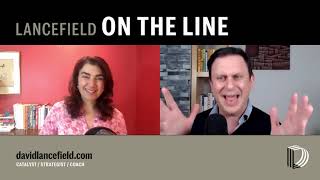
Alisa Cohn, a leadership coach, explains the shift from founder to CEO: stop building the product, start building the business. She covers mindset changes, team orchestration, and how to manage your own pace and resilience as the company scales.
Questions this video answers
From Startup to Grown Up
Out in October 21st (as stated in the interview)
alyssacohn.com
Chapters
Foreign.
Welcome to Lancefield on the Line. My name is David Lancefield and I'm delighted to welcome Elisa Cohen, a star coach to entrepreneurs and executives lauded by Marshall Goldsmith and Thinkers50 is the number one startup coach in the world, quite rightly, as well as the same accolade from global gurus. You are an author. We'll come on to that. A keynote speaker, a teacher, guest lecturer at Cornell and Harvard amongst other places. A recovering cpa. I didn't realize you could recover. A Broadway investor, a freestyle rapper. We're definitely coming onto that later. And a kettlebella extraordinaire. You are a force of nature, which by the way is a compliment. You are the author, as I said, of a new book, from startup to grown up, grow your leadership to grow your business out in October 21st. Congratulations, that will be fantastic. I am inspired and a little bit exhausted already, but we are going to have a lot of fun. So welcome to the show. Alyssa.
David, thank you so much. What a pleasure to be here with you and thank you for that very warm introduction. I appreciate it.
Fantastic. So of course we are going to talk about the book. I want to talk about coaching, want to talk about entrepreneurs, maybe a little bit about you. Well, let's start about, start talking about the premise behind the book. You know, in terms of the shifts moving from sort of startup to scale up and particularly from a leadership angle, what are, what is the, if you like biggest shift? If you had to generalize across all your studies that you have to make from being early stage to medium to late stage, from entrepreneur to world class CEO, I think you talk about.
Yeah, that's right. So if I had to sum it up in one way, and there's a lot to it, but if I sum it up in one way, you have to grow from founder to CEO, from somebody who is focused on building a product to somebody who's focused on building a business. What that requires is a lot of self awareness, a lot of quick like rapid growth and an understanding of how to manage a team, choreograph a team, be the conductor of a team to get you where you want to go. That in a nutshell is what it takes.
How big a shift is that in terms of mindset and skill set and practice?
Generally it's a massive shift generally because what you have is you have founders who are often their tinkerers, right? And so they sort of figured a whole bunch of stuff out. They might be technical people, might be salespeople, product people. They come from a certain domain and the Thing about entrepreneurs is that when you're an entrepreneur, the entry level job, the entry level job is being the boss, the leader, right. The president, the CEO of the whole thing. And that is pretty daunting for people who haven't managed a lot of people in the past. Even if they have managed a lot of people in the past, they haven't been sort of the one, the owner, the one who's where the word like everything really falls onto them. In the high stress, stress environment of a startup which turns into a hyper growth startup and scale up, which turns into a massive company.
Yeah, there's a lot there. Let's unpack that a little bit. I mean, aside from working with you, with you and reading the book, which is obvious, right. If they can and want to, what happens to make that shift? Is it sort of, apart from getting external support and obviously that's part of it. Is it a sort of a moment of realization, sort of wisdom? Is it a problem that sort of typically comes up? What triggers that shift that you talk about? And that's a pretty fundamental shift. What triggers it, do you think?
Yeah, well, I think, I mean, I think what triggers it is forever for everybody. At some point they just realize what got me here won't get me there. So, you know, it's normal for a founder or two co founders or three co founders to start a company, get a little bit of money, hire their friends, hire 5 people, 8 people, 10 people they already know, and then they're sort of in a conference room together or in the days of, you know, remote work, they're in sort of zoom rooms together all day and everyone knows what they're doing. And there's like perfect, perfect communication. There's only 10 people, there's only 15 people.
Yes.
As you go from 15 to 30 to 70 to 500, etc. Right. All of a sudden the systems you have, informal systems you have in place to communicate, to execute, to measure, to know what's going on, everywhere they break, they break differently. And then when you put them back together again, you know, in sort of a way that helps you take into account the new size of the company, they break again. Because once again the company has changed. Not only that, but the playbook that you used last week will not work this week. So kind of situational awareness of that is one of the triggers to help you think like, wait, stop, I got to figure out what do I do to grow here.
I mean, there's a lot more shifts and inflection points in that process than Say a corporate job, which is not easy, it's just a different path. But they're pretty fundamental shifts and sort of step.
Right.
Does that role have to be all consuming? I mean you always hear about people who sort of eat, sleep, everything about entrepreneurship and which makes you wonder how they make smart decisions. But does it have to be all consuming? Does it typically be all consuming?
You know, I talked to the founder and CEO of Hibob. He's a three time entrepreneur, his name is Ronnie. And he said to me, you know, I have four children and so my startup is my fifth child. So most founders do kind of think of their startup as their baby, right? So it does become kind of all consuming. Every once in a while you hear about a founder, let's say early stage founder, not like a sort of 15 year in founder, but like an early stage founder who says, I really care about work life balance. It's important to me that we design this company. People only, only working, you know, a certain amount of time and that they have like work life balance. But I would just say that in general, the founders I tend to know and work with, even if they're comfortable with their employees, like having a slightly EAS your life, they're pretty consumed and you know, you can understand why. And there's also just to say about a startup, and this is unlike a large corporate experience, you never really know if you're winning in a startup. Yeah, it's like, it's like you start, yeah, you start and then you kind of have a sense of what's going to happen when you end. But all the way through in the middle, you have ups and downs and ups and downs and you have so many crises that should and might break the company. And they don't, but still they might, right? So which ones to focus on and which ones are markers of your impending demise? That is difficult and psychologically very difficult for people.
And that's incredible resilience beyond just resilient physical resilience, that's incredible. Resilient mental resilience, emotional resilience and so forth. Definitely beyond resilience. If you had to look at the traits of the most successful or entrepreneurs that made all those shifts that you described, how would you, in a few words, how would you describe them?
Well, resilience is big, right? Resilience, grit and persistence, all those that cluster of activity, of characteristics, I would also say ability to learn and integrate rapidly and the ability to really understand what's needed for this situation. So all the stakeholders you work with as A founder as a CEO, it's like the customers, the vendors, your employees, the executives, they change your ability to go sort of from constituency to constituency and slightly change your behavior to deal with that constituent. Right.
Okay. What other magic in your book? I haven't read it yet. I haven't got an early copy. Hint, hint. No. What are the magic that should people? This is an area that's been studied a lot.
Yeah.
You will have your own take and it'll be brilliant. But what are the magic sort of magic dust would you share from the book you think is particularly compelling?
Well, I think some of those. So my book is divided into three sections. Managing you, managing them, your employees, and managing the business. So if you think about that, you have to integrate all those aspects at once. So from the point of view of managing you, you've got to realize that you're in this for the long haul. A lot of the founders I know and I've worked with, they could work themselves to death. They won't eat, they don't sleep. They just, you know, they just sort of focus on like to your point about all consuming, all consuming startup, they have to pace themselves for the combination. People call it a roller coaster, people call it a marathon. People call it several sprints. It's all of those. It's all of those. It's both a roller coaster and also a marathon. And the marathon is made up of multiple sprints. So you've got to pace yourself. You got enough, get, get enough sleep. You have to eat right. You have to protect the asset, which is you. When it comes to managing, I would say the most underused tool of founders is positive feedback. So founders are enormously self driven and self determined and self motivated. They don't always need feedback from others. But what they have to realize is the people they're hiring, just like they don't know exactly like, is it going well? Are we doing it right? Their employees are much further away from that control. So a founder has to both help people understand the progress we've made, really merchandise that product, that progress really sort of showcase, hey, look at all the progress we're making and give people reinforcement, positive reinforcement, to give them motivation, determination, and even just like a good mood to keep on fighting when fighting is hard.
Yeah.
And people don't. I think that founders really don't take that into account.
What if any shifts have you seen in if you like the practices of founders? I mean, you've, you're clearly still very young, but you've been doing this for A short while, a long, not a long while. I'm trying to be polite here, but what shifts have you seen, you know, say over the last five years, you know, or less in terms of, you know, styles, because, you know, leadership practices, the entrepreneurial community, they go through certain fads, fashions and so forth. What shifts have you seen in that space that you'd call out?
Well, one thing I would say, I mean, you know, I again, I work on, I don't work on sort of the strategy of building the startup or the business. I work on leadership and I work on interpersonal skills. So what I have seen in terms of trends over the past five years is a much more attuned focus on founder mental health. So entrepreneurs are 30% more likely to experience depression and anxiety as compared to their counterparts. So what does that mean? You've got people who have a propensity to some sort of anxiety and depression, which is an exacerbated by being in the intense pressure cooker, which is a startup. Right. A startup is like extreme, an extreme workplace. And so if you take those two things together, what you have is, you know, some mental health issues that I think that are becoming more to light in the, in the entrepreneur community and.
There'S more open discussion of them. And obviously certain role models have actually made it easier to talk about it in an open setting rather than just always in a crisis, if you like, which is often.
Definitely.
Yeah, I know you also work with corporate executives in your portfolio. If an executive came to you and said, you know what, I need to freshen myself up in whatever guys and context, tell me what I can learn from the entrepreneurs in the corporate world? I don't want to become a startup entrepreneur. What sort of lessons could they take from your experience and their entrepreneurs experience?
Yeah, so when I work with my corporate executives of large companies, I help them take on an entrepreneurial mindset. So that includes a number of things, but one of the things that includes is agility. The idea to be able to pivot, to do small experiments, to run things and see how they play out in a quicker and more agile way rather than having a whole corporate process that gets spun up and committees and subcommittees and that kind of stuff. So agility. The second is risk tolerance, the ability to take a risk knowing, listen, what's the worst that's going to happen that comes out of this risk? If the answer is we're going to get sued and die, maybe don't do it, but if the answer is we're going be uncomfortable or we might not, you know, we might not be able to succeed in this business we're building. But the ramifications of that are not so significant. I like to help them really do what I call risk scaling. So they really scale the risk and they're able to make a more intelligent choice about how much risk they can take and where. So those are two examples of traits that all, everybody, certainly senior executives in large companies can take on to have a more entrepreneurial mindset.
I really like that. Often the red lines, not just in your setting at the moment, but the red lines in life are not really red line when you actually test them. They just become norms in an organization as opposed to a legal or statutory sort of requirement. And if you're in that space, you don't test them enough to actually take some more risk. As you. As you're just saying.
Yeah, I like what you just said about the red lines. Right. We have our own personal red lines. Like, oh, I could never. I was just working two weeks ago with a corporate executive and she said to me something about the role that she was in. And she said, oh, I could never do that. I would never do that. And I was like, okay, how come? Sorry, why? And it was really about approaching. It was about approaching a situation or one of her peer executives in a. In a new kind of way. And then she gave me all these reasons why she would never do that, as in, it would be embarrassing. What if it didn't work? You know, that kind of thing. And if you think about it, gosh, there's like no risk there. There's a little bit of ego risk, but you're going to be fine either way. But then to your point, if you start doing something a little differently, be a little more vulnerable, be a little more open, a little more transparent, for example, and then everybody else in the organization takes that on. It becomes a new norm that you're able to start. So I just think that that's very interesting. You said the red line, like, what am I not willing to cross? And then why. And examining yourself in that way, I think is very helpful.
There's a lot of limiting assumptions that people make, especially as they progress their careers. And by doing what you just described, often you give permission and empowerment to others to follow. There's a multiplier effect, if you like, from doing that.
So true. Yeah, so true.
So let's talk about how you've applied everything you've just said to your own brand. Because there have been shifts. I mean, I've Studied you, I've done my homework. And clearly you've elevated your own brand, your own practice, taking on, I guess, more speaking engagements, you're doing more, bigger things from the coaching you were doing. You're still doing and teaching people like, you know me as I'm making my transition from corporate or consultancy life into this new space. And I'm very grateful for your wisdom. What are the biggest takeaways in terms of your own practice when you're making those shifts? What have you learned about yourself as you've made shifts in terms of perhaps a bigger platform, a bigger stage as you've gone through?
Yeah. So, I mean, that's so interesting. Like, I'm on that journey toward a bigger stage. I mean, I would start when I started my coaching practice decades ago. And the truth is that at first I had a lot of chatter in my head about, like, oh, I shouldn't do that. Oh, it's so embarrassing. You know, like we have talked about in that class that I teach this idea that, like, what are they going to say? What are they going to say when they find out I am a coach? Like, oh, what is she doing now? You know? So getting that negative chatter out of my head early on was a push as I have gotten more sort of well known. The truth is there are still those negative voices in my head, other criticism or the critical or the questioning voices, and I'm more able now. I've practiced quite a bit of helping, really recognizing I've got some negative chatter in my head.
Yes.
Wonder what that is. Checking it out, unpacking it, making it conscious. A lot of, you know, a lot of coaching and certainly a lot of what I do with my clients and with myself is to surface what is concealed. I think I picture, like metaphorically put it all on the table. Like, on the one hand, this voice is saying this. Oh. A different voice is saying this, oh, that's interesting. Here's something else. And when you unpack it in that way for yourself or with a coach, first of all, it just diminishes some of the chatter.
Yes.
You can see it from what it for what it is and look at it with compassion and with curiosity. And then you can literally like physically set it aside so you can move forward. Like, I know that when I was named the top, the number one global guru for startups just a few months ago, actually, my VA sent me a text. He said, how come you didn't tell me? I was like, tell you what? He was. When he told me I was named the number one global guru for startups, which was a big deal for me. And immediately I thought, oh, what are people going to say like that? Like, am I worthy of this, you know, award? And I say that really openly to you and to everybody because I think it's really important for us to see what are the unseen elements that stand in your way, that keep you small and that prevent you from taking steps into your greatness.
And I think that's a beautiful way of putting it. The one thing I really like about you, from what I've seen and heard and read and so on, is that you still go for these steps, you know, making these steps, but actually you're quite real about the process and the, you know, whether it is the insecurities, imposter, syndrome, whatever description, as opposed to sort of saying, oh yeah, I have slight doubts it's already any sort of slightly fake. You know, there are some people who make these big steps and you sort of think, oh, there's nothing wrong. Actually. The reality is, you know, we all have these questions, issues, challenges, assumptions, but the cathartic process you just talked through and then actually going through a structured process of challenging whether it's a real thing, an assumption, a belief, I think is very refreshing, very refreshing. So I know you've, you placed some bets along the way. Early in your career you got, you know, you had a, you spent some time with Marshall Goldsmith, who still is a mentor to you. So there were things you did consciously. But how strategic have you been in your career? I. Making specific choices as opposed to allowing for serendipity. And obviously you need a bit of both. But what's the balance being between. I'm a planner, like, I have a 10 year, 20 year goal versus, hey, I know where I'm going, but let me just experiment.
Yeah, it's. So first of, first of all, the thing that came to my mind as you asked that question, the first thing to say is like, I worked really hard and I still work really hard just to say that.
Right.
Hard work to me is like the grease of everything that I've ever done, whether it's planned or serendipity. When I sought out Marshall 16 years ago, I didn't know why I sought him out except that I just knew that he was the great, one of the greats in our field, and certainly a great. And I knew that it was good for me to spend time with greats. So I went to him with no, with no agenda except to meet him. And he was so gracious and you know, there's a whole story of, like, if you ever were able to visit him in Rancho Santa Fe, he. He walks you around the pond, right? The lake. So he walked me around the lake and we had this chat. And that's after a long chat. He invited me to work on this project with him. And I was so taken aback. I. I almost didn't. I was like, yeah, I'd love to do that. I was, like, lost for words. So that was not. Was that serendipity or strategy? I don't know. I do know that my philosophy is if you stay home on the couch, nothing will happen to you.
You put yourself in a position to make.
Right.
Yeah.
And if you put yourself in a position, like I always sort of say in the. In the line of fire. Right. In harm's way, because it is. Can. It's risky, then you. Some things happen to you and they work out or they don't work out, but they always lead you someplace else. I call it the corridor principle. The idea that you're walking towards something, and maybe that something isn't going to really work out, but it opens up these. These doors along the corridor.
And also, I think if you're. If you're going. If you're marching on, you have some momentum and you have a positivity around you. My sense is that people get attracted to you, you know, and so you. You can determine certain things, but actually, if you're moving, people want to move with you. And, you know, riff, if you like to use a music, just being specific, then I mean, as a coach, what is your biggest strength?
My biggest strength? My goodness. Okay. Two strengths.
I'll give you that, too. I'll give you that.
I have a lot of positive energy, and I have a lot of. That didn't go well. That's okay. What did we learn? And you know what? Shake it off. It's going to be okay. And also, you can do it. And like, awesome, you did it. So I bring a lot of that. And people. It's easy to be discouraged. And so I think people really appreciate that.
That's genuine, though. I sense that is. That is because not everyone. There's a little bit of fake, you know, positivity, but it's. I can sense it's genuine with you. So that's.
For me. Yeah. Thank you. For me, it really is. It's really genuine. Yeah, I still. I really see it that way. The second is harder to articulate, but it's something like this. I really have the ability to pinpoint quickly in a nuanced way what's actually going on, including the set of contradictory emotions that someone might be feeling or experiencing, the set of conflicting priorities inside that person or inside of this situation. The sort of. The nuanced way we try something but don't really go for it and so understand like what's. And I pointing out and helping unpack what's really holding you back. Yeah. So it's sort of this. This what I sort of think of nuanced insight that I think integrative.
Integrative thinking with a bit of systems thinking as well, which I might, might add as a description. Yeah, that probably so that's fantastic. And I can see that in a sense that what's on your development plan, and I mean development in terms of skill and capability, not just opportunities. I'm particularly interested in what's. What do you want to learn.
Yeah. So something you said earlier about has this all been strategy or serendipity? My development. I'm very much a go getter, super proactive. I'm learning to let things play out a little better with more patience and not have to be so kind of proactive and proactive and sort of make things happen all the time to sort of see more what might be available if I. If I let more. My intuition maybe play more of a role and have a little more quietness about it. That's one thing. And the second thing is tactically speaking, I just wrote a book and I'm promoting this book and this book is coming out in the fall. So I'm really interested in the skill of launching a book. Not writing a book right now. Writing. I did that. So now it's like the skill of launching a book. I'm really curious about that and I'm trying to learn that.
That's fantastic. That's fantastic. How do you measure your life?
I thought you told me no trick questions.
Is there a trick?
I don't think about my life as measuring it. I don't. I think about. I think about meaning and purpose. So I became a coach 20 years ago because I had a voice in my head that said to make a difference. To make a difference. And I was like, who's talking? And also that's not even a sentence. Right. But like in my mind's eye it was very clear to make a difference, that the work of my hands matters. And I've devoted my life to making a difference and that to know the work of my hands matters and I would just add part of like what I Think about my mind's eye is like to be a bright light. So that's about positivity. Thank you. That's about positivity, but it's also about telling the truth. Right. So it's a shine a light in a situation so you can see it.
For what it is, call it out. If something's not resonating with you, you'll call it out. And I love. That's a better way to frame it then. I didn't mean measure in terms of KPI. I just your. What you sort of your impact, as it were. So I think that's. That's very refreshing. And you're. You will have received, you know, I guess by nature or by you. You will have sought out coaching or received coaching right in the moment and so on. Yeah. Without betraying confidences and so on. What is the best coaching you've received?
So much. So much. So much, so much. I'm going to, going to say two things. One from the great Marshall Goldsmith, who has given me much, much, much wisdom over the years, but he would say, quote, unquote, build your brand. And what he means is, don't make yourself a secret. What he means is don't be afraid of going out there and showcasing your accomplishments and what you're doing, he says, because you can have more impact that way, not because, like, oh, you're so great. Although, you know, he's got a little show showmanship to him, but he's like, you can have more impact and influence. People kind of know who you are and you're sort of a trusted, known resource. So that's one piece. The second piece is from my really dear friend and peer coach Prakash, who recently he and I had a conversation and he, he. His coaching to me was focus on contribution. Because I can get gummed up in the mechanics, like, oh, I should be doing it this way or this way or this way. Am I doing it right? You know, because I want to do it right. And I, you know, I have a lot of pride in my craft. And he helps me come back to purpose. Right. So to make a difference is my purpose. And he helps me. He's recently has been. Really helped me focus on the notion of what's the contribution here. And that is both calming and also, like can really open me up to be my best so I can be my best for my clients.
That's very powerful because the ability to pivot or shift style in different forms in a coaching relationship, in any relationship, is very powerful. There are some people who are sort of full on all the time or so facilitative and laid back. You sort of think. But come on. I don't want you necessarily to tell me what to do, but actually, I personally think and actually know there's been a shift during the pandemic where people want a bit more of the direction. What do you think? Right. More action, focus. Right.
So true. Yeah, very true.
I mean, if you. You talked about craft there as well, and if you are starting afresh, if you were mentoring and. Or coaching a new coach and you sort of said, here are the frontiers of coaching, practice and craft.
Yeah.
Things or aspects or skills, would you call out?
Well, I'm not sure. I mean, I'm not sure if they're like the frontier, but I do know that what's powerful as a coach is the notion of our signature presence and the notion that what I'm experiencing with you, my client, right now is what other people experience with you too. And with my clients, with everybody. Right. So my clients. I'm thinking of one CEO in particular. He has only then. He only knows what the experience is like to be him. He doesn't know what it's like to be next to him. He can never know. That's a tragedy for all of us, of being human. Right. So what I see more and more is that in part, my job is to give the feedback and information that I experience about being with him and all my clients, because that is. It's just really powerful. It's in the moment, and I think it's part of the special relationship you can have with your clients. So I would encourage you because young coaches, they don't know that. It's like, I'm not so confident doing that. That is very powerful for people.
Yeah. And it's a special. It's either in the moment. And that lens on somebody, I think is particularly, particularly powerful. And you can, you know, whatever the feedback is and the observation is you just sort of share it as a gift, if you like.
Exactly.
So that, I mean, you are a fantastic person. You're clearly very generous. You're at the master. You know, you're mastering brilliant things and you're doing more and more. I hope you're kind to yourself along the way and sustain yourself along the way. I love this conversation. Where can people find out more about you in the book if they don't know you already, which is shocking. But how do they find out more about you?
They should know me immediately. They should go to alyssacon.com a L. I S A C O H N.com and my book is called From Startup to Grown Up. It's available for pre order on Amazon if you Google or Amazon. From Startup to Grown up with the hyphen.
I love the framing of it. I think it's of the moment and I think, I think it'll be brilliant. Can't wait to read it.
Thank you.
Lisa, thank you so much for your time and candor and spirit. And I hope it wasn't too many trick questions.
David, it's a joy. You're a wonderful interviewer and thank you very much for this great conversation.
Thank you. And that was another edition of Lancefield on the Line.
More from Alisa

128: Ken Davenport Produces Broadway Hits. Here's the Startup Playbook Behind Them


The Library of Minds Podcast | Top Startup Coach: The New Hiring Rule for the AI Era | Alisa Cohn


124: Alex Lieberman Built Morning Brew to $75M. But That Was Just the Start [ENCORE]

123: GiaNina Paolantonio Has Millions of Followers. Here’s the Business Behind Them

122: The Kettle & Fire Founder Is Fixing How America Pays for Health | Justin Mares, Co-Founder a...

121: Founder Mode on Bitcoin: Double the Volatility, Double the Stakes | Will Reeves, Co-Founder ...

120: Miro's Founder on Reinventing a 100-Million-User Company | Andrey Khusid, Founder of Miro

119: Eric Ries, Author of The Lean Startup, The Corporate Governance Crisis No One Wants to Admit

118: Josh Reeves, Co-Founder and CEO of Gusto, The 3-Part Alignment Framework Every Founder Needs...