Ann Smarty Helps Businesses Become VISIBLE! | Biz To Biz Podcast
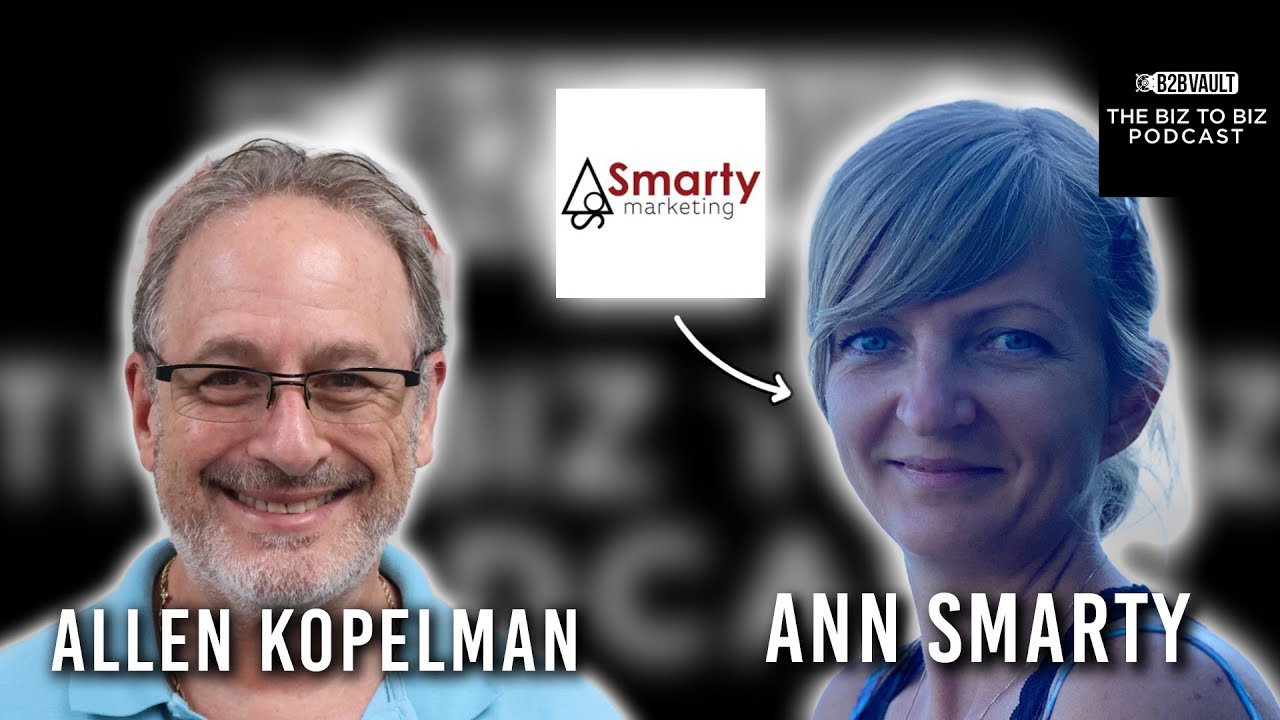
In this episode of the Biz to Biz Podcast, host (Speaker A) interviews Ann Smarty, a veteran SEO and marketing expert and founder of Smarty Marketing. The conversation explores how AI—especially large language models like ChatGPT and Gemini—is reshaping search, SEO, and online visibility. Ann explains that AI has been part of Google’s ranking algorithms for years, but the rapid emergence of AI‑generated answers, zero‑click results, and AI‑driven SEO tools creates uncertainty for businesses. She discusses whether Google will lose traffic to AI platforms, the rise of AI‑focused SEO products (e.g., Search Atlas), and the hype versus lasting value of such tools. Ann warns against shortcuts like promises of getting listed inside ChatGPT, emphasizing that citations and being the actual answer are more valuable than mere references. The discussion moves to the challenges of brand visibility in a world where anyone can spin up a website instantly, the importance of building a recognizable, trustworthy brand, and the advantage local businesses have through Google Business Profiles and map integrations. Ann advises businesses to treat AI as an assistant for brainstorming, data analysis, and routine tasks, not as a creative substitute, and to focus on improving their own website, clarifying product positioning, and preparing for a zero‑click future where clicks may decline. Practical start/stop recommendations are offered: start by updating and enriching your website with clear, detailed content; stop expecting high click volumes from traditional search and avoid relying on AI‑generated content as a unique brand voice. Ann shares her contact points (smarty.marketing, LinkedIn, X, Instagram, newsletter at nsmarter.com) and encourages listeners to follow the podcast for more insights.
Chapters
Welcome to the Biz to Biz Podcast, your number one source for all business news. Hey everybody, welcome to today's episode of B2B Vault, the Biz to Biz Podcast, sponsored by Nationwide Payment Systems and our new product we have up in the back here called NPS One, which is coming soon. So watch out for NPS One, probably be out by the time this podcast is aired. So check it out, getnpsone.com. .com, a new payment platform for all-in-one payments. Today we have a special guest on the show— all our guests are special— Ann Smarty from Smarty Marketing, and she is a marketing and SEO expert. So it's always cool to have people on the show that we can talk to marketing about. Every business needs marketing, and today websites Everybody has a website and you need to know what to do with your website to make it, you know, to make your website work for you. So welcome to the show and tell us a little bit about yourself.
Hi everyone, I'm Ann Smarty. I have been in SEO for more than 20 years, so I've seen it all, been helping businesses through all the updates, new things coming into Google. It's an exciting year, even more than a year for our industry now with AI. So a lot of changes, a lot of new things, a lot of overwhelmed businesses, business owners who have no idea where it's going and what is even happening. So I'm glad to be here to try and explain everything, and I always try to talk to businesses without too much tech talk so it's understandable for everyone.
So I mean, AI is definitely changing the world. It's changing our business world, um, it's changing everything that we're doing on the internet, um, soft— I mean, software coding. I mean, it's just insane, like, what's going on with AI. AI and SEO, this is like a thing that is like Bursting out everywhere, um, probably because I search for it. So then I see ads, right? For all these different companies. So how is, how is AI affecting SEO in a good way, in a bad way? Like what's going on with the AI and SEO?
Well, it's such a good question because it is, there are a few things here. So first of all, for SEO, it's not exactly new. AI has been in the background of Google search algorithm for at least, I would say, 5 years. So it hasn't been exact matching of keywords. It hasn't been as straightforward. Rankings have not been as easily translated into visibility. So it's been a while. So it's not exactly new to us, but it is changing so fast that the answer to your question. No one really knows if it's for good or for worse. We are in the same boat trying to go with the flow and see where it's going. Visible things about AI like AI overviews, AI mode, ChatGPT that is also part of Discovery Channel for businesses as well. All of that is changing so fast. They are keeping up with each other. They are changing the outputs. One day they use a lot of references and links and answers. So it's starting getting traffic. The other day it's just text answers, so there are no traffic. It's changing. Even the output is changing every month for all those products. So keeping up with that is definitely difficult and no one really knows if those are good changes or bad changes. At this point, I would say it is too fast. No one really has any answers in terms of where it's all going, how it's going to change. Things and how customers are discovering businesses or products. It is changing. That's all we know. Changes probably are always for better, that makes us evolve. But practically, it is much more difficult for businesses to adjust just because of the speed of everything that's changing.
Do you think Google is going to lose search traffic to ChatGPT and these other, you know, Gemini, like people are going to go in there and ask their questions or go in there and do their searches. I'm sure that there's a significant amount of traffic that is headed that way.
Well, our hope as an industry is that not exactly that Google is losing everything, but it is that it has competitors. That is because our industry hasn't been in a healthy position for too many years where there is no other alternative. And now that Google is struggling to keep up with everything that's going on, you can see that they are scared as well. They don't have all the answers in terms of how they're going to monetize all those answers, how they're going to make money. So they're going with the flow just like the rest of us. And it's a good sign. They haven't been struggling for at least two decades now. They have been the only channel, so they could do whatever they wanted. And now that—
And charge whatever they want too.
Exactly. Talk about the pricing for the ads that has been increasing for no reason for many years and business owners were not even aware of that. But all of that is a good change for the industry overall. There needs to be some competition. I don't see Google losing and being like forgotten at least for at least, we have at least 10 years then Google is still the major player. I would say that's my prediction. But it's, it's obviously that they are worried. They are actually trying to do something and do something very fast to keep up with the changing searching behaviors, with the changing expectation, with the changing industry as a whole. And while it does impact many business owners in a negative way when they're losing clicks, they're losing visibility, they don't know what to do. But as a whole, I see that as a good thing happening to our industry. We do need few options so that Google is not the only one. Okay, I, I throw 30% of independent publishers from the index and no one can say anything because where, what, what are they going to do? And now that there is another platform that is speeding up and trying to be an alternative, Google is very, very worried about that. And it's good for the industry for sure.
So have you seen like products like Search Atlas. Have you heard of that one? Search Atlas? It's like an AI SEO product. I see them all over the place.
There are a lot of new solutions that are picking up at this wave of interest in AI. I do still a little bit. So there are two possible outcomes. One of them is that it's just a hype and at some point Silicon Valley will stop investing that crazy amount of money in just about any AI-driven startup. And the other outcome is that it will mature at some point and we will know which big players are actually staying and which ones are just pioneers for them to figure out what to do.
Well, that's kind of like the, that's kind of like the internet. So if you go back to like the early 2000s, there was 50 50 different search engines and then over time it all just got gobbled up to where it's just Microsoft and Google and that's it. And there's a few little players out there.
And the only difference, I mean, it's not different. I think that internet probably touched and impacted many more industries beyond marketing. So it's something that's going on with AI. No one knows what it's going to do with the movies industry, with the anything actually, with advertising. With just about any market out there. It's just for us, I think we are in a little bit of advantage as SEO industry because we have been in the middle between the humans and the machine for as long as we existed. So we have that a little bit of advantage of understanding what's going on and where it might be going.
So one thing I've been hearing about, which I don't believe, right, is I see these companies advertising, oh, we can get you listed inside ChatGPT. I don't believe like that's even possible right now.
Well, depending, it's just about as the early days of SEO. Remember those companies that would say, we guarantee rankings, we know exactly the magic button, how to do that. So there will always be companies and agencies like that. In our There is a long way to get into the training data for ChatGPT, for Gemini. It's not easy. There are no guarantees, but we know exactly how to do that. It's just for every client, there are always like, how are you going to measure that? What's the outcome? If I invest this much, how much traffic or visibility will I get? Those questions do not have easy answers for sure. That's why it's such a still magic happening, but it's definitely not easy. Do not believe in any shortcuts, any guarantees, any promised ROI, because no, no one knows exactly the steps. We know how to—
I've definitely heard like having frequently asked questions on your website can help you show up into those into the AI because if someone asks a question and it's searching the internet and you have that question and answer on your site, you might pop in there.
You might. That's, that's, that's the biggest thing. So there are, there are few components. I think that not many business owners or even marketers understand that being cited, having your URL referenced from the AI answer is one thing. Being the answer itself, like being suggested with your product or brand name as the option to buy from is an absolutely different technology. So when you talk about FAQs, they may at this point help you to get referenced from those little panels that nobody really clicks at this point. Not many people when they get full answer, who cares about those references to the right or hidden behind the icon?
Or you see little references under the answer.
Have you ever clicked them? Like, it's very seldom. I would say that the answers usually are so detailed that people just go with that and pick the brand name or product name that is mentioned in the answer and go find it on Google. That's how the buying journey is happening right now. So being the The answer is much more important in my view than being referenced as the source for that answer because people just get what they need from the answer. It's very seldom when they need to click anything. That's why we are all losing clicks across the board because they are not needed as much anymore. And imagine that in the future. Now, right now you can ask what's the best perfume for this and that. So you have your options. You can find them in Google and buy right now. So you have to go to that site and make and to buy. In the future, I imagine when ChatGPT is rolling out that shopping integrations, Google will follow. They will be able to buy just from the answer. They would, okay, pick that. You have my card. Just go ahead and buy it and have it delivered to my address so that the clicks will not even be needed to convert. So Everything might be happening inside those answers, AI answers, and that is a very probable future. We already are losing traffic right now. People still need to get our website to buy. They may not have to do that in the future. So keep that in mind as well.
So what should businesses be doing with AI right now? Like, I, my suggestion is, hey, get a paid account on one of these AIs and start to play with it? Like, what else do you suggest?
That's what we've been doing for more than a year now. We are asking questions about brands, about ourselves, keeping an eye on what is the answer is and why. The bottom line here is to be a very well-defined business with very well-defined value proposition. So product positioning is much more important these days than it ever was. In Google, when you— we were just had to create content that is keyword rich, and then Google would match those search queries with the page that mentions those keywords. That was easy. You didn't have to be recognized entity to be found. At this point, you need to niche down and really understand what it is you are offering that solves particular problems. And yeah, I will become the answer to particular questions or prompts, and I will be the answer to that. It could be everything. It could be your particular segment of the audience. For example, you, you sell something. Very cheap to moms. And you need to make sure that not just your site, but the context all over the web about you says the same thing. This is what you are good at, and this is why. And then when the mom that has kids goes and prompts ChatGPT or Gemini, I need this product and I need it very cheap. You will be the answer. And that's when people will just, those people, that little segment will know about you. And next time they will already know your brand. So this is the buying journey, very simplified in a very simplified way, explained to businesses what the future is. And it's not about huge brands. It's not about a lot of mentions around the web. Actually, it's very, very well-defined context about you. Which is something that I'm struggling actually, because, uh, Anne Smarthy has been an SEO for 20 years, but I've changed so many angles throughout those 20 years. Well, not surprisingly because SEO was changing. So I was pivoting from one thing to another. I was a search SEO community manager, search editor. I was blogger. I was guest blogger. I was link builder. I was search analyst. I've had a lot of roles during that path. And now when someone is asking something like, I need a good— someone good at brand marketing, I would not show up because even if I had that expertise, it's not well defined enough for me to be the only answer to that prompt. So that's something. Mm-hmm.
Go ahead. Sorry. No, no, no. I get it. Let's talk about like visibility, right?
Mm-hmm.
So visibility seems to be super elusive. You know, because also, you know, like you divide up business. We deal with businesses because we deal with their payment processing, right? So you have companies who sell B2C, business to consumer, and B2B, business to business. And, you know, visibility on the internet, sometimes, you know, like I tell every business, like you need a website, you know, even if— which is kind of crazy. Like now I see people spin up a website, they go on GoDaddy, buy a domain name. All of a sudden you get this GoDaddy AI tool thing. You punch in your basic information, hit a button. I actually tried it out. In about 10 minutes, this thing spit up a website. I was like, wow, that's like literally insane that it did that. I mean, obviously you didn't have, you know, like privacy policies and terms and conditions and all of the things that you need, but it spit up, spin, it spun up, you know, a basic one-page landing page with basic information on it. The funny thing is, is I've seen people apply for merchant accounts through us, and I'll go click on their website, and I've seen the same website like at least a dozen times. It looks like exactly the same with the same pictures on it, which is crazy. I'm sure you can change the pictures. I didn't play with it enough, but I mean, it's kind of crazy like how fast people can be putting this stuff up and they're basically like even making websites that have like an extra letter in it, making it look like somebody else's company, you know, these, whatever you want to call it, a fake, deepfake or whatever.
Well, that is, that is definitely the problem, how easy it is to create an entity. That's how, that makes it harder for everyone else to stand out for sure. That there is very low entry to the web at this point when anyone can just set up a website and consider themselves a brand. You are right with the point that brand visibility is elusive. One thing to keep in mind, and I've been talking about branding since I can remember, it's part of SEO for many years because you have to be distinguished. You have to have return traffic, return customers, return everything, all those signals that show Google that you are not just one-day business. You can be trusted. You have a community behind your site. You have return visitors and return buyers who think that you are good enough to just type your brand name in search results and go directly to that site. It has been important for many years. There are always shortcuts. There are always holes in the algorithm that now there are lots of holes. In AI process as well when you create fake brand visibility and they will catch up on that. If you post articles on LinkedIn, Medium, your own site, you flood AI training data with some, with content that talks about you and how good you are. And you may show up in some answers just because of that. There are shortcuts all the time and you do not need a recognized brand to win. But for how long? That's another business model. It has always existed. Like that black hat SEO still there. They can set up a website, enjoy their income traffic for 6 months, and then they know they need to exit. I'm actually consulting some businesses who trying to buy those websites because they have such great data. They have all the growth and trends. I'm like, no, no, no. They are exiting exactly because they know they have a few months left. Do not invest into this because it's not real. It's not real brand. It's very short-lived.
So I've seen these ads like on Facebook and LinkedIn where these companies are, I don't know, it's called S-E-R-F or something. And they're like, oh yeah, sign up, pay $200 a month, and then give us like your website. And then we have real people. I don't know who, where these people are in the world, right? Real people, somebody with a phone farm probably.
And they're clicking on your, blog posts every day to like send your traffic up, but the guy's sitting in a straw hut in the Philippines somewhere with 500, you know, when you are setting up a business and you want to, you have an idea of how long you want it to live, what's your why you're creating that business, which idea you have, who you are serving, and what's your goal. If your goal is to make X amount of clicks that translate into X amount of ad revenue, that's fine. That's your business model. You don't have a brand for that. If you are setting up a business that you think will survive for years and will be your income and even full-time job at some point, that's when you need to think about how I differentiate myself from similar businesses, how I make it clear to search, to AI platforms, to my customers, what it is so good and unique about myself and which problems I'm solving. Those are two different things and they both exist and I feel like they both have the right to exist, whatever works, you know. I have no problem with those businesses that are created with an idea that they will be there for 2 to 6 months and that's okay. Once they are done, they create more businesses like that and as long as they do not cheat real people into buying them, losing businesses that are about to vanish in 2 months, as long as they're just making money and then they switch to something else. I'm fine with that. My clients and people who I work with are invested in the brand visibility that should be there for years. And brand visibility is something that has been there for many years. It has always been a hard sell. Not many businesses understand, like business owners understand why and how to even measure that. But what I'm saying, everything is changing. Channels are changing. Google is changing rules all the time. Facebook is now only sending paid traffic. It used to be organic traffic for many years. So everything is changing. But if you have a visible brand, if people know you, you can survive all those changes. You will be in the training data. You will know you will not be impacted by search algorithms as much. If you lose clicks, you will still rely on other forms of visibility you have and return visitors and return customers as well. Brand visibility is a smart investment because it's going to walk you through any other changes that are always happening. AI is not the first change that we are going through. It's much more rapid, I would say. But it's still, it's not the first one. And we have clients going through many, many updates. And back in 20, 15 years ago, there was paid, people would invest in PageRank instead of brand. And where are those people right now? Like, you know, it's being focused on what works at this very moment makes sense only when you know that you will lose this business. In 3 to 6 months, maybe a year. That's the one.
It's also, you know, it's also important to like claim your Google, whatever they want to call that now, your Google Business Page, Business Profile, used to be Google My Business. It amazes me how many businesses do not claim that on the internet. And it's super important for your, I guess it's, I think it's important for your SEO, but it's definitely important for your visibility.
Exactly. And local businesses absolutely winning in these AI changes because ChatGPT relies on Bing Maps, Gemini AI mode rely on Google Maps. Anytime there is local intent asked, whether it's search results, whether it's AI platform, Maps with all those cleaned profiles and views would always show up. So local businesses probably are the biggest winners from all of that because they are still going to be found, whether it's AI search or traditional search.
So what, what kind of things should people not— I mean, I guess, you know, there's dos and don'ts, right? And, you know, it's I guess, and you know, and everything's changing like so fast with Google and AI and, you know, where is it going? And, you know, then you see other platforms popping up everywhere, you know, like little tiny search engines, and they don't seem to last. You know, I've seen a few of them. They don't, they don't last, probably because they don't have any revenue. Right. And then nobody's investing in them. But, you know, so what's the, what's the smart play like, right? Besides like, yes, you need to learn how to use AI. And we see people using AI, like in, in our industry, we see people using AI already helping clients, you know, get better reporting, getting answers to the, instead of searching through frequently asked question library of 1,000 pages. They can type a question in and the AI finds the answer right away. We see really cool stuff like that and we see results because someone gets their question answered. They're not calling the help desk, right? So they're, you know, that's, that's helping. Like, what do you, where do you see, like, somebody owns a small business or whatever, any, you know, obviously big businesses can invest big money, but where do you see small businesses using AI to their advantage right now?
Well, there are different use cases for AI depending on niche, business model, business type, and again, small local teams. If you have a team, AI is very helpful in organizing it. There are lots of use cases. I I think that question is great, but a little bit too generic. What I'm trying to say is, from marketing perspective, do not try to use AI as a shortcut to anything. Like you said, generating your website and content on that website, that will not make you unique. That will not make you return worthy. That will not make you memorable. So using AI, whatever you do, use it for inspiration, brainstorming, productivity, but not creativity, I would say. You cannot generate content using AI. It's not original content. You cannot generate brand identity using AI because it will still be repurposing other people's ideas. AI doesn't have ideas of its own. AI is using its training data and training data is 100% based on our knowledge, on people, people's content, people's brands, people, everything. So Try to think about AI as a little, as an assistant. I use AI to generate something that is made for robots, like meta description, or I use AI for brainstorming and ideation, like how we create a better title, more eye-catching subject for an email. If I ask it to create, to write an email for me, I'm never satisfied. It's not my tone. It's not how I would say it.
Yes.
So keep an eye on that. Like, remain unique and human while using AI as an assistant. Look which tasks you don't like in your day-to-day life. It could be customer assistance in terms of like frequently asked questions. Like you said, I like chatbots when I ask question and if there is an answer, it will give it to me with a helpful link or helpful something. And if it doesn't have an answer, it does, It's not wasting my time for 5 minutes. It will just connect me to the human being. So this way, if it's like, it's easier on your team because they don't have to answer generic questions that are already answered on this side. AI will point that to your customer. But if they're still not satisfied, don't waste their time. Connect to the human being right away. That's a very ethical and productive way to use AI. So think about things things that you don't like doing and can be automated in a smart way, but keep the human side of your businesses for sure. Like, do not fire your customer support because definitely AI cannot be as helpful and many customers will help a human being, we need a human being to help them. So that's, that's kind of how I suggest thinking about integrating AI into your business operation?
Yeah, I've seen all kinds of like interesting use cases, but definitely like AI can be used to analyze your data, can help you maybe schedule people, figure out like, oh, here's my data from my point of sale system and, you know, tell me what my busiest days are, busiest times, how should I schedule my staff, boom, boom, boom, boom, boom. You can get a lot of answers. Huh?
Don't forget, and I'm using AI for data analysis a lot, it's often hallucinating. So do make sure that you kind of still make some, something, some moves to check if it's right or not. We do have lots of spreadsheets even for our clients, for keywords, for anything. And I would upload it at Gemini or ChatGPT GPT and ask like, show me the trends, show me the most popular that, create a graph. It's all good at those tasks, but make sure to kind of refer back to your data and make and check if everything is right because it is, it is still very hallucinating, very much hallucinating.
That's why, that's why one of my favorite sayings is people do what you inspect, not what you expect. So don't expect like perfect. Thing from AI, you need to inspect like what's going on. You know, so if somebody, you know, like in the SEO, you know, the world of SEO, oh, you're muted. I think you hit the mute button. Oh, in SEO, like what if on a final note, as we finish this up, like give something like positive that people should be doing right when they're thinking about their SEO right now. Like what's one thing they should start doing and one thing they should stop doing when it comes to like SEO and trying to get traffic to, you know, their website or make it more visible? Like what's one thing they should start doing and one thing they should stop doing?
So definitely one, the first thing that you need to start doing is to go back to your website and work on it. Most businesses, including myself, who keep talking about creating great websites, and I never have time to do that for my own website. And most businesses have websites that are either too old or not too detailed or not even too unique. So try to go to your website and see what should be added, what is missing, your story, what you're focusing on, the story of that business. Your more detailed product description, whatever it is your business is doing. There is room for lots of improvements of your website that you have been delaying for probably months or even years, like most of us did. And having that is already a great first step to making a relevant business and making moves to become part of training data. Relevant problems you are solving, describe them, talk about what, what you are doing and which problems you are solving for your target customers. Could be articles, could be product pages, could be FAQs. Again, it's up to you, but try to see how to improve your website so that one, it becomes good solid training data for AI or search engines, doesn't matter. For any machine out there and to encourage people remember your site and remember your brand and know that they will go back. It's not about just first-time visits. You want those people that you earned to come back. So just work on your website. That would be the first step. And what not to do, and you mentioned traffic, do not expect much traffic. Think about the world where there are not many clicks. Think about most platforms, even social media platforms. Look at Instagram. They do not send, even if you run ads on Instagram, they do not necessarily send people to your website. In many cases, you can buy something right from that app. I'm sure AI and with AI, Google will try, will be trying to do the same. So do not expect much traffic. Think about the future when there may not be as many clicks as there are, there were 5 years ago, or even now in, in our research, businesses already lost 30 to 40% of clicks.
I think social, social selling is going to be a new thing where you take a product and we actually have this in our new software. Where you can take a product, create a link for it with a picture, product description, and a buy now button and stick it on Instagram, put it on TikTok, put it on Facebook, put it on LinkedIn, and then it basically enables somebody to hit the button and buy now. And I think we're going to see a lot more of that in the future, this social selling.
Social selling and AI selling where people will just get get product recommendations through ChatGPT or even AI mode, which is part of search of Google Search right now. So all the Google searches are now will have access to that AI mode, which is free. They will find me great shoes that I can wear tonight and it will find fast delivery, all the options, categorize them by like anything you want. And then you just pick the image you like and say, hey, buy me this. And that's it. So So think about your product sustainability in this future and don't expect, don't rely, try and stop relying on clicks that much and think about other avenues and other channels which you can utilize to sustain your businesses through zero-click future.
So where can people find you? What your website is? Smarty.marketing?
Yep, Smarty.marketing is my agency. You can definitely find me there. I'm very active on LinkedIn as Ann Smarty. I'm on Twitter.
That's where we found each other, LinkedIn.
Yes, I'm also on Twitter, X, I'm sorry, I'm old school. I'm on X as SEO Smarty. Ann Smarty is on Instagram. Basically, if you search Google Ann Smarty, everything is right on page 1. Feel free to follow me everywhere. My very— my newsletter lives on nsmarter.com, and that's where I'm trying to make it very clear and actionable to explain people what's happening, what's probably future for that is, and what you can do now, which integrations there are at this point. We need to talk about yours, by the way. Which solutions are there for small businesses, for B2B businesses, for B2C businesses, which solutions exist to try and be the early adopter or discover more channels to not depend on what you have right now and probably losing. Everyone is losing what they have right now. So what other things you can do? So I talk about that every week over at nsmarty.com. So feel free to subscribe and I will try to make it very easy to understand and very actionable every episode of my new series like that.
Well, thank you for being on the podcast. You can find us, B2B Vault, the Biz to Biz Podcast, on Spotify, Apple, anywhere you listen to podcasts, on YouTube. I'm on LinkedIn. We post clips from the podcast and all kinds of things about the podcast and our guests on LinkedIn. And check us out. Out. And we appreciate all our listeners. B2B Vault, the Biz to Biz Podcast. I always say carpe diem, which is seize the day. And watch out for our new product, getnps1.com, coming soon. And thank you, Anne, for being on the podcast today and talking about AI and SEO, because this is like one of the top things searched all the time on, on Google right now. This is probably and probably searched in ChatGPT, Gemini, and everywhere. So thank you for being a guest today.
Thank you. Thanks a lot for having me.
More from Allen



How B2B Companies Can Turn YouTube Into a Lead Generation Machine | Featuring Samu Kovacs


How AI Is Transforming E-Commerce with Zero Code | Kumar Senthil, CEO of Firmly



Dre Baldwin on Discipline, Leadership, AI & Business Success | The Mindset Every Entrepreneur Needs

The Same Skills That Made Me a Pro Athlete Built My YouTube #podcast #entrepreneurship #success

