Can A Shy Person Be A Salesperson? | Biz to Biz Podcast
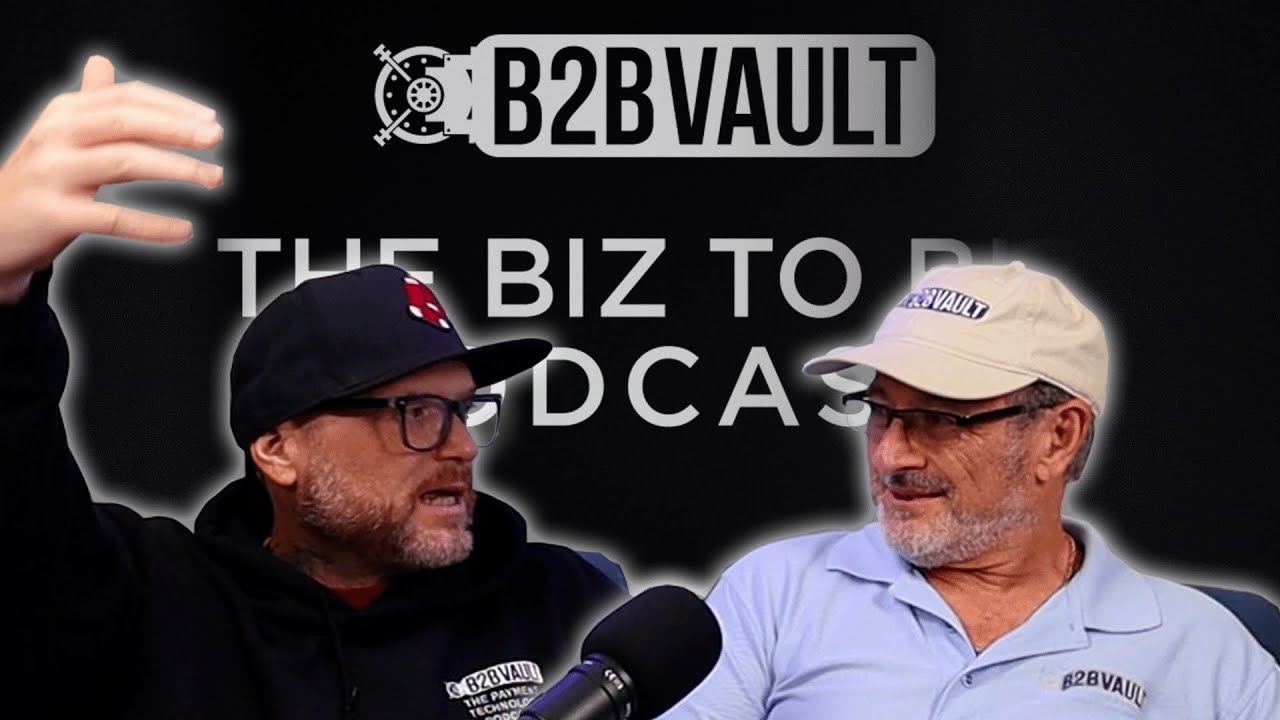
Payment-processing expert Allen Kopelman tells Justin that shy people can absolutely sell. He recommends Dale Carnegie's "expert authority" mindset, crafting a tight elevator pitch, and practicing with friends first. Product knowledge and authenticity matter more than charisma.
Chapters
Yo, what's up everybody? It's Justin live from B2B Vault, the payment technology podcast sponsored by Nationwide Payment Systems, hosted by this guy, the Steve Malkovich of payment processing himself, Allen Kopelman. And we'll be providing you educational information about payment processing, fintech, small business, and the technology they use in the world today. And in today's podcast, we'll be talking about If you own a business and how you need to be a salesperson, and if you're shy, can you still be a share salesperson? So right off top, man, how you doing today, sir?
Doing good. Busy week.
Busy week.
Yes, every lot, you know. So it's been busy, so it's been good, and, uh, everything's going along fine. Planning, making, making secret plans. My— for my daughter's birthday. Oh yes, we'll not reveal them at this time. Once it happens, then we'll put it out there, but it's going to be fun. And, uh, how are you doing today?
I'm doing all right.
All right, cool.
Had a rough week. I found out one of my friends passed away.
Oh, that was sad. I remember.
Yeah, ish. Big ish, man. Rest in peace, bro. He was, uh my barber for, I don't know, man, 20 years.
Too young.
Yeah. So we love you, brother. You know what I mean? I hope your family's doing all right.
Who's Steve Malkovich?
I don't know, I just made it up. I was waiting for him to say something. I was like, who is that? Yeah, no, I just made him up. Uh, so we're gonna—
I think you should go through the '72 Dolphins. The Vernden Herder of payment processing. He was my favorite. I just like the name Vernden Herder.
Yeah, I was waiting for him to catch it. I've never done that before, and I was like, let me just— I didn't have anything for today, so let me just—
you could go through the whole defense on the, on the '72 defense.
We could do something like that. Yeah, man.
Bonacani.
Other than that, man, this week has, uh, been active. Uh, we've been finishing up a lot of stuff. Um, almost ready to launch a couple projects we've been working on, so that's cool.
Um, yeah, it's very interesting. Every article—
real quick, what? My kids finally are all on the school bus.
Nice.
So yeah, congratulations. Shout out to Broward County Public Schools. Cheers to you, mate. Yeah, it was a pain in the neck, dude.
I mean, this isn't something to talk about on this podcast, but it's a little bit crazy. But all of a sudden I see all these articles coming out from these companies about SEO, and then they're talking about SEO and changing and artificial intelligence optimization for your website. And, and, and some other stuff about AI with having to do with websites. It's a little bit crazy. I don't even know if it's—
I mean, I could jump in. Yeah, I, I'll— it's interesting. I mean, I, I've been— there's a lot of people, SEO is dead and this and that, and web design is dead, and digital marketing is dead, and all this other stuff. Yeah, sure, show me. And well, let's come back to this conversation in 6 months.
Yeah, I'm just saying it's going to be interesting to see because all of a sudden I get these emails, you know, I get hit up every day on LinkedIn.
Yeah, I know. I mean, but it's crazy because we've been— people who really do SEO, like, you know what I mean? We've been optimizing for artificial intelligence in a sense for quite some time now.
Of course, because Google's been using AI for years.
Yeah. I mean, what is—
what do you think crawls?
What is predictive text?
Yeah, AI.
Okay, so when you, yeah, man, I mean, so yeah.
When you're typing on your phone, it starts putting in words. Same thing when you're email.
So you know what I mean? So it's like.
It's been out there.
Yeah, it's definitely been out there. It's just kind of. I just think it's laughable to me.
I just think it's funny 'cause all of a sudden I get these emails that say, oh, instead of SEO, you should be doing AO. I was like, what? Like, okay, artificial optimization. Instead of—
it just sounds artificial optimization.
I guess what— that's what the A stands for.
It doesn't sound— AIO.
Yeah, AIO or AO. That's what they call it.
Artificial intelligence.
I think it's more of a sales tactic because now we're going to talk about sales.
Sales, sales. Yeah, man, there's a lot into sales. Uh, my— you know, like we said, like, if it— you know, Real quick, the social media guy was asking, do you think if you're a shy person, do you think that you could still run a business and be a good salesperson? And Allen and I both immediately said, you're going to have to break out of that mold real quick.
And I had to do that.
If you're a business owner, you're going to have to do it.
When I had my first chef job where I was the chef of an entire hotel, You know, all of a sudden one day they call me, they're like, oh Chef, you gotta come in the catering office. And I go into the catering office, you know, my nice clean chef uniform. The girls told me, change your jacket, the woman in the office. So I come down there and there's people, you know, people in there. They're looking to book an event at the hotel. And all of a sudden, I didn't know what— obviously she helped me a lot because she asked me questions. Oh, what could you do for this or for that? What kind of ideas did I have? And then my boss was in there and afterwards he told me, he goes, yeah, he goes, you're the chef. You got to be a sales guy too. I was like, I didn't even know that was part of the job. And what helped me was I ended up— they paid, but they sent me to Dale Carnegie. And I went to Dale Carnegie and that kind of one thing you can always remember. This is the one thing I learned at Dale Carnegie that I take with me every single day. So I'm going to tell you what it is and it's work for anybody. One of the things that they taught me is, is that I was the chef and I am the expert. In that department, right? I'm the chef and I'm the expert chef, right? So when I talk to people, that you have to use that in your authority. So in this business, I'm the credit card processing guy and I'm the expert, right, on credit card processing. And Justin is the expert on web stuff, everything to do with the web and digital marketing. There you go. And you have to, whenever business you're going to go into, if you're starting a business Right? You have to remember that you're the authority, not— you run the business, not the employees running the business. And you have to use that, your knowledge of what you're going to go business. If you're going to sell cars, hopefully you're a car expert, you love cars, right? So you have to put that in your mindset that you are the expert.
Yes, agreed.
Yeah. And that can help you get over your shyness, I think.
Yeah. I mean, you have to be— you have to know what you're selling, right? Like, you know, you should be knowledgeable. You know, you should— you, like you said, you're the expert of whether it's a product or a service. So you got to be able to sell yourself to why I should be using your service, right?
And when— and one of the other—
definitely important.
Yeah. One of the other things I learned when I was learning about sales. When I first started selling credit card processing, I would go out to businesses, walk in, talk to them, and I didn't know anything about sales. And then I started to learn. One of the things— a person I learned from was my stepdad. He sold insurance, right? Jerry. So he told me, he goes, when people buy, he goes, you have two types of buyers. First of all, everybody wants to buy. Because they need, you know, hopefully they need your service. So they're a buyer and one— there's two buyer personas, right? Visual and audio, audible. So some people you're going to need to talk to and some people you're going to need to give them a visual, right? And, you know, so you have to be prepared for that when you're doing sales. Is that visually, you have to be able to audit. Just explaining something, talking sometimes doesn't always work. So you got to figure out how you can do things. Like now, I remember before the pandemic, I would pull teeth with people to jump on a Zoom. I'd say, oh, I'm going to share my screen and show you this software. They'd be like, what? You can do that? I'm like, yeah, I'm going to email you this link and click on it. And then I would run them through a demo.
Yeah, I remember when I first started my digital agency trying to sell websites and, you know, going through business to business and how I would like— I would basically almost change my whole persona, right? Like I would you know, go into this meeting and like, hey, how's it going? My name is Justin. Nice to meet you. I look forward to being your digital marketing guy, blah, blah, blah, right? Like, and then not realizing, like, I'm not being my true self. And, and that these companies that they found me, right? So they had already vested some time. And they know who I was. So like, me being self-conscious, of like, you know, my personality or my tattoos, the way I wear my hat, you know, just my general look, right? Right. I always felt like it was a disadvantage. So I was going there almost like with a chip on my shoulder to show them that, you know, this guy who looks like this, who, you know, a little rough around the edges, you know, unpolished, but he's still an expert at what he does.
Right.
And so then I would go into that, you know, that meeting, and I would fail because I wasn't being myself, right? Like, I wasn't being Justin, I wasn't being Jay, you know, I was, I was just, I was going in there, like, pretending to be something that I'm not and forgetting that one, I am the expert, and two, they have already found me, they know what I look like, they know who I am, you know, most people, they're gonna, you know, they're gonna They're going to Google you, they're going to LinkedIn you, they're going to Facebook, right? So I mean, my point is, is like, once I figured that out and was really able to become my, you know, full, you know, self, maximum potential or whatever it is, right? Yeah. My, my confidence to sell my expertise was through the roof. Like when I came here and interviewed with you, right? I was extremely confident that I could get the project done because I knew everything that you had already had the foundation set. And so it was nothing for me to come in and clean it up because I have been working on WordPress websites and Divi websites for over a decade now. So it was, you know, my self-confidence at that point, you know, it's not that's— it's easy to sell myself at this point, right? So I'm saying that to all the people who are starting, you know, practice on your family and your friends, right? It's going to be awkward. They'll probably laugh at you. But you got to come into your own, you know, like come into your own self so that you're— so that you sound as confident as you want to be, and then that you come across as knowledgeable and as much of an expert as you say you are.
So one of the things, another thing I learned in business was this. The first time you meet somebody, that's the best they're ever gonna look.
Most of the time.
So when you're going at, you know, if you're going out making sales, make sure you don't need to be wearing an expensive suit. You don't need to wear a suit and a tie. People have gone very casual, polo shirts. People can even show up like, listen, I go to conventions.
I came to this, job interview in a Milwaukee Brewers baseball jersey and some Crocs and a pair of army fatigues.
Listen, it showed some personality.
I'm just saying, like, but that's how I go towards all of my things, right? Exactly. So like, if I have to change myself, right, to sell my expertise, then yeah.
But you, you're in a creative business, so you can do that. You have to remember what kind of business.
Well, that's true too. You can't show up to a a corporate business, like even in web design, right? I'm not gonna show up to a, like say we have to go to a corporate office or something and you're saying, hey Justin, we gotta go and do something. I even know that, yeah, there's a time to clean up, right? But like for a job interview or you're going, I mean, it depends on your niche, right? Your industry.
But listen, we went to a convention, right? There was maybe, 4 people. We counted less than 10 people that had on any kind of jacket and tie, right? And anybody that was wearing a jacket and tie was at least 70, right?
I mean, give or take, you know, there are— there is a group of younger people who are really like trying to bring back that whole business attire stuff. But yes, what he's saying is right and exact. No one is going out to get fitted for a suit to wear to business conferences for 3 hours. No one's doing that. Why would you even spend your money on that?
Well, it's not just that, but I'm just saying, like, people are very, very casual. We saw—
you want to be comfortable.
We saw owners of companies. We saw a guy who owns a big company. He was wearing shorts and a t-shirt and flip-flops, right?
Like, that's the type of guy I want to do business with. He's real. He's not impressing you, you know? Like, that's— I, you know, like, I'm not a huge fan of, uh, Steve Jobs, but there's a lot of stuff that, you know, that he did that I really, I appreciate, like his simple, simplistic way of looking at the world.
Zuckerberg has a simple attire.
Right, exactly. Like, I appreciate that type of stuff. You know, I'm— it's a— it's something that I'm working towards, right? Because I struggle with decision-making. Okay. Right. So that makes my morning even harder because I have my favorite—
one of my favorite books, The 5 Second Rule.
Yes, I know what that is.
It's a good book.
I've definitely, I know the theory.
Right, so that was my first, you know, so be an expert. And what was the second thing I said? Nah, I forgot. I don't know. Then the other thing I learned in sales was, and this one is really good, under-promise and over-deliver. So the best, when you do that, The thing is, let's say I know I could get your— let's say you have a restaurant and you call me up and you say, hey, I need to get credit card processing right away, or I have a retail store, I need a credit card machine, how fast can you get it to me? Listen, send me over the paperwork, boom, boom, boom. If everything's in order, yeah, we can probably have it to you in a day or two. Oh, I really need it tomorrow. I'm going to try my best to do that, but you got to get me the stuff right away.
Right.
And then so now I set the expectation. You deliver me the what I need and I can deliver what on my end. So, you know, or if you tell somebody, oh yeah, I can get that done in 2 to 3 business days and you get it done the next day, you look like a hero. If you tell them, oh, I can get it done the next day, and then the person you need to do it's out sick, out on a vacation, you look like an asshat. Right, then you didn't deliver, you didn't do a good job.
Now your reputation is already getting soured. Right. Your trustworthiness is lacking and your quality of work is lackluster.
And then like when—
You're already fighting uphill.
Right, and then one of the other things, like I tell salespeople that come work for us, I say, you're gonna get questions thrown at you that you don't know the answer to.
Yeah, you say? I don't have an answer for you right now, but I'll find out and I'll get back to you.
Yeah, and if you're in front of them, you make a phone, you call or text me. Yeah. Because you might not get another chance to be in front of that person. Or let's say they're on the phone with you and they're asking you a question. You say, hey, my boss is in the other room in his office. Let me see if he's available. Hold on. Boom. And that way you get the question answered right away.
Number one is don't bullshit your way through the answer. Like, don't, don't promise something that you know, or, or just try to get the job. Like, I've done this before with website contracts. Like, somebody wants something that's, you know, like some sort of functionality, right? And I'm like, oh yeah, absolutely. But I, because I need the money. But then come to her, I'm doing the research, I'm trying to implement the functionality, and it's really becoming a pain in the ass, right? Yeah. And so now you're like, you're running through your budget, you, you're not gonna make it the client happy because they won't have exactly what they want, right? And so, I mean, that's a very good point. Don't ever, ever like overcompensate for the job, right?
Like, don't, don't, don't say, oh yeah, we can do that, it's custom development, but we can get it done.
Yeah, don't do that.
And then the cut, you do the install, like for a point of sale, Then the customer's like, oh, well, what about this thing that I wanted? And then all of a sudden there's no—
There's not even such a thing.
There's no such thing. The development on it hasn't even been thought out. Don't promise people. Like I had a guy, they called me—
What's the word, overpromise?
Well, no, it's just like, if you're not sure that you can do something, don't tell people you can do it.
Yeah, don't take the job.
Especially if it's a product and something custom needs to be done to it, maybe it can't be done or maybe it'll take It takes 6 months. Well, I had a guy the other day, they go, and we've had this, I've gone to the ATM company 100 times. Oh, when can we get these cash recyclers so we can put them in these adult nightclubs to dispense the $1 bills? And they ask me, oh, can you find some people who want that? I found them a dozen people who want it. And they can't seem, they're just like dilly-dallying around. And in that industry, it's kind of an issue because—
It's a nuisance for sure.
Yeah, it's a nuisance for them because people come in the club, then they want ones. So they have to go to the cashier at the front or they have to go to the bartenders and go, oh, here's a 20, give me 20 ones. And it's just taking away time from making drinks.
I get it.
Or the manager has to go to the office and go take You know, I mean, it makes it hard to sell when they can't sell it.
Right, right.
So if they had a machine that would dispense the ones— the problem is the regular ATMs are not made to dispense like 100 bills at one time. Right, right. So it can't— it'll just get clogged up in the machine.
So what are some tips for some business owners to get their sales up?
To get your sales up, be confident in your— the product that you're selling, be knowledgeable. You have to instill your knowledge into your employees and teach them, like learn as you go. Like I do with Justin, sometimes he has to learn, you have to learn as you go, right? Let them listen to you, how you're pitching, how you're talking to the customers, how you're interacting with them. And then that's how they're gonna learn. But when you go start a business, that's one of the things a lot of people don't realize.
You gotta hit the ground, bro. You gotta get out there. You gotta, shake hands, kiss the babies, feed the dogs. Yeah, you gotta go out, network. Rescue cats from trees, fam. Like, you have to get out of your comfort zone and really, you know, make room for the person that you want to grow into, for sure.
Right. Like I said, Dale Carnegie, that's expensive. You could join a BNI group. One of the things they do at BNI is when they start the meeting, they go around the table or the room And everybody has to give a 1-minute commercial. Even on Alignable, there's people that say, hey, practice your elevator pitch. And they do a Zoom meeting.
But like, I mean, when it comes to sales, right, and you own your own business, like, and you're selling, like, what, I don't care what, like, if it's a new towel, right? You're selling towels. Like, you must, you have to be knowledgeable and confident to be like, all right, this has, 20,000 thread count. It's Egyptian cotton that is—
what's so soft—
sustainably sourced. It's in a green facility, you know, like, you got to be the person— you have to— I want you to know every single last detail, right? You can, right? You're in that way, you don't even have to worry about your sales pitch because they're going to trust like, yo, this guy knows everything about the materials, the textiles, the fabrics, the way that it's being shipped, you know, when it— the types of whatever. Like, I would do business with you.
So like when I book calls for people to talk to me, right, I'd schedule them for 15 minutes. But I know that if in the first 2 or 3 minutes, if I don't catch their attention, right, the call might not last 15 minutes. Sometimes a 15-minute call lasts an hour, right, because they're interested in what I'm, you know, in, in what I can do for them, right? So the thing is, is that you have, when you're doing, you have to have an elevator pitch. You have to have a 1-minute pitch. What do you do? I, we help businesses process credit cards, whatever you do in person, online, invoicing, B2B. This is what we do. We help. We work with a multitude of banks so we can get just about any type of account approved. And now I told everybody what I do in less than a minute. You have to have that for your business. You have to have that 30-second to 1-minute commercial, you know, of—
agreed.
What is— what, what do you do and what, what are you selling? Like, oh, I repair Hondas, we have a special computer and that computer, when we hook it up to your car, we know exactly what's wrong with it. And we have all the access to the Honda official parts and blah, blah, blah, blah, blah, or whatever it is. Oh, I sell trees and we have special bonsai trees. I know you like bonsai tree, right?
I can't wait to buy a bonsai tree, bro.
We have special bonsai trees and it comes from here and da, da, da, da, da, da, da, right? So you have to know everything about your product, whatever that product is. Oh, maybe you're selling ad specialties, you're selling t-shirts, whatever it is. And then you have to give the person a reasonable expectation of when are they getting it?
The t-shirt thing is a great example because all of the younger generation are heavy in fashion right now.
Right, yeah, a lot of fashion.
And when you guys are running up on me to buy your t-shirt, Like, you need to be explaining to me like, yo, this is 100% organic cotton, stonewashed, pre-dried, shrunk, whatever it may be, stone fire grilled. I don't care. Like, you use specific ink that's only out of a flower that's grown in East Africa. I want to know those things, right?
Yeah.
You know what I'm saying? So like, If you're just saying, yo, buy my t-shirt because it looks cool. Nah, man, like, sell me your t-shirt. Like, let me know, like, you know, why you love it so much. Why do you love your brand? And I think that's what's going on with a lot of these, you know, like these small businesses and like the pop-up stuff is that they're in for it. They're not— they don't love the brand. They love, they love fashion, but they're not in love with what they're selling.
Right.
You know what I mean?
And whatever it is, you gotta love it.
I think that you really do, you need to be in love. You need to trust yourself. And if you really love what your expertise is, it's gonna be no problem for you to sell it because you're gonna be great at whatever it is you do.
Yeah, you wanna show people, oh, I'm knowledgeable, I love what I do, I love what I'm selling.
I don't suck.
Yeah, I don't. So yeah, because, you know, some people buy on price too. So you got to know like how to price things.
And that might not be your clientele, you know, like they're not— every person that you're selling to is your customer fit, you know?
Right.
You know, so like, you know, be aware of that too. Like, you— all money isn't good money. I said that this morning, but never turn down a dollar. No, know where the money's coming from.
It's funny, like my son works at a store, a PacSun, right? And they have that one brand Essentials. So when they put it out, they get a drop and literally he has like a list of people on his phone. He just texts them all.
Right.
Right. And he goes, you know, they only get an hour. They only have a certain amount of t-shirts, shorts, pants, hoodies. The hoodies go really fast. So once you have that thing that people want, right, then you can do that.
It sells itself.
Yeah, it sells itself. But you got to build it up to where that's what you have, what people want. Oh, they like that style. They like the feeling of the material. That's why people buy that stuff.
I got what you need, cuz. Anyway, it was a good podcast, man.
Yeah, what's up?
Don't be shy, dude. Learn about what you got going on and be out outside. Be confident, you know?
Develop your one-minute pitch.
Practice on your family and your friends, or even if it's, you know, somebody that you really don't know, it can really, it helped me a lot.
Yeah, under-promise, over-deliver. Don't leave people with questions. Don't tell 'em you're gonna come back. Get the questions answered right away.
My favorite quote is by my best friend in the world, Mike Tyson. Thank you, Mike. Everyone has a plan until they get punched in the mouth. So nice. It's a good one, man. Shout out to you guys.
Peace out.
Check us out on YouTube. Smash that subscribe button. Like, share, comment. Tell your friends and family that these guys are— they know what they're talking about. So peace out.
Carpe diem.
More from Allen



How B2B Companies Can Turn YouTube Into a Lead Generation Machine | Featuring Samu Kovacs


How AI Is Transforming E-Commerce with Zero Code | Kumar Senthil, CEO of Firmly



Dre Baldwin on Discipline, Leadership, AI & Business Success | The Mindset Every Entrepreneur Needs

The Same Skills That Made Me a Pro Athlete Built My YouTube #podcast #entrepreneurship #success

