Founder Burnout Ends Here: Outsourcing Secrets from Adam Spector
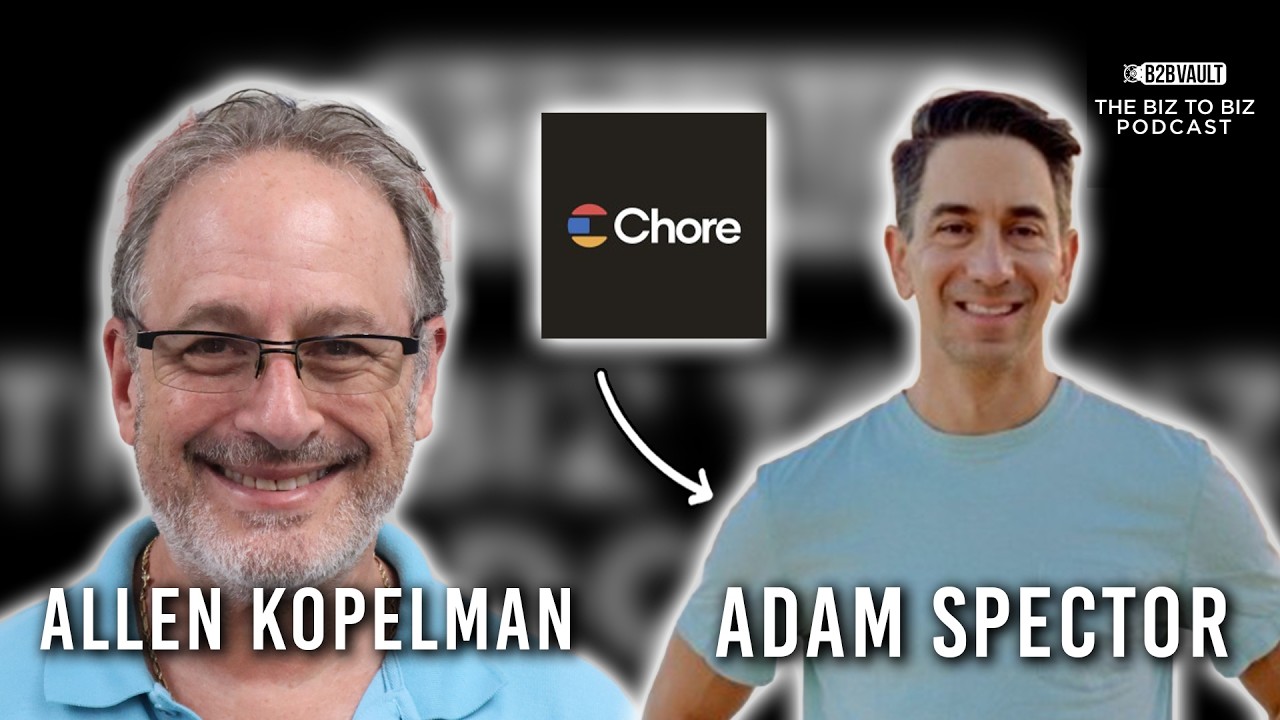
Adam Spector of HireChore explains how founders can outsource HR, payroll, compliance, and finance to avoid burnout. He argues that hiring full-time staff for back-office work is inefficient and costly, while paying vendors only for actual work saves money and lets founders focus on product.
Chapters
You're now watching B2B Vault, the Biz to Biz podcast hosted by Allen Kopelman, powered by Nationwide Payment Systems, the number one solution for payment processing.
Hey everybody, welcome to today's episode of B2B Vault, the Biz to Biz podcast sponsored by Nationwide Payment Systems and our new gateway, NPS1, where you can do smart invoicing, send out payment links, have a customer database, get a free WooCommerce plugin and a two-way sync to QuickBooks. To find out more about our great services, you can visit nationwidepaymentsystems.com. And today we welcome to the podcast Adam Spector from HireChore.com. And it's interesting because I just came across a post that he made on LinkedIn one day and I was like, hey, this looks pretty interesting. I gotta find out about this company. And I connected with Adam and we chatted and I said, I think this would make a great podcast. So welcome to the show.
And Allen, it is great to be here. Thank you.
Yeah. Give us a little overview on who you are, where you're from, all the good stuff.
Yeah. So I'm obviously founder and CEO of Shore. We do back office chores. We essentially run operations for companies. So that means we do all the HR. We are outsourced HR. We do all the compliance work that you have to deal with. So state registrations, all that work. We do all the finance, accounts payable, accounts receivable, bookkeeping, taxes. Um, and we do, for startups, we do equity management as well. So essentially all of the annoying things that a founder needs to manage to run the company, we take that off their plate so the founders can focus back on what they do best, which is building a great product and getting customers for that product. Um, So before that, I'm a 4-time founder. I've founded 4 different companies. I've had the privilege of investing in over 200 companies as well as an early-stage investor. And I've probably seen just about everything out there. Still more to learn, but I've seen a lot.
So what motivated you to start this company?
Pretty simple, which was that my previous companies, I was— so I come in as the business founder. I had a lot of great sort of technical co-founders. And as the business founder, my job was to go get business. But then I also had to spend probably 5 to 10 hours a week just like, man, there's some payroll issue or there's some tax issue, there's some accounting issue, there was some compliance issue. And all these random things kept popping up that were so distracting and time-consuming. And it, and it was like death by a thousand cuts trying to run all these things. It's like, oh, I want to go do this sale today. Oh wait, my team's saying payroll didn't run well. What a distraction. And then I got to get back in the mindset to go sell and close, or like traveling to go see a customer and try to log into my computer from some random hotel room because there's some issue with the state claiming that we owe them $10,000 for a random thing that we don't owe them for. And I got to go stand hold with to see if someone in the state will pick up the phone call. Like, once again, this is like a time tax on your success of your business. And it is actually the admin side is why most businesses fail. Today, especially small businesses, to be clear, because they can't afford to outsource this, or at least they don't think they can afford to outsource it. And so they try to do it themselves as a founder. And it, you know, you, you take a founder, I'll just use some random example, right? Someone who makes the best pies in the world. They are the world's best pie maker. Mm, delicious pies. Um, they go start a business, they sell all these pies, people love their pies. Okay, they open a storefront. Now they have to deal with all the regulations for a storefront. They gotta go hire some people to man the storefront. They have to hire a bunch more chefs and bakers and everything else and train those people on how to do it. And they're still dealing with all the other stuff and trying to market it, put things on Instagram, whatever they're doing. And next thing you know, they start failing because they're hiring bad people. The people are stealing from them. There's issues happening. Payroll isn't running and it all just falls apart. It's a classic story of business failure because the person who is great at a certain thing, who had a superpower in baking pies, is now trying to figure out how to run payroll. And guess what? Those two things don't usually mix all that well, or unless you want a payroll pie, I suppose.
Payroll pie. I don't know. That could be, it might not be tasty, but it could fill up your bank account.
I was gonna say, if it's filled with money, that sounds like a pretty good pie. Yeah. But for most people, payroll, at least for a business owner, payroll is money going out the door, um, not coming in. And so you need to run well, you need to pay your team, obviously, But you need to make sure you're actually collecting money, which means running a good business, making sure your product, your pies are freaking amazing, making sure people know how to go buy your pies, not figuring out how to do all the back office chores.
Yeah. You know, there's a lot of difficult tasks. One thing I learned about payroll is it's better just to have a payroll company, let them deal with the payroll and especially making sure the tax are paid. It's super important. And from an HR standpoint, it is, you know, when you get to a certain size, all of a sudden you need an employee handbook. You have to get— have people have like an onboarding meeting, and they have to sign onboarding paperwork. And then you got to collect all their information so you can put it into the payroll system and the time clock system, or whatever it is., and that could consume hours of your time. And, you know, calling the government, like having to call up, let's say you have to call up like the sales tax office, unemployment, or in Florida they call it reemployment. I don't even understand, like the Department of Revenue is in charge of your sales tax and they also collect your unemployment tax, and then they call the unemployment reemployment people. Are under the Florida Commerce, which makes—
that's weird. But, but, but your point is right. One, right, this is where, this is where companies— like, what a terrible use of your time. I mean, do you enjoy that, Allen, as like a business leader? Is this something you enjoy doing? Is it a good use of your time? Are you making money by spending time on this?
No, definitely not.
So why the heck would you ever do it? Like, why wouldn't you delegate it out to someone else?
Yeah, exactly. It's— I mean, thank goodness for me, I don't have that many employees to— that, that work.
That's what everyone says. You're still wasting time, Allen. I'm telling you, this is a tax in your time in, in like, this is the whole thing. Well, I don't have that many employees. I don't have that much stuff. Doesn't matter. There's all this stuff that happens, right? Literally, there are companies, obviously Chor is one of them, that will do it for a price that makes sense for your size company, right? It's not just like, oh, the big companies that have 100 or 200 or 1,000 people can hire a back office team. That is BS. There are solutions out there that exist. You don't need to do this work again. And like, I don't know, life's too short. I don't, I mean, this is what I love doing, so I'm cool with it. But I think for most entrepreneurs, I don't think like their grave is— they don't want on their grave to say, built an okay business, spent half of the time doing payroll.
Like, nobody wants to do that.
That's not what you're gonna be proud of. You're gonna tell your kids that? Is that gonna be— they're gonna be so proud of dad or mom being an entrepreneur because they spent all their time in back office work? Give me an effing break. That is a joke. And yet that's what happens.
It's, it's weird because I had a discussion with a few business owners recently and we were talking about how unemployment is handled, right? And we were discussing it, and I was like, this— the state is like so out— our state is like completely like out of control. Like, they send you a letter in the mail, you have like 2 days to answer it, right? They don't even have a way for you to upload documents on their website. So you know how you have to go make copies of all these— find all this stuff, make copies of it, then mail it to them, and they have a PO box, so you can't use FedEx.
So once again, so then why, why are you doing that yourself? Like, this is— you're, you were perfectly describing the problems. The question then is, why are you and every single other small business owner doing this work themselves? Like, what a terrible— you literally just, once again, you described exactly the challenge and the pain.
It is a huge challenge, but it was like, for me, it was like one incident and it gave me a headache. But I was talking to some of my, a couple of friends of mine, and one of my friends was like, yeah, we have high turnover. They own a restaurant company with 3 restaurants. And he's like, yeah, he goes, we have one person that's just dealing with this all the time. Like, that's their full-time job. I'm like, dude, are you kidding me?
Like, I mean, even for that person, that, that person's company, this is where at least Chor, that's why we exist, is because like you shouldn't have to hire, recruit, manage, and train someone just to do this work. Hire specialists whose only job it is to handle all of this stuff. The thing— this thing is that other people, people don't realize as well is a lot of companies say, I need to hire someone full-time for this role, or I need to hire somebody who could do this. I absolutely believe to the depths of my heart that we are moving into a world where you need fewer and fewer full-time employees on your team. In fact, you should try every day to build everything you can with outsourced talent, contractors, or vendors and just say, nope, I know there's someone who can handle all the unemployment stuff, all the unemployment claims. I don't need to hire someone that I have to manage who has to come into the office. If they get sick, I need to backfill them. Wait a minute, like, it's your friend's company. If that person who runs all this gets sick or goes on vacation or quits, Your friend's probably SOL.
Yeah, my friend told me, he goes, he goes, he had a bunch of unemployment cases and he goes, he got— they got tired of just dealing with the state. So I said, what'd you do? He goes, just— he goes, I just don't even answer them anymore because they just— I said, then your unemployment rate's going to go through the roof. What are you gonna— you're gonna be paying like some crazy unemployment rate.
So that's once again, this is this is the, this is the issue that they need to be considering. And this is the why you need specialists for this. And I know I keep talking about this, but like, if for all the people listening to this podcast, like, please don't hire someone full-time internally for this work. Do not do it yourself as a founder. If you want to have a chance at building a fantastic long-term business, delegate and outsource this to experts. Chor is one of those, but like, I don't care. Find someone who does it that is not you internally.
Yeah, it's really— it's definitely a growing trend to do that and, and find people. And, you know, I never even heard of a company like yours before who's like outsourcing so many different tasks. Like, I have somebody I outsource to clean up my QuickBooks every month, and I have another person that I outsource some other stuff to for my business also., and it's, you know, it's worth it because they, they do a good job. They do a specific task and they do that. If I had a bigger— if I was constantly hiring people, I would definitely outsource HR because it's a huge pain. Not just— it's not just because you have the hiring process, the interviewing process, the onboarding process, getting them enrolled in whatever systems that you're having them use, right? That could all be handled by somebody, you know, outside. It just goes here, boom, collects all the information, takes care of it, boom, boom, boom, boom, boom, and you're done.
Correct. And, and wouldn't it be nice to just say, I'm hiring you as a contracting firm for me, or a vendor, or whatever, and you promise me you're going to do X job, right? You know, you guys at MPS One, you, you sell a certain product And people buy that product and expect an outcome from you. And if you provide that outcome every time, they're super happy. And if you don't, they're angry, right? Or you could use Coca-Cola as an example, right? I buy Coke, I'm expecting it to taste the same basically anywhere in the globe I go and not have any diseases or anything else in it, right? Expecting it to be high quality. Um, and that's the same thing with every vendor you work with. It's my job as a vendor to our customers to to get them high-quality services at all times. Now I have to deal with all the issues on my team, right? Training, recruiting, hiring, managing, keeping people happy, all the stuff. But that's on me. You as my customer, you don't care. You don't care if I'm getting it. All you care about is the outcomes you're receiving.
Exactly.
I'm paying you money, get me the outcome. That's my relationship with my, my customers. That, and that's a fair one.
Well, it's like, uh, when I first became an executive chef before I was in this business, I worked in the hotel business and I got my first executive chef position. And I'll never forget, the food and beverage director sat me down and he's like, listen, he goes, I'm going to teach you something. I said, okay, teach. So the one, one, he taught me a few things I learned from him. I probably taught him plenty of things too, but one of the most important thing, two of the most important things he told me was customers come into your business and he goes, they have a blank slate. So when they're done eating, whatever it is, have whatever you're selling them, dealing with them, no matter what it is— if you're selling them Chor, you're selling them MPS1, you're selling them a phone, whatever it is— they have a blank slate. When they leave, there's either going to be a blank slate, a zero, they had a— they didn't have a positive or negative experience, or they have a minus sign, so they had a negative experience. Or they have a plus sign and they had a good experience. Mm-hmm. You wanna make sure that whatever you do, you want everybody to leave with the plus sign, you know, on their forehead. That's what he used to tell me. Great.
Like, but once again, like this is, this goes back to the question of like, that is what a good vendor does. When you have a product, your whole point of your good product is that people are happy with the product, the output, right? The problem that you have with employees And sorry, I'm on a rant today about this because I was, I was writing a post about this today about like the actual cost of a discussion with a potential customer. They're like, well, we might want to hire someone internally. And I just don't understand it. Like they don't, what people don't take into account is the average employee. Let me, I can pull up some, let me find this data for you, um, really quick here. I, I literally will tell you some really interesting things, right? So, um, so the average employee. Right, is like, so here we go. 21% of workers globally are engaged. Only 21% of workers globally are actually engaged at work. So that means, that means 79%, right, are not, are disengaged.
That's not good, right?
62% of your workers are doing the minimum amount every single day. 15% of your employees are actively working against you as a company. Like their own companies. They're working against your outcomes. 15%. Over 70% of employees dread going to work on Mondays. Um, uh, only 15% of frontline workers say that work fulfills any sense of purpose. And 50%, 50% of your workers are watching for or actively seeking a new job right now.
That's crazy.
Do you want to hire a full-time employee or do you wanna hire an outsource company who just says, we're gonna do X job for you and get it done. Why would you want employees given those stats?
It makes you want to think, right? And then, you know, makes you want to think like, how, how did the— how do you deal with that? Now, if you aren't— if you're running a retail store or a restaurant, you don't re— you can't outsource employees unless you're going to start having robots. Sure.
Yeah, there, there, there are certain companies you have to have employees for, but there's a lot that you, you don't need to have employees for most jobs other than the core ones that you do. Everything else, you just say, I'm going to hire a vendor. And the thing is with vendors, right, look, with Chor, we will charge you more on like a per-hour basis to run HR and finance and compliance than you would pay your full-time person on an hourly basis. However, we only use hours we need, number one, right? So we're only essentially— we don't charge by the hour, but we're essentially only charging for hours we really work. Whereas, you know, you have an employee, he's sitting around half a day like twiddling their thumbs, you're paying them for that.
Right.
Okay, so that's one. Two, you're paying us to make sure we're getting it right every single time on a regular basis. Maybe not every time, but hopefully every time as much as possible. Um, uh, and three, I forget my third point, but like, oh, we're, and we're dealing with all this stuff. So if there, if you have a person, people, look, you've implied hired a lot of people, Allen. Um, hundreds. People get sick, people go on vacation, people have family issues. You name it, people, more people, more problems. And look, I love people, but like people got a lot of issues and so they're unreliable in many cases. Whereas once again, a vendor is more reliable, right? So maybe I'll use the pie as an example. I can go make pie at home, but my pie might turn out badly. I'm not very good at it. I don't have the resources. I don't have a system set up for making good pie. On the other hand, I can go buy a pie from a store. You know what? That pie's gonna be delicious. And if it's not, that store's gonna refund me and give me a free new pie. Um, yeah, I paid more to the guy, the, the person making the pie, than if I made it at home by myself. But I'm paying for convenience and I'm paying for quality, right? It's the same thing with us.
Yeah, it's definitely, you know, it's definitely a trend that's been going on in the United States for a long time. And, you know, with, with workers, you know, and it's the same thing like we were talking before we hopped on the podcast about When people are building sales teams out, how are they building their team out? Are they hiring a manager and then a bunch of people on salary, or are they hiring a manager and a bunch of 1099s? And how do you control all of that? So like when somebody is using, you know, outsourcing for like HR and all that, I guess you still have to reach out to the team and go, oh, we're having this problem, and then they deal with it, right?
Well, yeah, but then you hand it off to someone to go figure it out. Like, literally, that's how we work with our customers. They send us emails or Slack messages and just say, like, we have this issue, figure it out, or we got this message from the state of Florida. We need help, right? I don't know what to do. Great. You shouldn't know what to do. That's the whole point, is that's not your job. We'll go figure out what to do. Like, well, you know, it's the same for all these things. Once again, like, if you have a, you know, if you want a pizza pie right now, Allen, are you going to go bake your own pie? You're going to go call up DoorDash or go to the pie store?
I might make a pie.
You might, but that's 'cause, that's 'cause you enjoy the activity and it maybe takes your mind off other things. But like generally speaking, you know, once again, like you're gonna outsource it to get higher quality, but you pay more. Why do you go to a restaurant instead of cooking food at home? Yeah, you go for the experience, you know, experience, but you also don't want to, you know, you don't wanna cook at home, maybe all these other things. And you pay more on like a dollar per dollar basis, but there's so much waste. You show when people cook at home, there's a huge amount of food waste. When you go to a restaurant, hopefully less food waste because they have a pretty good idea of who's coming in, how much I need to spend, all those things.
So it's definitely an interesting thing. So when you talk about, like, you know, you talked a little bit about operational chaos, right? And that's a big problem for a lot of businesses. You know, I find it all the time. I talk to a lot of founders and startup companies, and I'll be sitting there talking to them about, like, okay, well, we can help you with all this stuff with payments, and then they're like trying to figure out like how to skin the cat more. And I'm like, I don't understand what you're trying to do. Like, you know, you, you, you're trying, you know, you're focusing on the wrong area. Or I see people and they start a business and they're like technical guys, right? It's a group of— I met with some group yesterday, 4 guys, all tech guys, and I was like, who's doing your sales? Like, how are you gonna make sales? And they just don't know. And they're like, well, we're doing this. And I'm like, okay, well, how is that going? Like, you know, you, you know, you have to focus. You have to get people on your team, right, that can do, that can do, that can, you know, do these, do, do what the jobs that you can't do, you know.
Or, or in their case, I would say don't even— if they're 4 technical guys, Don't try to hire some salesperson internally. Do they know how to recruit, hire, manage, and train a salesperson? No. So why the heck would they spend time doing that? Hire an agency and say, agency, I'm gonna interview 5 agencies. Okay, agency 1, how many sales do you think you can get me in what period of time and what will you charge? Agency 2, same question. Choose the best agency, give them 3 months. If they don't get it done, fire them, go to the next agency.
Yeah, that's what I told them. I said, you guys are just going about it the wrong way. Of doing things. I said, you gotta, you gotta build out, you have to go to, uh, you know, you have to get experts to help you in the areas that you don't do. Like, I don't make the website in my office. We have people that make the website. We don't think— I don't make the website, somebody else does it.
You're not making the servers that's running this, this, this podcast recording. You're not making the servers that run the website. These are things we outsource so much in our lives, and yet I come across companies nonstop who say, oh, I need to have this person internally. And I'm like, what are you talking about? In what world do you think that's a good idea? Yeah, life is too short for me. Like, life is too short. I love my team, but man, like the amount of time that I have to spend with my team dealing with just like personal stuff because like that's life, that's people, is a lot. And I'd rather be building a great product and getting customers for it. And so we outsource what we can.
So when we talk about like AI, right, which is, you know, you know, AI, it's kind of a little funny because I have a friend of mine that's a real bit— he's a major computer expert guy, right? So I go, he says, oh, I want to show you all this AI stuff that I built. So I was like, okay, I go over to his office, he shows me all this AI that he built out. And then the other day I go talk to him about it again, and he goes, yeah, he goes, I don't know what I'm gonna do. And I said, what do you mean you don't know what you're gonna do? And he's like, because it's a huge problem. I said, what happened? He goes, well, Claude and OpenAI and Anthropic, he goes, they woke up the other day because they figured out that everybody was taking their $200 a month product and building out all these agents on it, right? And gobbling up all these— I don't understand it— these, the coins or whatever, tokens, tokens, tokens, right? So he's like, I get a letter, I get an email from Claude, and I go, what does it say? And he says, says I'm using 5 billion tokens or something, right? And I'm like, okay, well, what, how does that translate out? So he starts explaining it to me and he's like, Well, when you divide it all up by what they want to charge me, because it's like $7,000 a day, I go, $7,000 a day. Then he's telling me, goes, well, I looked at this other model and he goes, and that one would be $600 a day.
A big difference.
No, but he's like, he says, that's still unaffordable. $600 a day times 30.
Well, then what's he building? I mean, I would say like, look, I get it. These things can be very expensive. But if you're building something that's going to eat that, $600 a day is too expensive to you, like, I get it. Then like you're, you're, you're either building something that isn't valuable, in which case like you shouldn't be building it, arguably, like you're spending too many tokens. Like I will prototype a ton of things in AI, but I'm not going to go drop billions of tokens on it unless I feel relatively confident I can make money doing it.
Yeah, well, he was just saying that he was doing it for like a few months And he goes, and he guesses that these companies started to realize that everybody was building all these agents out. And I guess they said, you can't use that, the $200 thing anymore.
Yeah, no, they were subsidizing it to get customers and they're just running out of compute right now. But the world is changing massively because of that. Like the things that I've been able to build, and I'm not necessarily an expert by a long shot, is I think mind-blowing even to me.
Oh yeah, I mean, I've done stuff like on Claude, like ask it questions like, can you build me a savings calculator? And I'll show them an example of one on a website, and then it just makes it for me.
Yeah, 100%.
It prints, it makes like a huge thing of code. I just give it to the website person, go here, go plug that into the website.
Correct.
We're done. They didn't have to code it. When I look at how much code there was for this thing that literally takes up like not even a sheet of paper, like on the screen, right? It was like 40 pages long. I was like, wow, that's, that's insane. Like all of that is the code that, that, and the computer just made it in like 10 minutes.
Like, but if you think about it and, and yes, it looks like a lot of code and a lot of text, but, um, or writing, it's relatively small given the abilities that it has, or maybe a different way to put it, like, you know what, I'm going to get this wrong, but how big is the human genetic code? It's teeny. The code to run a human, literally from like birth to growing into an adult, getting old, all the things in life and all the things a human can do, the actual code is teeny. And, and my point sort of is like, even with the computer code, like it looks big, but it's like really small. Like the data size for most computer code is like small.
I think a lot of companies now are rebranding themselves as AI, but basically they're just automation companies, you know what I mean?
Yeah, for sure.
They're just doing automation, but now they're calling it AI and it's not really AI.
Yeah, no, uh, it's— most companies are not, um, and that's okay. But like, you do need to be very thoughtful about whether there's going to be a world where— do, do you as a company still exist in a world of AI? Like, what are the outcomes for you as a business? Given where AI is headed in everyone, you know, there's a lot of people who are much smarter than me who've said this, but like, you need to be very thoughtful about what this means for you, your business, who you're working with. Do you have a future? How are you creating that future? And what are you doing to create that future? So at TROAR, we're working really hard to make sure we are building a super strong AI foundation, which I think will enable us to work great with every company into the future and hopefully build a really bright future for us. But if we don't do that, we relegate ourselves to death. So we need to do it.
Yeah, the AI, it's the future. So you got to figure out like how to, you know, do more automation, how to figure out how to use AI. You have to figure out how to get your employees to use AI so they can do more in their day. You know, either that or you're going to end up outsourcing to somebody who knows how to use AI. I was talking to some students from, uh, a high school the other day. Actually, they're going to be a guest on the pod. They're— we already recorded a podcast, and they started an AI group in their high school. And so we were talking all about AI, what the high school— their teachers are like against it, but what are they doing with it? What are the other students doing?
Legitimate question.
What, what's going on with the— with, with the AI? And they said They said, you know, like the teacher gives them some homework to do and they don't understand it and their parents don't understand it. So now they can take that homework. I wish I had this. I mean, I was a horrible student in high school. I got a lot of C's.
I mean, but you know, you're a great example though of how little school applies to outcomes in life because you've done really well. So, you know, it's, you gotta have a, you you had other magic.
Well, you know, you get a sense of business, right? So I grew up around business people, so you have a sense of business and you understand like, oh, business and sales and, you know, it's a whole thing. But, you know, they were telling me like, oh, we can upload this homework to AI and go explain the homework, explain this concept, a math problem or whatever, and get some general help on it. You know, obviously you don't want AI to do your homework, but You know, at the same time, you know, you have to ask somebody a question and that's how that goes. And the same thing, like we were talking about before with sales, you know, I was in a room once at an incubator and the guys who run the incubator invited me to come speak about entrepreneurship. So I, first question I asked, how many people in the room want to start a business? Every, all the hands go up, right? And I said, okay, now you have this business. And I said, okay, what are you going to sell? And I went around and asked about 10 people, right? Yeah. Tell me, tell me, tell me. There was about almost 100 people in the room. And then I said, who in here thinks that they have to go make a sale to make their business successful? No one raised their hand. Yeah, I was like, one person's got to make sales. So I tell them the story. I was a chef. And I get my first executive chef job and I'll never forget my boss. I had to go to these meetings and I didn't talk in the meetings and they told me, you got to talk in the meeting. They sent me to Dale Carnegie so I could learn a concept. So the one concept, the most important concept I learned from Dale Carnegie is you are the expert. So if you're the chef, you're the chef, you are the expert on chef stuff. If you're the restaurant manager, you need to be the specialist on that. If you're the HR person, you're the HR specialist. You got to own it, live it, and breathe it. And you got to take that— the bulls by the horn, right?
And this is— but by the way, this is once again exactly to go back and not to oversell Tor here, but like, that's exactly the point. Like, if you're a founder, you got to choose which one of those you are, right? You you cannot be all of those things. Because guess what? If you do all those things, you'll do almost all of them badly. And even the thing you love doing, you will do that badly.
Yeah, it's not, it's not, it's not good. But you gotta, you know, people have to understand like what are they doing in their business. What chores do you think that AI, besides like what you're doing, the outsourcing, where do you see like AI coming into businesses? Because I look at tools every day and I'm trying to find like the right tools. To incorporate into my business, right? So you have to really dive in, talk to these companies, and a lot of them, they're super expensive. They're looking for high-ticket people selling high-ticket stuff. So that's not for me. We're not gonna— we're not a high-ticket company where we're selling people something that costs 3, 4, 5 grand, right?
Yeah, and I don't think most companies need to be selling you high-ticket things. Like, the thing is, the beauty of AI is it's dramatically lowering the costs of a lot of things. So it's lowering the cost to get work done and getting output. And so in the end, like when I, like when I hire a lot of my vendors, I just say, look, I want outcomes. You achieve these outcomes. I don't actually, don't care what tools you're using. Don't tell me the details. I don't need to know. That's the whole point is like you're the expert. Just tell me what outcomes you're gonna get. Right. And so like, for as an example with like, uh, with sales or with leads, if I'm gonna go hire, uh, some company to do leads for me, I want them to achieve outcomes. Get me great outcomes. I don't, I don't care what you're doing to get there. Just achieve them.
Yeah, I had a couple of marketing companies that we hired one time and we told them, we said, okay, we want to be able to measure the outcomes. And they got really nervous with me.
Yeah, most people do.
And I'm like, well, if you're not going to measure the outcome, how do you justify how much you're going to charge me to do this? There has to be an outcome. If you don't achieve the outcome, then I want some of my money back.
And they probably didn't want to work with you.
This one guy was like, okay, they worked with me, and then he ended up having to give me back a lot of money because he didn't achieve the outcome. He tried to blame it on me, and I said, no, I put— you're the one— if I knew what to do, I wouldn't hire you.
Yeah.
And a lot of times when I talk to these people about AI, they're trying to resell something that they're involved with, and they're not the creator of the AI and, and all that. Cracks, you know, and, and I even know another person who went and put all these open claw things in people's businesses, and then they're, they're all shut off right now because they broke down. Did the $200 thing, right? And then it all went kaput. The guy installed like a lot. I said, what do you— I asked him, I said, oh, what are you doing about that now? Because we wouldn't give him credit card processing because it was an unproven like product that he was selling. And I was like, now what are you going to do? He's like, I don't know. He goes, but I'm essentially right now out of business.
Yeah, I get it.
Because he was using billions of tokens, right? And he's— and it's done. But what do you see, like, things that AI can do for people, like answer the phone? To take, you know, my working—
my working assumption is AI can do every single thing that I or any other business can do. So the first thing that I try to do is I go ask AI, can it go build this for me? Or what vendors does it recommend to go do it? Now, to be clear, I also don't believe that I should go build most of the tools that my vendors can do. So let's say I want to get content created that I want to post different places. I can go obviously ask Claude to go write me or ChatGPT to go write me a post. Um, but it might not be the best post in the world, right? And, um, so are there specialist tools that go do that? Or, um, doing outreach to various companies or building me a pitch deck, right? Claude Design now has that, but there's also lots of other companies that will do that. Or helping me, um, edit my podcast and get great stuff out the door on that front. There's so many different things that I can go do. Um, but my working assumption to start with is AI can do a lot of it. That's where I start. And then, then I go from there. If AI can't do it by myself, or I don't want it, the cost of maintaining it, right? Cause that's expensive to your point of open cloud. It's expensive to maintain these systems. I don't want to go rebuild my CRM, right? I'll go get— I wouldn't recommend Salesforce, but like, I'd go get something like Salesforce, right? Because there's a CRM out there, they're not that expensive, and I just don't want to go build that myself. Like, that's just the tax of building and maintaining something is pretty high too, and the cost is relatively low to go buy it. Um, and then if I can't find a vendor with a good product for it, I can't build it, I don't want to build myself, I can't find a good vendor, then I'll go find an outsourced consultant. To go do that work. And then the very last thing, it's like, okay, I haven't found any of the solutions here, then I'll go hire someone for it. But once again, my working assumption is I can have vendors do almost all these things and they probably are using AI and therefore they're lowering their prices.
And so people could do more with their time with 100%.
I mean, I had this debate with a former teammate of mine, and, and we— I started looking at all our expenses. We had some vendors who were charging us a lot of money for some things. Hadn't changed their prices with us in 3 years. Said, you know, the world's changed a lot in 3 years, right? For this side of work especially. I asked them what the deal was and guess what? They came back right away and gave me a 40% discount.
Wow.
40% right off the bat. And I was like, okay, thank you. Like, and, and this actually teammate of mine was a little bit angry. She's like, that doesn't seem fair. Like, we know them well, we've worked really well with them, everything else. I'm like, look, one, we're not a charity. Two, like, They can do 50%, they gave us almost a 50% discount cuz they can do 2x as much as they used to be able to do. Right. It costs them to do this work, so I hope they have 2x more customers. And yes, now they were just making extra money off of it. Like they're a business too. They, why, why do I owe them generosity if they're not owing, owing me generosity? Um, now I think a good business is one that continuously says, how do I lower the price for my customers? And proactively says that to them. So like with Chor, our goal this year is we're gonna be building out a lot of new tech. I want to go lower my price to my customers over time. It's gonna take some time, but we wanna get to a point where we're a no-brainer and you're never gonna build this out yourself. And frankly, I don't even think you can right now, but like we've tried with AI. There's a lot of work we do that you can't build out with AI, but like then outsource it. Once again, don't, don't build it yourself. Like we are in an age of a company of one person. Outsource all of it.
Oh yeah, I think we're going to see a lot of that in the coming future where it is a company of one person.
100%.
So if people want to find out more about Chor, where do they go?
Pretty easy. As you mentioned in the beginning, hirechor.com. Chor. So hirechor.com, uh, C-H-O-R-E. Um, you can find me on LinkedIn, Adam Spector. I'm all over LinkedIn. Um, I I'm happy to talk with folks. I like talking with business folks. So if you want to just send me a note, happy to chat about your business, what's happening, where it's going, if I can be helpful. And obviously if Chalk can be helpful, even better. But in the end, I just want the world to have more entrepreneurs. I think that the world is a better place when there are more entrepreneurs. And our mission is to help make more entrepreneurs successful, right? Go make the best pies in the world. Focus on making the pies that you love. Hand off the chores to us.
All right. Sounds awesome. I love it.
Excellent. Allen, thank you for having me on.
Well, thank you for joining me on the podcast today. And everybody, thanks for listening to B2B Vault, the Biz to Biz podcast, again sponsored by Nationwide Payment Systems. And we'll have all the information about the podcast, how to get in touch with Adam in the show notes. Everybody have a great day. As I always say at the end, carpe diem, seize the day.
Yes, sir.
More from Allen



How B2B Companies Can Turn YouTube Into a Lead Generation Machine | Featuring Samu Kovacs


How AI Is Transforming E-Commerce with Zero Code | Kumar Senthil, CEO of Firmly



Dre Baldwin on Discipline, Leadership, AI & Business Success | The Mindset Every Entrepreneur Needs

The Same Skills That Made Me a Pro Athlete Built My YouTube #podcast #entrepreneurship #success

