How To Build Loyalty In Your Business | Biz To Biz Podcast
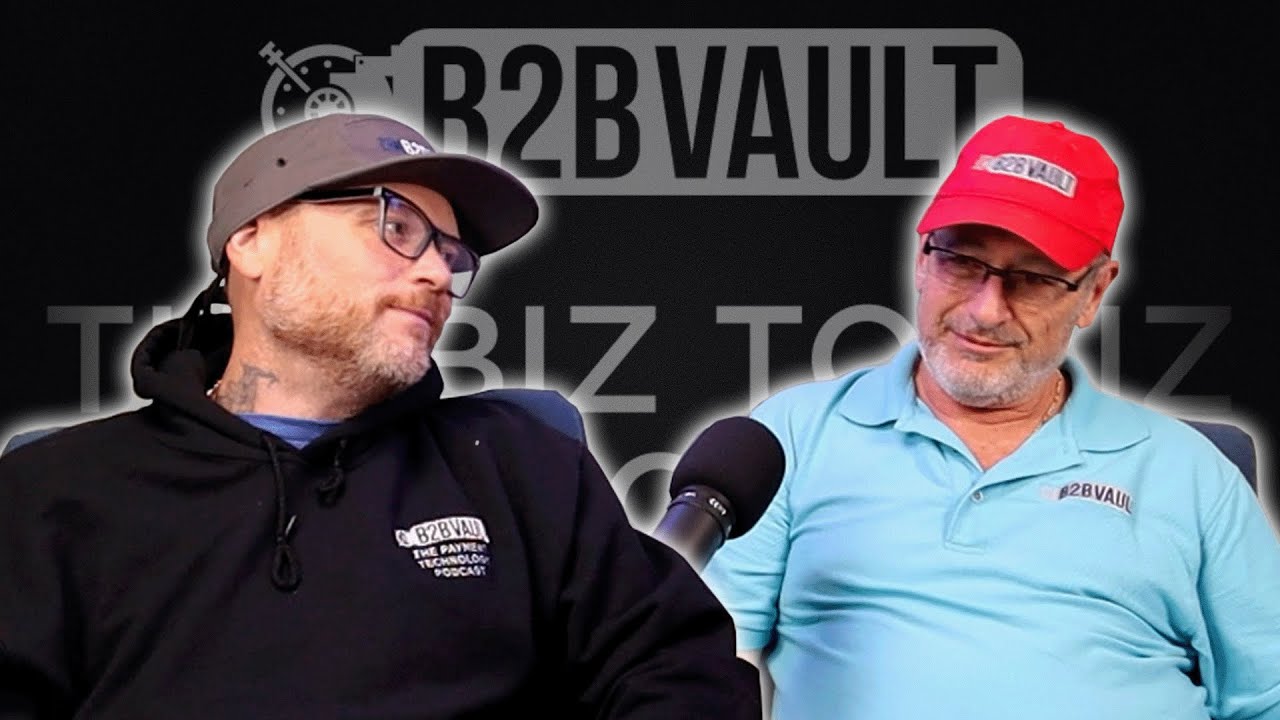
This content was created by Allen Kopelman. This content was uploaded by Allen Kopelman. This is a YouTube podcast episode titled "How To Build Loyalty In Your Business | Biz To Biz Podcast" (B2B Vault), published Sept 22, 2023. The excerpt is an English conversational podcast between Allen Kopelman and a co-host/guest (Justin/another speaker). They discuss building customer loyalty for small businesses within the fintech/payment-processing context—covering loyalty program mechanics, POS integration, phone-number/text/email tracking, incentives (points, visits, rewards), kiosks, and practical examples from events and local businesses.
Chapters
Yo, what's up everybody? It's Justin live from B2B Vault, the biz to biz podcast sponsored by Nationwide Payment Systems, hosted by this guy, the Mike McCarthy of Payment Processing, myself, Allen Kopelman. And we'll be providing you educational information about fintech, payment processing, small business, and the technology businesses are using in the world today. And in today's podcast, This is part 3 of the Future Proof Your Business: Survive and Thrive in This Crazy Economy. How to build loyalty at your business. Yeah, man. So there's a lot of different ways we can come about that. But before we get into that, how you doing, sir?
Doing well. Getting ready for the next Jewish holiday, Yom Kippur. This is like the holiday season. Yom Kippur, then you got Sukkot, then you got Simchas Torah. So it's like 3 holidays, boom, boom, boom, boom, boom.
I thought you're not supposed to work on those holidays.
No, Yom Kippur is Monday. I will not be at work on the Monday of Yom Kippur. This will be seen on Tuesday, right? Wednesday. Wednesday. So Monday will have already passed.
Got it, got it, got it.
But I will not be here Monday for the holiday. It's a day off.
You'll not be here. Oh, my sounds aren't working, man.
Uh-oh. And then, uh, so how did you enjoy that networking we went to yesterday for the Entrepreneur slash Space Day at the Nova Southeastern University?
It was okay.
It's okay.
Yeah, I mean, I don't know. I, I, yeah, I was expecting more, I guess. But, um, the networking was cool. I talked to a lot of interesting people, a lot of app developers. I met some, uh, I met a lot of, uh, yeah, there must have been a— the law school must have been real close because a bunch of law students were coming through, a bunch of those. The food was terrible. But other than that, you know, I mean, it was a decent event, I guess. It was just super— it's just, you know, I get it, man. Like, events are hard to put together, man. But it's just like, we've been going to a couple of them and they're all just so unorganized. Um, and it's frustrating. It's just frustrating because I used to put the events together and we would make sure stuff was running smooth. Of course there's going to be problems, but I don't know. Uh, all after— I mean, the, the, the, the pitch contest was okay. It was pretty good.
Um, that was kind of interesting to see how— what surprised me was how many billions of dollars is being spent on reverse engineering, I guess, space technology.
No, technology that we use on Earth to use in space, right?
But then also reverse engineer it to use on Earth again, I guess.
I didn't get some of that out of that.
Well, for some of the stuff that they were talking about, there was a One Health thing, so they were talking about using it for astronauts and then reverse engineering it.
No, they didn't say reverse engineering it. Well, they said, they said you're gonna— they Did— when they— when the way I got out of that, it seemed like that whole thing was based on for firefighters, coal miners, and the other thing. And then they got into this incubator and they were like, why aren't you doing this for astronauts?
Oh, okay.
That's what I got out of it because the rest of it made sense.
I guess that's how they're getting the funding is by doing it through— for astronauts, there's more interest in it for Exactly, exactly. And that's what I got out of some of the other products there too, because there was like one that was for like cyber security. There was a couple of cyber security products, and it seemed that that also was related more to personal security.
Yeah, real-time use right now. Like, I get like this whole future thing, but we were just off the camera talking about like You know, we have Earth, we're here, we're in the present, and yet everyone is in this race to get off of Earth. I, I just, I just don't— it doesn't compute. I don't—
yeah, some of it I didn't understand, like why are they taking a cybersecurity application and trying to use it for something with space?
But their idea, I think it was more so like on a worldwide scope. So that they were able to suck the data from everywhere. Yeah, that was the whole Go Known, Be Known or whatever.
Yeah, there was two of them, two cybersecurity things. And then there was a guy who made like a LinkedIn for people involved in space business.
You're describing these things wildly, dude.
I don't know, that's what it looked like to me. It looked like LinkedIn and Eventbrite all in one.
I don't know. I don't know what the, the, the last guy— I was talking to Sean and Samantha this morning about it. Like, he had like 3 components to one business, right? And the way that he was, um, presenting was terrible.
Yeah, I did not understand.
I didn't, I didn't get The differentiation between the three, right? He didn't explain that well. He seemed a little very nervous and off because he was supposed to go first, right? And his slide deck was all messed up.
So a few people had missing slides and stuff when they were up there, but they did fine. I thought it was pretty interesting, but we met a lot of different people there. There was like a guy with drones. There was another company there that had like an Uber, but it was like a—
Drone Nerds. We met them.
Yeah.
Before.
Yeah.
They've been at a bunch of events with us.
Right. And then there was another one with that flying Uber thing.
Yeah, we met them before as well.
Right. It was a flying Uber.
I've definitely talked to the woman that came by the booth.
Yeah. More than 3 times. We've seen her at some other events because there's another company that has like an air— a car that turns into a plane also. And And then they, then they were talking about, you know, that Artemis project for space.
NASA was there.
NASA. And then there was people there from the—
NASA was there? What the hell?
Space Foundation. So, and then a bunch of Broward County different organizations that help the same entrepreneurs.
Florida Tech Hub, Broward County MAP. It's the same people every time, almost.
Yeah. And then we had JM Enterprises next to JMI, which does a— which is cool because I attended that like 8, 9 years ago.
Yeah.
And it's a— you go to a thing once a week for 4 or 5 hours. It's very informative. Meet other business owners. It was kind of cool to do. Someone's a newer business owner might help them a little bit.
I just thought it was cool meeting all the young, uh, African-American attorneys that were walking through there. I met at least 4 young ladies that were—
and we did talk to quite a few students.
Yeah, I thought that that was cool that there was a lot of young Black women trying to be lawyers. I thought that was really cool. Yeah, um, yeah, but there was also a lot of students starting businesses, entrepreneurs. I didn't meet a lot of students. I've met 2.
Okay, well, I talked to about 4 or 5 different students when you went to get lunch that you didn't like.
That lunch was bad.
I was talking to a few students and they were telling me about starting businesses, building apps. They were getting ready to start a business, launching a website. We talked to that one young lady who was from Philly, remember?
Yes.
She was building an app.
She's not in school though.
No. Well, she is involved in the Entrepreneur Center there.
Yes. So yeah, I didn't meet any young entrepreneurs like I thought I would.
Only a couple that I met. And then, you know, so let's dive into why is having loyalty, why is that important at your business? So, you know, the big companies, you know, they have, you know, they have loyalty type programs or they have hooks to bring you to their, you know, hooks. They hook you in with something that you want for something else or that, you know, like bigger stores have loyalty programs like a Target where they have their own credit card and you get points and bigger restaurants give people points, right?
Yeah.
And like someone was asking me the other day, they were building a portal and I was like, well, what's going to get people to go into your portal? And I was like, you know, look at somebody like Amazon, right? It's like almost like they want— they started off with books and then they started into the movies and then they started selling you stuff, more stuff, right? And now it seems like they give you the movies for free because they would just want you to buy stuff, right? And the movies is kind of like, here's these free movies, but you have to have Prime, right? You have your membership. That's my point. Yeah, your membership. But I think they're more folk— they make more money from the shopping than they do from the movies. The movies is kind of like, oh, I want the free— I want the movies. So yeah, I'll do some shopping. Yeah, that makes kind of a tie-in. But, you know, loyalty programs can be difficult to administer. And, you know, when they first started, they were all like, you had to have a card and you'd have a wallet full of cards or you'd have a bunch of little tags on your keychain and they'd all fall off., but now they can track loyalty points through like your phone number. They just punch it in the machine, or they track it on the last 4 digits of your card if you use the same card all the time. Most people try to track with phone numbers 'cause they use multiple. You might use your debit card, a credit card, your phone one time with your Apple Pay. But loyalty programs can really help you bring customers back to your business. You get their information, their phone number, you can send them texts, or you get their email address and then you can send them emails and get them to patronize your, whatever your business is, a smoke shop, a liquor store, a website, whatever it is.
Right.
You know, and although I do find that some loyalty programs are not executed well. So you have to kind of figure out is like, how can you execute the loyalty program, right? And so that it's attractive enough that people are going to actually care about it.
I agree. I mean, I'm not involved in much loyalty programs, so.
No, but if you go to your— let's say you went to your favorite restaurant.
I don't go to restaurants.
Okay, let's just say you did. Okay. Like we get food from Adam and Joe's. Right, at the office. So they give you points, and then when you order often, then they send free cookies. So it's like, that's the, that's the link. So you have to have that.
Give you free cookies every day. They give you extra points off on your order when you— the points, yeah, they give you money off.
Yeah, they give you money off your order, but they also throw, throw in the cookies. Ah, that's their, like, you know, everybody knows they have good cookies. Yeah, they get cookies. Yeah. So do the same. So you have to have that thing in your business. Like we have some smoke shops and they run the loyalty program off the point of sale that we sell them. And, you know, that helps people get points. And then when they come in, they get 100 points, they get money off. And then that helps bring, you know, customers. They're going to, instead of going to another smoke shop, they're going to maybe drive the extra 5 minutes to your smoke shop. 'cause they're gonna get $10 off. They're buying the same stuff anyway. Yeah, I wish, nevermind.
I wish bills gave you loyalty points, but yeah, that doesn't work. Bills? Yeah, when you pay your bills, you don't get loyalty points for paying your bills.
They should, if you pay your bill on time, they should give you loyalty points.
That'd be smart on, yeah, but yeah, like, but for loyalty point, loyalty programs for businesses are smart, you know? I don't necessarily have, I can't give any examples. I've been sitting here thinking of like, 'cause I don't buy, I don't order out food, I don't go to restaurants.
But like, let's say you buy a lot of hats.
I mean, I used to and I would buy the, I was a part of a club.
Okay, so that's part of a loyalty thing. You got a discount.
Right.
So you get a discount for doing that. So if—
Hats are $50 apiece now, so I don't buy hats anymore.
Yeah, it's expensive. Everything's expensive now. But I'm just saying, like, I'll give you an example. I buy coffee from this one place, so they give you points, and the points are like fairly worthless because you have to buy— I figured it out one day. I said, man, you gotta spend like $500 on coffee before you get anything. I'm like, How am I going to get— spend $500 on coffee?
Yeah, I don't know, man.
No, I'm just saying it's going to take a long time to get the 500 points to get a bag of coffee. They need to— you have to come up with a reasonable thing. Like, there's one restaurant near where I live. I go there not all, you know, some, you know, once every month or a couple months to eat. And when you go there, you know, they get— you put your phone number in when you pay and they give you the points. But it adds up pretty quick to— and then you get, you know, money off. Cool. So, you know, those kind of things will help you bring customers back into your, into your store, you know, or come up with a way like, oh, if you make— it could be by the visit. Oh, if you come in 10 times, then we'll give you a coupon. Or if you come in 10 times, you get a free ice cream cone or whatever it is that you have in your business. You just got to— it's got— I think you have to just come up with like, how much money are people spending? And then what's the reward that you're going to give them?
Yeah.
And come up with something that they're going to be able to reach fairly quickly, because if they're not going to reach it quickly, then it's going to be— people will not think it's a good program. Like the coffee one is not attainable even if you, you know, I mean, I drink coffee almost every day. It takes a long— that's a lot of coffee. $500 of coffee at $20 a bag, it's a lot of coffee. But it's less than $20 the coffee.
That's going to take a while, right? So you, you know, that's definitely not worth it.
Yeah, it's not worth it to you know, you get the points. Or like, I have some app on my phone from Shopify Shop, it'll say, oh, you have $3.86, or you have— and I can't figure out how to use it. So that's the other problem with loyalty programs. You have a loyalty program, you got to make it easy for people to use the loyalty program.
How does a business even do that?
Well, you get a point-of-sale system that has a loyalty program built in. Or you use a loyalty app on the credit card machine. And when people come in, you punch in their phone number and then you set it up to either track dollars or visits. And then you just make it easy for people to re— you know, make it easy for people to redeem it. So, you know, don't stick it for 10 visits if someone only comes once a week. That's going to take them 2, 3, 4 months to Do you know they take 2 and a half months to make 10 visits? Do 5 visits, something somebody is going to accomplish more often. Or like the lunch place does. Oh, get people that order often automatically get free cookies all the time so that, you know, oh, if we get that place, we always get the cookies, right? And you're going to get cookies. You don't have to pay for cookies. Because our graphic designer Samantha, my assistant Anna, love the cookies.
Oh yes, they do.
So, you know, and the other thing is, once you have their people's information, you collect the text message, you can send them a coupon. Besides your loyalty program, you can send out emails informing people about specials. I think with younger crowd, text works well. With a prior— an older crowd, email works better. So based on the demographic of your business, you got to pick which one of those is going to work better for you.
Agreed.
Or you use both.
I would say use both, you know.
And then, you know, or you give— like, um, there's one— there's one, like, uh, one business that I follow, and like, they always send stuff out and they talk about like, oh, go leave a— they ask people to leave comments on their social on their, you know, Facebook page. They'll send you like a text or an email, say, oh, go comment on this. And if you leave a comment, they'll send you a coupon. There you go. So you'll leave— you'll comment on some posts that they have, or they'll ask you to review some product maybe they're thinking about offering, or watch a video, and then they'll send you maybe $10 off or 10% off. And I noticed that even like you go on a web, some websites now they'll have like, oh, put in your phone number and we'll text you 10% off. Put in your email, we'll give you another coupon or spin the wheel and get a special discount.
I hate that. The wheel. I don't know. The nonstop pop-ups with that. I do not like that.
I think it's a little annoying. Ask once. And be done with it.
Yeah, I don't like the add your email and then the next screen is put your phone number in and then the next screen is some other nonsense. I'm not a fan of that. I don't like that trap. Yeah, I don't like that funnel at all.
Yeah, I went the other day to a website, something I wanted to buy, so I went to the website. The first thing, put in your phone number to get 15% off, put in your email, and I kept trying to get at get it off the screen.
It wouldn't go off the screen, right?
So then I put the email in, I got the same exact coupon, and then it has spin the wheel. And I was like, I don't want to spin this wheel. I spun, it wouldn't go off the screen, but I wanted to buy that, so I spun the wheel. I still ended up with 15% off. Exactly. So, and then I had to go unsubscribe from all of that.
Yeah, the last— I don't know, the— that wheel thing is That's annoying too.
Yeah, I agree.
I don't like that either.
I see a lot of websites like put that on there. They'll say, oh, you know, 'cause now, you know, like they don't even know. Like sometimes I'll go to a website I've been to before, they'll have that wheel on there and it's only for new customers.
Right.
And then they're wasting your time 'cause you can't get it off the screen without putting your email in and spinning it.
Exactly.
You know, 'cause you cleaned your cookies outta your laptop or off your phone, and now they don't, they don't know you anymore. So it's, you know, those are, those, you know, those are things to consider, you know, or at least make it so people that maybe they'll pay full price and you don't have to give them 15% off. I mean, I don't know why this place was even giving 15% off. They sell, they sell, uh, computer hardware. How many times are you going to go buy a computer screen?
Once every— once, uh, I don't know, until it dies, right?
I'm just saying, it's not like you go there once a month and go buy— no computer screen, or you go every 2 months and buy 5 years, right? Right. It's not, not like coffee. Like coffee, you're gonna go once a month, buy a big box of coffee so that you don't have to pay shipping. Don't—
I'm still trying to think of here, like, an example of a loyalty program that I thought was cool. And the punch cards are out of style. That's old, too old, because no one carries wallets.
Um, yeah, we used to have a punch card on the phone that people could have on their phone. Like, yeah, it was like an app with a punch card in it, but that kind of like went away. People not into that.
Nobody wants to give you no phone number.
Yeah, so that's kind of hard. I think the ones that work the best is just where you ask for their phone number and you enroll them. I know where my son works at PacSun, that's what they do. They enroll your phone number and then you go to PacSun. When you hit enough points, it just prints out on the receipt. Oh, they just ask you, oh, do you want the $10 off now or another time?
Right.
Or save it. And then people can do it and they hit the button. Boom. The person gets their reward. That's the best way to do it. And then, you know, have it programmed into your point of sale. That's why I think we're going to see a big shift in the And we're seeing a shift now. Like most of the businesses we're signing up that are, you know, card-present, they're all trying to run, you know, run some kind of point of sale, some kind of software program versus just having a credit card machine. Some of the old-school businesses still want to have just a credit card machine.
Right. Yeah.
So it's a, you know, a balance for the businesses.
I think that every business is, is going to be different for your loyalty program. I, I think you got to figure out what's most cost effective to a way that doesn't hurt your business. Um, I would say, you know, just, just do the numbers, man. Find out what's working and what's not before you set up your loyalty program.
Yeah, see what your competitors are doing. If there's a competitor in your business, what do they do? I mean, look at it, you know, like, whatever. Like when you order pizza, like, I don't— my son's big on pizza, right?
Yeah.
So I say, oh, how do you decide which pizza you're going to get? Domino's or what's it, Papa John's? Yeah, right. He's like, oh, he goes, one of them has a special if the Marlins win. You get something free. The other one is a different special. So whoever has the best special that day, and then they all have, they all have coupons, you know, they all have some kind of loyalty program because you order it online always. So they also have some kind of loyalty programs. Like when my kids were little, they wanted to go eat it. If I took them out for fast food when they were little, years and years ago, they used to tell me, oh, we want to eat here. Why do you want to go there? I drive all the way over there. Oh, because they got a different the toy, you know, kids meals. Yeah, McDonald's or Burger King, whichever one had the toy that they wanted, that's where they wanted to go. I don't even keep track of what toys they have at these places anymore.
I— they usually— I don't know either. I don't buy that shit from— I'm sorry, I don't buy that for my grandkids. They're not eating that around Papa, so I know they give out toys though. Yeah, last time I— they had, they had cool toys actually. Last time I went, I went and bought a Happy Meal, the grown-up Happy Meal.
Yeah.
And they had, uh, some cactus plant, uh, whatever. I forget the name of the brand.
Oh yeah, I forgot they were doing— they still do that or they just had it for a while?
That was just one day.
One day. I know they had it and they were giving away some superhero thing at one restaurant. For—
yeah, that's that. I don't know, is that necessarily a loyalty program?
It is because it's bringing customers in. So you're— they're giving you something for coming into the restaurant. They could have a kid's meal and no toy, I guess.
I don't consider that necessarily a loyalty program. That's just an incentive.
Yeah. And I think some places, like a bonus, like now, like kiosks, right? I think like today, like if you put a kiosk in your business, right, and you want people to use it, have— give some kind of incentive for people to go to the kiosk, right? Like, you know, I don't like self-checkout. I'll go to the regular checkout.
I hate self-checkout.
And, uh, no, but if they want people—
I have 2 or 3 items, I'll go do it. But if I have more than that, I'm not doing that.
Exactly. You're there like I don't know, I'm not into it, but I'm just saying, like, if they want— like, if you had a restaurant and you have like Grab, you know, where people can pick up food, you know, and you want people— you want more people to use your app, you want more people to use the kiosk, I think you have to provide an incentive so that people will do that. And I think we're going to see more and more kiosks because of the, you know, lack of people finding employees. I think businesses need to really seriously think about investing in a kiosk. I had one guy ask me how to kiosk, and I was like, oh, well, it's like $3,000. The guy's like, oh, that's way too expensive. I go, where do you get an— where do you get an employee that works 7 days a week for $3,000 one time? Where do you get that from? You know, Right. That doesn't exist. So business, don't be cheap. Right now we're in the world— the world we're in today is a technology world. It's going to become more technological. We've seen the most technology develop in payment processing in the last 5 years than in the previous 15. And I've been doing this over 20.
Right.
So we've seen rapid explosion, you know, with fintech and all of those things. And loyalty is one of those things where it used to be a card, right? So you used a little tag on your key ring and now, now it's just a phone number. So, you know, if you're not running a loyalty program, figure it out, you know, how to do that, you know, and maybe it's time to get away from the credit card machine and get into a point of sale. And if you're using a point of sale, Do they have a loyalty program? But get the loyalty program turned on.
Absolutely.
Because, you know, today you want to thrive in the current economy. You got to keep your customers coming back. You know, you got to, you got to figure out a way, you know, if somebody's coming to your restaurant, let's say twice a month, how can you get them there for one more visit? That's what it's all about, whether you have a restaurant or retail store. Or whatever. And however you accomplish that, that's how you accomplish that.
Agreed.
Through discounts, through— and how you communicate that to your customers, you know.
Well, if you guys have any, uh, interesting ways that you guys are incorporating, uh, loyalty programs in your businesses, we would love to hear them. Um, if you don't know how to start or where do you should go to get a point of sale to get that loyalty program come and holler at us. We got you covered, man. Uh, do us a favor and subscribe to the B2B Vault channel. Please smash the like button for us a couple times on the videos. Share it to your family and friends. Uh, until next week, we'll see you soon.
Yep, peace out. Carpe diem. Yep, let us know about your loyalty programs, or, and, you know, and leave us a comment.
More from Allen



How B2B Companies Can Turn YouTube Into a Lead Generation Machine | Featuring Samu Kovacs


How AI Is Transforming E-Commerce with Zero Code | Kumar Senthil, CEO of Firmly



Dre Baldwin on Discipline, Leadership, AI & Business Success | The Mindset Every Entrepreneur Needs

The Same Skills That Made Me a Pro Athlete Built My YouTube #podcast #entrepreneurship #success

