How To Future Proof Your Business! | Biz To Biz Podcast
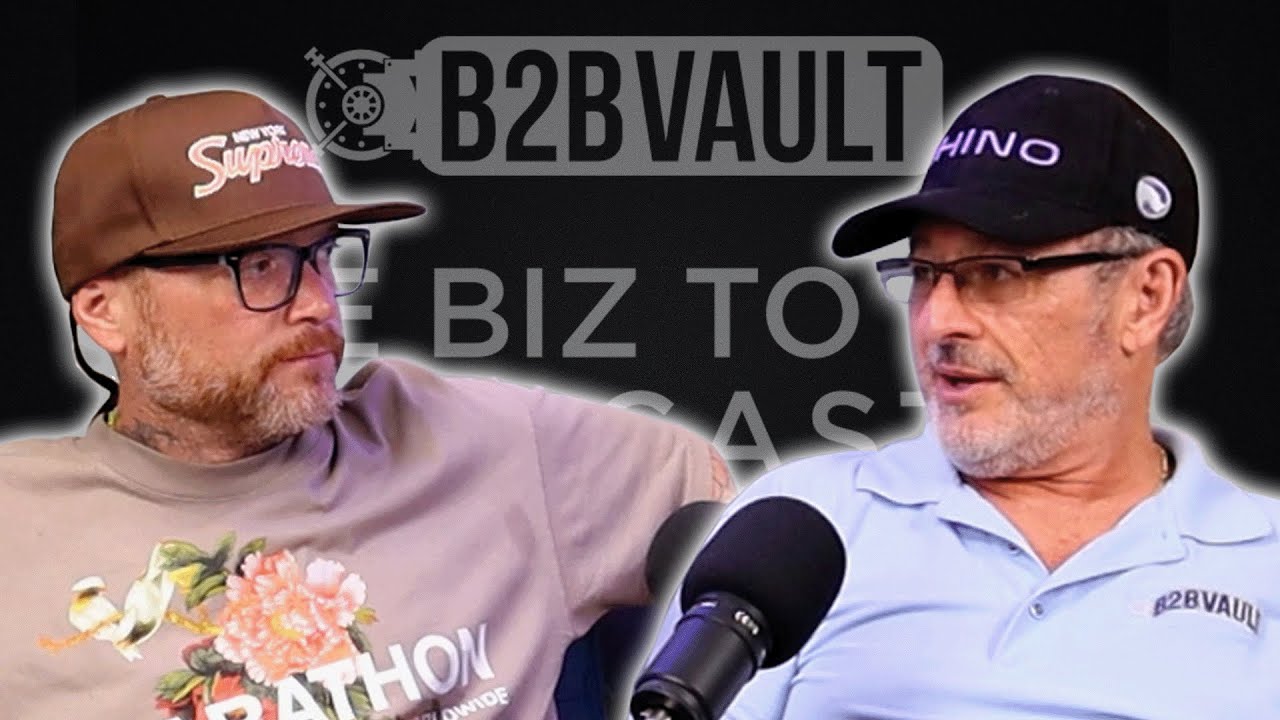
Justin and Allen Kopelman discuss how small businesses can survive economic volatility through technology. They cover payment processing evolution, modern POS systems that track inventory and generate real-time reports, and online ordering platforms. A retailer using NCR CounterPoint with handheld scanners and a barcode scale saw smarter purchasing decisions, while proprietary ordering systems can save merchants the high fees charged by DoorDash.
Chapters
Yo, what's up everybody? It's Justin live from B2B Vault, the biz to biz podcast sponsored by Nationwide Payment Systems, hosted by this guy, the John Gruden of payment processing himself, Allen Kopelman. And we'll be providing you educational information about fintech, small business payment processing, and the technology businesses are using in the world today. And in today's podcast, We're on part 4 of how to future-proof your business, survive and thrive in today's crazy economy. And it's going to be covering technology and how that plays a role in your business and how you can utilize it and all that good stuff. So how was your birthday? I mean, your— how was your weekend, sir?
The weekend was good. Finished up the important Jewish holiday.
Very good. Very nice.
Yom Kippur. Now there's more holidays coming up, but it's all good.
It's the holiday season, right?
Yep. It's the holiday season for the Jewish people. We had Yom Kippur, now Sukkot, then we have Simchas Torah, and then another one, Shemini Atzeret. Lots of holidays.
Sounds busy.
Yeah, it keeps everybody busy and on their toes.
Yes, yes.
How was your weekend?
Uh, it was cool, man. I went to the Brewers versus the Marlins series with my pops. Um, got 3, see all games. Brewers smoked them on the first Friday night.
Yeah, I saw that, 16 runs or something, right?
Yeah, they smoked them, man. And then, uh, we lost the rest of the— Brewers lost the rest of the games. Uh, game— the second game, we should have won that game. Um, I don't know what the the pitching. When he threw that wild pitch, that was just dumb. And then Sunday we played like crap. They didn't look like they wanted to hit the ball. They didn't look like they wanted to be in Miami anymore. Yeah, on the way there on Sunday was interesting though. We got trapped in the first base parking garage elevator for 40 minutes.
Wow, that stinks.
Yeah, that sucked. And then, you know, we all were kind of expecting, you know, like maybe a bottle of water when we got off of there or something. And we were greeted by 3 security guards and a maintenance guy. And they basically went on to say it was like our fault, like it was too many of us. But I've been on elevators— I'm 43 years old. And to look at me and say that, like, it was too many of us for this elevator. First of all, this is a commercial size elevator. Second, like, there was only 12 of us on this elevator. I've been on an elevator with way many more people on a smaller scale. Like, I just, yeah, the Miami Marlins, whatever, whoever's in charge of your maintenance, you guys are terrible.
They should have hooked you up with some free food.
Woulda, shoulda, coulda. I don't really care. The Marlins. You guys suck. That's why you guys ain't going to the playoffs. I hope someone hurts themselves.
No, don't say that. That's not good. So besides, besides that, I know you're a vegetarian. Was there any vegetarian options at the game? I don't know. I don't— Oh, you didn't partake in looking at any food?
No.
Oh, okay.
I'm there for one thing, to watch the baseball game.
Okay.
And to drink cold beer.
All right. Well, they got plenty of beer there.
Yeah, and I didn't drink plenty of it because 2 of them was $50.
Wow. That's crazy.
That's just— I don't know how you can enjoy yourself at a game anymore.
Jacob has something.
You have to be rich, bro. Like, I know people who work there. I could have called the guy, you know what I mean? I know the guy who works at the vending, but I'm not that guy who does. I don't know, man. Like, it's just— I'm just done with the whole— I'm ready to call it quits. I'm sorry, we can bleep this part out. Edit that out part, Sean, sir, please. Yeah.
So anyway, Jacob has some spot at the stadium that he goes to.
Yeah. I mean, you can get beers for like $7 sometimes. You got to go and it all depends if you want to drink Bud Light. Yeah.
Oh, okay.
It's $8. I don't drink Bud Light.
Okay.
It's like drinking water.
I get it.
So, you know, yeah, carry on. So technology plays a role in your business.
How do you—
does it— you know, how are we going to make this—
how are we going to make this happen? So customers, everybody, you know, customers, they want— they want to be able to pay quick and easy. So that's why everybody's asked— always asks us, oh, we need our machine I remember like 2015, that's when we started deploying EMV machines.
So that's an EMV machine for those that don't know.
It takes the chip transaction with the chip card.
When you start to insert your card.
Insert your chip. So that started 2015 where it was mandated. Everybody had to do it. And if you swipe the card, then you could get a chargeback on this fallback rule. And all the machines had Apple Pay and Google Pay. Back then.
Right, right.
And then the pandemic started. We started getting like the craziest phone calls from customers. Oh, does our machine have Apple Pay? Does the machine have Apple Pay? Can you do a tap and pay? We're like, yeah, every single machine has that. And they just didn't know like that they had it. And then some people's machines just needed a software update. Because it wasn't turned on or they weren't using it and it got shut off during, you know, or the machine hadn't updated. But everybody, every machine pretty much has that. And if you don't have that, you need to have it, you know, and other things that people expect from you. Like if you're doing a, if you're doing invoicing, people expect, you know, you send them an invoice and you can do a click and pay through an email or a text message. People want it easy. They want it easy. You know, and I've talked about this before, like I think I wrote a blog about it or we might have done a podcast about the consumerization of business payments.
Definitely, sure.
But right, the same way people are making payments for their personal things, people want to make payments for their business that way too. They want it quick and easy. And I don't want to have to call you on the phone. I'm dealing with something now where this company asked me for my credit card information. I gave it to them and I went— then they sent me a new invoice and then they're asking me to do a bank transfer to them. Mm-hmm. And I'm like, I already gave you my credit card information. What happened to that? And then I can't get a call back. Now I got to put Samantha on figuring out why they—
they never got back to you.
No, they never got— sent them an email. I left a message. 2 messages on their phone, and that's not a way to collect money. I mean, if you're a business, you need to take credit cards.
Maybe you're not doing so good.
Yeah, I don't know. Now I'm worried, right? Should I pay them with a bank? Should I pay them with a bank transfer?
I wouldn't use the service.
I'm worried that I don't want to use the service now because what does that say, that they don't take credit cards? I'm not comfortable paying for a year upfront and not using a credit card.
Yeah, it's pretty expensive, so I get it.
Yeah, I mean, 'cause if they go out of business, then it's gonna be a pain in the butt. You know, other ways businesses need to start, businesses really need to start thinking about the technology and how to put it to work, like point of sale system. You know, when I talk to people and I'm like, you know, if you have a point of sale system, You can track all your inventory, you can track all of your, what's coming in, what's coming out. You can make sure all the charges are being done accurately. So someone comes up to the counter with 4 items, they're all rung up. And whether the person paid cash or with a credit card, it's all recorded. You know, and so many businesses don't take advantage of that. And then, you know, we were talking to a huge business that we're in the process of selling them a whole, big system to replace another big system that they have that's like 15 years old.
Okay.
Right. And they have credit card machines on the side. So now they're going to upgrade to this, uh, NCR CounterPoint product. And then as part of that, we asked them, like, have they ever— they've never done it. They haven't done a fit. They have not done a physical inventory in a decade. So we're— wow. So we're contract— we're helping them by getting Regis, this company in there. They send in like 5, 6, 7 people, right? They come in with these handheld scanners and then they scan all your items, right? And then that way you also get— besides that, you get the inventory, you have accurate barcodes in your system. So now you can scan the barcode instead of searching for the item. And this place has over 10,000 1,000 items in it.
Very cool.
Yeah. And we're also getting them a different scale so that when people go to the— get things that are weighed, that it'll print out a barcode they can scan at the register. Nice. Punch in the item number and then it'll print out the barcode scan.
Technology, baby.
Yeah. So technology can help because with that many items, You know, they don't really know what's going in and out. What are their best sellers? What aren't? What's sitting in there that—
I mean, they know, but they can't act on it. They can't do anything, right? Got to— yeah, yeah.
You can act on it better if you know, like, oh, I have this item and I'm selling, you know, 500 of these a month, right? Instead of buying 150 of them every week or 250 every 2 weeks, maybe you go to the manufacturer and you go, hey, I want to stock up. I want to buy 3,000 of those, maybe I can get a better price, still charge the same price that I'm paying, I'm selling it for, and make extra profit. You know, that's how, that's what inventory can tell you. For sure. If you're doing your inventory, you can really learn like, oh, what was the cost and what am I making? And know like, hey, what are my most profitable items based on what you're moving? So it's important to do, to have that inventory and take the time to deal with that. Like when you get in more stuff, you enter it into the system. And with this system, it's going to be a lot easier for them because you're going to be able to upload the invoice and then update the inventory.
Oh, that's cool.
Because, you know, they'll be able to do that. So, you know, the, you know, and you can get point of sale, very basic point of sale for retail. There's point of sale for restaurants, the same thing. You have a point of sale for your restaurant, you're able to run reports and know, oh, at the end of the month or the end of the quarter, what items are we selling the most of? You know, you don't have to keep track like beer on tap. You can know which beers are selling and which ones are not selling. So that way you can really zone in on what you're doing, what you're selling, maximize profit on your most popular items.
Indeed, man.
You know? Yeah.
So, I mean, there's tons of different point of sale systems out there for all different types of—
yeah, for restaurants, for bars, for retail, for smoke shops, vape shops, liquor store. Yeah. And then incorporating like loyalty in there, which we talked about in the last podcast. The other things that are being very popular is you know, kiosks and online ordering and incorporating those into your business.
Right.
You know, and connecting that to your point of sale.
What's a way a business can incorporate a kiosk into their business?
By having a self-service option, even though there's been a lot of negative stuff about it and people don't like it. But, you know, having some kind of self-service.
I'm not a fan of a kiosk.
Right. I'm not either, but I'm just—
we sell them, right?
No, but if you have the right kind of bit, let's say you have a fast food restaurant and you want to line bust a little bit, you have a kiosk in there so that people can order from the kiosk, pay at the kiosk, and then just pick up at the counter, you know. Or like online ordering. You said you went to the baseball game, although they do a horrible job at the baseball stadium with the Wi-Fi. Say.
I was not about to attempt to order. Everyone in front of me was complaining. They kept getting the wrong stuff.
Yeah.
Took forever. I was like, dude, I'm just gonna walk and go get it. I mean, we were on the first base side, so it wasn't a big deal to walk up some stairs, but I can see why older people don't want to keep doing that. But yeah, I don't know. I am, I'm very biased when it comes to baseball parks, and I'm not a fan of the Miami Marlins baseball stadium. I don't like the way it operates. There's, wait, why did it make all the people walk all the way up all them stairs? I mean, or the ramps.
I don't even know why they don't have an escalator over there.
They do have an escalator, but it's not for, yeah, man, I don't know, man. It's poorly, I don't know. I didn't like it. Geez, I love baseball, man. And I hate talking bad about baseball, but I did not like the way it was there.
Yeah, like at the Dolphins Stadium, the walkway goes like around in a circle and then you get up there. It's much easier to walk up that than walk up all those stairs at Marlins Stadium.
I don't know.
We walked up, my dad walked up a ramp and I mean, well, I'm just saying.
Yeah, I get it, man.
It's a different—
Strokes for different folks, man. Go Brewers.
So no, but I'm just saying like, kiosks at the airport. I saw at Fort Lauderdale Airport, they just put in some food place and there's no employees there now. You just take your food, scan it at the kiosk, and pay.
I mean, the sketchy part for that to me is one, we're already in the surveillance state, so it's like, go ahead and steal it if you want to. You know what I mean? So that's weird. But two, it's like, man, none of that stuff even look good. I was just in the airport last month and it was not, I was, 'cause I was hungry and I'm like, man, let me see if this. So I don't know, man, you guys did, if you own a kiosk, you gotta do something better. Step it up, bro. Especially at the airport, just people are hungry.
Yeah, the food choices need to be a little bit more thought out.
Yeah, like putting a salad in there with this dressing at the bottom, that doesn't look appealing. Sorry.
No, but the kiosks, like even in the—
What's a better way of using a kiosk for a business?
Well, like—
What's a unique way?
A unique way would be—
I would say setting up like your clothes. Somewhere, like, in— instead of, like, you renting a space, you have, like, a— if you have a brand or something, that might be a cool way to use a kiosk. You, uh, sell your package, your clothes, real easily so that we can grab it and drop it. Well, you know, that's more like a vending machine, I guess.
No, but like a kiosk, let's say, you know, kiosk could be used even for, like, online ordering. Let's say you go into a store and you have a shirt and you say, oh yeah, I want this shirt in an extra large, but they don't have an extra large. And then the clerk has to go over to the computer, go find it, order it online, fill it all out. It would be cool if the store had a kiosk and they say, oh, we don't have it here.
Yeah, I'm not going to order a shirt.
You could order— no, I'm just saying you could. Some people would do it. They would order the shirt.
I would have to really like that shirt.
Maybe you do really like that shirt and then they could ship it to you. And you could just order it from the kiosk instead of just a service.
That makes sense though, you know, or maybe I could see where use case for that.
Or maybe let's say you have some items coming out, you're going to do a drop and you're going to have a special hat, right? And you want to— and people can order the hat in advance, pre-sales, pre-sales. So instead of sending them to the website, they could just go right to the kiosk store, right? Go to the kiosk and buy it in store. And then come pick it up in the store or have it shipped.
That's, that's, that's a cool way.
So there's different ways you could put a kiosk together to, to do certain functions, right? To create extra business, right? You know, I get it.
I mean, people use kiosks all the time. I'm just not a fan of them.
And I see them in fast food places a lot now. Like, you walk into a lot of fast food places, they're clunky, man. They have 2 or 3 kiosks set up.
I mean, I can't be the only— I mean, maybe because I'm, you know, a web designer, and so like the user interface and user experience is important to me, you know. Like most of the time the touchscreens, they're clunky, like they move slow, the screen doesn't, you know, like—
well, part of that problem is, is that a lot of people are using technology that's all cloud-based instead of being like server-based in the business, and that can cause— that can be create a lot of lag.
Server base is expensive, Allen.
I know that.
And then you got to hire somebody to manage it. You have your whole IT department. No, no, McDonald's is not trying to have an IT department at every store.
No, no, I get that, but I'm saying like point of sale can run faster if you have one of the, one of the devices is, is actually acting as the server. Like we work with a restaurant bar POS where that's what— it's a hybrid system. Yeah, so it runs quicker. So you— there are ways to do that, of course. So, you know, they just have And the other thing is many of the point of sales, the kiosk mimics the point of sale. It's mimicking what the employee is doing, which is not going to necessarily be the same thing that the customer is going to want to do.
Right.
And I think that more thought has to go into that when you're putting out a kiosk is how is the customer going to interact with the kiosk? That's my point, because they're going to—
the user interface and the user experience. It's trash.
So they need to improve that.
They need to fix it. This— I mean, the technology is vastly improved in the past 5 years, but I mean, for me, it's just annoying when you— it should be, it should be more fluent, should be more liquid. You should be able to go in there and get it done. If that's the reason that it's there for, to streamline something, right, then it should be doing just that, and it shouldn't be making the customer frustrated or abandoning that situation and then going to the person at the actual point of sale. Right.
So some, but some kiosks can be, can be customized. So if you're going to put in a kiosk, make sure how it's going to interact for the customer, that there's a customization feature there, you know. And then online ordering, you know, we talk about this all the time.
I feel like there's got to— there should be an incentive to use the kiosk, you know, save 10%, you know, you gotta do so— I don't know, you gotta make it more incentivized. It's more incentivized. Is that the word? Yes, incentivize.
Give an incentive for people to use your kiosk. Give something free, free cookie or whatever it is, you know, an online ordering. Yeah.
Yes, if your business does not have the capability to order online and you're, uh restaurant, clothing store, I don't know, um, you are losing out on tons of revenue. Um, and that's all I'm gonna really say.
Yeah, you're losing out on a lot. We actually have a new feature on one of the point of sales that we have for like liquor stores that could— for online ordering— that could save them a ton of money. That's cool because it can save them money because they don't have to pay DoorDash an exorbitant amount of money for the online ordering. They could just go through this interface and link up all the inventory in the store to the online ordering and then enable it so people can come pick it up. And it could get picked up curbside or delivered. And, and it's work— and it's really great for like liquor stores or even let's say you have a convenience store and you have sell food, or maybe you just want to put your staple items on there, you know. Yeah, it can, it can really create extra business.
That is wild to me. People are getting liquor delivered.
Yeah, that's starting.
It also makes a lot of sense because people be drunk and you shouldn't be driving, right? So How much does that cost?
There's like a small setup fee around $100, around— I think it's $89 or $99 to set it up and a small monthly fee like $49.
I wasn't asking about that. What?
How long setup? You said how much does it cost to set up?
I didn't say how much does it cost to set up. I said how much does it cost? And I was talking about like to get a delivery, but—
Oh no. Oh, to get a delivery. There's— they actually have like— they're not using DoorDash, so there's actually like a $5 delivery fee within a certain range.
So it's more expensive or less expensive?
Less expensive, because with DoorDash they add 20% to all the prices and you don't have to do that.
So it's better for the customer and the merchant, or better for the merchant and the customer?
Both. It's better for both. You don't have to upcharge so much and have all bunch of fees added on that DoorDash adds on.
Got it.
So it's more advantageous for you to do that for your store. Sounds good. So it's, you know, I think it's a pretty good, it's a new option. So we're starting to roll that.
That's technology.
Yep, it's technology. You wanna get more business into your store, you gotta up the technology game, you know? Indeed. And you know, I mean, we've talked about robots before, which I'm not a big fan of robots, but, They ain't going nowhere. That's another technology.
And the NYPD just launched their robot for the subway. Yep. That thing is going to get tagged so bad.
It's like, weighs like a ton. Doesn't it weigh like a bit?
They say it's really hard. It's almost impossible to tip over.
Yeah, it said it weighs like over 1,000 pounds.
Yeah, so that's going to be interesting. People are going to be shooting that thing, tagging it.
I hope they— I—
another cool thing about NY, somebody bombed all the NYC trains. I mean graffiti bomb, like spray painted. Terminology is called bombing because whatever. But yeah, they spray painted the paint, the, the all the, uh, trains. Uh-oh, that's awesome, man. That was cool to see. That was really cool to see. It's hip-hop's 50th year. Happy birthday, hip-hop.
50 years of hip-hop. Cool. So yeah.
And if you're like, you know, I don't know, like technology, if you're selling your CDs, right, you're a hip-hop artist or something like, you know, you guys got merch, you need to be selling this stuff online, figure out your online stores that, you know, etc., etc.
There's even ways where you don't even have to have an online store.
You can create payment links with some of the software we have, and then you can take that link and post it in an email, put it in your social media, and enable, you know, yeah, like if you got some exclusive merch or something that's only available in, you know, 300 pieces or something, you can send the link out to your, to your fans and they can buy it right, right then and there. Yeah. So a lot of cool ways of getting paid these days.
Yeah. You know, incorporating that also into your social. Letting people know what you're— what kind of technology you have in your business by posting pictures, by posting what you're selling and things like that. Because I think a lot of businesses don't really take advantage of social media like they should, and especially like their Google My Business page.
Google My Business is important, right?
Because we've talked about that before, how many people have it set up, but they have a page, but they don't have anything on it. Right. They haven't set it up properly and it's free.
So the common mistake by small businesses in the world today, I always say, if it's free, it's for me. I'll take two.
Yeah, exactly. So that's the story about technology. You know, put technology to use. You want to talk about technology, give us a call. You know, technology is not going away. It's getting better and better. I think right now we're in a really great time for business technology. And, you know, we didn't even scratch the surface. We could do a whole podcast about AI and what you can do with that with your business. That's a whole nother technology. But technology is there for you to use. To help you streamline your operation, make it run smoother, give you and get you more information, you know, on what you're doing in your business, what you're selling, how you're selling it and all that, and make it easy for your customers to pay you. That's the most important thing, whether you're B2C or B2B, you know, you want to make it easy for your customers to interact with your business.
Absolutely.
All right. So that's today's podcast.
Hit that like subscribe button on YouTube for us, man. Pass it along to your friends and family. Share it to your colleagues. If you have any cool technology advancements that you, you know, you know, you think we should know about, we'd love to hear about them or interesting ways that you're incorporating technology into your business. I would love to hear about it. We'd love to have you on the podcast. So yeah, man, check us out on YouTube and everywhere else. Peace.
More from Allen



How B2B Companies Can Turn YouTube Into a Lead Generation Machine | Featuring Samu Kovacs


How AI Is Transforming E-Commerce with Zero Code | Kumar Senthil, CEO of Firmly



Dre Baldwin on Discipline, Leadership, AI & Business Success | The Mindset Every Entrepreneur Needs

The Same Skills That Made Me a Pro Athlete Built My YouTube #podcast #entrepreneurship #success

