Humans vs Ai: Why Ai Won't Be Replacing Humans Anytime Soon
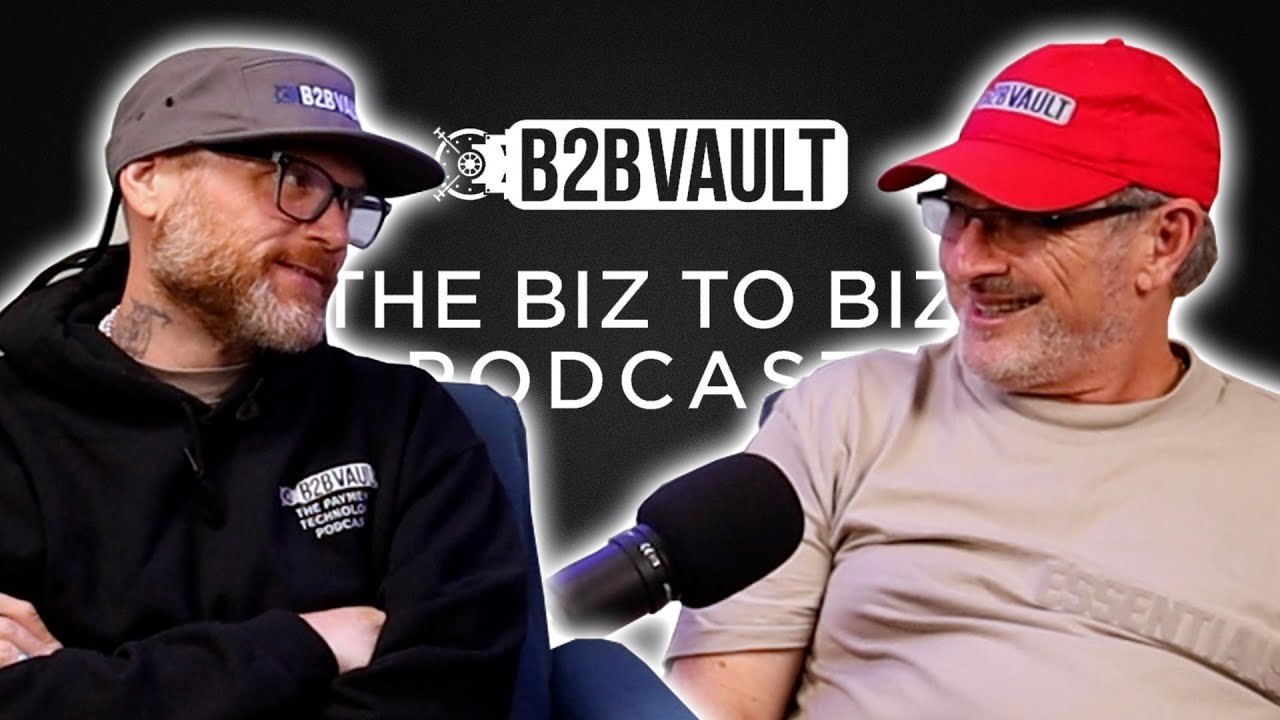
In this episode of the Biz to Biz podcast, host Allen Kopelman and co‑host Justin explore the current AI hype and its impact on jobs, especially in digital marketing, web and graphic design, and customer support. They discuss the anxiety many feel about AI replacing human work, but argue that AI is more an efficiency‑boosting tool than a replacement. The conversation covers practical AI applications—AI‑enhanced website builders, help‑desk assistants, content generators, video tools, and even AI‑girlfriend apps—while highlighting their shortcomings: lack of true creativity, ethical concerns, plagiarism issues, poor handling of visual details, and massive energy consumption. They cite a Harvard Business School professor’s quote that “AI won’t replace humans, but humans with AI will replace humans without AI,” and note the importance of data quality, citing that AI is only as good as the data fed to it. The hosts also touch on industry trends such as the convergence of automation and AI, the need for professionals to learn AI tools, and the broader societal implications of corporate control over AI infrastructure (e.g., Elon Musk’s acquisition of NVIDIA chips for XAI). Throughout, the tone remains conversational, slightly skeptical yet optimistic, emphasizing that human creativity, judgment, and ethics remain indispensable.
Chapters
You are now watching the Biz to Biz podcast with Allen and Justin. Yo, what's up everybody? It's Justin live from B2B Vault, the Biz to Biz podcast sponsored by Nationwide Payment Systems, hosted by this guy, the Mike Singletary of payment processing himself, Allen Kopelman. And in today's podcast, we're going to be talking about the— I don't know, I guess you could call it the craze or the wave of anxiety behind artificial intelligence and taking human's jobs in general. Um, yeah. How you doing, man?
I'm doing good. Yeah, yeah, it's been a little crazy week, but you know, it is what it is.
That's what I say. Yeah, you interviewed Brandon from, uh, Invent U Text. How did that go?
That was interesting. It was a really good interview. He talked about taxes, how to deal with taxes, how people should— especially like if you have a small business and you're starting a business, how to properly structure your legal entity, when to make changes to that legal entity.
Yeah, I mean, I would have joined, but I genuinely— I thought— I don't know, I was a mix-up. I thought you were on his podcast.
Oh, okay.
You know, I— yeah, I don't know. That's okay. Sorry, bro. I wish I would have—
It was an interesting conversation because we talked about how that, you know, you could start off like a sole proprietor.
Right. Well, check out episode 247, 248, I think it was. Well, it's literally—
Oh, we're approaching 250.
Nice. Yeah. It literally has his name, Brandon Madden.
Madden.
Brandon Madden. Yeah.
Very interesting. I think there's great pointers on there. If you're thinking about starting a business or you already own a business. He gave a lot of really good pointers.
Nice. Well, today's date is Thursday, June 6th, 2024, 12:33 Eastern Standard Time, man. Yeah, I'm doing great.
You're doing good. Yeah. Anyway, what's new with you?
I got nothing. I got nothing. Got nothing new.
Rocky's over here. Bother him.
He's going nuts.
He wants to get scratched.
So, uh, yeah, man, like, I don't know, for in my field or whatever industry where digital marketing, web design, etc., that's going crazy with AI.
I mean, I get so many emails, yeah, about AI related to make an AI website, uh used it. You know, there's tons of TikTok videos and reels.
Oh, have you tried any of them?
Yeah, I tried a couple. Terrible. Yeah, they weren't that great. So even GoDaddy is launching one now.
Yeah, I mean, all of the WordPress, uh, you know, the theme Divi that we use, uh, we purchased the AI upgrade for it. It's cool, it's decent, like Um, but like, you know, like the chatter— some people I feel like who are new to the industry, right, are more worried per se, like the senior level people like myself and other people who have been— who are like— who've seen technology come and go.
What do you think about these ones where it says like, oh, plug in your website to this thing and it'll— and the AI will tell you everything to fix on your website? I mean, and fix it for you, which is crazy.
Well, will it fix it for you?
I don't know. I'd be scared to press the button.
I mean, so, you know, that goes back to the question of is AI taking our jobs, right? I mean, I think what it's forced— not forcing, but what it's really doing is just making our jobs, you know, we're more efficient at our jobs.
I saw a really interesting article when we were talking about doing this podcast. So there was an article by this Harvard professor at the Harvard Business School. I'm not a big fan of Harvard, but I liked what he had to say. And his name was Karim Lakhani. Hopefully I didn't butcher his name. And he said, "AI won't replace humans, but humans with AI will replace humans without AI." Oh, for sure.
That's a, if you're not, you know.
So I think whatever job you do today, you know, you've got to figure out how to incorporate using AI into your job.
Making you more efficient, that's what I'm saying. Like, 'cause at the end of the day, artificial intelligence, it lacks creativity, it lacks, emotional intelligence, it lacks ethics, right? Like, yeah, you know what I'm saying? So like, it doesn't know that all these world events are happening, you know what I'm saying? Like, it can't— it has no idea what— what— so like, the human element is going to always be needed to monitor, to edit, you know, Like, so, but what I get back to what I was saying, like in my industry, like the, the, the, the, the fright or right, the anxiety around it of possibly taking our jobs, you know, I don't see it now, right? Like 10, 20 years from now, maybe, right?
You never know with that.
Right.
I mean, but here's a quote. Let me tell you another quote.
Okay.
And you'll like this one. So another guy was quoted in an article saying AI data is as good as the data that it's fed. And you and humans are the ones feeding it the data. And it needs humans to assign tasks to the AI.
Absolutely.
So it can't be just used by itself unless, of course, right, we end up with the Terminator. Yeah, exactly.
Like AI is going to, you know, will, uh, like I wrote down, AI will introduce more efficiency to daily tasks like data collection, keyword research, content creation. And these are all positive things, right? Like if, if it's gonna make my job as a digital marketer easier to pump out content for you to go over or for you to send me content, vice versa. Right. And, you know, it's valuable to the end user.
Right.
And, you know, I'm championing the use of AI, right? Yes. Now people who are like early adopters and they were, you know, hopping on the AI content bandwagon. Yeah. They're reeking of stink right now because, you know, like, they posted a whole bunch of content to their website. Yeah, it's terribly written.
Yeah, there was one guy I saw where he posted something like 8,000 blogs to his website using OpenAI, just 8,000, just cranked out without correcting anything, the grammar, the spelling, the words, the wording. You have to go in there and use Grammarly or something else. I mean, it doesn't—
So everyone needs to really understand that all AI, that like those content writers, you know, it's regurgitating content that it's been fed.
Exactly.
So yeah, it only knows what it knows, right?
But when you hit the plagiarism button, it'll pick up, oh yeah, well, this sentence came from here, there. Obviously you're going to come across some sentences that are fairly common, right? Right. So, you know, that's not plagiarism, obviously.
No, for sure. But, you know, at the end of the day, like, it's going to spit you out that stuff. So, I mean, you— it's going to take somebody, an expert in that field or industry, or, you know, who— the person who's selling the product, for instance. Yeah. You know, they know the product best. And, you know, using AI as a tool to make you, you know, shoot through these tasks quicker throughout the day, that's going to make everyone more productive. That leaves you open more time to take a walk outside or to do some exercise or, you know, make that phone call that you've been putting off for whatever amount of months because, oh shit, man, I just don't have time to really, you know, drill down onto this, you know, sales lead that we have. And I know it's going to take me 30, 45 minutes to go over all the features or whatever. You just don't have time for it. With— I feel like with AI, the way that you can structure your days and, and, and set these tasks up, you know, for success, I think it's a great tool.
One, one thing I'll tell you, one of the companies we work with, that's a point of sale company, so they have like their help desk kind of like glossary, right? They installed an AI on there. So let's say you forget like, oh, how to add a menu item. How to add a new employee. You just type it in. You don't have to scroll through like the glossary, find the section, find the thing. You just type it in, boom, it gives you the answer right there.
That's cool.
And that can say, you know, that's going to save, that's going to save that company. I don't know how much they spent on that, but I'm going to tell you what I asked them. They've been, they put it out a couple months ago. They said they're getting a lot less phone calls. Because people can find the information easier, so they don't call them on the phone as much. And that's, you know, that, that saves money, saves time and money. So, you know, let's say, you know, and of course, you know, they only have customer service during certain hours of the day, right? So, you know, someone's having a little problem at night and they want the answer, boom, they can get the answer. You know, the AI can be very helpful in that. Yeah, I'm not keen on the chatbots, and I'm not keen on the AI telephone calls. I don't like those.
Yeah, the impersonating humans aspect of it. Yeah, no, the Terminator side, the Skynet side of things. Yeah, no, that's the spooky part that I don't, I don't like that either. Um, but like, you know, for like web design, for instance, or graphic design, like we, we can use those AI tools now for mockups or, you know what I mean, placeholder stuff that we're going to be, you know, we're trying to streamline a project launch or something. But, you know, when you, when you tell one of these generators, right, to make me a barbershop website with um, fluorescent Miami lights or something like that, it doesn't really spit out like the most beautiful end result.
Sometimes the stuff will be upside down.
I mean, and the people are like, you know, as far as graphics go, you know, like AI is having a really hard time with like bodily features still. So like hands are looking really weird and body parts are like ex— like elongated looking like—
well, I saw pictures of people with like no legs.
Mr. Fantastic, that too. Like, it does, you know, it, it, you know, it doesn't, it doesn't understand that it's not, you know, cape. They're not—
yeah, there's not— there was like no legs on the person, right? That I saw.
So, you know, like, yeah, you can use them for like for a quick, you know, mock-up, like I said, you know what I mean, of like, okay, this is what this is the aesthetic or whatever we're going for. But the end result, if you're going to just take the AI, what we're working with right now today, and make it into a, you know, functioning in-production website or, you know, like marketing material, people are going to know right away that this is AI.
Exactly.
And, you know, like, that's what, you know, and that's where the human element comes in again, right? Like, because it's going to take the human creative touch you know what I'm saying, to like make it is what it is.
You want to know what's a big—
Creativity is like the lifeline of digital marketing, you know what I'm saying? Like you have to be creative in order to think of new ways to reach customers and you know what I'm saying? Like AI isn't thinking about that. I get it, you know.
So let me tell you one thing I learned about AI, that these AI computers are using an insane amount of electricity.
Oh yeah.
And servers. And currently Elon Musk is like ordering like all these chips from NVIDIA. And he's telling them, I don't want the chips for Tesla. He goes, I want you to send all these chips. Because they're not selling as many Teslas as they were at one point. And he wants all these ships sent to his new factory that he's building in Tennessee. That's by like the 3 largest power plants in the US or something. The Tennessee Valley and the Tennessee Valley. I guess there's these, the river, whatever, whatever it is. There's these huge power plants over there. And he wants to tap into the power from those power plants to power his XAI is what he's working on. Because he doesn't like the OpenAI.
Well, he, he was one of the original founders of it.
So then this is the one thing. So somebody—
the scary thing, like, for me is like, uh, AI, like you said, is as good as the data that is fed, right?
Right.
So you— we as a the population, the human race, are depending on— we don't know these people.
Exactly. We don't know who's feeding it the data. Exactly.
So, um, that's, that's the— unless you feel the wizard behind the screen, right? Right. Like, that's the, that's the scary shit for sure.
But the other thing is, so one of the most popular— I was Googling this to see like what, what was really popular, and we've had a bunch of people contact us about AI products and things like that. So they have to prove like that they actually make, you know, they can't be using other people's AI and then reselling it.
Okay.
We can't do that. But the one thing that I was looking up is what's one of the most popular things being done with AI right now? And it's literally approaching like a billion dollars a month is AI girlfriend apps. And I was like, how many can there be, right? I mean, so I went into the— I went in the App Store, right? In the App Store. And I punched it in, AI girlfriend, right? And there is 1, 2, 3, 4, 5, 6, 7, 8, whatever.
There's a lot. Yeah, there's—
it's just going down, going, going, going. And you can go on here and you can make some avatar, right?
Whatever, dude. What is the point?
The whole point is like, it's, it's, it's crazy. Like, are people that lonely or that, that's what they want? That's how they're gonna do is have a relationship?
I mean, it's been in the— it's been in movies for years, like the cyber with the virtual reality.
You had like the Blade Runner was the first movie. I mean, the girl was a robot.
I can't— I kind of stopped watching sci-fi flicks.
Well, I'm just saying, like, the girl was like in Minority Report.
That one is like, to me, that one is really relevant, and I feel like that is a really, in my mind, stop crime before it happens. No, I'm not talking about that part of it. I'm just talking about like where the— how they the year it took place in.
Yeah.
I feel like we're not really far away from that timeline, I guess.
I don't know.
I just, you know, it's— we're really close. Like the way people, they were hovering with the—
Yeah.
Flying around and shit like that. Like we're there. The military is using that type of technology.
Probably.
No, they are. I've seen videos.
Yeah.
I'm just saying like— Yeah, no, they're definitely using that.
Yeah.
And so like magnetic pulses and all that, they've been using that for a long time.
Of course.
So like, yeah. So I mean, I feel like we're really close to that, which will be cool to see, right? Like, I mean, I don't know, Total Recall level shit. I don't know if we're going to be able to have this.
Like you wanna come to work, like it would be cool to go outside, sit down in a little thing, put Rocky in there, say, okay, thing takes off, and then instead of going down all these streets, it just, you know, fly to work.
Yeah, I don't think we're that far away from that. I really don't.
That would be pretty awesome.
Yeah, I don't think we're—
imagine, like, I saw this thing where there was a—
maybe we are, and I'm just like—
I saw this guy, this video of this guy the other day, he was disabled. No, he was disabled, and with— he had this AI thing implanted into his head.
Yeah, I've seen that.
That's crazy.
And he's the first one.
Yeah. And now the guy can do all kinds of stuff.
Yeah, that's awesome.
He, he, he can— he's controlled by just by thinking.
I mean, he's doing stuff.
Yeah, he's typing on the computer, searching the internet, watching TV. He was doing it. He was making everything work.
I mean, like, I think AI is going to— it's going to take some— it's going to take jobs like automated stuff. It's gonna take like, like I said, like data collection and stuff like that and filtering out. You're not gonna need a whole team anymore of, you know, crunching numbers.
Right.
You know what I'm saying? Or like phone calls, you know, like taking customer support, customer service calls.
Yeah.
That's where it's type, I feel like that's where it's gonna be.
You can't yell at the AI computer.
They don't care. Right.
Imagine it. Hello, I am the AI here at AT&T. How may I help you, Justin?
That's already like that though.
Well, it'll—
if you have to go through, eventually you say, I want to speak to a representative, enough times. Yeah, you get sent to a representative.
So it doesn't speak English.
Yeah, I mean, whatever. But, uh, in India, yeah, well, they can't find someone who speaks English to want to work for $5 an hour. Well, I mean, That's not— it's another conversation.
That's not even real.
It's a whole nother podcast.
Yeah. Uh, yeah, well, we shouldn't be offshoring all these jobs either, so it's neither here nor there.
But I think that, uh, AI is definitely gonna, you know, take some jobs away. I think, um, you know, there's a difference in general, like AI and web design. I think it's going to grow organically. I think, you know, we're going to start We will get to a place where it's like, all right, I need a website that sells payment processing, payment processing. Geez, that's a tough word to spit out this morning. Uh, you know, located in Florida, um, we offer customized payment solutions. Um, this is our color scheme, red, white, and blue. We want to use Helvetica font for our H1s and our headers. For our body font, we want to use whatever, Times Roman, you know what I'm saying? I think we'll get to that point. You're yawning all through this podcast.
I'm sorry.
And I think we'll get to that point, right?
Yeah.
And it'll spit out. Something usable right then and there. But like right now, I, I mean, we're not there, but it's cool to be like in this where we're like watching it evolve firsthand.
Yeah, but one of the things is when you ask it to like spit something out, like, oh, let's say, oh, I'm gonna be selling a Déjà Vu QD credit card machine. Blah, blah, blah. It's going to literally copy what's on the internet from a bunch of websites. And that's the part that's not good right now, is that it's not producing any kind of original, 100% original content. If you take that content that's spit out from OpenAI, hit the— put it in something like Grammarly, hit the plagiarism button, the whole thing's plagiarized, right? So you have to people. You have to— that, that's— it's not going to do that. That's going to take time for the writing to evolve.
No, for sure.
Yeah, I mean, but, but there's people writing all sorts of prompts and doing all kinds of stuff inside OpenAI. There's gazillions of prompts in there and all kinds of crazy stuff, and all these companies that have millions and billions of dollars, like GoDaddy, Wix, they got AI website builders. I mean, yeah, you're gonna have to put— go in there and fix it all.
Yeah, that's the— like, again, like you just said the key point, like, go in there and fix it all, right? Yeah. Like, so like, for the—
yeah, but the—
but for the entrepreneur trying to do it themselves, like, what the fuck are you gonna do with it then? Right, but do you know how to change your name servers? Do you need to set up your email address? Uh, like, you know, like, how are you going to connect it to Facebook? Like, AI can't do all those things.
Exactly, that's what I'm saying. So like, they're putting these products out that they're selling, but then it's not exactly— and then also, like, where is it all hosted at? Like, all these like little companies, right?
That's what I'm saying.
Like, where is it all at?
What—
do you have control over these things?
Do you own the content after it's done?
Yeah, do you? Yeah. Do you own the domain? Like, how does all— how— there's a lot of, there's a lot of questions when it comes to, uh, AI, you know, more than there are answers for those questions, right? Would you say that?
Yeah, for sure.
Yeah, it's evolving. I mean, just like this guy says, that eventually, you know, like There's people like out, like I talked to some college kids recently, right? And they're out trying to, you know, find, you know, get jobs and stuff, you know, get jobs. I'm like, man, you guys gotta, it's like, you know, you got like, they, you gotta figure out like, you know, because they're going to one of them, one of them was telling me he went to a job interview. They wanted to ask him, you know, if he knew how to use OpenAI.
Right.
So he never even used it before. They weren't allowed to use it at college. Was block, a block site at the college.
What is this guy going to college for?
No, no, he's out of college, but I'm just saying like, so he just graduated, right? Yeah, he just graduated.
Where would he go to school?
Business degree.
And then, but he wasn't using OpenAI on his own time?
He played around with it, but there, he said he didn't use it.
Did he use it or did he not use it? He didn't, he didn't use it for any writing. So he never, He doesn't know what the hell it is, right?
He had, he had no experience with it. He was just saying that during the job interview, they— he got asked by 2 or 3 companies what was his experience using AI. And the colleges want to block it because they don't want the kids—
they don't want you to write papers. Yeah, well, of course, right?
I mean, doing your homework.
I still have my daughter use it. Yeah, she understood the, you know, she understood the assignment. Like I told her, I said, listen, you could, you could use this, excuse me, for a template, for like a starting point, an idea, but you cannot use this as a final product. Like you need to refine it. You need to edit it, make it what is not yours, yours.
But also people need to understand you have AI and then you have automation. Right? So we've had automation for a really long time, right? And now you have— now you have AI. So these two things, these two like technologies are starting to converge.
Well, AI is taking—
enhancing automation.
Yeah, right, exactly.
That's what I'm saying.
There's just taking a little step out of it, you know. It's making the steps easier to automate tasks is what it's doing.
But I'm saying those, those two industries are converging. True. Yeah, or tasks. Correct.
Right.
So yeah, man, and there's a ton of these like AI products out there. AI video products, AI editing products.
Yeah, I mean, the video editing software I'm not too familiar with. I, you know, I'm not—
you— we played around with it a little bit. I have not. Yeah, remember you made the little video and you showed it to me? Made like a SpongeBob.
Oh, I didn't make anything. I just—
yeah, you just plug it in, it makes like an AI video.
Literally all it did is it asked me for the website, so it scrapes the website and then it does a— I don't, you know, I won't mention the company, but that shit was terrible. Yeah, but I think that's, that's why it's like so— it's hard to like, you know, to be a digital marketer, like, because I noticed right away, like, my wife was watching a video on Instagram and she was like, this just— something doesn't look right. And I was like, that's AI. And she was like, how the hell can you tell? I was like, you said it doesn't look right. And if you look at their mouths and their eyes and their nose, like, it, it literally— you could tell.
So some of it looks very real though.
I haven't seen— I haven't seen anything like that makes me look like, oh, that's—
that was a real The other weird thing is you see these, um, a lot of these videos where they dub over like what the real person is saying, but I can see that, I can, I can tell right away that that's not them speaking, right?
You can hear their voice change, you can hear the little— for, I don't know, maybe because I was in, you know, a musical recording artist and, you know, like my ears aren't that bad, so like, and I can still pick up on little you know what I mean, little sounds and whatever. Yeah, man, people are gonna lose their jobs, but at the end of the day, we're gonna be okay. AI is, you know, here to stay.
Yeah, tell us, what are your— some of your favorite AI software products, tools, tools that you use? And we'll post some of the tools that we, that we, that we've experimented with. Let us know what you think.
Smash that subscribe for me one time. That's the pod. Peace out.
Peace out. Carpe diem. Go AI.
More from Allen



How B2B Companies Can Turn YouTube Into a Lead Generation Machine | Featuring Samu Kovacs


How AI Is Transforming E-Commerce with Zero Code | Kumar Senthil, CEO of Firmly



Dre Baldwin on Discipline, Leadership, AI & Business Success | The Mindset Every Entrepreneur Needs

The Same Skills That Made Me a Pro Athlete Built My YouTube #podcast #entrepreneurship #success

