"If I Were To Start a Business in 2024 It Would Be This..."
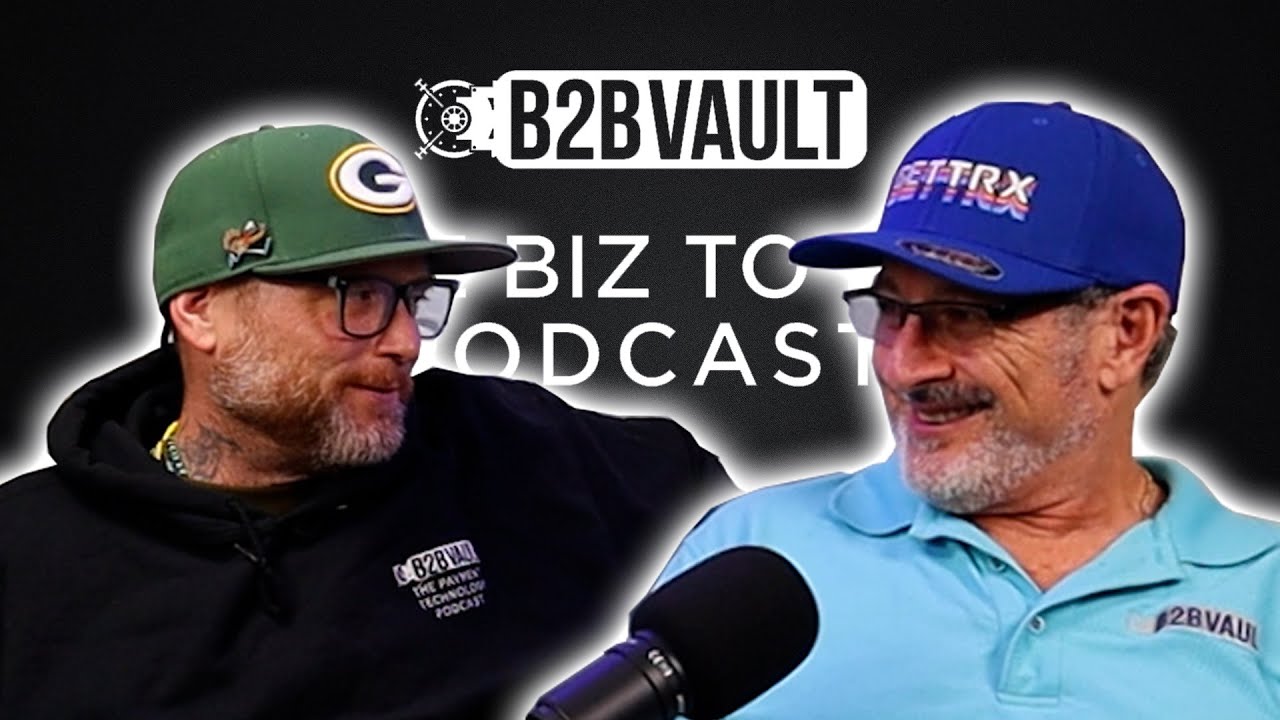
Justin and Allen Kopelman brainstorm business ideas for 2024, from permaculture landscaping and fintech to e-commerce management and trade skills. They highlight growing demand for eco-friendly products, the shortage of skilled tradespeople, and practical low-entry opportunities like SEO consulting and bike repair.
Chapters
Yo, what's up everybody? It's Justin live from B2B Vault, the biz to biz podcast sponsored by Nationwide Payment Systems, hosted by this guy, the Mike McDaniel of payment processing himself, Allen Kopelman. And we'll be providing you educational information about fintech, payment processing, small business, and the technology businesses are using in the world today. And in today's podcast, We thought it'd be different to ask a question, ask the question to each other. What business would you start in 2024? So yeah, man, how you doing?
I'm doing good. Fresh back from vacationing.
How was Des Moines, Iowa?
Oh, Cedar Rapids, Iowa.
Oh, yes. Cedar Rapids.
It was good. I got to be on. I made an appearance on TV with my daughter. That was fun.
Oh yeah, yeah, very cool.
At the end I got to wave while they made fun of me for being cold there.
No, I was freezing.
I'm wearing my hat from my friend's racing team. Then I got some, uh, these are very dark, these are the Prime Time Deion Sanders sunglasses. Oh nice, but they're really dark, can't see anything. Might be— are they prescription? No, they're not prescription. You can check them out. No, they're not.
I'll check them out off camera.
Off camera.
Off camera.
Yeah, man. And, uh, but it was a good trip. Rocky missed me, of course. He was very excited for me to be back, jumping up and down.
And, uh, the office was so quiet, bro. Oh, it was so quiet without Rocky here.
Oh, come on, you miss Rocky.
Not a bit. But yep. Anyway, keep going. How was your trip?
The trip was good. The flight was good. It was great to go on a nonstop instead of being a 9-hour flying day. 9-hour plus. It was a 3-hour flight.
There you go.
On the way back, it was 2.5 hours. It must have caught a tailwind.
Winner, winner, chicken dinner.
So that was good. It was a good thing I parked my car at the airport because it was gridlock. If I would have had to get an Uber, Miami or Fort Lauderdale? Fort Lauderdale. It probably took a couple hours. I mean, it was packed. The airport was packed with people getting dropped off to fly out because I came back before Thanksgiving. I came back the day before Thanksgiving. And for Thanksgiving, I was at my mom's with my brother, his wife, two of it— two out of three boys, Jacob. So that was nice. I like the family in Cedar Rapids and then the fam here. Good. There you go. How was your week? Besides, I know you really missed Rocky.
No, I didn't. Anyway, it's not like I don't like Rocky. I just didn't miss him barking.
Okay.
That's it. And I don't miss it. I will never miss it.
He's good when he's sleeping.
But he doesn't— anyway, my week was fine. Busy. Did a lot of work around the house. Blah, blah, blah.
Yep.
Anyway, um, so man, what business would— I don't know, you want me to go first? You want to go first?
Whatever you want. You want me to go first? I'll go.
No, I'll go first because then you'll finish out the podcast.
Okay. Um, well, we're gonna discuss it, right? The pros and cons.
Sure, whatever you want. Um, so My business, what I would do if, if, if I was in a perfect world and I could just, you know, let's say you had unlimited funds, I would start—
funds was not an issue—
I would start a permaculture landscaping business.
And what exactly is that?
That is, uh, so, you know, landscaping obviously, right? Um, but Permaculture landscaping, you know, the way we've been taught to believe that your lawn is supposed to be this grass that you can golf on, that's not right. It's just a lie. It's not true. Um, it's not native to—
well, I don't know, you can't golf on my grass.
I don't care what did you say about it, but it's not— it's a, it's a big false narrative that's been lied to the American public, and we've been told that our house has to look nice this way. And so the traditional—
So what would that landscape be?
Permaculture landscaping takes it back to whatever native plants and grasses and fruit trees and bushes that actually grow in your zone. So there's a lot of different zones. I know a lot about gardening, so it's a passion of mine.
Well, if you're in Florida, you'd have like a coconut tree and a lime, lemon tree.
I mean, there's, you're just saying the basics.
Yeah. Well, I'm sure there's other stuff.
There's a lot.
Yeah.
Avocado, mango, soursop, banana, ackee fruit, blueberries. I can keep going. It's just not, there's a lot of stuff that you could grow, but because we are taught and because we are forced to believe that you're, lawns have to look a certain way, we don't do that. So my landlord won't even let me do the stuff that I want to do because it won't go by the neighbors. The neighbors won't like mounds of dirt growing fruit and vegetables in my front lawn for whatever purpose. I don't know. It's a big no-no. So permaculture landscaping is a really big— well, specifically in a broader thing, a business thing, is like a sustainable living, sustainable products, eco-friendly type of stuff. Those things are a huge business right now and are only going to keep growing and growing and growing. People my age, and even, you know, a little bit younger, are really, really specific on the types of brands that we buy, the clothing, what it's made of and stuff like that. So I mean, if you, if I didn't really think of like endless resources, this is just, you know, like if I like was put into a bind and I had to start a job, that's what I would do. But as far as like if I had endless resources, it would definitely be like a sustainable product. You know, I don't know, whatever it would be, you know, like a clothing, a t-shirt, something that you would wear, something.
Yeah. What? What's unusual is about like gardening and stuff. There was— I had met with a company and we actually— they never got off the ground, but they wanted to do like— they wanted to take like all the old office buildings that are closed. Yeah. And they wanted to grow like hydroponic vegetables and stuff in there.
Yeah. Where I'm from in Milwaukee, we have a place called Growing Power started by Will Allen Kopelman. And he developed the first vertical farming.
Right.
Because in inner cities, you know, we don't have space to farm. So he implemented programs in the inner cities so people learn how to grow up. Yeah. And we got to, I mean, Milwaukee's really cool and big on like sustainable living. You know, obviously, you know, we were talking amongst each other earlier, like some of the, like I had another one on here for— well, so the businesses, like, for me, another one was, uh, like bike repair and refurbishing. Um, that is going to continue to grow as a business. Um, the biking community is already very large. Um, and I don't see a lot of that down here. I don't see a lot of bike shops. I'm sure there are closer to the beach, but like, you know, where people live I don't see them, right? So I see a missed opportunity there.
Yeah. One thing, let me just touch on something. One thing that's really cool about Cedar Rapids is there's a lot of trails for walking, running, and biking.
Yeah, there's not— I mean, there's parks down here, but there's not a lot.
No, but I'm saying, and they actually, Rebecca, my daughter, was telling me they actually started to connect all the trails together. So now you could like walk literally like across the city or run or bike.
Yeah, they have that in Milwaukee. It's called Hank Aaron Trail. You can like walk from Milwaukee basically to the Illinois border.
Yeah, so it's really cool. It's pretty interesting there considering that it's freezing cold some parts of the year.
So what business would you start, man?
Okay, so I thought of two things. One would be if I had unlimited funds, I would open— I would be— I would, uh, have unlimited funds. I would create the real comp competitor to like Stripe and Square. I know that would be one thing. And then what? And then the other thing that I would do that would be my passion business would be I would do some kind of food business because I always dreamed when I was a chef to have like— it would have been, you know, I— when I was a chef, it was before the internet, before there were cooking shows on TV and all that. So I thought it would be pretty cool, like, if I had a way to do that again now. I would have do like a— I would have like a restaurant and a cooking show and cookbooks and all that kind of stuff. And, you know, my cooking, when I was doing cooking, was all based on local food. So everything was locally sourced. I bought all my herbs from local herb farmers. I got all my vegetables from vegetable farmers. I used to actually go in the morning to this like farmer's market type place where farmers brought their— local farmers brought their stuff that got sold to like grocery stores and different places. But I knew the guy who owned it was a customer in the restaurant. So I was able to go there and get those kind of things. And, you know, and I got local fish. All my fish was coming out of the Keys. Okay. By guys that caught fish. And that would be cool if I was able— I don't know if I want to be in the restaurant business, but be like a celebrity chef with like a book and an internet channel where people are watching me cook. And I always enjoy cooking. Like when I went to visit my daughter, I cooked for everybody. Everybody loved the food.
There you go.
Even my daughter was like, oh, you can grow the vegetables over at your house and then I'll cook them. And, you know, she didn't know if her kids would eat the food, you know, right? But they ate everything. They ate the brisket, the chicken, the vegetables. They ate everything. So, you know, but that's my— that would be my one passion, I guess, to, you know, re— to, to have that part of my life. But in a— in the time, you know, I'm, you know, I was before all the digital, the digital era, right? So that would be interesting as a, as a business. Now, if I was my age now and I went and I said, oh, I just want to have some kind of relaxing business, I don't know, maybe I'd be a dog walker. I'd go around and walk dogs.
I'm not gonna make no money doing that.
I know, but it would be, it would be fun.
Yeah, I don't know, man. I, I mean, my, the, you know, permaculture landscaping is actually a thing.
No, I get it.
So it's like a really big thing, and so that makes money. Uh, I'm not trying to hate on your business, man, but I would never open a restaurant.
No, I wouldn't do it again. That's what I'm saying.
That's what we're talking about.
What business would you open in 2024?
2024, bro?
In 2024, if I was gonna actually start, start a business, I would, I would have to say I would start— I don't even know what kind of business I would start because—
so this podcast is pointless.
It is not pointless. I talked about things that were— are my passion, of things that I've done.
So there's some businesses that I was looking into, right, that are like really, you know, doing well, projected to do even further, more, you know, more growth in coming years. And everywhere I kept going, the number one thing was like website management, e-commerce consulting services for existing brands. That makes sense. You know, we talk about a lot on the podcast, I talk about how, like, you know, how I've built websites for a bunch of people who had stuff on Wix, Shopify, etc. You know, and they don't know how to run it. Once the business becomes successful, they have no idea what they're doing and they're way over their head. So that makes sense to me. And SEO still was really high on that list. So web design, those types of, you know, content creation, if that's your thing. And then besides like me doing the passion sustainable, sustainable products on a bunch of different websites were really up there on the list, whether it be like soap that you make in your house, candles, stuff like that, perfumes that are, you know, environmentally friendly, right? All those other things. Those are really hot businesses. The bike repair thing, that was mine. And then, oh, The upcycling of clothing in like secondhand stores, right, is really popular. And I can, you know, confirm one of my homies back home in Milwaukee actually just opened his second thrift store.
Okay.
Okay. So if that's not something that's— that's just showing you that, you know, people, one, we're in a downtime and can't afford to pay for, you know, new products. And two, you know, people are kind of getting sick of the monotony of, you know, the way that fashion and just the retail system is set up in general.
Yeah, when you talk about websites, you know, one of the things—
Wait a second before you get into that. All right. You know, the number 3 that I came up with that from like a little bit of research, the time that I put into it, um, was the health and wellness industry itself, whether it be like yoga studios, massage therapy, um, you know, stuff that you don't need to be a doctor for, right? You know, you can go and get a certificate to be a yoga instructor, you can be a tai chi instructor, Pilates, Pilates, stretching, etc., etc., etc. It's really That's a low-level, low-entry-level, you know what I mean? As far as money-wise and stuff like that, it's just time. And then like self-care spas, like the spas where you go to to get, you know, a massage and then you sit in the whirlpool or whatever, those types of things. And wellness centers. Now wellness center, I was saying, is like, that's one of those if you have endless money, right? You know, like a wellness center is all of those things I just mentioned combined into one. Right. Like a physical therapist, you know, somebody to help you work out and all this other stuff. Training. That was also on the— what I was going to mention as well, the trainer being like a physical trainer to train people how to, you know, get in shape. That thing, that especially if you're doing it digitally, right? Like that is a huge business right now for people all across the world. They're making handovers.
I get hit up on that on LinkedIn. All the time. Like, oh, do you want to be in the best shape of your life?
When I was working, I went out, went to work out with my wife last night, and I could see a bunch of, like, people just looking at me, like, and I could, I mean, I could see myself training people, right? But I wouldn't want, I wouldn't do that, you know what I mean? I wouldn't want to, but, um, I could see, I could see how people, it's good money, I guess, you know?
Yeah. There's money in it. There's definitely like— I see a lot of these small gyms starting to open up everywhere, like smaller gyms where people can get like more one-on-one versus like going to the LA Fitness, you know, or go to LA Fitness. Yeah, bigger LA Fitness. Going to the bigger, you know, going to like the bigger gyms, you know, and Then there's other companies like Peloton with bikes and treadmills and rowers.
At-home workout programming, that stuff is—
Tonal is another one.
Yeah, coaching, that type of thing. Boxing. It's really big.
Yeah. And I think that there's a lot of businesses because a lot of people started to stay at home, right?
Yeah, but that's over.
Yeah, but they still— a lot of people working at home now because a lot of companies have given up their office space.
Yeah, but that's still— they're figuring it out because because they—
there's— oh, there's definitely backlash on that for sure.
They come to figure out that most of the people who are at home working, yeah, they ain't working.
Well, there was one guy that just got in trouble. He was a computer programmer.
We talked about that a lot of times.
Yeah, well, there was just a new, a new article that I read about a guy who was a computer programmer and he was getting salary from like 3 or 4 companies.
I, I read about a travel agent that was doing it.
And it's great, you know.
So I don't know how a travel agent could get in trouble for that, but I guess if you're getting paid an hourly rate from like 10 different companies, right, to do work, I don't know. But whatever.
Yeah, well, you know, it's going on out there. I don't know, the, you know, I look at the, you know, I look at, you know, like what, like the farming thing. I think, you know, that's one thing that's really popular.
Not farming, landscaping.
Landscaping thing. In Iowa, it's very popular there. A lot of people, especially popular here in their backyard, have— are growing.
It's very popular in South Florida. Okay. I mean, I have in my neighborhood a bunch of people have gardens. So I mean, it's not a— it's not a Midwest thing to have.
No, no, I'm just saying— I'm saying I know a lot of people doing that. Not so much like in a gated community like where I live.
Well, that's because they don't have That's what I'm saying. That's why the, the permaculture landscaping is that type of business. That those people are perfect customers, right? Because they have such a small space, they think they can't do nothing, right? But they can. So, you know, it's, you know, that's one of those things, lack of education, and, you know, or just I don't care to, to want to know enough. That's what, you know, a lot of it is. But I think a lot of times too, people are really afraid of What is my neighbor going to think if I don't have nice grass?
Right.
So put up a fence, tell them to kick rocks. Yeah. You're trying to support yourself in these trying times.
Well, the whole thing, the other thing is so many people live in apartment buildings and stuff.
You can still grow outside on your balcony.
Yeah, you can grow on your balcony.
I grew on, I had a, when I lived on the east side of Milwaukee, I had a small, well, it wasn't small, but I had a small area that was outside and I grew on my porch.
Yeah, I saw things recently, like online, when I was—
dude, you just made me realize, like, those tomatoes that I was growing on that porch were some of the sweetest tomatoes I ever had. I really— they were so— I was— I even took some out and transplanted them into the place we moved because they had like 4 or 5 garden beds already in the side of the house for me.
That's cool.
Yeah, yeah.
When I had my restaurant, I had, uh, um, a garden— there was a garden bed in the back and I turned the whole thing into an herb garden.
There you go.
So I had like basil, lemon verbena, uh, thyme, rosemary, everything growing back there.
I mean, you got me thinking, like, I mean, if I had endless money, I would, I would start my own production company, a media company. Like that would kind of like— not what Tyler Perry did like for movies, but some similar, some really similar, you know.
Yep. No, there's a lot of different businesses. I think if you're on a— I think if people look at it and you say, well, I'm gonna shoot—
not on a scale of what Tyler Perry did. No, no, but Tyler Perry bought a whole town and turned it into a Hollywood. There's That's awesome. Shout out to you, dude.
No, but one thing is, is a lot of people are looking for like the side hustle type business, but I don't—
I mean, yeah, everyone needs a side hustle right now. I need 5 of them. I'm looking for a part-time job right now. So if anybody's listening, my email is justin@nationwidepaymentsystems.com.
I get a 10% cut. Just kidding. No, the No, but a lot of people are trying to do like dropshipping. I don't even know what this Amazon F something A is that people are trying to do.
And what's like, huh, Amazon what?
F something. I don't know, it's something to do with Amazon, but a lot of people are trying to come up with this.
AWS, Amazon Web Services?
No, they're trying to do like some kind of Amazon shipping thing.
Dropshipping through Amazon?
Yeah, but It's different. It's like you have a warehouse and you're like warehousing stuff for Amazon.
That's not— that's a big business.
Yeah, well, it's starting to— a lot of people are starting to get into that business of doing that where they— people selling on Amazon instead of Amazon stocking it, this other third-party group stocks it for you and then they deal with all the shipping and all of that different logistic company. Yeah, it's like a logistics type of thing. And you know, the other thing popping up too is, you know, like I had to get a FedEx package today, right? So it was at Walgreens. So used to, you would go to the FedEx warehouse place down the street over here, but instead they had it at Walgreens. There you go. So, you know, there's a lot of businesses like that popping up too where people are putting Amazon lockers in spaces.
I mean, that's a big jump though.
What?
I don't know how much that costs, but like I myself couldn't just go and No, they just had like a cloth.
They just literally had like one big cabinet in there in the Walgreens. And that's it.
How much did it cost to get into Walgreens?
Who, for FedEx?
That's my point, Allen. We're talking about what people could start a business.
No, I'm saying like now the most popular businesses I see people trying to start because they try to get merchant accounts is I see people, everybody wants to be a coach of some sort. Coaching. And the other thing I see is I see a lot of people trying to get into digital marketing, and like you talked about, websites, SEO, and those type of things. I'm going to give two pointers on both of those businesses right now. If you want to get a merchant account and you're going to do some sort of coaching, you need to come up with a sustainable business plan It does not involve somebody giving you $2,000, $3,000 up front. You need to come up with some kind of down payment and then either a biweekly or monthly payment for— to do this coaching and incorporate some kind of group coaching into it. Because I see a lot of chargebacks and disputes with this type of business. Any time you have a service-oriented business where there's no product involved or no specific service, I'm not talking about like plumbing., right? And that's another thing, the hand— if you are handy, become a handyman.
Oh dude, I was gonna say that to the end, but yeah, bro, become a handyman. If you— especially if you're in high school and you're about to graduate high school, like, yo, and you're like, I hate school, bro, please, you're— for, for your granny's sake, because because one day she gonna call you, she's gonna be like, man, can you come and stop this sink from leaking, please? And you ain't gonna know what to do. But, you know, like, on top of that, if you go and get your plumber's license, yeah, that's all you need. You can hit the ground running. It is a— it's a lot involved in that, okay? Like, getting, you know, being a plumber. But an easier, uh, entry level is a pesticide license. Your family lives in an area where you're dealing with a lot of rodents or something. You study this book, it's about this big.
Yeah.
And you go take the test, you certified, you go buy your equipment and you, that job, you can hit the ground running.
Yeah, there's not enough people in the trades today.
Trades, trades, trades, please.
Plumbing, electricianing, HVAC. HVAC. Handyman, carpentry. These are all needed skills that are not being addressed today.
Especially, I mean, for the youth. I think, I think, yeah, man. I mean, we talked about it on the podcast before about how they took away like shop class, art, music, you know, people listening, it sounds crazy. Like they say, bro, you don't have that. And, you know, like, no, we didn't. They took it out of the schools. My kids, like, They didn't get it back until I put them into Montessori school. So I mean, yeah, dude, like the youth, I think would really benefit from one, working with their hands.
Yeah.
And seeing the fruits from their labor, right? Like I remember one time building something, building a birdhouse in shop class.
Right.
And yeah, I was just so proud of that. Like, I measured everything, I sanded it, I, you know, I'd make sure everything was right. I stained it, you know, I was just proud of that. You know what I mean? Like I seen something that I created with my own hands. And I thought that at that point I was like, oh, okay, I could be a carpenter.
Yeah.
But without them having that experience, you know, they don't know. Kids don't know.
To give you an example, we had a call around to like 4 different places today. Trying to find somebody who can, from an IT company that wants to go out and run wires at a business. There is not enough people doing that. The people who are doing it don't want to do the small jobs.
Oh, right.
Only looking for big jobs that are, you know, doing. But you never know. You can— there's many times when we signed up like a guy with a small store, right? And then they referred us to a wholesaler.
Right.
You know, and then a big company. So, you know, you got to start somewhere. But there's lots of jobs out there, the trades. I mean, that guy, Dirty Jobs guy, the—
yeah, whatever his name is.
But yeah, man, you know, he talks about it all the time. And you know, there's tons and tons of, of jobs in those jobs.
What he's not saying, jobs within those professions, right? You could start a business, right? You don't need to get every— like, you don't have to put yourself in the worker's mentality, like the, the way that they embedded in your brain and since you're in kindergarten. Yeah, you can go work for some— So you can break the mold, bro. You don't have to go work for anyone. You can go to work on your own. You can go get your license. You can get the experience. You can do it. Everyone can do it.
Yeah.
But yeah, lots of businesses to start.
Lots, there's lots of businesses to start. Do your homework, pick the, we've done other podcasts that you should listen to about how to pick a name out and the different legal steps that need to be taken. To start a business and so you— and make sure you can get paid. And we did other podcasts about that. We could reference in the, in the notes of which ones to maybe go check out. I can give you a little bit more guidance into what, what, what you need to do paperwork-wise and different things to start a business. But definitely 2024, I hope people go out, start a business. Maybe you have a business that you want to start. Maybe you need some— want to ask us some questions about it. Feel free, reach out, ask us some questions. And I wish everybody good luck in 2024. And hopefully somebody starts a great new venture out there and comes back and tells us that this podcast inspired you to do it.
There you go. Peace out.
Peace out. Carpe diem. Seize the day.
More from Allen



How B2B Companies Can Turn YouTube Into a Lead Generation Machine | Featuring Samu Kovacs


How AI Is Transforming E-Commerce with Zero Code | Kumar Senthil, CEO of Firmly



Dre Baldwin on Discipline, Leadership, AI & Business Success | The Mindset Every Entrepreneur Needs

The Same Skills That Made Me a Pro Athlete Built My YouTube #podcast #entrepreneurship #success

