Luke's Blueprint for Scaling Payment Infrastructure
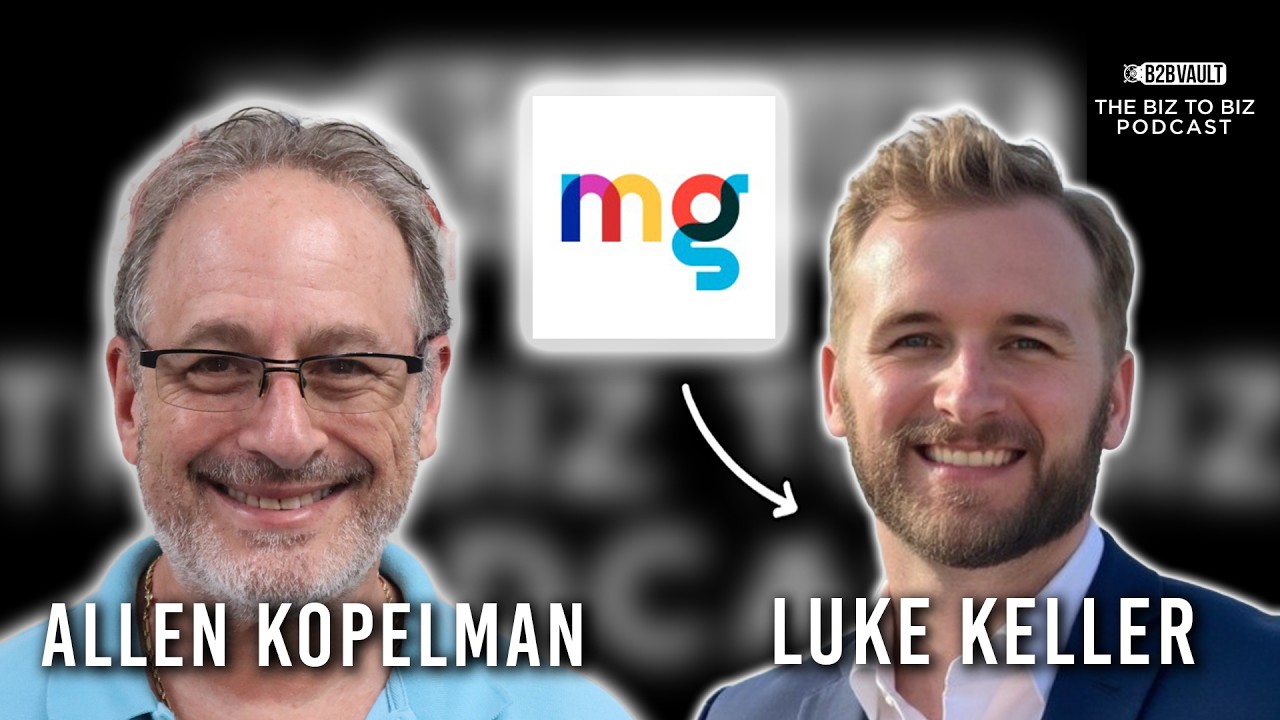
This content was created by Allen Kopelman. This content was uploaded by Allen Kopelman. This is a YouTube episode titled "Luke's Blueprint for Scaling Payment Infrastructure" (B2B Vault / Biz to Biz podcast) published 2026-03-13. It's a hosted interview-style podcast episode powered by Nationwide Payment Systems with Allen Kopelman as host and Luke Keller (founder of Match Grant) as the guest. The discussion covers Match Grant — an AI-driven grant discovery and management platform for nonprofits and SLED (state, local, education) entities — including use of IRS 990 data, grant matching, application/reporting workflow, an upcoming automated grant-writing assistant, pricing ($2,000/yr) and 14-day trials, target users (nonprofits, grant writers, contractors), and contact/website info (luke@matchgrant.co, matchgrant.co). The episode is promotional/educational in nature for nonprofits, grant writers, and board members and also references payment-processing services from the sponsor.
Chapters
You're now watching B2B Vault, the Biz to Biz podcast hosted by Allen Kopelman, powered by Nationwide Payment Systems, the number one solution for payment processing.
Hey everybody, welcome to today's episode of B2B Vault, the Biz to Biz podcast sponsored by Nationwide Payment Systems and our new payment platform, NPS1. So if you want a demo of NPS1, to see all the great things it can do, um, for— as a payment platform for your business, go to nationwidepaymentsystems.com and book an appointment. And today on the podcast, we're having a guest. All my guests are special, but I really like this guy. We met on— we connected on LinkedIn, and you know, I always like to find unique businesses, unique products, to expose my audience to, and this is a great product for nonprofits. And welcome to the show today, Luke Keller from Match Grant. So welcome to the show, Luke.
Allen, thanks for being— thanks for, uh, inviting me. I really appreciate the opportunity to talk.
All right, so tell us a little bit about, uh, Match Grant.
Yes, sir. Yeah, so, uh, Background is on myself. I'm a serial entrepreneur. I've started a number of businesses over the years, and one of those was a nonprofit my wife and I started about 13 years ago, mostly serving kind of in the refugee resettlement space. And I took back over running that organization as interim director about 4 years ago. And amongst other roles I had at the time, and things went really well. We were up and to the right programmatically and funding-wise. I brought on a grant writer. Brighter. We started winning some federal grants. And then, uh, and I say this apolitically, a year ago, the reality is, is we got doged. We lost three-fourths of our funding overnight. And now I've, you know, subsequently talked to hundreds of foundations and thousands of nonprofits. But what I've also— what I also witnessed, and I, I didn't quite understand at the time, was a serious increase in the competition side of applying for grant opportunities, because as you may or may not be aware, a lot of nonprofits in the US are funded through applying for, for different levels of foundations, whether that's federal grants, private foundations, corporate foundations, you name it. And, and that level of competition just increased severely, and it makes a lot of sense if you think about it, you know, if the federal grants have all, for the most part, dissipated. Those are no longer around. You have a lot of nonprofits who have historically been funded, for example, NPR. So National Public Radio, almost entirely funded by the federal government for, for its, I think, 60 years, 50, 60 years. And for the first time in its history, about 3 or 4 months ago, they lost all of those federal funds. And so they're, they're now having to go find private grants alongside the smaller nonprofits like, like ours. And that's tough, you know, because they've got floors of development people and grant writers. And we're, you know, like, like 75% of nonprofits in the US, we're an SMB, you know, we're a sub-million-dollar nonprofit, usually about half a million dollars.
And so it's like when we, when we were talking, I asked you how many nonprofits you thought might be in Broward County, Florida, and you were shocked at the number when I told you it was about 8,000 to 10,000 nonprofits, excluding religious organizations and schools.
Well, you know, and that's, that's an interesting topic too, because, um, well, I can mention this in a second, but we, we're now working with SLED, so the state, local, and education, because a lot of those, those, you know, that could be a city, that could be a library, it could be a public, public school, private school. Many of them also are applying for grants, you know, because their, their shortcomings of their budgets and whatnot. So long story short, I look into existing software, Allen Kopelman, and I was kind of left wanting in terms of finding software that would help me find relevant, even better fit grant opportunities. So rather than casting a wide net, how could I find solid fit foundations for our nonprofit? And I looked into all the existing solutions and they were very expensive. They were $8,000 to $10,000 a year for the subscription, and then they just weren't really leveraging AI like I really envisioned they should be. You know, they weren't. It was bringing me a list of foundations and grant opportunities, but based off of very stagnant data. And, and that just, that's not helpful for me. I don't have a huge team to have to manage and go through that whole process. And so our platform uses AI to match nonprofits, and that includes, again, all the sleds. That could be a state, local government, it could be education, mostly is your traditional nonprofits. With best fit grant opportunities, and then the software allows them to also manage that entire process of, you know, researching, applying, you know, submitting LOIs, applying, submitting reports, you know, whether you've won the grant or not. We also, because we also layer on 990 data, which I don't know how familiar with 990 data, but kind of boring tax data, but every nonprofit and every foundation has to file a 990 every year, right? Exclusion of faith-based, um, and nonprofits' information is interesting, but it's basically just P&Ls and board information. Foundations' 990s include who, who they gave to, what was the purpose, and what was the amount. So our platform also gives you insight into basically who are your peers getting funding from. So if you're a nonprofit for the first time in your history, you now have the ability to literally know who's funding organizations like you, and then it gives you the contact information for those boards. It gives you how to apply, when to apply, all the relevant information you need to actually then pursue those organizations as well.
Yeah, it's really tricky when you get into, you know, getting grants. And I've been involved with my synagogue, and like, we applied for like many different kinds of grants over the years. For help with security, schools, because there was a school there. So there's grants for school security, there's grants for all kinds of things. And it's not necessarily easy to find out who— where to go get that money for your nonprofit, right? Because where do you go? Just go search on the internet or, you know, it's word of mouth. Other people say, oh, we got this grant, so, you know, you can apply for that specific, specific grant. And there's all kinds of grants out there for different nonprofits. And there's large, like you said, large foundations and corporate foundations who give away millions of dollars, you know, every year, you know, to different nonprofits. It's just, what are they, who are they giving to, what types of charities and things like that. And, and paying a grant writer can be expensive because we've done that. In the past paying a grant writer? And does your software help with like writing the grant?
So right now it's more of the matching and the management side. Um, how— and, and, and even then, you know, I, I don't ever see a future where like the human intervention side of like writing the grant, verifying the information will ever go away. But the joke is if you've written one grant, you've probably written 50 grants. Because it's basically, you know, with the exception of some questions and some information, you're basically rewriting the same thing over and over and over. And so, uh, in the next month or 2, we're launching— we've almost built it completely, but it's an automated grant writing assistant that will basically be able to take those boilerplates, 990 information, financials, and then pre-fill out applications for you. And the goal of that is that it will help you write grants faster and more accurate so that you're not having to repeat yourself over and over and over.
And a lot of grants, and I know this from projects that I've worked on when I was helping different nonprofits, is, you know, you might get a grant for, let's say, $50,000, but you have to spend the money first. So you have to send in all your invoices and proof of payment and all that. Like, oh, we were putting in a security system, so They want to know like, oh, you paid for the security system, then you get the money back, things like that.
Exactly.
So the same thing, and they have a lot of rules. You can't pay the grant writer with any of the money. You're not supposed to be paying your rent and things like that. Things have to be used for, and you have to supply proof of that most of the time. And do you guys like interface with that part of the process too?
Well, so I'll say this, that, you know, the beauty of our platform is that it's based— that it surfaces grant opportunities based off of, you know, hyper-specific what you're looking to fund. So, for example, if, like, if you're wanting an— what you're describing to me is an unrestricted grant or a general operating grant, that's how you can basically search for it. So you could search for it wanting it to not necessarily be programmatically tied to it, or even just putting in the details, like, I want to be able to use 30% or 50% of this grant to pay for administrative overhead, or grant writer, whatever. Like, you can put those in the details, and again, that's only going to surface grant opportunities where that's relevant. I'll also say that, you know, the other interesting thing, you know, with, with that information I have from peers, we call it peer search. I could tell you, well, who are your peers receiving funds from? And then you're able to then search for, again, unrestricted. So then you could find, are they writing unrestricted? What's the percent of those that's unrestricted? And then that gives you the ability to, again, like, go through that process. And some grants, as you may or may not know, Allen, you're not even applying for. A lot of the insights we're giving are in foundations that have historically been pretty closed off. So we call those non-solicitation foundations. There's— by definition, you can't reach out to them. There's no application process to actually put in the door. It's truly just networking yourself into those opportunities. And that would be hard to do because some of these organizations, some of these foundations don't have websites. So the way it works is we're actually telling you, based off of their 990 data, who are running these foundations, what's their LinkedIn profiles. And then pretty soon, as AI continues to get better and better, we'll be able to layer on, you know, additional data like emails and phone numbers and things like that.
Yeah, it's interesting how, like, there's, you know, community chests and community foundations all over the United States, and they're pretty private of, of, uh, who they're funding. And, you know, to get your foot in the door, usually you have to know somebody that's a grant writer who can kind of approach them and go, oh, well, we are working working with this nonprofit, or they know that the, the people over there, they're funding like art projects, or they're funding projects for children, or they're funding security systems for buildings, or whatever it is, right? They know who's, who's like doling out money for that.
Yeah, exactly, exactly.
And it's, it's very interesting. So for— so like As a cost, you know, somebody wants to be the ideal customer for you. Is that somebody that's a grant writer or just an SMB nonprofit? That's who's using your service right now?
Yeah, both. I mean, we have a number of contractors who are like, you know, independent grant writers. We have grant writers that are employees of nonprofits. A lot of our customers are the nonprofits directly, you know, I'd say majority of them are nonprofits directly where it's a combination of an executive director, program manager, you know, oftentimes, Allen, you see the people who are writing the grants are wearing like 3 other hats, right? That's because these are small, small, medium-sized organizations. And so your executive director might be actually writing the grants or your program managers might be writing the grants as well. It's a, it's kind of a, a mix of, of different people who I would say, but, but mostly centered around the leadership associated with nonprofits or the contractors serving nonprofits around grants.
Okay, so how, so like when, when, so when you're looking at, you know, long-term, you know, the long-term effect like this is going to have on nonprofits a website like yours? How do you envision, like, nonprofits using your service?
Yeah, yeah, great question. I— my, my, my long-term vision is not too far different than our short-term vision, but, you know, just the ability to give nonprofits access to relevant grant opportunities the data they need to apply, the contact information, everything they need to win grants faster and more effectively at their fingertips and more affordably. You know, we're about a third the price of our competition purposely because I'm a nonprofit founder first, and I wanted to provide this platform as access to other nonprofits similar to us. You know, we were, we were not a technology company for the sake of being a tech company. We were a product a value-driven business that just came out of like this being a tool that we've, we realize is really valuable. And so my biggest goal, though, frankly, and the data so far is showing we're tracking towards it, is the ability to have won in the next few months $1 million in net new grant opportunities that were not on our, our, our, not the nonprofits are using the platform's radar previously. And we're right now after about 3 months, 3.5, 4 months of being public, you know, in the public, we've raised about $300,000. It's a little over $300,000. So we're definitely trending in that direction, which is exciting. And, you know, I mean, if we're, if we're helping, if we're helping nonprofits raise more money faster, more effectively managing that entire process, well, then in some ways we're helping nonprofits, you know, do their work, their very, very valuable work. I mean, what's the whole point of a nonprofit? Well, nonprofits exist exist to fill societal gaps that the government's unable to provide, right? Like, like you mentioned, at least to fill the gap faster. Fill a gap, yeah, fill faster, maybe more effectively. Um, and so if we're able to, to be successful, then frankly we're helping nonprofits who are doing the most important work in the world do their, do their work, you know, faster, more effectively.
Yeah, one of the things that I found with like nonprofits when they start to— when they start to grow, and especially sometimes in the religious sector, you know, they're not like on top of doing all their financials. And it's super important that they have like their financials up to date every year so that they can— because a lot of times, let's say they get a grant. I was dealing with somebody yesterday there. They had to report like all their donations to this one organization they work with.. And they, the woman lost the login to the back end of the payments website. And I was like, well, let me go in there and, you know, pull all the reports down and give them to, you know, get your accountant and let's give it to them so they can, you know, record it all for you. And it's important that you, it's important that, you know, for nonprofits, you know, when I talk to nonprofits all the time, you know, it's important, you know, to You know, not just like getting all this grant money, but, you know, your grassroots outreach and making sure like, oh, our financials are in order. We have easy way for people to, to give us a donation, right? Recurring donations and being, you know, a lot of times when I'm talking to somebody who owns a nonprofit and I try to explain to them, I go, you know, there's two, there's like, I think there's three types of givers. You have people that just give because they like to give, and sometimes they'll give you $100, right? But then there's other people, they'll give you money, right? And but they want to know, like, okay, if I'm going to give you $10,000, what are you going to do with it, right? They don't want to just hand over $10,000. They want a purposeful— a purposeful, um, to know purposely where is that money going. And I think a lot of nonprofits have to kind figure out, like, figure that out. Like, how does that all play into, like, what they're doing? Like recurring donations, um, purposeful donations where, like, oh, somebody— oh, we need to build a classroom, it costs $50,000, you know, we need $50,000. And then somebody, somebody or a grant, they're gonna give you the 50 grand, right, grant for the classroom. Everything you need, and then you need to be ready to give back all the bills for all this, for everything that you purchase. And a lot of them don't, like, understand all of that. Do you guys provide, like, information that explains to people what they— the process that they have to do before, you know, not just getting the grant, but, you know, after they get it, what they have to fulfill after?
So we, we definitely are able to provide all the information on what's required to apply, first of all. So that's a mix of, you know, some, some require audited financials or third-party, third-party audited financials of sorts. You know, some are going to require P&Ls, and most of them require P&Ls. But yeah, I mean, so we're able to provide that information, and then usually based off of what is coming back, like, let's say you win a grant opportunity. Well, it's kind of relative to what that foundation wants to see. Government, governments are going to have a little bit more oversight, like, they're going to, they're going to want to have more, more information on like, well, I should say this, every single one of them, whether they stated or not, want to see some sort of report. They want to see, like you said, they want to see where their money was spent, how it was spent, what's the impact. It just, it's relative to whether that's like required or not to receive the money in the first place. I always say every single one of them wants to see it though, and that's why I always recommend submitting those reports anyways, because if you're going to reapply for a foundation and you have not submitted a report, well, that's not going to be— that's not going to look good. You know, not again, not that they can like do— and there's no recourse generally for that. But it's if you ever want to reapply, they're going to want to have seen that. So that's where like our, our platform makes it really easy, mostly just to be reminded. So like we integrate with Google most calendars, like Google and Outlook. And so it's going to remind you when you need to reapply for those, those foundations or submit reports or things like that.
Yeah, it's like a two-way street. You know, they're supplying you with money. You got to supply back a report. And even to private donors, because when you go a lot of times to these, like you're talking a corporate foundation or a community foundation, and they're these like hidden opportunities, right? Which that's what you're exposing people to. They want, you know, they want— they're the ones that where you can get a lot more private money from because they're focused in on specific things that you're doing at your nonprofit.
Exactly, exactly. Yeah, well said.
So the— so AI, let's talk a little bit about AI because everybody loves to talk about AI. What, what is— what's going on with AI? And I'm sure that, you know, you're using that to tap into, you know, all the information out there to build a better database, right? And then, and then what else are you doing with AI? Like, you were talking about contact information, helping people write the grants, and any other type of thing that you're doing special with the AI?
Yeah, so that's a great question. I mean, that's, and that's the, that's the like DNA of what we've built. Um, I will say this, that You know, we, we're not— we're— I would say we're agnostic to the large language model. We use multiple, which is a benefit of using us. I mean, if you, you could go on ChatGPT right now or Gemini and say, here's what my nonprofit does, help me find grant opportunities, and it's going to do okay, but it's going to miss a lot of the details. It's going to make up stuff like that's just what AI does. If you, if you build out like a prompt, that's a very long prompt. You could prevent it from making up some information, but again, you're still gonna be based off of that LLM and its shortcomings or its primary role. So because we're agnostic, meaning we use multiple, it's gonna, it's gonna bring you the most relevant grant opportunities. And then simply by layering on that 990 data, which by the way is public, it's public information. You know, the IRS is the one that's releasing this information. We're pulling that in every time the IRS releases that, going back decades into our database. And when you layer on 990 to those 990— sorry, when you, when you layer on AI to those 990s, that's when you get really valuable insights because that's what, that's what AI does best. AI does best when you, when you give it a document or you give it a data, a dataset and you say, analyze this, pull me this, this thing, that's, that's where it shines. And so that's, that's in part what we can do is we can say, here's this 990, pull me only this, this relevant information that's going to be helpful for the nonprofit. And that could be a mix of, again, who they've given to previously, what was the amount, what was the purpose, you know, contact information. And that's just the start, though, Allen. Like, we've got a, we've got a number of other datasets within 990s that we're going to start using pretty soon. That are also going to be able to pull in really, really relevant information, especially for, for international nonprofits as well. So yeah, that's, that's kind of the main gist. And then our next big push is that we have a product that we're launching in the next, I think, month that basically is an automated grant writing assistant. Like I said before, you're, you know, you— I think I mentioned this to you before, but, you know, you've applied for one grant, you apply for 50 grants. So we say And so because it's really the same application over and over and over, with the exception of a couple different questions, we can pull in those boilerplates and then have AI basically extract also from your website, your 990 to pre-fill out applications for you. And then obviously the big kind of like part of our intellectual property is the, is the UX, the UI, the actual platform that then is managing that entire process. That's keeping track, you know, the management of those applications, management of the, you know, where you're at in the process with all those individual foundations and grant opportunities as well.
Well, it sounds like it's a great, you know, great resource if somebody's even there, a grant writer, and they're, you know, they're always looking for opportunities to work for people. They could find the opportunities and then go approach people that they've worked with in the past and go, hey, here's a bunch of new opportunities that you probably don't even know about because your software is going to expose now all of these different opportunities to them. And the same thing for nonprofits. You know, it's all, you know, the, the internet is all about getting information. It's the information highway. Yep.
Well said.
So if people want to get in touch with you, what's the best way for them to do that?
Yeah, I appreciate you asking. My email is luke@matchgrant.co. Our website is just matchgrant.co, and you can actually go on there, you can see additional information. There's some really great kind of educational videos on there, and then my, you can book a demo for Match Grant through the website. So you go on there, you can email me and we'll book a demo that way. Or go on the website and book a demo that way. And, and then, you know, I'm pretty confident if they're willing to do a demo, we do free trials for everybody. So we do 14-day trial and most everybody by the end of the trial says, okay, this is worth the price. And so they're willing to, to move forward and get rolling, which I don't know if I mentioned, but the product is $2,000 per year. And so that's unlimited, unlimited matches, unlimited users. It's just, you know, basically very simple pricing model. And yeah, we're thrilled. I mean, anybody in the nonprofit space, I know some of your listeners might not be running nonprofits, but they might sit on boards, they might have friends or family that run nonprofits. And so, you know, we, we built this out of our own need and it's provided a ton of value and the data is showing that. So anybody's interested, I'm happy to show them a demo and give them a free trial.
All right. You can also find Luke on LinkedIn, and we'll post all his contact information in the, uh, in the notes of the podcast. And at Nationwide Payment Systems, we do a lot of things with nonprofits, and we help nonprofits process payments. So if you need that, we can help you with that too. And, uh, thank you for coming on the podcast today, Luke, and I hope anybody who's listening that works with— works at a nonprofit or you're a grant writer, this is a great opportunity to find new places to get money from if you're for your nonprofit. Any last words?
Yeah, thank you for your time. I really appreciate the invite to be on and time to talk to your listeners. And yeah, just grateful for you, man.
All right. Peace out, everybody. And carpe diem, everybody. Have a great day.
More from Allen



How B2B Companies Can Turn YouTube Into a Lead Generation Machine | Featuring Samu Kovacs


How AI Is Transforming E-Commerce with Zero Code | Kumar Senthil, CEO of Firmly



Dre Baldwin on Discipline, Leadership, AI & Business Success | The Mindset Every Entrepreneur Needs

The Same Skills That Made Me a Pro Athlete Built My YouTube #podcast #entrepreneurship #success

