Marketing, AI & Personal Branding: What Every Business Needs to Know with Jaki Kackert
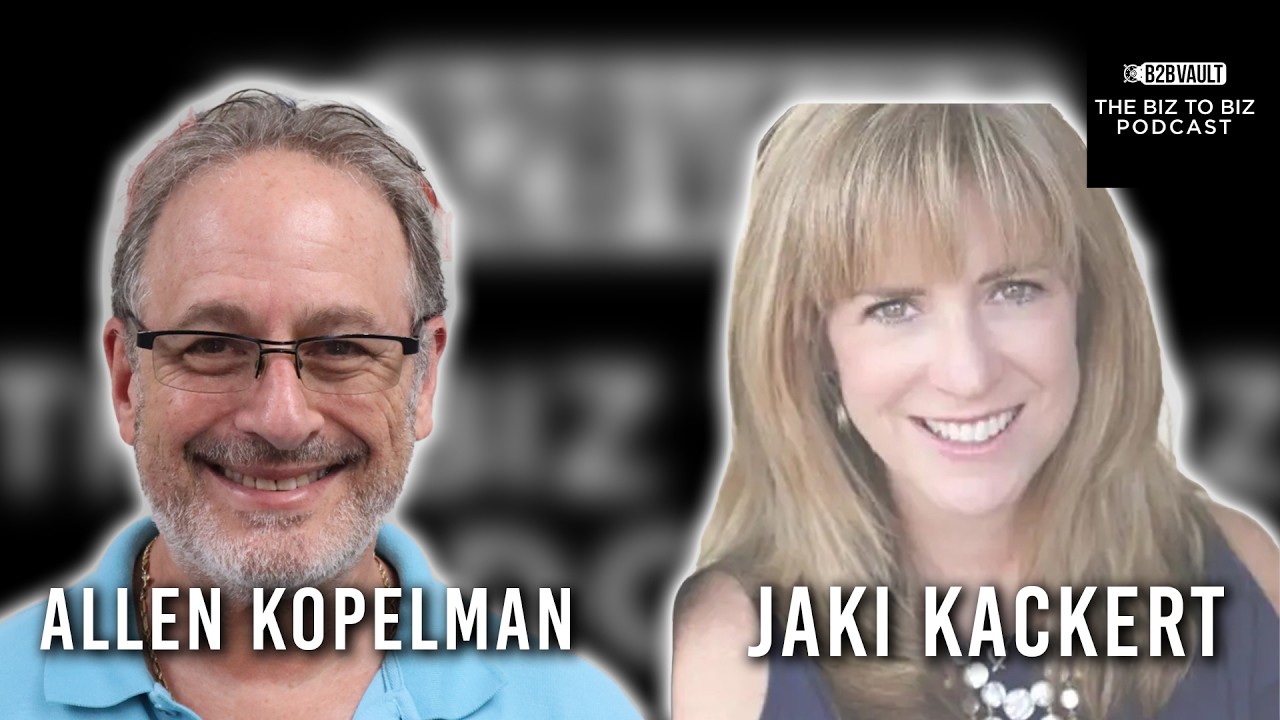
In this episode of the B2B Vault podcast, host Allen Kopelman interviews payments‑marketing consultant Jaki (Jackie) Kackert. The conversation begins with Jaki’s extensive background in marketing for Fortune‑100 brands and her shift to the fintech/payments space, where she now advises small businesses, ISOs, and agents. They discuss the industry’s transition from hardware‑centric point‑of‑sale systems to software‑driven fintech solutions and how that shift reshapes sales and marketing strategies. A major focus is the growing importance of personal branding versus corporate branding, especially on platforms like LinkedIn, where Allen’s experiment showed a 500‑fold increase in engagement when he emphasized his personal profile. Both guests stress the need for consistent, multi‑channel communication—newsletters, Google Business Profiles, social media, and regular webinars—to keep merchants informed and loyal. They differentiate true AI from simple automation, noting that AI can accelerate tasks (design, copy, research) but still requires human direction and industry‑specific data. A practical tech stack is recommended: HubSpot, Canva, GoHighLevel, Hootsuite/ManyChat, and Google Business tools, emphasizing low‑cost or free tiers and the importance of integrating existing CRM capabilities. The dialogue also covers challenges in customer support, the value of the Green Sheet’s “Street Smarts” column for industry education, and actionable advice for agents juggling many roles: prioritize a marketing plan, leverage existing tools, assign responsibility, and maintain a regular content calendar. Throughout, the hosts blend anecdotes, industry history, and forward‑looking recommendations for marketers in the payments ecosystem.
Chapters
Welcome to the Biz to Biz Podcast, your number one source for all business news. Hey everybody, welcome to today's episode of B2B Vault, the Biz to Biz Podcast. We're doing a special green sheet edition today and talk about payment processing and marketing. And B2B Vault is sponsored by Nationwide Payment Systems and our new gateway and smart invoicing tool called NPS One. If you want to see a demo or watch a webinar and learn about our products, go to nationwidepaymentsystems.com. Today's guest, Jackie Kackert from Kackert Marketing. And welcome to the show, Jackie.
Thank you, Allen. It's so great to be here. Thank you for inviting me.
So tell us a little bit about yourself and Kackert Marketing.
Sure. I have been in marketing for quite a long time. My experience is vast and varied over the years. So worked with large corporations, a lot of Fortune 100, 200 companies, from Disney to Fiserv and to Intuit. And most recently, in the last decade or so, took the directive of taking my, my experience on the road as a consultant. And so have been working primarily over the past decade or so with small businesses and really focusing mostly in the payments industry and in fintech, but also helping small businesses market their products or services out to their clients or prospective clients and really kind of keeping the small guy in mind when trying to make robust marketing services with the little guy in mind. So that is, that is where I've been for the past long while.
So, okay, so for the last 2 years I was doing a column in the Green Sheet called Street Smarts and wrote columns, and now Jackie is taking that over, and I think your first couple columns have come out. And, you know, I was— I'm gonna tell my little Green Sheet story, and then you can tell how you found the Green Sheet. Great. So I got into payment processing. I worked for a company in Miami and had to go get some equipment. There was some sitting around the facility, and the guy who ran that company, Riyad, who later opened JR's POS Depot. Do you know?
Oh yeah.
Yep. So I met Riyad and he handed me two copies of the green sheet. And he said, you look like a smart guy, you should read this magazine. And it was a thin magazine. Today it's electronic, online only, but it was a thin magazine on green paper. And I started to educate myself about the business and figured out how to start my own company. And I always tell Riyad, it's all his fault. So shout out to her. To Riyadh. He sold his company, but his son is still in the business, and his sister worked for the people that took it over. And then later, at some point, you know, I remember Paul Green wrote some books about payment processing. I read those, and I got to meet him one time, and we— he actually was trying to— he coined the terminology MLS merchant level salesperson. And, um, you know, today that's still being used, the Merchant MLS. And, you know, he tried to start NAOPP, which was going to be an educational and sort of a trade group slash organization of agents, you know, to kind of say that we all belong to this group of professional payments agents, but that never like panned out to, to do anything and fizzled out. And then later the ETA came along with the CPP program, which I'm not a big fan of because they don't really promote it so that business owners know what a CPP is. I wrote an article about that, the great G, and, um, you know, my focus when I wrote The articles was about all different things about marketing, personal branding, what's going on in the business, where do we see like shifts and like what, you know, what merchants are buying and things like that. So what, what's your story about how you found The Green Sheet?
Well, as, as working in the business, and I really started in this business with Card Service International, so came on to Chuck's organization at the time in, in a marketing capacity, and my introduction with Green Sheet was as the marketing— one of the marketing managers is the advertising campaigns that we had. And that was obviously the Green Sheet was, um, one of the highlights and one of the magazines that we, we really did strive to, um, have marketing in because the fact that it was so well respected within the industry. Um, you know, that green, that green magazine that came every 2 weeks, um, was well read by, um, everyone we worked with. Within the industry, the merchants read it, the ISO, you know, MLS agents, resellers as they were called at the time. Everybody really thought highly of the content in the magazine and it was well respected. So our advertising campaigns were prominent in, in that magazine. So got to really understand, learn about the newspaper, you know, about the publication and the people behind it. And then just as I stayed within the industry, working for eProcessing Network, working for— as CardService morphed into, um, you know, Fiserv and First Data, and then back and forth through those organizations, um, just keeping in touch with folks. And then working for eProcessing Network and Steve Sotus and maintaining their advertising and their awareness to the reader, just really Got to do more writing and ghostwriting for particular people for eProcessing Network, for Mark Beauchamp, who's in the industry, and other, other entities. So just built that relationship. And when the time was come for me to move on, when eProcessing Network got sold, and to just maintain my, you know, a foot in the industry, um reached out to, you know, the people at The Green Sheet to see if there was any opportunity to offer articles occasionally. And that morphed into being given the opportunity to take on the Street Smart column after you stepped down. So it's been a long time with The Green Sheet and again, well-respected publication in the industry.
It is the oldest payments magazine. It was the original Payments Magazine. There's been a few. There was ISO and Agent.
That went away. That went away.
Digital Transactions.
Transactions.
Yeah, but that's more like very high-level kind of stuff. The Green Sheet mostly focuses on like the, the ISO and the agent community and things that, that they need to know about that's going on in business. So let's dive into what drew you to marketing around payments. Was that just an accident or something?
It was a little bit. I was in consumer products for the most part prior to financial services, and the opportunity came after I was leaving Disney and their, and their consumer product sector to be a part of Digital Insight when it was a first startup. So, Digital Insight was web-based home banking, right? At first, they offered web services and then home banking. DI has then since moved into— they were acquired by Intuit, then they were sold off, and then they were bought again, I think, by NCR. So, working in a marketing capacity with credit unions small banks to offer home banking services and products, cash management services and things like that. So getting my feet wet into the financial services sector and getting to understand more about credit unions and working for Logix after that, following and being in that industry helped me when an opportunity was given to me to move over to card service. That's when I stepped into the payment sector and have been been involved in that since then.
So, okay. So like when it comes to, you know, obviously marketing and advertising, right, many years of experience, right?
And I think, and I think the best thing, I mean, my, you know, if you look at my resume, it's varied, it's kind of all over the map. But I think the main thing comes to is marketing, you know, helps tell a story and, and you have to, you have to find ways to connect with your with your clients, with your target audience. Um, and you have to be able to tell the story uniquely and set yourself apart, but also tell it in a way that's easily understandable by the audience. And sometimes that audience isn't technologically, um, motivated. They don't understand the nuances of technology, but they want to understand how it applies to them and how it can help them and provide them with something that they need. And I think Being able to tell that story and market to them and market to an audience is kind of the string through, you know, the continuity between all of the different markets and industries that I've been involved with.
So yeah, definitely, like, you know, marketing and advertising has changed. Before I was in payments, I started this company in 2001. Prior to that, I was in the restaurant business. Yeah, and you know, it's a whole different animal today. When I was in the restaurant business, you know, presence in the Yellow Pages, newspaper advertising, you know, trying to get PR into the— I had a PR person trying to get PR into the newspapers and into the local magazines and things like that. And today it's much different. We're dealing with a digital landscape. We're dealing with social media. I mean, this is all like, you know, things that popped in over my 30-plus years of owning businesses, right? And then now we have AI on the scene, right? And you know, where are people going? Do they go to Google or do they go to AI? Where, where are they finding out about everything? How, and how can people You know, I always tell people, you know, you can do so many things with AI to make your life easier and do things really fast. Someone said to me the other day, they go, how do you deal with all that throughout your whole day? And I was just on the phone with them. I was like, here's an example. I have somebody coming on my podcast in a couple weeks and they wrote a book. I'm like, I don't have time to read this whole book that this person. Just, it's a really, really, really great subject, and I can't wait to interview this person because it's all about AI and how people are creating synthetic identities. And it's going to be a great conversation because I talk about it a lot with people. I— it's a huge problem in our industry right now. And it's— I just talked to somebody who said the card issuing side, and they have the same issues on their side. And I talked to a person who does loans, and they told me it's a problem for them too. So, you know, it's, you know, there's the good and the bad.
There is.
So when it comes to, you know, when it comes to like things that changed in marketing and advertising and ways to get the word out today, you know, I've always, you know, Recently, like a lot of algorithms of what's online has shifted away from like the company per se and to like personal branding. What's your thoughts on that?
Um, you mean personal branding from a company perspective or?
Well, from a perspective of when somebody's, you know, are people going to the, and I can tell you, I did this experiment on LinkedIn. Do more people go visit the Nationwide Payment Systems page and the B2B Vault page, or do they go to the Allen Kopelman page? I can tell you that I did it. We posted like crazy on my company pages. I switched it all over onto my page, and we, you know, 500x what's going on.
Really?
Okay. Because people want to— they want to connect with the person who's running the company.
I think that's important.
Unless you're like a huge company, like a Stripe, right?
Right. But I think, I still think that it's very much woven together. I mean, there's still the leaders of those companies drive people's impressions of that company. And so you can't really disconnect when it's always astounding at how many leaders still haven't been up to date on maybe what not to say or say in the public eye and how that might come back to bite them and what kind of damage control a company does past that. So, I mean, you look at our— the people that are no longer autonomous or no longer anonymous within those companies. You can't— your impression of a company is very much. You know, look at Meta, you know, and look at how much people may or may not like Mark Zuckerberg, um, and how he is so closely tied with the identity and the brand of that company.
Um, well, you have to kind of interweave. Yeah, what you're doing, you know, because people want to know who's running the show.
I think people are looking to have connections, and, and it's not just a faceless organization. There are the people behind it, and I think the people behind it, you know, no matter what level you're working with, you know, the customer service reps or the people on the phone. I mean, there's, there's a need for connection. And I think, you know, because social media is so intricately involved nowadays, you just, you can't just have an anonymous brand. You, there's a, the people behind it are what going to help drive a person's impression of that brand, but also in get them buy-in with, I want to be a part of that brand as well, because I identify with those people. So, um, that's my take.
Similar. So yeah, we have similar outlook on that and both are important and you need to pay it. And if you're not paying attention to both of them, it's, you know, could be making a misstep.
So, right. I think your, I think your brand and your identity has to, has to be in line with the people behind it. So the people behind it have to have the same ideals and the same kind of, you know, just how they live their life as the people that, as the company. So, you know, I mean, you know, look at Disney in the old days, you know, Walt Disney was synonymous with the brand of Disney. You know, that has grown over the years. But, you know, when you have a really strong leader, that the ideals of that brand have to be congruent with the ideals of that person. So.
For sure. So when I was asked to do Street Smarts, you know, I wanted to, you know, just impart 25 years of wisdom out to the people working and, you know, let them know what I was thinking about, what things I saw we were struggling with in our business. And, you know, I wrote a couple of articles couple of articles about— a bunch of articles that were surrounding the movement away from the credit card machine to software and to fintech, and how that we all— that as a— as, you know, sales reps, companies, ISOs, everybody needs to, you know, take, you know, get on this journey because You know, when I talk to sales reps and they're like, oh, I lost another client. Okay, what happened? They bought a— they bought software. They bought a point of sale. They bought software. I'm like, why aren't you selling software? And then they tell me it takes too long. I'm like, well, you know, would you rather— you know, you, you're locking in the longevity of your clientele. And that's kind of, you know, and then I talked to that like marketing and things people need to have, like business, you know, you need a paper business card, you need an electronic business card, you need to be able to communicate with people on multiple ways, whatever that is, phone, text, email, WhatsApp, you know, having Zoom meetings, you know, right? And, and, and being able to run demos for people, you know, not that are just down the street, but they could be in another state, right? Being able to do all these different things. And, you know, that's kind of like what I tried to impart on people. Like, where my— you know, we started selling software a really long time ago. We just saw too many players buying up all the point-of-sale systems, stealing. I talked about this too, the great residual robbery, where these companies came in, bought up all the point-of-sale switched all the credit card processing, took money out of our pockets. And, you know, the only way to fight back is to, to sell software and come, you know, partner with companies who own the software and own the, own the processing. So it's one unit. And, uh, right, you know, that's what we've, we've kind of done. And, you know, that was like what I was teaching. So what, what are you, what are you thinking about? Like, what are you gonna impart on the sales and market, the MLSs, the ISOs?
Right.
Like, what are you going to impart on your street smarts journey?
Yeah, well, as I started to, you know, what are the tools that, you know, one from a marketing perspective, and I would imagine eventually it'll morph more out of marketing as to, you know, from a sales perspective, but they go hand in hand, obviously. Marketing is you know, what can they use and, and what can I impart in wisdom to them and remind them of maybe the tools they have but they don't use consistently? And I think that's the key for a lot of, um, a lot of these, or, you know, the agents and, and organizations, is that, you know, what— how do you prioritize marketing? How do you do it when you're wearing so many other hats and you're trying to keep up with, you know, technology that's just going at such a fast pace. How do you implement a marketing strategy and stick to it? And I think that's probably the biggest thing is just sticking to a plan, sticking to a strategy that you've built or had someone build for you. How do you maintain marketing communications? How do you— as you just said, you know, how do you keep your clients informed so that they aren't just It's not an easy way for them to just move off to a different provider. You know, are you giving them the information that they need? Are you giving— are you letting them know when you have the programs and the software and the solutions to help them run their business effectively and to reach the markets that they're, that they're trying to reach? You know, what, what is your strategy to, to get the word out to those markets that you're that you're entrenched in. But it's really just the consistency and does not— you can't just do social media once a month. You can't send inconsistent communication and emails, and you can't offer a webinar once and then never do it again. It's just that. And I know that the urgency of business is always going to be a priority, but there has to be someone on your staff that can take the time to do a consistent messaging and marketing to your clients so that they know what you have and they're not— they don't move off because they— oh, I didn't know you guys had that. Um, and we used to see that all the time. I mean, merchants just, you know, I mean, if you're dealing with merchants, whatever, whatever industry they're in, they just want their, their product to work, right? They— but if you don't talk to them and communicate with them, they won't know what else there is to make their lives easier. And there's a lot of add-on programs that can help supplement the business and make it easier for them. And that's really what you're trying to do is make it successful and easy for them so they can just do their job. But if they don't know and you're not communicating with them, then they're left to look for other resources. And it's easy to— and if it's too easy to move off onto someone else, they're going to do that. We see that in all aspects of life, right? I mean, yeah.
I mean, I tell people all the time, I've told told even like sales reps, I'm like, you need to have a newsletter. Yeah, send it out either once a week, once a month, twice a month, some kind of schedule. And you need to have a presence on social media, you know, for you and your company. And it's, you know, Facebook, maybe it's Facebook, but it has to definitely be like LinkedIn. And because when someone goes, you go into a bit, if I walk in a business and somebody else walks in a business and we're selling almost the same thing to the person, they're going to go on Google and they're going to put in your name. They don't find anything. They're going to be like, man, what is it? You know, should I be doing business with this person? And I also tell people the importance of even though, like, you're an agent for XYZ, you're an agent for 3, 4 different companies, right?
Right.
You don't need to have 3, 4 different business cards. Name your company like we named our company Nationwide Payment Systems. We had a web— we have, you know, we have a website, Nationwide Payment Systems. And with AI, I mean, you can literally spin up a one-page website in a day, right? Right.
And videos, right?
And have a dot— a real— because if I go in somewhere and they say, oh, Allen at Nationwide Payment Systems, .com, right? And then you come in and you're Billy Bob at Gmail, they're gonna go, what is this? Why is this guy have a Gmail? Like, you got to have a professional business, you know, right thing for your business. You just have to do it. And people like— I was talking, uh, I was interviewing a guy on my podcast the other day and we were talking about, you know, he started a business and you know, hiring your first employee and what are you going to do and how are you going to do things. And, you know, these are things that, you know, I tell sales reps, I go, you're making money, you have to invest in your business. And a lot of people don't— I don't see them doing that. And I don't see them looking at like technology and going, okay, technology's changing. What do I need to do to keep up with technology?
Mm-hmm. Yeah, I mean, I've still seen, you know, agents out on the street and, you know, trying to, you know, going into a small business shop during like 1 o'clock in the afternoon and, you know, and ask and hoping to get someone's time, you know, to talk to them about, about, you know, payment processing. And it's— I mean, kudos to them for being out on the street. That's hard. Um, but You know, not, not knowing the, you know, not really gauging, you know, your audience at the time, you know, or incorrectly reading the room is just, you know, that will leave a lasting impression longer than you would like. And how to do that effectively and get to where merchants are, right? They're inundated, you know, I mean, you know, we've all started our small business, you know, we get our license and then instantly how much, you know, how much information is do you get in the mail still and deluged with, you know, emails and calls and mail, you know, with like, oh, Kakarot Marketing, you know, use us, use us, use us. And so it's, you know, how do you, how do you, you know, how do you have your name float to the top in such a really saturated, you know, industry?
And the other thing we battle are companies that just have like, oh, click here, fill this out and get your start processing a credit card. Yeah, we can't do that in our industry. Well, we can. We've built something now where we can literally send you a link as long as we know what pricing plan you want.
Right.
Literally, we just get the name of your company, your DBA, your email address, your phone number. That's literally all we need. We put it in the system. We know which pricing plan you want. You click off the equipment or the gateway. And send it to you. You fill it all out yourself. You upload, you know, we tell you upload the documents. If you don't, then we call you. Hey, we need a voided check and a driver's license or whatever else we, you know, we need from you. But I think, you know, more people need to just, you know, go, you know, go. We have to get more electronic. We might not be able to approve people as fast as these other companies, But we have to get more electronic and we need to get, we need to get on the program of software because software is changing everything. People want software, they want to see information, they want to get gather information, they want to get the cust— you know, they want to have a build a customer database. They, they need these things in their business, right? I think You know, that's part of the things I was preaching when I was writing was all of these different, you know, things going on in the business.
Yeah. And I mean, yeah, there is, and it's just fast moving and, you know, and again, if you're a small business and it's, it's just, how do you make sense of it all? Right. You know, how do you get a really good understanding of what, what you need for your business? And it seems, I'm sure it's overwhelming. You know, so how to simplify that, that communication and simplify that process to someone that just wants to accept credit cards, you know, at a competitive rate. And they just really want the system to work. It's like, I don't, you know, it's like for me, I don't ever want to have to call you. I just want my system to always work. I want my phone to always work. I want my internet to always work. Um, so I don't want to have to call you, but if I need to call you, I want that process to be simple. And, you know, that's always so— I mean, you know, for a lot of people it's like, how do you distinguish yourself in this game from, you know, someone that's, you know, sign up here now and we'll get you started, um, and you'll be up and running. But then when there's a problem, are, are they there for you, um, you know, to help resolve those issues?
Yeah, that's a major problem in the business of, of, yep, with these bigger companies that don't have telephone numbers. I mean, listen, you have a problem with Facebook, someone steals your account, you can be ripping your hair out, send them emails, right? There's no one to call, right?
There's no one to call anything, right? You get, you get those FAQs on how to do it, and then, you know, at the end is like, was this FAQ helpful? It's like, no. So, you know, thumbs up, thumbs down. Hmm. So, um, Yeah, there's a lot of services out there that don't have, you know, an in-person customer service. And I think if I, if my, if I was a merchant and, and I'm not getting paid, um, because of that, or, you know, I, that's, that's going to be a sore subject for me.
Um, so, so let, let me ask you, I always, I love to ask people about AI, right? Yeah, I'm a big, you know, I'm a big I don't know, my friend— I'm a big nerd when it comes to different things. Like, I was— I nerded out on crypto and Bitcoin.
Oh yeah, yeah.
And did a bunch of stuff around that. And we actually processed millions of dollars of cryptocurrency before the tax laws were changed. And, you know, now there's big talk about stablecoin, and we won't get into a whole stablecoin discussion because You know, it's, it's not going to go anywhere until they change the tax laws, and people don't even understand that. So don't run out and buy stablecoin and use it because you'll have a surprise when you get the tax bill from Coinbase. Um, so the, the thing like AI, like there's all this AI marketing, AI leads, but when I start to look at some of these companies Because I, I like to call, I like to call them because I want to educate myself. Like, what is this? What are you guys doing? Or I see a company that was called XYZ, now it's the same company but instead of .com or .io, now all of a sudden it's .ai, right? Okay, you guys do something different or you're just taking advantage of the whole AI thing? And is it AI or is it just automation, right? There's a difference between automation and AI. There's a lot of people trying to sell AI, but they're really just selling you automation, right?
Um, you know, I, I use AI as, as I can, as much as I can. Um, and, and for me as a marketer, I think it just, again, it helps simplify, it helps reduce the time, the amount of time that I'm working on a task. So it's not that I'm using it as a replacement, but I'm using it as almost like a partner. And you put something in the systems that I use, the tools, the marketing tools or the design tools that I have. Sometimes it's great and sometimes it gives you something that's not useful at all. And I think you still have to understand what you want and what to tell it in order to get the results that you need. And it may not always work. I mean, for design, you know, if I'm trying to do a design, um, with an AI tool, sometimes the results, they're just not there. And that might be, that might be something that's, you know, a limitation of the tool I'm using at the time. Because the tool, you know, if you're looking to use it in an industry that's well known, or retail, or a com— you know, some kind of consumer product, you might get better results. But if you're looking in an industry that is a smaller industry and doesn't have as much information in those engines for learning, then you're going to get different results. So, you know, and sometimes you can spend a lot of time trying to fine-tune something in AI and it's just not going to work. So, you know, it's really— and then it's relying back on your experience and partnerships that you have with real designers or real writers or, you know, people that have that experience that's just not in the system at the moment. And that's, you know, again, it's limitations sometimes of the industry. And not to say it won't get to that, you know, it won't get to a point of, of, you know, real proficiency. Um, but I don't know if it's quite there yet. And, you know, especially in some industries and, and particularly what I'm finding in the payment industry.
Yeah. There's not a lot of, you know, you have to educate it. Like, I, I've educated like the AI that I use by, yeah, upload giving it my website and telling it things about the company, and then what, what am I trying to do, and this and that. Now it knows. So if I ask it to— okay, I need a— I need help with this blog or whatever it is that we're doing, it works. But that took a lot of time to get to that point.
Yeah.
And if— when, when you look, you know, and like I was telling you, this guy wrote a book, so I said, oh, I need to— I need a synopsis of the book, and some questions, like 10 to 20 questions to ask that person, right? And it basically spit it all out for me. I was like, okay, great. I knew the premise of what that person was talking about, or I had the vice president from this big company on and I wanted to know more about him and the company, and I just put it in AI. Hey, what would be some great questions to ask this person about this company, you know? And it gave me some good ideas because, you know, it's 30— we're talking for a few minutes and, you know, you don't— it's not like we're— it's a 2-hour podcast, you know, it's 30, right? About 30 minutes. So if you were going to give people tip, you know, agents or ISOs or whoever, business people that are listening to the podcast, you know, 3 to 5 things about marketing and advertising, or just one or the other What would be those, those tips?
I think look at the tools that you already have and look at who you have in your organization that can use those tools. If you don't have a marketing person, who in your organization has the best ability to utilize the tools you have? Because there's, again, you know, if you have sales, if you're using like a CRM program, there's already AI tools built in it, right? There's already systems. If you're using other, like, you know, engines for design or engines for, you know, your advertising strategy, or, you know, a one, you know, a conglomerate. I don't want to give names, but, you know, like a Hootsuite, those kind of things. If you're using those types of engines that have those tools built in and can give you the— and have everything on the back end to help you organize it, who can, who can help drive that? Um, you know, do you need a third-party person, you know, like a marketer, like a consultant, to help you at least build your strategy, and then you can manage it from there? Do you even know what your strategy is? Um, it's, it's kind of building, setting the stage of who you are and what are the important parts that you want to market. It's knowing your audience. It's using the tools that you might have from a CRM, your customer database, everything that you already have in place, and then, and, and how to use, you know, your Meta tools. You know, there's— if you're a business, you have the Business Suite already in Meta. You don't have to go out and buy things. I'm always looking to save money for— and maybe that doesn't make me, you know, the richest marketer in the, in the business.
You got to be crafty, and you gotta—
you have to—
you gotta try to do things. I don't call it on the cheap, but you got to look at like, okay, you know, what does this tool— what's inside this tool I'm already paying for that I can use? And maybe there's new things in it that you haven't looked at yet, right?
Or you can add on. I mean, you know, like HubSpot is such a robust engine.
Um, expensive though.
It is, but there's a free— there's a free version, and maybe you can add on to that. Maybe you can get used to using some of those tools at a low cost, and then if it's, if it's applicable to your business, how do you add on to it? Um, you know, Canva's inexpensive. Um, those are all tools. Um, Canva is a— is— I, I'm not, I'm not here to sell Canva, but the cost of Canva is so price effective for what you get out of it. Does it have everything you need? Maybe not, but combined with the, you know, the marketing tools, if you have Mailchimp or Klaviyo or, or any of those engines and Constant Contact, you know, how can— and you can use those all together. They all work in cooperation with each other.
Yeah, we use something called GoHighLevel and it literally can do emails for you, customer database. You can even build websites in there, although we haven't really— we don't really do that. There's forms in there, so you could have form fillers that go into a email sequence, right, that people fill out. You can do a bunch of different things. There's a tool called ManyChat, and GoHighLevel keeps adding things on. Like now it can post your social media for you. Nice things like that. So you can do your social media, put it in GoHighLevel, and then schedule all the posts. You don't have to like go, oh, I need to post something today, I need to post something tomorrow. You can build out 2 or 3 posts for the week and then stick it in there and let it post it out on all your social media.
Yeah, that's— I mean, you know, I use Hootsuite for that. I mean, there's so many tools, and even Google, if you have a business account, you know, you can build templates in even their email function, and you can customize templates within that, that system. And, you know, and they have all of the AI tools to help, you know, to help to really reduce the amount of time. They'll give you suggestions. Everybody, everybody has an AI component built into that to help make, you know, writing something or creating something a lot easier. And, and time-wise, you know, it's a good saving.
So you mentioned Google. One of the things everybody should have, a Google Business Profile. Yes, you're home-based. Yep. You don't have to put your address in, you just can put your city and your phone number. So yeah, everybody should have that if you own any kind of business, whether you're in the credit card processing business or any other small, medium-sized business, that should be one of the first things that you set up.
Yeah. Yeah. I mean, there's just, there's just so many tools that are out there. They're inexpensive. You just have to know, you know, working with a consultant to help identify what you have and how you can make it work for you, how to use everything in conjunction with each other, and then to just build a strategy and a calendar so that you really are just, you take a lot of that work off your shoulders from a day-to-day perspective. Like you said, you know, you can go in and use your scheduler, you know, you could schedule out a few weeks and, and it might take you an hour or two a day or a few hours a week, but you can build a strategy. And just maintaining consistency, I think, is where most people fall short. It's like, oh, I have an hour this week, and then I forgot next week because I don't have time. And then you lose that momentum and you lose that that continuity, um, and then you're off people's minds, and that's probably the worst place to be, is out, you know.
So that's today's podcast.
Thank you.
Dove into everything you wanted to know about the Green Sheet and street smarts. And if you, you're in the business or you just want to learn about sales and marketing, you know, pick up— go to greensheet.com and you can click on Street Smarts up on the top navigation. I forget where it's under. And the columns go back for probably more than a decade. Yeah, been lots of people that wrote Street Smarts columns, and you can read mine, and you can support Jackie with her new column. And I hope everybody enjoyed today's podcast, B2B Vault. Follow us on Apple Spotify, YouTube, LinkedIn, Facebook, wherever you want to find the podcast, we're there. And thank you to Jackie for coming on the podcast today. And a shout out to the Green Sheet and the team over there, Dale, Kate, and Laura and the rest of the gang at Green Sheet. And we appreciate you guys. Peace out and carpe diem.
Thanks. Thanks so much, Allen Kopelman.
You're welcome.
More from Allen



How B2B Companies Can Turn YouTube Into a Lead Generation Machine | Featuring Samu Kovacs


How AI Is Transforming E-Commerce with Zero Code | Kumar Senthil, CEO of Firmly



Dre Baldwin on Discipline, Leadership, AI & Business Success | The Mindset Every Entrepreneur Needs

The Same Skills That Made Me a Pro Athlete Built My YouTube #podcast #entrepreneurship #success

