Modern Payments, Massive Impact: The Andrew Jamison Story
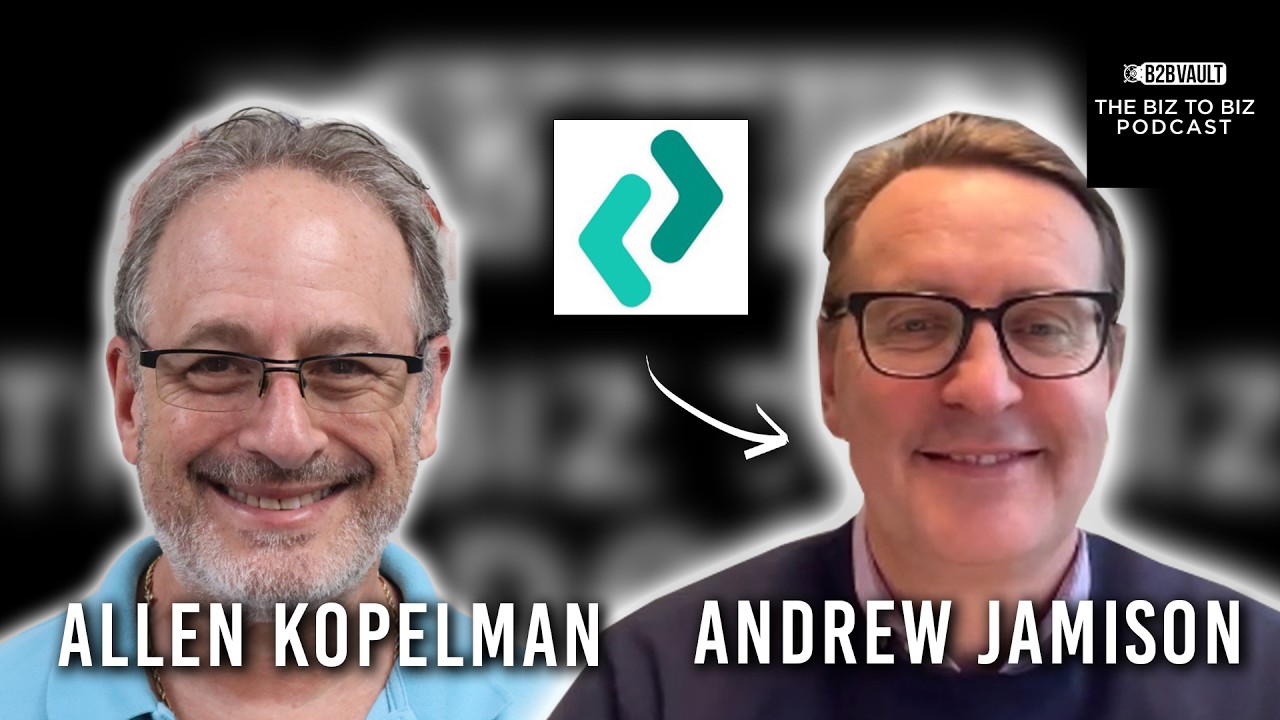
In this B2B Vault podcast episode, host Allen Kopelman interviews Andrew Jamieson, CEO of Extend (paywithextend.com), about the company’s virtual‑card platform that lets businesses shard a single corporate credit card into multiple project‑ or vendor‑specific virtual cards. Jamieson explains his background in SAP and American Express, the founding of Extend in 2018, and its growth to 8,500 customers handling roughly $20 billion in spend. The conversation covers how the platform automates expense capture, reconciliation, and reporting, reducing manual effort and fraud risk. Real‑world use cases are discussed, including construction firms, healthcare staffing agencies, franchise operators, and logistics companies. They explore the impact of the subscription economy on B2B card spend, the role of banks versus fintechs, and the importance of seamless software‑bank partnerships. Jamieson highlights AI‑driven spend insights, natural‑language reporting, and the move toward no‑code configuration. The episode ends with a look at future growth—targeting 20+ bank partners by 2026—and provides contact information for Extend.
Chapters
Welcome to the Biz to Biz Podcast, your number one source for all business news. Hey everybody, welcome to today's episode of B2B Vault, the Biz to Biz Podcast, sponsored by Nationwide Payment Systems and our new product NPS One and our NPS One smart invoicing platform to help you make more money, get paid faster, and be more automated in your business. And today We have an exciting guest. All our guests are exciting. I love talking about money and we're going to talk about business to business and a new way for businesses to manage their credit card transactions without switching their credit card, which sounded really cool. And today's guest is Andrew Jamieson from Xtend. Welcome to the show, Andrew.
No, thank you, Allen Kopelman, for having me on the show. Excited to have this discussion.
Yeah, so tell us a little bit about, you know, how you started Extend and where you guys are today.
Yeah, absolutely. Look, it's funny, I started my career really in software, spent 10 years working in and around SAP, and then switched over to work at American Express for a dozen years. And really Extend is a combination of both of those things, right? There's a software element to it, there's a payments element to it, and in a way sort of uniquely put me in a position to be able to do this. I got to this a little bit by accident. I swore I'd never be an entrepreneur, largely because my father was an entrepreneur and I was like, no, I'd rather do what my uncle does, which is work in big corporate. And lo and behold, here I am as an entrepreneur. But sort of life, life situations sort of get you in this place. And largely for me, it was about figuring out that I could go and solve clients' problems faster and do it right. More efficiently outside of a big organization. And so that's how we got to Extend. And we started the business around 2018. And today we've sort of gone through a number of rounds of financing. And here we are supporting some 8,500 customers on our platform. And over the course of the last few years, we've helped them, right, with processing or generating some $20 billion in spend volume on the virtual cards that are created on our platform. And I would say most recently then we've also now launched the full spend and expense management suite of a solution to better help businesses frankly manage the spend.
Okay, so somebody wants to, somebody's got like an American Express card, we'll use an example, and then they want to marry that up with Xpend. How does that work?
Well, so that was our first thing that we want to look at is I find so often today The challenge with software is it takes resources, resources either on the sort of bank side or resources on the client side. And guess what? If you're a small business, if you're a middle market customer, the one thing you don't have is resources. And so for us, the way we got there was to say, actually, could I use the credit card that people have in their wallets? So can they pull out their American Express card? Can they come essentially to our application and sign up just with a credit card. And we're able to authenticate who they are. We're able therefore to credentialize them and say, okay, you can now use your American Express card inside of Extend. And within Extend, I'm effectively going to allow you to shard your American Express card into any number of virtual cards, right? With distinct limits, with potentially very distinct project IDs, assigned to those cards and specific general ledger accounts also assigned so that you help with automation on the back end, right? And so done with the idea of, hey, I share my card with 17 other people and then we have to figure out whose charges are whose. We're done also with, you know, even one central person managing sort of 200 different subscriptions, right? And now there's fraud on one of the subscriptions. And so guess what? You're now going to change your card in 200 different locations. It's really sort of helping businesses, right, stay focused on what they do best and let payments take care of itself on the back end through automation.
Yeah, I had a problem like that on my card once several years ago where one card got fraud and then I had to figure out how many companies had that credit card and switch all these bills over. Of course, I missed a few and you get that nasty email, hey, your card didn't work. Then you quickly change the card. Now I just have one card that's only used for bills and it's not used for anything else.
Yeah, that, then that's right. And so look, we have some companies we support that actually, because of the nature of their business, right, and how they procure things, may have a, you know, different cards now spread across over 250 different suppliers, right? One card per supplier, you know, very easy to reconcile. It also means that if they ever encounter fraud in any particular place, they switch out one card, not all 250 have to be changed out because effectively they've narrowed it down, right, to that card against that's assigned to that particular merchant. So again, saves a tremendous amount of frustration and certainly helps, right, as they try and close their books at month end.
Now, is there any like financing, additional financing going on with this, or this is just strictly the backend and then they're dealing with American Express or whoever? And paying their bill to them. You guys are not.
That's exactly right. We did not feel the need, right, to interject ourselves there. At the end of the day, we find customers trust their bank partners, trust them implicitly. And what we've seen is through highs and lows of financial crises and other different things, right, the banks are there. They're a steady anchor here. And we've seen others in the fintech ecosystem be a little bit more flaky depending on which way the wind is blowing. And so, you know, our view is the bank's the best place. They have the lowest cost of capital and therefore they can typically offer the best solutions over time. Where the banks we felt were looking for support was more in the area of like, well, help me with the right software experiences. Help me with effectively a suite of mobility and mobile apps, right, which are powerful enough that you can take these virtual cards and put them into digital wallets. They're powerful enough where I can send a card to someone simply because I have your email address and I can give you access to that card in a really secure way. Right. And it's limited for the period of time you can spend and how much you can spend. But it all happens seamlessly within our application and all that's just software and essentially in how we've piped into the infrastructure and ecosystem of the bank partner of that particular cardholder.
Yeah, I've seen a lot of the, uh, business banks like Capital One, Chase, um, American Express now, like, you know, where it used to be you had to pay your bill at the end of the month. Now they'll let you pick and choose different transactions. Oh, I want to spread this into 4 payments or even longer payments, and they have much lower fees than— it's not even interest related in some cases. It's just like $5, $10, things like that.
Yeah. And so, and you know, and you can use your points sometimes to do these different things. So I think that's the key is we recognize that, you know, the banks have the balance sheet to loan effectively. And so we essentially support that and try and enhance the use cases through which actually these companies could leverage that.
There's definitely, you know, in the B2B area, which I've done other podcasts about, business to business, and we deal with a lot of businesses that have businesses paying them, right? And we've got— we get questions all the time like, oh, this company wants to pay us using this virtual card system. What do we need to do? And I'm like, nothing. It's just a card. And they're like all freaked out about it. And I'm like, no, it's basically a card, and they probably have a card assigned just for your company. So that's just how they want to pay you, is with that virtual card. And they want you to send them a link, you know, which they never did before. They're, you know, some of these guys have been around forever, they're just taking the card over the phone. They want you to send them a link, right, so that they can pay the— they'll put in the card number and pay it. That kind of freaks out a lot of business owners. But I tell them, I go, this is the new— this is the new thing. This is what's happening. It's the This is a B2B 2025, 2026. And we see more business-to-business transactions on cards now. And it just continues to grow.
Yeah, the ecosystem continues to grow. And you have to remember, back in the day, right, often you'd also say to the merchant, hey, I want you to use this card. And by the way, there's extra fields in the point of sale where you can type in data, right? So an invoice number or a project number, and that was fraught with challenges, right? Number one is the person operating the point of sale was like, I have no idea how to do that. Number two is they often miskeyed, right, the information. And so what you do here by having essentially a virtual card creating for that particular scenario is when you create it, you actually add the data and the client knows particularly where that data needs to go. So the likelihood of getting it wrong is minimized. And so Then when it, when a card is used in a transaction, that data flows to that card all the way through. And so means on the backend, no one's having to touch that transaction. You can get to really automate it, right? And straight through processing of those expenses without people having to touch it, which means month end is just less burdensome for these businesses where typically you have few people in the finance department who play a multitude of roles between AP and AR and payroll and all the different things, right? So key to help them through that process.
Yeah, it's funny, you know, businesses really need to switch from like the old paper check and like sending a wire or sending out an ACH card is a much cleaner way to track things from, you know, from the buyer to the person, the merchant receiving the money. Right. It's a much cleaner way. Like, okay, we send our money. Over to them, then we have our reporting and our reporting is much cleaner. And at the end of the month, they're not sitting around going, who sent $28,000 to this guy? Who sent $40,000 to that guy? And the paperwork is all, you know, not clean. This makes it to be much smoother. And like you said, assign one virtual card to each vendor, especially when you're spending tons and tons of money, or to each subscription so you can keep track of all your all your spend and where it's going and where, how it's supposed to be allocated to advertising, to an expense, to this particular project, especially like construction companies and things like that.
Yeah, I mean, construction companies is a classic example, right? These sort of different companies buying lumber for different projects, different locations, right? And in that case, we have dozens of users, right, that are involved in this, but it's seamless. Right, to the merchant. You know, we have other use cases in healthcare, right, around sort of traveling nurses, right? These companies that help manage staffing for different hospitals. But every nurse, right, has to have their credentials verified. Right. And so in this case, we're talking about, you know, over 400 users and spend is like, you know, it's over $100 million, right, in spend. Imagine trying to do all of that manually., right, in a world where you have to drive automation so that you can get the nurses in the right place at the right time, right, to go and support, right, these different hospitals, right? It's unmanageable unless automation is really involved. And that's kind of where we're seeing a lot of value. We see a lot of value also across franchise businesses, right, where you're trying to make sure you can allocate costs to the right part of the franchise when you're managing dozens of franchises. You kind of need to have that piece pretty locked down, right, to make sure that you truly understand the cost of operating each franchise.
Yeah, it's, you know, it's, it's very complicated, like running a business and then running all the finances and doing all the accounting and all that. How do you see, like, do you see more like businesses that are buying from B2B companies spending more on credit cards in the future? Versus, you know, oh, I'm going to send you a wire, I'm going to send you an ACH, I'm going to mail you a check. Like, do you— how do you see this spend growing? We see it as a trillion-dollar industry that's basically not untapped from the card end.
Yeah, look, if you look at the US commercial card market, it's somewhere in the region of $1.8 trillion, right, already today. But the funny thing is, I remember from my days in the card industry, but then you sort of think I've seen recent studies, right, saying it's $57 trillion. I'm like, okay, we're at $1.8 trillion. It's embarrassing to talk about $57 trillion because clearly we're missing a trick here. But the reality is one major thing changed, right, with COVID It sort of like was also the birth of subscriptions, right, in terms of how, you know, we all sort of leverage software and pay for things at the individual level. And so Even Extend as a company, right? 65 employees, right? But if you take salaries and rent out of the equation, it's surprising, right, that over 65% of my costs are paid for on a credit card.
Why?
Because actually, you know, we stand our infrastructure up over AWS. Well, that's a subscription, right? We use tools like GitHub and Jira and Slack. Well, they're all subscriptions that are paid for on a card. And frankly, they help me putting it on a card because I manage like overcharging really simply and do it upfront. Right. And that's the key is I'm very much able to control how much is being charged across these different subscriptions. And so, you know, when you start talking about millions of dollars, it becomes really, really important, right, that you're really on top of this. And so, yeah, the business world has evolved. So to answer your question, oh, I think this thing continues to go. Largely because of this subscriptions side of the business. And if you're able to manage subscriptions at individuals' levels, you're also creating efficiencies for the merchant because they're getting— they can now automatically bill and collect at the individual level and not necessarily at the aggregate level. And so they are getting efficiencies actually baked into that particular side of the business.
Yeah, they definitely have talked about this dozens of times on my blogs, on podcasts. We even had somebody on here from a subscription billing company. And yeah, this— we— I call it the subscription economy. And we see all kinds of businesses, every kind of service that there is, switch from, oh, you buy this software for $2,000, to now, no, you're going to pay $200 a month for it. Like it's, it's turned into this whole subscription economy on a lot of things. I also think COVID made people more comfortable with things like Zoom and payment links. Like, okay, I'm gonna get this electronic invoice. I'm making a click and then I'm paying it, especially for your bills at home. And now I think it's transferring to the B2B side. Yeah.
Yeah. Yeah. And if you think also, you know, a lot of companies involved in logistics, right, as they buy, sell, ship and do all these different things, right? The ability for every one of these things to be on its own account means again, they instantly can reconcile, right, what was related to what client. And especially in a world where you're rebilling customers, right? You're having to rebill an end customer. So yes, you're collecting costs, but you have to reassign them to then go and collect cash. Right. And that, that happens across so many different industries, not just logistics, but it happened across digital advertising, right? You place adverts on behalf of any number of customers on any number of different mediums. Again, you need to be able to tie it back and say this campaign across, you know, this platform cost this much and I've reconciled it to the dollar. And by the way, beyond that, it doesn't go beyond the $10,000 you allocated for that particular campaign on that particular medium. And so you see the benefits flow through there in terms of how you manage those, those particular campaigns. And law firms, right? Law firms have to manage all sorts of different court filing fees. And again, at some point they have to reinvoice, right, for those filing fees. So how do you do that efficiently? How do you do it effectively? And with the recent mandate that says that checks are now being sort of pushed out, right, of the system as far as the government's concerned, they want to receive electronic payments. And so you're seeing boost, right, through these different initiatives.
Yeah, it's very interesting how, like, you know, they're trying to push like RPT and the FedNow and all that, although I don't think that's really caught on because I think that in the end businesses want to have this, this float, right, this float of their money because they're like, oh, I'm floating this money, you know. And I tell businesses this all the time. They go, well, I don't want to accept card. I go, well, you should accept card because right now you're paying, you're absorbing the cost of the float for your customer for 30 to 60 days. You can just take the card and let your customer deal with their bank on the float. You don't need to be the bank, right? From the business standpoint, don't be the bank, right? Don't be the bank. Let the customer use their bank relationship. And let them deal with paying, you know, floating the money, you know, to their bank. So, you know, you got to work with your customers. And a lot of times the customer not going to mind paying you 2% or 3% or 3.5% if you want to surcharge them or issue a service fee to them because they're also getting a benefit using these cards like you talk about points, miles, cashbacks. All these things we talked about. We have a client that spends $2 million with a— on— with one of our merchants. It's not the— that we started with the cardholder as the client to talk the merchant into taking card. And then you said to me, yeah, that guy's probably— the cardholder probably pays for all his vacations spending $2 million a month on his credit card. He's just flying everywhere and that's how people do it, you know. Yeah.
And I think what we have to recognize is one size doesn't fit all, right? I mean, you're alluding there to the concept of surcharging. I think it's just different use cases, the size of the customer, the amount of business they do, right? They influence, right, how a particular supplier thinks about being a merchant or not a merchant, right, on the credit card network, depending on some of these different parameters. And so I think this flexibility that we're seeing now is key, right? It's about tracking back to who gets benefit and how much benefit do they get. So things are priced appropriately relative to the relationship.
Right. Yeah, it's just there was a recent survey and said 35% or more businesses pass some kind of fee to their customer. It's kind of crazy. There was like a whole thing in Miami. Everybody's complaining that most of the restaurants in Miami add service charges to the bill. And where do the service charges go? And do they— and then they also want to add a tip. So it's, you know, sometimes you can— you don't want to fee people too much. Sometimes it's a lot better to absorb the cost and put that cost into your cost of goods, you know. But sometimes that doesn't work because there's fluctuating, uh, fluctuating prices with supplies and things like that. Today. But how do you see, how do you see like, like your company, like partnering with more and more banks? Like, how do you see that going in the future?
Look, I see increased pressure on banks to deliver on broader spend and expense management capabilities. What's happened, I think, is there's been some sort of more recent fintechs that have focused in on this space, right? They issue their own cards, they do the expense management piece, they start doing some AP things, starting some procurement things, all focused around one simple concept is saving money. And I think over the years, you know, banks have certainly benefited from having, right, credit cards in circulation, right? The lion's share of that $1.8 trillion sits with sort of the main banks, the core banks. And that's really a bet we've made is to say, well, that's, that's where the core business is. But I think what these fintechs have highlighted is that's all well and good. But as we go for more and more of a consumer-like experience, we expect the technology to work a certain way. And if I'm a small business, I expect it to work this way. If I'm a mid-market, that way. And if I'm large, that way. And you can't blanket them with one solution, right? Because either you're giving the small business a large market solution that assumes you have 27 people in finance, and that's just not the reality. And so I think, you know, we're going to see a real growth here because banks have come to realizing that they'll lose customers if they're not able to provide one seamless experience. It's not good enough anymore to give your customers a sort of piecemeal and broken experience where you can see your card transaction data in one application, you can issue virtual cards in a second application, right? And you can maybe issue a credit card to another employee in a third application. I think the world has sort of turned around and said, no, no, no, there's efficient solutions out there today And if you don't evolve, I will switch. I don't want to switch because I'm very loyal to my bank because my bank supports me in so many different ways, right? Around lending, around FX and all these different things. It's like, don't force me to switch. And so the pressure's on now for the banks to react, to deliver. And so we're seeing really a growth in partnerships across, right? Both the card networks, but also on the processing side, the issuer processor side of the world. And really a desire with the banks to really collaborate to sort of bring that best-of-breed experience, right, to their customers.
Yeah, it's interesting. I went to a banking convention a couple of years ago and I was talking to a lot of banks there and there was all different kinds, you know, large banks, there were state banks, regional banks, credit unions, and all these different types of banks. And I was asking them, Well, what type of, you know, because they invited me there to speak about payments. I was like, what problem are you guys having with your clientele? And they just said, you know, the fintech world is just invading like their customer base and invading their customer base. I was like, how? And they were like, our customers are going to Stripe, Square, PayPal, QuickBooks to do their credit card processing, not doing it with us. And I go, because you don't provide them with a link. That could— they can just sign up for credit card processing. I can show you how we can do that for you. And they were like, huh, what? They did— they're just gonna get around— they can't get around this like whole fintech thing, right? And, and the same thing on the card side. They're seeing their customers not taking their card and going to these fintech card companies with those— with the virtual cards like you were talking about.
Yeah, and I think, you know, it's happening on both sides of the house, both on the merchant side, but also on the card issuing side is kind of software is becoming a critical piece here, whether it's embedded or not embedded is kind of, it depends on the use case. But you're starting to really see this need for this whole thing to work seamlessly where finance and software work hand in hand. And so it's actually not even just a two-horse race. It is not fintechs and banks. It's actually fintechs, banks, and now software companies are getting in the game, right? In the case on the, on the sort of card issuing side, you've seen recently some acquisitions that have happened here, which basically says these software companies are saying, no, we're getting in the game too. And some of these software companies are starting to issue their own cards because they're saying, well, actually, I think we bring it together even better, right, than either of the other parties. So it's become a really dynamic space after being somewhat of a sleepy sort of corner of the industry over the course of sort of 10, 15 years. It's alive, it's kicking. I think the technology's moving fast. And I think finally you're starting to see different segments, right, of customers, be they small, medium, large, getting actually the software that's right-sized for them and allowing them to sort of like benefit then from tools like AI for insights, AI for allocation of an expense category, and doing things that frankly we shouldn't be doing in today's day and age, right? If I take a flight, it should recognize the airline and know that it's a flight. The fact that anyone today has to allocate that, here we go, it's a flight, you know, I'm in this team in this department, right? It's like, it's almost so archaic. It's hard to believe that that still happens, but we're evolving really quickly. And I think the tools now where you used to rely on complicated business intelligence tools that you had to again implement, install, manipulate, is moving away because you can ask simple queries, right? And it's like, it's natural language queries where you said, okay, can you just show me in the last quarter who my biggest spenders were? Can you show me last quarter the breakdown of my spend by expense category? Can you show me my 20 largest tickets? Over the course of the last month. And it's all happening without you having to go and do all this parameterization of these applications because the tools are smart enough. And I think that's where we're seeing both merchant and card, card side of the house, that everyone's starting to benefit from these efficiencies. And it's— and you need to get on that treadmill pretty quickly because it's actually quite an exciting journey in terms of the value it can deliver, whether it's on savings whether it's on the right insights so you can acquire more customers. There's just a lot to be unpacked there.
Yeah, there's definitely like AI is definitely like invading everywhere in this, in software, you know, even QuickBooks just did put some AI thing in the, in QuickBooks. And I did not turn that thing on because I'm like, I'm in business for 25 years. All these transactions are allocated. I don't need QuickBooks like going, oh, well, maybe it should be under this now. No, we can't change our chart of accounts just because some AI is telling us to do that. You know, it's just crazy. But yeah, definitely, like, you know, AI is coming into play with software. I mean, I've talked about this for a while, like, okay, you know, what is driving a business to do business with me, right? Most likely that decision, unless they're just a small business and they need you know, one of these credit card machines, right? They're calling me to talk about software. You know, 80% of the phone calls we take, software related. 20% is about payments. And, and, and that's happening on the card side too. I get pitched by companies all the time. Oh, we have this virtual card system. I'm like, yeah, I don't need that. I just have two credit cards.
Yeah, I think, look, I think software's evolving really quickly, partly because actually the barrier to building software has come down, right? You used to have to have a really highly technical team. And actually, if you look at inside of our company, right, actually AI writes 60, 70% of the code, right? It's, and that's what's really impressive. And then you have all sorts of apps that help you actually develop your own app configuration, right? You don't even have to know how to code. And I think there's this sort of almost no-code ability to build software is really what's impressive because now you really get the creativity starting to— people are reinventing things. People are seeing things through different lenses and being able to make an impact that effectively go and drive savings, go and drive opportunities to drive, you know, sales. And I think that's why I get excited where we're actually headed. Not concerned, more excited, actually.
So when somebody's using your system with all these virtual cards and then it's all being allocated, you know, to their systems and telling them all this information, that, that's obviously saving them. I always talk about this. I told you, we have a friend, somebody— you're not connected to my friend Roger, and we always talk about this, the time, value, and money, right? Time, value, money. It's a little triangle, the time, value, money triangle. So you guys are actually in that triangle because you're saving people time. You're saving them money because of all the time that they're saving and giving them more accurate reporting. And they're, you know, overall saving money. That's the whole idea behind it.
Yeah. Look, it's, for me, it's about, you know, the number of, of VPs of finance or CFOs that sort of come back to us and said, like, you don't understand. I used to spend weekends doing this, right? There's only so many hours. That I have in a day. And you're giving me like time back. You're giving me insights where I have duplicate transactions that are happening, right? Or maybe I have two people in my organization paying for the same service and I didn't really know. You're kind of giving me all these insights, which is, you know, getting me back on top of the function, allowing me to focus on other parts of the business that are frankly, you know, more important for me to be focused on. And also saving me money. And those are things that, that these are commodities that everyone wants more, right? Everyone wants to have more time and more money.
Right.
And that's what really our focus is on. Okay, good. Let's, let's create the platform that delivers on that promise.
I always talk to merchants about their time and I go, how much time are you spending on X? Right. So at the end of the month, you have a whatever, a store. How much time do you spend figuring out your sales tax? Your liquor tax and your tobacco tax? Or how much time are you spending because you have, you know, 6 price levels, and each time that you have to make an invoice for somebody, you have to manually enter in all the prices? How much time are you spending on that? Well, we have software that solves all those problems. So now you don't have to spend, you know, 1 day every month figuring out all your taxes, or— and you're not spending 3 hours a day pricing out invoices. And in your case, someone's not spending a whole weekend trying to reconcile all these, you know, all their credit spend, and they can't figure out like, oh, two people, you know, we're paying for ChatGPT, whatever, Enterprise, and why are 3 different people paying for it, right? Or—
and I think it absolutely goes down that path. And I think it's also then you know, how do you help these people in finance when there's lots of people in the field and they need to make these purchases that don't go through traditional procurement channels, right? It's like, well, okay, here you go. I can instantly provision people in the field, right? There's less of a back and forth. Or if someone wants an insight, then they have to call finance, right? They're able to go to the dashboard, look at them, look at the essentially the spend and break it down by the different categories, right, that they've gone and broken out to say, okay, I get where I am now relative to a budget. I don't have to go to finance. I get where spend against this customer is, and I know how much more capacity I have. And I think all of these things are sort of like, okay, take that burden away from different sort of finance teams, right? Or different data analysis teams who frankly are overwhelmed. And actually more importantly, empower the people in the field to get on and do what they do without having to go and chase people on the back end.
Yeah, spend less time trying to do a bunch of paperwork and take all that off your plate. Now you have time to do revenue focusing things other than figure out looking at spreadsheets and all kinds of other tools that, that, that are like pretty dated.
That's, that's right. I still see many tools out there that look like Microsoft Access front ends and you're kind of like, wow. It's not Back to the Future, it's back to the '80s.
Yeah, I've had people look at dashboards before and they go, wow, this dashboard looks kind of dated. And I go, well, the dashboard looks dated, but the data, you know, you're able to go in and say, we can give you like 500 different reports. You just tell us what you want in the report and then we're going to give you a report. You know, I've seen, you know, there people are surprised when they go, oh, I didn't know I can even get numbers like that. And I go, yeah, because it's basically a reporting system. It's not like a spreadsheet and you're looking at a spreadsheet of sales of things. You can go in and do all these different reports and do all these different things. Yeah, COVID definitely changed where people were like paying their bills and doing things at home one way, and at business it was in this like 1970s, you know, paper check thing still going on, right? And then people like started writing less checks at home. Then they're like, yeah, why isn't this transferring over to the business world, right? And now it's starting to transfer slowly. It's moving slowly, but it's, it's moving.
The train is finally moving. You're absolutely right.
So what— how do you see the future of like your company? Like the growth? Like how many— like for 2026, like how many banks are you thinking are going to come and say, hey, we want to partner with Extend so we can extend our— your network, your product out to our clients?
I like what you just did there, Allen Kopelman. Yes. So we support about 12 banks at the moment and we're looking to support well over 20 by the end of 2026. Right. And we do that in collaboration with the different issuer processors and with the card networks supporting us. In that sales motion, right? Which is really key.
Yeah, it's a, it's a, it's a great idea because then you don't have to go to a smaller, one of these fintech companies, especially if you're a business and you have established banking relationships that, you know, where you're getting your loans and all that stuff. That's super important to the business and they don't want to have that kind of that take that spend away from the bank. You know, it kind of makes—
exactly right—
kind of helps the bank keep that, keep their money there and those customers not leaving for fintech or software companies, which is what I was telling you the banks were telling me. They're like, yeah, we're losing customers, they're going to these different companies. They need to bring all that in-house. So if people want to get more information about your company, where do they— what's the website to go to?
So the website is essentially www.paywithextend.com.
Okay. And if someone's out there that's with a bank or they want to partner with you, what's the best place for them to find you on LinkedIn?
Yeah, LinkedIn. I'm always available there or they can email me at andrew@paywithextend.com and effectively we can get the conversation started there.
All right, great. Well, I thank you for joining us on this show today, and it was a great learning experience for me to learn about the card issuing side and B2B and what's going on and the future of that. It looks— it's— I, I like it. I mean, if I was a banker, I would be calling you tomorrow, be like, hey, this, this sounds great. So I hope everybody enjoyed the podcast. Connect with Andrew. We'll post all his information in the, in the, in the, in the show notes. Again, Nationwide Payment Systems is the sponsor of B2B Vault, the Biz to Biz Podcast. And thank you very much for listening, everybody. Carpe diem and peace out. Thank you for joining us today, Andrew.
Thank you. Thank you for having me there.
More from Allen



How B2B Companies Can Turn YouTube Into a Lead Generation Machine | Featuring Samu Kovacs


How AI Is Transforming E-Commerce with Zero Code | Kumar Senthil, CEO of Firmly



Dre Baldwin on Discipline, Leadership, AI & Business Success | The Mindset Every Entrepreneur Needs

The Same Skills That Made Me a Pro Athlete Built My YouTube #podcast #entrepreneurship #success

