Never Miss a Lead Again: 24/7 Virtual Reception with Jessica Volker | Biz To Biz Podcast
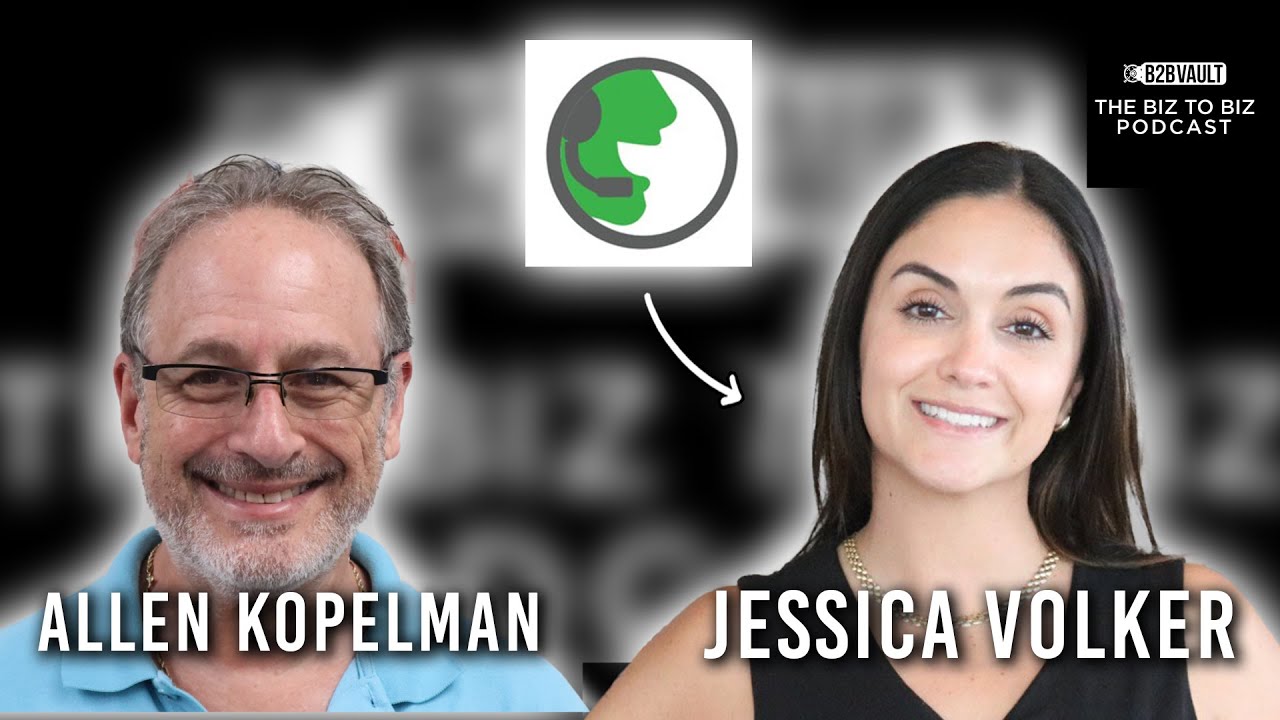
Jessica Volker of Responsive Answering Service explains how 24/7 virtual reception works for medical practices, legal firms, and contractors. The service handles appointment scheduling, payment processing, and CRM integration while staying HIPAA-compliant. One counseling practice regained lost appointment volume after switching to the service.
Chapters
Welcome to the Biz to Biz Podcast, your number one source for all business news. Hey everybody, welcome to B2B Vault, the Biz to Biz Podcast, sponsored by Nationwide Payment Systems and our new product NPS One and Click Biller, which helps you do invoicing better. And today we have a very special guest. All our guests are special here on B2B Vault. Today is also International Dog Day. So Rocky got a special post. His picture is up here. And, uh, it's— although this probably won't be viewed on International Dog Day, but since it's today when we're recording— and today's special guest is Jessica Volker, and she's from Responsive Answering Service out of Coral Gables, Florida. To tell us a little bit about yourself, Jessica.
Hey, Allen, nice to be here today. Yeah, so I'm with Responsive Answering Service. I'm born and raised here in South Florida, kind of grew up in the call center answering service world, kind of aligned with Responsive Answering Service a few years ago and, you know, been part of their business development team since then.
Okay, great. So, you know, answering services, it's always interesting. When I first started out in this business in 2001, We actually hired an answering service. You're probably going to start laughing. And part of the service was they gave us these beepers because back in those days when we first started, if you got— if you received a phone call on your cell phone, it cost you an arm and a leg to receive phone calls. To make a phone call was free, but to receive a phone call, you paid for minutes. So in order to avoid paying like a $700 phone bill, beepers. I know for you young people, you guys don't know anything about those beepers and pagers, but they were really cool and they could send you a message to your pager. And since we were never in the office, people can call the office number, leave them— they would take a message and then send it to the page.
Yeah, you'd be surprised to learn that a lot of our medical clients, doctors specifically, they still use their pagers. So they're still very much around. Getting back to that cell phone comment, that was always the case unless it was— I think it was 9:00 PM that your minutes were free after that point or 7:00 PM at one point. But yes, I remember those days.
Yeah, that was kind of crazy. That was like the beginning of everybody getting cell phones.
Yes. Yeah. And now look at us now. We can't be away from them.
And yeah, doctors, they don't get a text message.
No, well, you know, with doctors and text messages, they have to meet like HIPAA regulations, which means that we can't send patient information, which patient health information ends up being just your name and your phone number to them. So we cannot send messages via text. We do offer like a secure messaging platform where they can receive their messages that way, but no, no text messages, just email and secure messages or phone calls for them or pagers.
Oh, that's interesting.
That's still considered secure.
Yeah, you gotta listen to HIPAA compliant. You know, we deal with that in the payments world all the time. Things have to be HIPAA compliant for doctors and any kind of medical that we deal with. So what kind of services, you know, do you guys provide besides just answering the phone?
So everything is customized by our clients. Um, it really is not one size fits all. Every business is a little bit different, even within like the same industry. You know, one doctor might want another thing that another doctor wants. So everything's customized and made to fit their needs. But I'd say what's— we're hearing more and more of is appointment scheduling, submitting tickets, entering information into like the CRMs that they use. We have a few clients that expect us to process payments when it comes to, you know, booking an appointment. They require a deposit or just in addition of like payment information to secure the appointment. So a lot, a lot of different features that are coming up nowadays.
Yeah, I can imagine that, you know, it's busy, and plus a lot of businesses are shorthanded, and, you know, the luxury of having somebody just in your office to answer the phone sometimes is at, you know, that's a way to save money and get an answering service. One of the things like In my business, like, we'll deal with e-commerce companies and first thing we'll ask them is like, wow, you have all these, you know, you're getting chargebacks. Like, okay, well, who answers your phone when you're not at work? And you know, when do you guys answer the phone? And the first thing we do is we're like, you have to have an answering service because, and your answering service needs to be able to access at least maybe the customer information, provide a tracking number. Or whatever it is, or at the least just answer the phone and go, hey, somebody's going to call you back, because that way at least you, you can avoid getting a chargeback.
Yeah, customer service is definitely 24/7 now, now more than ever. So people are expecting to call you at 7 PM when the thought crosses their mind, you know, after work, or at 3 o'clock, 3 o'clock in the morning that, you know, you get those thoughts when you can't sleep. So People expect around-the-clock service, whether it's, you know, via chat or a phone call. We're available to kind of fill that void.
Yeah, it's crazy that people, you know, but you want to, you know, if you're an e-commerce merchant, you want to avoid getting a chargeback. Somebody didn't get a product that you mailed them, or they, you know, want to talk to somebody about whatever it is, the product or service you supplied them. You definitely need to have— I'm a proponent— you have to, you know, either you supply somebody's answering the phone during this, between these hours, and then after that you switch to an answering service. It's super important to deal with that.
Yes, I definitely have to agree.
And like, what are the main industries that you got that you find that people answering service besides like doc— I'm sure doctors and lawyers are probably up there.
Yeah, well, for credentialing with different insurance companies, doctors, specific doctors like cardiologists, mental health specialists, they have to have an answering service or someone to answer their calls 24/7 because of how emergent their calls could be. But yes, the second highest surprisingly is going to be our home services, whether that's a plumber, an HVAC, especially down here in South Florida or in the summer months, honestly, AC companies, uh, we have different construction companies as well, but lawyers is, is a close third.
Okay. And tell me, like, you know, what's a good success story where somebody, you know, got it, you know, used your services and it really enhanced their business?
I just recently had one client. They are a counseling company, um, and Like most mental health counselors, their hours are not like your typical 9 to 5, you know, they work based on when their clients are available to come in for a, for a consultation or for a therapy session. And this particular one is based out in Missouri. And they had been struggling with being able to answer the phone, scheduling appointments, they had seen like a big drop-off in how many consults or how many therapy sessions they were having within the last few months. It just kept decreasing and decreasing. It ended up— they noticed that it was because they were missing calls and people were not leaving messages. People don't leave voicemails anymore. They either want to talk to someone or they're going to send you a text message. That's just how it works, right? And they recently started using us, I'd say about a little over a month ago, and they recently reached out and they said, hey, we just wanted to let you know that not only are your operators great and they're professional and they're kind to our clients, but we've seen the best, I guess, grossing month that they have in a while because they have consistent appointments being scheduled for their follow-up consultation. So that was a really happy moment for me to see that we, we're really making a difference in their business.
Yeah, it's important, you know, because, you know, different— every— any business that you have, if somebody— if you don't answer the phone— and even today, you know, what's really crazy is young people will not put in— they will not have a landline, right? And they'll give me like a Google number, and I'm like, yeah, we can't take that. You have to give us either a landline phone number or a cell phone. We're not going to let you give us some Google phone that you could just shut off and we can never get a hold of you. Yeah, it's amazing how many businesses will try to operate with these, uh, virtual phone numbers and they don't even have a cell. Yeah, things like that, you know.
And those virtual phone lines work in scenarios especially where it's a business that you don't have to have like a, like a brick-and-mortar office, um, But we run into challenges sometimes with them because they don't have the scalability of being able to handle, you know, multiple calls at once like a landline or a cell phone does. So I'd say if a business owner is going to look into a voiceover IP system, just make sure that they are a multipath carrier where they can have multiple calls coming in at once without clogging and getting that like busy signal, right?
Yeah, that's— yeah, you don't want to have that. You don't want to have that happen. How do you got— how does your company handle like high call volume? Like if you're dealing with somebody that's, uh, like a company that's going to get a lot of phone calls?
Yeah, well, we staff according to our call volume. We're constantly looking at our call patterns and are able to scale our, our operators in that way. Um, The beauty of the pandemic for our industry was that we were able to shift our operations remotely, and we noticed that having our operators work from home also made them more available to, you know, hey, we're really busy right now. Do you have like 10 minutes that you can jump on the line and answer a few calls so we can get this call volume down? So we're able to kind of, you know, reach out if needed and adjust schedules. Especially now that our operators are mostly working from home.
Yeah, that's interesting to have so many at— that's been a big change in the— I think in business in general is that some— a lot of companies, you know, have people working at home and, you know, people on the road, people all over the place. They don't necessarily even live in the area. Yeah, so they can still do, you know, still do a job. One challenge that I've had with that is, is when, if you have remote workers, you have to be able to monitor that. You have to have some kind of monitoring place to monitor that staff.
Yeah, definitely. So with our operators, we're able to manage that through a VPN connection, you know, allows us to see when they logged on, the activity level, and all that. It's constantly being monitored. You know, they have to have a quiet environment, right? We can't have— we all love our pets and we all love our kids, but can't have them in the background of calls. So they have to make sure that they have a quiet environment too. And they're constantly being monitored by our Q&A team. So this is one industry where I think has benefited from shift of like working from home.
Yeah, there's that. I mean, when I drive around, I see so much empty office space.
Mm-hmm.
And I'm sure people are listening to the podcast and, you know, you, you, some businesses grapple with like, okay, we're not in our office all day long and we don't want to pay somebody $20 an hour to just sit there and answer the phone. Yeah, because maybe that job paid much less years and years ago. Answering service is an affordable answer to that problem.
Definitely. I'd say our average client spends a little over $35,000 a year on answering service. So if you compare that to the minimum wage of living, especially in states like California, South Florida, New York, Maryland, that's definitely nowhere near what you're going to pay somebody to sit in your office and answer calls for 8 hours a day when we can do that for a fraction of the price 24/7.
And how do you— so when you're at— when you're answering phones for companies, let's say they have a very, you know, they have a low call volume you know, a small company. So how does their pricing compare to somebody with, you know, tons of calls?
So our plans are packages of minutes. The minutes are going to be from the moment that our operator answers the call until we disconnect from the caller. So kind of like those cell phone plans we were talking about earlier. Um, so, you know, our lowest rate, it starts at $29 a month. It doesn't have any included minutes. It's our pay-as-you-go option, we call it. So it's a base rate of $29 to have the service available to answer any calls. If you don't get any calls, you're paying $29 a month. If you do get calls, from the moment that we answer until we disconnect, those minutes that the operator's on the line with their client are being billed at $1.25 per minute. So you get a tally at the end of the month of how many minutes you use at $1.25 each, plus that $29 base rate. And then there's plans above that that give you an allowance of minutes. And obviously the more minutes you have, the less per minute you're paying, and that overage rate drops off too.
Okay. Yeah. Yeah, it is affordable for somebody just starting out and they want to make sure their phone is answered. Maybe for— could be a couple hundred dollars a month, and that's way less than having paying somebody all day to answer the phone.
Yeah, I'd say our average client spends about $300 to $350 a month.
Okay. And what— and like, so how do you send— like, for the obviously non-HIPAA compliant people, how do you send them their messages? An email, a text, or—
Yeah, they have a variety of options. We can do email and/or text. We can send it to as many people as you'd like as well. There's always the ability of having us call you to relay the message and And the instructions on how we send messages and what kind of messages we send you are completely dynamic. If it's an emergent call and we want to notify you more away— more quickly, we can call you. If it happened to be something that can wait until the next business day, we can send that via email so you see it in the morning when you log in. And you can also have escalations to like where we start with a text message. If you don't reply to the text message, then we can follow up with a phone call to make sure that you saw it. So There's quite a few different options as to how messages can be delivered.
And how do you stay competitive? Like, I'm sure this is a competitive market. And so how do businesses like yours stay competitive against the competition?
I'd say that in my eyes, what has helped us be competitive is our employees. Like, we provide you people that actually care about their job, that are committed to what they're doing. So that care that they offer is, I'd say, our number one feature. From there, obviously, we're, we're an affordable pricing option as well. We're definitely not the cheapest out there, but we're not the most expensive. And we offer quite a bit of technology as well, you know, with our integrations with like being able to schedule appointments, being able to submit information directly into, you know, CRM, EHR, EMR. So I'd say that that would probably be how we stay competitive.
Okay, yeah, it's very interesting about how, you know, how businesses, you know, especially like with technology. Are you guys doing anything with AI right now?
Not just yet, not just yet. We are, we have the ability to use AI. It's just most of our clients prefer a human being, right? So that's why they're coming to us. They're coming to us because they have either had an experience where their answering service was using AI, because there are answering services out there that are just using AI to answer calls, and it's not the same experience. Or like Google Voice has like an option where like the voicemail is transcribed. And I don't know about you if you have an iPhone, but every time that my iPhone decides to transcribe my voicemails, it makes no sense whatsoever.
Oh yeah, I get those messages and I'm like, what in the world is this?
What are they saying? And then you listen to the voicemail and nothing what the transcription is. So AI is not just there, not just yet. So a lot of people prefer to have that live person. I can totally see us using AI in the future for like maybe, you know, we get— just to go back to the medical industry because they tend to be the more— the one that we work with the most. They usually want us to answer calls with a live operator if it is an urgent matter that needs to be paged to the doctor. But the majority of the calls that they get after hours are the patients that realize, hey, I have an appointment tomorrow and I can't make it, I need to reschedule. Or, oh, I'm out of prescription, let me— I don't have any refills available, let me call my doctor to refill my prescription. So they don't want those in the middle of the night because you're not in front of your computer, you're not in front of your patient records, so you don't know who Sally Smith is and what milligrams of pills she needs. So they just want those calls to call the next morning. So I can totally see us using AI to filter those calls out to where it's not, you know, using operator time because, you know, AI time I'm sure is not as expensive as an actual human being.
Yeah, I get annoyed. I get annoyed when I get messages on my phone. Hi, this is Suzanne. Are you aware about Medicare?
Yeah.
Okay. Like, Yeah, this isn't a real person. Click.
Right, exactly.
It's super annoying. And, you know, or, you know, and I know, like, sometimes when I'm calling a company and they're like, oh, we've changed our prompts, you have to listen to this whole long thing and you're just like, okay, can I just get somebody, you know, right now?
Right, right, exactly. And then the prompts are— none of the prompts are what you need either, usually.
Yeah, I'm like, okay, I'm trying to get a hold of this person. Like, what is going on? Why can't I get a hold of them?
Yeah, super.
So if you had to give somebody like some advice, like, to have a business, any kind of business, what would be advice about, you know, why they should consider getting an answering service?
I'd say the overall caller experience is important for your clients to be happy. And you could bet a million times that them reaching a voicemail when they need you, when they're in that moment where like, I don't know, maybe their dog is sick and they're trying to get a hold of their vet because they have a question about something, or, you know, maybe their kid is sick and they have a question about it and they get a machine. That just doesn't leave you feeling satisfied as a, as a client, as a patient or anything like that. So having an actual person and knowing that, okay, they took my information, they told me I should expect a call within 15 minutes, or even then they transferred me directly over to the doctor. Like that right there just makes the world of a difference in having satisfied clients. And, you know, happy clients are more inclined to leave reviews. And in today's day and age, everything is about the reviews you have, right? How many 5-star reviews can you have?
It's interesting, you know, like business-wise, like people have, you know, how the— if they'll leave a review. And, you know, do you get any reviews? We get— we'll ask clients like, oh, can you leave us a review? They're like, we don't want anybody knowing our business.
Ah, yeah. And you run into the people that only leave reviews when they're angry too, right? So there's those people too.
Oh, well, that's, you know, that's what they— I mean, I used to be in the restaurant business, so they'll, you know, they would say you have one person has a bad experience, they'll tell 10 people. A person has a good experience, might tell 2 people. So yeah, you always have to make sure you want to do a good job to, you know, our thing is we, you know, like I have people, I give them my cell phone number and I go, okay, you know, if you have a problem, call my cell phone. And then on my cell phone it says If you've called after hours and you need to get a hold of me, just leave a text, you know, just text me, you know, what you need, you know, and then I'll call you back if it's an emergency. Sometimes I'll get— I'll wake up in the morning and I'll find a text message. I'm like, hey, what is this? Yeah, because, you know, what's an emer— you know, I always tell people, you know, there's an emergency and there's certain things we can't do anything about in the middle of the night. You know?
Yeah. So, well, then sometimes what's an emergency to one person isn't necessarily an emergency that, that can't wait. So, right.
And I guess, you know, that's part of the— when you, when you guys are taking on a new client, I guess, you know, you have to answer a lot of questions like, okay, if a person does— says this, or you run into things and you go, oh, somebody called and this happened, okay, well, from now on do this, you know, so that they can get—
It's always evolving, that's for sure. You know, when we do the initial onboarding call, the client has an idea of how these interactions are going to go, and I always tell them to try not to overthink it because we're going to be talking in a few weeks or in a few days and revamping this whole thing. Because as the calls and the messages start coming in, they start thinking like, oh yeah, I didn't think about that. Oh, 'That's right, maybe I do want that call after hours.' So it's always changing and, and we're adaptable. So that's not a concern to anyone that maybe wants to try out an answering service and just doesn't know where to start. Just start and you can adjust it as needed.
And we can tell you what to do. We can tell you what to do with the crank phone callers that we get.
Yeah, you can. You actually can. There's, you know, things in place, especially with the ones where where it's a recording or there's, you know, like you said, the AI calls where they don't even respond to you, they just keep talking and you're saying something and it's, they're not even capturing it. So there's ways that we can get those to where they're not getting to an operator and therefore costing, uh, costing you minutes.
Yeah, it's kind of crazy. We'll get calls in the office all the time from like, and I'm like, where, how do they get these phone numbers? And they'll be asking for people that aren't here and yeah, and things like that because You know, now when they give you phone lines, every phone actually has a phone number. Not like it used to be where you had these like rollover lines and they were fake. Those rollover numbers they give you could have been assigned to somebody else at some point.
Oh, I didn't know that.
A long time ago. Yeah, we'll get phone calls. Oh, is this person working there? And I'm like, no, we don't know who that is. So if somebody needs to find you, Jessica, what's the best way for them to find you?
You guys can go to our website, responsiveanswering.com, book a call. It's a button right there. It comes right into my calendar.
Okay. And you're on LinkedIn?
I'm on LinkedIn as well. You can find me on LinkedIn, Jessica Volker. And you can always just give us a call. I'll be the one answering.
All right. Any final messages for the listeners today?
Not that I can think of off the top of my head, Allen. Thank you. This was a great time.
All right, so if you need an answering service and— or you're considering an answering service, give Jessica a ring. Go to the website, visit her on LinkedIn, find more out about their company. And that's today's pod, and we're talking— and also, if you have an e-commerce company, get an answering service. This is one of my biggest pet peeves with clients is You need to have an answering service if you're running any kind of service business or e-commerce business. Super important. And I would definitely recommend getting in touch with Jessica. So thank you for listening to the podcast today. B2B Vault sponsored by Nationwide Payment Systems. I always say carpe diem, which means seize the day. You can follow us on Apple Podcasts, Spotify podcast. We're on LinkedIn, we're on all the social media, and you can watch the podcast on YouTube. So thank you very much to Jessica and responsiveanswering.com, and everybody have a great day. And don't forget about your dogs. You'll remember the date was August 26th, was International Dog Day. So I hope everybody was nice to their blog today.
Thank you, Allen Kopelman.
Thank you.
More from Allen



How B2B Companies Can Turn YouTube Into a Lead Generation Machine | Featuring Samu Kovacs


How AI Is Transforming E-Commerce with Zero Code | Kumar Senthil, CEO of Firmly



Dre Baldwin on Discipline, Leadership, AI & Business Success | The Mindset Every Entrepreneur Needs

The Same Skills That Made Me a Pro Athlete Built My YouTube #podcast #entrepreneurship #success

