Productivity Tips From Two Experienced Business Owners!
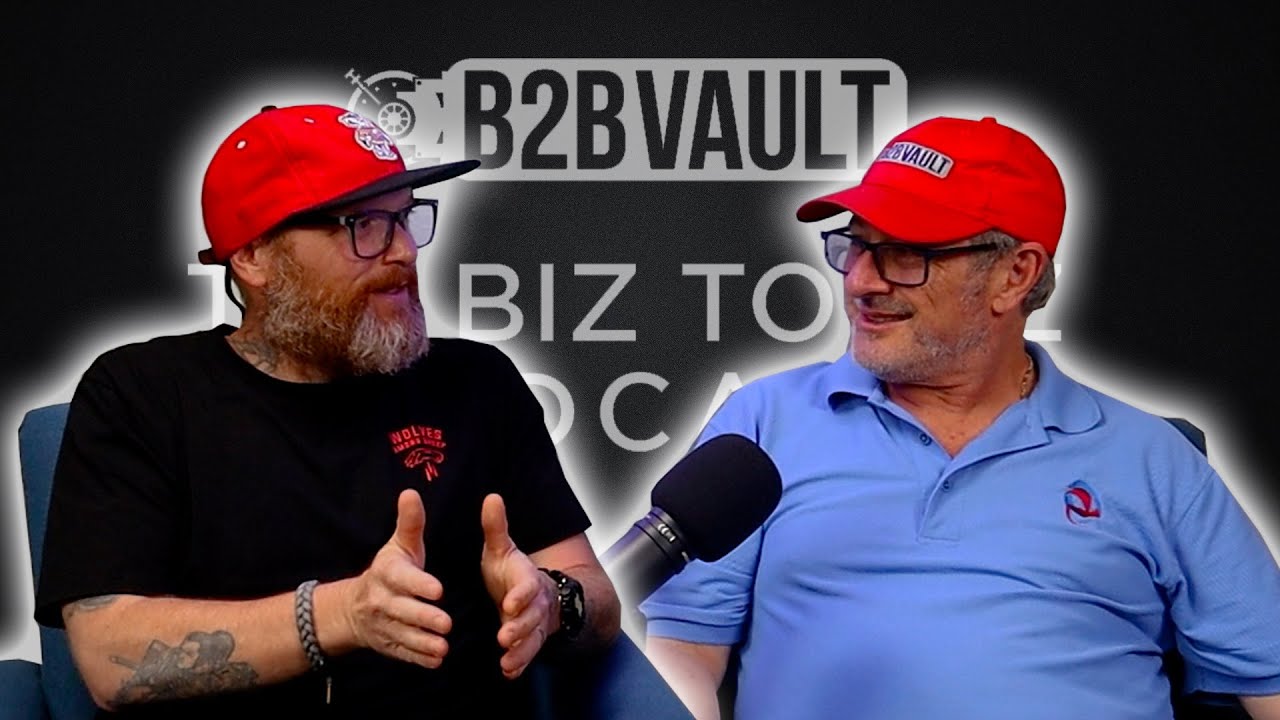
Allen Kopelman and Justin from B2B Vault share productivity tactics: calendar links for scheduling, the 2-minute rule, the Pomodoro technique, and the 5-second rule to beat procrastination. Justin relies on weekly lists and phone reminders; Allen swears by the "eat the frog" principle and breaking projects into phases.
Chapters
You are now watching the Biz to Biz Podcast with Allen and Justin. Yo, what's up everybody? It's Justin live from B2B Vault, the Biz to Biz Podcast sponsored by Nationwide Payment Systems, hosted by this guy, the Bob Costas of payment processing himself, Allen Kopelman. And in today's podcast, we'll be going over some productivity tips, you know, to keep you, uh, on track for a productive day. What's up, bro?
Another day, another, another week.
Yes, sir.
Start of August, the hottest month of the year. Yeah, crazy temperatures. The Olympics is going on. Bob Costas was like the main guy for many years on the Olympics. And, uh, so far the U.S. has won 79 medals, 21 gold, 30 silver, 28 bronze, And here's an interesting statistic that I saw that my daughter went to University of Florida, but University of Florida has 41 athletes from like, I see, 20-something different plus countries participating in the Olympics. Very impressive. And they, and their athletes have won like more medals than most, some small countries. Which is crazy.
Nice.
I mean, they have a— I didn't realize like how many, uh, athletes are actually training at the university, like athletes from all over the world.
I have no idea. I don't pay attention.
No, no, I'm just saying I didn't realize like that many.
Well, I know that a lot of athletes that are in the— I mean, I shouldn't say I don't pay attention. Yes, a lot of athletes that are in colleges are participating in the Olympics for their country, right? Like Sudan, Ghana, in these types of places. They come to school here and, you know, like people go, you know, from African countries that come to school here and they'll go to participate in the Olympics.
Yeah, and I didn't realize like some countries are like, I guess they don't have a, I guess they don't, they don't participate in the Olympics. So there's people that are on like Team Refugee or something. And this year, like a couple of people from that won medals. This is pretty cool.
Yeah, I seen— you see what they did to Sha'Carri Richardson?
No, what happened?
Uh, I guess she got played. Um, so apparently the security for the Olympics, um, decided that only people staying in the village could enter through a certain gate, and Sha'Carri Richardson and another athletes from Team Jamaica weren't staying in the village because it's a shit place. Like, have you seen the facility?
Dude, that's ridiculous. You see that?
Them sleeping on cardboard beds. Hardboard beds. Just to refrain from having sex.
Yeah, that's just weird.
I don't understand.
And I heard they spent millions of dollars on that and they had like condoms with the Olympic logo on it.
Yeah, the one chick got— anyway, I don't know. So security wouldn't let them two in, right? So they missed warm-ups.
Okay.
So the one Jamaican runner, she just, she just forfeited. She didn't even try, right? And Sha'Carri said, I'm about to run, and she still came in third. So she won silver. But there, it's pretty much like, uh, kind of like, you know, kind of conspiracy theory kind of happening. Like, because, you know, the last time the Olympics came They said she couldn't run because she was smoking weed, right? This time they have no choice. She had to run and she'd been whooping ass, right? Like, can't nobody— she's just been smoking everybody.
Yes.
So yeah, so then that happened and she's still, you know, but she still ended up getting silver. Yeah, I saw where like she should have won because the, the, the, the time that the, whoever the, the winning time. Yeah. That was her, Sha'Carri Richardson's qualifying time. Wow. So that ain't even her full, like she, cause this one dude described her of having like 5 gears, like literally. And he was showing it like when they were doing the relay and he was like, Sha'Carri is about to kick it in her next gear. And she was just kind of, you know, she was leading. Right? But then she just was like, boom! And he said, that's not even her fastest. Like, when she left the—
she left everybody. Group, bro. Did you see the— there was another relay race, or was that— the Americans were way ahead. It was like men and women mixed. And then at the end, the girl from the U.S. was some girl from Texas. She was way ahead of everybody. And then this girl from Norway or somewhere, or the Netherlands. Netherlands. All of a sudden she was like way taller, longer stride. She came around the last turn and she just smoked past everybody. And then we got silver medal. And then that one guy won the world— the, the guy from the US won the 100-meter, the 100-yard dash or 100-meter dash, whatever, by literally like his tippy toe. His toes, like, was like a photo finish. Yeah, I saw where the USA basketball team went to the Olympic Village. They like flipped out, and then they're spending somewhere upwards of $50 million to rent like some luxury hotel that they can't even sleep in the beds. They couldn't sleep in the beds, they're not even big enough, right? So they ended up going to this a hotel and they're spending over $50 million. Apparently LeBron is, uh, helping foot the bill on that and to pay for all the coaches, the staff, and everybody to stay at this luxury resort.
Yeah, I haven't, I haven't had, I don't know, I haven't really sat down and watched anything.
So I watched a little bit. That's, you know, here and there.
Breakdancing is the big Is that— is that Thursday and Friday?
Oh, we'll have to watch that in the office. You know, the other thing is, did you see that guy from Turkey?
The shooter?
Yeah, that was crazy. No equipment. Everybody else had all kinds of equipment and, you know, and special glasses and all kinds of stuff. This guy just walks up and the big joke is he's a hitman.
Is it a joke?
No, the guy—
well, and he loves cats.
And he was— yeah, but he said—
they said, uh, there was a meme going around on, uh, Instagram that said, if some— if, if someone kills this man's cat, expect 4 movies of lots of shooting and action or something. I was, I was like, yeah, that's—
well, apparently I saw— I read where the guy was in the military and he's won multiple shooting competitions all over Europe.
Oh, well, there you have it. So, well, let's hop into it, man. What's your, uh, productivity tip, sir?
Okay, now I wrote a bunch of them down, but one, one that I use a lot is to stay productive, especially like you're working in an office or you're working at home, is I use my calendar and my calendar links. So that meetings are scheduled, and that's like been a game changer, saving time, saving day planning thing for me. Doesn't always work 100% of the time because sometimes the meetings go over, but you know, it's a good way to, to keep organized.
Yeah.
And productive. What are you— what do you—
what's your favorite Um, that's a good question. For productivity, I mean, I'm old school. I like to write things down. So like at the beginning of the week or something, or if, you know, there's something that on Mondays typically I, uh, make a list, make a list, and then, um, work through that list, you know. And that's— those are like— the list is kind of like main goals to hit, and then in between are intermittent goals.
Um, I saw a good—
yeah, for my— for like Technology-wise, I guess my number one thing is reminders, right? Like, uh, I set, um, a lot of reminders in my phone.
Okay.
As far as, um, for me, like, I guess the number one thing though, when it really boils down to it, is routine. Is developing a routine to be productive, right?
Yeah.
Like, well, I know one starts with sleep.
I know one time you told me you like that thing, the Pomodoro technique.
Yeah. I mean, if you really have to sit down and like knock some shit out, like, and you're— you don't want to be distracted from social media, YouTube, etc., you can— I mean, you can— there's a— what he— what Allen is talking about, he's talking— it's called the Pomodoro effect. There's a There's a book you can read and a bunch of other stuff, but there's a Google Chrome extension that, um, you can, uh, install to your browser and you click the little tomato and it shuts. You can't view any social media websites. You can include or exclude certain things that you want. Say like, you know, like if you're a social media manager, obviously you're going to need those, right? But there's other stuff that if you know you're going to be distracted, you can add that to the block list and then, you know, just really focus and hyperfocus onto the task that you need to get done. I think it's a great tool. It's really not— I don't know, the iPhone and all the other things, you know, people like tend to utilize that and stray away from other amazing tools, you know what I mean? Like, don't restrict yourself to just your iPhone. There's a lot of other stuff that you can use. But yeah, the Pomodoro Effect, if that— like, if I'm trying to finish something or if I just, you know, just really want to focus on that task, yeah, that, that, that helps, you know. So it goes for, uh, you work for 25 minutes. 25 minutes, yes. And then it's— you click the tomato again and you get a 5-minute break, and then you can look at all your other, you know, your social media if you want to, watch your YouTube video. I don't block YouTube because we use YouTube, right? And I listen to music on YouTube, so it doesn't—
it's—
I'm not really— I'm not distracted watching a podcast or something. Something like that. But yeah, that would be— that's a great tool. But I think the routine, right? Like, my routine, it starts with sleep, getting enough sleep, waking up on time, taking your personal time in the morning, recentering yourself, and then, you know, getting into the office. And, you know, you know what you need to do. Like, that routine is really important.
Um, yes, I was looking at some like different things about time management. So here was one, this guy called it the 2-minute drill. So if you make your list of like tasks for the day, which I do frequently, I write it down, write a task, make a list. Okay, gotta knock out boom boom boom boom boom. Anything on your list that could take you like 2 or 3 minutes should knock those, knock those out. And then another good thing was, let's say you had a more difficult, a more difficult task to do during, during the day, or something that you really needed to concentrate on. It was the other suggestion was, I don't know, this guy called it eat the frog. Which I looked it up, somebody wrote a book about it.
Definitely heard of this.
And pick out your most challenging task.
Yeah.
And then do that one first, which that's— I think that's a really good idea. And then another good suggestion was the Pomodoro Effect.
It mentions that too.
Oh, it does? Yeah. Pick out this, you know, your most challenging task. The other thing I liked was that I read this guy, another guy was talking about take a large task, which I frequently do Like, so we have to do commission. It's a very— a lot of, you know, we get commission from, you know, I don't know, 15, 20 different places.
Sources.
Places. Yes, sources. So we got to make sure all of those have been received, check them all, have a list of them, make sure they're all there, make sure the reports match the bank account because people do make mistakes. And review those reports, make sure there's no missing information. And then, you know, and then, you know, the next phase, you know, and then I kind of take a break because then I have to break those reports down to each, you know, sales agent or referral partner and get them all done. So I've kind of like made a new way how to do it. So I take care of part one and then I take care of, you know, part 2, and then I take a break. Part 3 is paying everybody. So I broke the task up instead of trying to do it all at one time, broke it up into like 3 sections. So, and then I try to get it, and then, and I found that like the last, tried to do that the last 2 times, it actually took me less time to complete the whole total thing because I didn't try to do it all at one time. Makes sense. So that was kind of, you know, I like, I like that.
Learn something new. Yeah.
Learn something new.
So you can teach old dogs new tricks.
Yeah. Once in a while. One of my— another favorite productivity task of mine. And mostly it's, you know, more about like decision making because, you know, I read this book, The 5 Second Rule, Mel Robbins. And she talked about like she was in a funk, and then she was watching the space shuttle or one of the rockets taking off, and she heard the countdown— 5, 4, 3, 2, 1— and then she decided like, okay, I'm gonna have this 5-second rule, and I'm not gonna lay in bed and be depressed, or whatever was going on in her life at the time. And you know, I compare it to I wrote myself a note about it. I compare it to, I was in sales for the first time, you know, I wasn't, I was a chef, then I was in this, got into sales selling merchant services, and you know, had to go out and cold call on businesses, which is not necessarily the most pleasant thing to be doing with your time, but that's how things were done in 2000, 2000, you know, 1999, 2000, when I was first getting started in this business, was going out cold calling. Because until people know who you are, you're not going to have this referral base of people calling you on the phone. And, uh, you know, and I guess I kind of used that 5-4-3-2-1 thing because I basically, you know, sitting in my car sweating nervous, anxiety was kicking in, you know. I got to get this done. I said it in my brain, like, I got to get it done, get it over with. Don't resist, don't be the— don't get taken over by the Borg. Remember the Borg from Star Trek? Oh, you will assimilate. They're trying to assimilate everybody.
I could vaguely—
it was—
I wasn't a Trekkie.
Was, uh, the Jean-Luc Picard Next Generation, the Borg attack.
Oh, I definitely wasn't watching that shit. Okay, I was outside, bro, in 1999.
Well, whatever, I used to watch those shows. So, you know, you just gotta get— you just gotta, you know, you gotta break that, you know, whenever you're dealing with something that you're nervous about or you're uncomfortable doing whether it could be something new that you have to do in your job or something you have to do in your personal life, you got to use that. Okay, 5, 4, 3, 2, 1, bam! I'm just gonna do it and get it over with. And you know, hopefully after the 10th or 20th time that you don't, uh, you stop worrying about it and it becomes like you say, routine, rote. They always talk about that. Like when I was cooking, when I was a chef, you know, a lot of things are rote. That's what my— the guy who taught me how to cook, he used to tell me that you make— you're making hollandaise sauce, right? And after you made it 20 times, you know, in your brain, like, okay, I need my egg yolks, I need my clarified butter, I got my whisk. My bowl is clean.
I really—
water bath.
I really think that routines are like imperative to not just success in like a job, bro, but like in life.
Yeah, definitely. You gotta— if you have a good routine, you get your day going. You wake up— like, my day starts the same almost every day. Get up, Rocky's gotta— he wants to go for his walk unless it's raining outside, and then He's pissed. He looks outside with us, you know, dogs, he can make a sad face when he sees it.
For sure.
Outside, he's sulking right now because it's storming. And, uh, yeah, you know, your routine is important to get your mind set, to get your day set, to get your whole, you know, moving and get where you're going. Mm-hmm. Some people put timers on, set an alarm. I do have a timer. Okay, by this time I need to be doing this. By this time I need to be doing that. By this time—
I mean, I did when I was trying to figure out my best routine, like the optimal routine for myself. I started all kinds of different alarms set, you know, 9:00 AM, 10:00, 9:20, these things have to be, you know, so I stay on track and I get, get to, uh, where I need to be on time and stuff like that. So yeah, it's really important. That's that, that when it comes to being productive, if you, you know, if you don't have those types of routines set in place or productivity tools that you know work for you, like to keep you distraction-free and to keep you focused on your, you know, your tasks, you know, set yourself up for failure.
Yeah. And today, like everybody's in these, like, even to, you know, today, like even though we work in the office, you know, if you were, you know, sometimes employees don't feel good, they need to work at home, transportation issue. Things like that. I mean, probably 3, 4, 5 years ago, wouldn't even think about, oh, somebody wanted to work at home 2 days a week or 1 day a week, or even they're sick today. You know, we went through the pandemic. Okay, well, we don't want to get— you know, probably 5 years ago you would come to work with a runny nose. Today people say, hey, I'm sick, I'm staying home because I don't want to get the whole office sick, you know, where, you know, and where's— that's an acceptable like thing to do, you know what I mean? But that part, that was not acceptable 5, 6 years ago, like in an office environment.
Yeah, I mean, for me, I've been working at— I've been doing this for, you know, building websites for 15 years now, so if I'm not self-starting and getting my shit done, then I'm not getting paid. So for me, it's not a— it's not— I don't know, I'm just built different in that regard. I'm an entrepreneur, so I'm, you know what I mean? Like, I'm— I have to wake up in the morning and get to, to the money. So if, you know, it's no different I don't know, since working here at Nationwide Payment Systems, it's like there's no different. In my mentality, I wake up, I have to go get the money. So if I'm not, if I stay home and fuck off all day, and one, I'm not gonna feel good about myself because I'm very hard on myself, and two, Why would you waste your time? You know what I mean? Get to it. Get to it.
No, but I'm just saying like that's a thing people need to, you know, that's a thing that today like people have to deal with that they weren't probably dealing with a few years ago.
Yeah. And I mean, a lot of people aren't capable. Like for instance, my wife, she's not, she doesn't like to work from home because she, she notices something in the corner of the room and then she's sweeping and then she's mopping and then she's straightening and then she's doing doing some other stuff, and then she's cooking, and then now she's got to work until 8 o'clock at night because she didn't finish what she was doing because she was distracted all day. So some people, it don't work. Some people just, you know, need, uh, self— need governance, right? Is that where people need to be told what to do? Um, Like the people who don't put their shopping carts away. This is why we can't have a self-governing society, because if so, people would just throw shit and do shit however they felt, and it would be chaos, right?
So I always find it so annoying, you know, whether it's at Costco, Publix, whatever, they have a, you know, those whatever areas set up where you can go put your cart. You don't have to walk it all the way to the front door, but there's just, you know, usually a spot.
There's always a spot, right? And, uh, you know, well, I shouldn't say always, but typically there's a spot.
Yeah, typically most shopping centers have a place for you to— in each—
don't be a lazy piece of shit and go put your cart back, bro. Come on, man. Anyway, that's the price. That's, that's, that's, that's, that's going to keep you, you know, you're like, okay, you know, every time those little things will help you in your day-to-day life. Like, I used to be the guy that, um, you know, they said throw something in the garbage and it would miss, and I would leave it there, right? I stopped doing that shit. Okay, I'm not gonna Don't be lazy, you know what I mean?
Well, they say what you put out is what you get back.
Sure.
If you put good things— if you do good things, good things will come to you. If you go do bad things, you know, karma. I don't know if putting back the grocery cart is a—
well, it's karma if the grocery cart ends up rolling backwards and hitting some old lady backing out of her spot, you know what I mean? But I don't know. But yeah, when it comes to productivity, man, there's like a million and one tips and tricks. I think that at the end of the day, for most people, it's gonna really boil down to the person themself, and they need to figure out what it is that works for them. Um, it's, you know, it's different for everybody. Like, I used to— I'm not necessarily a morning person, but I wake up early, right? Okay, so like, if I'm up early, that doesn't mean I'm ready to interact with people, right? And I know that about myself, right? Yeah. So I'm not setting meetings for 8 AM and 9 AM. I'm not doing that because they're gonna get a version of me that they might not be ready for, because I'm gonna be keeping it real the whole time. Like, when it's that early, I cannot— I'm like, no, that's a fucking terrible idea. You know what I mean? Like, that's the type of person that I am. And after I wake up a little bit, have my cup of tea, then my— I guess my manners kick in. You know what I mean?
Yeah. One thing, one thing I want to say about productivity People used to always talk about multitask, multitask, multitask. I find like multitask is like a bad idea. And you know, while you can have multiple, you might have to perform multiple tasks, I think you gotta basically—
don't tell that to someone with ADHD though, right?
I know that because I'm, because I'm the same way. Yeah, I'm ADHD.
If I'm not doing 10 things at once, then I'm not going to get that shit Yeah.
So if you're like doing a multitask, it's good to like make sure like you have each thing on a list and you prioritize them. And then that way, even though you're multitasking, you're giving yourself a little bit more organization.
Yeah. For people who aren't like me or yourself, I guess, I don't know. I didn't know that you had the same type of thing. It makes sense. That's why you and I click the way we do sometimes.
No Diddy.
Um, but yeah, like, uh, if I'm not— I have like so many tabs open, right?
Right.
But I put them in groups.
Okay. So I don't even know how to do that. When I see your computer screen, I go, wow, that's a lot of stuff going on.
Hell yeah. But that's how I keep myself productive, right? Because if I'm doing something on the— say I'm writing a blog and I just read the blog and I'm feeling a little burnt out, I'm gonna just stop that, right? Because that's not like a huge priority. I'm gonna stop that and I'm gonna go do something that kind of, you know, brings me back to life, whether it's looking at— I mean, this is crazy, but Google Analytics for me. I love looking at numbers and seeing what's doing and what's not working and shit like that, so Like, and then, but it's easy for me because I have it all organized. So it's like the SEO tab, the design tab, the, uh, learning tab, the etc., etc., etc., you know what I mean? Personal tab. If I, oh, if I need to do something like, oh, I just remembered, you know what I mean? Like that way you're, you can pivot but also get right back to it, right? So Yeah, man, I really think, you know, download the Pomodoro Effect app for your browser on Chrome. Get yourself a whiteboard, some dry erase markers, and read, read a book.
Like, find a book every month. Find something.
It's funny because I had— my wife told me I need to get back to it, but she's right. And but I've kind of ran out of time to like I've been running out of time.
Yeah.
And I don't want— I want to go to sleep at my time that I say I go to sleep. Guy told me, he said, man, when you wake up in the morning, you go take your morning crap ski.
Yeah.
Grab your book and read one chapter. You cannot get up. And that's probably about the round of time that it takes anyway. You know what I mean? I mean, unless you're reading a book that's right, an encyclopedia.
Well, we're all paper trained, right?
Yeah, exactly.
So like, it's a good idea.
It's a great idea. And that's hence the reason when, when you go over to old people's houses, they always have books in the bathroom or a newspaper or some other shit.
I used to always read the paper back in the day. Yeah.
But now the paper's in your phone.
I know.
So it's like, I don't look at my phone in the morning time because I don't want to look at the screen because I'm staring at a screen all day. So, but yeah, for me, I think that's, that's always so awesome.
But if you're staring at screens all day is to get up and go outside and go for a walk.
If you're capable. Hell yeah. Well, since I started doing that, I do that once in a while. This, Past 2 weeks I've been doing it every hour. I've been just getting up because my knee has been bothering me so bad. When I stay, you know, sedimentary for so long, right? It just starts aching. So I get up, take that little walk around here. I come back, it feels better.
Take Rocky.
Just kidding. Anyway, man, if you guys got any cool productivity tools or tips, things that you want to, you know, discuss or something that you think we should try out, I'd be more than happy to. But yeah, man, that's the vibe.
All right, peace out. Carpe diem.
More from Allen



How B2B Companies Can Turn YouTube Into a Lead Generation Machine | Featuring Samu Kovacs


How AI Is Transforming E-Commerce with Zero Code | Kumar Senthil, CEO of Firmly



Dre Baldwin on Discipline, Leadership, AI & Business Success | The Mindset Every Entrepreneur Needs

The Same Skills That Made Me a Pro Athlete Built My YouTube #podcast #entrepreneurship #success

