Revolutionizing Payments with Payroc POS — Featuring Alec Overly
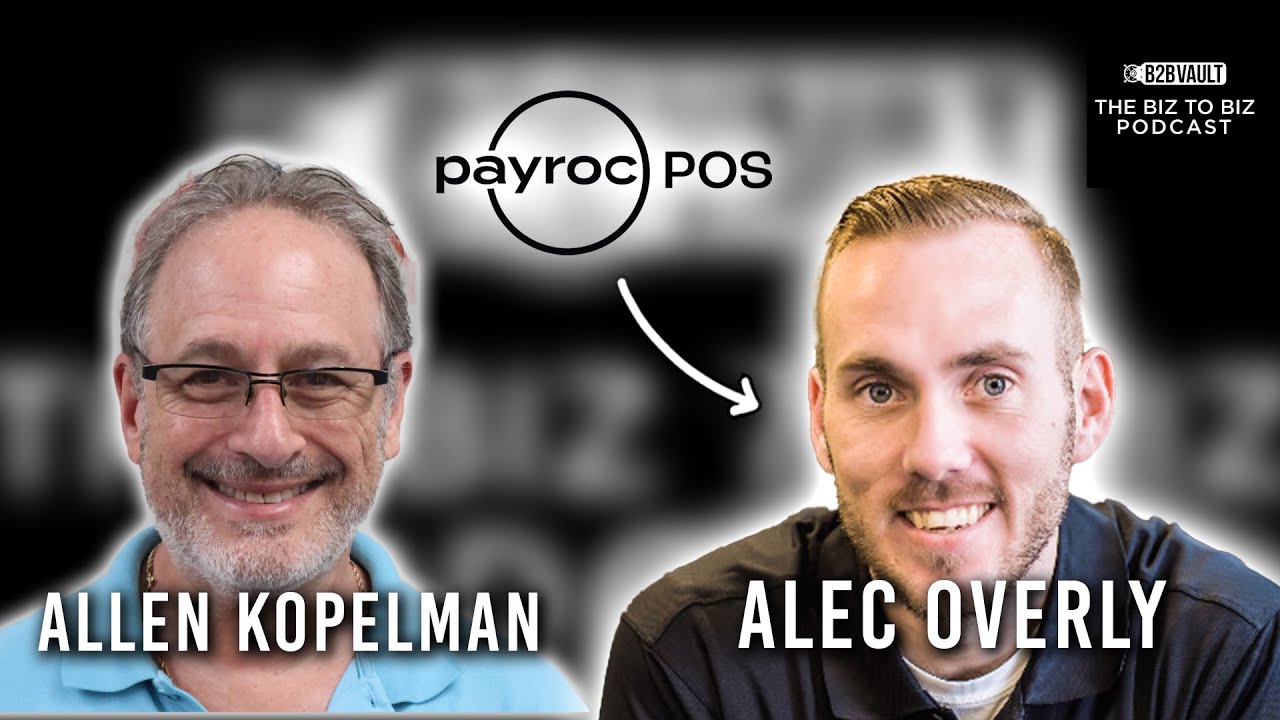
Alec Overly, an NCR Counterpoint expert with 12 years of experience, explains why the Counterpoint POS platform works best for medium-to-large merchants with thousands of SKUs and multiple locations. The system offers contract pricing, unlimited inventory tracking, B2B e-commerce integration, and over 100 customizable reports, with machine-based licensing that typically costs less than competing solutions.
Chapters
Welcome to the Biz to Biz Podcast, your number one source for all business news. Hey everybody, welcome to today's episode of B2B Vault, sponsored by Nationwide Payment Systems and our new product MPS One. And today we have a special guest on the show, Alex Overly, and we're going to be doing— talking about one of the products that we offer here at Nationwide Payment Systems with Alex. He, he is our NCR Counterpoint expert. And, you know, we always, you know, we talk to a lot of merchants, business owners about their business and what they need to do. And, you know, we work with businesses of all sizes and, you know, small businesses, medium-sized businesses, large businesses, people growing. And, you know, every time there's all different kinds of software that's out there for businesses. And this is one that we're going to dive into today and talk about who it's for and like who it— you know, we'll talk about who it's not for first real quick and then we'll get into who it's for, give some examples of businesses we helped and learn a little bit more about this in a short discussion. And if you like what you heard, you know, just go to Nationwide Payment Systems, book an appointment. Me and Alex will get on there and we'll give you all the ins and outs and discuss your business with you. So, Alex, welcome to the podcast.
Thanks for having me, Allen. It's a pleasure.
So tell us, how long have you been working with NCR Counterpoint?
It's been about 12 years at this point. So we've, we've been through a lot. And what's cool is that we have a lot of clients from when I first started. That are still with us, still using Counterpoint. So it's been quite the journey, um, but, but it's been awesome.
So 12 years, Alex is an expert. I'm an expert on the merchant service side. Alex is, is the expert on NCR Counterpoint on the point-of-sale side. And we have helped together, we have helped several businesses, you know, get, you know, get this system, switch providers, upgrade systems, put in a brand new system from the ground up. We, we have done it all over the last like 2 years, right?
Yeah, it's been about that.
Yeah. And, um, and it's, uh, you know, and sometimes there's a little sticker shock, and we're going to get into that in this whole discussion. So let's talk about Who— well, let me just preface this by, like, you know, if you just have a small store, you know, a few thousand items in inventory, this is probably not for you. But we've switched merchants who were using— what was that— Epicor, people using QuickBooks POS, which has been sunsetted, people using just QuickBooks, people using Microsoft RMS. Wasn't that one of them?
That was one of them.
Somebody else using some really weird inventory system, and even somebody who was just using QuickBooks and trying to like invoice people but ran into a lot of problems of how to actually control everything that was going on in their business. And it created a lot of extra work. And we've helped— we've talked to businesses like it's just one location doing $500,000 to $1 million plus a month, locate somebody with 3 locations, 10 locations, 20 locations. You have somebody with like 100 locations, right?
Yeah, we do. They're by site, they're the largest. Yeah, they have about 100 locations and it's really a good fit for them specifically. And like you said, it's, you know, the small mom and pops with, you know, 2 or 3,000 inventory items, we're probably not a good fit in that environment. But as they grow and as they get larger, add on additional locations, that's where we start to be a pretty good fit.
Yeah, because people need to transfer inventory from even like a warehouse to stores or from store to store, and you need a sophisticated point of sale system to track all of that.
Yeah, exactly. Well, we call it centralized purchasing, so they could at the corporate headquarters, you know, do orders for all of their locations and have it be dispersed according to, to that order. So pretty cool function.
Well, let's, let's dive in. Let's talk about like one of the first customers we helped, which was a huge feed store doing over a— they do like $1.5 million a month in credit card processing, probably another $500,000 in cash at that location. And we switched them from QuickBooks point of sale, which was sunsetted, and they were having all sorts of difficulty with their hardware, the software, everything. And we switched them over and, you know, it was a pretty long process. But we helped them because we organized their systems better, right? From that standpoint of, AP, right, their accounts receivable, or AR, accounts receivable. Like, dive into that a little bit.
Yeah, I think that's kind of what's unique about the Counterpoint system as a whole and working with a service provider, um, like us, is our goal is to try to help achieve the goals of the merchant. And when we're getting everything rolled out initially We ask a lot of questions and we want feedback. What are they struggling with today? What processes could we improve to help make the system be more efficient for them, to save them time, of course, increase sales and those sort of things. And we spend a lot of time kind of getting acclimated to what they're hoping to accomplish and then crafting our implementation around their goals. Where other providers, it's, you know, you buy the software and, you know, they get it installed and they might do some training, but you're kind of on your own. We want to help you because we want them to be, you know, a client for many years to come.
Right. One of the unique things they asked for was they had some clients that got special deals that were like 10% or 20% over like the cost of the feed, and the feed prices change all the time, and that manually do that with what they were formerly using, and now it's completely automated. So when that customer comes in, explain, like, that just happens, right?
Yeah, exactly. Uh, Counterpoint has a function called contract pricing, and it's common with a lot of wholesale businesses, um, where they'll have different categories or groups of customers and Each one of those groups gets special pricing just based on either the volume that they're purchasing from that store or just this longstanding relationship that they have with them. And that contract pricing allows a specific pricing tier to be assigned based on customer type or customer category. So it takes all of that work out of the cashier's hand. They don't have to manually apply a discount. It just automatically happens when that customer is added to the transaction.
Yeah, we were recently doing a demo for somebody else with a large wholesale business and they also were doing all of that manually and they needed to have like 5 or 6 different price levels for the different customers that they had. And explain how that works.
Yeah, exactly. They, they, uh, they had 5 or 6 different customer types and each one of those customers got special pricing. And it wasn't like a flat discount or a flat markup. It was unique because they had different margins in different categories or types of items. And, and Counterpoint does offer up to 6 different prices for a single item. And then those prices get assigned to different customers. So that way when that gets scanned at the register,. It just reflects the appropriate price for that customer. And what's cool is that on the receipt it'll state what the regular price is and then what they paid and total savings. So the customers can kind of see that on paper to know that when they shop there, they're saving money.
Yeah, that's amazing because I mean, when we talk to people and we're listening to them struggle with something like that and they're doing all this manual work, to do all these discounts, it's just, it's literally like it's game-changing for them. They're, they, because they're talking about, you're talking about in these places somebody's coming in and they're usually buying pallets of feed from the feed store, filling up a whole, you know, a couple of pallets of all different kinds of, of feed that they're selling. Or like the wholesaler we talked to, and they're filling up pallets that are getting shipped out to these stores, right? And to sit there and manually figure all that out can take hours.
Yeah. And one other piece too that kind of gets overlooked is we're taking the ability away from the cashier to manually apply these discounts in some cases. So it kind of, from an auditability standpoint, you know, it helps ensure that, you know, a cashier might not be applying too much of a discount to the wrong customer. All that happens on the back end and it takes that option away from, from the cashier.
And another thing that I learned about Counterpoint over all the demos that we run is that the differences between Counterpoint and, and other software, how they charge for the licenses. And one of the things I learned is, is Counterpoint's licenses are based on the amount of machines that you're accessing. And other companies charge by the amount of users, and that can really affect how much you're paying for your software.
Yeah, if you have shifts, I mean, you double the number. If you have 2 shifts, you double the number of folks that are working each shift. And yeah, it balloons pretty quick. And yeah, with Counterpoint, like you said, it's, you know, per concurrent user. So, you know, we can load it on 10 machines and if you have 5 licenses, 5 of those can be logged in simultaneously with an unlimited number of unique users associated with that customer.
Yeah, because I remember we were talking to one store and they were like, well, we have 7 computers, but we're paying for like 100 licenses. That was crazy. Yeah. And, you know, I think they were in a little bit of shock of how it like worked. Right? Because that was a huge amount. There was like a big difference in, in price when you come to that.
Yeah, when they first told us, when we asked how many licenses, you know, they gave us this really big number and we were like, that doesn't seem right. And then, yeah, once we, you know, dug a little deeper, we found out, yeah, that's the discrepancy there.
Yeah, so like, you know, that's one of the good things with Counterpoint is you could have 50 employees and you have 10 computers but only 5 of them are being used at a time, you're only paying for 5 licenses. You're not paying for 100 employees to have licenses. You're not paying for 100 licenses. Even with, you know, even with QuickBooks, right? If you have 20 people using QuickBooks, you have to pay for 20 licenses. You're not paying for 20 licenses from us if you only have 3 or 4 computers.
Yeah. And you buy it and you own it, it's yours. It's not like a, you know, monthly subscription. You buy the software and they own it. They can use it for as long as they want, which is pretty cool.
Right. And let's talk about some of the inventory-like capabilities of, of Counterpoint. Let's talk about that a little bit. So how does that inventory— like, how does it track inventory?
Yeah, I think if we're, if we're looking at POS solutions, I think that's truly where Counterpoint shines the best is from an inventory standpoint. If there's multiple locations, we can see inventory on a global scale across all the locations that they have. We can hone in on one single location and see what they have in stock there. We can also track in different quantity, size. So like you said, that the hay, you can purchase that in a bale, you could purchase that in a pallet. So those, those different units of measure can be tracked in Counterpoint. There's really no limit to the number of unique measurements that you can use to track inventory. We see this, you know, in liquor stores with 6-packs, 12-packs, 24-packs, and that breakdown. As well. So really, that's, that's truly where Counterpoint shines.
And even like clothing stores, like people don't realize, like a clothing store or a shoe store. Yeah, you can have a massive amount of SKUs because you have one shoe, but then it's a men's shoe. It comes in like 15 different sizes, right? 10 different colors. Right. And then all that has to get tracked.
It does. And we, we have a golf retailer pretty large, and they have over 100,000 items in their database. And a lot of that is they've got these, we call it gridded items, where we're tracking that shirt in small, medium, large, different colors it might come in. And so when we do that, I mean, the database can get pretty large with the number of items that are in it.
Let's talk about one of the things that we see a lot of people asking us for, And still I see a lot of businesses because, you know, one of the things with Counterpoint is that's really unique is that you have this retail part and then you have the accounts receivable part. So you have retail and wholesale going on at the same time in a business location. And we, we're starting to see that more and more as more people find out we offer that product. But we see it more and more. And one of the things that that, that we get requests for that I don't think enough people take advantage of is the e-commerce part of this. And I think B2B, when we talk about business to business, a lot of most business, most people, we talk about business to consumer, but business to business is growing at a rapid pace and especially in the, on the e-commerce side. And I think not enough businesses take advantage of that from the standpoint of Okay, I can have this website and instead of the customer calling me on the phone to order a bunch of items, they can order it on the website, pay, and then have it either delivered locally or maybe it's in-store pickup or it's shipped in some cases. So explain like the e-commerce part of Counterpoint, how it like syncs it all together.
Yeah, and we have a lot of wholesale nurseries or lawn and garden locations. And one of the things they struggle with is throughout the day they get a bunch of phone calls. Hey, do you have any of this Japanese maple in stock? Do you have any of, you know, this bush in stock? The clients that have implemented like an e-commerce solution have the ability to point their customers to that site. They can see availability right there on the site. They can place the order. They can pay with accounts receivable if that's a form of payment that's accepted and have it delivered or have it picked up. And it's saving them a lot of time from having to field those calls, go into the POS, check inventory availability. So it's been a really big time saving, time savings for them.
Yeah, I think a lot of businesses need to take advantage of that because it's a, It can save time on the phone from your employees answering the phone and spending a lot of time, and also makes it easier for customers.
Yeah, it's way easier. I prefer to just go on my phone, go to the website, place the order, and, and be done with it. Um, and I think a lot of folks kind of agree with, with that mindset as well. So it's, it's been growing for sure, um, especially in the B2B space. Doing e-commerce. And we talk to a lot of merchants or wholesalers, and they might have an e-commerce site, but it's not linked to their POS system. So what happens is they've got to go to the website and update the inventory every night to reflect what they sold at the brick-and-mortar store, and they've got to manually enter these orders into their point of sale so they can track inventory that was sold on the website. And if they change the price of an item, they have to do it in the point of sale, then they got to go to the website to make that change. In our eCommerce integration, they make all the changes in Counterpoint. So they updated price, they do it in Counterpoint, that then gets published out to the website. If they sell out of something in store, it reflects that inventory on the website as well. So it's a huge time saving and it ensures that you have accurate information on the website as well.
One of the big things, like, you know, also it does, like, like you talked about, is, you know, let's talk a little bit about like dual pricing, cash discount. And we see that, you know, a lot of businesses, some businesses, it doesn't fit into their business model. They don't want to do it. And I get that. But some businesses want to do that. And Counterpoint supports that. And a lot of the— when you look at a lot of the bigger point-of-sale systems that compete against Counterpoint, most of those systems don't support dual pricing.
Yeah, that, that's very true. And that was something that we were happy got added on to the functionality because we got a lot of, a lot of requests for it. I mean, you see it at restaurants pretty frequently, but we didn't have it on the retail side. So once we added that, that was a huge benefit. And when we did that feed store together, Allen, I remember when we did the cash discount piece, it was like a perfect time for them to do it when they implemented the point of sale. Because if customers asked, they could say, hey, it's the new POS system, it's a part of the system. And they're not trying to make— and the customers can see the new hardware in place, Um, and it helped that transition be a lot easier for them to move to the cash discount model.
Yeah, one, one of the things that was crazy at that location is they actually discovered when they were putting all their inventory from their old system into the new system, they were actually selling some items at or below cost also. And they discovered hundreds of items that they were literally losing money on. Yeah, in that, in that store. And we've seen that over time with people where they, you know, they even like we did that place that's like a wholesaler for hay and feed. And now they have the same thing where they have customers who get certain discounts and things like that. And all the things they were doing before manually are all done automatically.
Yeah, and CoverPoint has a pricing utility as well, Allen Kopelman. So if they say this is my minimum margin for an item, there's an indicator on that item that has like a green arrow pointing up saying, hey, we're above that target margin, or a red arrow pointing down that says, hey, we're below that target margin that we've established. So there's a visual aid encounter points so they can quickly see if they have something priced wrong in the system too, which is pretty cool.
And when somebody— and when somebody's tracking thousands of inventory items, like we've talked about, people like this feed store, nurseries, they have 40, 50,000, 100,000 different little items everywhere, right? I mean, a feed store is crazy. I mean, they have everything from clothing, saddle for a horse, and then every kind of feed that you can put on grass plants and to feed animals. So you're talking about thousands and thousands of items, and getting reports is super important on things like that. So talk about like the reporting aspect.
Yeah, I mean, out of the box there's over 100 reports. Um, what's cool is that Counterpoint's built on Microsoft SQL, so it's really customizable from a reporting standpoint, and you can really drill down and get really granular with the data that you're reporting on inside of Counterpoint. And if you find a report that you're like, man, I really love this report, we can save those parameters the way that you like to see the report, and we can save it as a new report with whatever name you choose. So it could be Allen's favorite report, um, and when you run that report, it'll show up with those parameters parameters that you've established. And the reports cover everything from customer sales history reports to inventory reports, aging reports. I mean, there's, there's really no shortage of data that's available in Counterpoint.
So you like how old your inventory is?
Yeah, how many days it's been on the shelf. Yeah, you can find what's slow moving that you can maybe mark down get out so you can make room for those products that are selling more quickly.
Yeah. So you can get rid of stuff that's not selling and bring in more popular items. It's super, it's super important. You know, a lot of people like, I'll talk to somebody, they'll have a liquor store and then they'll be like, we'll hear about their inventory count. We're like, well, how do you track that? And they don't, they don't, they don't even know. And it's kind of like, you know, from a spending standpoint, let's talk a little bit because counterpoint, I know that we've sent some invoices to people and they're like complete shock, like $80,000, $30,000. I think one we sent out was about $600,000 or $700,000 for somebody with like 10 locations. It's actually— that one was going to be a lot less because the guy couldn't wrap around his head that he wasn't going to need as many licenses. He was going to need about a quarter of the licenses that, that, uh, that he actually needed because he's not paying for people, paying for a thing. So like with Counterpoint, one of the things we talked about is cash discount. The feed store that has spent a pretty good amount of money on their system, and basically by employing the dual pricing cash discount, they were literally able to pay for It was probably about $80,000, $90,000 altogether between what they spent on Counterpoint and their IT people and all that. But they literally, with cash discount, dual pricing, they paid for that in about 3 to 4 months.
Yeah.
And boom, the whole system is paid for.
It's common. Yeah, it's real common. And I think when people do see that initial quote, they're used to seeing, you know, the monthly SaaS options out there where, you know, you know, the Clovers of the world, the Squares of the world. We're different. I think we hinted at this at the beginning. You're kind of getting a consultant with this as well because again, our goal is to help improve the business. So there's a lot of legwork going into the initial setup and how the database is built, how it's configured. Doing data conversion and pulling items from the current system over to Counterpoint, getting those reports right, getting that logo to display well on invoices and forms, all the training that we do. And we come on site for the go-live too, which our clients find really helpful. We've got somebody there on site, so if they run into any issues, we're right there, and it just gives, gives them that peace and comfortability while they're going live because it's stressful. It's— they're going to a new system and, you know, having somebody there to hold their hand is important.
Yeah. And we've even switched some customers, like we switched one customer and they had found me on the internet and they were— when we got— when we started diving into their system and realized they were using computers with Windows 8 on it, you know, they were like, they didn't even realize that they were paying like some huge noncompliance fee to their current processor, which was massive. Okay. We literally like saved them like almost 3% on credit card processing. And, and then, you know, upgrade, you know, they upgraded all their PCs and everything and, and made a really smooth transition for that company. And we've also run into people that they bought it from a company and the company sold it to them, but that company really didn't have like custom programming ability. So let's talk about that a little bit because we've gotten customers who've bought Counterpoint from somebody else, but that person wasn't an expert. They were an expert on some other system. This is the only system Alex Group supports. So we don't support Clover. He's not supporting some other cloud system or another system. This is it. It's only Counterpoint. So when you call the help desk, those people only know Counterpoint. They don't know anything else.
Yeah, you're right. And I talked about this earlier. It is on a SQL backbone. So Counterpoint's based on Microsoft SQL, which is a developer's dream. And when we do have a full-time developer on staff that has done a lot of really unique customizations to Counterpoint. I mean, we have clients, Allen, you mentioned we have feed stores, lawn and garden, nurseries, pet stores, liquor stores, minor league baseball teams, really anywhere in between because it is customizable and can be tweaked to work pretty well in any industry that wants to be able to track their inventory and transact with their customers.
And let's talk about the other other ways, like, so we talked to somebody recently, I think they got a little sticker shock. And then we tried to explain, explain a little bit about financing because I know a lot of times leasing is, you know, especially in the credit card processing industry, you know, leasing has been like kind of a thing like everybody doesn't like leasing. But when it comes to a big— when you're, when you're using a big point of sale system, you know, and we see, I see people, we ran into two customers recently that we're still working on to get them set up with demos, and they're using QuickBooks Point of Sale. It's sunsetted, it's not PCI compliant, and if that thing crashes, all their business information is going to be gone. And it's super, super, super risky to be using. And we saw somebody else using, you know, like old computers on an old Counterpoint. We actually straightened out a bunch of stuff with that. The licenses weren't paid for, and we got that fixed. And, and we ran into other people who didn't pay for their credit card processing module, and we fixed that problem so that they could get proper credit card processing done. And a lot of people don't understand, like, you know, it's like building a website with WordPress, you know, you can't attach a module to it and not pay for it because then the, the testing period is out, and then you're not getting the full— you're not getting any customer service out of the company because you didn't pay for— you didn't pay for that module. So it's super important, you know, that, that you do— that you're getting the right service. And we know the system, we know all the pieces that you have to put together so that it— so that it all— so that it all works. So, and from a— so, you know, the bill can be, you know, 20 grand, 30 grand on the low side in a smaller location, could be up to 100 grand for some big place. You know, maybe the $100,000 guy is going to go, okay, well, I'm going to do dual pricing, right? And not having to pay for credit card fees is going to wipe that out, right? Maybe some other businesses don't want to do that so they can do like a leasing finance option. Explain that.
Yeah, exactly. And, you know, they call it a lease, but it's financing. And we have a handful of partners that we've worked with historically that we have a good rapport with, and we typically offer the introduction to all of them. So if a merchant's interested in going that route, we'll offer an introduction, let them negotiate, you know, the best possible terms for their business. And ultimately, they finance the whole point of sale investment, everything from the hardware, software, all the services to get everything set up. I think it's like 10% down and then they can finance it over the course of 2 to 5 years and there's no prepayment penalties. So if they, you know, have a good year next year and they just want to pay it off, they can absolutely do that and there's no penalty and then they own everything. It's all theirs. It's their hardware, their software. Earlier we talked about how it's not a software as a service. Once you own Counterpoint, it's really, it's a cheap solution to maintain and to keep. So, you know, doing that financing will free up some capital and give you some flexibility. And so we see a lot of clients doing that. And, you know, in some cases they had a really good year and they want to write it off on their taxes for 2025. So they'll just you know, cut a check and call it a day. But having that other option of financing has been beneficial for us for sure.
Yeah. And financing is tax deductible. So yeah, it's tax deductible to finance it. So it makes it affordable when you're, you know, let's say you're going from something really basic and then you're jumping up and you got to spend $30,000. You can finance it for $400 or $500 a month. Just the time savings alone on repricing all these inventories Right. Just that in itself could, could, could free up a whole lot of time that you're not having to deal with manually repricing, you know, 30, 40, 50 invoices every week. Yeah. Or a month. Let's— and there was one more thing that I totally forgot about. Oh, so one of the things that we do is if you do the credit card processing with us, there's like a yearly fee. So that you get your, your support. And one— and, and the support that you're going to get is you, you have support on your credit card processing piece, you have support from the NCR Counterpoint team, Alex Group, where you have the people over there who, who you can call, email, open tickets, right, for support. And that yearly fee is not that expensive, and it also includes any updates to Counterpoint. So talk about that a little bit.
Yeah, so the, the Counterpoint software is developed by the NCR Corporation. You've probably seen the NCR stamp at the grocery store, you know, ATM machines. They've been around forever. Um, so they're the ones that are actually developing the software, and, you know, we sell it, we provide support. Um, so our customers are getting the best of both worlds. They've got the global powerhouse NCR that's doing the development. But if they need help, they call us, and we know them by name, we know their business. So it's really a good relationship there. So NCR does probably do about 4 updates to Counterpoint a year. Sometimes it's new enhancements that might be beneficial to the merchant. And in those situations, yeah, if they're under— if they have a support contract with us, We'll come in and install those updates, ensure that they're trained on how to use those new features, and they're good to go. In some cases, it might not be applicable to them, and they say, you know what, we're happy where we're at. We're not going to just automatically push these updates down. We make sure we let the customer know this is what's available. Would you like to take advantage of it? If they do and they have a support contract, we just do it for them. So that part's nice as well. They're not obligated to have to, you know, update every time a new release comes out.
Yeah, we had a client who came to us and they were with somebody, a different group, and that group had like an hourly fee for support and they had to buy like blocks of hours and the guy was trying to figure out whether our deal was better or not. He ended up going with us because he figured out that it was a lot less costly to have to just pay for the yearly contract than to try to manage when his people could call support on the phone. Right.
It's unlimited. Yeah. So with us, it's unlimited and we don't want them to be afraid to pick up the phone and call us. 'Cause if they call when they have questions and they get support, they're gonna be happier with Counterpoint. They're more than likely going to tell others about their experience with Counterpoint. So it's a win-win. And so yeah, our support contract is unlimited so they can call us as much as they need to. Any employee at the business can call us. It's not restricted to certain employees or staff.
Yeah, like we just had a client and, The manager, they got a new manager and they got a new bookkeeper. And then both of those people, you know, needed to get trained because they never worked with Counterpoint before. And we just set up like all new training for them so they could get all trained up on what they weren't exactly familiar with. And that's also one of the great things about Counterpoint and that and what we do at Nationwide Payment Systems with NCR Counterpoint. Is, you know, making sure you're, you know, if you get new staff members and people and you don't have somebody on staff who can train them, then, you know, you can reach out to us and then we can get that all arranged for you. So as a final thing, let's, let's just go over like the kinds of business. We, I think you mentioned pretty much like all the different kinds of businesses like feed stores, nurseries, garden centers, pet stores, clothing stores, liquor stores. Like, one of the things you mentioned, wine. We've talked to a couple of wine companies, right? Wine distributors where, like, they have a warehouse and then they have a wine store. So we can service just about any kind of business. Wholesalers, you know, you don't have to have a retail store to get Counterpoint. You could just be a wholesaler, right, Alex?
Yeah, we have quite a few strictly wholesale, uh, clients. One does music equipment. Um, yeah, I mean, there's a variety of, of different wholesalers that are using Counterpoint in that fashion. Uh, grocery stores, we accept EBT. So liquor or grocery, we accept EBT transactions. Um, scale integrations as well. So if they have integrated scales, we can accommodate that. Sporting goods, serial numbers. So if we look at like firearms, for instance, that's another industry that we work pretty heavily in as well.
Yeah, that came up with a lawn and garden store. They were talking about, oh, can we track the serial numbers of the lawn mowers and all the different types of heavier equipment? And we had somebody that we're still working on, right? With like boat trailers and boating stuff, right? And there was like a lot, and there's a ser— and there was a— there's a service plugin too, right? Because they also did service.
Yeah, exactly. And they can schedule, and we've got some clients in lawn and garden that are scheduling deliveries. Um, we can do like scheduling for service. So if it's like an appliance store and they need to send technicians out to do repairs on refrigerators and things like that. Those can be scheduled. And I think the, the merchant you're talking about, they have a shop where they do repairs on boats and ATVs and things like that, and they needed a tool that would integrate with Counterpoint to allow them to do scheduling and dispatching. And we have a really good solution for that too.
Yeah, so you can track this all kinds of different things, plug all kinds of things in and get like this, get the solution that you want instead of trying to figure out like, oh, can I use Square? I mean, I've seen where we talked to a merchant. I'm like, you're not going to get all this with Square and Clover. It's just not going to happen. And, you know, don't be scared of the price tag because we can show you different ways how you could say, you know, save time, save money. Implement dual pricing or use the financing program to get what you need in your business. Because today businesses need to really focus on technology, and, and technology saves businesses time, saves businesses money, and makes them more efficient. And if you're more efficient, then you have more time to spend with your family, and you have— and you're making more money.
Right, exactly.
It—
and Counterpoint is not just a point of sale. I mean, it's, it's a business management solution. So it's, it's really the, the heart of their business. Um, it's one of those things you invest in today, and for the next 10, 12, 15— and we've had clients 20-plus years, uh, using Counterpoint. So get the right thing. Don't try to piecemeal if you're going to do it, do it the right way and you'll be set for, for many years to come.
Yeah, it's not just point of sale. It's a business financial management tool is what it is. Yeah, get right down to it. That's what it is. It's managing because it's doing everything it's doing, going into your QuickBooks, it's doing your accounting, it's doing your running your whole— you're running your whole business through Counterpoint.
Yeah, exactly.
So that's today's podcast, what you— everything you wanted to know about NCR Counterpoint but were afraid to ask because you were scared of the price tag. And I want to thank Alec Overly for coming on as our— he's our Counterpoint expert. If you want to book an appointment and talk to me and Alec about your business, and we'll talk to you about Counterpoint, give you a demo and get you and explain everything to you. Just go to NationwidePaymentSystems.com, book an appointment with me. We'll get Alec involved and we'll help you out. You get to look at Alec's cool guitar behind him.
We have a lot of comments on that. I get a lot of comments on that guitar.
Yeah, I would. What's the story of the guitar before we—
It's signed by Joe Walsh.
Who's nice.
Yeah, love Jerry. Guitar player, uh, got it at a charity auction and love it.
So yeah, that's cool. I saw the Eagles at the Sphere for my birthday in April.
I heard that. That was awesome, huh?
It was, it was sick. So I loved it. So again, thank you to Alec. You can watch B2B Vault on YouTube. You can catch us on everywhere you listen to podcasts— Spotify, Apple, all the podcast apps. If you like watching, watch on YouTube, even YouTube Music. We're on there. They have a podcast channel too, so you can listen to the podcast there. You can follow us on LinkedIn. Reach out if you want to set up a demo, learn more about how Counterpoint can help you run your business and help you save time, make money, be more efficient, and you can spend more time with your family. Peace out, everybody. Carpe diem. And thank you for listening to B2B Vault today. Thank you again to Alec.
More from Allen



How B2B Companies Can Turn YouTube Into a Lead Generation Machine | Featuring Samu Kovacs


How AI Is Transforming E-Commerce with Zero Code | Kumar Senthil, CEO of Firmly



Dre Baldwin on Discipline, Leadership, AI & Business Success | The Mindset Every Entrepreneur Needs

The Same Skills That Made Me a Pro Athlete Built My YouTube #podcast #entrepreneurship #success

