The Business Problem Kevin Hart and Michael Andrud Finally Cracked
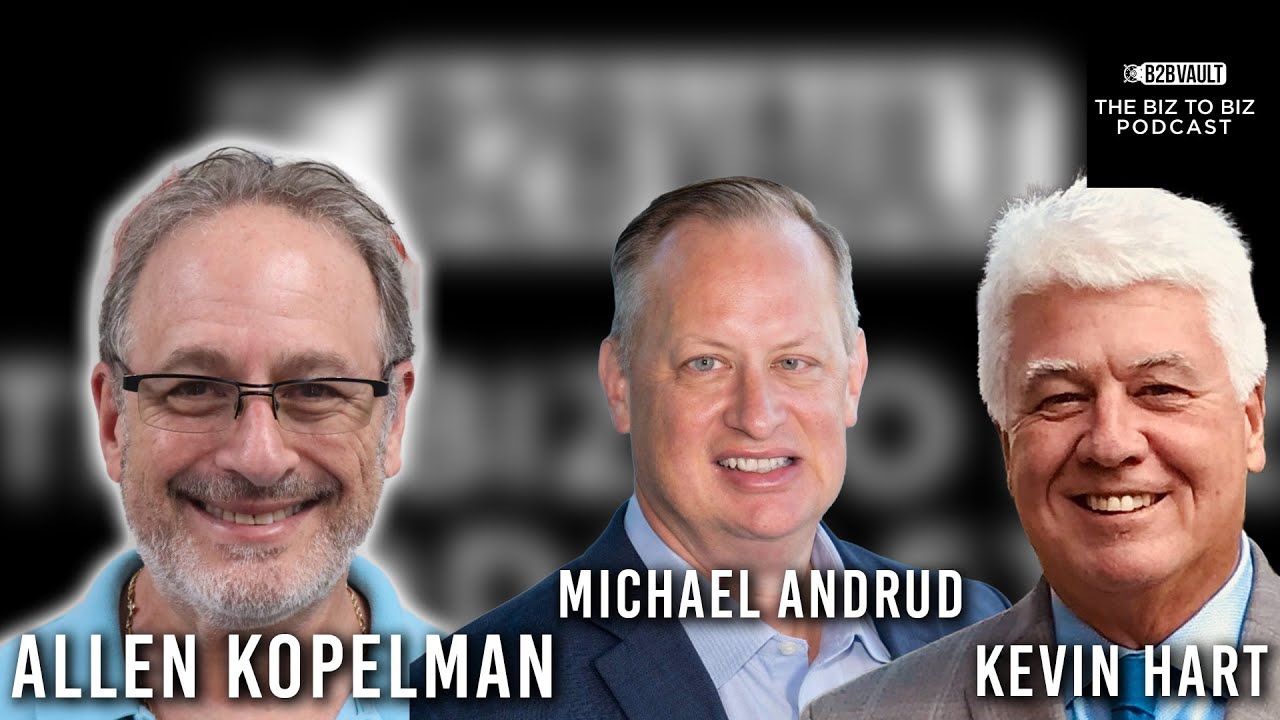
In this Biz to Biz Podcast episode, host Allen Kopelman interviews Kevin Hart of GreenCheckVerified and Michael Andrud (founder of LOOT, formerly Lute) about the chronic payment challenges facing legal cannabis dispensaries and how their partnership creates a compliant, cash‑less solution. Hart explains GreenCheck’s role as a compliance platform that breaks down every transaction to the atomic level, monitoring inventory, licensing, THC limits and payment methods for over 17,000 cannabis businesses, of which 9,500 are already banking through its network. He highlights the massive cash reliance in the industry—about 75 % of $1.4 billion monthly sales are still cash— and the safety, cost, and latency problems that creates for merchants, consumers, and financial institutions. Andrud describes LOOT’s closed‑loop payment system: consumers download a mobile app, fund a LOOT account via Plaid or real‑time rails, and pay at dispensaries by scanning a QR code. Money moves from the consumer’s bank to a sponsor bank (First Federal Bank of Florida) where LOOT holds an FDIC‑insured ledger, then settles to the merchant’s account the next day. The platform is PCI‑certified, SOC 2‑certified, and runs across AWS, Google Cloud, and Azure with AI‑driven auto‑scaling to handle spikes. Features include cash‑back rewards, geolocated offers, merchant‑controlled surcharge options, e‑commerce widgets, and an Ambassador‑Plus program that pays budtenders for signing up users. The conversation also touches on regulatory uncertainty (Safe Banking Act, state‑level cash‑acceptance laws), the pitfalls of cashless ATMs and rounding practices, and future expansion ideas such as co‑branding with universities and moving toward an open‑loop system. Both guests stress that the solution is a win‑win for consumers (lower fees, rewards) and merchants (price flexibility, faster settlement, compliance reporting), and they invite resellers and partners to join the rollout. The episode ends with contact information for GreenCheckVerified (www.greencheckverified.com) and LOOT (myloot.com).
Chapters
Welcome to the Biz to Biz Podcast, your number one source for all business news. Hey everybody, welcome to today's episode of B2B Vault, the Biz to Biz Podcast sponsored by Nationwide Payment Systems and our new product NPS One smart invoicing tool for businesses. And today we're going to be talking with two gentlemen, Kevin Hart and Michael Andrew, and we're going to be talking about how they have solved the problem to have legal cannabis payments at dispensaries. It's a really interesting subject for me. We've talked about cannabis on the podcast quite a few times and cannabis-related industries, and cannabis payments is a huge problem for dispensary owners all over the United States. It's a problem not only for them, it's also a problem on the consumer side. So we're going to have a great discussion today. It's really interesting. We have Kevin Hart here from GreenCheckVerified and Michael from Lute, and which is an interesting, um, platform. I actually know a little bit about it because I spoke to people from their company before. So gentlemen, welcome to the podcast. And Kevin opted to go first. He says he is not Kevin Hart the comedian, so we do not have Kevin Hart the comedian for those listening on Spotify, etc., etc. And he's laughing right now, but he said he goes first because he looks more like Santa than the rest.
Well, yeah, you can find the Santa-looking pictures online. So here, you know, just to make it easier, I'll start with a joke then, just so I can do the Kevin Hart thing. You know, somebody walks into a dispensary and they think they only have to pay with cash. Okay, that's the way the world works today. No longer true, okay? Because there is an opportunity with what Michael and his company have built with Lou. And so our role in that and how GreenCheck plays into this is in our background, uh, we started the company in 2017, and I'll fast forward to where we are today. We're working with over 185 different financial institutions. We have over 17,000 unique cannabis businesses connected to our platform, of which over 9,500 are banking through our platform today. We offer other business and financial services and we're seeing over $1.4 billion a month in sales deposits. And we know at the single dollar level from every one of those organizations to where that money goes to every one of those connected FI's, we know that over 75% of that $1.4 billion is cash today. Cash is brutally expensive, uh, brutally cumbersome for so many people.
Let me say one thing to interrupt you, but the amount that you're processing, that is this, that is like a two— if we had a ball, we said that was 100%, that's like a toothpick in the cannabis industry.
Well, no, actually it's not, because, you know, the cannabis industry is what, $35 billion, $40 billion? And so we're $1.4 billion a month, we're at $18 $1 billion annualized, you know, it's a, it's a little bigger, you know, Allen, you know, from a math perspective in terms of percent of market. But, you know, as that scales forward, you know, again, it's just way too much cash. It's just cash is brutally expensive for everybody, the consumer, the merchant and the FIs. And so, and it's not safe. And so we've always known we stay in our lane. We're a compliance company to connect the industries. Together. We're the largest provider in the cannabis space, but we always knew somebody was going to build a true payment solution that wasn't some janky ISO and skirted around the issues and, you know, had a different address or some fake BIN. And, you know, all the things that we all know have worked out. And lo and behold, here you have Loop. And, you know, it's, it's been gosh, what is it? It's probably been, you know, 6 to 7, 8 months of, you know, real due diligence back and forth with each other, on each other, uh, to have announced the partnership at MJ. And we're really excited about what they do.
So the— so from a compliance standpoint, do you also look at what kind of products they're selling in these dispensaries, like to make sure there's no synthetics and things like that?
Yes, so we, we break down every single sales transaction to what we call the atomic level. You need that level of data. So we're looking at their point of sale system, we're looking at their inventory system, and we're looking at their financial system. And it's the triangulation of all those things that have to be measured up against the rules and regulations of the state for the license, for the type of product the frequency of purchase, the aggregate THC balances of those purchases, the method of payments, etc. You know, the comp— the rules engine is complex. So there could be, depending on the environment, the location, the license type, and the mix of products, because you have adult and recreational mix, you can't mix product sales. There could be 40, up to 46 different checkpoints on each individual transaction. And our financial institutions rely on us to make sure that we're doing that for them because they have to show and prove to their examiners and the industry that they're letting the good money in and keeping the bad money out, which is why the inventory is important in the financial systems. You can't sell your buddy's weed out the front door because you brought it in the back door. So, you know, it's a very, very, very complex data nerd problem. We're a bunch of data nerds. Raise my hand. Love that. Moniker, uh, but, you know, method of payment is one of the critical things that we have to check. And again, this is where Lute has something very unique and special for the cannabis industry.
All right, so Michael, let's hear about your background and what Lute is doing.
Yeah, so many years in banking and consulting, uh, to banks and, and to payment firms. Uh, some of my clients were the largest, uh, payment processors in the nation, you know, with Fiserv and Tesis at the time, are now Global Payments. And I assembled, after meeting with my investors, we recognized the need to build a modern payment processor, you know, one that runs on the cloud, one that takes advantage of modern development and can scale and have uptime and flexibility for not only the cannabis industry but other industries as well. And so our benchmarks when we started building, frankly, you know, we, we know the situation and the limitations of traditional payments in the United States, but UPI in India was one of our benchmarks. So in terms of how, how They did it. They're actually with the largest payment processor in the world today. And there was others that the Target Red Card was very interesting. And there was an article written by kind of the chief investor at a16z, Mark Andreessen, called "The Future of Payments is Red." And when I read that article, I thought that's what we're gonna build first. And so we're on a journey and we started off our first product that we've launched and we have PCI certified is our closed loop system. That's what works in the cannabis industry, but we're on a journey to build out the world's most modern open loop system for regular industries with debit and credit cards. And so that's us. So we have PCI certified. SOC 2 certified, and there's no aspect of our system that runs with Visa and MasterCard. And we think we actually do things better than they do in this industry. So we will help a lot of different kinds of merchants that are tired with Visa and MasterCard, not only the cannabis industry but others as well. So we're excited to have launched, we're excited about the relationship with Kevyn. We think it brings a lot of synergies. And that we could help the cannabis industry in a way that they haven't seen before.
So, so one of the things, like, we can get into— this discussion could go on for 2 hours— but we see now, like, uh, Trump is talking about, or his, uh, people are talking about, you know, changing the scheduling of cannabis. And while that, I'm not sure, is going to really do a lot for for, you know, the industry in general, because Congress would still have to pass like the Safe Banking Act. And until they do that, kind of banks are on their own and have to deal with like company like Kevin's to come in and, you know, set up the guidelines and things like that. So the other thing is, you know, we're also watching the hemp and the CBD industry go through a huge change also with, um, that they're going to get hit with. We don't know what's going to happen with that. I mean, I think we'll see probably 6 months, June, July into 2026, you know, how the card brands, Visa and MasterCard, how the banks are going to react, and the, the acquiring banks, that process for those businesses. It's going to be a very interesting be very interesting to see what happens with all of that. And I know that we also talked— so I'll just give people like a little baseline. So like, you walk into a cannabis location, you're either walking in there with cash or you're walking in there with your ATM debit card. And so let's say you go to the ATM machine. The ATM machines generally charge $3 to $5. For you to take out some cash so you can pay. Or somebody— these dispensaries have, for a better term, cashless ATM machine, which is basically a credit card machine but is illegally or improperly being run on the ATM rails until the bank finds out about it, shuts it off, and then the dispensary's money is held probably for 180 to 280 days, and everybody's getting yelled at. And the consumer has this like really bad thing because you go to the ATM, you get hit for say $3 to $5, then your bank hits you for a non-bank ATM fee that can be $2 or $3 in most cases. And the same thing when you use the cashless ATM, you can be getting charged 3, 4, 5 bucks on there, or a percentage. Sometimes you could be charging, getting charged 3%, 4% on those machines and then getting hit with a non-bank ATM fee on the backside. So that makes it a very expensive transaction for the consumer. You know, the business is not really paying any of that, maybe a small fee, but most of that fee is being collected on the consumer and outside of the business too, because the banks making that money. So how does Lute— how does that— how does Lute figure in when someone's doing a Lute transaction? What happens from enrollment to using the system?
Right. So when we designed Lute, we wanted to make sure it was safe and compliant across the board. So, you know, when you download a Lute app, from the App Store or the Google Play Store. You download it on the consumer side. We do different identity checks, validity checks, that sort of thing to make sure you are who you say you are. And then we open a Lute account and you fund the Lute account by putting money in from your bank. You can tie your account to it via Plaid. If you have real-time payment, your bank is modern payment rails. You can fund your, your account, um, instantly. So the— when you fund your LUT account, the money never leaves the banking system. What happens is it moves from the consumer bank to our sponsor bank, which is First Federal Bank of Florida, and we are the ledger. So we keep that ledger. So your money is always in the banking system, always FDIC insured. When you go into a dispensary, it's really at that point like, uh, almost like a traditional payment in that the merchant has a Loot app on a smartphone. So they don't— you don't need a terminal, you just— it's all done on the smartphone. So the merchant puts in the amount and scans your QR code. We often hold the money just like the big guys do, and then the merchant gets their money in their bank account the next day. For all their transactions, and that's it.
Does the consumer get like a text message saying, oh yeah, you spent $287.12, hit okay, or they're just bringing up the QR code on their phone and then getting it scanned?
They're getting— bringing up the QR code on their phone, getting it scanned. Now they, they can immediately see the transaction, so the consumer can see all of their transactions on the app. And if there is a mistake made, they can return that and correct that immediately.
Okay. Yeah.
And then that's— consumer gets cash back on every transaction. And we have things like geolocated offers. So the merchants can offer when you come into the store, the offers from that merchant will pop up. So like, you know, one of the things going back to the Target Red Card, Target gives 5% off of every purchase when you use the red card in their stores. We wanted the ability for every store to be able to do that. So like, if you think of like a Dollar General, they could use Loot App, the Loot App, to do a permanent offer like that for a standing offer like that, as long as they wanted to.
I think Dollar General better price their shelves right there in a classic lawsuit.
Yeah.
Yeah. That's right.
For having the one price on the shelf and a higher price at the register.
So, right, right.
No, but that's, uh, that's really interesting. So are you only working in Florida right now, or this is available nationwide?
This is available nationwide, um, you know, and, and, and from us, we were very interested in scalability and making sure we're scalable. So We're the first payment processor that is PCI certified across the multi-cloud environment. So we run on AWS, Google, and Microsoft's clouds. And so, you know, if we sense that there is a spike in transaction volume in Seattle, our AI front end will automatically spawn new capacity, switch capacity in Microsoft's data center in Seattle. So we, we can scale all the way up to Black Friday volumes on 2,000 data centers around the world. By the way, we can go global almost instantly and we can scale down. So one of the innovations of Loot is to make the infrastructure cost variable. So that's a huge fixed cost for a traditional processor. We've made that a variable cost.
So when somebody pays with Loot, the bill's $100. Is there— are they paying a fee like they are with the cashless ATM and ATM machine, or there's no fee to the payer?
We give the merchant the option so that, you know, to the consumer it can appear that there is no fee that's built into the price of the transaction, or you can add it on top, or you can, you know, not have it at all. So I mean, there's different options that the the merchant has in terms of how they want to do charge the consumer for it.
Okay, interesting, because I know there's some states that have laws on surcharging. So even though it probably does— I can guarantee those laws don't say anything about Visa and MasterCard or cards. It probably just says surcharge in general of everything. So when someone signs up with Loot, then they also have to sign up with Kevin's company at GreenCheck, or no?
No, not at all. No. And that's the, you know, aside from all the things that Michael is just talking about, you know, it goes way beyond just the capabilities. It's how they built the company, how they operate the company, the compliance, the flexibility, the scalability, etc. This is who the merchant is and what that merchant is doing. Now, if they're a GreenCheck cannabis merchant, then that funds movement becomes significantly easier for that merchant. So it's advantageous for them to be banking with a green check FI. It just makes the fund movement a lot easier, and it also makes the verification and the implementation of LOOT a lot easier. But they have the option. They can, you know, they can go standalone and go with, go with LOOT.
Okay, so as long as they have a business bank account, Michael can deposit the money, right?
Yeah, uh, definitely. So it's as long as they have, uh, an account at, you know, one of the banks. And, uh, you know, Kevin's banks, he's got a lot of them in the cannabis industry. Uh, the money gets into your merchant account the next day. You can see the transactions, all of the transactions, in our portal. So, you know, we're trying to give that a good level of service. And, and, you know, as you talked about cashless ATM and how that, you know, they call it— they're really good at marketing. They call it an outage when, when Visa finds out that it goes down, right? It's not an outage. Visa found you. They're shutting you down, you know. And in some cases, Visa came and has levied some pretty heavy fines against the banks that have sponsored these cashless ATMs. So You don't have any of those headaches with us. We solved all those problems.
Yeah, being that we have an ATM portfolio, we've definitely had— they've had conversations with us like, hey, nobody better be hiding any stuff, we will shut down your entire portfolio, you lose all your business. You know, there's, there's— I mean, there's still people doing it, they think that they're slick, but Eventually, I've seen every one of these solutions get caught. And then you see complaints on Reddit, oh, some bank is holding all my money, blah, blah, blah, blah, blah. And from that, like with Kevin, so let's say they still have some cash. Do you help with armored car service and things like that?
Yes. And that's what we're doing today. So again, if you're a dispensary operator, you want to have options and you need to have options. You know, and today you're very limited. But again, if you look at the cost of cash, cash costs 6 to 8% to handle. And so now you have a compliant payment solution with multiple value points associated with it that you can provide to your consumers. And the banks are also looking at this. This is part of the effect of if you're a cannabis operator and you're with a green check bank, we, we expect, okay, and this is all new, but we expect that a lot of our financial institutions are going to go to their operators and say, you need to put something like this in. Okay, we, we don't want to have to handle all this cash because there's the expense and the compliance and the latency and availability of funds. Everybody wins. It's, it's pretty much a no-brainer in terms of it, but it's the word's got to get out there and the proof points have to be there. And I think one of the great things that we're working on together is creating those empirical, you know, financial models for an operator. And because we have that data, you do this much in sales, if you translate that much to LÜT, this is what your benefit looks like. Again, it becomes pretty simple. But, you know, press hard, bottom copy is yours.
Let's go. I mean, I think from the consumer standpoint, if I was going in and paying, I would want to pay with LÜT versus cashless ATM because I'm going to probably not pay as much in fees, hopefully.
Right, right. No, it definitely is going to save the consumer and the merchant money in this.
We showed this to one of our— on one of our FI partners who's, you know, part of the initial launch of this. And this is somebody who used to be an examiner, federal examiner for banking. Services. And, you know, after, after doing their due diligence, etc., he goes, I'm signing up, I'm using this from now on, get my dispensary online, you know, because, you know, this is the only method of payment I want to use from now on. I mean, that sort of, that sort of endorsement and acceptance and approval with that background shows you the power of this.
And how does it work? Like, a lot of the dispensaries now have it where somebody can like order online. They can't really pay online, but they can order and then come pick it up. Do you guys have it configured where someone could actually pay for it online too?
Yes, we support e-commerce, um, and deliveries. So, so that was a very big, um, goal for us is that, you know, you look at, uh, the number of people that— and dispensaries that want to build their e-commerce business So you have a Loot payment widget inside on your shopping cart. You actually— the consumer scans that with their phone and the money is held against that Loot account. And then when they do the pickup at the store, because you have to, you know, prove that you are right, the transaction is done and the money money flows.
Okay, and if somebody's transferring money, like I want to transfer money out of my bank account to my LUT account, like how fast is that happening?
Anywhere from— depend— it depends on your bank's payment rails. So anywhere from instantly to 48 hours. Okay, because, uh, some banks have not modernized their payment rails yet. The big guys have, and You're seeing movement toward modernization with smaller banks now too. And Lütte is a good reason for a bank to modernize and get to that.
You don't see like any banks going, oh, we know this guy's going to pay with— it's paying, loading money up on some sort of cannabis app and like blocking it or anything like that, or?
No, I don't think so. You know, actually, when money is flowing out of a bank, like if you go into your local Chase branch and you say, I want to take out $1,000 because there's some really good weed on sale, you know what Chase will say to you when you do that? Would you like, would you like an auto loan too?
Yeah, yeah, it's very hard.
And do you need an envelope?
I'll tell you what, it's not so easy to get cash out of the bank anymore. I mean, we used to load some ATMs and we went through— we switched all— we don't have any ATMs that we load anymore. It's all armored carrier, or we have loaders that load for us because the— and, and they have to have special accounts at the bank. Some of them have—
aren't—
I've got so good that they got armored car license so they can go to the Fed, the local Fed offices, and pick up, or even pick up in the bank because they have an armored car license, you know, to do that. And yeah, cash is definitely like, um, even like one of the things that's kind of crazy is what are all these point-of-sale systems going to do now that they said, oh, we're not going to make pennies anymore, right?
Yep.
So I was talking to somebody at a restaurant that had a big sign. We— if you pay by cash, we round down— they round down to the nearest nickel, right?
Yep.
Like, this, this is going to be like an accounting nightmare. What is all the— what are all these point of sales going to do with all of that? Because you can't really— what are you going to do, treat a cash transaction and an electronic payment transaction different? Differently. It's going to be pretty interesting to see.
It's Y2K, but steeped in reality this time.
Oh yeah, this is definitely probably one of the biggest headaches that point-of-sale companies are going to have to deal with in 2026, is figuring out how to, how, how to do that. Businesses too, because there's a lot of states that pass laws saying that you have to take cash. So which is good because there's still a lot of people, you know, in cash-heavy businesses and that get cash. And, you know, that's just the way the world is. I think it'll take 50 years to wipe out cash, but that's my personal opinion.
So yeah, you know, it's interesting too with, uh, uh, a lot of dispensaries, because of their cashless ATM systems, they round up they do their pricing so that when you buy the product, it comes out to an even number, you know, $30, right, $7, whatever, so that they don't have to give out change. But, you know, that limits the merchant's pricing ability as well. So with Loot, you don't have to charge $10 for a product. You can charge $9.99 or $9.95, or, you know, you can do all the things that normal merchants do pricing-wise. That's all in your favor now as a merchant.
And what is it like— so from a consumer incentive, what's the consumer incentive, um, to sign up with Loot?
Offers and rewards. So like, uh, one dispensary that we're working with, and it's kind of a joint thing, the dispensary, uh, gives a free item, you know, to sign up for Loot because their cash costs go away and And that's part of the marketing and stuff that we do with them. But then on every transaction, uh, the consumer gets cash back. So we have, uh, Fridays is called Loot Paydays, and so that's when consumer gets their cash back on their transact— all their Loot transactions. And then the other thing we do for the consumer is offers. And, and so you, you go into the dispensary an offer at that dispensary will pop up on your Loot app, or you could search, you know, which dispensaries or stores, whatever store you're going to, has an offer available. And for the merchant, the merchant can see that there's 1,000 looters, so to speak, we call them, in there within a mile of their store.
I don't know, you got to change the terminology for that. Looters, that does not sound good.
We love it, you know, and we, we have fun with it. And, and so the, uh, there's 1,000 looters within a mile of your store, you can push out an offer to them.
Oh, so they would get like a push notification in the app on the phone. That's really good.
Can they also—
the online sales comes in too because you asked about that, Allen, because they've integrated that and we've had to make sure that all online sales, delivery sales, etc. Also flow all into the compliance because that creates that massive diversion opportunity. So it's not just on-prem, it's total operation and that integration together that all has to happen.
No, this is definitely like a really strong game-changing product. I've seen some other ACH products. I mean, being in payments for 25 years, you can imagine what my inbox looks like. Oh, we have the latest and greatest thing. For the cannabis industry or this or that. So I've heard a lot of pitches over the years and, you know, this one sounds— it sounds really good for the consumer. I always talk about in business, especially in the payments business, if the consumer wants to pay a certain way, like they want to be able to tap their phone, right? They want to tap their card. You better have that in your business.
Yeah.
If I go to a restaurant and they don't have a pay-at-the-table solution, and I only have my phone with me, which happened to me a couple of times, I'm probably not going back there, you know.
Yeah.
And you're, and you're going to section out a section of people that just not gonna— that's how they want to pay. They don't carrying their wallet, they're going to want to carry their phone. So I always say, if the consumer wants it, then the business wants it. Then if the business wants it and the consumer wants it, those two things come together, that makes a great payment product. All the time.
We want to make it easy and rewarding for both the consumer and the merchant. And, you know, one of the things that we built in, uh, our guys had an idea, you know, to drive adoption, was we actually give rewards to the budtenders for signing up consumers as well.
Okay.
So, so they get— the budtender can actually get ongoing residual income, uh, We see in the future that there's going to be a new career for people, and that is signing up people on Loop because they'll get a— every new looter that you sign up and they use during a transaction, you're going to get a cut. And so, so that, you know, for, for a lot of people, they could, they could make residual income just by signing people up for Loop.
That's pretty interesting too.
Very—
we call it our Ambassador Plus program.
And again, they— I mean, they really, they really thought this through. And, you know, so the fact that it works is exceptional, right? Because Allen, you said you've had all these pitches, right? You have that background, you have that experience. But the fact that it's multi-layered, multi-dimensional, multi-value is really, you know, as— and the technology and the stability but they thought it through. I mean, this, this really, you know, we have work to do to roll this out into the market. But, you know, you having that level of excitement and/or understanding and enthusiasm, not saying you're endorsing us, but, you know, that's what we expect in the market as we roll this out.
Well, we'll see if we can become a reseller.
There you go.
Help you guys get it happening.
You absolutely can. We have a reseller program and we'd love to have you guys as a reseller.
Yeah, because, you know, listen, anytime there's something really good, you know, like I said, I look at this product, I go, good, good for the consumer, good for the business. There's nothing, you know, it's a win-win situation. That's what makes every product successful in payments. Yeah, when you have that win-win, it's like PaymentLinks. People love getting a PaymentLink, click on it and pay. You know, people are going to like this because there's benefits to the consumer, benefits to the business. Benefits even to their employees. We probably have to deal with getting yelled at sometimes, and I think it's a really good product. So in closing, uh, Kevin, let everybody know how to get in touch with you if they need to get banking set up.
Uh, www.greencheckverified.com. Um, you know, uh, please look us up if you're a cannabis business and you need help with, uh, banking, financial, or business services, tap us. We will help you, no charge.
Oh, great. That's awesome. And Michael, how do people get in touch with you or get set up with LUT?
Go to mylut.com, M-Y-L-U-T dot com, and you can get set up there. And you can also sign up for our app. You can download LUT Consumer from the App Store or Play Store. And Loot Merchant from both places as well.
Oh, one question about your, like, your app. So if I downloaded the Loop Loot app and then I, let's say, and I'm looking at it and signing up, or I don't sign up, is it also searchable on there to see who accepts Loot?
Yes, we have on the front page the, the different merchants that are in your area that accept Loot.
Oh, that's awesome. That, that That really gives—
We give you a map that shows that. And so, you know, and what we're hopeful for too is, you know, like any place that has a private payment card system like universities or resorts, we can do a co-branding with them and have it be, you know, use LOOT as their co-branded university payment systems, for instance. So that's, you know, there's lots of opportunities beyond the cannabis industry that we see for the closed loop.
Definitely, like, university systems are so archaic, it's not even funny. And, and I know because I worked in that industry for a short time, and I remember when my daughter was at college, even though that was like 9 years ago.
And even today, still the same one today.
Yeah, it has not— it has not changed. They have their little card with a mag stripe and It's pretty, it's pretty archaic, you know, what they're doing over there. And they, yeah, and it's all cash really because it's closed loop inside the university.
Yep.
No, and they've even, you know, some universities have actually tried to, you know, expand that to like the restaurants around the campuses and stuff, but it's very, very difficult, was very, very difficult for them to do it. I don't think anybody, maybe a few accomplished something, but Not really, but I'm sure with this that could definitely be accomplished and that would be super easy to do that. Yeah, it would be a big winner for the university to do that. So that's really, really cool too. So thank you everybody for listening to today's podcast. Again, B2B Vol. You can find us on Spotify, Apple, any app you listen to your podcast on, and YouTube. You can go to nationwidepaymentsystems.com to find more information about what we do. You could see information about the podcast there. You could book your— fill out a form to be a guest, although we're a little bit overbooked right now, which is a little crazy. And also on YouTube, you can watch the podcast videos if you like videos better. Follow us on LinkedIn. I'm on LinkedIn. Michael's on LinkedIn. Kevin's on LinkedIn. And if you call Kevin up, he promises to tell a joke. Kevin, give us You have one joke. Come on.
All right, I'll tell the one I just told my grandkids, so we'll keep it sort of PG. What did Blackbeard say on his 80th birthday? Aye, matey.
Yeah, we're going to do a video. That's going to be a video clip out on LinkedIn. When the podcast comes out, and maybe Kevin Hart will have you open up for him at his next concert. Okay, peace out everybody. Carpe diem, seize the day, and check out LÜT and check out Green Check Verified. Thank you for joining us today, guys.
Thanks, Allen.
Be good.
Okay, stop.
More from Allen



How B2B Companies Can Turn YouTube Into a Lead Generation Machine | Featuring Samu Kovacs


How AI Is Transforming E-Commerce with Zero Code | Kumar Senthil, CEO of Firmly



Dre Baldwin on Discipline, Leadership, AI & Business Success | The Mindset Every Entrepreneur Needs

The Same Skills That Made Me a Pro Athlete Built My YouTube #podcast #entrepreneurship #success

