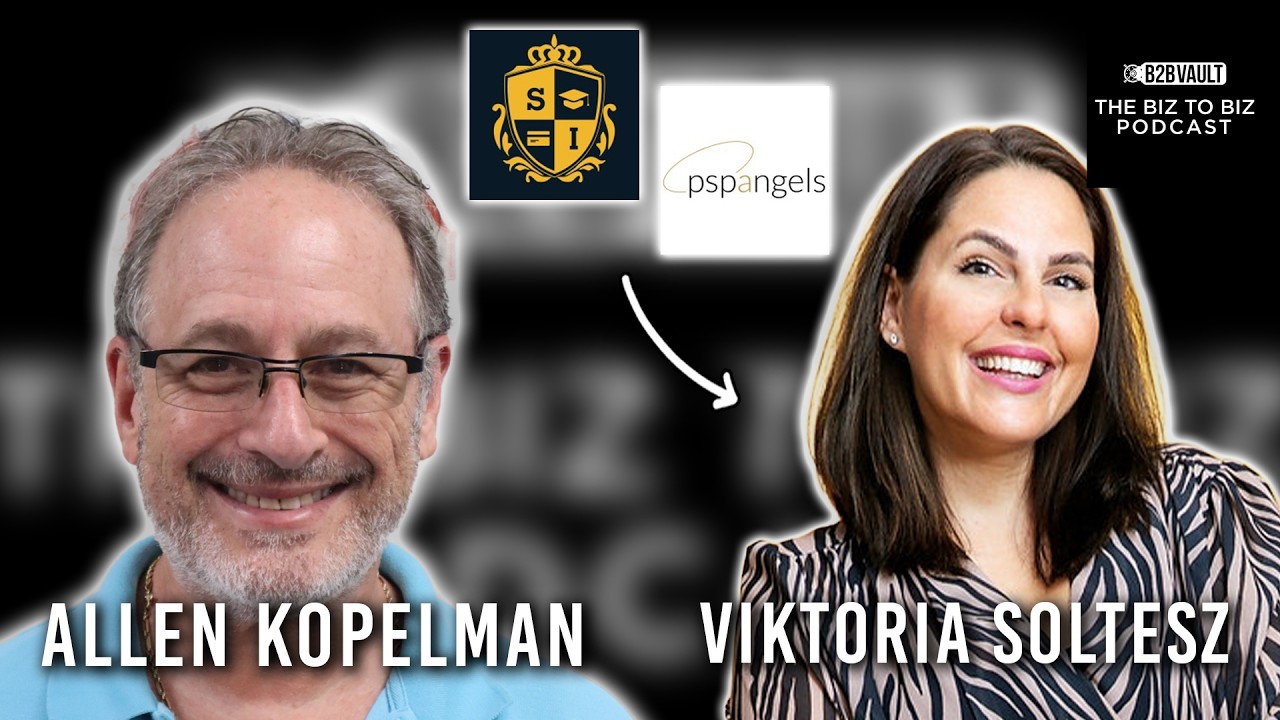
In this episode of the B2B Vault podcast, host Allen Kopelman interviews European payments expert Viktoria Soltesz (founder of PSP Angels and the Soltys Institute). The conversation covers the systemic lack of education around payments and banking, the distinction between public and private acquiring banks and their differing risk appetites, and the often‑overlooked "meaningful presence" rule that forces merchants to have a genuine local footprint to obtain a merchant account. They dissect common onboarding pitfalls – hidden banks behind platforms like Stripe and Shopify, opaque fee structures, and the danger of using fast‑track providers that accept questionable merchants. Compliance is highlighted as a make‑or‑break factor, with deep dives into niche high‑risk verticals (CBD, nutraceuticals, adult content) that require LegitScript certification, COA vaults, and detailed product labeling. The hosts warn against straw‑signer scams and "free‑cheese" offers that attract fraudsters. Technical scalability issues are discussed, illustrating how sudden traffic spikes can overwhelm gateways and lead to account shutdowns. The dialogue also explores alternative payment methods, including Buy‑Now‑Pay‑Later, crypto, and stablecoins, weighing their potential benefits against regulatory and cost challenges. Finally, they champion the emerging role of a Chief Payment Officer (CPO) as a strategic function that bridges finance, compliance, legal, and technology to protect and grow a business’s payment ecosystem.
Chapters
You're now watching B2B Vault, the biz-to-biz podcast hosted by Allen Kopelman, powered by Nationwide Payment Systems, the number one solution for payment processing. Hey everybody, welcome to today's episode of B2B Vault sponsored by NPS1, our new gateway from Nationwide Payment Systems that offers smart invoicing to merchants of all sizes. And today we have a special guest. All my guests are special and I like, and this is somebody that I've talked to a number of times. Victoria Soltys. Now she's not in the US, she's in the EU. She runs a company called PSPangels.com and SoltysInstitute.com, and the podcast is on her website. So thank you for having our podcast on your website. We both write articles for The Green Sheet, which is the oldest payments magazine in the United States. Greensheet.com. Check it out. Lots of great articles from many great contributors that have been in payment processing and banking for decades. And also she has written a couple of books, Moving Money and CPO, which is about Chief Payment Officer, why you should have one. And her books are available on Amazon. So welcome to the podcast, Victoria. And introduce yourself.
Well, thank you so much, Allen. I'm so excited to be here. Yeah, it's like all the good stuff you already mentioned. But if I have to introduce myself, I would say that I am the person who is fighting for an ethical and transparent payment and banking industry because we all have problems with payments and banking at least once in our professional life for sure, but even in private life. When you're dealing with payments abroad, there's going to be a bank bank who is asking funny questions. There's going to be a delayed transfer or a fee that you're so surprised about. So I'm trying to demystify all of this world and help my clients through the consultancy, which is the PSP Angels, and through my institute, shvates.institute.com, to understand how banks think, how money moves, and overall how this payment and banking world works. And I'm so excited to be here in the podcast. As you said, We are hosting your podcast and other very interesting podcasts related to payment and banking as well on the website. So please everyone check it out. We've got a lot of free content because we would like to make this education and understanding available for everyone.
Yeah, we're always trying to educate the merchant and let them, you know, make, have them understand, you know, how does everything work? Because a lot of businesses don't understand like how it works, you know, how do you get this merchant account? Where's the money going? What's going on in the background and things like that? Like, who's the, you know, why is it important who the acquiring bank is? You know, every bank, you know, I'm sure the same in Europe as it is here. Every bank has a different taste for risk and merchant type. And, you know, I always tell people, you know, there's two— I put banks in like two categories. We'll see if you agree. You have the public banks and they have board of directors and they can be publicly traded on the stock exchange and they have a board. And that board of directors, they can— you don't know where they're going, right? One day this type of merchant is good and the next day they decide Nope, we don't want that anymore. Whatever it is, you know, we don't wanna do nutraceuticals anymore. We don't wanna have guns anymore. We don't wanna have this anymore. And then you have private banks, which are more closely held, owned either by a group of people or a family, things like that. Those banks tend to take more risk.
That's right. And I think that there is a lot of misconception about payments and banking. Like, ooh, on Monday they say yes, on Tuesday they reject you for some unknown reason. Well, everything has a reason behind it. But for that, you really need to understand all the history of banking. Like what is a bank? What is the responsibility of a bank? Let it be public or private. What is risk? What is risk appetite? How banks are actually making their money. And if you think about it, you can't even blame the merchants not understanding it because there is no education on the subject. The best you can get is usually An accountant, the CPA, right? The guy who's trying to figure out like where is debit, where is credit, how to do budgeting. But these people are not trained on even the basics. Like for example, I'm telling you a gateway, maybe your understanding about the word as the concept of a gateway or an ISO, it completely different than my understanding. So we don't even have the common understanding of the basic expressions and principles. We don't really have standards, best practices. Everybody's just winging it. Hey Allen, what kind of bank works for you? Well, I'm going to try that too. And if you think about it, your money deserves better. I mean, you also have a marketing strategy, a sales strategy, but why don't you have a payment and banking strategy? Why don't you want to understand how your money is being handled? Who are the people who are handling your money? What is the regulation around how they are handling your money? And it is very complex, yes, but at the end of the day, it is about your own funds, your money. And of course, you have the freedom to choose all of those providers, ISOs, gateways, banks that you want to work with. But what is your criteria? How do you negotiate the best fee for yourself and make sure that they are really supporting your growth and your business? Because You can't really expect a supplier to help you and lose money on the way, right? Obviously they need to win, but you need to represent your part of the equation as well. So it is going only through education. The only way that you can really make good decisions for yourself, for your business, if you understand what's going on and just have at least some kind of standards in the industry.
Oh yeah, you know, and a lot of merchants, you know, don't understand, like, oh, I just signed up with Stripe, you know, or I'm with Shopify, and then Shopify shut me off, so I went to Stripe, and then they shut me off. Because it's not really transparent that, you know, that Shopify and companies like QuickBooks, Lightspeed, all use Stripe, you know. There's, there's— but, you know, and then behind Stripe they have dozens of banks that are processing the transactions. And even though you're signed up with Stripe, those banks are also reviewing what you're doing in your business with a lot of automation and a lot of AI. And all of a sudden the bank can just go, hey, we see Stripe is sending us transactions from Billy Bob's business. Well, we don't like this guy, so boom, and you're shut off. And then you're like sitting— the merchant's sitting there going, why am I shut off? Where's my money? What happened? And you know, there's nobody to— those companies, while it's quick, fast, and easy to get set up, and there's a lot of benefit to using some of their services— we were talking before we hopped on the podcast, like processing international transactions. It does. You don't have that customer service where you can call Allen or Victoria on the phone or whoever your provider is. You don't have access to that, you know. And sometimes merchants are like, oh, I got put on by— why is this bank putting me on the match list? Or why did this bank shut me off?
That's right, exactly. And I feel like a lot of people get get stuck on this Stripe, Shopify kind of equation that they don't really see that there could be another alternative. And it's not always about the price. It's not, as you said, it's about the customer service, about the technology. It's about the scalability. For example, I had a client who was a startup and, you know, every startup at the beginning, they try to get the minimum viable product out. Sell, sell, sell, guys. You know, we build the wing while we are flying. Kind of attitude. And unfortunately, their website only supported 10,000 clicks a day and they went viral and everybody wanted to buy on their website, but the website had a limitation, which is sending a huge amount of traffic to the payment gateway, which is also having limitation, but you don't know. And of course you don't know what you don't know. You're not asking these questions. You are concentrating on the price, just get it out, just do the bare minimum technical requirement. This can actually really badly backfire. Fire when you're scaling up, or for example, when you want to introduce new products or services, you sign an agreement with a gateway or a payment provider that you're going to sell whatever, red mugs, right? And then you are introducing blue curtains and, "Ooh, no, it's outside of our risk appetite." But who is going to tell you that? At the best place, of course, if you have a good relationship with your payment provider, payment provider is helping you on that. But ultimately the responsibility is on you as a business owner to know what are your opportunities, where it's gonna be the bottleneck, when can you go back and renegotiate the fees, can you even renegotiate the fees, what are the terms and conditions, how quickly you receive your money, on what bank account you are getting your money, what are the different fees, because every time that money moves, it triggers risks and costs. So there are so many little aspects that if you are not asking the question and if you don't have anyone to guide you, You don't even know how much money you're bleeding out and you don't even know how much risk you're facing. And this is the problem because sooner or later it is going to show and maybe that's just too late.
Yeah, changing your product, you can't do that. You can't say like, oh, one day I'm a restaurant and the next day you're selling mugs. And then all of a sudden the bank's like, what? What is this guy doing? All of a sudden there's all these e-commerce transactions. That we don't know about. You know, another thing people don't understand, and this comes up a lot, I've heard that I've gotten phone calls from attorneys, accountants, merchants. I see comments on Reddit, Facebook, LinkedIn, all about this, and it's never talked about. And it's the meaningful presence rule. And I know you guys have it there in Europe and we have it here in the US. And I'll get phone calls from people that are like, Well, I live in the UAE, I live in Germany, I live in wherever, England, France, doesn't matter, right? Australia. I went to Stripe, I used whatever service they have. I formed the corporation in Delaware or Wyoming. The Wyoming is the credit card processors. Literally, they're going to dig deep into your background if they see Wyoming because they know this is a hotbed for fraud.
What are you doing there?
I mean, it's on everybody's radar. We've been told by underwriters, like, we don't want to see that address on the application. It will get scrutinized beyond what we normally do. Even if it's legit, they're going to really look into it. And then they don't have, you know, they don't have a Social Security number. They have a federal tax ID. And then the bank says, well, where's your driver's license? No driver's license. They show a passport from a foreign country. Okay, do you have a house in the US? No residence, no office. They might have like some kind of distribution, third-party distribution, but they don't have this meaningful presence. And I know we've run into the same thing. We can get people merchant accounts in Europe. Someone will come to us, say, Oh, I live over here and I'm trying to do this, you know, adult site or this e-commerce site or whatever it is. And then we're like, okay, well, where do you live? And they're like, well, what does that matter? Well, you can't— we can't establish, you know, you— when you want to establish a merchant account, you have to be— most of the countries over there in Europe, right, have those resident rules. You have to be a resident, right?
And you are hitting the nail on the head, Allen, with that, because I see it so many times. Now, first of all, I'm originally a tax accountant. So I was the person who was setting up different tax structures and optimized taxes internationally. You can still do it. However, you do need to understand that the banks are the policemen of the economy. They are obliged to filter out if you're committing any crime, you're selling something that you shouldn't, or you're cheating your taxes. So if it was that easy that I just don't want to pay taxes in Germany, therefore I'm going to British Virgin Islands because now everything is online. But don't mind me, dear bank, dear payment provider, I'm just cheating my taxes. It does not fly anymore. You can't just go to Panama just because you don't want to pay your taxes. No, you have to have this meaningful presence, which is like the substance, as you said, right? So The good reply, why do you have a company in Wyoming, is not because, hey, I just want to optimize taxes, is because I like the Wyoming food, I like the air, I have local friends, I live here, and lucky me, I'm paying less taxes. Now this is a good reply, but the intention has to be examined, which is the reason why are you going there to do business. And if it's too obvious, if it's obvious for you and for me, trust me, it's gonna be obvious for the tax office too, right? Oh, well, well, well, what are you doing there cheating your taxes in a foreign country? So that's the important part, that the banks are not against you. The banks are trying to save society from people like you who are trying to cheat their taxes. And if it was that easy, everybody would have done it. So there has to be a system which stops you to take your tax money elsewhere. And it's very, very apparent nowadays because nowadays you can do everything online. You can live in Germany, and legally and reliably run a business in Asia, but then have a bank account in the US. Okay, fine. But think like if you were a bank, how would you assess this risk? Because if it looks a bit weird, the bank is going to be the one who is getting the penalty. Their license is going to get revoked. So if I was a bank, would I take a risk with this questionable shape, this questionable setup. No. So if you don't even believe what you are doing is looking good on paper, at least like some reasonable explanation, it's not going to look good for the bank either. And of course they're going to shut you down. So I'm very happy that you mentioned that because we see it all the time. People are going to tax advisors, classic tax advisors are still saying, "Oh, you're legal." Yes. But just because you are legal, it doesn't mean that banks want to work with you and they want to take the risk. With you.
Yeah, it's just, I find it kind of ironic that nobody really talks about this meaningful presents rule. None of the credit card processors talk about it. I learned about it when people were asking me, and then I would go to the bank and they would be like, no. And then I remember one guy, my, one of my friends, Kevin, he says, no, you have to look this up, meaningful presents from the IRS. And I was like, Oh, wow. Okay, now this all makes sense, you know, and it's in Europe and I learned all about it. So when we were talking to merchants, we ask them like, oh, you're in Israel, you do you have a US corp? Do you have an officer here? Like that person is going to be able to sign and all these different things. And if you do have that, boom, you can get an account, no problem.
Exactly.
But when you don't have that, there's no way to get you an account, you know. And then, you know, we had this whole thing going on for a long time, this Straw Signer thing, where they would, they would literally advertise. I see posts on Facebook, Instagram, LinkedIn, everywhere. Oh, do you have a 600-and-something credit score? And they want you to get a merchant account for them. And one of my friends did it, and he tried to get me to open up the merchant account. I go, you're going to get ripped off. And I had one friend that got ripped off. He didn't listen to me. He lost $20,000. And I know another guy that lost almost $100,000. Oh, wow. Because they fell for this fast money deal, you know? And I'm like, you guys cannot— I said, when I'm telling you not to do it, don't think like I'm jealous, right? I'm just telling you, like, that person goes and takes— runs a bunch of credit cards, and then there's a whole bunch of chargebacks. They're not going for them. They're in some other country. They're coming for you.
That's right. And we have a— and exactly, we have a saying that there is only free cheese in the cheese— in a mousetrap, and there is a reason for that, right? Because if something good looks good—
free cheese is only in the mousetrap, I like it.
That's right. Yes, because if it looks too good to be true, then you are not the only one who is going for that. So usually what I'm explaining to my clients is that think about if there is a bank or a payment provider who is just onboarding you with a questionable setup. They don't really ask questions. That means that they are onboarding other ones like you, and it doesn't mean that you are doing something wrong, but the other ones like you are having some kind of fraudulent activity. They have their account frozen. This can affect the company which is handling your money. Your money is at the same pool as these questionable transactions. So you're risking your own money just by trusting these payment providers who are a bit more flexible, it's only going to end badly because if they are just accepting you like that, they will accept others like that too. And you might not want to keep your money in the same pool as others like that. And this is the big problem that not many people understand. Oh, I just got onboarded in 2 minutes without any documents. Like, wow, I wouldn't trust my money there for sure.
No, but it's also like another thing that, you know, merchants don't understand when I talk to them is about compliance, right? And, you know, everybody tries to lump businesses and they go, oh, well, this is high risk. And I say, well, you know, you can't really just say everything is high risk. I call them, they're just niche, right? So if you have an adult site and then you're trying to get credit card processing from 50 companies, there's only really 4 companies in the US that even want your business if they're even taking the business. Right. So you only have a few banks that want that business. CBD and hemp, the same thing. There's only a few banks that want that business. Nutraceutical business, same thing. You know, telemed and pharmacy, right? You have to have LegitScript. Without LegitScript, you're not going to get a merchant account. And a lot of times I see these people, they'll come to us and I'm like, well, you have to do LegitScript. And we tell them we can help you. You apply to us for the merchant account, then we help you apply to LegitScript, and then we work with LegitScript. And because LegitScript, one of the things that's— whatever, they don't tell you what's wrong with your website. They just say we can't approve it, and you paid them a bunch of money to tell you. What we do is intervene in between you and LegitScript so that we fix your website before You go to LegitScript, and that's what's important to understand is, you know, compliance is everything. Like, where do you— we're working with a new company now, and they have like a— they call it a COA vault, but it can be used for hemp, CBD, nutraceutical companies, because the banks don't want your company coming there, everything you sell that has a label on it, nutritional label, a food product, a vitamin product, a Nutra product, right? You have to show the labels. Do you think the bank wants to sit there and pay an employee to look at 100, 200, 300, 400 items, all these COAs? No. That's why you have to come to, come to someone like me who can help you Navigate compliance. So you have your compliance piece done, you hand it to the bank, and now the bank goes, okay, this guy's compliant. And we do that for all kinds of businesses. We hand over a compliance report to the ISO, to the underwriters, and then those— they can see, oh well, there's compliance and there's a website to go to, the compliance, you know, dashboard, and they can go look at everything in there and you're going to get underwritten like super fast.
Yeah. And I think if you even add the foreign transactions, that's when things are getting even more juicy because you might be completely legal in one state or one country, but if you start trading abroad, maybe your fungal nail cream, which was approved by the local authorities, are completely illegal because of one tiny ingredient in, I don't know, in Japan, which is your max target market. But again, you don't know what you don't know. And who is going to make a decision on that? Your accountant, who is making decision on the payment providers, or is it the chief operating officer who is trying to keep everything together? Of course it's going to reach legal too late and legal might not even have more say in who is the payment partner that we are picking other than here's a contract, 'Approve that the prices and terms and conditions are good and let's go.' So I think what we are arguing about is that we need to have a person in every merchant's operation who understands a bit of compliance, a bit of finance, a bit of legal, a bit of tech because everything is now fintech, right? The connectivity and whatnot, a bit of data security. So a lot of aspects what payments and banking affects. User experience, for example, maybe you've got a beautiful website and the checkout experience is carefully designed just to direct you to a dodgy page which has 4 colors and random pop-ups and all of that. It affects every area of your operation, yet the people who are making decisions of who to onboard as a gateway and as ISO, as a partner who is handling our funds. It's like a super important asset. They are just not trained on that. Everybody is defending their own corner. There is not that much of an understanding that I'm changing something here, then that is going to change. So it's very, very complex. And you're seeing it, right, Allan? There are not that many payment providers who actually care about you because sometimes it's just too much of a hassle of like, hey, okay, just go somewhere else. I don't have time and energy and motivation to explain you the whole industry of payments and banking, just take your business somewhere else. Then those merchants have nowhere to go. And this is a problem because you don't even know that there are people who can explain this to you if you only apply to Stripe. So that's the goal here, to talk about the problem, realize that payments and banking is indeed a standalone thing that you need to strategize for. You need to talk about it. You need to to plan for. And you do need to have suppliers like yourself who are, who understand the business and can help you that, hey, don't put that product up because then the whole website is going to go down. Thank you very much for letting me know. But if you don't have the communication, then you can't really figure this out on your own. That's what I can say.
And one of the things that really irks me from a business is like companies like Well, like Shopify and Stripe, the merchants do not— when they're putting in their business and they go business type CBD, right? Nothing pops up on the website to say, hey, we don't support CBD payments, right? So the merchant just goes and builds the website or sets up Stripe or they're setting up Shopify payments, and then all of a sudden they get to the end and they go, well, we spent 2 months building a website. We hooked all this stuff up. Now you don't support my payments. And they don't know that going in because none of that, none of these people, these business owners, they're in a hurry to get payments, right? But they don't look at the terms of service, the restricted and prohibited list. You know, they think restricted, oh, that doesn't mean anything. Prohibited means prohibited. Restricted means restricted. It means that you're going to need more approval. To do that. And, and I see merchants get caught in this pickle all the time, you know, or they go to a provider that will miscode their, you know, miscode their business. And that's not good either. We don't get involved in stuff like that.
Yeah, exactly.
But it's, you know, it really, you know, it's crazy that how many times I'm sure you have you heard from a merchant And you say, well, Stripe doesn't support your business. Did you look at the restricted and prohibited list? And they go, huh, what's that, right?
Yeah, yeah. And it's even worse when they let you to process for about a week, for about 3 weeks, just when you spent all your marketing budget and you're all in and you're getting the customers and everybody is clicking and buying and poof, and after that, no more. And then you're in panic because obviously the marketing budget has been spent. It's a massive reputational damage that what you're just on for 3 weeks and now you disappeared. It is a big, big problem, but Stripe and all of these big payment providers usually do that, that they accept you just to evaluate what's your traffic, and then it just hits some automated fraud report that it's not even checked by a human and then automatically gets shut off. And then where are you going to go? There is no phone call, as you said, you can't call anyone, right? And then you are already busy serving the orders. You just launched your business, clients are on your website, but you don't have a payment provider and to find a new one. And first of all, understand why they shut you down. I mean, good luck for that. Second of all, find someone who is taking you because most probably Stripe shut you down. Maybe other classic payment providers are also going to shut you down. So the panic increases. Oh my God, I got shut down by 2, by 3. I got rejected by 5. Oh my, I just need someone to work. And then your budgeting is all over the place because someone is going to take you instead of 3% for 13, even I've seen that. And you're desperate because all your clients are waiting, marketing budget have been spent. So you're getting in this very bad toxic spiral of like, I need a payment provider yesterday and I don't care about anything. And of course, once you find someone who is miscoding, someone who is not really good, the tech is breaking a bit, the data is like leaking everywhere, you shouldn't. You can't really build a business like that. And that's what I said, that a lot of people think that, oh, we only need an expert when we get there. No, it's cheaper to get it right from the beginning and make sure that everything is working and scalable and you can release your volume when it comes. It's much cheaper to plan ahead than fix the problems when you are up to here with orders and then you need to figure out forms and figure out why no one takes you. So it can be really, really problematic, even for, for very small merchants and startups.
Yeah, before we were, you were mentioning about SaaS and when we had a client come to us, they were doing over $1 million in SaaS. They got shut down by Stripe for, and they were processing for, well, they were processing on a regular ISO. But they made a mistake. They said, oh, let's get a Stripe account. And then they set up PayPal and then they got dinged and got put on the match list because it's unsupported product of Nutraceutical. And the biggest mistake that they made was they were not using a third-party subscription software. And all their— because they're on the match list, the credit card processor shut down the gateway. They can't get the data. They have to get a lawyer to get the data from the gateway. You know, the lawyer is going to want— they're not going to just release it. They're going to say you have to have a merchant account. And people think that they can go form like, you know, whatever, even like people will come to me and they'll be like, well, I already have an NMI account. And I'm like, well, where are you getting all these customers from? And then they'll say, oh, I had another business that's been closed for 6 months and they think they're just going to do those rebills, right? Oh, they're going to start billing people. We won't— you know, I don't get involved in stuff like that. And I wish that the gateways would not let merchants open their own gateway account, right? And control and have control over this payment data that they could be running through accounts that are not set up the way they're supposed to be set up. And that's a huge problem. But you have products like Recurly, Chargebee. I'm sure there's other ones I'm not mentioning, but those are big ones that are out there. And they— or, you know, some people use this, use CRMs like OrangeCRM or GoHighLevel, and that manages their subscriptions and manages all their data. And then that way, you know, some companies sometimes have to do load balancing and you can load balance your, you know, 2 or 3, 4 merchant accounts, right? It's frowned upon. You don't really need to do that if you're working with the right provider. You know, you don't really need that. You don't really— you don't really need to do that. But you do need to have, you know, someone's doing $1 million a month. You do need to have some redundancy.
Yeah, exactly. Anything can go wrong. And that's the other thing I see that the industry is not really telling you what is the right thing to do because it might clash with certain interests. And that's another thing that I have seen, for example, people who are selling their merchants, right? Go there because I'm going to have better commission or go there because they are paying me more of like an introductory fee. And it might be clashing with the interest of the merchant who is like just trying to figure out what's the best for them. But many times I think the problem is that merchants don't even know where to look and who to ask for all of these questions because it's not publicly available. There is a lot of information out there, but I would say 90% of the information is just to support some kind of sales activity. They are hosting articles to come to us. They are, you know, educating you, but just enough that you sign up with us. But there is no independent way of talking about the industry. And as we said, there are no standards, frameworks, benchmarks, anything which the merchant can stick their teeth into and they say, ah, now I understand that this is why I'm rejecting. Those are the things I need to pay attention. I need to put terms and conditions on my website, like basic things. Now we talk about it. If it makes sense. But yeah, as you said, you just— what you don't know, you don't know. And, um, it's very hard to find this, this, this independent knowledge that tries to help you. Yeah.
And the other thing that's big in our industry that's being discussed a lot is alternative payment methods. And we talk about like Buy Now Pay Later, Klarna, Afterpay, and now there's a lot of talk about crypto again and stablecoins. But I try to— I was telling somebody the other day, I was like, you know, you can't tell me a stablecoin— that this stablecoin is a dollar and then I move it over here and it's still a dollar. It's not, it's not even possible. There's mining fees, there's all these fees to move this thing across the blockchain. And I don't understand why— I mean, sure, your money is— the way I look at it, money is already digital. Right? It's on a plastic card and it's digital. So I don't understand why we need this stablecoin. But I go back and I tell people, you know, I go back to the guy Silk Road. The guy got shut down and thrown in jail. Trump let him out of jail. He shouldn't have gone to jail. But, you know, but because the original idea behind Bitcoin and all this cryptocurrency was to be off the radar of governments. Off the radar of the banking system, off the, you know, just underground, like cash. Like, oh, I have my business and I'm taking cash, like at my nail salon or my barber shop or my auto repair place. Now I take my cash, I go to the grocery store, I spend it. Nobody knows what I'm doing with all this cash, right?
Exactly.
And crypto, that's what it was supposed to be, this whole, you know, underground money, you know, and you can still do it, you know, as long as those coins never touch an exchange like Coinbase or something like that. Once it touches there, boom, you're exposed. You know, those— because they know where those coins originated, who had it, their wallet address, the email addresses, your probably home address. Maybe they know, they probably have your phone number. Somehow from all those transactions, right? So I don't even— and Bitcoin, I think more especially before the US put like tax on it, there was a lot I call the Bitcoin bros. They were just dropping bitcoins in strip clubs that we had, renting yachts, renting boats. We did a bunch of it, you know, but then they changed the tax laws here. But still it looks more like an investment like it looks like a very dangerous stock to me versus like a CD in the bank. What do you think?
Yes. Well, it's a huge topic, but I think you are right on that, that crypto can be a very double-edged sword, right? So it could be a blessing and it could be a curse and it's based on how people are using it because the idea is beautiful. There is something traceable. There is something on the blockchain. You can see where it goes. But the problem came with the anonymity. And the problem came with all of these innovative individuals who try to avoid paying taxes using this kind of new digital assets. And unfortunately, that's how crypto is still in a lot of people's mind of avoid the stock market and get high return for investment, or use it as a payment method. But don't worry, because the IRS is not going to see it. Now, those days are obviously gone, because if it looks like money, walks like money, quacks like money, it has to be regulated as money, right? So, so eventually we needed to put things in control, because it cannot be that something is circulating around tax-free and you use it as money and then completely avoid all of our systems that we are building for tens of thousands of years, right? Um, But it's very interesting that how now the crypto is merging into banking, as you said, through the stablecoin. Because at one point, yes, crypto is safer and cheaper and because transparent and, and it gives a lot of new opportunity to send money really quickly. But again, as you said, it's not completely free of charge because someone still need to check what's going on. Someone still need to do the compliance, which is not free. If I'm storing or checking your passport, it has to cost something. And who's going to pay for it? Not me, you, right? So every time that the money moves, as we said, it triggers risks, it triggers costs. And that's what I see, that stablecoin is just an icing on the cake, which looks good, looks fresh, but the cake itself is still the old legacy banking systems which are clearing at the background. Does it have good opportunities? For sure. Is there a lot of money to be made if you're a financial institution? You bet. However, you do need to understand how to use the good part of it and try to avoid all of those, as you said, these crypto bros. When you see a text of one, you know exactly what's going on when the money starts to fly in a yacht and Lamborghini. But this is, I think, what we need to encourage more of of using crypto assets, using digital assets. It could be the CBDCs, you know, the central bank digital currencies as well, which is like a quasi-crypto. It's something digital but controlled by the government. But you need to keep it in mind that, as we said, if it was that easy to cheat tax, everybody would do it. And they made it for a short period of while possible for people to cheat tax. And this is not the right thing to do. So it has to be investigated and it has to be shut down because we can't run a society when everybody is cheating tax. Yes, some creative individuals manage that. But on the large scheme of things, banking system works in a certain way because we have seen the problems, we dealt with the problems, we went through economic crisis. I'm not saying this is the best system. I'm not saying that the fiat system is the is perfect because it's far from it, but this is the best what we could come up with. And if something is coming as a contender and the challenger, it has to be better, not just go back to the original problems of going under the radar and go unnoticed. But yeah, I can talk about this subject for years.
And we can do a whole podcast, 2 hours about crypto. Oh, absolutely. So about where it was, where it is now. It's, it's, it's, it's kind of, it's a crazy subject. But I think, you know, moving money is moving money, whether it's a, whether it's a credit card, it's cash, it's checks, it's ACH, it's wires, it's the SWIFT network, it's crypto.
Chicken and barter. Huh? It's chicken and barter. There you go. I give you a chicken, you give me a bread. Exactly.
Even bartering, you know, started to get taxed. And that was a couple of decades ago. Barter was flying under the radar. And then all of a sudden they came after the barter networks there because there used to be big networks of bartering. So I want to thank Victoria for being a guest on B2B Vault today. Tell us where everybody can find you.
Well, it's very easy to find me. I put my name there, Victoria Shortes, or the institute, which is the Shortes Institute, or BFB Angels. Www.cpayos.com. But if you are curious about the concept that I'm advocating for, the Chief Payment Officer, just Google CPO and I am the first one who's coming up. So it's very easy to find me.
Yeah, that's a new concept that people are starting to learn about. And hopefully, you know, people can wrap their heads around, you know, at companies and figure out how to either have, you know, a remote person helping them, someone like me or someone like Victoria, or hiring your own chief payment officer at your, at your business who helps you navigate payments and banking. So thank you. And you can find also Victoria on LinkedIn. You can find me on LinkedIn. And thank you for listening to B2B Vault today, the Biz to Biz podcast, where we try to educate people about all kinds of different subjects. This is a great— it was a great discussion today. Founders, anybody who owns a business, startup companies should definitely be checking out today's podcast. And you can find us on Apple Podcasts, Spotify, YouTube, and anywhere else you listen to podcasts. But check us out and follow and become a loyal listener. Thank you very much. And carpe diem. Seize the day.
Thank you, Allen.
Thank you.
More from Allen



How B2B Companies Can Turn YouTube Into a Lead Generation Machine | Featuring Samu Kovacs


How AI Is Transforming E-Commerce with Zero Code | Kumar Senthil, CEO of Firmly



Dre Baldwin on Discipline, Leadership, AI & Business Success | The Mindset Every Entrepreneur Needs

The Same Skills That Made Me a Pro Athlete Built My YouTube #podcast #entrepreneurship #success

