The Website Mistakes Costing Businesses Money in 2026 | Biz To Biz Podcast
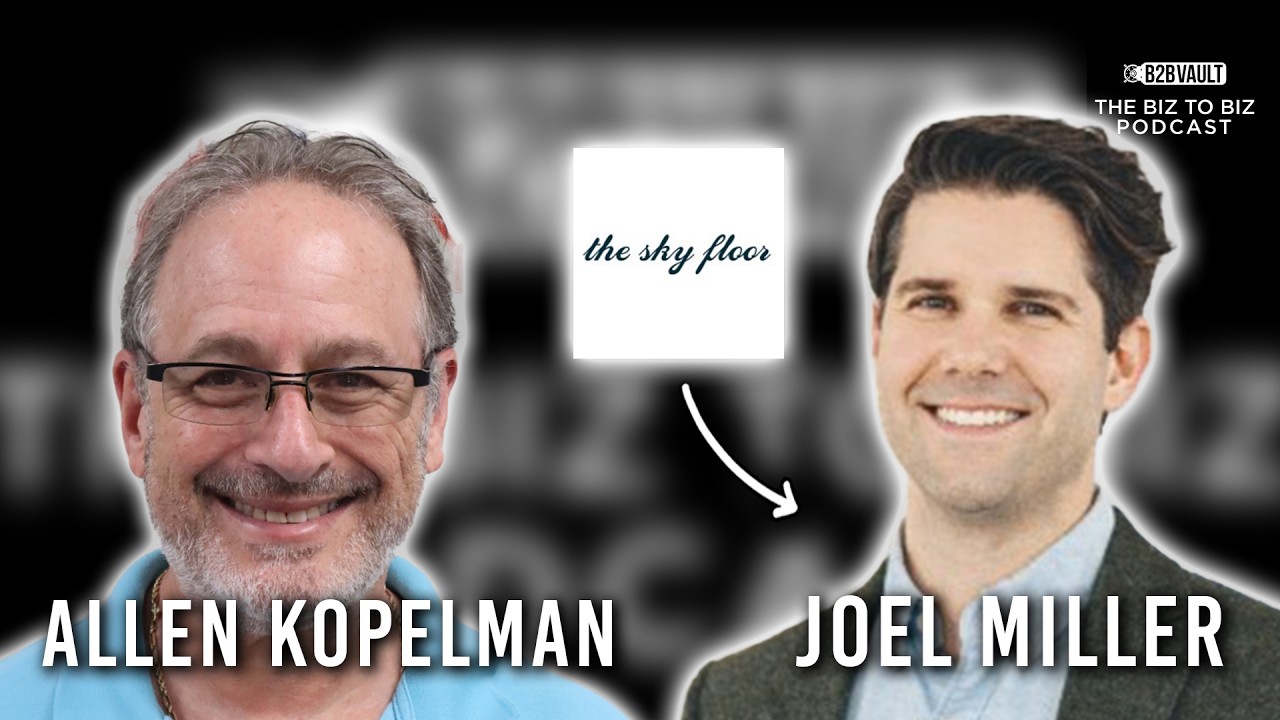
In this episode of the B2B Vault Biz to Biz podcast, host Allen Kopelman interviews Joel Miller, co‑owner of the web‑development boutique The Sky Floor. The conversation covers the full lifecycle of a business website, from the strategic questions a company must answer before even starting a project to the technical and legal details that keep a site functional and compliant. They stress the importance of defining clear business goals and ROI expectations, setting realistic budgets, and understanding what a website should achieve. The hosts warn against common pitfalls such as domain and hosting lock‑in, agency‑owned assets, and inadequate legal policies (privacy, terms, refunds) that can jeopardize payment processing. Trademark and cybersquatting concerns are discussed, along with the need to secure social‑media handles. Design best practices—including mobile‑first responsiveness, user‑friendly navigation, and brand‑consistent messaging—are highlighted, as is the ongoing maintenance and content strategy required for organic traffic. The role of AI tools in site building and auditing is explored, noting current limitations and future possibilities. Finally, they advise business owners to choose a web partner who acts as a collaborative ally rather than a transactional vendor, emphasizing communication, transparency, and a disciplined, dollar‑cost‑averaging approach to marketing spend.
Chapters
You're now watching B2B Vault, the Biz to Biz podcast hosted by Allen Kopelman, powered by Nationwide Payment Systems, the number one solution for payment processing.
Hey everybody, welcome to a new episode of B2B Vault, the Biz to Biz podcast sponsored by Nationwide Payment Systems. And we're very proud to say we're in the top 50 podcasts on Apple Podcasts for entrepreneurship. And today we have joining us Joel Miller from The Sky Floor, which is a website development company with some unique things going on there. And we're going to talk about what do business owners need to know about websites. And today I'm wearing my 22 Caitlin Clark hat. We're getting ready to kick off the WNBA season here. So. Now we're gonna probably— when you listen to this, probably lots of stuff is happening with the WNBA. Also a big Miami Dolphins fan. And Joel also is joining us today from Michigan. And, uh, so Joel, introduce yourself to the audience.
Yeah, hi, thank you for having me. I'm Joel Miller, co-owner of The Sky Floor. I'm, uh, an identical twin. We were born on Leap Day. And we're in business together. So that's my business partner. And we, we actually like working together, believe it or not. We, we don't fight each other constantly, maybe just a little bit here and there, but not constantly. And we're still liking each other after 42 years. And I think it's actually a competitive advantage that we have that we've stayed small. We've stayed just the two of us and that we're similar enough that we can kind of understand where we're going on a project, but different enough to refine our work and sharpen it for our clients' benefit.
So can you fool clients today and get on a meeting?
It probably depends on how long they've worked with us. We have a lot of clients that have been with us for like 8 or 9 years. Right. So I doubt those people would be fooled even though we've kind of switched places on some projects, you know, like he might have started it kind of as the lead and then I'll take it for a while. But we actually also never really fooled anyone very effectively in our lives. We tried it, I think, in second grade. The teachers played along, but they told our parents and they knew the whole time.
Did your parents do stuff to you? Like, I had friends when I was growing up and they were twins, and when they were younger, the parents dressed them exactly alike.
Oh my goodness. No, luckily no. They kind of assigned us colors, maybe for their own benefit. I don't know. Color code your kids. Although I have like a big birthmark. You can't see it right now. So like that kind of does it too, but. If you're wearing long sleeves, then it kind of helps to have one in blue, one in red, and you know immediately who's who.
Yeah. So then I guess they got annoyed when they got to like the 4th or 5th grade and they didn't want to dress alike anymore.
Oh yeah. Right. I, there was definitely a season where you start going, all right, this is, this is a little much. Even if we have little differences in our outfit, we can't be looking exactly the same every day.
So like in my business, we deal with clients all the time that have websites or You know, sometimes people come to us and they're like, oh, I need to make a website. And then we don't— we're not the ones for that. You know, you have to get— you know, you have to find, uh, you know, I tell people, and this is something that like people don't understand, is like they go, how much does it cost? Right? And I'm sure you guys get asked that question all the time.
Oh yeah. So yeah, I mean, yeah, if it's like— and that's something, I mean, I actually like This sort of answers the how should you approach a website question to boot, which is what are you trying to get out of your website? And if you can't answer that already, then you need to take a step back and I can help you guide or guide you towards that answer as the provider. But like you have to fundamentally understand what you're trying to get out of it. It's not just, I need to have a website. You, I mean, you should have one, but just simply I need to have one or it needs to be redesigned cuz it's been too long to me isn't a good enough reason. To have one because you actually, you have no clue what you're getting. You're just going to pay someone for nothing because you don't know what it's supposed to do for you.
The other thing I think is, I think people need to have in mind, like, okay, do you have a budget?
Right, right. Well, that's true too. Yes. That's two things on the pricing front. Like some people get really bristly, right, at the idea of asking if they have a budget. And sometimes it depends on the conversation. I'm asking that because I want to know how we can work with them. How can I help you achieve your goal? And I'm not gonna just try to take you for everything you have. And yet there might be a ceiling to, to what we can provide, but it doesn't mean we can't help you. Right? So like, that's an important question. I also though am like, I'm not gonna give you a cost even based on what it normally looks like for us to do this work. Cause I still, I need to know so much more about the business we're helping to know what we're gonna provide for them that helps them achieve their goal. And so I'm just like, I can't tell you what it costs because I don't know you well enough to know what I'm providing, that it's going to be valuable to you.
Yeah, because I was working with somebody and I'm friend— the woman is a— well, her husband is a friend, plus like a business. Yeah, we have a business relationship. So, you know, I was trying to guide her and I was like, you know, you have to have some idea of how much you're spending. Do you want to spend you know, $1,000, $2,000, $10,000? Like, what is that number, you know? And where is that number going to be where you're going to say, like, okay, above that I can't do it, right?
Right. And doesn't that fundamentally highlight what you want to get out of it too? Because if you can't attach, like, some kind of business value to it for you, an outcome, like, well, if I spend the $10,000 I'm expecting it to increase our leads by 50%. And if our leads increase by 50%, I'll book, you know, 10% of that pool more. That's gonna become X amount of dollars. It was profitable. Like, if you kind of have to understand that. And so I think coming up with a budget sort of starts to push that question just even subconsciously, because now you have to say, cuz then like maybe a $1,000 website doesn't produce that outcome as effectively. So you want to spend more because you want to get more out of it. So you start to like move the levers to get what you need, right?
So you have to figure out what that is. You know, the other thing, you know, in 25 years of business, you know, I've had crazy stuff happen. Thank God, nothing detrimental to my business. But one of the most important things that I talk to people about is, okay, you're going to start a business and then you come up with a name. Right? You have this name, but you have to really do your homework because there's a lot of people who have trademark names. They're using that name online. Somebody could own— let's say you come up with this great name, and then all of a sudden you go look online and the website is owned by somebody. Somebody's basically just bought it, and, and, and maybe it's for sale for thousands of dollars. Or maybe it's for sale for $500, $600 or even less than that. I mean, I've bought some domains that I was like shocked. I'm like, oh, this domain is available. It's like $200. I'm like, boom, I just take it. Yeah, it's close enough to Nationwide Payment System. So we want the domain and, um, but you have to really do your homework. So like even before you incorporate, you need to make sure like, and also I always tell people your corporate name and your DBA name. Or your website name doesn't have to match, right? No, that's a general corporate name, you know, because sometimes people are starting a business like a CBD business or a business where they might be selling some sort of controversial or, you know, sex product or whatever it is, right? So you don't want to have that in your corporate name because that can prevent you from getting banking, right?
But you got it, right?
Yeah, you know, you need to register your own domain. Don't go through like some of these platforms where they register your domain because ultimately they own it. Because that happened to a friend of mine. He registered a domain through Shopify, right? And he didn't realize that Shopify owned the domain name, right?
Yeah, we're, we're huge on that. Whenever a client comes in and they need a domain or they really any of the services that they might need to sign up for, the kind of a lot of agencies we, we kind of take over from. Are in the practice for lock-in of registering all this stuff for their clients and holding it, right? But then it ends up becoming a hostage negotiation, right? Later on, it's like, we need our stuff back. Well, arguments or the invoice isn't paid or whatever it is, it becomes all this stuff because things went sour. So we're just like, no hostage situation for our clients. We will help you sign up so that you own your hosting, you own the domain name, you are the main person on your Google Ads account. Whatever it is we're doing for them. Because we got to, uh, we got to make sure that they could, they're portable. They can go where they need to. I don't want, I don't want to be the person that the FBI needs to come in and convince to give up the stuff later.
Yeah, we had somebody come to us and they were like, our website is gone. And I'm like, what are you talking about? So they couldn't, they couldn't, their website was online, but just the homepage. Oh yeah, and the rest of it was hidden or removed or whatever, and the person disappeared. And I was like, well, did you pay them? Right? I called the host. We found out who the web host was, called them on the phone with the client, talked to the owner. It was a small web hosting company in Miami. Told the guy the story. He knew who the guy was. He goes, let me call the guy, and he couldn't get a hold of him. And he said, no, this guy's no good. He went in, found the website, moved it into a new account for the person. They got very lucky.
Yeah, they're so lucky.
And I had another client that had 5 websites for 5 restaurants. They got in a fight with the website guy and unbeknownst to them, he owned all their domains. He owned all their domain names. And he went and he took the— he, he, they had a big fight with them. What he basically did was he gave them back the domain names, but he took the websites down.
Wow. Yeah. I mean, I can't tell you how many times the, the first thing that we're asked to do coming like into, you know, one of these situations is remove the last agency from everything as fast as possible because people are scared of that. I mean, I'm wise. I was just thinking maybe that web developers or these companies were the first people to invent the term ghosting, cuz it seems to happen enough that I've, they've ghosted so many clients that I have a handful of stories I could lean on any time of where that's happened. And it's just, I mean, I don't know, it blows my mind. It's not how I operate. When that happens, we try to kind of become not the negotiators, but like We try to speak the same language as the people we're taking it from, even if they're pissed off at our new client.
Right.
Like, let's find some middle ground here. I'm a pretty firm believer in not burning any bridges if possible. And it's amazing just like what some relational warmth can do to smooth over some of those things. Obviously at that point, usually the client and the other agency can no longer talk, but at least we're able to come in and say, be amicable and then get their assets back without a huge fight.
Yeah, the thing is to stay out of court.
Yeah, exactly.
You don't want to go to court. That's what happened with these guys. They ended up in a court— they owed the guy some money, and so that, you know, they ended up having to pay him. But it wasn't— it wasn't— they say they didn't owe the guy money. The guy said he owed the money. He ended up giving them the domain names back, but the rest of it was all gone.
Yeah, yeah, you know. Yes, if it's not like a big Especially most of these things don't like traverse into the territory where court helps, right? Like, I don't know, this is a kind of off topic, but I think of a guy hit our car once in LA when we were living there and in the middle of the night he was drinking too much. And you know, some people were like, you should take him to civil court. And it's like, it was a $2,000, whatever it was, the car was totaled. But you're like, we're going to spend so much time and energy and resources trying to get this solved. And he probably still can't pay because we kind of knew who the person was. We're like, he doesn't have the money. So what is this? What's the point of all that?
Yeah, that's usually what happens, you know?
Right, right.
Stuff like that. And, you know, and then what are you going to do, just be without a website for—
right?
You can't do that. So, you know, move on. And you— but that's why it's important, you know, register your own domains. Make sure before you start spending money on domains and websites, also your social handles, you know, you got to go out and get all these social handles.
No, that's very true.
And get them all registered. Don't let somebody else register your social handles. I've seen that happen before too. They go to somebody and the person goes, oh, I set up all your Facebook and all the blah, blah, blah. Meanwhile, they're the administrator and you know nothing about it. And one day they're holding your stuff hostage.
Yeah, yeah. I mean, in the worst case scenario with the domains, maybe even social handles, I'm not sure how you transfer those, but is that someone comes along and wants it one day. I mean, they're pretty cheap to own year to year if you're making any kind of money. And we've had that happen. We had like a never-launched side project idea, right? Like 10 years ago, just didn't have time to do it and it wasn't that important to us, but we liked it enough to buy the domain. Well, someone came out of the woodwork the other day wanting to buy it for $1,500. Well, it's quite a bit more than we've spent registering it for 10 years. So we're like, sure, we're not going to use it now. Great. This is a little bonus money.
Yeah, yeah, that works too. But you have to be really careful to own all your whatever IP.
Yes, yes.
Yeah, we had somebody like took a name from us and then we had to get a lawyer and we sent them a lawyer letter saying they were cybersquatting on us.
Yeah.
And those laws like didn't exist years ago.
Yes. Yeah. I'm curious about how that's all going to develop as far as naming and trademarking and all that. Just because there are more people than ever. Right.
Right.
And so, and, and there's more kind of repeat of these, a lot of like maybe surface level ideas. I don't know. So I go look sometimes for clients and I'm like, wow, there's so much competition in kind of how you want to be named already. Yeah. I wonder how it's going to mature.
Yeah. One thing with trademarking is, is they're like years in the rears now.
Right.
And one thing I started noticing when I was reading about trademarking is, while you can put a name in, right, and you can say, I'm going to trademark this name, it's very hard to trademark names because what you were talking about, generic, right, right, right. There's people with very similar names. You could trademark like your name with your tagline and then some kind of unique, um, logo Right, right, right. Would have to be super unique. Okay. Yeah, it can't just be like a letter, right? And, um, and you— and, and that's— and, and may— and that's like not even a guaranteed path to get there. As I have one friend of mine has been trying to get— he's launching a— they're launching a product, they're trying to get a trademark name approved. And I was like, that's not going to work. You guys got to put a tagline and a logo next to it, and then it's going to move a lot faster because they just see it and then they go, oh, sorry, no, go back to the drawing board, right?
Yeah. And I think that—
get into the process, right?
And it makes sense. Like, that's the thing you want to protect anyway, right? Is the very specific thing about you. Like, the idea of, of going to the broadest level of protection for just a, a general concept doesn't really make sense because, hey, anyone— well, and in the AI era, you know, GPT is probably gonna spit that same thing back to everyone who types in a prompt about what to name something as the first option. So, so get it specific anyway. It's helpful to you to protect you more than the general.
So talking about AI, right? Yeah. We see people sending us websites and trying to set up scam merchant accounts.
Mm-hmm.
And they literally can just spin up a website using like AI And we can see, like, we check, like, the whois, when they buy the domain name, how new is this website. We check the addresses, we find the address. The other day, one was in a field, one was a restaurant equipment company, was located at a dentist office, right? I mean, I called the guy just to have fun with him.
I was like, you need to record that, I want to watch that.
Behind the dentist office? I'm like, dude, come on, bro. Oh my goodness, I'm the dentist office. Yeah, some equipment warehouse.
No, that's right.
Not there. I'm looking at it on Google right now.
Right, right. Yeah.
Come on. So, like, tell me, like, what kind of, you know, when someone's making a website, like, what are the, you know, also, like, people will come to us, they don't have policies on the website.
Right.
And we talked about that when we were talking. And, you know, the importance of, like, like, basic things that go on somebody's website.
Well, right. I mean, and I probably shouldn't even be the one saying this. You have way more e-commerce work experience than I do, but, but you're right about the policies. There's all these checkmarks that payment processors are, are, and legally as well, obviously, that need to be present for you to actually accept payments on your website. There needs to be a place for, to specify to the customer what they're actually agreeing to when they use your website and when they send you a payment and And then what you're agreeing back, you know, to offer in return, something that actually has some consequence for both sides, really. It's a— there's a contract happening whether you realize it or not.
Yeah, I tell people all the time, you need a privacy policy, terms and conditions, return refund policies, right? That's to all be in writing. And if there's some specific policy that they have to agree to or say they read their terms and conditions on the checkout page, you have to put little checkboxes there because maybe they're buying a sale item and all sales are final and there's— you're not accepting returns, right? There needs to be a checkbox or something on the product page that says, hey, this is a closeout, all sales are final, right? People don't realize the importance of that. Or even shipping times, right? Yeah, you know, keeping in touch with people about their shipping.
Right. Oh yeah. And then more broadly, I think it's like, well, it's kind of twofold. One, you need a guide, I think, or maybe you're super talented at this kind of stuff, but you need to really get to that core message of who you are. What makes what you're offering different than the next guy who's offering that thing? It can be a very difficult question to answer, but if you can't answer it, you have to ask yourself, why would anyone buy from me anyway? Whether it's a service or a product or whatever it is. Right? I mean, even if it is just that you're the cheapest one or whatever, you can be the fastest. There's a million things that can be your advantage, but you better know it and be able to specify it and tell that story on your website. And then the other thing that comes to mind immediately is, and I'm not seeing this as much these days, but making your website complicated cuz you want it to be cool. Now I think websites should look great, but I've come into so many projects where the desire was more about how cool it was than how user-friendly it was. And it ends up just confusing people. There's a, we, there's kind of like some conventions on the web, like you're probably gonna wanna follow because if you don't, the user gets lost. You're absolutely going to lose sales or gonna lose leads if the average person cannot navigate it. Right.
The same thing, like with your, you know, like with your pages, they need to be mobile friendly.
Right.
Probably 50% 50% of people are searching on some sort of mobile device or tablet, you know, other 50% are on a laptop. It's so funny, like, we'll look at things on different screens, you know.
Oh yeah.
And we go, oh, we got to fix this, we got to fix that, right? It's kind of crazy. Yeah.
Oh yeah, it's crazier than ever these days with that too. So I have a lot of grace for that for myself and for, for people we come into and You know, I'm not necessarily the one who comes in, takes over a project and says, we have to blow the whole thing up because someone else made it. I look at it sometimes and you're like, I mean, you know, because you're saying this, like there's so many sizes now that even if you get 80% of them right, someone's going to have some weird device. It's going to usually be the client who says, I loaded this on my whatever it is. And you ask them, well, what screen size is it or what device? And you look it up and you're like, Oh, that's not— I can look up the stats. No one is using that size.
But like used by 500 people.
Right, exactly. Right. You can, we can see device stats generally broadly. And, and then we always joke, Allen and I joke internally when we do that, we're like, all right, I guess we, we're designing a version of this just for them. Cause they're the ones who are gonna see it. So we'll make a breakpoint for that and make sure everything looks perfect on their screen. And then we'll make sure that it looks really good for everyone else who are regular users too.
No, it's crazy. Like the iPhone, they'll come out with a new iPhone, right? The difference is like, oh, they made the sides 0.02 of an inch thinner than the last phone, and then every website is messed up. And then, you know, everybody's running— all the web designers are trying to figure out how to correct all this stuff. You would just think by now there would be some like auto-correcting features in WordPress or even in the phone just to format things correctly.
Right. Oh yeah, you would think, but, but then again, no, there isn't.
Then again, no.
Yeah. Yeah. Unfortunately, maybe it's coming though, right? Speaking of AI, I mean, maybe there's a version where you use the tools to help you get to the build. I still think like the really customized work that speaks to who you are as a business is probably still going to need, and maybe it's personal bias, but I think it's still gonna need people like us to help you get there. But perhaps there's a layer of that where you don't need as much maintenance going forward because the plugin's running that connects to whichever is the latest hot model in AI and it audits the site every week and makes tweaks to the mobile view. I, you know, I'm sure it's coming.
Something. So, I mean, I see so many companies Offering, you know, AI this and AI that.
Oh my goodness.
Oh, we're going to make your website appear in ChatGPT instantly.
Right. Yeah. Yeah. I was going to say that if you like, if you're also maybe doing a product or a service and you think AI is a layer you can offer to your clients, please by all, make sure that the AI does something that only AI can do. Cause I think this is maybe kind of what you're saying. I go to so many websites, software service products, they're gonna help me as a business, right?
Right.
And you look at the AI promise that they're offering and you're like, that isn't special. You just gave like an, it's like a, a help doc essentially with a little bit smarter engine behind it because it surfaces the stuff faster. But you're not actually like synthesizing data into new patterns that help me take new action in my business. You just wanted to slap AI on your homepage and claim that you have that feature now. That drives me nuts. I'm like, make it meaningful.
Yeah. One thing with AI, a lot of things can be done. Like I started messing, I mean, I've been using OpenAI ChatGPT for a while. And then I just recently started using Claude and Claude does some really unique stuff that I'm not used to yet.
I have to figure out some of it, you know, but yeah, at least at the time of this recording, to me, GPT is sort of dead right now. Claude's amazing. Like, I've been enjoying that a lot. So we'll see what happens though. Everyone's gonna come out with a new one.
One thing I noticed is that if you really dig into it, GPT is really good at like searching the web and finding answers and reading documents. Right. Okay. I've tried. I've done it. With both. Like, someone sends me—
someone's—
I'm in the middle of dealing with some land use stuff near my house. It's like a 400-page document, so I stuck it in DDT and I stuck it in Claude. Claude really didn't, didn't want to deal with it because they also have some usage, uh, stuff they— so you can pull usage for the day, right, right, when you upload something like that. So That stuff is not really good on Claude, and GPT used to make horrible images.
Oh, the images.
Images are so much better.
Wow. Yeah.
With correct spelling, you know, no spelling mistakes. You don't get any like stuff all over the place. Everything is misspelled. So I give it to them on that. So I don't know.
That's true.
Huh?
The images have, oh yeah, the images have completely changed. I like 2 years ago I was trying to make a comic just for fun, you know, send my brother, I think. And it kept like putting a bear in the, in the image, right? Like an, a cartoon bear. And I would say like, I like everything about this, but please no, get rid of the bear. And then the next one had two bears, right? And I was like, for the love of God, get rid of the bears. And the bears started getting angry and there were more of them. I was just like, all right, that, I am done with this. It does not do that now. The bears don't appear randomly.
No, I think that they're all unique, you know. Even Perplexity came out with this Perplexity computer thing, and that does some, some other function that the other two doesn't— don't do. So it's, it's all unique, you know. And then Open Claws, like a whole big discussion right now. I mean, I don't know, I don't know. The big talk I hear about that is how much electricity it uses.
Yeah, probably.
Yeah, you know, if you set it up in your office and you know, and all this. But, you know, AI is definitely here, and people are going to figure it out, and they're going to use these different tools for whatever they're going to use it for. So if you have to give a business owner— calls you on the phone today— and 5 tips or something, whatever your list is, it could be 5, 10, whatever you want to do, what's the 5 things like you're gonna tell them, like they need to know before they can, you know, you guys can engage them in building the website of their dreams.
Yeah. I mean, number one, I kind of went over already, but it's to know what you want to get out of it. So absolutely, you must understand what you're hoping it's going to do for you. If you don't understand that, there's a chance when we talk in depth, I'm going to try to convince you to use like Squarespace or something like that. Because it's, it will probably serve the purpose if you don't exactly know what you want out of it and at a lot cheaper than it's going to cost to have someone do it like us. Number 2 is to know what content you want on there. Now, that doesn't mean that I don't help you or the person you're hiring doesn't help you hone that content to tell your story. We do that all the time, but have some idea of what you want on there. We will go into so many situations where we're babysitting that process, not just assisting, but babysitting it. And the projects often get delayed. And the biggest cheat code I try to tell people ahead of time is if you know what you want on your website, we can get this project done in, in 2 months probably, right?
Right.
The biggest bottleneck is them trying to figure that out. And, and a lot of these people come with current websites and so sometimes it's as easy as just figure out what you want to keep. Change the few things you wanna change and bring that to the table upfront instead of being the last thing to happen. And actually, I wanna build on that just a little bit more because the design of the website should communicate the words that are on it or the images that you have. And we're, we're completely out of this now, but there was so long before we were guiding that process that clients would say, just make us a design, put placeholders in. We'll fill it out later. And what you end up with is this weird Frankenstein thing that was never meant to communicate the words that are on there eventually. Just don't, let's do it the right order. Let's not do it backwards. Let's know what you're saying first and design around that. And then I think the other thing is know, and this isn't so much about the website, but about who you hire. I mean, I'm very passionate and think you should hire a partner. Someone who treats your business almost as if it's their own, and you're not just another project to them. You're not just the paycheck that comes in. If they can't help discover or refine that business goal or outcome that you have, and then kind of internalize it and say, we want to see that happen too, I think they're gonna make a crappier product for you. So that's how we approach our business. We want to actually be on the team. And, and see if we can achieve the goal. And then, and then no sacred cows. If we're wrong about something, let's burn it and try something else.
Yeah, I think it's important. You know, all of those things are important to figure out, like what, you know, how, what your approach is gonna be. And also, you know, just keep in mind that you have to have a budget. And then there's, you know, every time you want to do something to your website, You know, um, that it costs money, right? Like, I have a person in my, in my bit, in my office, and they work on the website. And, you know, we upload blogs every single day, so it's— somebody has to be— somebody has to do that. You're either, either have an employee or, you know, sometimes, you know, we started off, somebody built a website, you know, and then we later rebuilt it many times over because everybody wants to update their business. You know, every year or every 2 years, like how often do you see people doing that?
Right. Yeah. And also expect to like to spend money on it, whether it is internal or external, right? Like an employee costs money too. I mean, I'm often saying having an external team is actually cheaper for you sometimes depending on what the workload is, because obviously it doesn't come with tax implications or benefits and all those things. But yeah, it's a living, breathing thing. You're probably gonna want to stay up to date on it. Keep it, keep it growing. If you want organic traffic, which most people do, it can't just sit there. Like Google values the signals of a website that's being updated and new content's going on it. That's important to organic traffic. And, and then like I talk about this sometimes that I really think that we should treat our marketing investment, our digital marketing investment, our website investment, like it's dollar cost averaging in the stock market. And if someone's listening and they're not familiar with that, that's the discipline of buying on a schedule essentially, and taking the emotion out of it. And you're taking your average cost and kind of medianizing it, making it so that if you're, it's down, that makes your cost cheaper when it's going up over time, right? You're going to see increases unless the economy just tanks. Well, do that with your marketing budget too. So say I'm, I'm willing to spend this much, this percentage of our revenue, and some of that percentage is gonna go to the website. And that means that when things go down, I'm gonna keep spending that instead of cutting that back. And guess what happens too in that moment? You actually capture new market because other people do the logical thing and they cut that line pretty fast. So I really think that it's just be having a disciplined approach to the fact that it costs money. To put yourself out there and to commit yourself to that. Don't do it stupidly, right?
Right. You can't go crazy and build a $100,000 website.
Right. But know that it should be or could be a priority given what you're trying to achieve. I won't say that's for everyone, but for a lot of people, that's what they need. And then come up with something that takes the emotion out of it. Not that you don't measure it, measure it, make it better, but, but don't go like around trying to make that the first thing that gets on the chopping block. I think it hurts you more than helps you in those situations.
I mean, I've talked to— I'll talk to a business owner one day. They sent me to their website. I called them back. I go, when was this built? Yeah. Oh, like 2003. I was like, oh man, man, you got to— you're telling me you're doing like— I didn't believe them when they were telling me they were doing like $10 million a year in sales.
Wow.
I was like, you're doing $10 million in sales and you got a 2003 website. I'm not following the story, you know?
Yeah, yeah. And that probably means they left money on the table, don't you? I mean, I would think so.
Like, well, I don't know if they're even doing as much business as they said. No, because if I'm going to a website for a technology company and their website's from 2003.
Yeah, right, exactly.
I'm not going to be too happy with that. I'm gonna be like skeptical. It's like going to somebody doing digital marketing and you go to their website, doesn't look good. Okay. What kind of marketer are they?
Right. That's why we make digital proposals for our clients. I make a webpage for them because I'm like, well, part of this work is gonna be something on the web. So why should I send you a PDF? I'm gonna make you the thing we make. So you can see it in that format.
Yep.
Yeah.
So if people want to find—
Yes.
Joel, where is the best place for them to find you? You're on LinkedIn?
Yeah, I'm on LinkedIn. I think that's just /JoelMiller, Joel Elliot Miller. And then there's The Sky Floor on LinkedIn too. But our website, theskyfloor.com, and you can find some blog posts. I have over 300 of those. I'm going to start posting some of these podcast appearances there, me, Allen, and I. Reach out. I'd love to have new conversations with people and see how I can— if we can't help you, I want to point you in, in the right direction.
Yeah, I think, uh, thanks for joining us on the podcast today. You can find theskyfloor.com, uh, their website. I found it to be very friendly. I like Joel, and I haven't met his brother yet, but maybe I'll have his brother on the podcast in a few months.
That's right, see if you can get some dirt on me, and I'll play a trick on—
and then I'll post them. I'll I'll interweave them into one podcast and see if we can trick anybody. But thanks for joining us on the podcast today. I think there was a great discussion about websites and, you know, where you start, you know, by getting all, getting all your ducks in a row and then, you know, mapping out what you want it, what you want to accomplish, what your budget is. And then, like I said, I have a theory on everything I learned when I was a chef. If you're going to go buy an oven and you never bought an oven before, you talk to 3 or 4 different companies.
Yes.
And that way you get a good overview of what you're doing, what you want, what the costs are, and you get a comfortability because you want to— like you said, even if it's person in your office or outside of your office, you have to have a working relationship because they're a business partner in a sense. They're helping you with your business. So, right.
Yep, 100% agree. Thank you for having me.
All right, thank you again. Uh, if you want to find out more about Joel, go to his website. We'll post the, the links will be in the, um, show notes. And also join our new school group on school, skool.com/nps1, and we have a ton of educational and information on there. We're also going to start posting podcasts on there and other educational videos so people can learn more about merchant services and payment processing and what it's all about in 2026. So thank you for joining us today, and everybody have a great day. Peace out, and carpe diem— seize the day.
More from Allen



How B2B Companies Can Turn YouTube Into a Lead Generation Machine | Featuring Samu Kovacs


How AI Is Transforming E-Commerce with Zero Code | Kumar Senthil, CEO of Firmly



Dre Baldwin on Discipline, Leadership, AI & Business Success | The Mindset Every Entrepreneur Needs

The Same Skills That Made Me a Pro Athlete Built My YouTube #podcast #entrepreneurship #success

