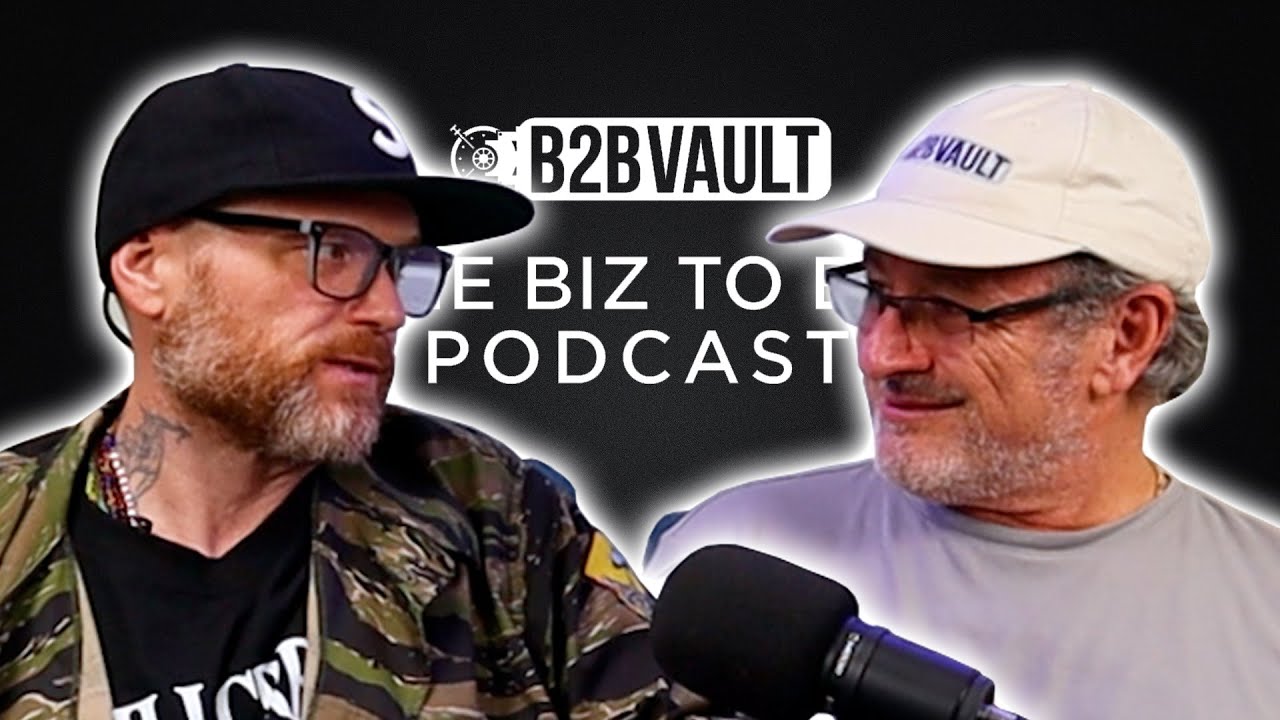
Allen Kopelman and Justin redefine success beyond money and status to include family time and health. They note most founders hit major financial milestones in their 40s-50s, and stress that technology like POS systems and automation are crucial for scaling without burning out.
Chapters
You are now watching the Biz to Biz Podcast with Allen and Justin. Yo, what's up everybody? It's Justin live from B2B Vault, the Biz to Biz Podcast sponsored by Nationwide Payment Systems, hosted by this guy, the Johnny Carson of payment processing himself, Allen Kopelman. And in today's podcast, we'll be answering a question: what does success mean to you? Um, it's kind of a It's a loaded question. You know, there's a lot of different answers, a lot of different ways you can look at success. And we think, thought that, you know, for 2024 starting off, you know, what's that look like to us? What's— what does that look like to me? What does it look like to Allen Kopelman? What does it look like for Nationwide Payment Systems, B2B Vault? And, you know, don't put too much pressure on yourself. That's the one thing. But yeah, man, how you doing?
I'm doing good. So, you know, we're getting up, finishing up the month of January.
It's going fast.
Yeah, it's amazing.
It's crazy, dude.
Yeah. How are you doing?
I'm doing good, man. I'm doing good. Lots of stuff going on. Lots of new stuff going on.
Okay.
Yeah, just staying busy. I'm plugging away at that, uh, digital marketing certificate, one, one module at a time. Okay, just finished the first section.
I saw that. Congratulations.
Yeah, I was telling Samantha, I was like, I got— I scored like a 95 or something.
Yeah, I needed—
I need to take it a little bit more serious.
Uh, only 95? That's not good enough.
Well, it's good, it's, it's bad, but I wasn't really trying. Oh, okay. I was like, I didn't—
so you think like if you paid attention, you'd get 100%?
Oh yeah, easily. Okay. Yeah. I mean, cuz it's, it's all the stuff. It's nothing's changed in the past 50 years.
Well, I think like the, you know, the base, the foundation. Yeah. The foundation hasn't changed.
That's what the start of it was. Just the, the foundation of digital marketing and e-commerce. So like hopefully in the, there's like, I think there's 7 sections. Right, to the, to the certificate.
Yeah.
So I'm on part 2, and there's like modules within there, you know, different sections or whatever, you know, they call them modules. But so maybe— I'm sure there's going to be something I learned.
Okay.
I'm— it's from Google, like it's, it's on Coursera, and it's a Google program. The people who are teaching the course. They work for Google. So let's—
maybe that— maybe somewhere hidden in there is a secret that— yeah, I mean, only get a few.
I got notes, you know, I was taking notes about it.
Okay, we'll see.
I, I don't— but yeah, so I'm doing that, and, you know, a lot of my shoulders feeling better. I'm going next week Thursday for, uh, to become more, more of a mutant Uh-oh. Yep, gonna get another injection. So.
Oh, Dr. Stein?
Dr. Stein from the Non-Surgical Orthopedic Center. Shout out to you guys. Hopefully we can get a payment, you know, get a credit card machine in there.
Pitch 'em when you go in there. You think I'm not? Say, yeah, tell 'em.
No, I'm not gonna pitch it.
Give 'em some guilt about my mom's been going there for years.
Yeah, I will. I'm gonna have to do that. And then got some other appointments, got some blood work stuff just to—
Got to keep up with the health. Yeah.
Health is wealth.
Yeah. Part of owning a business or running a business, whether you're a manager or you're in charge of an area within a business, you have to look at all things like your personal life, your health, physical activity, mental health. You gotta look at all aspects of your life. It's also funny, like I have discussions with my brother a lot. He's an accountant, so we talk about business. I remember one conversation years ago, I used to always tell him, he goes, oh, I'm gonna steal that saying, 'cause I told him, figures don't lie, but liars sure can figure. Yeah, he liked that one. And one day he was giving me a tidbit and we were talking about different businesses and he was like, some people are running a business and some people run like, he calls it a lifestyle business. So their business, they're running their business, but they're draining like the cash flow to keep up their lifestyle. But they're not growing, they're not, You know, if something, if a hiccup happens in the business, you're done. It's a big hiccup for them because they're not keeping a ton of cash on hand to handle things, right? Because they're sucking everything out, you know, and it's a lifestyle. So that becomes a lifestyle business, you know.
There's a lot of those around.
Yeah, there's a lot. And a lot, a lot of people, you know, they don't think about that. When they're in business about how that going to affect later on or making changes?
A lot of times I think they're young, or they're in their midlife crisis and they're trying to keep up with the younger kids.
No, it's just—
I've seen it all. I've seen, I know exactly what you're saying. Those guys who are hitting up every happy hour, like, yeah, we're going to go network, but really you're just an alcoholic.
And well, they're just out partying and they're not really doing any business.
No, they're alcoholics.
No, but some people step in it, you know, and they're doing tons and tons of— they're making— their business is making tons of money. But then, you know, I mean, I know some guys that just—
I can't, dude. Like, I have— if I had, bro, if I had 2 beers today, yeah, after work, right, I would wake up tomorrow morning.
Yeah.
Possibly with a headache and really feeling tired.
I would be sick.
That's what I'm saying. Like, how the hell— I, I get it when you're like 20, 26, you know, up to like you're 30, but how did these guys— I, you know, I'm talking, you know who the kind of guys I'm talking about, because your age.
Listen, we had some guys here at the office, those young guys, they lived in— they didn't have a house, they had no— they literally, they were— they Airbnb'd across— they were Airbnb-ing like across basically the US and the Caribbean.
The one guy said he had one house though. They had one apartment in New York.
Yeah, they had an apartment.
Yeah, New York. In New York they had that little like a place where they all would like just— I don't know, that was weird. But yeah, man, those kids, I get it. Like, that's cool. Like, they could get away with that. They don't have any responsibilities, right? You know, they're not raising kids. They can go and party.
But it's also a lifestyle business because they're out.
Definitely a lifestyle, right?
They're just taking all the cash flow and spending it. And then at the end of the day, when you sit down and you need to be doing some stuff like, oh, I want to buy a house, or I want to buy a car—
never established any credit. You never saved a dime. You don't have a savings account. You didn't set up a CD. You didn't set up anything. You didn't buy any stocks.
No IRA.
No IRA. No anything. I mean, come on.
I shouldn't talk, but that shit happens, dude.
I mean, I don't have any of that stuff, but you know what I mean? I'm working towards it. Things are getting different, you know, things are better. But anyway, man, success.
Woo. What notes did you write about success?
So like when you think of success, right? When I think of success, the typical thing is money, cars, clothes, the wife, you know, the property, the big house, the big office, you know what I mean, with the nice overlooking view. Now, that's success, not to me, right? So I've like that, the perception of— yeah, you know, like my, for instance, when I own, ran my business, digital marketing, people thought I was so successful, like I was just ridiculously loaded, right? Because, oh, well, Justin, you know, he can go and do whatever he wants. You know, he's in New York, or he, you know, he picks his kids up whenever he needs and stuff like that. But they don't understand the sacrifices you make when— when— well, that I was making.
Yeah.
Because success to me was being able to raise my kids the first 15 years of their lives. You know what I'm saying? Like being around if my daughters got sick at school or they needed feminine products, I was able to get up and go and do that.
Right.
Having a 9 to 5, well, working with Allen, you know, he's very awesome. And he, you know what I mean? He's understanding. He has kids. So he knows what it is to be a dad and he's not a dickhead. Oh, sorry. So, but yeah, like, you know, like the, that was the success that I had. Is it measurable in a sense to what other people?
Yeah. But, but sometimes when you, when sometimes when you have a, you know, if you're, if you own a business and you have the type of business where you can create your own hours, then you can create your hours around what you, what you need to do. That's—
oh, believe me, it was a lot of late nights, bro. I would typically get the bulk of my work done after dinner when the kids were in bed and I'd be up till 3:00 in the morning building websites.
Yeah, it's like sometimes I come in here late in the morning, but I'm up at 6:00 in the morning doing stuff for a couple hours and then I need a break.
Exactly.
Then I'm in the office or sometimes I have a bunch of work I have to do and it's got to get done at night or on the weekend. So those are tasks that I'm not going to— there's some tasks that I'm not going to, uh, farm out, right? Right. So, um, you know, that's what you have to do. But, you know, you know, to, you know, also success is, you know, watching your kids grow up, become young adults, and then go out and be successful.
That's what I'm saying. Like, there's— I have like so many— I would— dude, I went on camping trips with my kids and I brought my laptop with me, of course, you know, and when I'd have the hot spots, so drink your coffee.
I'm having my coffee.
You're having your coffee. I brought— shout out to Gale from one of the family friends. He brought me some Blue Mountain coffee from Jamaica. I don't drink coffee, but it's instant coffee and I thought of Allen, so he's indulging in that. Shout out to you, Gale.
Thanks. We'll see if I can feel the hair grow on my head. Yeah.
Yeah, I mean, 'cause I mean, I was able to do a lot of stuff You know what I mean? But again, that takes away from what you're earning, right? You know what I mean?
So that's why success comes in many different forms. You know, it comes in all different forms.
I'm wealthy in more ways than one, right? Like I always— my thing is I'm the richest man on the planet. I just don't have any money.
Okay.
Like I have my kids. They love me. Yeah, we, you know, we go through it. I love you guys. But anyway, like You know what I'm saying? Like, at the end of it, to me, it was all worth it.
You want to know what one of my friends told me?
What's that?
Who's much older than me. He was telling me, he goes, oh, all through my life, you know, he struggled. And he goes, then when he hit his 50s and into his 60s, he goes, that's when he made like the bulk of his money.
Well, when you look at—
And he said, because he became like very established in what he was doing.
Yeah.
And that's when he like hit, like he started to hit like a big stride where it was boom, boom, boom, boom. And he hit like a big stride in business.
It's funny, I kind of feel that coming.
Right?
Right. A lot of people, well, if you look at like these people who are running the country right now.
Yeah.
And are successful business owners. Yeah. Typically most of them were in their 40s when they made their first million. Right, right. Or even when they even started the business, right? Walmart, he was 43 years old or something like that. Um, I can't remember all these guys, but typically, you know, it's like, I mean, I feel like I lived a whole lifetime, right?
And not everybody did like step in it like Mark Cuban sold a couple of dot-coms.
Yeah, I mean, look at— there's a bunch of other people, right? I mean, but I'm saying like people who have really set up like these huge corporations in America, you know, a lot of them were older. Yeah. They were in their early 40s. Right. And some in their early 50s, right?
Yeah.
And that's when life changed for them. So I think it's all about mindset and you know what I mean? And my first half of my life was hard, okay? And, but I'm not dead. So what, I can't just quit, you know what I mean? I got kids to raise, I got grandbabies to go, and I got two grandsons that I gotta get ready to be the best baseball players ever. So yeah, man, there's a lot of stuff to do. But anyway, man, enough with the fam. But success is family though. It's hard to not talk about success with family, isn't it? 'Cause I'm sure you could relate a lot. You were able to do stuff with your kids.
Yeah, I was able to do stuff with my kids after I got out of the restaurant business.
Exactly.
Which was absorbing all my time and I got to spend time with them while they were growing up and go to their games and plays and music recitals.
Listen, all that stuff, it's crazy, right? When you see, when you think about it, like a lot of times I would go, you didn't ever see the dads, right? Because what were the dads doing?
Oh yeah, I would be at like my kids' stuff and everybody'd be like, huh, what? There's like a dad here.
Exactly. Sometimes it was awkward a lot of times because I would be the, my wife's a teacher, so she wasn't able to, she doesn't have that flexibility, right? She couldn't just go and do stuff. So I was always there— soccer practice, whatever, piano lessons.
I still remember taking my kids to story time at the library, story time at the bookstore.
I had my nighttime time. My time was at nighttime.
I used to laugh because, you know, it's like a lot of moms there. Yeah, be like the only— there'd be like maybe one other dad. Most of the time, no dads. But you know, it's important to spend time—
Because dads are out there getting to the bag, man. We got to get the money. Cash rules everything around me. Cream get the money. Dollar, dollar bill, y'all. Shout out to Wu-Tang.
You know what's crazy? Like, you know, like when I was a chef, one of my favorite shows to watch is Hell's Kitchen, right?
So I would just ask him, I can't believe that that guy is still relevant.
Gordon Ramsay.
Why? Just because he yells and curses?
He actually, like, this past season, he was— it was the most— he was the most calm that I ever seen him this last season of Hell's Kitchen, because it really didn't have— there was a couple people that did some, like, really bonehead stuff, but not as bad as in the past where he just, like, didn't lose it. Yeah, just lost it, threw everybody out of the kitchen, started breaking the plates, F-word bombs everywhere, right? And then after the show was over, I was watching the show and the theme was the American dream.
So whatever.
There was one guy on the show actually reminded me of Justin. He came in second place. He's still a winner.
Second place is good.
Yeah. And he got into the final and the kid that won immigrated to the US from Ireland, actually lives in Miami. Shout out to Ryan. From Hell's Kitchen. I don't know if he'll hear the podcast. Maybe we can tag him. And, uh, so in the end, he came down to the final two. And the other guy— now I'm not going to remember the kid's name— his— they had his daughter and his parents come to see him. Nice. And then for Ryan, they had his wife come. They probably flew her from Miami. And his dad, they flew him in from Ireland.
Cool.
So that was really cool.
And then why'd the guy remind you of me?
He had a big beard. Oh, and he also—
you talking about Adam?
No.
From Milwaukee?
No, not Adam. No, it was just this past season. It just finished the other day.
There was a guy from Milwaukee on there.
Maybe.
With a really big beard. He had tattoos?
No, this guy had a big beard, but he was from— I think his name was Jonathan. He was from LA area.
And yeah, there was a guy named— I can't remember his last name, but he opened a place called Egg and Flour. In Milwaukee.
Well, that wasn't this past season.
I think it was the season before.
So, but let me finish. So then at the end, whatever, they're at the door and I'm thinking of this, right? You know, I could just see like this Ryan guy had really good control with the kitchen and everything.
Cool.
So he ended up, you know, he won and he, whatever, he was very humble about the whole thing. And then after the show, I look up, you know, to see who he is, what is he doing, you know, blah, blah, blah. And he's still living in Miami. Because the show was filmed 2 years ago and they just put it on TV now.
Wow.
I'm like, that's weird. Like, they filmed it 2 years ago and he won Hell's Kitchen and he had to keep it a secret for 2 years.
That's crazy.
Yeah, I didn't— now I wonder if he's gonna take the job with, uh, you know, like all these people that were on the show, they couldn't tell anybody they were on the show. And then the show aired, you know, it's kind of interesting 'cause I looked back to see like how many people were like successful from Hell's Kitchen. It's always interesting to see, you know, I'm sure some people—
The restaurant, man, those guys, dude, the chefs that make it and really like are flourishing, man, shout out to you guys. 'Cause my wife is constantly trying to, everyone wants us to open a food truck.
Don't open a food truck.
I'm not doing it. Don't worry about it. I deaded it again on Sunday. I said, who is going to wake up at 4 o'clock in the morning and do all the prep?
Listen, I was a chef for 20 years. I worked in restaurants.
There's no money in that shit.
Hotels. I had my picture in the newspaper.
Well, you were making money. That's different because you're a head chef. That's different. But for us trying to start a—
No, and I owned a restaurant. It was pretty rough. It was a rough— It was rough. I would never open another. When people tell me they want to open a restaurant, I go, not a good idea. You're not going to spend any time with your family unless you've got a bunch of business partners. Right.
And you're mega rich already.
Somebody's got a bunch of money and you're going to be able to—
And it's an investment for you, right?
Yeah. But you still got to have controls and you got to— because you can't just have everything go off the rails and bad food being served and all that. And the restaurant business is even harder today than it was. Years ago because now we have labor shortages to deal with. And I see all these, I mean, I see these, there's a guy I was showing Justin on Instagram, right? About how many, all these restaurants closing up all over the place in South Florida.
I see.
And then people are coming in right at, these places go out of business, then somebody new goes in.
Sometimes Allen sends me stuff and just kidding. No, but I did. I was, I like watching that. I like, you know, restaurant—
But it was—
What is it? Restaurateur?
No, but it was interesting. Like, you know, that just shows you, like, you know, people go out of business and somebody else comes in. Constantly. Yeah, it's a circle. But, you know, the other problem is, is because they don't have enough help, all these places are getting beat up by the health department for cleanliness. Listen, you own a restaurant.
This is next to godliness.
Listen, you own a restaurant, you need to clean today. You need to clean. You need to figure out how to get a better point of sale system, get a kiosk, get pay and order at the table.
Use the technology at your disposal.
Yeah, spend money, spend money. If, if you know you're not going to be able to get enough employees, spend money on technology in any business that you're in. I haven't— Justin gets mad at me because I always ask him, I said, oh, do you need this? We'll pay it, you know, because anything—
if I can pay for something that's going to streamline my job, right, to make sure— to make it— I don't get mad at you, it's just like, I don't need it.
I know you don't need it, but still, if it's going to save time—
if it saves time, you know, if I look at it and it's like something that's actually useful, right, most of the time we end up going through it. But if there's something that's gonna— that's— it's gonna take me longer to learn a new It's just not worth it to me.
No, I get it. That's why you have to—
but you can teach this old guy new tricks.
No, but you have to look at things and you have to measure like, okay, if I spend this money on this technology, how's it going to help my business?
Right.
How's it going to bring—
what's the ROI on it?
Right. But sometimes, you know, like your point of sale system is almost like another employee because let's say it does all your reports. And your sales tax and your liquor tax and your tobacco tax or whatever kind of tax you need to have, or it calculates all your payroll and, you know, whatever, whatever that is, you know, in your business, all of that can save you a ton of time, which is saving you money, right? Time is money.
Making more money.
So, well, it's going to, you know, if you can alleviate certain tasks Right?
Right.
Like I'm working with some guys now and they have this restaurant buying co-op.
That's right.
So that they can help their business is to help smaller restaurants get set up with, get set up through them. And then they're going to have 50 restaurants buying and then they're able to negotiate lower pricing from the produce company and the meat company and this company and that company.
See, that's another thing. Just thinking about that, like the vendors to get the food for the vegetables and the meat for the food truck. No, I'd love, Justina, I love you so much.
You be going to Restaurant Depot buying stuff.
I am not, a friend of mine, he has a food truck. He's been trying to sell it to me for years. It's brand new. He never even launched it.
One of my friends.
Sitting in a storage warehouse out in the middle of Wisconsin.
I'm sure there's a bunch of them in Miami sitting around. Right. Food trucks for a while was like the big rage. And then during COVID food trucks got crazy because it was like, because they were like outside. So a lot of people started going to these like food truck things, but I think kind of the novelty of it has kind of wore off a little bit.
Yeah, I agree. There's only so many different kind of egg rolls you can eat. And I mean, down here in South Florida, it's either you're eating Jamaican food, Colombian food or what?
No, like we used to have this Nicaraguan. We had a client that had these food— he had this food truck and seafood. He had these food trucks and what he used to do was he used them for like catering. So he had like—
oh, that's cool. Like you take it to a wedding or something?
That's smart. Like he would take— that's what he would do. So he had one like a dessert truck, one for something else, and one for something else. And then people would have that like at, you know, for events, all types of events. Like one would be making like little slider burgers and slider chickens. And then the other one was making, you know, French, different kinds of French fries, you know, and then another one's making desserts. No, but you got to think outside of the box anyway, man. But success, yes, you know, it's important. And you know how you measure your success is up to where you are in your life.
Agreed.
It's not always measured in your bank account.
It can't be. I mean, you're gonna end up driving yourself crazy.
Right.
And I did. I drove myself crazy for many years, like chasing a dollar. Right. Just chase that dollar, chase the— my man, I'd wake up, maybe have only slept for 3, 4 hours, and I would hit the ground running, cold calling, stopping at businesses, shaking hands, driving from one side of the city to the other. And some days you wouldn't make a dime. Your phone would be dry as the desert.
No, it's like we got approached with a couple of different ways to bring business into the company, right? So me and Justin sat down, we talked about, okay, got this way, this, whatever, 3 or 4 different options, right? And I weighed them out and it was like some of them were like, Very, it would be like a lot of pressure, right, on both of us.
A lot on top of the investment.
Yeah, on top of the investment. And then we decided, you know, yeah, we decided like it wasn't going to be manageable. So then we said, okay, then we—
so you take those same things that is so like large, right? Right. And then we like, okay, let's trim the fat off that.
Right.
And then you find a more realistic entry level.
Right.
Right.
So not just a realistic entry level, but a manageable—
manageable, right?
Because one thing—
for me, realistic, like money-wise, right?
But the thing is, is you also want to be able, you know, the office is only so big. So you can't just go, oh, well, I'm going to have like 5 employees working at home. You then you need a supervisor. To supervise all of them.
Then we'd need a bigger office. You'd have to buy more.
Well, I'm just saying it just didn't—
it just didn't work.
Yeah, it just didn't add up. So you have to look at the whole picture when you're looking at like, oh, I'm going to go do this. That's why I always say, like, I see these companies like Toast and Stripe and other companies, you know, and they're— you see them making tons of money, but they have no profit, right? I mean, I don't know how they exist. They just keep taking venture capital, venture capital. So If you want to be on the podcast, we're looking to interview people on the podcast this year in 2024. So we're looking for people who are like startup companies. That's who we want to talk to. Tell us why you started your business. So maybe you've been in business for like a year or less and you want to come on the podcast and then we can talk about why you started your business and why you think it's going to be successful or how you are being successful.
Yeah, man, I want to hear what your definition of success is as well. I'm interested, you know, anyway. But so yeah, man, that's the pod. Success.
Success.
What does it mean to you? Success, man.
Success. Yo, 2024.
Smash that subscribe button for us one time. Like and share to your people, please. That's all I got. Peace out.
Carpe diem.
More from Allen



How B2B Companies Can Turn YouTube Into a Lead Generation Machine | Featuring Samu Kovacs


How AI Is Transforming E-Commerce with Zero Code | Kumar Senthil, CEO of Firmly



Dre Baldwin on Discipline, Leadership, AI & Business Success | The Mindset Every Entrepreneur Needs

The Same Skills That Made Me a Pro Athlete Built My YouTube #podcast #entrepreneurship #success

