What Does The Future Hold For Modern Payments And PayTech Women? | The Biz To Biz Podcast
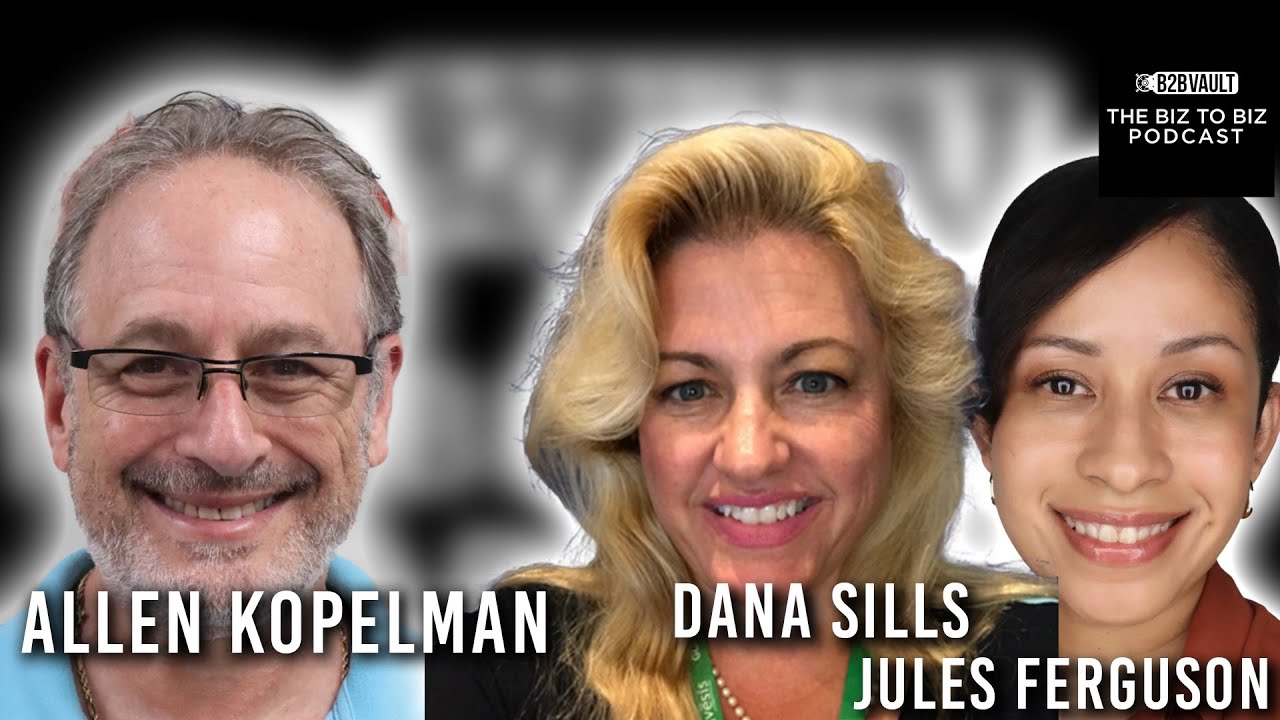
Dana Sills and Jules Ferguson from PayTech Women discuss the future of payments and fintech. The nonprofit has 6,500+ members across 16+ chapters in North America. They cover AI in payments, embedded finance for merchants, and how fintech platforms like Stripe are replacing traditional bank-driven services.
Chapters
Welcome to the Biz to Biz Podcast, your number one source for all business news. Hey everybody, welcome to B2B Vault. This is a Street Smarts edition. We're going to talk payments today with Dana Sills and Jules Ferguson from PayTech Women. And the B2B Vault is sponsored by Nationwide Payment Systems. Street Smarts is the column that I write in the Green Sheet. So this is for, you know, Everybody who likes fintech and follows payments and follows The Green Sheet, this is like one of my editions where we're talking about the business and what's going on in the business. So welcome to the show. And I know Dana for like a pretty long time, so Dana, introduce yourself to the audience.
Hi there, I'm Dana Sills, and I'm delighted for the invitation here, Allen. Thank you so much for for thinking of me and looking forward to getting the word out. I'm a seasoned payments professional. I'm one of many that is currently on the market looking for my next role. I've got deep history in relationship management, product program, project management, you name it. And I am the chair of the Atlanta chapter of PayTech Women, and I enjoy being part of PayTech Women because it gives me the opportunity to make up for networking that I didn't experience at the beginning of my career. And everybody needs an opportunity to network and learn from others.
Yeah. And Jules, you gotta unmute and then introduce yourself. Hi, Allen.
Thank you so much for having me. Like you mentioned, my name is Julianne Ferguson, Jules for short, and I'm part of the PayTech Women team. I'm the business development coordinator, and at PayTech Women We're a nonprofit focused on empowering women in the payments and the fintech industry. And I work closely with our national team and incredible local leaders like Dana, so who's also here today. So I'm really happy to be here and talk payments and, you know, what we do in the industry.
So what, what other cities have local chapters?
Oh my goodness, Allen, thank you for asking. We have 16 national chapters that are growing right now. So we have chapters in the, you know, in different states. We have chapters like Omaha Lincoln chapter. We have chapters in New York, over in the western states as well. So we're, we're all over and we are growing every year.
Okay, great. So it's for anybody like salespeople, people that work in operations, everybody?
Absolutely, yes. Okay.
So if you're a woman and you're in the business, this is a great way to network with other women in the business. And, you know, besides, you know, the other opportunities that we get, like going to regional shows or the ETA, you know, the re— for me, like, regional shows is super important to go to the regional shows. I know you guys are usually at all the regional shows.
Let me try to make it, yes.
So it's, you know, and so it's super important to have, you know, to have networking opportunities. So tell me, like, what's some of the main reasons— like, Dana, tell me some of the main reasons what drew you to the organization. And what's— why is it important to you?
So I think one of the main reasons that I've really enjoyed being part of PayTech Women is that regardless of your role in the industry and regardless of your position, whether you're early, late, mid-career, or you're completely switching roles, you're going from accounting to IT, which I've seen happen with a lot of people in the industry. You have a place where you can meet people in a safe, positive environment, cultivate other skills that you may not normally employ at your job. Like for me, this is an example to present. I'm not currently in a presenting position, and so here I have a chance to practice my skills and get the word out. And most importantly, as I'm getting older in my career, to be able to mentor and help cultivate the next generation. So that they can have an easier path as things are in such a rapid change.
Yeah, we definitely are experiencing rapid change, and that's part of like my Street Smarts column is that's, you know, 25 years in the business, and that's like me giving back and giving information and sharing like some of the things. So if someone wants to join PayTech Women, they— what's the, what's the website? Jules.
Sure. We're at paytechwomen.org. And I do want to mention that we are the only 501 nonprofit in the industry that we are serving women in the payments and fintech space. And, you know, we started off with a handful of women in a trade show over 20 years ago. We're celebrating our 20th anniversary. You can tell by my Zoom background, 2020 to— sorry, 2000 to 2025. And, you know, Over 20 years, we've now grown into a vibrant growing network of over 6,500 members in North America.
Wow, that's a lot. I didn't realize that you guys had that many people in there.
Okay, it does.
It's interesting, like, so I started my company in 2001, and that was the first year of the SEAA. And I think this year is the 24th year of SEAA. Next year will be their 25th anniversary. So it matches up with my company. And who invited me to the meeting to go to SCAA was Judy Foster. And, you know, there's been a lot of women in my— in the years that I've been in the business, like from the— even from the beginning, from all the way from the beginning, you know, that I still interact with. You know, relationships are super important and having mentors And, you know, some of the people that I first met in my first relationship, I still talk to today, which is crazy. And it's, you know, it's super, super important. No, because this is a great opportunity for people to get— do networking on a local level and find out about other jobs, how to, you know, maybe how to transition from one role to another role. Because definitely, you know, what do you guys think about— AI is a huge talked about topic, right? So what are your thoughts on AI?
So AI is a great tool to be able to call through data quickly. The data is only as good as the resources that pull it together. But through machine learning, we're able to accelerate our ability to be able to manage data more quickly, more intelligently. It puts a whole new angle on what business intelligence can be. Back when Allen and I grew up with Lotus 1-2-3 and then Excel and then data Excel spreadsheets, Access, systems, data warehouses, data cubes. Now we're on like a whole other metadata kind of world. It's something we need to harness, but it's also something to not let us become lazy about because again, the better the input, the better the output. If the data's bad, the results are going to be off.
One thing I see, you know, a lot of is AI chatbots and things like that. I don't know how quickly that's gonna, you know, Pete, personally, sometimes I like it and then sometimes I don't like it. Some of them are cool because you get a real person in the chatbot. That's kind of cool. One thing that I like though is I see quite a few POS systems put AI into their frequently asked questions. And I think that's super cool because Somebody that's using a point-of-sale system can type something in instead of them search— instead of the merchant searching through a database of FAQs, they can type in, how do I add a new employee? And get the answer like in a few seconds, which can save time of people calling the help desk for simple, simple questions. What's— and I think everybody, if you don't have a paid account, for an AI service, you should get one because it will learn, it will learn what you're asking it to do. And especially if you use it for writing or blogging or anything like that, or you even use it for searching, it'll start to learn what you, what you're looking for and your, like, persona, they call it. And it'll get— you'll get better results. What are your thoughts on AI, Jules?
Oh, I love where you're taking the conversation. I think it's a very interesting, you know, it's all over the place. Every time you go to a show or everyone's talking about AI, there's some, there's just definitely some exciting things that are happening in the industry. But I want to hark back to what you said earlier in the conversation about relationships and experience. So I think it's all about the experience of about making, you know, payments and, you know, fintech and payments is all about making life as frictionless as possible. And I think AI is the next step into that. It's all about the experience and integrating into our personal lives and kind of making it a little bit easier. So it's definitely interesting what's happening with AI and payments. I think there's a lot to be learned yet about how impactful it will be in our personal lives in the next couple of years. I'm just excited to see Yeah, one of the biggest subjects everybody talks about—
I just interviewed somebody on, on the show that's the event, the podcast goes out on Friday with a woman named Stacy Bishop who has a fintech company. She's a— she's involved in embedded finance for banking. And I, you know, embedded finance is starting to come into the merchant service industry where we see embedded finance with some stuff with banking and embedded financing with loans, embedded financing with consumer loans. And what do you guys think about embedded financing?
We need to have new frontiers to round out what is traditionally digital payments acceptance or EFT from back in the day. And so the whole idea of, of seeing an industry mature there needs to be something new there. And often that's been an app-based technology that's omnichannel. Embedded finance is a great option to be able to add in or to lead with, as is just a full circle of accounts receivable, accounts payable, digital banking, digital card acceptance, card issuing. If it's something in this economy, which is shifting a lot, that can help small businesses move and get a leg up on their competition, then I fully support the whole concept of it.
Yeah, there's definitely like a merging happening of merchant services, embedded finance, and fintech. Like it's all like starting to come into one thing. What are your thoughts on that, Jules?
You know, I want to, I want to touch on what Dana said. And I think of it more, and I'm not an expert in the field, of course. I'm, a lot of conversations, you know, center around AI automation, embedded finance, everything that's happening in the fintech and payments industry. And I just want to say that I have a bit of a different viewpoint of it. I come from a developing nation. I'm from Belize and I have a background in banking there. And, you know, I've seen firsthand what happens when people in smaller communities have limited access to financial services. But now with, you know, everything that's happening with digital payments, mobile banking, embedded payments, and what's expanding globally, we have the opportunity to bridge the gap and serve the unbanked. So that's— it's not just about innovation, it's, you know, transformation of entire communities.
Oh yeah, there's definitely, you know, transformation going on. Access to banking, access to payment facilities, you know, crypto is like a huge, you know, for the, you know, crypto is kind of been like a whole up and down thing. And probably, you know, Belize probably is more active with crypto because I find outside the, you know, the U.S., crypto is a lot more active than it is here, for especially for buying.
Yeah, I haven't, I haven't heard so much coming out of Belize with crypto, but you know, everything's changing. It's definitely— I've been, I've been, you know, I came out to the U.S., you know, as a student, and now I'm working for P-TECH Women. So it's been a little over 5 years, and a lot has changed in the 5 years that I've been here.
Yeah, technology is moving at breakneck speed. So absolutely, it's moving faster than ever. I used to say to myself, oh, in 2001, oh, we got to sit down once a year and we have to analyze, okay, what tech are we selling today? What are we going to be selling next year? Now it's like, okay, what are we selling next week, next month? You know, what are we going to learn? One of the trends— there's a few trends that have been going on in the business I've been researching. So one of the trends is when when we first started in 2001, if you walked into a merchant and you said, oh, who are you with? Their answer was my bank. Today, if you walk into a merchant, they're with a fintech. So, you know, we— you see, I mean, I saw the emergence of PayPal, the emergence of Square, the emergence of Stripe. Today Stripe is processing something like a billion— a billion dollars a month or something like that. I don't know what Square's volume is, but it's pretty high. And then you have a company like Toast. I read that they have close to 25% of the restaurants who use a point-of-sale system. So there's definitely been a shift from the banks doing merchant services to more of fintech software company doing merchant services. And I wrote some articles about that. One of them is called Software is the New ISO, because the software— verticalized software. I'm sure that you have people joining your organization, and you're probably getting members that are coming in that have created these verticalized software companies. Tell me about that.
You guys— I have noticed an increase in the number of members that are parts of smaller PayFacts and smaller pay facts tends to attract ISVs that want to bring in their technology to be able to integrate into this gig economy-driven fund now, payout now type situation, essentially emulating sort of a DoorDash-style solution where you could have a food truck and drivers and your own your own stable restaurant location, just multi-omni-channel even for a restaurant with delivery and parking, um, at the restaurant, um, mobile somewhere. And so what I think that really leads to is the fact that ISOs today, to be able to thrive, have to embrace technology so that they're not just selling downstream what their supplier has who is also their competitor. And so when you're an ISO and you're in that, that, that supply chain flow, the savvy merchants know that there could be a greater cost involved in not going straight to the top. And the biggest differentiator to offset that is to be present, to be that relationship management person, and to be able to bring that bespoke unique technology to that merchant, to actively listen to their needs and solve for it. And have that merchant know that you are there for them and they're not just some number in some system, um, with a phone tree, with a bot that's going to figure out what they need and dump them to some tech support person after being on hold.
Yeah, we see—
I love that you said that, Dana. So, you know, it kind of just brings back to, you know, our message at, at Paycheck Women about authentic connection. So just not broadcasting our, our message, but actually speaking to people's values and aspirations.
Yeah, what we see is, you know, we used to see a lot of, you know, Dana knows, like, terminals were like the lifeblood of, of agents in this business, and now it's getting to be software. And one of the other articles I wrote was, and Dana mentioned some of this when she was talking about, I wrote an article about agnostic versus antagonistic, and what that article was about was how there's companies that we've built as the agent community, the ISO community, and now they— some of those companies have become our competitors. And that's— and then the other thing that's going on is the— with M&A, mergers and acquisitions, and having these private equity groups come in. And when they acquire a company, so a good example is Lightspeed. So this comes up in the forums that I, I'm in on Facebook all the time. Used to be— Dana remembers, and Jules, you don't know anything— the Green Sheet Forum back in the day was the place you went and talked about everything. Now you have to go to a few Facebook groups to see what's going on, what people are talking about. That's how I come up with a lot of my subject matter of what I like to talk about on the Street Smart podcast. But one, you know, they're talking about this Lightspeed company. Lightspeed bought a book. They bought 3 or 4, maybe 5 POS companies. And then they got some— they had— they were getting some private equity money. And the first thing that private equity group did was they said, oh, we got to capture the payments. They never were a payments company. They never referred anybody for payments. I mean, I personally saw about $3,300 a month disappear off of my residual. Because they took over their payments. They went to Stripe and they just switched everybody. And now if you want to sign up somebody for Lightspeed, you can't because they'll charge the merchant $400 or 50 basis points, whichever is higher. And we keep seeing this in our industry where reps are selling agnostic solutions. I get like a stomachache every time I see somebody post, I need an agnostic restaurant solution. I'm I think people in the business need to pick their— you need to really select your partners and look at the partnerships that you have. And you need to partner with companies who own the— they own the IP that you're selling. Like, they own— they call it the intellectual property, the POS system, whatever you want to call it. They own that software, or they have some contract that I don't want to say it's unbreakable because if somebody sells a company, all bets are off, right? But you can put things in the contract to— if they want to switch payment companies, they're going to have to buy the merchants from you or something so that, you know, you're protected. But, you know, I did a podcast with James Huber from Global Legal Law and, you know, all bets are off once the company is sold. But I think that reps and ISOs. I see more ISOs today, um, either buying POS companies, trying to build out POS companies, and, and things like that. Do you guys also see this trend in the ISO community? Are people in your organization talking about, oh, I lost my residuals when this company bought this company? Like, what do you guys hear?
So, yeah, I'll let Tina take it first. Yes.
So I, it does seem like the smaller POS companies are at risk of acquisition because they're often small and family, and unless they have special SaaS technology, if they have a developer in the family of the business, that they can go stagnant and stale and not keep up with, say, the toast generation. We're having something so— a payback right there in restaurant, and restaurant being such a competitive space that a lot of times it's driving a lot of salespeople up the supply chain towards the distributors, the wholesalers, the manufacturers, the space where it isn't so trodden with day-to-day sales, and there's still this opportunity to be able to modernize how, how the business is, is run with AR and then AP. Um, so I don't know if that helps a little bit. I might have gotten a little off track on that one with where, um, I'm seeing the trends going with making businesses move upstream in their targeting of their clientele. Oh, and then the other one was the fact that we're having different organizations trying to drive the dual pricing, cash discounting, all the different ways in which a business can offset the cost of processing. And oftentimes what I've seen happen there is an agent making that switch, watching their residuals increase, and then relaxing their new sales to the chagrin of their ISO, because the ISO wants to keep growing, and all they did was really just change, um, the way the residuals work for the business, but not in a growth volume transactional way.
Yeah, one thing is, you know, with cash discount, we've seen— which I don't like it as a business practice— is when sales reps start to pay merchants or do some shady stuff like program the terminal for 4% but turn in the application at 3.5%, and then the business is getting more money than they're supposed to be getting. And, you know, there's compliance with that. There's probably some laws being broken, and, you know, and, you know, kickbacks and things like that. And I'm— I just don't think that's a great way to do business. I know I've talked about it with other people in the business that it's, you know, I don't want to say it's like shady, but it's definitely like in the gray area of ethical business behavior, paying kickbacks and things like that. But do you hear from members? I mean, are there a lot of salespeople in your organization, Jules? Like people that are actively in sales?
There are quite a bit of people who are actively in sales. For the most part, our members within the organization come from all different departments within the companies that are sponsoring them. You know, we have large company sponsors, we have our smaller startups and, you know, fintech startups who are, you know, starting to join the organization. I would say quite a bit of them from the sales and marketing departments are very, very strong within our membership. But it's important to remember that, you know, that they're from all different departments within those companies.
Yeah, I think like the feet, the people who are, you know, out on the street, MLS, merchant level salespeople, you know. Well, I'm not exactly that, but I'm involved in sales on a day-to-day basis, you know. I kind of, I tell people all the time, I go, you know, you have to— I like embrace— I remember the first time I did a Zoom and did some— I said, oh, I'm going to show you a software demo while I'm on the phone with somebody. Yeah, let me— I'm emailing you a link, click this think, let me show you this software demo. The person thought I was insane. I ended up making the sale, but that's besides the point. So, but the, the point, you know, technology is just changing so fast, you know. And I think, like, you know, when in the business, sometimes I think people, like, at the, at the ISO level, you know, we'll— we get phone calls all the time from, I— oh, can you send us some business? Where's the business? Where's the business? Where's the business? I try to explain to them, I go, listen, This business today is not about like, oh, can I give you this machine, right? Sell you this machine and put it on your counter. That's not the business anymore. The business is, oh, what kind of technology do you need? What kind of software you need to run your business? Do you need a point of sale system? Do you need this? You need that. Even if they're on the internet, what kind of gateway do you need? What's matching up to your website? Or, you know, trying to partner with ISVs and say, hey, Mr. ISV, we have a white label program. You can come program to our gateway. We have our own hardware solution and you can have a whole private white label all the way out through your, your complete product, right? Which we just launched and not, you know, but I'm just saying like this is where our business is going. It's, it's going from like 'Oh, what's your pricing? What's your price? What's your price?' to, 'Hey, technology, technology, technology.' And do you guys see that where more and more people are involved in technology? Like the people joining the organization, where do you see like, maybe you need to attract more salespeople. So if there's any women out in the sales, join so they can get more information about like what's going on on the street because that's what That's, that's where the pulse is at. That's where everything's happening with the businesses, you know. But what do you got? What do you see, Jules, from like membership? Do you have a lot of software companies, fintechs?
Not as much, but we are steadily growing, uh, our fintech, uh, corporate sponsors in terms of membership and also, um, for, you know, summit sponsorship, etc. So when, when it comes to PCW and the organization itself, we look at business and sales as, you know, relations relationships. It's something that we always hark back to. So sales isn't just about closing deals, it's about trust, consistency, staying connected, you know, even when you're not actively selling to them. Our membership is growing in, in terms of from the traditional banks and traditional payment companies to fintechs and startups. I think it's something that's very, very exciting for us. At this current time, especially with how the industry is, you know, the direction that the industry is taking.
Okay, so any final thoughts, Dana? You want to give me some final thoughts on what your message is today for everybody? Besides, if anybody needs a good employee, Dana— I've known her for years— and if you don't have her contact info, you can find her on LinkedIn. And hire her.
Thank you so much. Thank you for the warm endorsement, Allen. Dana Sills, MBA, on LinkedIn. I would love to connect with you, whether I can help bring your company to its next level of strategy, problem solving, creative logic, critical thinking, streamlining. I'm here. I can do a lot of things. I'm a switchblade for a lot of different areas in the company. I also heartily love PayTech Women. Whether you're in Atlanta or anywhere in the country, anywhere in like Toronto, we have a team up there. I know we're going international. If you're interested in learning how you can supercharge your career and how you can get access to information, mentorship, education, self-improvement, and connecting with like-minded people that want to see you achieve your best yourself in your career as quickly as possible, please reach out. Thank you.
And Jules?
Yes, thank you, Allen, so much for having us. And thank you, thank you, Dana, for welcoming me and PTW into the conversation. And I just want to let everyone listening know that we're always welcoming new members, men and women. If you're passionate about the space and want to grow personally and professionally, PTW is the space for you. If your company wants to empower the women on your team, we'd love to make that happen, reach out to us at PayTechWomen.org. My name is Jules Ferguson. Thank you for having us.
People can reach out to you on LinkedIn also, right? Besides—
that's right, yes.
Okay, so everybody, thank you for listening to B2B Vault, sponsored by Nationwide Payment Systems. Today was a Street Smarts edition with PayTech Women. Thank you for Dana Sills and Jules Ferguson for for coming on today and chopping it up, talking about payments, fintech, embedded finance, and all that good stuff. You know, and if you enjoy the podcast, you can follow us on LinkedIn, follow us on YouTube, Spotify, Apple Podcast, or whatever app you listen to your podcast on. We're on there. Peace out, carpe diem, and thanks for listening to B2B Vault.
More from Allen



How B2B Companies Can Turn YouTube Into a Lead Generation Machine | Featuring Samu Kovacs


How AI Is Transforming E-Commerce with Zero Code | Kumar Senthil, CEO of Firmly



Dre Baldwin on Discipline, Leadership, AI & Business Success | The Mindset Every Entrepreneur Needs

The Same Skills That Made Me a Pro Athlete Built My YouTube #podcast #entrepreneurship #success

