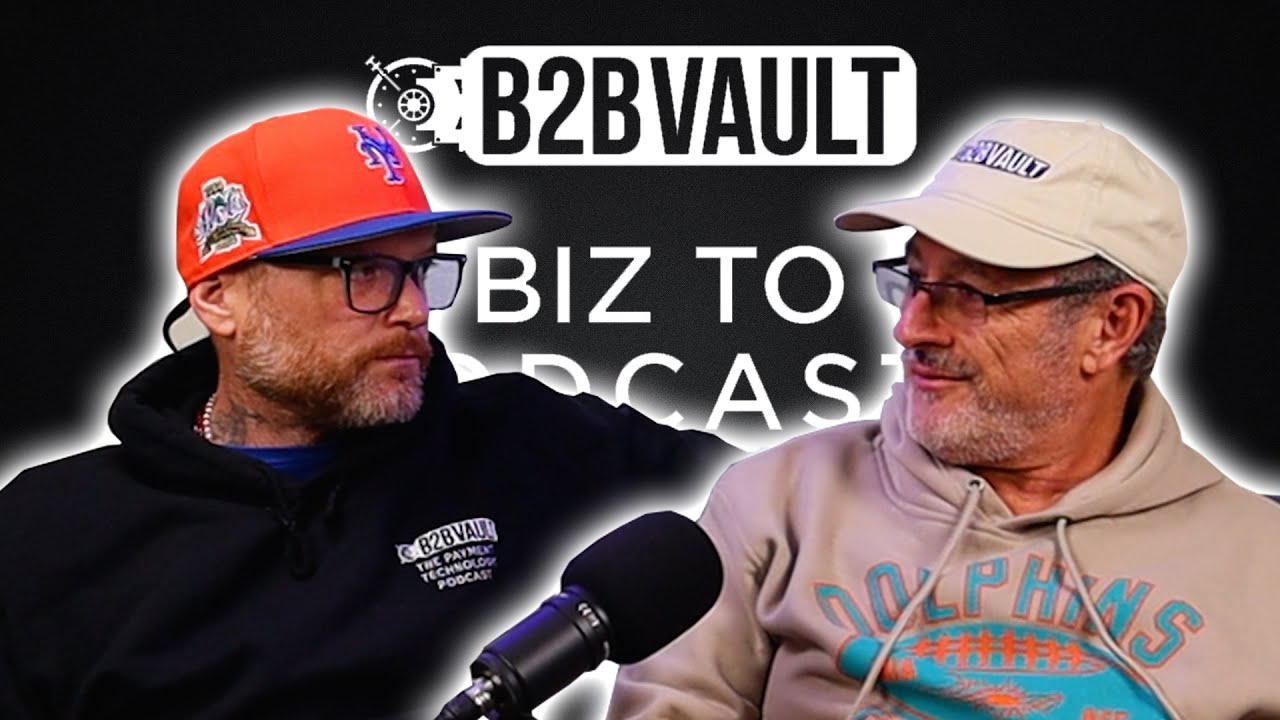
Justin and Allen discuss the most valuable skills to learn in 2024. LinkedIn's top three are data analysis, AI, and cybersecurity. They also highlight the growing importance of blending technical skills like Python and video editing with creative abilities, especially as AI reshapes how companies hire.
Chapters
Yo, what's up everybody? It's Justin live from B2B Vault, the biz to biz podcast sponsored by Nationwide Payment Systems, hosted by this guy, the Rocky Balboa of payment processing himself, Allen Kopelman. And in today's podcast, uh, we'll be talking about what skills do we think, uh, or do we want to learn in 2024, and also which ones do we think are going to be popular or looked after coming up in the near future. So how you doing, man?
I'm doing good. It's a little chilly here, especially for Florida to be in the—
Definitely a little nippy.
It was like 49 degrees this morning.
Yeah.
Yeah. I was walking Rocky, put on his little coat today.
He's definitely got a vest on.
Yeah, he's chilly. Got his little doggy coat. I'm wearing my new—
Rocky is wearing a puffer jacket right now.
Yeah.
Hey, South Florida, man.
He—
it's, uh, he wouldn't survive in Wisconsin, I'll tell you that.
Listen, I see like dogs up north and people put little boots on their feet.
Well, you should put boots on the feet because the salt messes with their paws, right?
So I see that, like dogs up north.
It's not so much the cold, it's the, it's the salt, right? So then I see like people put boots on them, and then down here people put the boots on because the blacktop is so hot.
Yeah, it's too hot. That's why I walk him early in the morning so that he's— or if I take him out when it's hot, I take him, make sure he gets on the grass.
Hanukkah just finished.
Yep. Yeah, Hanukkah finished. My favorite— got to hear my favorite song, the Adam Sandler Hanukkah song. A Million Times. There you go. I think there's like 4 versions of it now, 4 iterations of it now.
That's funny. Definitely, you've definitely played at least one version in the office for us.
Yes. And there's, you know, there is— there are some other groups that have— that come out with some creative Hanukkah songs that I saw over the, uh, holiday. So that's always interesting.
That's cool. That's cool.
How's your week going?
Uh, it's going fast. Not really. It's only what, it's Tuesday by the time this— I don't know when this will come out. This come out in the future. Um, tomorrow? No, it's not coming out tomorrow.
Oh, okay.
Um, but yeah, yeah, no, I mean, what, uh, not, not much going on at all.
Okay, so top skills that for myself, you know, I want to improve my writing skills. I want to improve— I always strive every year to improve on my organizational skills because being organized is important. It's not always easy, but it's important.. And so that's— those are two things that are on the top of my list. And, you know, always learning about new technologies because technology changes very, very quickly. And, you know, everybody, you know, the big thing is we talk about all the time in the office, AI, you know, and looking into how to use AI and what type of AI technologies are out there. And what, you know, we looked at different, you know, and people need to understand, like, you know, there's different— oops— there's a difference between AI and automation. So a lot of people trying to sell AI, but they're basically selling automation. And, um, you know, definitely machine learning, AI is You know, is it going to come to the point— we're watching a video, me and Justin, about a company that has an AI that can make cold calls for you. Just, you know, we're tossing it around, but I'm not sure like people are going to react to it well. But, you know, the time will tell when it comes to the to things like that.
What do you mean react to it?
Well, like if you got an AI telephone call, are you going to listen to it?
You are getting AI telephone calls right now.
Right. But do you hang up on them or do you listen to it? We should do a poll on LinkedIn.
I don't listen to any robocalls.
Okay. So if it—
yeah, I don't listen to sales calls either, though.
No, but I'm just saying, like, so I'm just saying, but I'm saying it's an interactive phone call. So, you know, I've gotten some, like, from my insurance company. I've hung up the phone on them because I don't have time to deal with them.
And I ask you all the time, like, how do you even— in my opinion, Allen, you waste a lot of time because you answer these phone calls and you listen to these people give you sales. And in my I don't do that. I hang up the phone. I'm like, who is this? No. Sometimes you do, but sometimes you hear them out and you schedule appointments. And if you want to— I mean, I feel like sometimes that's like your way of learning something.
But well, sometimes if somebody's trying to sell me something and I never heard of it before, sometimes I hear them out so I know, okay, maybe is this some technology I should pay attention to?
That's one of your time— your organization time management.
Yeah. Well, I've been doing— I just got a phone call before we walked in here to shoot the podcast. This guy's like, oh, we want to upgrade your software. And I was like, I don't have time for that, call me next week. There you go, that's it. You know, upgrade what software? I have no idea. I didn't even— never heard of the company. They're probably just trying to do a sales call. Exactly, that's what I'm saying.
So, you know, setting your calendar up for another Busy week anyway, man.
No, but I'm just saying. So I said, call me next week. No, because we get—
so skills, we're way off. Yeah, skills, skills to pay the bills. Yes, yes, y'all. One, two, microphone check, y'all. Anyway, man, I think so. I think that we have a lot of, uh, same ideas of what's popular and what, you know. Yeah, but you know, but LinkedIn said that, well, the top 3 from LinkedIn was data analysis, AI, and cybersecurity. And I couldn't agree more. Um, it's funny. And then like number 5 or 6 was digital marketing. It's funny, like how all these, these things up besides AI, right?
Right.
To me, who's been in this since, like, you know, I'm in 13 years now, right? Right. So like data analysis, something that we've been— obviously we use cybersecurity has always been, you know, for big large e-com companies or medical companies, obviously they need better security.
Yeah. What's crazy is, is we're seeing more breaches, like data breaches.
Yeah.
In the last like couple of years than we've ever had before. We had major ones in Las Vegas.
There was just going to keep coming. So like, but what I was saying is like the the, you know, cybersecurity and digital marketing is finally all getting love. So it's, it's good to see that people in the tech industry are starting to get paid what they need to be paid, man. And it's just good. But the data analysis, for the people that don't know, is to collect, clean, and analyze big sets of data. We don't have big sets of data, but, you know, I still, you know, analyze the data. And then AI, you know, obviously the knowledge of these processes are gonna be looked after because machine learning and prompt engineering and all these things and being able to actually use the, the, the, the information, the data that you collect from AI is gonna be one thing. You know, you're gonna still, the person is, there's gonna be people that are gonna be needed to do that. And then you're gonna need programmers. You know, people who are real into coding and developing, you know, like Python and Ruby on Rails, etc., etc., that type of stuff.
And one of the things is like data, you know, we— I get customers all— we had a customer yesterday and they were— they were— had a meeting with them, Zoom meeting in the afternoon, and they were trying to— they were, they were, they were talking about something in their business. And I was like, no, I says, you guys have no idea what you're talking about, right? 'Cause they were talking about that nobody's using Apple Pay or tap to pay in their business. And I was like, well, I'm doing your credit card processing, right? And I said, why would you want to take that option away, right? I said, so I told them, I said, give me 2 minutes. And I went online to the portal, I downloaded out their authorization logs for like a week. And I was like, you have like 70% of your transactions are tap and pay. And we can't identify how many of those are tap or somebody took the phone and tapped it on the machine. But those are, those are contactless transactions. And, you know, they don't— when they first— some processors can tell you, oh, this one, this many were Apple Pay, this many was Google Pay, this many was tap. But now they changed it with the tap cards. Everything just says tap contactless. And people don't realize how important that is to have that in your business.
Yeah, I mean, for me, for like the skills that I want to learn or, you know, sharpen, one is I really am going to follow up, follow through and learn Spanish. Number two is I want to get better at video editing. And then number 3, for more of like a personal type of, you know, I don't know, thing I was gonna— I want to some sort of martial arts. So get back into that. I need to figure that out. So those are the— those are my 3 things for myself.
Okay.
Yeah, I gotta figure this out, man.
Yeah, one thing, you know, somebody asked me the other day, they go, they asked me, they said, oh, I'm looking for a job. They want to know if I was hiring, right? Right. And then they were like, what do you look for on a resume? I was like, you know, that you got to think about what kind of, you know, what type of job that you're applying for, right? Right. And what type of skills are employers looking for, you know, from employees? And then the next thing is, is what's the work environment like? Is it a remote job, a hybrid job, in-the-office job? I mean, it's just, it's just so, so much out there from that standpoint. But I think when, when employers are looking to hire people today, Well, what does he do? Uh, the person was working in a bunch of different industries, you know, but I was explaining to them, I'm doing management and so nothing.
Well, I'm not saying he wasn't doing nothing, but in this world of where we're at, right, nothing.
Exactly. So that's what I said. I go, you're managing? What are you managing? So when someone says, oh, I manage the Salesforce, right, I say, okay, well, how did you do that? Right. Was there CRM involved? You know, people want to know what are your technical skills, right? So, you know, to do—
what is a technical skill?
Like CRM, customer retention management software, you know, working with the database, working with, you know, Excel spreadsheets. You know, that's just— those are the things, you know, employers want to know.
People need to be able to, you know, hop on a laptop and get busy. Like if someone wants to set a— if someone said, if you are sat behind the computer, in front of a computer, you know what I mean? And they're like, yo, I need you to organize this spreadsheet. Uh, I need A through E, I need the businesses, you know, whatever. If you can't do that right now, I don't know.
Yeah, it's kind of scary. Like, you know, this person is a little Somebody else who was older also asked me about a job. You know, they're 60. Yeah. And I was like, the same thing. I go, you know, you got to have technical skill sets. You know, when somebody comes into here and they want to do— they're going to be helping us with marketing, most importantly is, you know, what do you know how to do with social media? You know, because today, if you're the social media person, it's not just about coming up with a creative paragraph, right, and a picture. You got to know how to make videos, edit videos, make a video. Uh, I mean, put the captions in there.
So that's where you, you know, as a business owner, your idea of what a job description is gets muddied. Okay, so social media manager is one thing, like someone who's doing social media. Yeah, they need to be able to you know, at least chop and put together a reel. Right. You know, not video editing. No, no, no.
I'm not saying that. I'm saying you got to have these— whatever you want to call it. People need to have the skills that are required for the job. And I think when you talk to— if you go for a marketing job, they're not just looking for someone who can make an 8.5 by 11 PDF or a 4-page, you know, marketing piece for them anymore. You know, they're looking for a lot of digital marketing, you know, more than print.
When— I don't know, it's like, what are you really asking right now? Is the— so like, for me, for instance, a part of our marketing plan is in print.
Right.
But that's by design.
Yes. No, but I'm saying that's what I'm talking about is everything is shifting. So someone who's been making 8.5 by 11 product sheets, right?
What, like you mean a graphic designer? Well, whatever.
I'm just saying, like, all these jobs are squeezed down to where you need to have multiple—
No, they're not squeezed down. That's a problem that you as a business owner have. They're not squeezed down anymore. They're actually separated, very, very individualized. You know what I mean?
Oh, I get that, but I'm just saying—
People aren't responsible for doing all of those one jobs anymore because it's not just one job, what you're saying. You know what I'm saying? And that's— anyway, man, that's a whole different conversation.
Well, it depends on the size of the company as to what's going on there. Yeah, I mean, you got a 50-person company, obviously they're going to have things more dialed in to specific things. If you're, you know, going to work for a small company or a startup, then they're looking for people who could do multiple things.
Well, of course, right?
Yeah, yeah. But when it, you know, when— what do you think that, you know, with AI being probably the the most talked about thing, you know, everywhere, right? I mean, I think it's a business topic that's talked about quite a bit. What do you, what do you think is, are the type of things that people need to learn with AI that's going to help them in their jobs?
Well, the basic— well, I think the, the first thing is, is that people need to take a step back and see maybe what they're not good at with their job, right? Or I don't want to say not good at, or something that, you know, they hit all the marks on all these other, you know, checklists or checkpoints or whatever you want to call it. But there's that one thing that, you know, they always, you know, they're just not— they don't feel 100% confident with. I think that if they take a deep dive enough that they could get some help with a tool like AIPRM or ChatGPT, etc., etc., all these other things, and it could help them strengthen their writing capabilities or, you know what I mean, understanding of data, whatever, right? There's just, there's just so many different ways that you can use artificial intelligence, to help you, you know what I mean? Like you said, time management, there's literally an AI tool to help you, right? And you know, like you could connect it to your phone, et cetera. You know, like there's just, there's a lot of things that AI can, um, help people with. Like for me, I haven't really, I mean, I'm guilty as charged of one of those people that hasn't, I mean, I use AI for like, we generate articles and, um, ideas for marketing, um, plans. But I still haven't, like, like I said, took a deep dive into it, you know what I mean? And really, like, started a business with it, basically, is what I'm saying.
Um, so we've seen a few of these businesses where people are using AI and developing, like, a product with it and they're using the OpenAI, you know, API. And, you know, we've seen a few of those get the rug pulled out from under them because as soon as that API changes, all of a sudden their software stopped working. So that's something people need to really think about when they're developing these products, is that it's not just like set it and forget it. Somebody needs to be watching the store.
Oh, absolutely. I mean, I think AI is gonna go along a lot further. I think it's really young. I think it's a little spooky for me, you know what I mean? I mean, just coming up in our, in my era, like, it just starts to remind me of Terminator movie all over again and whatever. You know, we've mentioned that before, but I think that it's going to be great if, if if humans don't mess it up, basically. Yeah, yeah. I think that it could really advance mankind, right? Like, it can make, uh, life a lot easier for a lot of people. Um, it's going to make life harder at first because it's going to eliminate jobs. It's going to do a lot of things. It's going to, you know, changes are going to happen.
Yeah, there's definitely like, you know, definitely like a lot of job-changing stuff. I remember like 2008, 2009, kiosks started coming out, you know, and that's already years ago because we're in 2024.
But I still don't think that's really made that much of an impact though.
Uh, it's making an impact more because like yesterday I went— saw like, we went to the doctor.
I'm saying it's going— it's getting more popular now.
Yeah.
But I still don't see it. Like, I remember, like, in— when you're— what you're talking about, that time frame, right? And that was like literally the— oh, it's taking— everyone was panicking, like, this is taking my job, it's taking my job. But look how long that—
yeah, it took like—
that's already 6, 7 years ago.
Like, it's 2008, we're in 2014.
17 years.
Yes, 17 years.
So again, it's still not I mean, you don't go into every McDonald's and it has that.
Oh yeah, every McDonald's, every McDonald's.
No, bro, that's the corporate ones. I'm just saying, like, not everyone has a kiosk. So there's that, you know what I'm saying? Like, and people in the middle of the country, you know, I've driven up north a lot.
Yeah, no, no, I'm saying obviously in bigger cities you're going to see things change a lot faster than— right, of course, of course. No, like yesterday we We went to the hospital, right, to the doctor's appointment, and you walk in and there's like one person standing there. They had like 10 kiosks and you had to go up to the kiosk and put, you know, Jacob had to put his name in and all that. They ask you all this information.
Oh, they check in at the hospital?
Yeah, they check in and they tell you how much—
Those types of way, that's great.
They tell you how much to pay and you just pay. So, you know, that probably was the, instead of each individual office doing it, then you just went up to the the floor.
And I mean, that's an example of a job lost.
Not just one job.
That's multiple jobs for sure.
Dozens of people, right?
But again, it makes it easier for the, the, the person.
Yeah.
I feel, you know, like, I mean, except if it's an elderly person, etc., you know, kiosk, it's confusing, right? I remember what the— when my grandmother was still alive, that she would walk up to those things and she— her mind was blown. Like, what?
Exactly.
You know what I mean? She thought it was a billboard, right? But then I'm like ordering from it and she's just— she can't understand.
Yeah. And then we stopped somewhere to get something to eat and the lady was like, oh, I'm bit— the person behind the cash register, she goes, I'm busy. She goes, everybody needs to go over to those kiosks and order your food.
Oh, I would have walked up.
I was like, we were already there. Jacob was on crutches, so—
not a walk up.
I was like, wow. But that's, you know, I think we're gonna see more and more of that. Oh, you know.
Yeah, no, I agree. I think, uh, I mean, but yeah, there's a lot of that coming on. But as far as skills for people to learn, I think you, you know, technology, technology, technology. People who are, you know, figuring out what, how, you know, if they're stuck somewhere in a warehouse somewhere for Amazon, and they don't feel like they're going anywhere, or, you know, they're in some sort of corporate job, I definitely would tell you to go and learn some sort of cybersecurity, AI, digital marketing, data analytics, And if you're into programming or if you're good at math, go do that too.
One thing with cybersecurity that, you know, in cybersecurity, yes. Yeah. One thing with cybersecurity, I would love it if some of these, like, we, I probably get 10 emails a week, phone calls, LinkedIn messages about cybersecurity. When you dive, when you, you know, and I stopped even talking to those people because most of them try to sell you something that's going to cost thousands of dollars a month. Yeah. And it's a problem because when you look at the makeup of small businesses, right, small businesses represent about 75% of all businesses in the United States. So those are businesses doing, you know, zero, a startup company to $5, $10 million a month.
Right.
Those are considered small businesses. And when you look at how many devices does each employee use employees, you know, average employees, a laptop or a computer, some sort of phone, and maybe a tablet that they're interacting with work emails on or work. So I would say the average employee is interacting with probably an average of 2 devices in most, but, you know, in most cases some could be 3. Well, let's just say an average of 2. And they want like anywhere from $50 to $100 per device per month. Business owners are not going to spend that kind of money. But I think that when it comes to cybersecurity, I think that even as an individual and as a business, you know, people need to really be educated about these spam messages. Fake email.
I was just going to say, what's your cybersecurity and what What you're talking about is like, I mean, to me, it's two different things, right? Like, in making sure your devices inside of your office is secure is different from like someone sitting and monitoring a server, right?
Okay.
Like, you know, like for us, we, you know, we, I suggested to Allen that we upgrade our security on everyone's devices. Just, you know, it's happening. People are hacking into counts all the time. People pay bills when they're in the office, etc., etc. Let's, you know, make it secure. But cybersecurity is a way much larger scale. So like what you're talking about for small business is like monitoring. And I do think that these businesses need to figure out a better, like, you know, like how, how can you scale that up, right? Like, so scale it down. And that's what I mean, scale, like scale it per business, right? Like, so if we have you know, we have only this certain amount of traffic and we're done. Like, you know, businesses should be able to afford a package, right?
An affordable package.
Yeah, but I understand what you're saying, but like, what— yeah, cybersecurity is much—
I also thought about like, oh, I should make a— have a cybersecurity like training for basic cybersecurity, you know, basic, basic whatever. Why, you know, be careful, Like, people need to be careful with emails, text messages, and stuff like that. The basic stuff, that's where people are getting ripped off.
I mean, again, yeah, if people are— yeah, no, you guys need to hop on a basic computer skills course. Yeah, that's what you're talking about.
Yeah, but basic computer skills, and also use two-factor authentication even though it's a pain in the butt.
All right, man, well, if you guys got any ideas about you know, what you think is a hot skill to learn for 2024. Drop a comment. Make sure everyone has a good, safe holidays. Thanks for listening. Smash that subscribe button for us. Peace out.
Peace out. Carpe diem.
More from Allen



How B2B Companies Can Turn YouTube Into a Lead Generation Machine | Featuring Samu Kovacs


How AI Is Transforming E-Commerce with Zero Code | Kumar Senthil, CEO of Firmly



Dre Baldwin on Discipline, Leadership, AI & Business Success | The Mindset Every Entrepreneur Needs

The Same Skills That Made Me a Pro Athlete Built My YouTube #podcast #entrepreneurship #success

