Working 10 Years Ago Vs Working Now in 2024 | Biz To Biz Podcast
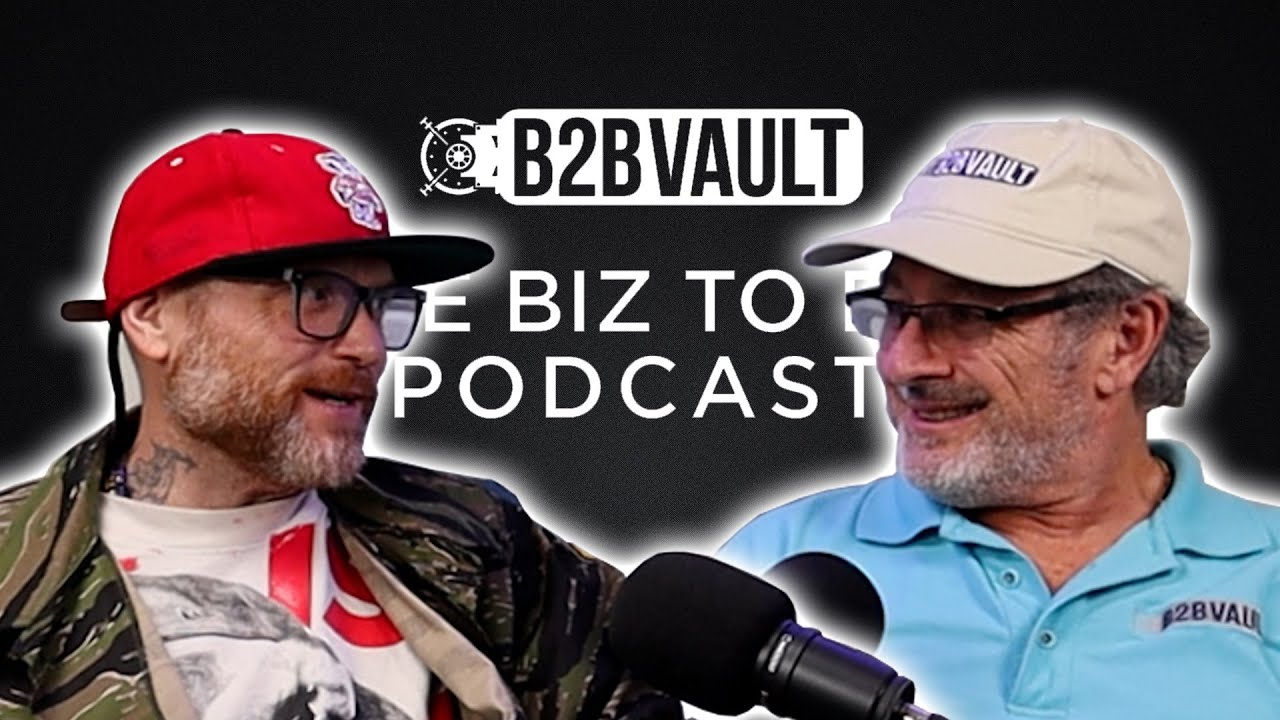
Allen Kopelman and Justin compare running a business in 2014 versus 2024. Door-to-door sales worked then; now it's all digital. Payment processors like Stripe and PayPal have become essential but frustrating, and clients ghost more often than they used to.
Chapters
You are now watching the Biz to Biz Podcast with Allen and Justin. Yo, what's up everybody? It's Justin live from B2B Vault, the Biz to Biz Podcast sponsored by Nationwide Payment Systems, hosted by this guy, the John Cena of payment processing himself, Allen Kopelman. And in today's podcast, we'll be, uh, reminiscing When we reminisce over you, they reminisce over you. That's Troy, it's a great song. Pete Rock and CeCe Smooth, hip-hop shit. Yeah, sorry. It's all right. Yeah, man, gotta play the song if you're gonna reference it. No, no doubt. We can't, you know, they'll cut it off. He won't even be able to have a podcast.
Yeah, that's messed up.
We don't own the rights. You can literally play like a zero, a tenth of a second of a snippet, right, without getting flagged. So yeah, it's just not worth it. Now we're gonna be talking about, uh, what it was like, you know, hustling, entrepreneuring 10 years ago. And basically we're gonna have to time travel a little bit further in the past to like a jobby job, like the last time you were working. And yeah, it should be kind of cool. How you doing, man?
I'm doing good. It's good.
You're awake today, I see.
I'm awake today, yes.
Yes, yes, yes.
I was a little tired the other day.
He's alive on arrival.
I didn't get enough sleep.
Coming for you live and direct. I don't know, it's sunny, Fort Lauderdale. It's, uh, 2:03 PM, the 25th of July, 2024.
Can you believe it?
This month, it did. I mean, where'd it go? I stopped listening to you, and, and, and once I did stop listening to you, the time slowed down. So, okay, yeah, I, I I'm not gonna keep, I don't want, I'm not in a rush.
I'm not in a rush.
I know you're not, but you always say it's going so fast, it's going so fast.
And then I turn around and I go, it's time to do the end of the month stuff. You know?
Yeah, it's, I mean, some, the last couple months really went by quick. I will say that.
Yeah, and there was a lot of days off of like holidays and stuff.
Well, then I got sick and yeah, that was terrible.
Well, you're feeling better today than you were the other day.
I'm finally, yeah, feeling my true self here, 100%. Like I feel great. I had a dentist appointment yesterday and everything's well with my teeth. Got them bad boys cleaned. Gotta go back.
Nice.
Don't have to go back for another 3 months. You know.
All right. So we're going to dive into work.
Work, man. 10 years ago, bro. Man, I was trying to think like what I was doing 10 years ago. And I was balls in, balls to the wall, Digital 1380, Fuel Web Media, Twicketer, just guerrilla promo. Like we were really, in the words of the great Jim Jones, ballin'. I was doing great 10 years ago. Like that was right before I moved here. We had a nice pipeline of clients. It was just really easy. You know, that's what I was thinking. You know, I'd walk into a coffee shop back home in Milwaukee and, you know, overhear somebody saying like, yo, I really need this website. And literally just, you know, bust out a website right then and there, you know what I mean? And get paid right then and there. Like the true entrepreneur shit, you know what I'm saying?
When you think about it, like this company I started in 2001, right? I don't even think we had a website for the first year. Then we got a website, it was a basic HTML site. I remember you— remember we— yeah, I showed it to you, you were like, oh, that's not bad.
It wasn't bad for, for 2002, right? And then it was good for 2002.
And then when you— and then when you start to think about it, when you start moving forward.
I mean, that's 22 years ago, Allen.
Right, 22 years ago.
That's not 10 years ago.
No, no, but I'm saying, and then if you get—
Yes, yes, it was.
I know that, but I'm saying, but if you go back to like 10 years ago to 2014, that was like the beginning of like, when did the iPhone first come out?
Shit, I don't know. I was never really, I'm a tech guy, but I wasn't into cell phones.
When did the iPhone first come out?
I was still like stuck on the flip phone. You know, like big brother's always watching type stuff.
Right.
I didn't wanna deal with the smartphones.
No, but like when the iPhone first came out.
You know what phone I was a fan back then?
What, BlackBerry?
Yes.
Oh yeah, I was a big CrackBerry guy.
Yeah, all I had was CrackBerries, man. Shout out to Lil Julian. I love the Crack. Lil Julian, man, love you, brother. Hope you're doing well. I hope that, uh, job lands for you, man.
I love the BlackBerry. Had that, you know, full-blown keyboard on it, you know.
It was efficient for people who had to do shit on— yeah, online.
Yeah, because you can do your email, you could do a text message.
I never was lagging on responding to somebody with a, with a BlackBerry.
Exactly.
You would get that email, it would take you 30 seconds to respond.
Exactly.
Now you gotta— it, it— I feel like it's laggy, right? Is that the term?
Yeah, the email doesn't come in like—
it's, it's not like—
it's not that, it's just different because the phone, that phone was—
it's not as efficient. It's not as efficient.
I'm saying like that phone was specifically designed for email and texting. Oh yeah, specifically. Like, that was the specific function of the phone. And I had the full-blown keyboard on there so you could just bang out stuff really quick.
You could get online and do some stuff, you know, if you really needed to.
I mean, but no, no, but I'm saying like it was a good tool, right? You know, like in your hand. When that—
did you have a Sidekick?
Sidekick? What was that?
The phone, the Sidekick.
No, I didn't have a Sidekick.
What?
Oh man.
Yeah, I had a Sidekick. Shout out to the Sidekicks.
I mean, I remember people out there. I remember when they got rid of the BlackBerry. I remember I got a Microsoft phone and I had that for a while. They don't even have those phones anymore. Microsoft phone. And then I got my first iPhone. I actually found one. It was—
it—
thing was—
it's—
I mean, it's like half the size of this thing.
And you know what, I might have— iPhone was out before 10 years ago, bro.
Yeah, but I'm just saying they were small. Yeah.
Oh yeah, yeah, they were small, super tiny, and then like the size of an iPod.
And then when they came out with the— and then when they came out with the apps, right, that's when businesses who like had no website were like, oh, I gotta get a website, I gotta have a mobile website. I gotta get in.
That's why when I was saying, like, that's why I was so easy around in 2014, right?
It was blowing up.
I mean, left and right, you know, you had like these older generation ran companies, family-run companies, and, you know, the younger folks are starting to like, hey Grandpa, you know, do you know if about the internet and shit like that? You know, like they're trying to start to get educated on that and, you know, it was just really easy to land clients that way, you know? And it's not just a website either, what I'm saying. Like, you know, everything in, you know, when it comes to—
to getting on Google.
Exactly.
Yeah.
Even if it's just helping them with photography or, you know, some video or something, you know what I mean? For their business or a new logo, right? Since that's— that was huge back then, helping these businesses with, you know, everything was hand-drawn. Or like, uh, just some really Helvetica shit font, right? You know, New Gothic, Times Roman, right? You know what I mean? Like, everything looks the same, especially like in, uh, up where I was, you know, in Milwaukee, uh, you know, the— our— my, my, uh, main, uh, you know, customer demographic was like a home remodeling But like, when I say that, everything that comes into that, like new construction companies, roofing, plumbing, uh, carpentry, drywall, painting, concrete, landscaping, like, you know, there's so much home services business. I mean, yeah, that's— those were the type of businesses that would contact me, right?
You know, I'm just saying, it's like, you know, business has changed. I mean, I go back to 2020, 2021. I mean, we— people don't even understand.
Like, we had to fill out— it was less complicated.
We had to fill out an application, and I remember we got them from the bank, and it was this folder, and then it folded out to 4 pages.
I mean, that's complicated. But what—
but, and now we can just type some stuff on the line, right?
There's stuff that's got more efficient, like, no doubt, right?
Yeah.
But at the same time, like, doing business, I was, you know, like I said, I was really thinking about it, you you know, um, I just drove to get some more air in my tire, right? I love tires. Oh, gotta love those things, you know. Wheels, love those, need those, right, to go round and round. Anyway, I'm like, well, the pumps are always broken, every one of them. And then the one that's not— yeah, it's not broke, it gets— it pushes out air but the, the gauge is broke. Oh, the one— it said it was at 22 pounds. I looked at the tire, I was like, that is impossible.
I gotta bring you the thing I have in my house. I have like a battery-powered one.
I have my— it's in my dad's car. Oh, it's just, it's just, it's hard to— like, everywhere you go, the damn air pumps are broken.
I know, it's crazy, man. Why do people vandalize those things?
For the copperish shit on the inside.
You think so? For the— what copper?
I don't know, the wires that are in there.
I don't know, it just seems like they just take a baseball bat and smash it.
They don't—
or they cut the— or they cut the hose off. Why are you cutting the hose? Because you can—
you can take— you can definitely recycle that.
The hose?
Yeah.
What are you gonna get from the hose?
You're gonna put it on your compressor.
Okay, well, I guess. I mean, how much could that— can't be an expensive part.
Yeah, ridiculous. But anyway, I was thinking about like, you know, just doing business. Like I said, how easy it was, like, because you could go door to door. Easier now. Well, door to door. Yeah, for sure. But you could like, have like a conversation, or be in a coffee shop and have a conversation with somebody. Not saying that doesn't happen today. But I feel like the likelihood of that happening today is just not very high.
Well, I think things, you know, moved— when you look at, you know, like, I go back 2001, come forward 10 years, come forward another 10 years, things now moving so fast, right? Right. It's moving so fast, like, people don't even have time to have that conversation. They don't want— they don't even want to make the time.
That's, that's what I'm saying is, in, in, in my eyes, it's just a lot more complicated and diluted. And, you know, like, you don't really have a chance to show value to people the way— it's like a genuine way, right? Like, if you genuinely— there's a lot of times, like, I talked to potential clients on the phone, and I'm like, I want to learn more about this business, but I just don't really like your attitude about, you know, how you think this relationship is going to work out.
Like, I showed Justin— remember, we still probably have it— that those two case studies, remember, and it had on there, and you were surprised because it said very small business. Oh yeah, then it said small bit, then it said medium small business, and then it was small business. And it was interesting because the people in the very small business that said 20 or less employees, remember, it was 5 less or was it 5? I think it was 10 or 20. No, it wasn't 5. Yes, it was. It was 5 or less employees. But it was amazing how it said those people get their information. So it said something like 40-something percent of their information they get from the internet and, and a lot of videos.
Yeah.
And that's how they're getting their information, huh?
I was, I was surprised that they have classified a, a small business to a something called a very small business. It's kind of messed up to me. I don't know, I just don't know.
Small business is basically classified 500 No, no, but 500 and less employees is basically a small business. Yeah, 500 employees, you're a small business at 500 employees. Anything less than that, you're still a small business. So you have one, you could have one employee.
Considering these surveys, you're a very small business. Right.
Yeah, on these surveys. But when you look at business, when you look at where do people work, most people work for a small business.
Yeah.
And that most people in the United States, small businesses under 500 employees employ probably close to 70% or more of the population.
Right. I was thinking about the technology aspect of business and just operating 10 years ago from now. Nothing has fucking changed, has it?
10 years ago? Oh yeah, things—
What?
What's changed in 10 years?
As far as communication and technology?
No, I think it's the same. Well, communication and technology is the same. I think COVID changed the—
'Cause see, I was doing video calls 10 years ago.
Yeah, but I think COVID kind of changed how people can—
I'm talking about technology.
Yeah, but I'm gonna explain.
Communication.
I'm thinking about like, 10 years ago, I would say people were less rude. How's that? Like, people, you didn't hear the term.
I almost told you to go froth yourself, just in true New York fashion.
You didn't have—
because no, no, no, but I'm saying like, you didn't have people— boom, ba-clap, out of the rock. I'd let you have it 10 years ago too.
No, no, but I'm talking about like ghosting people, right? 10 years ago, somebody wouldn't really ghost you as often. What do you mean? It happens all the time, dude. I'll have people call me on the phone. Yeah, yeah, we're interested, blah blah blah. Okay, we'll send you, uh, information.
Always was happening. Yeah, but I think now it happens more because there's more businesses for them to choose from. There's more crabs in the barrel.
I don't know about that. I think I do.
I, I mean, come on, man, think about it. Like, there's just so much competition in regards to whatever service that you're offering. No, but whether it be web design, graphic design, fucking detailing cars, like there's just a lot of competition nowadays. And there's a lot of small business. And then, yeah, someone will contact you because it's happened to me all the time. Like, hey, I need a website. Can you give me a proposal? Yeah, it's going to be, you know, boom, boom, boom. You wanted e-commerce, you want people to be able to download content, you know, it's $10 grand. I'll never hear from them again. Yeah, because that's nothing new to me.
No, no, I get that part. But I'm just talking about like, I think people have been— it's more like desensitized and it's more like, if I do that—
okay, when you say it that way, yes, like ghosting.— and like, hey, you know, back— I understand what you're saying now. People were more kind, like, hey Justin, it was nice meeting you. You know, unfortunately I'm gonna go with this other company. I think your ideas are really great, blah, blah, blah, you know, shit like that. Yeah, I get what you're saying in that regard, but—
No, 'cause I think like, especially like younger people, they're just like boom, boom, boom, boom. And then, yeah. And then you don't forget about it. And then they just, you know, when you're— Like, I had a customer. I'll give you an example. So I had a customer that—
that's that entitled shit, man.
5 or 6 years ago, I was in touch with them. They were like, oh, it's too complicated to apply for this merchant account thing. We got to give you too much information, blah, blah, blah. They ended up— they went to Stripe.
I say that all the time, though.
No, they went to Stripe right now. Stripe's kicking that— kicked them off.
Of course.
Right. The guy calls me back a couple of weeks ago. He's like, oh, we got kicked off Stripe. We have a temporary thing in place. And then finally today I found out the guy finally finished doing all the paperwork and it took like 3 weeks. He was traveling, but I'm just saying it took like 3 weeks. And then I had a conversation with the person this morning and I was like, yeah, you just don't— I don't think Stripe, you know, does, you know, when they change their terms of service, they don't send anything out to their customers and go, yes, they do. Okay, I don't have a Stripe account, so they're sending you an email. So they're probably sending an email, we're not supporting this business type anymore. Of course. But they don't say you have—
for legal purposes, there's no way in hell that for their legal team, they probably have it when you log into the portal.
We updated our terms of service, click here. Well, you need to read that because if you're not reading it, Stripe changed banks.
That's exactly how they do it. Right.
Stripe changed.
Actually.
But they changed banks, right? And then the new banks are re-underwriting all their clients and they're kicking people off left and right. Okay. For that are in businesses that they don't, business types they don't want to support anymore. And I see it all over Reddit and Facebook and these groups where people are complaining like, oh, I got booted off. And I ask them what kind of business you're in. Some of them are out of the country, right? Can't do much to help them currently. And, you know, but whatever, you know, so.
And then they don't ever contact you back?
No. And then I say, hey, we can help you get a new merchant account, blah, blah, blah. And they just, they just don't. They're like, I don't understand. Why do you have to provide all this data to the bank? And, you know, try to explain to them like—
well, trying to explain to them that PayPal is a middleman to you, you know, is people— like I say all the time for you, yes, it is a pain in the ass trying to, to get people to fill out the form.
Yeah, I get it.
Because it's a, it's a, it's a book, you know what I mean? And someone has to be committed on filling out the form, right? But You know, I mean, you have to give the same years ago, still the same problem, right?
But you have to give—
he had the same problem 10 years ago.
That's true.
But regardless, like, there's no— there— that's why, like, I was trying to say, like, in the past 10 years, like, well, nothing has really changed. Yeah, I have, you know, can say, because, you know, as an entrepreneur with boots on the ground in the field every day Like, you know what I mean? In the trenches trying to make it, you know what I mean?
The one thing that's changed, I don't see the business owners gotten younger. So there's a lot of younger business.
That was happening during when I'm even—
I understand that, but now it's the, those, the people, the business owners now are very okay, more into tech.
Tech companies are very young, right? So 21-year-olds or 18, 19-year-olds are coming, you know, dropping out of, you know, though I'm not going to college, I'm about to start this, uh, app and shit, right?
Yeah, yeah. I'm working with some guy now, like, still in college, starting, starting a, starting a tech company that we started, that I'm helping. We're getting them, you know. But I'm just saying, like, it's just like it moves— everything moves like very fast. Yeah, very fast. Everything's moving fast. We try to move as fast as we can, but sometimes they don't, you know.
You know, so, you know, it's funny that you say that because one of my, like, uh, you know, like when someone would recommend me, yeah, they would be like, yo, you need some shit done and you, it's gonna cost you a little bit more, but Jay'll get, he'll get that shit done, right? Like if someone needs a website up for an event that they're throwing next month, right? You know what I'm saying? Like that was my rep. Like it would be effective, it'd be cost-effective to a point, you know what I mean? But also like it'd be a dope little whatever project that you had, you know, people would be very satisfied.
No, but I'm saying like if you need a rush done, yeah, we can get it, we can rush and get things done. But a lot of times—
Not really.
No, we can't rush.
I mean, you still got to wait on the— everybody else.
No, but I'm just saying, like, if you come to me and you go, I'm opening my retail store and it's open tomorrow, we can have the credit card machine there tomorrow if everything aligns properly.
Yeah, like you have all your moon and stars.
I'm saying you have all your info. It's basically a retail or restaurant, a bar.
Boom.
And you just need a credit card machine. Obviously, we can't deliver a point-of-sale system overnight, but you can have a credit card machine there the next day. Yeah. I mean, that's not impossible to accomplish, except that Friday at 5:00, that's probably not going to happen. Yeah, but if it was Friday morning, you might get it on Saturday morning.
Yeah. I mean, technology has advanced. Like, don't get me wrong when I say like, not much has changed. I mean, like, you know, the The quality of stuff and, you know, the tools that we use for our jobs, you know, have evolved tremendously.
I mean, the one thing that's evolving, like—
I'm still waiting on the holograph to pop out of the mouse pad. You know what I mean? Like, why is that not here yet? I don't get it.
Where you just put your hand up and that's the computer. It's in the air.
No, I'm talking about like for like a Zoom call or like a meeting. Like, how come we're not looking at them like a holographic image?
That would be pretty cool. Yeah, I did see that, you know, like remember Star Wars, right? Yeah, yeah. Or Star Trek, they had that. Star Trek had that.
You know, I was not— I'm gonna get killed for this, but I was never a Star Trekky. I did like the movies. Yeah, growing up, but the old school shit, I just never really—
original Star Trek, like you watch it now and you— I just look at That looks so bad.
But growing up in the '80s, man, I mean, there wasn't much that was out there to watch. So of course I watched it. I was just talking to my mom, shout out to Ma Dukes, about M*A*S*H. M*A*S*H, oh, that was a great show. Radio.
Yeah, Radar.
Radio. No, Radar.
Radar. That's right.
See, I was calling him Radio. Radar.
Radar, Klinger.
And Klinger, yeah. But yeah, man.
Klinger was a huge troublemaker.
10 years ago, man, that was— You couldn't even show that TV show today. Maybe not, but yeah, no way. As far as like hustling, man, take me back. Take me back to 10 years ago, man.
Yeah, 10 years ago, if you were going door-to-door as like a sales guy 10 years ago, people didn't give you a hard time. Today, people don't. They're like, no, get out of my business.
Really?
Yeah, they don't want people— no, they don't want you coming there. There's so many businesses now, they're shorthanded, they don't have time.
You know, I will say that, like, I mean, I, I'm not denying the fact that I will say people are a lot more aggressive. I mean, I'm where I come from, I'm just used to that, right?
Right.
You know, like, so, but people that you wouldn't expect are, you know, having a little bit more cojones, you know what I mean, with their mouth at least.
Yeah. You know, well, that's what, you know, I think, like I said, I think people have become desensitized and they don't care if they're rude or whatever.
Yeah, because they don't— they ain't been slapped in their face. That's what's wrong with, with the majority of them. I could tell you right off top, I could look at somebody in their face and tell that they have never been in a fistfight in their life. And that's what's wrong with a lot of people. They need to get their ass straightened out.
Doing straight. I mean, I remember like at school. Oh yeah, people would have a fight like at school every day in the lunch line.
Anyway, man, come on, we're way off, way, way reminiscing for real. I mean, real quick, like the last job I had, I was working as a power engineer like Homer Simpson, not at a power plant, but for at the courthouse in Milwaukee. And you know, I don't want to go back to that ever and never. So I am blessed and grateful for having the opportunity of doing what I do here and looking forward to what the future holds.
Well, the last actual job I had, I was a chef in a hotel.
That's a lot.
And that was a hard job of lots of hours and all that. But listen, Work has changed. The whole environment's changed.
COVID changed everything as far as operation-wise of business.
You know, we didn't really touch on AI too.
I think, I think COVID is a touchy subject. And, you know, we still, you know, a lot of, a lot of negative.
I think it changed the workforce because a lot of people that were out of jobs got— went back to school during COVID A lot of people upgraded. Yeah, and they upgraded.
Crazy.
They crazy upgraded. And then that created like the worker shortage in restaurants and retail and things like that.
Still dealing with it.
And that's still a thing.
'Cause people are not, they're not settling for that job anymore.
Exactly.
'Cause they realize like, oh shit, all I have to do is sit down in front of this computer for 8 hours a week.
Right.
And in 6 weeks I'm gonna get out of this burger flipping job.
Exactly.
Bong, I'm doing this.
Exactly.
So yeah, that's amazing. That's something that's really, that's great that has changed for the past 10 years for sure. I mean, you could still do that 10 years ago, but it was no way near as robust as it is today.
No, today it's super robust. Online education is super robust.
So yeah, man.
And side hustling.
There's always, there's a way to make a buck, that's for sure. I'm trying to figure it out every day, man. Don't, you know. But yeah, that's the pod, you know. Shout out to everybody out there on the daily grind. You know, if you're out here thinking about starting a business, subscribe to the channel. There's a lot of great information for you to digest and to comb over. Hopefully you'll find some jewels and gems in there. There's a lot of treasures in there for sure. Lots of hidden treasures.
Have lots of fun discussing business.
B2B, fall, smash the subscribe button for me, man. Please, man.
And share. Tell your friends.
I'm begging. No, I'm kidding.
Carpe diem. Peace out.
Peace.
More from Allen



How B2B Companies Can Turn YouTube Into a Lead Generation Machine | Featuring Samu Kovacs


How AI Is Transforming E-Commerce with Zero Code | Kumar Senthil, CEO of Firmly



Dre Baldwin on Discipline, Leadership, AI & Business Success | The Mindset Every Entrepreneur Needs

The Same Skills That Made Me a Pro Athlete Built My YouTube #podcast #entrepreneurship #success

