OTT Executive Podcast S6 E7: Allison Yazdian, CEO, Uscreen @Uscreen
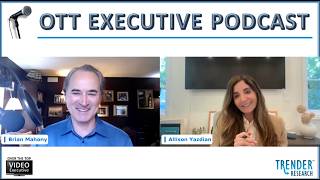
Allison Yazdian, CEO of Uscreen, discusses how creators can build owned audiences through branded apps instead of relying on algorithm-dependent platforms. Uscreen offers subscription, pay-per-view, and community features, plus AI tools for marketing and recommendations. She emphasizes that creator success depends on authenticity and direct audience relationships, not just platform reach.
Chapters
Hello everybody and welcome back to OTT Executive Podcast, where we interview leaders of the industry and get to know a little bit about them and a little bit from them as well. Today we're joined by Allison Yazdian, who's the CEO of Uscreen. Welcome, Allison.
Hello, Brian. Thanks for having me. I'm excited to be here.
This is great. I'm glad we could get this scheduled. And so folks are familiar with our format. We like to start with obviously an introduction on yourself and get to know a little bit about your career background, find out kind of how you got to where you are today before we get into the, the current day. So, so Allison, who are you? What do you do? And let's jump into your career background.
Thanks so much. So I'm Allison Yazdian. I'm the CEO of Uscreen. We're a video monetization platform basically powering white-labeled video apps and sites for video businesses, content creators, essentially if anyone wants their own membership experience, it kind of brings in streaming, OTT, and community. We can build it for you. We can help you make it successful and help you operate it with our operator tool. So a little bit about me. I always like to start from the beginning, but I won't take forever getting into the whole—
How far back do you want to go? We got time.
Let's start with my great-great-great-grandparents. No. No, I mean, I think a lot of how anyone is, is raised, uh, really sort of, uh, defines and influences sort of what they end up doing. And so I'm the daughter of, of entrepreneurs. So at a very young age, I sort of had this front row seat to all that is involved in being a successful entrepreneur. And my parents were merchants. They owned shops at a mall, and, um, they were taking me along with them to the store. And rather than sort of being bored sitting there and they could use the extra set of hands, I was sort of working with them in the business. And so they had a lot of different types of businesses. They had consumer electronics stores, they had sunglasses kiosks, jewelry stores. My favorite was a toy store. But I really got to learn firsthand how to run a business. I would talk to customers, especially at the toy store. They would want to hear my opinion as a kid. I would run the cash register. I would just sort of keep an eye on the shop. And I saw how hard they worked. I saw all of the, the upside of if we had a great holiday season and how exciting that was for our family. And we, you know, we'd leave the mall at 9 PM exhausted but feeling really fulfilled. I also saw the downside if the economy was down or foot traffic was low and how that impacted our business. And so a lot of my career has really been defined by I want to help entrepreneurs and small business owners essentially be able to like run successful businesses because I see the opportunity. I also think that the way the world is headed with a lot of technological advancements, namely AI, I think more people are going to become entrepreneurs. And so when you think about my career background, I mean, I've worked in actually a lot of different industries.
So, okay, I gotta pause you there for one second, Allison. So my parents had an import shop and I worked in it in middle school going way back when. It was an Irish import shop and they brought in like sweaters and slates and whatever, and they always lost money. And, and this is before I got into business. I remember thinking like, okay, you did that trip over there, you bought a bunch of stuff and you're charging, you know, you don't have enough margin here to cover your bills, you know? And I just remember thinking like a business person, like, but really for the wrong reasons, I think so.
No, I mean, I think that's, that's what's so hard about it is like, you know, any small business owner, any entrepreneur you meet, they have this like dream, they have this vision of what it could look like if they're successful. Um, and oftentimes they're alone in building it, right? They, they don't have necessarily the expertise, they don't have the network, they don't have the resources to hire a team for it to be successful. And so I've basically gone into different companies, a lot of them earlier stage startups and basically helped sort of build out like their go-to-market and basically their offering for different types of entrepreneurs and small businesses to actually help their dreams and their visions come to life. Because when you talk to an entrepreneur, I mean, they will get you so hooked and excited about the dream and the vision. But as you know, like, business is 10% idea, 90% execution. You just need the support and being able to do that. And so I, you know, have done this in a multitude of different types of businesses. I was at an early-stage startup that helped dentists, you know, think about them, they're running their practices. These were small business owners, helping them generate new business and manage their, their businesses. I was at Compass, which is a real estate platform, started there very early and sort of went, was there for several years through an IPO and through like hypergrowth. But again, we were helping these real estate agents who had these dreams, really help them sort of amplify, accelerate their businesses. And then I actually got into the creator economy by going to a business called LTK. A lot of people might know them as Like to Know It or RewardStyle, basically a monetization platform for content creators, right? So if content creators want to monetize through affiliate linking, through brand collabs, LTK built technology to really support these creators in doing so. And my big insights there was, yes, creators are just, they are entrepreneurs, they are dreamers. There's a lot of specific specific nuances in becoming a content creator, which we can talk a lot about today. Namely, content creators are basically building their audiences, building their businesses on essentially rented land, right? They're building it on YouTube, they're building it on Instagram, they're building it on TikTok, which is an incredible opportunity because, you know, 20 years ago, for you to be able to reach a global audience immediately and for free was unheard of. And now someone can, you know, start posting content and be able to have a ton of reach. The challenge is, is that reach is not guaranteed. They don't know who that audience is. And the monetization, the way to make money off of it can be very spiky, if you will.
And they don't really control anything. I mean, they're creating content. It's great, quick access, right? But the downside is you don't really have full control of the business plan, the monetization, engagement.
That's exactly right. And so, you know, I became really passionate about this as an opportunity, especially as you see more and more people becoming content creators. And, you know, content creator is a, is a really broad blanket term, right? It's not just sort of like that, a person who's posting a lot of entertainment content on YouTube, but there's a lot of people who are launching businesses through YouTube and Instagram and TikTok. And so Uscreen essentially is a, is a wonderful solution to creators who are starting to build an audience, have a lot of great premium content. They're building that community where they want to have their own destination. They want to own the revenue. They want to own the data. Data and the reach to their audiences to be able to, you know, future-proof their business and really build a sustainable revenue business, not something that's super spiky and algorithm dependent.
So let me ask you this question. How do you define the creator economy? Is it just the sum total of content creators? Like, what is it? What— when you, when you say creator economy, that term's thrown around by a lot of different people. What do you mean by it?
Yeah, I mean, I think it's a, it's a, it's a Great question. And it's, and it's growing exponentially. And I think there's a couple of reasons. So creator economy has like a few different like sort of parties involved, if you will. So first there's like the actual like social media platforms who are basically trying to get as many people to post content as possible. And then that is, those people are the content creators. It could be someone passive who posts here and there, and it could be people who have identified what their content category is, their niche, and they're posting that content, a major player in this. Because if you ever get into media, there's always that major player, which is the advertisers and the brands, right? So they're the ones who are paying for the ads, they're the ones doing the brand deals, they're the ones who are sort of kind of funding and fueling the growth of it. And you're seeing a lot of these brands really start to step up, not only them posting their own organic content on the social platforms, but also bringing a ton of ad dollars, a bunch of sponsorship and collaboration dollars to the content creators who they believe are, kind of own the audience that they want to get in touch with.
So is that, is it, so is there an inherent chicken and the egg problem here with the creator economy? Like, you know, we often hear about rags to riches, you know, like viral content suddenly have this massive audience, but we also hear like, hey, we want to syndicate your show, but we're only doing it really because you're bringing a million viewers or 10 million viewers with you. And so you're kind of de-risking that. Is it still possible to create audience, you know, from scratch the way you used to, or something fundamentally changed there?
It is still possible to build audience from scratch. And I think that's, that's what's wonderful about these platforms is like, it is, it is a little bit of, I mean, or so we would hope and, and then see, it is a little bit democratized in the sense of Look, if you're creating content that the audience wants, the algorithm will serve that audience and you're able to still build a lot of audience in being able to do that. And so I think that's why more and more people are going into content creatorship. You're seeing creators who 2 years ago were like, I just got started. And then they're having these breakthroughs of generating a ton of followers. And again, we can even talk about like followers is not the old— the metric. It is a metric that you have to pay close attention to, but it's not the only one. And I think like, I think we've sort of like, I think like 4 or 5 years ago, let's say, I think there were a lot of like especially larger brands who were sort of looking at, you know, what is the creator economy? Is this just a fad? I think now we're at a point where like it's in mass adoption. Yeah. Every single brand has a content creator like social media strategy. They know that collabs, they know that sponsorship on YouTube and, and Instagram and TikTok is, is the way to go. I think like to your point around you know, Netflix maybe going to a creator and saying, we wanna put your content here. I think it's mutually beneficial because I think for those creators, it actually gives them exposure to a broader audience. And I think for Netflix, it helps bring in subscribers. So it, it is a win for everyone.
And is it, is it true that the vast majority when we're talking about creator economy is unscripted content? Or are we seeing a transition where you get more, you know, production values are better, right? And you're getting, you're getting your content acquisition strategy needs to really kind of look at these these content creators in a different way?
Absolutely. I think it's anything and everything that you can imagine. Like, there's, you know, Dhar Mann, for example, is scripted content. He just started with YouTube, right? And he basically showed how much faster he can get content out that's super engaging for audiences. He's one of the biggest YouTube content creators out there. I mean, he has a massive studio out here in LA, and I believe Burbank. And so I think that's what's so incredible about it is that there's so many people who identify like a content niche, or what appears to be a niche or a category, and they're building that content, and then the audience comes.
Do the advertisers follow too, or is that like a separate monetization sort of lane, so to speak?
I mean, on, on YouTube, I mean, you know, YouTube has AdSense, so yes, like it's very easy for an advertiser to be able to plug in. There's also a lot of different ways beyond like the actual advertising for these brands to be able to connect directly with these, these creators to basically create like sponsorship collaboration opportunities.
Okay, cool. So enter Uscreen, right? What do you do and how is it different and how is it sort of enabling the creator economy in a, in a different way? Like how, how did you build a better mousetrap and what, what does it do exactly?
Yeah, great question. I mean, you know, for us, there's basically a lot of these of our customers, and we have thousands of customers ranging across a lot of verticals. They've basically found a lot of success on YouTube. And what does a lot of success look like? Typically, it's long-form content. They've got decent-sized followers, subscribers, if you will, and a lot of engagement from their community. And they basically recognize that there is an opportunity for them to have their own destination for their, for their community to come together. And so what that looks like is literally like white label branded apps. That's TV apps. These are OTT. That's mobile apps where basically they can engage with their followers or subscribers on YouTube, get them to sort of download the apps or even go to their website and engage with the video catalog. That's additional premium content. And every content creator that works with us has a different strategy of what their content looks looks like. So for example, we have some creators who cater to kids, like ArtHub for Kids is a great example. Um, their appeal to parents is like, you can come and watch ad-free content, they're not going to be on YouTube, it's completely separate, you can download the, the content for offline viewing, etc., through the app. But essentially, these creators recognize that they want to be able to have a direct relationship with this audience, they want to have an even more robust video catalog experience, A lot of them will turn on our community feature where they can start to really engage with the audience and the audience can engage with themselves. And in turn, the creator basically can start to build up sort of a recurring revenue business. Now, not all of our creators, they don't make all of their money through subscription, but the lion's share of them do. But there's also like pay-per-view, there's livestream rentals, you name it. But it's a way for them to be able to monetize this data and be able to directly reach their audience. It's been, you know, we've been around for 12 years. We've, our creators—
Oh, you've seen a lot of change in that time frame, that's for sure.
A lot of change. I mean, before this was even a thing, and that's really a testament to our founder PJ Tai, that we paid out a billion dollars, over a billion dollars to creators, right? So this is like a real way for creators to make money and sort of future-proof their businesses.
So let's talk about community a little bit. You opened that door when you were talking about how you engage with your audience. And that's kind of how I look at it. I'd love to get your perspective when you think of creator economy. It's also a different mode of interacting with your audience. It's not just kind of point to multipoint. You're pushing content out, people are passively viewing. You want your audience to feel like they have a seat at the table in some way, right? And they can engage with you. Maybe they contributing content, maybe they can talk to other viewers, maybe they can interact with your talent, whatever it might be. They can look behind the curtain to a certain degree. In a curated way, of course, and feel like they belong, that they're part of something bigger. Is that— talk to that a little bit. How important is that?
I mean, I think that's everything. I mean, you know, our, our mission really here at Uscreen is to help these creators, these entrepreneurs scale their impact, and they're scaling it through video and connection. And I mean, there's all these studies that have been done about the loneliness epidemic and how hard it is. I think the more time people are spending on screens, you know, for better or for worse, but they're not out in the world. They're really craving like that high-quality community experience. And so for us, we know that these creators, they have like-minded followers, right? Like, people who like their content are typically similar. And so what we're seeing happen is when they turn on the community, a lot of these community members really start to engage with each other. They're meeting up in real life. They're cheering each other on. They're sharing tips, resources, best practices with each other, and it really sort of takes the whole engagement experience to the next level.
Mm-hmm.
So a lot of times what our customers find is like they're, they're building this phenomenal content and it could be entertaining, it could be educational. And of course the community's coming in, they're watching that content, they're commenting on the videos, maybe they're participating in the livestreams. But if the community really starts to take hold, That's what kind of drives the retention because people really feel like they're building that connection with other folks in a digital manner.
It's funny that you say, 'cause a lot of people talk about how important it is to have authenticity or whatever, but you just kind of explained why that's important. Yeah. And I don't know if this is a term or whatever, but it's all about relatability. You're authentic because you want your audience to be like, yeah, I'm part of that. I relate to you, I understand you and you understand me. I remember looking at, you know, the Bucket List Family, the cute family that travel around the world and they end up getting picked up. And that's a great success story where they built an audience. And I remember the dad at one point asking his daughter like, what are your goals for next year? And she said something like, I— someone suggested this in the comments, how sweet it was. She said, I just want to have a best friend. And it was hard to do that traveling around. And so I think he built a whole episode around that concept and finally, you know, going, enrolling to a school or whatever. So, you know, I, I think, and I, that's an overused term, I think to a certain degree, authenticity, but it means something in the creator economy, right?
Absolutely. This is how I think so many of these creators have become so successful, especially the ones who are sort of like the face of the content. Mm-hmm. They are their true, real selves. It's, it's, and, and they're engaging and they build this trust with their audience that people just become super invested. Mm-hmm. Who they are and their outcomes. And so, and I think this is part of it, is they want to support these creators. They want the behind the scenes, they want the, the live streams. I mean, we even have creators who will do private Zooms, like they'll do like small group Zooms with their, with their members as part of a subscription tier because they know that it's a way for them to engage, um, and really sort of inspire their audiences and bring them together.
And I think, yeah, it's almost like a book signing or, you know, your talents going out there and engaging with fans.
Yeah. Well, and I, what I was gonna say is like, look, like there's, we could probably do several podcast episodes about what's happening with AI and AI content creation. But I think like this ultimately is gonna be the differentiator.
Yeah.
Is the differentiator, right? Like, is, is the authenticity of who these people are and the way that they are engaging digitally with their, with their communities and their audiences.
So let's do this. I, I'm, I got you a captive audience here, Allison. I wanna pick your brain a little bit. Let's do a little case study. So I'm the president of the OTT Executive Community, 50,000+ senior people in the media entertainment industry globally. I got a MailChimp, I've got this podcast, we got a LinkedIn group with, I don't know, 35,000 people on it, whatever. What would you recommend? Like, how would I use Uscreen to engage my audience and to monetize it, but also build engagement with my members?
Yeah, absolutely. So, I think—
This is some free consulting, so thank you for that.
I'll send you the bill.
Hopefully my audience can benefit too.
I mean, I, you know, I think the first question to you, which I see the opportunity here, is like, how would you feel about having like your own destination? And again, a lot of our customers, I mean, we have over 3,500 apps that we've deployed between TV and mobile, but a lot of them might even just start with a website where you're starting to bring your audience together. And what does that look like? So first of all, I'm sure you have a ton of great video content. So it's like building out a video catalog. Thinking through what that content calendar could look like. So for example, if you wanted to livestream this podcast, right, people could go to the website, be able to access the livestream.
And now you got like Meetup TV, like you got to publish, okay, at this time, this day, you got to tune in, right?
Okay, exactly. And so there's, and there's a lot of features that we have that sort of like can help people through, and you can, you can do that, check that box. Yeah, you can organize your content in ways, I think, behind the scenes We will, like a lot of our customers will use Mailchimp, but a lot of them are actually starting to, we just launched our own CRM and marketing and automation tool. So let's say like you actually want to have like a premium subscription level where your customers, um, for access to a certain set of tools. And we would kind of coach you on what that looks like, the group Zooms, whatever it might be, certain videos.
So the, the, the freemium part, the, the, you know, part, like what do you get behind the paywall? Like there's gotta be some special things they get access to. Okay. Exactly.
And like we, I don't know, We only have coaches and consultants that can help you with that. But this is actually where, like, we are— because we have so much data, we can actually have AI, like, start to make those recommendations of how to, like, price based on the industry you're in and structure. But essentially, like, you could use our marketing email and automation tools to not only start collecting these email addresses, but you'll be able to segment your audience and send them automated sequences. For example, based on their engagement. So if someone signs up for a trial, they'll go through the trial sequence. If someone signs up for the first time, there's an onboarding sequence they can get. If someone says, I wanna not be a member anymore, there's retention sequences, and then everything in between to drive engagement. For example, like we've actually just built out our own sort of AI-based video recommendation tool. So if you think about, you know, people who have thousands of video in their catalog, I mean, it's like the Netflix problem. You sit down, you're like, what am I gonna watch? Now tailored to every single viewer based on their viewer history, based on everything we know about them, we'll be able to deliver the right video to drive up engagement. And so basically, you'll be able to launch apps, you'll be able to launch the site, you'll have a video catalog, you can then have a community where people can start to engage each other. And then behind the scenes, we have a pretty sophisticated sort of all-in-one operator tool where you can set your tiers, You can turn on live streams, you can, um, be able to run like the marketing and CRM, uh, automations. You can have access to analytics to understand who's watching what. Um, and the list really goes on from there so that you can basically manage your own kind of like Netflix-like experience plus this community, which is sort of like a Facebook and a Discord. So back to you, like how would you do this? You know, I think there's an opportunity for you to sort of launch the site., with the catalog.
And that would be a UScreen site or it would be white labeled. It wouldn't be part of the UScreen umbrella. Like, people wouldn't know. They would just be like, it's a, it's a website. It's powered by UScreen in the background.
That's right. And, and frankly, like, this is, it's, it's interesting because we have so many customers. People may have one of our apps on their phones or on their TVs and they don't even realize it because the majority of our customers are white labeled. Now, we do have like an entry level stat. If someone doesn't have a domain yet, they can—
You throw them in there, your content aggregator, people can get discovered that way.
Okay, that's right. Well, not even discovered, they can just have their own private site. But if you own like a specific domain, it would sort of feed into that. So we're really the ones behind the scenes powering it. They go to the site, you can have the freemium model, they can start watching content. You basically like, and you could have like a, as I mentioned before, like a sort of like a TV on demand, like a one-time watch, a rental. You know, if they're having, if they have an app downloaded, they can download for offline view, sort of like all the bells and whistles you would expect, engaging with community. And then again, you'll— you would use our operator tool to basically be able to operate the entire site, the, the people, um, like the— we call it the people tab, but basically our CRM, um, to basically maximize your revenue. Because at the end of the day, like, our goal is to help these folks build out and, and, uh, create sustainable revenue. And so we're basically sort of giving them all the tools that they need to, to be able to do that, even if you're talking about it on YouTube, we can help build like sort of landing pages and sort of—
Well, I was going to ask you about that because I think that's— I mean, the analytics and the engagement and all the capabilities you just talked about with the white label platform, I think is very attractive. Now, some people would say, well, I already get some of that with YouTube and I have a Substack and I can monetize behind the paywall there. What do you get in addition to what you might get from those platforms?
Yeah. So again, I mean, I think YouTube can be very like like highly like algorithm dependent. You don't have insight into who that audience is. And again, like we love YouTube, like YouTube is a critical part of it.
So that's not the enemy, that, that's a feeder. That's part of your community, right?
Okay. Substack, similarly, it's on another platform. So maybe like, you know, you can feed in your email addresses, but again, it's not video first. I mean, we really are video first. It's like this Netflix-like experience. Yeah, it's your data. Like you can literally export it at any time. It's not algorithm dependent. So it's really up to you. It's your content only that these consumers are basically downloading to see. I also think like a lot of our, a lot of our creators are putting content on there that they wouldn't put on YouTube or even a Substack because they— it's maybe something that the algorithm wouldn't love. Maybe it's not safe for work. Like we have a parkour brand called Storrr+. They have over 10 million YouTube subscribers. Some of that content YouTube, you know, doesn't think is very ad-friendly, but their fans love it because it's sort of like daring moves that they're doing with parkour. And so that is actually something that like their fans are like, yes, like I would subscribe for this because I want to watch this, this content. I want it to be sort of a lean-back experience on the big screen or just a way for me to be able to gauge on my phone.
So that's interesting because now you're kind of going from the creator economy to what I would traditionally call an OTT or sort of fast channel., right? Are you a hybrid kind of blend of those two? And yeah, so answer that question.
I mean, I think like we have a lot of customers who look at us as sort of like powering their, their OTT Netflix-like experience where they have a ton of great content and they just need, again, someone to power the technology and to help them be able to operate like those content catalogs, et cetera. Fast channels again are more aggregators. We, you know, by design do not dabble with ads. So this is all like subscription. Okay. And monetization through like a paywall. Yeah. Because we feel like there's an abundance of opportunity for creators to be able to monetize in those ways. This is when they wanna have their own destination, their own opportunity, and to be able to monetize through sort of subscription and other sort of one-time purchases.
And it sounds like the sweet spot might be more like higher engagement. You know, those are those communities where people are committed to it. They're not like passively, you know, scrolling through fast channels, for instance. You know, they're, they're, they're, they identify with something. So one of my, one of my gigs is the CEO for, for the Flippin TV, which is a media arm of the Freestyle Trampoline Association. We can talk about that at some point too. But, and that's part of what I'm trying to figure out is like, what's the right where, where to build audience. We already have, you know, 35 million kids with trampolines in their backyards and 30, 40 events around the world and everything. You know, what's the right strategy to engage that audience? Is it, is it OTT and FAST+ like a Uscreen, you know, or is it one or the other?
I mean, I, I, I think you want to have that embedded audience. So like my advice on that is like if you aren't already like putting the content onto YouTube, for example, to see what sort of engagement you're getting, um, I would definitely start there. I mean, I think most successful customers are coming to us with a content library and an audience. Audience. We're saying to them, okay, let us help you own that audience and bring them together and monetize it and monetize like this incredible content library you have. And it could be independent filmmakers, it could be— we have a lot of fitness creators, it could be, um, you know, there's just a lot of niche content creators, um, or— and it's not just like solo creators, like these are video businesses where they have phenomenal content, they just don't want to have to hire a bunch of engineers, and IT people and product managers to basically be able to launch this. They really look to us as like their shortcut. Like if someone comes to us and hooks us up, you know, we can get them launched with apps within 60 to 90 days. Awesome.
So you have your sort of like an in-house IT department, right? You know, or development. You've got the engagement and more, most importantly, not most importantly, but very importantly, you have the metrics, right? Which you may not get through YouTube or, you know, other platforms. Let's talk about— we just touched on a little bit monetization. So, you know, obviously, you know, the subscription is probably the biggest part of it. But how about can you do, you know, sponsorship? You know, can you do merchandise? Like, talk to those other ways to— ticket sales, for instance.
Yeah, absolutely. It's a great question because we want these to be just a destination to bring the audiences together. So yes, like on the sites and on the mobile apps, You can actually, if you have like a Shopify store or if you have a live event, like a live ticketing event, you can actually like embed that into the app. That's something we actually launched late last year and we have customers who are saying it's now, they're attributing 15 to 20% of their sales through the mobile apps that we're building for them.
So, yes. And you take care of the integration with all the different platforms, iOS and Android.
Okay. Yes, we, we take care of App Store approvals. We sort of know how to like run the gauntlet on that. We also, like, we have linking. So let's say you are talking about something in a video, you can actually put the link in the video so someone can click on it and be able to go straight to whatever site, if it's an actual physical product, if it's an event that's coming up, etc., because we want to have that engagement be a part of it. And a lot of our creators, look, they're monetizing a lot of different ways. Now, when they come to us, They're monetizing very little through subscription. Our goal is to help that become a massive revenue stream for us, but they're still making money through affiliate, through AdSense, through brand collabs. And they're doing that in really interesting ways. If a fitness instructor does a collab with, you know, a nice high-end fitness brand, let's say, a lot of that content can be featured on their app. There's ways for them to sort of like—
You could do like pre-roll too. Is that an option? Or they can build out pre-roll digital banners and stuff.
Uh, digital banners were— is, is on the roadmap for later. But yeah, there's ways for them to create like wrappers and whatnot so that it's very, very clear, like within the subscription experience. And I think brands like that as well, cuz they— there's a highly engaged target audience there who, if, I mean, if they're paying for subscriptions, that means that these creators have a ton of influence.
Um, and it's more fluid and natural. I mean, you know, YouTube, I don't know all the mechanics, whatever, where you have to declare this is sponsored content and and, you know, there might be some restrictions there and everything. Wow, that's really interesting. Um, you know, we're just about out of time. One of the things we just touched on, I'd love to get your perspective on, is AI. Obviously it's huge right now, everybody's talking about it. There's a lot of different angles from, you know, we've always had machine learning to some degree for things like content discovery, recommendation engines and such. How are you like looking at AI? You know, you don't have to tell me your, your roadmap or whatever, but like what's the future look like?, in AI's adoption or adaptation in the creator economy?
Yeah, I mean, I think like there's a few like, table stakes that we know will remain true. And I think you're actually gonna see like a, like almost like a reversion to this where I think like there's gonna be a huge emphasis on like the humanity of these content creators. I think like, AI is enabling content creators to be a lot more efficient and effective and almost like realize like their wildest dreams, like in their content. But I think at the end of the day, like, we think that there's a massive opportunity for humans to really supercharge themselves. And that's what we always tell our customers is like, AI is our way to supercharge you. And so that is showing up. I would say about 60% of our roadmap is AI driven, meaning how are we helping our customers basically accelerate a lot of the admin work involved with running an OTT platform. Involved with running their use screen. And so, and how are we also helping them use AI to have better insights into who their customers are, and create a better engaging experience for their audiences. So we've built a lot of different tools. I mentioned that recommendation engine for, for, for the end user to be able to view. Where is this going? I mean, I think, you know, everyone's using Claude, they're using ChatGPT. There's this whole notion of an MCP, which is basically an API that kind kind of lets your, your agent talk to an agent, Uscreen, or any site. You know, we've deployed V1 of that, um, and so we're basically like, we sort of see where the puck is going. For us, it's how do we help, especially our— a lot of our customers, you know, they don't have massive teams, right? And so they're cobbling together, they're doing a lot of this work. We're like, how can we actually help their agents, um, just be able to kind of like get the work done a lot faster so they can do what they do best, which is being authentic, building trust, building relationships with their audience.
Yep, very cool. Well, I might just have to dip my toe in the pool here and, and, and, uh, and try. Do you have a, like, a free subscription or a trial period or anything like that?
We do. We have a free trial. We also have like a starter package so you can go in and, um, for very low cost per month dabble. You know, we have a ton— like, we have our own membership app, so there's a ton of videos you can watch. We have a coaching team, So I think there's a lot we can do to help our customers really take off. Okay. You know, we're here to help in any way possible. We're just, you know, Uscreen.tv, that's Uscreen with the U. But really, like, and I think that's the other thing that's amazing about this company is we have a product that works. And I've never worked with a company that is so customer obsessed. Every single person on the team is just, we're here for it with our customers. We're sitting side by side with you., to really help you make, uh, your membership dreams come true and as successful as possible.
Very cool. Well, congrats on all your success. I, I, one of the things we'd like to do in this podcast, Allison, is kind of personalize some of the leaders in the industry. Is there a hobby or, you know, interest you can share with our audience?
Yeah, I think in the last few years I've, I've discovered and really become like a hardcore, like, fan of Pilates on the reformer. And so I had done it, you know, almost like a decade ago, and then life and work and family sort of took over, and I finally sort of said to myself, I got to get back into this. It is absolutely, not to sound cliché, changed my life. Oh, wow. In the way that not only do I feel stronger physically, but there's just something about that hour that sort of like cleanses and calms my mind down, that it's become like a great form therapy for me as well.
That's great. I think just having that, you know, just the physical exertion and getting outside of work to, you know, kind of, you know, clear your mind of all the clutter from the, from the business day. I think, I think that's so important to have that.
Absolutely. And you know what's really special about it too? Like a lot of our customers are Pilates instructors.
I was going to ask you about that. There's got to be Pilates. Would you call them channels? You call it— what do you call the, the use group, the Uscreen, you know, kind of apps?
Apps stores. Sure. Okay. Yes, we have a, we have a ton of Pilates. A lot of our features really cater well to like fitness. I mean, not all, we have calendars, we have badges, we have streaks. There's a lot that we do to, to help our fitness and education and wellness instructors really be able to engage their audiences. And those audiences also love the community piece because again, some of our most successful fitness instructors, it's very niche who their audience is. Prenatal Pilates, or it's women in their 40s going through perimenopause fitness, whatever it might be. So again, these communities, they really, they want like a safe space to be able to interact, not in sort of like the public forum. And so the apps really cater to those audiences to be able to engage with each other.
And it's interesting too, because I know on like the CTV space, you can only have so many, I don't know, like cowboy western or, you know, certain apps geared towards different genres or whatever, where on Uscreen you can have unlimited, right? It's just what, what audience are you going to bring to the table?
That's exactly right. And again, like we have, we have customers who have smaller, like smaller YouTube followings, but their audiences are so engaged. And if you run the math, like you don't need like tens of thousands of followers to run like a successful business depending on the content type and the value you're offering. And if you're charging $10 to $15 a month, you know, once you get 2,000, 3,000, 4,000 followers or subscribers, excuse me, it starts to add up. And you know, then you get into the game of, okay, how do you drive retention and engagement? Again, we have a lot of tools and best practices to help our customers be able to do that.
Well, this is really exciting. I might just have to sort of document my evolution here, you know, and then do a little ROI model of the time and effort in the monetization. Obviously for me, most importantly is engaging the audience and getting the content out there and helping people out and stuff. So, um, listen, this is fantastic, Allison. I really appreciate your time today. Kudos on all your success. Uh, Allison Yazdian, CEO from Uscreen. This is Brian Mahoney, your host for OTT Executive Podcast. Everybody have a great day. Thank you.
Thanks so much.
More from Allison
Own Your Audience: Allison Yazdian on Monetising Your Content & the Future of the Creator Economy
How Pilates Studio Owners Are Turning Classes Into Recurring Revenue (with Uscreen CEO Allison)