Own Your Audience: Allison Yazdian on Monetising Your Content & the Future of the Creator Economy
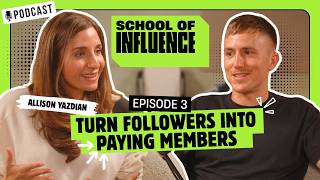
Allison Yazdian, CEO of Uscreen, walks through how creators can own their audience and build recurring revenue. Start by capturing emails and launching one monetizable asset like a video course or live stream, then experiment with pricing and community features. AI tools like Claude can handle analytics and automation, freeing you to focus on what only you can do.
Chapters
So thank you very much for joining us on the School of Influence podcast. I'm very excited about today, and you've just come into London just last night.
Last night, last night.
So this is the first stop.
This is pretty much the first stop. So if I say anything that seems off-kilter, we'll blame it on the jet lag.
Okay, well, we'll go easy on you.
Or if I sound brilliant, it's all me. So I have the upside and the downside.
Perfect. Yeah, nice. So thank you so much for coming in. I'm really excited to talk to you. Feel like this is gonna be a really useful conversation for myself, for our followers, and for the creators on the School of Influence roster. So I was hoping you could just start us off by telling us a little bit about yourself, your journey, um, or maybe just start us off with Uscreen and then how you became the CEO of Uscreen.
Sure, sure. So Uscreen, essentially we power white label video monetization and community experiences for video businesses, content creators, fitness instructors, education specialists and coaches, really anyone who has like phenomenal premium video content, has built an incredible community. Uh, typically they've built those on their socials and is ready to have their own destination. And when we say destination, that could be a really phenomenal website, but also mobile apps, TV apps, where you're sort of creating this like Netflix-like experience, but you're also bringing community in as part of it. And for us, like, our, our mission is to really help these creators who we believe are having a profound impact on their communities. We want them to be able to scale their impact and for them to be able to do that, they need to make money as well. And so for us, it's all about own the data, own the platform, own the revenue. Most of our creators have created subscriptions and memberships around it, so they have this recurring revenue coming in so that they can reinvest that back into their community, back into their video content, to be able to continue to have that impact on their communities that they've built.
Amazing. And yeah, I want to talk to you about owning your audience because I feel like that's something which so many content creators are really realizing that they need to do now when there is an abundance of content creators out there and abundance of platforms. But we'll come to that. I'd love to just discuss briefly how you became the CEO of Uscreen and your journey up until then as well.
I've always, my entire life, just been very passionate passionate about supporting entrepreneurs, and it starts with me being a daughter of one. So at a very young age, my parents, my uncles, my cousins, everyone had their own business. My parents would bring me along with them to their shop. And so I've learned at a young age everything that goes into being an entrepreneur, and it's a lot of blood, sweat, and tears. There's a mental load. It's a lot of hard work. And I picked up the business acumen. I really picked up the work ethic from watching these people around me do it. And I saw some of the heartache that goes with it too, right? One year could be phenomenal. You have all of this revenue coming in, and then the next year you're still worrying about where that next paycheck could come from. As I've sort of— and then the other side is the upside, because if you do have those incredible years, you can really build this incredible life for yourself and you're owning your own destiny. And so a lot of my career has been working at businesses, primarily technology businesses, that are very much geared towards supporting entrepreneurs. And so I've been able to work with a lot of different archetypes of entrepreneurs, the common thread being they've all taken a bet on themselves and really help understand what are their dreams, what are they trying to accomplish, and then how can the company that I'm with really support that through software, through programs, through community, through coaching. And I've done that for companies that focus on real estate brokers. I've done that for companies that focus on dentists, all small business owners, all entrepreneurs. And then before coming to Uscreen, I really started to foray into the creator economy. I was at LTK, a company that serves over 300,000 creators globally, and being able to, to monetize essentially their relationships and their influence through affiliate deals, through brand collabs. And I learned so much about the nuances of being a content creator while I was there. And a lot of the feedback and guidance we'd give to these creators was really surrounding around how do you, how do you set up a business that feels sustainable? How do you set up a business that doesn't feel like you're beholden to the algorithm? How do you feel like, how do you build something where you have a direct relationship with your audience and your own destination? And so as I started to understand more of the opportunity, when I stumbled upon Uscreen and the opportunity to step in as their CEO, I recognized that Uscreen was solving a lot of these big questions for creators, right? Our customers, they own the data. It is their data. They own the, the path to monetization. And a lot of these creators who start with us, of course they're monetizing through collabs, 'cause it's a great way to monetize, through affiliate, through merch, through storefronts. But, you know, one of the greatest things that they've created is, is this wonderful community who loves their content. And so these creators are like, I'm ready for that next step. To have this destination, to be able to monetize the content, to be able to bring the community together in our own place. And so Uscreen is like the perfect, perfect, uh, company for me to step into as CEO because I so clearly understand the audience and I so clearly see the opportunity within the creator economy to help as many creators as possible who are ready to do this, really set them up to be able to get to that monetization very, very quickly. And I feel really lucky being CEO of Uscreen for a couple of reasons. One, every day when we talk to our customers, they are thrilled. What they say to us is, I had this idea, I had this vision. Before Uscreen was available, I was going to have to build this myself. I was going to have to hire software engineers and product managers and customer service reps and all of these people. The fact that I can go to Uscreen and within days basically launch something And then I actually seeing it come to life, like we've paid out over $1 billion in earnings to our creators is incredible. And what's also incredible is that these creators represent millions, tens of millions of followers. And the fact that these followers, these subscribers subscribe to them because the, the content really is having an impact, right? Every single one of our creators is actually doing something really positive in the world. If you're teaching them something, if you're making them laugh, if you're educating them, if you are making them more physically fit, whatever it may be, it has a positive impact. And so to be able to be the CEO of a company where we really know that we're doing good, where we know that there's a loneliness epidemic, people are craving community, where we know that there's a world where the algorithm is maybe going in directions we don't wanna take, for people to, for these end users to even have a choice and go to this destination and really feel like they're getting the, the the, the content that fills their cup is incredible. So I like pinch myself every day. I'm like, I get to be CEO of this incredible business with happy customers, a great product, and wonderful team members. Uh, it really is a dream.
Yeah, it sounds like a dream job for you if you've got, you know, that we're seeing now that social media is enabling so many people to be entrepreneurship. And so if that's something you're passionate about, then obviously you're in the perfect spot for it.
Absolutely.
And Alongside your kind of like passion for entrepreneurship, did you have like a passion for content creation as well and social media? How did that kind of like sit in, in the mix?
Absolutely. I've always seen social media as having the potential to be a force for good, right? There's a ton of education, there's a ton of enrichment that comes out of it. And as I mentioned before, like the fact that it gives people a platform, right? Wherever they are in the world to, to be able to get their message out there, to be able to have this positive impact. And so for me, it is all about how do you help anyone who has a dream, who has a vision, unlock their potential? That's the mission of Uscreen. How do we help through the power of video and connection? How do we help these, our customers and their end users unlock their own potential? Because when I look around the world, and I see people walking down the street and I meet someone, what I always see is all of the potential that they have. And so for me, it's how do we help people unlock their full potential? And there's so much that goes into it. It's not just about, hey, I have a vision and I'm going to go execute it, right? You have to be in the mind space to be able to do that. And that's why even at Uscreen, we've invested significantly in coaching. We literally have coaches who will sit with our customers and not only show them how to use the product and how to think about their content strategy, their pricing strategy, but also kind of give them that little like inspiration to actually like take the step, right? Like they say, the best companies are 10% ideas, 90% execution. But sometimes there's that mental block of how do I get to take the step? So to know that we do that and also really investing in just the community, like our customers, they really care about each other, they help each other. And so to know that social media is sort of like the gateway to helping like the world, the citizens of the world unlock their own potential. Is incredibly inspiring. And for me, it's all about how do we harness that for all of the good in the world to make the world a better place.
I love that. And that ethos nicely aligns with School of Influence as the, uh, the reason I started the agency was because I wanted to build a community and roster of content creators who are making a positive impact and have purpose-led content to share with their audiences. So we are aligned in that.
Yes, very much so.
But with that, At School of Influence, I speak with a number of teaching and educational content creators, and they know they're sitting on heaps of value, but they don't know how to package it up and put it on a platform such as Uscreen. How do you advise people on taking that first step and how to package up the content?
Yeah, I mean, there, when you think about the entire journey, and so for us at Uscreen, we really feel like the, the goal, the holy grail, if you will, is like, how do I get into subscription? How do I get into like a true membership? But we recognize that not everyone's going to be ready to do that out the gates, right? Like, that is the goal. Why? Because recurring revenue, so you know how much you can be investing regularly back into your business, back into your community, is incredible. But there, there are steps that you have to take. So when we think about that journey, first, the question is, is like, do I, do I even know how to get in touch with my audience and do I know who they are? So what we tell everyone is start collecting email addresses, right? Email's not going anywhere. We're seeing incredible engagement. We've actually built out our own like marketing and CRM tools so that we can help you capture these email addresses and just start communicating with them. That it sounds very rudimentary, but you need to be able to engage and, and understand who they are. And then you can start small. And we even at Uscreen, we have different package levels where someone can come in and maybe there's like one video, one course, one challenge that they're gonna start to monetize first. You probably have a good sense of what's working because you're on socials, you're seeing what's having the, the, the highest engagement, you're seeing what's having the most comments. Think about how can you extend that into this sort of like monetize— monetizable space where people are gonna be willing to pay for content. And look, it's not just the content strategy, but it's also how much you're gonna charge for it, right? Like what comes along with it. You know, we've even seen creators who will offer the video, but then they, they'll offer even one-to-one Zooms or small group Zooms, right? Like there's a lot that you can do that really creates this premium-like experience. Community's another piece as well. Like, we feel like having the community coupled with the video content is really the unlock here because your audience is likely a bunch of like-minded individuals who are going to very much benefit from being in a private, safe space where they can really talk to each other and engage with each other and also feel like they have maybe, um, an incremental or additional level of access or value to you. So, so how do you start? Maybe as I mentioned, it's one video, a bundle of videos. You start to engage with the audience, bring them along. I love the notion of building in public. Say to them, if I built a membership, what would it need to look like? And what we've built at, at, um, Uscreen is, is sort of like a canvas where you can sort of structure it and build it however you want. You can charge for it whatever you want. Your content strategy can be whatever you want. And because we've done this for thousands of customers, we have a ton of insights that we can share. And these are self-service insights through our own membership community where you can watch videos. We have a ton of benchmark data. So if you're thinking about pricing, we'll give you a sense for what we think your audience can bear based on what we've seen other customers do. And as I mentioned, we have our own coaches who will sit with you and help think through what that strategy is so that you'll be super successful and be able to build up into that, like, recurring subscription., which we are best in class at, right? Like that's sort of our roots, like is this subscription piece, which then makes it really easy for us to start with, okay, let's help you monetize one or two pieces to get up to that spot.
I, most of the guys who I've worked with over the years don't start in content creation with the view to go onto a platform like this. And when they're building up to it, is there certain trends or engagements that they should look for to kind of realize they've kind of like passed the point where they can actually set something like this up?
Allison Yazdian: I mean, first of all, and, and there's been like a lot of like conversation. I've listened to other podcasts about this where people are like, follower count, subscriber count doesn't matter. I mean, it does to an extent. You wanna prove that it's more than like your parents, uh, or like just like a small group of people that you know. But really for us, it's all about that engagement. Are people commenting? Are people liking? Um, do you feel like you've built enough of a community that they're going to want more? I also think like having a content format that's tried and true. So, you know, I think first you need to experiment to figure out what that format looks like, but then really feel like how you can build upon that and also have incremental formats as well. So it might be a certain type of video that you're showing, but then you might also want more of like a content type format. You can have multiple. From there, a lot of our creators actually, once they launch with us, they're actually posting more. On socials, posting more free content, 'cause that's their top of funnel. That's how you're gonna engage your fans. That's how you're gonna bring them in. But then there's always premium value-added content that comes behind the paywall that your customers are willing to engage in. So especially if you're super niche, if you're super educational, there's a lot of education that you can provide on the free. But if you wanna take it a level deeper, you can do that behind the paywall. But with that, we also have customers who their communities are so engaged that they're like, Look, this is ad-free, it's a white label app, so there's no algorithm noise. Uh, you can download, you can access the community, you can access me unfettered. And the community's like, absolutely, am I gonna pay to, for, to have that access? Because this is so important to me to, to be able to engage with. So the strategy varies by customer, it varies by audience type, and that is why we've invested heavily in our own educational tools to help our creators really set themselves up for success.
Yeah, I can really see the value in that community. And do you think— have you ever seen content creators come onto your platform and then make that their primary platform and then slow down on the other sides? Or is it always about kind of like finding the balance of creating organic content but not giving away too much where, you know, you're devaluing the paid content? How does that balance work?
I mean, I think this is a great question, and I'm going to take a step back because when you are running a membership, there's a few things that you always have to focus on. One is you always want to have some level of growth, right? New customers coming in. Once they're in, you want to engage them enough so that they're not churning out, right? Because if you have a lot coming in and then they're churning out, you're like filling this like super leaky bucket. And then, and then it really turns into its own flywheel. And so we do a lot on all aspects of that flywheel to be able to help our customers. So on the engagement, on the retention piece, there's a lot of like automations and marketing tools that we can help you with to be able to do that. And then at that top of funnel, like how do you actually get someone from being a follower on your socials to coming in and converting? There's a lot we do from an activation perspective. Now, a lot of our creators, because they started as digital, because they started on YouTube and they know how to like play the game, if you will, with the algorithm, we want them to continue doing that because that's how they're gonna build their audience and that's how they're gonna convert. But with that, we have seen creators who have other sort of like funnel sources, if you will, where they're able to sort of drive through the membership. So we have customers who actually sell into corporations, and those corporations will sign up maybe for their employees to be able to have access, like maybe if it's like meditation or fitness as an example. And we have a whole sort of way of kind of signing up those groups and getting them into the funnel. We have, kids content creators who might sell into schools, right? Same thing. We're helping them get themselves set up. So because the schools want the ad-free content, they want the video content, et cetera. Maybe they're not doing the community, but at least again, it's like a safe way for like the kids to be able to engage. And so again, it's really helping kind of the creator create their own marketing funnel that feels very authentic to who they're serving and how to, how to get into that. And yes. They do feel like they can maybe get off that content treadmill. Maybe they're just taking that long-form content, putting it all onto the premium UScreen app that they've built, and then they're maybe just putting clips or shorter versions on YouTube. Again, it just comes down to you have to know your audience and what they'll be excited about. Yeah.
It's really interesting to hear what you're saying about some creators selling to businesses as well. You know, their platform then becomes a business-to-business operation as well as just like a business-to-consumer.
Yes.
Which is like, that's— this just goes to show the power of the creator economy right now as well, which is amazing. Um, what do you think to content creators when they start? Do you believe by rule of thumb content creators should start with a view to monetize or just start because they are super passionate about creating content and putting out positive message?
That's a big question. I, I think what it comes down to is Allison Yazdian: It's okay to pursue content creation in the spirit of making it a full-time job, right? I, I think it's, it's okay to admit that you wanna do this and be able to monetize with it. I think what's important is, is that you're very thoughtful in the way that you're monetizing. And the way that you start monetizing is by proving out that you've got a great audience who is super engaged. And again, if you think about that life cycle of a creator, most creators will start with the brand deals. They'll start with the affiliate. Okay, so how are you thoughtful about that? So first of all, you don't wanna take a brand deal that doesn't feel authentic or organic to your content because you have very savvy community members, audience members who are gonna see through that. And so my guidance is, yes, you can come in with the notion of I'm going to monetize this. You have to figure out which aspects of it you can monetize again to build it out sustainably. And again, I think that's why a lot of our customers come to us. They're doing so well with brand collabs. They're still doing brand collabs. Collabs. They're doing so well with affiliate, they're doing so well with all of these other sort of routes that they're taking, but they know actually to build a deeper relationship with their community, doing something like this feels a little bit more sustainable.
Yeah. And as a, as part of my role as a talent manager, I'm all about promoting longevity and sustainability, sustainable income. Brand deals are fantastic. We work with some amazing brands all around the world.
100%.
And so, yeah, part of my job is to push for that longevity and sustainability. And that's why I'm an advocate for platforms like Uscreen. I also push for, you know, I want all the content creators who we represent to become brands in their own right.
Yes.
And how important do you think that is? And have you seen any key success stories through your platform as well?
Yes, absolutely. I mean, I think like you, as you build that brand for yourself, you wanna, because it comes down to key man risk too as well. Like if you really, like where you really wanna take this is oftentimes your community falls in love with you, um, as a person and you wanna be a huge part of that, but you, you want it to sort of start to take on a life of its own. And that's where like sort of investing and building the brand is so important. I think that is why a lot of our creators like Uscreen because Uscreen is behind the scenes, right? No one really knows who we are. That's a little bit by design because our whole notion is, is like we're the stage and our creators are the star. So if you download one of our customers' apps, the, the thumbnail, the experience when you're in there is all branded towards the creator because it's a way that the creator is really gonna start to build that brand affinity and that brand relationship. We really look at ourselves as like the technology, the guidance, sort of like a blank canvas, but you sort of have also the art teacher there telling you how to sort of paint to make it as successful as possible so that they can be as successful as possible. And so I'll give you an example. One of our customers, Abundance Plus, he's a homesteader, great content on YouTube, built out a huge fan base where people who really were interested in being homesteaders were watching the content and truly learning how can I become a homesteader? And like, that's the thing that's incredible about YouTube is you just learn so much that you wouldn't be able to learn otherwise. The fans wanted more and he decided to launch with us. He launched Abundance Plus and it's this phenomenal opportunity for his fans to go in, access the membership and see things that he wouldn't normally put on, um, on YouTube, right? Like if it's like a, a baby goat being born or any sort of content, and he's really been able to build out this sustainable business, he then, because he's building out a sustainable business, can invest more into the content back into the membership. So it actually starts to get even better and better. His fans, his customers, his emp— his members are getting such a, a more enriched experience from it. And he's built this whole brand called Abundance Plus so that he can start to expand the universe, if you will, and maybe even bringing other folks into the fold to be a part of the content.
And it's basically adding a new revenue stream to his existing business.
100%.
Yeah. There is an abundance of content out there now. There's new content creators joining platforms every single day. What's your advice for someone to cut through the noise to eventually get to a stage where they can have a platform that they're monetizing?
Yes. It's— and I don't want to sound trite in saying this, but it really does come down to authenticity. Especially for education and coaching, like be real, be direct and share. Uh, someone, uh, once gave the advice of, especially for education and coaching, it's like give the advice that you would exactly, or the coaching or the training that you would exactly wanna hear if you were in their shoes. There's something about building that like direct relationship with the audience. And so being authentic, I also am a huge believer in this notion of like there's riches in the niches. Don't try to build something that's going to have mass appeal. Start super specific. If it's, you know, a certain type of home setting, if it's a certain type of cooking, and really let your, your personality, your, your flair come into it. People are very much going to relate to that and engage with that. And that is how you'll sort of build up this follower base. That's how you'll start to build up the, the new, the new customers, the new community starting to follow you. It's critical.
I love the riches in the niches line. That's, that's— I'm going to remember that one.
Yes, there really are riches in the niches. And then you can start to expand, right? Then you can start to go mainstream. We have a lot of fitness instructors who use us, and it's a great example because some of our most successful fitness instructors, again, have started super specific in who they're targeting. They're not saying, I'm good for fitness, everyone come follow me. They'll say, I'm great with women 40 to 50 years old, or I'm the perfect instructor for people who are looking for prenatal yoga. Um, I, whatever the example may be, I'm great for people who are in the armed forces or police or military. Come watch us and we'll try to get you fit in that specific way. That's when they start to build momentum. And then other people who may not necessarily fall in that niche will later discover them and be like, this is fantastic, where they can start to expand.
Yeah, I, I follow so many niche content creators, and they are the ones that I'm way more likely to convert and actually, you know, purchase something they're promoting or invest in their content a little bit further as well. Yes. So I'm a big advocate for that also. I want to get like a little step-by-step sort of plan from you, so Say you're, you're, uh, aspiring content creator, you've got a decent following, engaged audience, and you're on the cusp of creating a monetized platform. What would be your sort of roadmap to making that successful?
Yeah. So first, if you don't already feel like you have a direct way to reach them where you're not dependent on another platform, start there. And what that really looks like is make sure you have their email addresses. This is why we've set up our own embedded sort of marketing CRM email tools within Uscreen where you can capture their email from any site that you already own because you want to be able to directly communicate with them. Once you start to own that audience, and by the way, this will help you with brands as well. If they know that you own this relationship, if they're coming to you to do these brand deals, start there. Then start to think about what could your own branded experience look like, if it's, you know, starting with your own branded website, but have a place that you own where you can start to bring them together. And then you start to think about, you know, what are the products that they're going to get excited about? And so this is also where you can leverage on your socials. Ask them, put a poll up. If I were to build my own site, what would you want out of it? What type of content? You could even ask them, how much would you be willing to pay? Frankly, building in public draws so much excitement and engagement and suspense in the best way possible that if they see you like putting your, your love, your life, your blood, sweat, and tears into it, they're actually gonna be that much more like bought in when you're starting to take it to market. I say often like the holy grail is to get to that recurring revenue, right? Like that subscription. But that doesn't mean that that's where you start. And frankly, like even when doing that, that is a commitment, right? Because you have to commit to what they're gonna get. With a paid membership and you, you need to be willing and able to, to fulfill that. But there's things that you could build leading up to that that can really help you understand your audience, their propensity to pay with you, their propensity to stay with you. So that could be one video that you monetize. Maybe it's a livestream that you can monetize through us. We're offering one-to-one sessions, smaller group sessions. If it's part of the community that they'd wanna access, start with one thing. Or maybe like a small challenge just to start to again, test the waters, understand what your community's gonna be more excited about, and then you can start to move up that value chain. What if you bundle an access to a piece of content and a membership? Then you can start creating tiers of memberships. Again, because we've brought together the community and the premium video content, there's things that you can offer them for free, free videos through our platform, access to maybe a certain level of community. And then when they start to get excited and engaged, and again, you'll have a lot of this viewership through the Uscreen platform, you'll see who these members are, you'll see what they're excited about, then you can start to think about what else can I do to expand the relationship with them and to really make this like a long-term benefit on both sides. And so again, it's, it's start small. This is also why we've invested so heavily in the coaching, in the analytics and insights. Because when our customers come in the community, because when our customers come over, we want them to help each other, but we also have a ton of expertise to think about what should your content strategy look like? How should you price? How should you launch? How do you focus on retention? And we've even set it up where you can like literally flip a few buttons in the tool and you can set up some like auto sequence triggers that get out to your audience so that they start to engage with you. You can send out email broadcasts through us as well, cuz we want it to be sort of like that one platform that you can log in to start to manage the launch. Long-term relationship with your, with your community.
And on, on your, uh, your platform, have you seen any— is there an option, or have you seen any case studies where people have pushed for like in-real-life experiences that you could potentially purchase through the platform? That was one thing that was like a huge talking point at, um, 1 Billion Followers earlier this year, which is quite ironic, I feel like, because it's like a full circle moment coming back into real life off the digital space.
I mean, I could talk for hours about the power of in-real-life. And so even when I think about it at YouScreen, Look, everyone is in front of something digital every day. Like it or not, that's what's happening, right? You're on your phone, you're on your computer, and a lot of times now that's where we're seeing these communities come together. I think what's really special about it, especially in this like epidemic of loneliness, is if I'm in a small town and I'm staring at a screen all day, it actually probably would've been harder for me to find community in like the physical space around me potentially versus like being able to find it online because you can connect with people. All that being said, where this stuff really comes to life, where it really starts to unlock, is when the communities come together in real life. And we are huge proponents of that. So yes, we can enable and support our mobile apps especially, but even our website, it's like very much customizable where like if you are doing, I mean, it could be a big arena event or it could be small meetups, like you can promote that, you can set those up. And basically get— have your community be able to access that. We're seeing a lot of it happen organically through the community where actually a lot of your members will start to arrange meetups with themselves. But I'm a huge— even for me as a person, like we just had our big customer event in New York a couple of days ago and there's just something about being able to sit across from someone, build that relationship, get to know them. That's so, so special. And so the advice I give to content creators is If there are ways for you to get in front of your audience, even if you're gonna be in town for a couple of days, you can say, hey, I've got 6 spots for a dinner for my customers. Who wants to come to this? And maybe that is something you offer to the VIP. I say do it cuz every time you do it, you're gonna feel fulfilled cuz you're gonna get to meet your audience. They're gonna feel fulfilled not only cuz they've met you, but they've met each other. And again, niches in the riches. These are gonna be like-minded people coming together.. So whenever there's an opportunity to do that, absolutely. And we look to support and enable that in any way possible.
I love that. Yeah, that's something I like to kind of drive in the School of Influence community as well. And credit to you guys for doing a good job because your team also bring people together. We're having— we've got an event tonight, which I'm looking forward to as well. Yeah. So say, you know, you follow those steps, you're now a successful content creator, you're winning on the platform, you've got an established brand. What's next from there? How do you continue to grow? How do you continue to monetize and just become bigger?
Yes. I mean, so this, this goes into, I mean, there's a lot of art and science that goes into running a membership. Um, and I was alluding to this before, but it is first, it's thinking about what your flywheel is, right? And the flywheel is how all about your funnel. How do you first of all find and target who potential customers could be? How do you start to bring them into the fold? And then how do you start to engage them through? So this is where it starts to get really sophisticated. And we built a lot of tools through Uscreen that help you do that. So first, like, for example, how do I start capturing those emails? How do I set up YouTube giveaways, which we've enabled? How do I set up a free trial? Um, once they're into the platform and you've converted them, and I mean, we have, uh, folks on our product team that all they do is think about how do I help you improve your conversion rates? Like once you get people through the funnel, there's the science to it. Once they've signed up, how do you make sure that you are adding value as much as possible, right? And so that's like engagement tactics, thinking about ways to bring people back in. Again, because there's so much rich data of viewership and who your audience is, we can help you set strategies to bring people back. If you, if you, um, launch mobile apps, you can send push notifications. There's emails, there's community engagement. I mean, a lot of our creators every day, they'll pop into the community and maybe share a few words or put a quick vert— vertical— oh my gosh, vertical video in, um, to engage their audience. More and more premium content that's going into it. And then there's a lot that you can do on churn prevention as well, right? How can you think about ways to prevent them from churning? And then again, use as a— use that as a platform to think about other ways to be able to monetize. But I mean, we've seen creators generating 6 or 7 figures a month through the platform because they've figured out how to grow it, how to retain that audience, and again, how to create so much, uh, sustained revenue through it. And the majority of their revenue, like when they think about all their revenue streams, is coming through Uscreen.
Yeah, that's huge. Massive earning potential. Do the creators usually do it all by themselves, or they have like team members helping them out run it? Because I know, like you say, it is, is, is a big job.
It, it, I mean, it can be, it can be a big job. You know, it really ranges. You don't have to have a massive team. And, and frankly, this is where I think there's a lot of advancements with artificial intelligence. So first, like the way we've built the platform, like the operator tool, the, the admin tool for when a creator logs in, um, we've, we're really trying to build it out so that it's like relatively intuitive and it's quick. So what does that mean? You could log in. You could ask our AI analytics tool to do analysis for you. The tool will then give you advice on what to click on next and what to set up to help prevent that churn or grow the conversion, whatever it may be. Because again, there's a lot that we offer and you can start to take advantage of it. But yes, do a lot of our creators, our most successful ones, maybe have like a fractional team leader that's really focused on, focused in on marketing? Absolutely. Uh, do a lot of our creators obviously need folks on the content production side? Of course. Our whole theory though is that if you have some fractional folks, and we even refer people out, like we have a whole community, is how can we supercharge our creators using artificial intelligence? So we're not saying have AI build a bunch of slop, a bunch of videos for you, put it up. 'Cause again, like this is why the in real life is so important because the, it's gonna, physical is gonna matter and it's mattering more and more every single day. But are we in humanity kind of going to this unprecedented time in like, I'm talking about the history of humanity where AI is about to be this incredible 100x, 1000x force multiplier unlock, 1000%. And so we're all about how do we actually help our creators harness that if they're working with Claude. A lot of our creators already are. They're having Claude do a lot of the work within the Uscreen platform to, to help them be as successful as possible. So that you don't feel like you have to sort of bring on a lot of overhead and bring on a lot of employees. But at the same time, like, you want people with great trust, judgment, wisdom, expertise who are going to be able to take it to the next level.
Yeah, got to love Claude. It's, it's everyone's preaching Claude at the moment.
It is. It is wild how much I'm spending time with Claude and all of the work that Claude is doing for me. But I'm busier than ever. I mean, I think that's the other side of it is, and I look, AI is advancing very quickly, but you know, you still need your own discernment. It's just helping as a phenomenal like admin tool, like taking care of like specific tasks. And again, like we are living through a wild, wild time that is rapidly advancing.
Yeah. And it's sort of, I find that it like narrows your bandwidth because it puts more responsibility on you. Yes. Because you have to outsource less, so therefore, You have to do everything because you can do everything with the help of AI. That's right. I'm sort of finding at the moment, and I was actually going to ask you about AI and kind of like your take on that, because obviously we work in education, we're seeing how AI is having an impact on education, and there are certain schools now around the world where you can have like an AI teacher for however much, you know, of the day. How do you think the AI is going to affect content and education? Because obviously a number of your content creators are educational as well on the platform. So like, what, how do you kind of see the landscape changing and how can creators stay ahead of that curve that's looming?
That's right. So, I mean, it's— I just alluded to this notion of like trust, judgment, wisdom, expertise. AI is never going to replace that, in my opinion. So as a content creator, you need to establish with your audience why your specific expertise, judgment, wisdom is what they're going to want to tap into. And I saw this for myself. I'm working on a project at Uscreen. There's a lot of exciting things we're cooking up. I have a very close friend who's sort of expert in this space. Now, I went to Claude, I asked Claude a bunch of questions. Claude gave me a lot of information back, and then I asked my friend for a phone call, and it was actually pairing what my friend was saying to me because she's expert And then what Claude was saying to me, that was like the true unlock. And so when I think about the future of education, I do think that there is still going to be actually even more of a need for people to have that curation, to have that trust of who they are actually talking to for that lived experience. But I also think that we have to be realistic about the way that AI is going to be able to evolve that. And that's where it's like you have to be really thoughtful about the content format, about the way that you're coming up Frankly, I think this is why more creators are going behind the paywall, 'cause they're like, I don't wanna train potentially AI on some of my content, um, so that they really feel like they're building that unique value of what they're training. Um, and like we're seeing again, content creators take it in a lot of different directions. For example, one of our customers is Eckhart Tolle, who is the Power of Now. I mean, he has millions of followers. A lot of celebrities subscribe to his content and we're powering his membership. So you can download the Eckhart Tolle Now app. You can go and access his video content. You can access the community. He's also working with a company called Delphi AI who has trained an AI tool to speak in his voice, to be able to chat with, and it's trained on his specific content. So it's not just Claude or ChatGPT going out to the internet of like, what would Eckhart say? This has been trained, curated based on Eckhart and his team, and we've been able to integrate that in. Why? Because our mission is to help scale impact. So if someone feels like they can have a specific conversation with Eckhart, Eckhart approved, access the video content, access the community, it's actually gonna be able to help you amplify the impact that you're having.
So fans are gonna be able to eventually pay to have interactions, not necessarily with the creator directly, but with an AI version of themselves. That's where we're looking, we're looking at.
Potentially. And again, I think it comes down to what the creator's, like, specific preferences are. I don't think there's going to be one sort of, like, formula of here's what it looks like. I think it's going to very much depend on who the audience is, what the creator's preferences are. But I think there's a tremendous amount of opportunity., any way that you take it.
Yeah, just hope that it's all harnessed for good. I just, you know, I want to stay positive. I want to make sure that it is actually going to be a force for good. And also we're seeing like AI content creators coming through as well now, which I know— what's your take on that? Do you think that, do you think that that's like something that we should be kind of like engaging with as consumers?
You know, it's, it's really interesting because I think consumers are, are becoming so discerning so quickly. That a year and a half ago, if you saw AI content creation— well, first of all, maybe a year and a half ago you'd be like, is that— why does that person have 6 fingers or whatever? Or like a foot instead of a hand? It's gotten better. But as it's getting better, I actually think that consumers are becoming more and more discerning where now they're seeing content like even myself. I— if I see something, I ask, is this actually real? I go and fact check it. Or just go and try to figure it out. So I think what's happening is like it's very early innings and there's a ton of experimentation happening where there are AI content creators and there may be a use case for it. I think people are going to place more and more of a premium on that human-lived experience, that authenticity. And so I think there's going to be a lot of natural preferences that are going to start to shift. I'm already seeing a ton of fatigue around like the AI slop of content creation. I think a lot of the platforms are flagging for spamming. And so I think at the end of the day, like even what might have seemed to have worked 6 months ago, it's all shifting again. And I think it's ultimately going to come back down to like that human-to-human connection. We'll see. I mean, OpenAI deprecated Sora AI, like there's a lot of things that are like happening very quickly. The advice I give to everyone, anyone who will talk to me about it, is that it's, it's better for you to start to like dip your toe, start to experiment, use Claude, use ChatGPT, understand what's available to you, understand what the trends are so that you can help sculpt and shape what the outcome is versus saying, you know, I'm not going to touch it. I'm going to wait and see what happens. Like, own that destiny and start to engage with it yourself, even if you feel like you're too busy. I tell people, spend an hour a day just talking to Claude or watching content about how to make the most of Claude. It'll benefit you in really incredible ways.
Yeah, and I think that it's very important to not lean on Claude too much for inspiration. Have a chat with it, but don't draw directly from it because there's a lot of backlash even on LinkedIn people posting like LinkedIn content, which you can clearly see is written by AI. There seems to be quite a distinct formula there, which I think people are getting a bit smart to now.
Exactly. That is exactly right. And you're seeing people starting to go back to, let me just sort of write that sort of off-the-cuff content. I mean, it's funny, not that I scroll back in my Facebook posts from like 15 years ago, but sometimes I'll be like, I put that on Facebook and it was so unbridled and unfiltered. That content. And you even think about the evolution of Instagram, right? First it was all about that perfect shot and the filters, and then it's— and then TikTok sort of brought in this like, let's be more authentic, let's be more real. And you're even seeing content creators doing things to make them seem more real. Maybe they're not. I mean, there was a makeup trend I saw that literally like you wanted to look like you just woke up. I can't remember what the exact trend is because people wanted to show like, I am real, I am not airbrushed, I am not AI. Like, this is who I am. And so I think that's like what I get excited about. I think there is gonna be like sort of this like return to realism. And so as a content creator, it's like, how do you harness that and like make it very clear? I am a real person who has a lived experience that I wanna share from. And then as a content creator, think about how can you leverage AI, like Agentic AI in particular, like tools, workflows that's just gonna help you be more productive in your life.
Okay. Agentic, when you say agentic, could you clarify for our audience what that means specifically in AI terms?
Yes, so a lot of times, like, when people think about, like, ChatGPT, a lot of people just sort of use it as, like, Google search, right? Like, hey, tell me how I should think about this. And it becomes, there's a lot of generative content, right? Like, that is AI that's going, it's scraping every available resource to it, and it's sort of giving you an answer depending on what you're asking. You could ask it, help me write a script, and it can go and help you write a script. That's great, but it's what we just talked about, and it can write videos, make videos, et cetera. It's, but it's what we just talked about in the sense that it is, um, starting to feel like a lot less authentic, a little bit more sloppy. Agentic is sort of like what's really starting to come about now where you can actually have these AI, like they're agents who maybe you're teaching certain skills to. That can actually take care of tasks for you. So you can tell it to log in to a certain website and make you a hotel reservation. You can tell it every morning to send you a morning briefing based on everything that's going on on your calendar, your email, your Slack channel, what, what it may be. And they're actually taking care of tasks for you. This is also why a lot of people are starting to like very quickly build their own websites and apps right now. It's usually for an end of one. What that means is like you can build something for yourself. If you want something big and sustainable, then you have to think about your, your infrastructure, your security, your stability, etc. But you're seeing this world come about where these AI agents, as you start to train them and give them access to skills, they're going to be able to take care of tasks for you. And so for us at Uscreen, we're very much investing in this future of if every single one of us has not just one AI agent, but multiple agents who are sort of on our team, that we're actually setting themselves up to be able to operate the Uscreen platform for you, for you to be as efficient and productive as possible while holding true to the fact that, like, you're the one with the— you're the brains of the operation, you're the ones building the phenomenal content.
Yeah, wow, so it's that advanced already? Like, you can pretty much, like, get the agents to run it for you, like on your platform?
Uscreen is getting to— I mean, it's happening very quickly, but we— and I won't get into the specifics of like what an MCP is or a CLI. You guys can all Google that. That can maybe be another podcast, and I'd want my CTO to come with me to make sure that I'm not botching it. But we've had— we have customers who are sophisticated enough that they have trained their Claude agents to go and log in to Uscreen and start taking care of tasks. What we're building out right now is the ability for them to be able to come in and basically for the platform to be able to talk to these agents, to be able to do it. Because right now it feels like science fiction, although there are a lot of people who are starting to do this, the way things are moving and how quickly they're moving, it, it's going to be very commonplace where everyone has an agent or two who are, who are on their team doing these things. And so we want to make sure that we are there with that trend to help people be able to do it. But again, at the end of the day, who's going to be in front of the camera, who's going to be the brains of the operation? That's the talent. That's why we— it's all about this notion of, like, amplifying and scaling the impact of our creator. We talk a lot internally about this notion. I think I mentioned it before, like, we are the stage and we want our creator to be the star. So all the things happening behind the curtain, we're, like, running furiously. We're trying to make it as easy as possible so that they can be on stage amplified as much as possible.
Yeah, amazing. I think it's really helpful for people to hear about the actual capabilities of the platform. I think a lot of people think it's quite daunting to set something like that up. So it's obviously really good to know that you guys are putting the creator first, which is so important on a platform like Uscreen. Okay, this has been really, really insightful. I know that everyone's gonna really benefit from listening to this podcast. I just wanted to wrap up with like any last minute tips that you think it would be beneficial for a content creator who's starting out to hear to eventually get to the stage where they can have a profitable platform?
Yes. I mean, I think it comes down to a couple of things. And it's interesting, like one of our values at Uscreen is this notion of like customer obsession. Like we are obsessed with our customers. We want to be able to support them in any way possible. My advice to the creator is do the same, like really understand your audience, really start to build that relationship with them. That's why I mentioned being able to grab email addresses, but even on the social platforms, like learn from them. You know, people say often like it all goes down in the DMs. If you're getting the same DM asking you the same questions, okay, you probably have some content that you could be putting out that the rest of your audience could be benefiting from. And it could be, what shoes are you wearing? Okay, well there's a brand deal to be had or some affiliate revenue. Or it could be, can you tell me more about why you're like, how you started this or what recipe you're using for that? Whatever the educational content could be. So it's, it's really be obsessed with your audience. Don't be too shy to like experiment a little bit. Like you can try new things, but also lean into what's working. But what I tell anyone is like, you just have to take the step, right? Again, the most successful businesses were 10% of it was the idea, 90% was the execution. Take the step. It's okay if it doesn't work, but just keep pushing forward. And you will get to that place of success. And this is, this is our why at Uscreen. So we're here if anyone wants to talk to us, if anyone wants to help, we have a free trial. You can go and tinker. We have a very low-cost entry point product. We're here to help in any way possible. And so we just want to be alongside this journey because we want to— we know our creators are doing good in the world. They're having a wonderful impact. We're trying to build that creator middle class, really help them build that sustainable revenue so that they can keep having that positive impact in the world. Where more and more people every day are gonna be, uh, entering into the, the beautiful world of entrepreneurship and we're here for it with them every step of the way.
Love it. Inspirational stuff. And you've echoed some of the things which I regularly tell the guys who I manage as well. So I'm gonna take this and make sure they listen to it and say, let's do it. Let's do it.
That's great.
Um, thank you so much for your time. This has been really amazing.
This has been awesome. Yeah. And like kudos to you for like the great business that you've built and to like the awesome creators that you represent. Again, I think you and I see the world very similarly where there is just There's so much good in the world and there's so much potential in the world. And so I love that we're both aligned on like, how do we just unlock that? How do we help as many people as possible reach their dreams and, and really feel like they're walking around belonging? So kudos.
Thank you very much. It's very kind of you.
Of course.
Thank you, Allison Yazdian.
Thank you.
More from Allison
How Pilates Studio Owners Are Turning Classes Into Recurring Revenue (with Uscreen CEO Allison)