Amy Wu Of FTX Ventures Discusses Investing During The Bear Market | Forbes
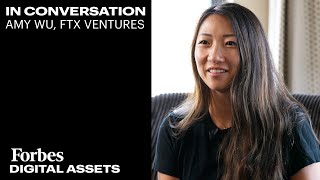
This YouTube interview (Forbes) features Amy Wu Martin discussing FTX Ventures’ strategy and views during a crypto down market. She describes FTX Ventures as a newly formed, strategic fund (distinct from FTX) with a technical/operator focus that offers capital plus exchange/listing and market-making introductions; the team is ~8 people with roughly $2 billion under management and reach across ~160 jurisdictions. Topics covered include differences from traditional VC (token vs. equity dynamics, DAOs), observations from Korea (strong gaming/Web3 adoption, TerraUSD collapse effects), tokenomics red flags (projects relying mainly on yield/airdrops), market outlook (capital available but valuations cooling), and priority sectors: infrastructure, layer-1/2, developer tooling, gaming, NFTs and consumer apps (including a speculative note on decentralized dating apps).
Questions this video answers
About eight people.
$2 billion under management.
160 jurisdictions.
In January (year given in video context: recorded August 2022).
Yeah, so FTX Ventures, you know, we were a newly formed fund right after I joined and we are about eight people today and we have $2 billion under management and we are investors in across a broad category of companies in crypto and web 3 primarily, but actually have, you know, flexibility to invest outside of crypto as well. And also, you know, equity tokens, all the above. So some of the categories that we actively are investing in are, you know, infrastructure, data infrastructure, DevOps tooling in crypto, which is a huge topic this year, you know, some of the layer ones and then of course in consumer Internet space there's gaming, there's social networks and a lot of categories that you know, I personally spend a lot of time in.
You were a partner at LightSpeed before FTX Ventures positions itself as you know by builders for builders. Tell me, how does your investing approach, how does FTX's investing approach differ from what you did at Lightspeed?
So I would say on one hand the types of teams that we're looking for are very similar and also we are leading and co leading rounds, co leading a lot of times with our close partners and the teams that we're looking for are ones that are not afraid to take risk, have a long term orientation, are building something that we think is disruptive and really like pushing the technology forward in crypto and blockchain and from a team founder perspective, you know, really looking for ones that are again like long term oriented and visionary. And it's interesting because like investing in crypto and blockchain projects, particularly in web three, sometimes you're investing in DAOs and so it's a little bit, and also not just in equity but also in tokens. And so in that sense there's a few different, like there's more formats and different types of team orientation that you know, I will work with versus just the sort of your classic relationship between venture capital and the founding team, you know, in, at Lightspeed and although, you know, at Lightspeed I was also leading crypto investing so there was a lot of that overlap. On the builder side though, it's interesting because a lot of people ask, oh you know, what's the relationship with FTX Ventures and ftx? The reality is it is a separate, it's a separate fund. But you know, we do, we, we, a lot of teams see our investment as strategic because not only are we able to provide capital, but our teams also are technical. And so we also build on top of for example blockchain layers as we have done with Solana and You know, we're interested in doing with other blockchain teams as well. And also, you know, we do have the exchange and so we can introduce them to the listings, we can introduce them to our sister fund, Alameda Research, which is one of the largest crypto market makers in the world. We also have just networks of operators in the 160 jurisdictions that we are currently operating in at FTX and our partners there. And so it is a very strategic, I think fund to work with versus a purely financial one.
You said you were just in Korea, so tell us what FTX is looking for there and how has the market been there like since the Terra USD club?
Yeah, so it's just there for just over a week and it was really eye opening I would say because first of all Korea is a massive crypto market actually on a trading, spot trading basis. There's there at parity or actually like have higher volumes in the U.S. which is pretty astonishing considering that there's 50 million Koreans versus you know, kind of 330 million Americans here in the U.S. and so, so that is Koreans on a per user basis have a high propensity to trade and are really interested in NFTs. So for ventures I was there basically scoping out the market and seeing what are some of the teams building there. It's been long a vibrant gaming market. So the Korean market has always sort of been years I would say, along with probably China gaming teams in terms of innovating and design ahead of Western markets. It was like free to play monetization. They were first to market really with that. And it was years before I think the Western markets for example started, you know, charging for digital items and looking at, for different forms of monetization. And so it was really interesting to see how far Korean gaming studios, at least some of them were experimenting already with Web3. And so I think that they're, you know, also it helps that the Korean player base is pretty friendly and, and, and open, you know, collecting and experimenting with digital items. Actually I think a lot of them probably are just playing the games and they're not even realizing they're collecting NFTs. Whereas the Western player audience, there's a vocal minority that has definitely sort of been vocal enough that they're scaling back a number of the Western gaming studios and efforts there. So I would say the gaming web3 market is pretty gaming dominated right now, the Korean one, but, but I'm interested in seeing kind of like that as the builders grow there, they'll probably also start looking at Payments and defi and infra and really excited to track teams that they develop there. And obviously Terra had collapsed which affected a few hundred thousand Korean holders of Terra. And so it was essentially in the mainstream news every night that I was there. And, and so I think like, you know, whereas, whereas previously actually it was a quite bipartisan in crypto support and a new sort of administration in the government was very supportive I think a lot. I think it seems like, you know, the blockchain teams are all sort of waiting to see where regulators, what kind of stance they'll take post Terra. But I would say that really hasn't, that really hasn't deterred builders and also like, you know, consumer companies in Korea to be committed to exploring in crypto and web 3, which is super exciting. And I actually think that theme resonates broader as well, you know, as we're moving into softer markets that it's really not deterring builders from getting to the space.
And how has the attitude towards Doc one changed?
I think people are a bit conflicted because before he was seen as a hero figure quite frankly and a celebrity in crypto. Right. He was the most well known Korean entrepreneur in crypto. And so therefore like when most of the projects I would say were looking at either building on top of Terra or Clayton, which is Cacao's, you know, sort of first party blockchain they built and now, you know, with Terra not being an option anymore I think and also a lot of Koreans losing money from, from you know, the collapse. There's a lot of mixed feelings towards him. I think some are angry and think that he has, he had built a Ponzi scheme and quite frankly like needs to are advocating for him, you know, sort of potentially, you know, like going to jail. And I think like others feel like, you know, he really had the best intentions but you know, he was experimenting crypto and he really just, that team really got over their skis. So there was, there's a whole range of emotions towards him and the team.
And when you work with founders, what are you looking for? Are there any red flags you are on the lookout for?
I think that in crypto because the token is such a powerful form of incentivization, the question is always, well at the end of the day, what are you offering users other than yields? Right. And if the answer is just yield and airdrops for example, with defi staking, that's just not enough. It's less interesting to me quite frankly as an investor because for example, I think defi Staking is a huge tool right now. Like, right, like so project starts and then they basically dedicate like a substantial percentage of their token supply to staking for their users for seeking wars. And my, my main issue is, okay, well you know, you're, you're in the short and maybe even medium term going to bring on. It's basically a customer acquisition tool and then a customer retention tool. But after you're finished giving a finite supply of tokens out, right, you're essentially potentially just kicking the can down the road in users churning. Because instead you could actually be using that to build products and you know, maybe pay people to help team members, collaborators, contributors to actually build real utility in your protocol. Right. And so I think that relationship is really, is not obvious sometimes, right, because the tokenomics sometimes can be obfuscated as actual products. But if you really pull back the layers, there's ultimately not actually like a product for users to, to use long term. So I think that's something that we, we really look at. And you know, some strategies are really like liquid token strategies where we are deriving value as investors from yields, but on the venture team we are really looking for teams that are building real products that users are using.
I want to ask you about how you navigating the current downTurn. So you FTX Ventures launched the 2 billion fund in January. Obviously you still have a lot of gunpowder, but there is chatter about venture capital potentially drying up a little bit, valuations going down. What's your outlook?
Venture is a long term outlook, right? So you had last year unprecedented amount of crypto fundraising happening, right, in terms of these new crypto funds that are raised, including FTX Ventures. And so you have a lot of funds sitting with dry powder right now. So I would say in terms of amount of funding in the private space and venture investing, there's a lot of it. You know, For Andreessen raised 5 billion fund, you know, and multiple funds like raising multibillion dollar fund. That being said, the valuations in this space have really been overheated for a number of months and it's, and that's testament. And you know, it's of course like the dynamics are always like demand supply, right? There was huge demand of investments into fewer, you know, like world class teams. And so of course that drives up the valuations really beyond where kind of like fundamentals were, right? Whether it's like number of active users or revenues or even profits in some of these companies. And not just in crypto, but actually in many other tech sectors as well, and so the reset I think in the markets and I think we're still up from for example at the beginning of COVID when you look at equity markets, although most of the gains have been wiped out. And similarly with crypto. Right. But you know, a lot of people think that we might be slipping into a bear market. You know, who knows? I think there's been, I still remember when at lightspeed we were convinced we were in a bear market like at the beginning of COVID but you know, we had a V shaped recovery. It seems unlike less likely this time with some of the macros. But I think like, you know, in any case what happens in a bear market is that you have a lot of the noise and really overheated valuations leave the market. And quite frankly builders and crypto investors can just focus on teams and helping and support them build great products. So we continue to do deals. But I would say that we have definitely pulled back a little bit on capital deployment, as has every fund in this space. I think a lot of us want to wait for valuations to settle a bit to be more reflective of actual traction and progress in some of these teams. And there's also, I would say maybe a little bit fewer teams out there raising right now, although there's still many. But I think give it a few more months to settle and we'll be back sort of on pace again.
And what areas are venture capitalists scaling back on at the moment? What are some of the first that you kind of, you know, saving for better time.
So it's not on similar dissimilar to other areas of tech with and also public equities where I think the pre launch, pre revenue larger rounds with very advanced valuations like you know, billion, billion plus in valuation, those are the first to scale. And then but if you look what happened was in the, in the last few months actually those growth rounds have scaled back and then those funds have actually just moved earlier stage. And so seed rounds and series A's were as heated as they have been like last year. And I would say those are starting to scale back as well. Right. So like a pre launch, I would say pre revenue company raising at 100 million and you know, whether it's token valuation or equity valuation, quite frankly was unheard of a year ago and became super common, you know, by the second half of like last year. Right. And so I think those are starting to come down to earth a little bit, which is I think a good thing for the industry quite frankly. And so the areas that we're excited about are the areas that we always have been because when we make an investment we're looking at, you know, like a multi year decades time frame. And what they always say in crypto is that you can't time adoption. Adoption sometimes comes much faster than people think. For example, essentially NFTs, but then others much longer than people think. Right. In terms of technology shifts and certainly in crypto as well. And so we're super excited about the infra layer because it's still extraordinarily difficult to develop on the blockchain. I mean as you all seen for example with the optimism Winter Mute market making mishap. Even an extremely experienced market maker like Winter Mute can still have issues and there's still be sort of, you know, vulnerability that happens, you know, from Multi sig Wallet. Right. And the way that it was essentially designed and that is essentially never going to lead to mainstream for example consumer adoption. Right. Consumers need to feel safe. They need a safe, super easy and intuitive user experience. All of which are for the most part not really found in blockchain experiences today. So we need more tooling infrastructure, access to data for developers, for more developers to come in and also make it easier for them to build on chain. That's a really interesting space. Also interesting is that we see there's a lot of layer ones and layer twos right now. They've gotten a lot of funding and from the last 12 months I think that will continue to happen because actually some of the biggest areas of innovation and tech progress is happening at the layer 1, layer 2 level. And so I think we will continue to see those rounds being raised. And the last area that we're really, the other area we're really excited about is just consumer Internet. Right. Like, and so we think that a killer consumer app really potentially will bring the tens of millions of users because you know, Defi apps are more niche. There's only Defi really caters to a more prosumer trader profile of user. And there's going to be, I mean they may be you know, crypto whales but there's really fewer of them versus again like the tens of millions, hundreds of millions, maybe even billions of people that use consumer apps on a daily basis. And so we're super excited to find like where like NFT brands are starting to become entertainment companies or commerce companies. Right, like Yuga Labs and Border Yacht Club and you know, and then we're really excited to see in back like more of these NFT projects that really have that vision of course, gaming, decentralized social networks and other forms of consumer apps with utility.
I think you recently talked about.
Dating.
Apps potentially being the breakout crypto app. Can you talk about that? How does dating in web 3 look like?
Oh, yeah, it's a bit of a joke around that because I just, for example, haven't really found a decentralized dating app yet. And I think that it's a great candidate for kind of breakout viral success because who doesn't love hearing about a dating app and also experimenting with it, right? And this is where I think creative tokenomics. If you incentivize, for example, maybe you're a friend that refers a lot of great candidates for your friend to go on dates with. And then you get more tokens, for example, or people stake token, like do some sort of staking mechanism on your profile because again, they want referrals from you or something like that. Like, there's a lot of just like fun, whimsical ways that you can actually use tokenomics to incentivize both sides to have marketplace. And there's also scary ways you can also incentivize. But in any case, I think it's a potentially great method of viral adoption, certainly attention, awareness. So I'm definitely encouraging teens to try it out. Sam.
More from Amy

Working for and backing generational businesses | Amy Wu | Head of Ventures, FTX