Hacking Innovation & Life
Andrew Ngui teaches MIT students that asking the right questions before building solutions determines whether you tackle the right problem. He maps this onto exponential growth curves, introduces ikigai and purpose-driven design, and explains how to overcome status-quo bias through behavior-change frameworks like lowering barriers and flipping defaults.
Chapters
So before we start with our class, the first thing what we are trying to do today is we have a guest faculty for today's class, Andrew, who was my mentor as well as one of the faculty in my MIT boot camp when I attended in 2017. And after that, we have been in touch with a lot of important things which we were doing together. And I would leave the stage to Andrew for another 20 minutes, and then we'll have Q&A session. Uh, followed by, we'll have the rest of the, I mean, class syllabus to be covered. So hey Andrew, welcome to the class, and we have almost, I see that around 300 students who have joined at both the links. And over to you.
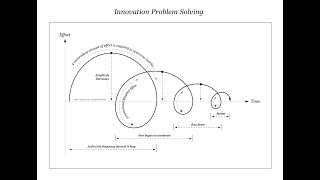
Thank you, Abhishek. Uh, what a great opportunity to share insights from life with you today. I've titled the presentation Hacking Innovation and Life. Not from India, originally from Singapore, but very familiar with India and the whole idea of jugaad. I hope I'm pronouncing that right. So I'm currently based in Peoria, Illinois. It's a small city It's the biggest small city south of Chicago between Chicago and St. Louis. And so today what I— and this is what it looks like at the sunset. And, you know, in a Harvard class in entrepreneurship, the first class they will ask their students, tell me What is it you plan to do with your one wild and precious life? Our time on the earth is short, and we want to be doing things that are important to us, to our family, and we can— that we can impact the world. And so I'm just going to start with that. So if you can start writing in the chat box, what is your focus? Select from one of the two options below. Are you solutions-focused, or are you always asking questions? And here's why I ask the question, right? It's really the lenses in which we view the world will determine how we approach life and how we approach innovation. And so what does that mean specifically? When you view the world through a solution-focused lens, how do you know you're solving the right problem? For the right audience, and who are they specifically? And if you view it through a lens of questioning, you're first seeking to understand what exactly is the problem, why these problems exist, who they impact, and how. This is not to say that one is better than the other. It is a question of sequencing. And so you may have already viewed this short video I shared with your professor last week, and he would have shared it with you. And this really is about the process of iteration and hacking life. Okay, and how does this map onto the exponential growth curve? So in a small and medium enterprise, This is a linear trajectory in terms of how businesses are moving forward in time, but if you look at the exponential curve where this is innovation-driven entrepreneurship, right, that's the idea of the how and the funnel and the iteration over time, When you accelerate the terminal velocity over multiple iterations, this is where you get into the exponential curve. The, the big difference is that it's in the dip here with the hockey stick curve that there's a significant amount of effort required to start, just like in the first loop. There's such a huge, uh, effort required to overcome inertia, and this is always a challenge in innovation, whether it be new ventures, starting a business, or even in corporations because of the challenges within an organization. So, coming back to problems versus solutions, Or questions versus solutions, the answers you get depend on the questions you ask. Right? And so I want to do a draw— draw a few parallels. So traditional problem solving, you gather all the information that's available before the process begins, and it is very similar to the way the Earth orbits around the sun. So from a natural perspective, it takes 12 months because of the distance of the sun is away from the Earth, there's a very weak gravitational pull, and there are not very many observable effects. And so the parallels in that, in traditional problem solving, is it's a long cycle, it focuses on the entire process, there's such high barriers to engagement and ownership, And, of course, there's always significant financial commitment. Now, the difference with what we're talking about in terms of the innovation loop and problem-solving from that perspective is about testing assumptions quickly. Yes, we talk about Lean Startup, we talk about all these different things with limited information available. And so the natural observation is that the— Moon orbits around the Earth every 29 days. There's a significantly strong gravitational pull with observable effects: the ebb and flow of the tides, the length of the days and nights, and the seasons. And the parallel in the innovation loop is that really it's short problem-solving cycles. Focusing on just one part of the process, low barriers for engagement and ownership, and low to zero financial commitment. Why? Because you're looking around you for the assets you already have. And so I want to come back to the natural laws of time and space. This— these are animated pictures. Of the satellites orbiting around our planetary orbits. Okay, so in the Voyager 1 here, you see that the satellite is leveraging gravity to slingshot. Same thing with this one. And so there's this acceleration that happens. And so at the heart of it, it's the build, measure, learn loop. Everybody hears about this. We need to build, measure, and learn. But what it doesn't tell you is how to do it. And so we've heard a lot about, you know, build, measure, learn loop. But what are the factors involved with building and measuring and learning over time. So effort is one huge factor in that, like the effort to get a team together, to get resources together, to get a cohesive direction that you want to work forward in a project. And so, like I said, a tremendous amount of effort is required required to overcome inertia. And once you get off the ground, right, there's this whole idea of a gravitational slingshot effect. As you see here, the satellite continues to accelerate over time. So what's really interesting is that they leverage the gravitational pull of the Earth, and once it goes past the planetary orbit, the engines in the satellite go on to maximum thrust, and it leverages the terminal velocity in that process to accelerate over to the next waypoint in their trajectory. And so as a result, you begin to see that the significant inertia, once it's overcome, begins to accelerate over time. And so, you know, what I also want to get at is once you overcome that inertia, you can also see a parallel in that in the hurricane. So hurricanes are these tropical storms that start as small weather systems off the east coast of Africa and come across the Atlantic into the United States. And what happens is that, if you go back to this slide here, as you overcome the inertia and you continue on that spiral, all the information that you gather, all the experiments that you are working on to validate the assumptions that you have, continue to build momentum. And as you build that momentum, it becomes self-propelled and translates into this immense kinetic energy that we see here in the cross-section of the hurricane. It's a self-powered spiral. So here's something interesting that I learned last week in preparation for this presentation. The power of one hurricane is able to— the electrical power is able to power the entire Earth through one hurricane. It's so incredible. And so similarly, coming back to this, think about once you've overcome the inertia in the work that you want to do in your life, imagine the limitless potential that you're able to achieve. And so I want to really dive deeper into that. So what is your raison d'être? And that's French for really, what is your purpose in life? And so there's a Japanese framework called ikigai. What is your reason for being? So it's the intersection of your passion your mission, your profession and vocation. Simply, what do you love, what you're good at, what the world needs, and what you can get paid for. But how do you get to that center dot, right? And really, the question that we're asking is, how do I hack my life so that I can lead a fulfilling life? And Simon Sinek says, start with your why. What is your purpose? What is your cause? What is your belief? And how does that resonate through what you want to do? And so we've seen this slide many times, Maslow's hierarchy of needs. We're climbing the corporate ladder, we're trying to make lots of money, and we're trying to reach this idea of self-actualization. But the question is, by what age will you expect to get there? When you retire? Instead, look at the blue arrow and consider the following. What if you did this? Don't go, don't pass go, don't climb the pyramid. Instead, invert the pyramid and say, I'm not going to wait till I retire when I'm 65, 70, whatever. Who knows where the world will be? Let's start now and go to understanding our purpose of what we want to do in life and self-actualize. And what that looks like in a 3D space is when you live and operate from a core space of self-actualization, you understand your identity— who are you— your purpose, why you're here in this time period and location. Everything else in this whole pyramid becomes circumstantial, right? Like it's It's inconsequential. It's just part and parcel of life. And I want to move on very quickly because we're running out of time. We talked about solutions early on. I want to share a little bit more on solutions. I want to encourage you to think about whole solutions. Whole solutions don't just impact— the functional component of people's lives, but they also impact on a social level as well as an emotional. And this is really from the Innovator's DNA, which is a workshop that I'm currently taking right now. I also want to go one step further and say, in developing a whole solution, you need to address three parts. Obviously, the functional component of your body and physical connections, your mind, your social, emotional, intellectual, but I also perhaps want to argue that there's perhaps a spiritual connection. And if you look at the crossovers between the spirit and mind, there's this whole sense of peace and security there too. So what did we learn today? We're asking about what is your focus? Are you asking the right questions to the appropriate audience? Are you developing whole solutions that address real needs across multiple fronts. Do the places where you study and work solve problems in a traditional or innovative way, and what are you going to do about it? How can you change the world better than you found it? We've also compared and contrasted the orbits of the sun and moon and how that parallels the challenges we face in problem solving. Leverage, addressing, or identifying effort over time as factors is just but one part. What other factors over time can you think of? Most importantly, how has this presentation impacted your life? Will you do things differently or will you continue in your same trajectory of life? So there's some bonus material, and I think this bonus material is actually quite important, and that really has to do with the last question, which is behavior change. Whether we are starting a new venture or whether we are starting a project in a corporation or in a school or anywhere else, behavior change needs to happen. Yes, I love gulab jamun too. Actually, I had it 2 weeks ago. We have a great Indian place here. Behavior— understanding the science of behavior, understanding the science of how we think is so important. I just want to introduce one bias that we have, which is the status quo bias. It is the preference for keeping things the way they are, similar to Newton's first law. Nothing will change. An object at rest tends to stay at rest, and an object in motion tends to stay in motion, right? Nothing is going to change unless you design for change to happen. And so the, uh, very, very simple framework that I want to leave you with is called the 3B framework, uh, that was taught at Irrational Labs. It is a think tank and research facility in California that focuses on behavior change. So it's 3 B's for the 3 B's in the process, identifying key behaviors. If you want to design for change to happen, you have to identify where those behaviors Behaviors need to start to change. Then you need to find ways to lower those barriers. Friction prevents users and people like us from performing our key behavior. How often have we woken up in the morning when our schedule changes, we're on vacation, we still wake up at 7 o'clock in the morning, we still brush our teeth, I can still do all these different things. So these are points where we're used to doing that. And then amplifying the benefits for changing behavior. I'll leave you with one last story. In many countries, when you have the opportunity to apply for a driver's license, they will ask you, In the event of an accident, would you like to donate your organs in the event of death? When it is an opt-in, meaning to say you have to say yes, the sign-up rate is only 16 to 17%. However, in certain countries where they have flipped the default of that organ donation to opt out. The percentage by default, you're already in, you have to opt out, is 75 to 80%. And so just by a simple change in designing the change for behavior, suddenly you're flipped. The process for onboarding. So thank you for your time. We're, Abhishek, just about 22 minutes. So over to you, Abhishek, professor.
Thank you a lot, Andrew. It was really amazing. I mean, as usual, it was expected from you. So we'll, and by the way, thanks a lot for, you know, staying up late night and it's early morning for you.
My pleasure.
Yeah, and already I'm getting messages from my students saying it was inspirational, and they're asking for slides, which I'll be uploading on the Canvas for our students to have.
Great.
Quickly, we'll spend maybe another 5 to 10 minutes. If you have any questions, either you can raise your hand and I'll be happy to unmute you guys, or you can put it on chat box. Anyone?
Yeah.
If you have any questions to ask Andrew, he'll be happy to answer.
So we have a question. Gopika is asking, "What is the best way to understand your customers?" And so the best way to understand your customers is to talk to them, right? Communication is 80% nonverbal. And so you can see their gestures, you can see the way they respond to your questions. Are they smiling? Are they frowning? Are they like, you know, their eyes are like questioning without saying that they question? And so your professor will be sharing a book called How to Talking to Humans, right? And it's talkingtohumans.com. The author, Giff Constable, writes about asking open-ended questions because if you ask very specific yes/no questions, you have already biased the conversation and it's leading people down a pathway of your train of thought versus letting you discover what you actually think about. Okay, so we have a few more questions. Let's see. Elaborate— Vinith asks, elaborate on the ikigai concept and how do you find yours? So remember that spiral is really a process of experimentation. I would start with your areas of passion. What are you passionate about, Vanit? And start experimenting. And the more you experiment, you set your variables, you set a control, and you set a determined amount of time for the experiment and see what level of interest you have. And so the more you begin to experiment, the more you begin to try and learn things, you will discover cover your ikigai. All right, so Mohammed has another question we see. Let's see here. We fix a goal, but sometimes we become weak by seeing the hard work. And so your professor could tell you that at boot camp you have to own the problems you want to solve. Nobody is going to own the problems for you if you are tired and if you give up. That's okay because maybe that's really not your passion. You have to iterate and experiment and conduct and look for all these different things. Not just, not just go wide but also dedicate a certain specified amount of time to go deep, right? And that way you really understand over time and that's hard work. Nothing that's good ever comes easy, right? All right, moving on. Krutharth says, "How to motivate other members in our team to start working on our projects?" Really, that's where the alignment happens. You have to find people who are aligned with— so the way I think about that is culture vision and mission, and then expertise. If you do it backwards, there is zero alignment. And if the culture piece doesn't even pass, don't even get to the expertise because you're— if you're here and they're here, 10 kilometers later, you're completely apart. You're going in the different trajectory, if that makes sense. Okay, moving on. Kritika says, "I didn't get the point about the change in organ donation." What was different in the second scenario? The difference in the second scenario was the first scenario was opt-in where you have to sign in or sign on for the organ donation, so you have to enroll. That is 16 to 17%. And the second condition is that you're already enrolled, you have to opt out. So that is the 76%. So the second condition is that you're already enrolled by default. Think of, here's the interesting, you can go look this up. So iOS, the Apple phone system, right? When they first launched iBeacon, which is the Bluetooth locationing services, it was opt-in. The signup rate was abysmally low. Then they updated iOS to the next point zero dot version, and they switched it to opt-out. Sorry, opt, yes, that's right, opt out. 80%. Same thing, you can look it up. I actually wrote an article on Medium on that process for the iBeacons. Okay, let's see here. Chirag asks, how do you handle doubt and adversity? Doubt? Well, you know, that's a great question. Off the top of my head, I think this is why community is so important. You have self-doubt, but when you're surrounded by a community with you that is going the same direction, you have the ability to interact with one another that is headed in the same direction. Iron sharpens iron, right? The idea that we don't really know what our skill sets are until other people see what is unique and uncommon to us, right? And so that's why the whole community is important. And so same thing with adversity. With adversity, it is hard to go alone. If you want to go far, go together. Abhishek, cut me off when you need to, Professor. Lots of different questions.
Yeah, so you can take 2 more questions and then—
Okay, so let me just— let me, let me Let me just look through very quickly here. Pick 2 questions. So many interesting questions. And Professor, if you can send me a list of the questions that we don't answer, maybe I can get back to them through email. And we can do that.
You can do that.
So let's see here. Madhuri is asking, if we have a genuine problem and the right solution to it, we have certain risk of losses. How do you minimize those risks? On a high level, this is why you have to do your homework. This is why researching all the different areas are so important. And how you can accelerate that is by building a team that covers your areas, all the different areas of your strength. Right? So you may be strong in one thing, somebody else may be strong in another thing, and really it's about exponentially as a team we're able to achieve that curve. Okay, one last question. Suarna, how to view failure as it relates to innovation? When is it part of the process and when does it become unacceptable? So I want to define failure as giving up, and giving up over an extended period of time when your assumptions have been invalidated, when your problem that you're— and the root cause of a problem has been invalidated, when you cannot find a large enough market segment, when you over a significant period of time, it is just not the right time, right? Like, say, I don't know, 12 months, 2 years. You set a period of time, you leverage the SMART framework, that is specific, measurable, actionable, relevant, and timely. If you use that as a metric for your innovation project, at some point you have to say, "Hey, all the assumptions that I've had are invalidated, and as a result, we need to put it to rest." Maybe it's not the right time, the technology has not caught up. Battery technology or miniaturization of integrated chips, from when Apple started with the Newton pad to look at the iPad now. I mean, it's incredible. How many years has it been? Maybe what, 20, 30 years? That's incredible. Apple Newton to the iPad today and to the computers that we have today. It's incredible. So yeah, Professor, thank you for your time. It's been my pleasure to meet everyone, and I hope this has been informative and helpful for you. I wish you all the best.
Yeah, thank you, Andrew, and it was really amazing presentation, and thanks for taking some of the questions.