Free Cities, Prediction Markets, and Stablecoins, with Anirudh Pai | InFi #120

In this InFi podcast episode, host Rob interviews Anirudh “Ani” Pai, a partner at Robot Ventures, about the current state and future of crypto, stablecoins, prediction markets, and broader technological trends. Ani explains how stablecoins can be divided into payment‑oriented (e.g., Tether, Circle) and synthetic (e.g., Athena’s USDE) designs, and why the rapid pace of crypto development forces finance professionals to adopt a “Red Queen” mindset. He highlights Polymarket as a flagship prediction‑market platform that demonstrates crypto’s ability to scale, provide insurance‑like products, and generate granular probability data. The conversation moves to Robot Ventures’ investment approach—reach, analysis, and founder support—and its portfolio spanning L1/L2 chains, AI‑evaluation infrastructure, and decentralized physical infrastructure (DePIN) such as Dawn’s bandwidth exchange. Ani also discusses macro‑economic implications of stablecoin adoption, suggesting that stablecoin holders could become a major sovereign‑like bloc buying US debt, potentially reshaping the debt market. The dialogue touches on the concept of “free cities” and the role of venture capital in fostering new jurisdictions. Throughout, Ani emphasizes the democratizing power of programmable money, the importance of trust‑minimization, and the long‑term secular trends of AI, crypto, space, and biotech that will shape the next 40‑50 years.
Chapters
One maybe smaller modality of that is just everything that you're seeing in the prediction market space, right? Like we were in the first round of Polymarket and it was like you could kind of look forward in the future and be like, yeah, like you sort of know that this thing is very important, right? Prediction markets sort of naturally make sense, but the mechanism by which and the timing, the timing is so important, just really required a lot of effort and waiting. And then I think Polymarket has like proved it out, right? And that's really made possible. Via crypto. And that's like a great example of crypto working at scale where they're worth north of $10 billion, have still not generated revenue, and usage is like through the roof.
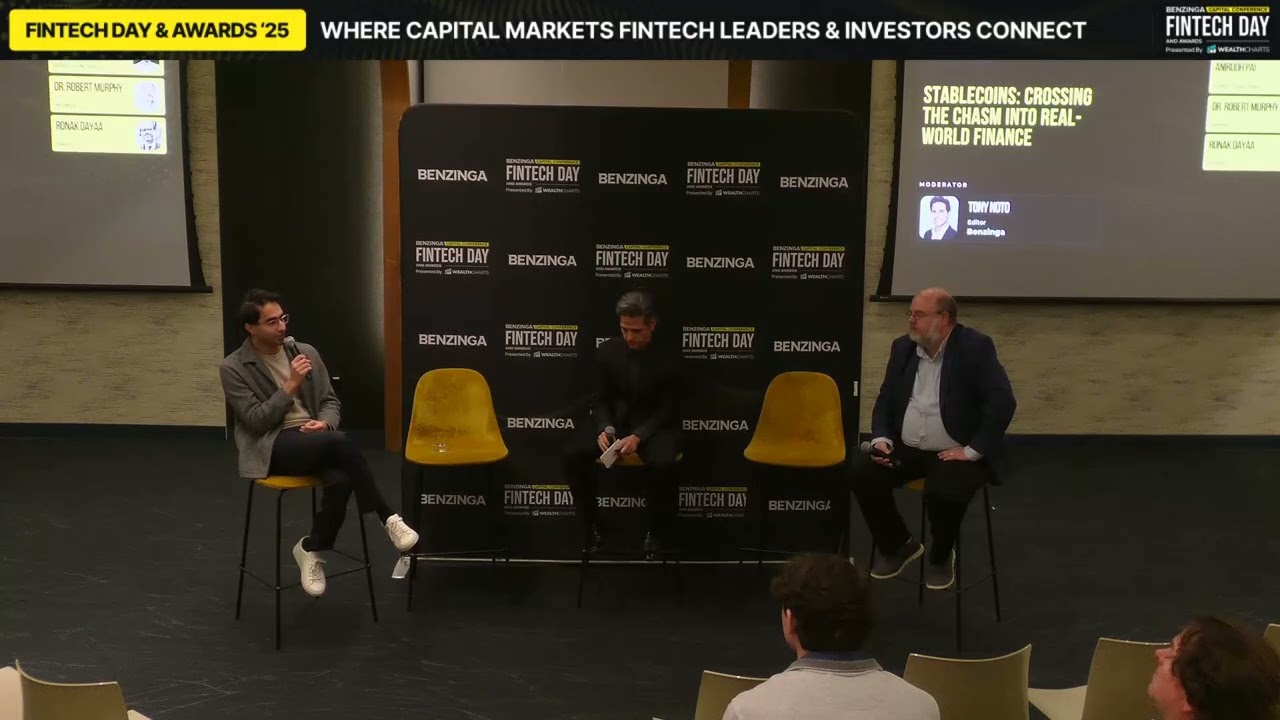
Welcome to InFi, the future of finance. Hey everybody, welcome back to the InFi Podcast. Today I am speaking with Anirudh Pai, who is a partner at Robot Ventures. And as we discuss throughout the conversation, He's been at a bunch of other interesting places as well, and specifically places that would interest Infi listeners. So I met Ani, we were both on a stablecoin panel at the recent Benzinga conference in New York City. I think it was in November at some point. And I thought, wow, this, this guy has a really interesting perspective. It's the kind of thing where he was compatible with the points I was making, but yet he was saying things that were extensions of it or things I didn't know about. So I thought this would be a great guy to get on the podcast. So we cover a lot of terrain in this discussion, including things like using smart contracts and prediction markets to allow for decentralized governance, if you're familiar with those kind of buzz terms. So without further ado, here is my discussion with Ani Pai. Ani, welcome to the InFi Podcast.
Thanks. Super excited to be here.
Yeah, glad to have you here. So I would've already explained a little bit of this in the prerecorded intro, but Why don't we just jump into when last we spoke, we were both on a stablecoin panel at Benzinga. So the listeners of this podcast are probably sick of me sharing my thoughts on the Genius Act and what the future of stablecoins are and that sort of thing. But do you, do you remember any of your particular takeaways that, that you gave at that conference?
Yeah, I liked, I guess, the overall environment and I think the nature of the participants was diverse enough so that I don't know if you recall, but I think we got like a bunch of different questions from the host and from the audience. So that was nice. But yeah, I guess to kind of summarize what I was saying, it's that a lot of people who are, I guess, broadly interested in stables, especially if they have a finance background, I guess my view is that they're stuck right now between, I think the line that I used was that they're stuck right now between a crypto future that they don't understand and a TradFi past that they cannot go back to. And it's like every day that they wait to kind of learn stuff about crypto or Genius Act, Clarity, whatever, how stables work, all of these things is more than a day that they're behind because things just keep getting faster and faster. Actually, one of my favorite mental models, I guess, overall in investing is called the Red Queen effect, which is sort of the idea that, like, you know, it's from Alice in Wonderland, which is just sort of the idea that, like, to stay in the same place, often you need to run faster and faster. And I think that is kind of the case with crypto where it just moves so much faster than Even other modalities of technology, right? Like on one end, it's like you have crypto and then maybe on the other you have enterprise SaaS or something, or some belugared part of biotech, which hasn't seen any real advancement, right? Since the '80s or '90s, you could say, and crypto is just getting faster and faster. So I kind of caution people to pay attention and if they get the chance to learn more about it, I mean, it would just sort of be like learning about the internet in the time of Mosaic in, I think, the early to mid-'90s. I think that was like more of the parallel we were drawing.
Yeah. And I remember one of the questions, I forget the way that it was worded, but what ended up coming out, and I know I gave my thoughts and then I think you had something that was compatible with, but you know, not identical to, was it was, I was just making the point that among other applications, the rise of stablecoins, for example, just would allow people around the world who just, as long as they have an internet connection, if they're in a country with, you know, a hyperinflating currency or just, you know, real unstable regime and, you know, authorities might seize your farm or whatever, that just to have access to whatever, $800 US in terms of stablecoins, like for a lot of people around the world, that would be incredibly valuable. Like that might be the means by which you can journey to a different country or something and have something when you land. And so, yeah, anyway, there it just beyond just kind of like, ah, portfolio reallocation for wealthy Americans or something that I was just saying that, yeah, the rise of Just blockchain-based finance, I think is going to, we haven't even fully comprehended just the boon to humanity that can represent.
Yeah, we haven't also, it's in one part because it's like when you look at the big themes of tech, you could say in our time, right? It's like you have OpenAI as sort of the metonym for all the AI stuff. And then you have Tether as I guess its own plinth about crypto. Then for a while at the beginning of the year, right? I think I was mentioning this, it's like they were both worth $500 billion. And these are like 2 of the big tailwinds in technology, right? It's like America obviously at the forefront of the AI stuff, but we sort of dropped on, you could say a lot of the stables, like, you know, Tether's not American. It's not an American company. Paolo is Italian. I think Tether is based in Lugano in Italy. The 2nd biggest stablecoin company obviously is Circle, which is based in New York. And then the 3rd is in Portugal, which was one of my former employer Dragonflies, one of our big investments, Athena. And yeah, also not American. So it's like America very ahead on the AI stuff. It's like the kind of pinnacle and bastion of AI talent is very Western. Or of course, there's obviously the stuff on the open source end in China, but the stablecoin stuff is just sort of like, yeah, I mean, it's like the market has kind of run away with Tether and Athena is like a synthetic stable. So it's not really meant for payments. And so it's like, yeah, like you haven't really seen, I think, a place that has really been the home of both. I guess. And that to me is a funny kind of story about the history of tech.
I know this is going to be elementary to you, Ani, but can you just, for the benefit of our listeners who don't know the distinction you just made there between a payment stablecoin versus like a synthetic one, can you just spell that out a little bit more about specifically what that means?
Yeah, no, yeah, please. So the stablecoin space overall is, I think we all know, very new. And so the thinking here has really just evolved in the past few years. But you could kind of break it down into like, at the end of, at the end of the day, these things are just like programmable logic. So I guess unlike the history of currency, specie in the time of the Revolutionary War, right, there were hundreds, if not thousands of different currencies kind of made possible by revolutionaries and sporadic towns within the heartland of America, all the way to today, which currency has become very homogenous with the EU and obviously with the dollar and so on. But the crypto landscape is very different because the input costs are very minimal, de minimis. Anyone can go off and make some, and they commodify logic into kind of very specific frameworks. And so similar to the dollar, you have something like Tether, which is just backed 1 to 1, kind of made possible by US reserves. So it's like for people to just go and buy stablecoins, Tether would, when they get a dollar, would just go and kind of mint a stablecoin in their backend using like US Treasuries as reserve collateral. But one of our portfolio companies, this company I was mentioning, Athena, sort of figured out that they could commodify one of the most popular trades in finance, the basis trade, into a single token, USDE. So, you know, USDE standing for Athena. And this has been, I think, one of the fastest growing crypto projects of all time because the basis trade is one of the most popular trades in finance. And I can get into what the basis trade actually is. But I think that's like a broad overall kind of view that like these things are so unique because you can distill logic into a single token. And of course you cannot do that with the dollar and the dollar is kind of run by the 14 Federal Reserve chairs today, of which, you know, are all completely unelected.
And
now you have this very democratic future, right? Where it's, if you believe you can make a better currency than me, you just go off and make it. And then you get liquidity and it just happens. And I think that's been super exciting, I think, to see time and time again.
Okay, let me reproduce one of the claims I made, and then I'm curious your reaction. And it's fine if you want to say, no, I'm totally wrong. Like, that's good for the listeners. I don't want to mislead them. They can hear both sides. But if you want to say that, yeah, I'm genius, that's fine too. So I had, I forget the exact wording of the question, but I was commenting on the issue, which you hear a lot is, oh, you finally, the US, unlike with the Harris admin— or what would've been the Harris administration, presumably being fairly hostile to this stuff, that Trump coming in, crypto, AI capital of the world, and then the passage of the Genius Act, and you're seeing other things on the horizon. Is that going to solidify the dollar's role as the world reserve currency in the coming decades? And so I tried to, as a good economist, I tried to answer it both ways. So no matter what happens, it ends up I'm right. But what I said is I think Relative to what would've happened had that, had the Genius Act not been passed and, and so on. That yes, it does lock in more people are going to be, the dollar's going to be on one side of every transaction percentage on planet Earth, more so over the next, let's say, 20 years because of the Genius Act and solidifying the ability to issue stablecoins and so on in a regulated manner. But I thought that was in a sense like The fact that companies now, and even individuals, are going to structure their operations such that accepting stablecoins is going to be commonplace, just like, you know, oh yeah, you could go and do online banking and it's not a big deal. And so yeah, you can just go ahead and have your wallet that's accepting stablecoins, and that's kind of as good as money in a checking account because the Genius Act says so, blah, blah, blah. That once companies around the world are equipped to accept USD stablecoins, It's not going to be hard for them to just go click a button and have a pull-down menu and then also now accept stablecoins that are pegged to an ounce of gold or to some other basket of currencies or whatever. Whereas had they not gone down that path, it might've remained a weird thing and it would've been harder down the road for them to coordinate.
There'd be a ton of variance. Yeah. Right. There would be tons of variance and it'd be like, oh, do I trust this guy? Like, what about the counterparty risk? And really when you delve into this stuff, you realize all of finance, a lot of technology, a lot of business is just trust. And it is about minimizing the cost of trust to conduct transactions. And that effectively is what the Genius and Clarity Act have been able to do, making it possible to reduce the activation energy of trust required to do transactions, I think.
Okay. So yeah, I agree with everything you're saying, but do you agree that Not once everybody, once every institution and even regular business is equipped to accept stablecoins. And perhaps in the beginning they're just doing the really regulated ones and all this. It's like basically the dollar. But once everyone gets their feet in the water with that stuff, then if down the road they decide there's other assets that are more stable than the dollar, to get stablecoins denominated pegged to those things is going to be a lot less of a leap.
Yeah, I think so. But maybe let's, Think about the opposite case here. And so I think we were talking about this as well, but if you were to put the entire block of stablecoin buyers on Earth into a sovereign faction, I think you would get something like the 13th biggest sovereign block on Earth. And you're just combining the people in Asia and America, et cetera, all those stablecoin holders. That's one of the fastest, if not the fastest growing kind of block of new buyers for American debt. And you kind of look at what's going on in the world right now. Japan, I think historically one of the big buyers of American debt, if not the biggest, is going through its own kind of flux today, right? I mean, YCC has kind of proven to not work anymore. The Japanese yen carry trade, the ability for foreign investors to kind of borrow yen at cheap rates and then deploy it across the world for way higher yield has fallen flat. I mean, that just doesn't work anymore. And kind of the tumult you're seeing in markets today can maybe be best explained as Uh, one of the best kind of relatively risk-free trades on earth kind of unwinding. And so that's largely the stock market kind of volatility, all these things. I mean, it's overdetermined, but I think that's one core part of it. But anyway, it's just like, we have to ask, who are the new buyers of debt for America? Where are they going to come from? Like, you look at the demographics of other nations. I mean, Japan is having its own death knell. They have to like bring in foreigners and that's its own kind of crisis going on. China is in a huge demographic upheaval as there is just frankly not enough women for men anymore. And so the government is doing all sorts of kind of crazy activities there. And you can go on the list, right? Italy, many of the countries in Europe, so on and so forth. And it's just, we have no clear idea as to who is going to buy the debt. And so the net result of stablecoin buys, new buyers, I think will And I'm sort of thinking about writing a piece on this, will sort of lead to the big companies in the space, Tether, Circle, whoever else, to be one of the kind of main juggernauts and power brokers of American finance, much like we saw. We have like 120 years ago, right, of JP Morgan kind of bailing out the US in the recession of 1907. Something similar happened. I was just reading Andrew Sorkin's great book, 1929, and he sort of details and underscores the importance of private industry, both in making 1929 happen, but also in the recovery in the decade thereafter in the '30s. And it seems like we're due for another one of these. And I think it's like not the power players of a decade ago, not Buffett, not Jamie Dimon, but perhaps a third path of Tether and Circle because they're going to be one of the big buyers of American debt.
Yeah, I think you're right on that for sure. Okay, well, can you maybe Talk a little bit, 'cause I'm looking over here. Your current and previous positions are very interesting. The folks, the host, the moderator of the panel that Ani and I were on was just talking about how like younger people especially would really lighten up when they would sit, when they saw your resume here. But right now, Robot Ventures, what is it? You're a partner there. What is that?
So Robot is a crypto venture fund. We are probably the only founder-led investment firm in crypto. And before this, I was at Dragonfly. Dragonfly is one of the largest, if not the largest, I think, global crypto venture fund. Before that, I was investing at On Deck, which is a startup accelerator backed by Founders Fund, and also a founder of a deep tech company called Realm, which we basically built something analogous to Palantir for mining operations all across the world, both in America and Abroad. But, and before that I was at Pronomos, which is I think one of the first things we spoke about, which was a venture fund made by Patrick Friedman and Peter Thiel kind of investing in new cities and seasteading and all of these things. And so yeah, I think now when I say that I've had, I guess, a very libertarian path, one could say, throughout my career.
Yeah. So that means, so thank you for the quick rundown there, but let's circle back and kind of unpack some of that. So in Roam.io, what exactly is it that you guys do? I mean, I understood the words that you said, but maybe for our listeners.
Yeah, sure. So yeah, so I guess in Specific terms. Yeah, like any venture fund, we raise money from LPs, many of our LPs, high net worth institutions, people who have a great affinity toward the crypto slash deep tech space. And we raised about $85 million for this current fund. So the total AUM, which is kind of the money we manage across all firms, is a few hundred million at this point. And yeah, with $85 million that we have, we invest in early stage projects in this space kind of globally. So the remit can go all the way from Like you and I were just talking about with stables, investing in new stablecoin projects, to crypto AI companies. We sort of incubated something recently that's around the AI eval space, one of the kind of hot new vectors, I think, kind of happening in the AI field. Then so, and so on. So it's like we have done things ranging from new chains. So things like Monad and MegaETH, you know, these are L1, L2 chains with the kind of promise that they will be able to process and handle a greater throughput and higher speed of transactions for just crypto in general. And yeah, we have a pretty broad remit, but the team is very tiny. It's about 5 of us in total. And yeah, we're trying to work with the future legendary founders of crypto and AI.
Okay, great. So can you, and maybe what I'm going to ask is like 2 sides of the same coin and there's no pun intended there with the crypto, but is it so much that you're identifying and say, oh, Like, this is a good project here and we want to like own equity in that company. We're help— we're giving them money to get them off the ground. Or is it just more like you're buying up a portfolio of different cryptocurrencies?
Yeah, that's a good question. So the way that works, and I think this is sort of standard with many crypto funds, is there's about 3 parts to the job, which is the first one is reach. So you need to have the ability to— it's like if you were getting pitched by Mark Zuckerberg, The kind of mental model is you at least want to get a pitch, right? So maybe you pass or whatever, but there are so many firms that Zuckerberg never spoke to, right? And now it's like, that would have been in your investing career. It's like you need to get the slam dunks. You need to be exposed to the power laws. And so that means as a result, you need to be meeting the great founders of today. And so that's the first part of the job, visibility, reach, going to market, making sure that The next Elon, the next Zuckerberg knows your firm and obviously wants to talk to you. And so that's step one. Step two is analysis, which is: Is this a good company? Should we lean in? And this is perhaps the hardest part of the job, which is the record of all great investors comes down to concentration. Are you concentrated heavily in your big winners, right? And that's why Peter Thiel and Founders Fund is such a legendary firm because their entire modus operandi is. Investing a ton of their fund and not believing diversification, which is something that, of course, you know, not financial advice, but if you're not doing this job or you don't really know how to invest, diversification is good because it prohibits you making sort of the dumb mistakes that we're all susceptible to. But if you are doing this job, really the kind of way you get the highest return for your money is understanding what makes a great company, what makes them built to last and durable at the early stages and betting big. When you know you're right. And that takes a lot of courage, right? It's not as easy to feel and look stupid in front of your friends and family for a long period of time. But very often that is what the job sort of requires when you're contrarian. And the third part, I guess, is making them successful. So after you invest, we spend a lot of time with our founders and kind of work on strategy, on media, operations, helping them hire, helping with product. What is a good product? And that I think is what makes Robot very different from everyone else, which is we are current and former founders helping founders sort of succeed. And there is a lot of, I would say, evolving and growing up one has to do to be a founder. It's not as simple as, oh, I'm going to go start a company. It's almost like an evolutionary process as in the history of evolution, right? It's like you have single-celled and multi-celled life, and then the kind of movement of amphibian to land-based creatures. And that is actually very much what building a company feels like where it's just you or your co-founders, and then you're bringing on people, making them happy, they stay, they bring on more people. And it's this fractal sort of thing that you can kind of imagine where it's, how do you go from 2 to 4, then 8, 16, right? And it's just letting this compounding happen. And this is why so many of the best companies and the ones that we look for are, they generate most of the value toward the 50-year mark, 60-year mark. And I think that's what makes this so exciting, which is you just have, you never have any clue, I guess, what the direction of these companies are going to be.
Okay, great. So I guess on that, can you maybe give your thoughts just broad-based in terms of like the evolution of the crypto space as you see, like over the next, let's say, 5 to 10 years? Just give you an idea. Like, I know some people think there's going to be like a lot of consolidation, like, oh yeah, all these alts are going to get crushed and Basically everyone's just going to have Bitcoin. And then I know other people are like, what are you, out of your mind? No, it's going to be the exact opposite. There's going to be all these little niche things as more people get comfortable with this stuff and you want different protocols that do different things. So anyway, any thoughts you have? I know those are pretty simplistic, but given that question, how do you feel about that?
Yeah, totally. I mean, it is always worth repeating. I just think because of how fast the space moves and there's always a new project or company du jour that I think Gets a lot of the mindshare and the hype. I mean, I think we saw that this year with one of our portfolio companies, Monad, sort of kind of created to help make Ethereum go faster. But stepping back, I mean, it's like the first part of the crypto industry sort of just began with the idea that like, hey, can we have scarcity on the internet? Right? What does that even mean? And, you know, so many people attempted this prior to Satoshi and He solves something very important, right? Called the double spend problem, which is that, yeah, like what a blockchain is sort of meant to do is that it's a digital ledger made kind of possible via proof of work, which is the harnessing and instantiation of electricity at scale to kind of prove that digital value has scarcity. When I send you a Bitcoin, that means I don't have a Bitcoin, right? And this is something that the earlier kind of cryptocurrencies, qua cryptocurrencies, did not solve. Like if I had e-gold and I sent you e-gold, Mm-hmm. I would still have EGLD, right? So obviously it doesn't mean that it's scarce and you need a different way to kind of act as a barometer of these things. So that's kind of where it started. And then ETH kind of came on as kind of becoming the incumbent smart contract layer. Now you can kind of bypass, you can make trustless systems and we can all kind of have programmable finance that way in these building blocks that are composable and people can build off each other. Fast forward to today. I mean, many things happened. Yeah. in between, but I think those are 2 good building blocks and pillars to start with. Some of the areas that we're looking at today, I think, extend this logic, this idea of a trustless layer into physical systems. And so I was previously mentioning the AI eval space. It's like the world has put trillions of dollars behind these companies, right? To the point where it's like the US stock market is on some days just a proxy for NVIDIA's movement. If NVIDIA does well, it's like stocks go up. Vice versa, right? If the earnings report does not go so well, and I think even Jensen has mentioned that. And so in this world, right, it's like one of the areas in which we see crypto being very useful is how do you actually make sure that we are training these models properly? And right now it's like they're being trained off IMO problems, right? For those who don't know, that's the International Math Olympiad. It's like, do regular people even care about that? Like, that doesn't make much sense, right? It's like, why would you test maybe the foremost thinking models of our time with problems that college grads should be solving in math. That seems oddly specific to my view. And so there's been a lot of thinking on this of like, what are the right ways we should train and test these models? And then I think that can be done actually quite seamlessly via crypto as an example. The other area that's seen a lot of interest this year is DePIN, so decentralized physical infrastructure. And we backed a company in this space called Dawn, which they're both a Web2 and sort of Web3 company and their kind of goal is to build the first bandwidth exchange and their product, which is, they serve over 4 million customers, is one of the fastest growing ISPs in America. They basically built something like Starlink for cities. And that also is a crypto company. And so it's like, you're seeing the kind of crypto appendages move and form into all kind of aspects of the economy. It's not just this like crazy thing that kids are playing around with today. Right. I mean, it's like, All through traditional finance, crypto is being used. You could say stables are the kind of lion's share of that. And then now you're seeing it in both AI and DePIN and physical systems as well. But yeah, I mean, the list goes on. It's like there's so many things to be working on that it's a very exciting time, I think, for anyone interested in the space.
Yeah. And I, what I've done in terms of like just more theoretical things and like I've given talks at various places on this stuff is that One aspect of it that I foresee is just, I'm picturing a world down the road where people can have like decentralized contract enforcement that 2 parties in an area where the conventional legal system either doesn't work well or they want things that their court system would not uphold, but they can still just transact it. And then, you know, a guy can post a bond or something and have it be stored somewhere. And then the smart contracts. can store it. And then if the AI system through various inputs determines that yes, the other guy fulfilled it, then the funds get dispersed, which are, you know, can all just be crypto and whatever. And so it just, you know, as a libertarian economist, just talking, thinking through those things, like the scope of possibilities of stuff you can do with that kind of a framework is mind-boggling.
Yeah. Like one of the big problems in finance in general, and I think why there's so much uproar about this K-shaped economy we're in, right? It's just like the rich keep getting richer, the poor keep getting poorer. It's like, how is this kind of made possible? And it's like, you kind of peek open the curtains behind a lot of traditional finance and it truly is just like a network game, right? If you've done business with someone, they get preferential terms for credit. And it's really not this like automatic standardized scientific thing. I think that like a lot of economists and everyone love to harp on about. It's very much like a very closed-door network, and that's kind of how a lot of the private credit industry runs and all of these things. And now we're seeing, I think, some murmurs behind that as those in the industry realize how out of hand these things are getting. But there has to be a way to do this trustlessly and to do it in a way that is more meritocratic and fair and doesn't prohibit those, I guess, without the right credentials of getting access to capital at cheap rates. And in the end state, I mean, this is an area that we have been focused very into, which is unsecured credit lending. And this was pivotal for a lot of traditional finance with the advent of Drexel Burnham and Michael Milken of the '80s, right? And that whole period of finance was made possible by junk-based financing and junk bonds. But what if there's a way to do that actually more equitably and in a way that has, I think, less overall credit risk for the system. And I think that's something that only crypto can do. And if it still remains on the level of people to do that, it's just, we'd be repeating the past, right? We'd be repeating the private credit bubble that's sort of happening today, 2008. And I think you'll need cryptographic systems to kind of step in and make it possible for this vision of normal people getting access to plentiful capital at scale happen.
Yeah, I don't know, Ani, if you're going to think this is a goofy analogy, but So backstory is I had had an idea a while ago that it seems like online arguments, like on Twitter or whatever. And I thought, you know, there could be, if there's like some kind of separate system where people are arguing about something and then they want, and like someone challenges them and says, oh yeah, well, I'll wager 10 tokens. And they would, you know, they have the tokens or credibility score on some alternate thing. And they would agree ahead of time, like, what are the rules? Like, what, what are the criteria? Like, what are, for a person to be right or not? You know what I mean? Like, like, so they would agree ahead of time. to what is it that we're actually arguing about? And then they would feed it into this external thing that would then render an opinion. And then based on who, you know, and they would wager ahead. It's like one guy was, you know, I'll wager 10 of these things, reputation tokens or whatever. And then, you know, it would get transferred to this external ledger. And that would work so long as the public saw who cared and wanted to see these 2 guys go at it. And again, and like, I thought if it got popular, like big names could challenge each other to debates, you know what I mean? Like famous people or whatever. And they'd argue in this forum. And so long as the judging system seemed pretty fair to everybody, kind of like the referees in a boxing match, then, you know, they would, it could take off and it would sort of, but, and I noticed instead of, you know, I took too long to try to develop that thing. And I see people using Grok now on Twitter/X where, you know, people will be arguing about something and then someone will just say, you know, Grok, and then they'll say their sentence and then Grok will give the answer. And depending on how fairly the person worded the thing, that could be devastating. Like the other guy just slinks away because he realizes, you know what I mean? And with that, and that works because people have come to trust, at least in some settings, Grok seems pretty unbiased and knowledgeable. So anyway, so I'm just saying that idea and like how people can see how that resolved disputes that in a legal dispute, if there was some external thing where somebody could just say, hey, Judge Bot, is this guy what he's saying? Does that even pass muster in terms of standard contract law? And it would say, well, no, actually according to the statute, blah, blah, blah, blah, you know, So anyway, like, I think there's a big thing and people underestimate to convince the community at large who's in the right. Like, there's a lot of value in that, even if guys with guns don't show up and enforce it.
Totally. One maybe smaller modality of that is just everything that you're seeing in the prediction market space, right? Like we were in the first round of Polymarket and it was like, you could kind of look forward in the future and be like, yeah, like you sort of know that this thing is very important, right? Prediction markets for it naturally make sense. But the mechanism by which, and the timing, the timing is so important, just really required a lot of effort and waiting. And then I think Polymarket has like proved it out, right? And that's really made possible via crypto. And that's like a great example of crypto working at scale where they're worth north of $10 billion, have still not generated revenue, and usage is like through the roof. And it's like people are using it as insurance. So instead of having to go to insurance companies to get fire insurance, whatever, you can do it through Polymarket. And much like the advent of the original internet, it takes like a lot of time for builders and investors to go from the application, sorry, the deployment phase, the infra phase, I should say, into the app deployment kind of stage. And the first part unfortunately requires a lot of trial effort and capital. It requires a lot of mistakes and many people kind of end up unfortunately losing their shirts in the process, kind of like we saw with the internet itself and, you know, many of the previous tech cycles. Railways, canals are some really good examples of this. And now we're, I think, seeing the app kind of stage of crypto really take off where it's like these things work. They're being rolled out to hundreds of millions, if not billions of people globally, as we're seeing in the stablecoin kind of sector. And it's just like, how do we make more of this? Right? It's like we have all the building blocks and now it's like we're supporting the great founders of our time and making these Breakthrough apps at scale.
Okay, that's fascinating. Let me just pull on that thread a little bit, make sure that our audience is getting it. So Polymarket, the basic structure, like if you want to say, hey, who do you think the Democrats are going to put up in the next presidential election? And so it's the kind of thing where you're buying a contract if you think it's going to be Newsom. And like, so this, what it is technically is like, it'll pay $1 if he's the nominee. And then how much are you paying for that right now? And so if it's like, if you're paying 8 cents for that, that Implicitly kind of backs out what the market thinks of the chance that he's going to be the Democratic nominee. So it's technically like a financial transaction, but that's the way people are assessing. Okay. And so I think everyone gets how that works.
So it's like you can sell on the gradation of 8% to 16%, right? And it's like you don't necessarily need to, it's like not like a certain type of option where it's like, oh, I buy this and I have to wait till expiry. No, it's like you can buy Newsom at an 8% chance. And then when it hits, he has a 15% chance you can sell. Right. And so you're having this granularity of the odds that you previously never had before. And Polymarket has just gotten so accurate. Right. I mean, I think even now, as we get closer to midterms and stuff, it is like one of the hotly watched sites, if not maybe the hottest one, because yeah, it's like, what better way is there to gauge the wisdom of the crowds than financial incentives. And it's been proven.
Yeah. And so just in case, Ani, we're getting people who just like don't even know what we're talking about, because the idea is like, oh, it's real money on the line. So as opposed to like polling people and saying, ah, you know, 62% of respondents said that they would vote for Newsom. Like that's for one thing that the pollsters, you know, there's tricks they can use to get the answer that they think the client wants. But beyond that, people who, like, there was a thing where a lot of people who were going to vote for Donald Trump didn't want to admit that, at least in some of the cycles and whatever. So that's partly why everyone was surprised. at his success. But here the idea is you're not going to bet $1,000 of your own money on something just for public appearance when it's a private transaction. So this was supposed to recover. And also people who just— it would give people the incentive to really go ahead and look into it as something, you know what I mean? Whereas if you're just asking some random guy, who do you think is going to be the next president? What does he care? But, you know, if there's a lot of money you could make, just like investing in the stock market, and that's the sense in which economists think stock prices reflect all the publicly available information. So I just want to circle back though, Ani, you said with the— I'd never heard the fire insurance. The idea is if you own like a big building, there could be a contract saying, oh, if there happens to be a fire on this building, then I'm going to get paid out. And hence I could just get my insurance that way. And then people take the other side if they think, well, chance of that thing burning down is pretty low. Am I understanding correctly?
Yeah. Yeah. So I was actually pulling that example from Vlad, the founder of Robinhood's Talk, I think this week where he said verbatim, some people have already started to realize that using prediction markets can be cheaper than conventional fire, flood, and hurricane insurance. And so I don't know if that's necessarily on Polymarket yet, but it's just the idea that like by betting on odds, it's like you can transform the whole world parametrically right now. Suddenly everything is like a matrix of probabilities. I mean, it always was, but It didn't make sense to think about it that way because it's just, you weren't getting a lot of mileage from that idea. Unlike now where it's like, oh, if everything is this like pseudo horse race, right? And you can calculate the probabilities of everything because, you know, it's like everything is just nets down to probabilities. Right. Then it's like the entire world gets the public goods benefit of like, oh my God, okay, it seems like Miami is going underwater. This thing is happening. This area seems like the fire is going to last for months, if not years at a time. And before it's like, okay, maybe someone or 2 people had this knowledge and they kept it under closed doors. Now it's like, because this is possible, you can see this superintelligence being applied everywhere, right? You know where to go, where not to go. You can hedge out a lot of this risk that we all implicitly take and that insurance companies might not want to provide because they have no business being on the wrong end of a bet. And yeah, I always thought that was Fundamentally very exciting and impressive. And it does seem that if we're entering this like Star Trek world, right, of cheap, ubiquitous AI, of intelligence, that prediction markets made possible by crypto is part and parcel, I think, of that future.
Okay. That's fascinating. I'll have to go dig that up and look at that talk because it's a kissing cousin of something I've been saying for a while that part of my vision. So here at Infinio, Ani, we're putting life insurance on the blockchain. And so one of the, in terms of long-term vision, you know, when I'm trying to explain to people like how this is going to change things, it's not just, you know, oh, there's some efficiencies because you don't have to print out a bunch of papers or something is like at the reinsurance level to the extent, this will be a bit fanciful, but sort of like if there's certain things where it could, where the mortality rate in different regions could either be positively or negatively correlated, then you could see how there could be hedging operations and a reinsurer could take that stuff into account. Whereas like a local carrier. Just giving life insurance to people in this region, you know, wouldn't be able to benefit from that. And so anyway, and like you're saying, that happens right now, even with analog procedures and TradFi, but just the type of information and the ability to scan all kinds of data to find patterns that, oh, when the rainfall's really heavy in the Amazon, then it turns out that life expectancy does this over here in Portugal. And no one knew that before, but now that we do know that fact, blah, blah, blah, blah, you know, there could be implications in terms of how you want to readjust your portfolios. So anyway, yeah, I just, I think it's really mind-boggling. And like you say, the critical thing is the low transaction costs and like the contract enforcement being decentralized just to allow all this stuff to happen on a global scale.
Totally. Yeah, I think that's exactly right. I guess for all listeners, I would kind of say that like the pace of deployment here that we're seeing is through the roof and A large part, I think, of just like career success in life is finding the right secular trend that you're most geared to. You know, it could be like AI is, we're just at the beginning of this like 40, 50-year trend, right? Obviously there's going to be bubbles and collapses, whatever, but we kind of know the way the future is heading. Crypto is another example of that. I think space exploration is, I think like parts of bioinformatics also, you're seeing this level of interesting research and development sort of happen. I mean, biotech M&A is through the roof right now. So I would kind of just step back and see, oh, like this is a trend that is just going to keep taking over the world. And how do I get as much exposure as I can to that? If you do that, and it's like with life, you just need to be correct once, right? No one is asking you to get every single shift. It's like Elon started with a map company. That's what Zip2 was. It was making a map for the internet. And then who knows where life goes, right? And that is the exciting part of all of this. It's like, You just need to get one important idea right, and then that's it. And then it just kind of takes a mind and life of its own.
Well, I'm watching the clock here, Ani. Can we touch on, you mentioned it in your sort of whirlwind summary of your past here, but yes, you caught my ear when we first were talking at the Benzinga conference behind this, the, you know, in the green room there that you're an investor in Pronomos and that, you know, Patrick Friedman, and for folks at home, I have interviewed Patrick on other podcasts about his work with trying to set up free cities. He previously had had a venture of like floating cities where, you know, they're outside of conventional jurisdictions, they're international waters and things. And then he was explaining to me why the economics, that didn't quite work out. So anyway, what are your thoughts on that whole idea of free cities? And can you just explain to the listeners what that project is?
Yeah, I had been fascinated by this concept for a very long time and Patri and I met, I think, right after I graduated college, and I'd been writing a lot about this. I have my own blog, Dreams of Electric Sheep, and I think I was one of the early people to sort of chronicle the rise of new city developments and all of these things, the kind of foray of very brilliant people leaving their normie jobs or whatever to go and try to create cities across America or Eastern Europe and all of these things. And Patrik and I hit it off. I mean, obviously he's a very brilliant man in many ways, and I think has the pedigree of also this deep concrete economics theory that I think many people in the space lack. And we hit it off. And yeah, I mean, I think Pernomos is still in many ways the first and most unique of its kind of being this venture capital firm investing in the founders of new cities, right? And this used to be such a common idea. I mean, when America was first founded, it's like you would go get some land and you would just go and try to build these things. And then suddenly over the past 100, 150 years, as the frontier became constrained and blocked and kind of molded into this very bureaucratic diagram, it became impossible to do these things. And so I think unless you have this counterbalancing, this counterforce that I think Pronomos was designed to be, yeah, it's like there would just be no more frontier. And I think that would be kind of the saddest thing, right? And yeah, via the work at Pronomos, it's like now there's so many of these kind of cities blossoming and being bloomed. I think one of the other partners, not like officially at the firm, but, you know, a great thinker who helped us a lot was Michael Gibson, also one of the co-founders of the Thiel Fellowship. And he had this piece, Let a Thousand Cities Bloom, right? And it's like, unless you do this, it's like, Where is the next, yeah, the next Thiel or Elon going to be born? Like they should have a great opportunity at life to release their genius. And I think that's what these cities really develop. We don't have a surplus of great human capital in the world and the little that we do, we need to like nurture them and make sure that these future geniuses are successful.
Well, I think that's a great note to end on. So folks, my guest has been Anirudh Pai, a partner at Robot Ventures. And as you can tell from the conversation, he's into all sorts of things besides that. So, Ani, thanks so much for your time and your insights.
Thanks so much, Rob. Appreciate it.
Sure thing. Thanks everybody for tuning in. See you next time.
More from Ani
Benzinga Fintech Day & Awards 2025 - Stablecoins: Crossing the Chasm Into Real-World Finance