9 Spring Week Offers, 1 Strategy: Mastering Finance Internship Applications
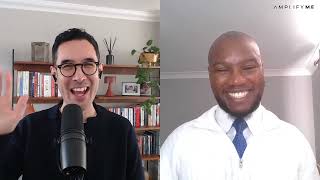
In this interview‑style YouTube episode, host Anthony Cheung talks with Favour, a student who secured nine spring‑week offers, about the practical mechanics of applying for finance internships. The conversation is structured around eight rapid‑fire questions covering (1) how quickly to submit applications after they open, (2) the relevance of A‑level grades, (3) the need for finance‑related work experience and how to translate non‑finance roles, (4) whether non‑finance degrees can still succeed, (5) the value of optional cover letters and bank‑specific preferences, (6) how many applications to send and the balance between quantity and quality, (7) prospects for landing a summer internship without a spring week, and (8) the relative competitiveness of summer versus spring programmes. The discussion also delves into Favour’s motivation for publishing a comprehensive guide, the importance of democratising information, and personal reflections on imposter syndrome and mindset shifts. Throughout, concrete timelines, thresholds (e.g., apply same day or within 72 hours), grade benchmarks (AAB/AAA), and strategic tactics (staggered applications, leveraging extracurriculars, using platforms like The Forage, cold‑emailing) are shared, alongside anecdotes about bank‑specific cover‑letter expectations and the broader applicant pool dynamics.
Chapters
Welcome back to the channel, and we have a bit of a special episode, and that's because I've been talking to a lot of students and I've seen a lot of LinkedIn posts, and there's a lot of people stressing out about application season. There was one particular post that I saw went viral, and I thought for a very good reason, and it was by the student, the guy joining me, Favour, today, who kindly put out a really extensive guide on how to navigate the application process. So I reached out and thankfully Faber was kind enough to give up some of his time to join me. And what we're going to do is have a conversation geared around how to help you get through that process through his own experience. We're going to cover things like how quickly should you submit your application after opening? How important are your A-level grades? Do you need a cover letter? You know, all these pressing things that might make you quite anxious at this present point in time. Uh, Favour has lived some of this and he's also had some incredible success having landed, I think it was 9 spring week offers, which is just insane. But what I loved was it's not about the number of offers, it's about sharing the process to the benefit of others. So we're also gonna dive into that as well and his reasons for doing so. So first of all, Favour, how are you? Where are we in life at the moment in terms of going back to uni and so on?
Hey, Anthony Cheung. First of all, thank you so much for having me on here. I have actually been a big fan of The Market Maker for so long. And, you know, when you reached out to me, I had a bit of a fanboy moment. I said, no way. And, you know, it really is a privilege to be on here and I can't wait to get stuck in. So in terms of where I'm at at the moment, I finished first year at LSE now studying management. and I'm really excited to move on to my next year. I'm back home in Southeast London with my family, and yeah, I should be moving back soon to get second year kicked off.
Okay, amazing. Well, look, very much appreciate you giving up some, some time to have this conversation. So what the plan is, is we're going to go through 8 quick-fire kind of questions, and these are probably the most common ones that I'm sure I certainly get, and I'm sure you have since you did your your really great post. So perhaps let's just go straight in and kick it off with number 1. Number 1 is after applications open, how quickly do you need to submit an application to an internship?
Right. Ideally the same day the application opens. Next best alternative within 72 hours. Alternative after that within a week. I think any later than a week and Your chances aren't absolutely zero. You can still secure the place, but I think it's an unnecessary amount of time to wait before submitting your application.
Is there a problem when you submit, say, multiple open at the same time and then you apply to them all at the same time and then you get the requests for numerical test of 5 years all at the same time? Is that a problem at all or how would you manage that?
It can be. Um, and I think that's a problem people face quite a bit. So if you, and this is why it's so important to have perspective on when things open so that if you know 3 of your ideal, you know, firms are opening in the fir— in the same day, then perhaps just apply one day after the other so that you can stagger the time where you get those requests for numerical tests and higher views. It's all about being strategic, but you can't be strategic if you are ignorant about when these applications open. So you have to be clued up.
Okay, and this is when we utilize the tracker tools that there's various out there online to follow these things. Exactly. Okay, cool. Well, look, number 2, and this is one that comes up quite often, is how important are A-level grades to the application submission process?
I think that they are important up until a point. Now, I think I'm not HR, so I can't say definitively how important they are, but I think honestly, if you have grades above, let's say, AAB or perhaps AAA, I think you— grades won't be an issue. Grades won't be the reason why you don't get the offer. Um, obviously you're going up against people who have 4 A*s, 5 A*s, um, you know, that level of education, which isn't fantastic. But after that threshold of, I guess, AAB, um, I'd say there's so many other factors that will contribute to your, to your success, and grades might not be something that hinders that. And for perspective, I got AAA at A-level, and, you know, I still achieved quite a lot of success in the process. So this is kind of anecdotal experience, but just generally things I've seen and things I've discussed with other people.
Hmm, okay. Number 3 is, is it necessary to have finance-related work experience when applying to big large financial institutions for their internships?
Transparently, a lot of my friends and people who have seen a lot of success in the process do have finance-related work experience before starting the process. However, I also know a lot of people who didn't. But the thing with people that didn't is, okay, yes, perhaps they hadn't done any in-person work experiences or, you know, insight programs at these top banks, But, you know, to compensate for that, they really lean into their online courses on platforms like The Forage. And yes, these aren't as competitive to get into, but if you don't have anything else, then how else are you supposed to prove that you actually want to go into this industry if you don't take it upon yourself to do these experiences? And further than that, the non-financial experiences that they do have, such as perhaps working in retail, working hospitality, they gear those things and spin it in a financial way. So for example, yes, you work in hospitality, but can you put a quantitative figure to, you know, the increase in bookings you made for, you know, the restaurant while you were there? Can you put a quantitative figure to perhaps the accounting you did in the back room while you were working your retail job? You know, it's all about using what you have and trying to make it as relevant as possible to the role you're applying to.
Does, um, sports societies, does that come into it as well?
Yeah, I was just thinking of actual work experience, but that definitely comes into it too. Um, sports societies, leadership roles, that is really celebrated and really looked for in, um, in these applications because they want holistic applicants. Um, yes, you can know your financials a lot, but you know, in these industries you work really team-based work is the is the name of the game. And if you have a proven track record of, you know, working well in a basketball team, or perhaps let's even say like math, you know, you maybe you're part of math club and you went to math competitions and you've worked well in that type of team. Just any show of, you know, taking something you're passionate about and putting it on, you know, at a high level or in a team format. I think expressing that and leaning into that can really help you as well. And very similar with societies because At the end of the day, that's how you kind of get that industry-relevant experience, but in a more accessible way at university. So definitely lean into societies, extracurriculars, and leadership roles.
Yeah, and I often think that a lot of students get intimidated by their peer groups, and they think that working at Sainsbury's isn't actually adequate enough. But exactly as you said, I think you can take certain elements of different jobs that are very much, you know, in keeping with the requirements of a lot of these roles within the financial industry.
Cool. Exactly right.
All right. So number 4, my degree isn't accounting and finance is what a lot of students say, or economics or anything finance related. So do I still have a shot at getting an internship?
You have no chance, Anthony. There's no place for you in finance. No, of course I joke, but I think that this is such a common misconception that you need to study accounting and finance or economics or something finance related. You absolutely don't. Some of the people who have seen the most success I know study nothing, I guess, inherently related to finance. And what you really need to do in this situation, there's no way about it, you definitely do need to study finance, as in not course, but you need to read the Financial Times, you need to read The Economist, you need to listen to The Market Maker to get, to get clued up on commercial awareness. You can't skip that part of the hard work, and if you think you can, then you're just deceiving yourself. But what you also need to do is lean into the unique strengths that you have based off of your non-finance degree. You know, let's say you study geography, for example. All the time in the finance industry, people make investment decisions based on some geographical components that the certain firm or industry operates in. Lean into that niche knowledge that you have. If you study history, if you study English, find what strength you can use from that degree course and use it to your favor. Don't shy away from it, use it to your favor in addition to all that extra reading around finance that you're doing, and it will definitely make for a strong application.
Yeah, such a good point. I mean, even I, where I sit, let's say more in the macro markets space, if someone is a historian, that pretty much unlocks the key to understanding a lot of the world conflict, trade agreements, commodity pricing. 100%.
Exactly.
Okay. All right. Number 5: Is submitting a cover letter, or if it is optional, should you do it or not? This comes up fairly frequently.
See, Anthony Cheung, my opinion on this has actually changed from when I first started applications to now. Because when I started applications, I was of the opinion that, of course, if it's optional, you're showing that you're going above and beyond by submitting a cover letter. And in some ways, I actually still think that's true. However, after going into these firms and speaking to HR, probably off the record, I don't think that they pay crazy amounts of attention to cover letters. I also think that a great cover letter that's done really well probably won't move the needle much in your application, but a bad cover letter can be the reason that you get dinged or that you get, you know, taken off the consideration. So I think you actually have quite a lot to lose by messing up the COVID letter, and it's such— I think it's high risk, low reward. And I would rather kind of submit the requirements of the CV and written questions and then move on. So genuinely in some of my applications where a cover letter has been optional, I haven't submitted it and I've still been able to get the place. So I'm not just saying this, oh, ideally I would submit it. This is my lived experience that there have been cases where I just haven't submitted an optional cover letter and still received the place. So it's up to you, but I think you have a lot more to lose than you have to gain.
Yeah, and AmplifyMe, I guess we sit in a position where we're in between academic and financial institutions with students being the kind of flow, if you like, through that process. And we get to talk to these hiring managers quite a lot, like, like you have done. And I would say as well, a few extra points are it's a little bit bank to bank. They can be a little bit different in terms of emphasis. I know for one for sure, because I know the team very well at Morgan Stanley, they they tend to look at cover letters, whereas at JP Morgan, I spoke to their team last week, they don't, they just don't. So, um, it's hard to know individually every single bank strategy. So yeah, you got to balance it, as I'm sure we'll talk about, with the volume and things like that as well.
And if I can just jump on top of that, um, this is also why it's important to get multiple different opinions from people, because if you just ran with what I said Morgan Stanley probably wouldn't like you very much. So definitely hear from other people and don't take anyone's— one individual person's advice as Bible. So definitely, you know, read around and ask around.
Yeah, some very obvious things because they do tell me that some people do send in application, a cover letter to Morgan Stanley with Goldman Sachs written on it. That actually does happen. And so I'm just calling it out now. That is unforgivable and you should be dropped from the process immediately. The other thing is they said is that this is an area where ChatGPT has made a huge difference in a sense of now it's almost degraded the quality of the COVID letter because it can be automated in a way that isn't really genuine. And so that might as well have impacted as to your point of why a lot of institutions have kind of moved on from that. To a certain degree.
Yeah, for sure.
Cool. All right, well, look, that's one. The next one's, you know, always the big one, and I think a lot of students I talk to tend to look at me and want like this magical number, like the silver bullet of what's going to equal success. So how many internships should I apply for is the question.
So for context, I applied for 18 different spring weeks. Um, and I was successful with 9 of them.
Wow, that hit rate is crazy, by the way.
It's not bad, right? It's not too bad. Yeah. Um, and I think sometimes, you know, people will say, well, I'll see LinkedIn posts where people say, I've applied to over 100 internships and, you know, I've only received 2 interviews and, you know, all this stuff. And I can almost guarantee, Anthony, that there's something fundamentally wrong with their approach or the quality of their applications. Yes, it's a number— it's a numbers game. You want to cast your net reasonably as wide as you can, but what is the point if you're not putting proper quality and proper, proper attention to your applications? There is no one silver bullet or magic number about the number of applications you should apply to, but definitely just look at where you would realistically want to work and look at the time frame that you have, look at when the opening dates line up with other firms, and, you know, just apply to as many as you can while maintaining a good and proper quality. So disappointingly, I don't have an answer for you, Anthony. I'm sure you don't either, but, you know, I can only talk about my experience. I applied to 18. I know most people, multiple people applied to significantly more, so it's up to you at the end of the day.
Something I've heard, particularly in the likes of LSE, for example, which is kind of, you're around a peer group where everyone's aspiring to similar types of jobs and they're very motivated in that way. And it gets quite competitive. Something I heard was that a lot of them also apply to jobs perhaps that they're not really that committed to so that they can do a couple of live testing conditions for online testing or a HireVue to get practice in for then the ones they want to perform at. Is that something that you've heard, or something that exists more broadly?
It's something that I've definitely heard. It's not something I've done myself, simply because that in and of itself is quite time-consuming, and I'd rather use that time for my role applications. And I also think I was coming from a place where, because of some pre-university programs I did, I had a decent amount of experience with interviews, so I didn't think I had to do that as much. But that definitely can be a good strategy if you fundamentally feel like your higher view skills aren't quite up to scratch. Then, you know, I don't think it would be a bad idea to perhaps apply to a place where maybe you're not too keen on, but just for the sake of, you know, getting that higher view practice in under like actual test conditions, then I think go for it. Why not?
All right, well, look, we've kind of had this quantity, quality debate. We seem to have kind of addressed that already. So let's move on to the next one. Number 7 of 8. How hard is it to land a summer internship without a spring week?
Okay, well, I'll preface by saying I am going into second year. I have not landed a summer internship in the way of applying to land one. So take anything I say with a pinch of salt here. But it has been done before. People have landed summer internships without having spring internships. And at LSE, actually, we had this, we had this panel called No Spring, No Problem. And it was, of course, it was a panel full of students who still achieve a summer internship in their second year without having spring internships. And You know, once again, I like to be transparent here. These people, almost all of them did manage to get a first year summer internship. So before the usual, I guess, internship cycle. So they must have seen that, hey, I wasn't really successful with spring weeks. So during that February, March, April period, they were very, very keen on cold emailing firms and, you know, getting their name out there to just try and get anything that they could. So that almost compensate for their lack of spring weeks, they had some tangible experience going into their second year applications. So when I say that, you know, you can still acquire a second year summer internship without any spring weeks, that's not to say that you don't need to put in other work and make up for that lack of experience, because the other peers that you're going up against might have spring weeks. So you need something that can also make you stand out and, you know, give you that edge as well. So definitely try and apply to first-year summer internships if, you know, perhaps you weren't as successful with Spring Weeks. Those tend to be a lot more less formal in application in terms of, you know, reaching out via cold emails, perhaps LinkedIn. So look into that and, you know, brush up on your technical skills over summer, do some courses, do some of those online virtual experiences that I alluded to earlier.
On that last point, so for you to become to this point as financially fluent about talking markets, for example, how much time do you dedicate and what is your routine to get to the point where you felt like then in an interview you can converse about these topics?
Oh, that's genuinely a tricky question because it's not something that I schedule in my calendar, okay, I'm going to increase my technical proficiency, or I'm going to work on my interview skills. It is all the little things that I do often. It is consistently talking to strangers while I'm out, you know, talking to my barista, talking to the receptionist, and just getting comfortable with asking people questions and being curious about other people's lives. So I'm constantly public speaking all the time. And I enjoy it. And that means that when it comes to doing so on, you know, podcasts or interviews, it comes naturally to me because I do it all the time. Um, but I guess a bit more tangibly, during interview prep or during application prep, I will sit down and I'll go through— I'll look at the firm I'm applying to and I'll go through, um, MergerSite, I'll go through Financial Times, I'll look at some of the recent deals they've done And the more you do that, the more you learn what to look for. So it gets quicker every single time. Now, towards the end of the application season, when I was on my maybe 16th, 17th, 18th application, I knew, right, merger site, go to the annual report, look at some key details. And I knew just bang, bang, bang, the quick things to go for. And, you know, it goes back to the 80/20 principle we were talking about before the podcast, Anthony Cheung. I knew the 20% of effort that I needed to put in to get 80% of the results. And that comes with practice, and it can also come by learning from people who have done it before. So bit of a convoluted answer, but essentially I don't always schedule in time to, I guess, get more proficient about these things, but it's just making sure you do it little and often and learn from others who have done it before you so that you can speed up your process.
Yeah, good, good intel. All right, the final one, number 8, is how difficult is it to land a summer internship compared to a spring week? I'm assuming— and I don't know the actual statistics associated with this— but it feels like sometimes people turn up at uni and they kind of missed the spring week opportunity because they're just like, I wasn't actually aware. Particularly if you don't go to a top-tier uni it's maybe not as spoken about in that way, but in the summer everyone's kind of either focused on the summer because they're on their A-game, or they're— that's the first opportunity they've ever had to go, right, okay, I've missed out, I have to get this back on the train now. So is it more difficult to get a summer, do you think, than a spring?
Short answer, I think yes. And the reason I think this is because The application pool to summer internships is so, so much larger. Now you're no longer just going up against people in their first year of a 3-year degree or second year of a 4-year degree. But now you're, I mean, talking as a UK student, now you're going up against people who are doing their master's in France or Germany, right? They've already done 2 summer internships, they own a hedge fund, and you know, now they're applying for a summer internship. I exaggerate, of course, but I think the caliber of applicants you go up against in a summer internship is a lot higher. Um, and it's a lot more international. So I think that you should really try and utilize this almost early door in with the spring week internships where the application pool is slightly less competitive in terms of the quality of applicants and what they've done. Um, and just a small application pool in general, because that's a backdoor in. Um, but yeah, I think it's definitely more competitive to apply to a summer internship. And if I can quickly go to one of the first points you made about how, you know, students land in university and they don't even know what a spring week is, I think that's such a shame. Um, obviously they're much first world problems. Oh no, I didn't get a spring week at a top investment bank. There are a lot more, you know, pressing issues at hand, but I think that information about these things should be accessible to everyone should they choose to want it and require it, um, which is, you know, one of the main reasons why— I'm sure we'll talk about this later— why I wanted to make this Spring Week guide, just so whoever wanted the information, it's not being gatekept, it's not being, you know, only spoken about in whispers or, you know, in certain rooms. It's easily accessible to everyone so that they have that you know, democratize information to make informed decisions about what they want to do in their career path.
Yeah. No. And so we finished the initial 8 questions. Let's just go a bit further with that then. Was there a catalyst when you thought, yeah, I'm going to do this, I'm going to make this guide? Hmm.
Yes. Um, it was replying to LinkedIn DMs. So although I didn't explicitly post about my 9 spring week offers, when I got them. And I was tempted to because, you know, everyone kind of wants to, you know, show themselves and, you know, rear their peacock feathers to LinkedIn so they get, you know, all the praise and attention. But I thought, okay, this is a pretty great achievement and I'm really proud of it. But how can I use the, I guess, the traction that this will get? How can I use it for good? So when I came to getting loads of LinkedIn DMs from people who happened to hear about this, and they were asking the same questions, 'Hey Favour, what are your secrets? How did you do well? How did you do well?' If you, I mean, I'm sure you've at least had a skim through the guide, Anthony Cheung. There is a lot of information on there. And every single time someone would ask me these questions on how to do well, I would be doing them an injustice by only limiting my, I guess, secrets to success within the span of a short LinkedIn DM. Really everything I want to say is on this guide here. But I leave it to use the STAR method, use this online test website, and talk to people in real practice interviews, which is good advice, but it's not nuanced, it's not specific, and it's not really digging deep into why I really had my success. So I thought, hey, instead of almost spending time working at this, I guess, one-on-one level, micro level, how can I make the biggest impact possible? So using the success of the, you know, 9 Spring Week offers and almost this desire to really do justice to the answers that I'm being given people, I thought, hey, let me make this one big comprehensive guide, put it out there for everyone to access so that I can answer all these questions that I'm getting and I can answer questions that people didn't even know they had. So that was the, that was the MO, that was the rationale behind it. And I think I think it was a, it was a, it was a success, so I'm happy with it.
No, I can absolutely tell you it's a success. And what I think I enjoyed the most about it was that it's exactly as you've described. It was, I think, on the net and through conversations, there's, there's all these fragmented pieces because to do the application process right has a lot of components. And what you, what you've created is such a nice succinct way of just packaging it up, super easy to follow. It's almost like a checklist, to-do list. And yeah, so we will share that link in the show notes for sure. So 100%, because I know there's a lot of anxious people out there. Hopefully this will settle those nerves a little bit. And perhaps we could talk about this, this next part, a little bit about you. And we've kind of heard your process, but what is it in self-reflection do you think helps you perform well in the application cycle. And then I just want to talk a little bit, probably extension of that, about imposter syndrome, about a lot of people. You said LinkedIn, the peacock feathers are out, you know, sending out my positive vibes to everyone when there's, you know, positive things to say. But that can be quite detrimental to others, um, or to many, I would say probably the majority. So Perhaps a little bit about you in self-reflection first. So what is it that you think looking back that went well?
You know, I've said this before, but I'm all about transparency. I had a great application. Yes, in terms of my process, which I've depicted in my guide, but as, for example, like my CV, for example, it was really good going into Spring Weeks. Before going into, you know, before applying for these, before even getting to university, I had already done two pre-spring, two pre-university insight programs with Morgan Stanley and Rothschild, and I had a private equity internship at GHO Capital, which is a private equity firm. Now, these came by me applying for them before going to university. It was a competitive application process that I worked hard for, just like anything else. However, I had the benefits and the privilege of people pointing out these opportunities to me, letting me know, hey, Favour, this is where you want to go. I've heard about this, give it a shot, give it an application. And I know that not a lot of people have that, you know, by no fault of their own, they don't have access to such mentors and to such, you know, insights before getting into university. So just to let it be known, I had a great application process that I'm sure, you know, as we can see, any bank would, you know, really appreciate and see as a strong candidate. And, you know, I had a good set of A-levels, I went to a top school, and, you know, once again I applied for that. I went to Westminster School and I had a full bursary to go there and got in the same way as everyone else, cracked the entrance exam, the interviews. So It's a lot of great opportunities met with hard work and attention to and intention about how what I do now before university will set me up well for the application process when I do get to university. So like I said, you know, you wanted to know about me. I had a great application process and I had a great, um, application in itself in terms of CV. And I think that, you know, I think that needs to be said. and it needs to be out there that I did some fairly impressive things that made me so successful.
So, so there's, there's two kind of people then who, in my mind, there's those who went to Nottingham Trent like me, and we might look at an LSE straight-A student like you and go, I've got no chance. Or there might be someone who's had a similar background to you worked super hard, got a bursary to a top school. But I imagine in the top school there's also imposter syndrome because everyone else is so good. So it's kind of like multiple levels, yeah, of, of the same problem, which is looking at other people. How do you— how— what tips or advice do you have to manage that? Because I'm sure you've gone through then your academic journey so far, and you're, you're right in the midst of the most competitive people?
Oh yeah. Oh, Anthony, um, I, I had every reason to have a significant amount of imposter syndrome at my sixth form and at LSE, right? There are so many incredible, intelligent people who are so driven and just so, you know, you look at them and you're like, wow, you're going to do so well in life. And it's so easy to look at that and be like, oh, I have no hope. They've had this, they've had that. But I think a paradigm shift that really helped me was realizing, wait, I'm actually around these people.
I have—
I'm talking to them, I have access to them. I'm, you know, perhaps in the same lessons or attending the same university, or, you know, I can DM them on LinkedIn and I can learn from them. I can see what they do well, I can see what they don't do well. I can get advice from them and I can, you know, work towards the level that they're at. And when I think about that, the whole game changes because I start to get excited. I'm like, oh my goodness, how lucky am I to be surrounded by so many amazingly intelligent people who have, you know, had great success in this that I can learn from. And it turns from a, you know, woe is me, I'm never gonna, you know, do well to, oh my goodness, I'm so happy for myself because I can have access to all these people and I can learn from them. And I think once you fundamentally have that change, it's a game changer. And imposter syndrome, you can kind of twist it and use it for something positive and something good to better yourself.
Look, I think that is an excellent way for us to wrap up the, the conversation. So once again, Favour, you're an absolute gentleman for giving up some of your time. Of course, more so for creating, creating the guide. I mean, the guide is such a one-stop shop that covers every nook and cranny of the application process. And so definitely I recommend everyone check that out. I wish everyone the greatest success in this current application cycle. But again, Favour, thank you for joining me.
Pleasure. Thank you, Anthony Cheung.
More from Anthony


Inside the Biggest Banking Stories You Need to Know This Week (Anthropic, Diageo, Private Credit)


Inside the Biggest M&A Deals You Need to Know This Week (UniCredit, GameStop, eBay, Eli Lilly)







AI Breakthrough or Hype? Anthropic’s Claude Mythos, Tim Cook Steps Down & LIV Golf Collapse