An update on Brexit and what it means for GBP
In this live market briefing, the presenter walks through a range of macro‑economic and geopolitical developments that are shaping currency, commodity and equity markets on 16 October 2018. He starts with a technical and fundamental analysis of the British pound, noting a recent gap fill and the impact of ongoing Brexit negotiations – especially back‑door talks on the Irish border, statements from UK Prime Minister Theresa May, French President Macron and Irish leader Tusk, and media sensationalism around a no‑deal scenario. He outlines potential price targets for GBP/USD depending on whether a deal materialises. The commentary then shifts to Chinese consumer‑price data, highlighting a fourth‑month CPI rise driven by food price spikes (pork disease, floods) and a divergence with falling PPI due to higher input costs and a slowing economy. Next, he reviews the Australian RBA minutes, indicating a weaker Aussie may support growth but rate hikes remain unlikely in the near term. Commodity markets are covered: oil is seen as resilient despite Saudi‑Khashoggi tensions; gold is approaching a 2017 support level; US equity ranges are mapped with key resistance and support levels. He provides a brief outlook on Italy’s budget submission to the European Commission, the upcoming sovereign rating reviews by S&P and Moody’s, and the political pressure to avoid a fiscal crisis. Finally, he outlines the economic calendar for the day – UK wage and inflation data, German ZEW, US industrial production, and the US Treasury’s macro‑FX report – and offers short‑term trading considerations for the pound and other assets. The presenter reminds listeners that he and colleagues are available in the chat for questions.
Chapters
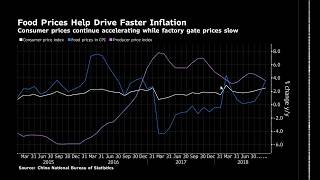
Very good morning, Tuesday 16th of October. Hope everyone is, is well. A few things to cover off this morning. I'm going to have a look at some Chinese inflation data from overnight, a bit of an update on the RBA minutes, and then a look at Brexit, what's the current status. And as you can see on my chart, I'm just looking at the pound at the moment. So we'll start with the, the latter. Let's have a look at the, the pound. And obviously we had a bit of a gap down seen at the recommencement of trade to get this week underway. Uncertainty obviously heading into these meetings coming up, kicking off officially tomorrow, but I can assure you meetings are happening, backdoor meetings today to try and break this deal on this Irish border issue and the kind of legality around the backstop commitment in order to get both sides on board. And so you can imagine there's going to be lots more rumors and so on and so forth, I would imagine, as we go through the session ahead. But what's happened here is we had a pretty quick gap fill yesterday's session after that initial kind of negative open for, for sterling. Market's come back and we've just technically breached an area of some significance, that being kind of support point from the latter part of last week. It was also to some extent the resistance level that's breached here, and we've had a run on R1 to this most recent current price point here. So if you're looking at both major pairs though, EURUSD similarly seeing some strength early on, finding a bit of resistance initially at its overnight high here as to where we are at the moment. So a bit of prevailing dollar weakness. The DXY's just moved into slight negative territory, so we're down about 0.1%. And so a bit of a combination of things. Obviously the, the euro discounting any of that Bavarian election, German political uncertainty, and a little dip that was seen overnight in Asia-Pac already reversed as Europe stepped into the market. Anything leading to this dollar weakness? Well, I wouldn't say there's anything specific kind of US or Fed, Federal Reserve led in that respect, but certainly the pound, there's a couple of stories pertaining to Brexit that might have just helped fuel this, this last little push. Going through those articles, starting off with the, I guess, the negative. This was what was said yesterday, and I do think that there is a quite a high degree of media sensationalism that obviously goes on. You know, the matter of fact is that us Homo sapiens, we love a little bit of negative news. I think to whet the appetite and talking about how bad the world is and so on. On that point, reading a very interesting book called Factfulness. I do recommend that for anyone. Interested in just some broader reading. But the point being is that actually this headline sounds quite, quite negative. There's, you know, comments from Hughes Tusk saying that, you know, the top-level meetings happening this week is the moment of truth. No deal Brexit is more likely than ever before, he was warning. And I think a lot of this is him just positioning ahead of obviously the kind of critical negotiations. He wants to show a strong hand and they're not willing to back down too easy. It's kind of similar case to what Theresa May is trying to obtain domestically herself. But he did go on to say that we are preparing for a no-deal scenario must not under any circumstances lead us away from making every effort to reach the best agreement possible. So, you know, once you get down to like the third paragraph or sentence well, what looked like quite a sensational no-deal situation, actually, well, he is being more even-handed than that. It's just a way in which they presented the article. The other positive thing that's happened here is that May and Macron strike a dovish tone before obviously this very critical meeting happening. And what's happened here and what's actually quite interesting is really two things: Theresa May striking a conciliatory tone after negotiations, obviously, over the weekend have broken down. But her French counterpart saying that cooler heads will prevail. And if you remember, it's the French president that's been pretty hardline in, you know, him alongside Merkel, very much the backbone of the European unity kind of ideology. And, and so he's very much a of the opinion that Europe is a— she's here to stay and we all must come together and united we can go on better than before. And obviously he's fully mindful of the threat that if you make an exit for the UK from the EU too easy, then does this then bring about a kind of domino effect of other European-related countries, i.e., the likes of Italy and Greece You know, there is this kind of hazard with letting the UK off too easy. Does this then promote or encourage, in fact, other European nations to start to push that narrative? So a lot of things going on in the background here, but I think from here and now, what's been quite soothing, at least for no-deal sentiment, has been that Macron has been sounding a lot more pragmatic. He believes collective intelligence will prevail. He said technical talks, which were put on hold on Sunday, should continue, and both sides want to avoid the disruption of a chaotic split. And I do think this does lend its hand a little bit to possibly some of the short-term reprieve for the, the pound this morning. On that front though, there was an article I was just covering for The Briefing. It just came out on The Telegraph. At 8:22 this morning, and it's their own kind of source piece. I think the headline kind of says it all: Cabinet told to force Theresa May to drop Chequers plan or she will face a no-confidence vote within days. Whether or not this is the case and whether or not this would be triggered— the Eurosceptic Conservative MPs backing a looser Canada-plus free trade deal with the EU, that's something which Theresa May obviously has pushed against. So this— I've heard these noises before, which might be why the market's kind of discounting it a little bit and we're not seeing any much reaction to it. I think if anything, the kind of higher powers at play on the European side, i.e., let's say the political faith to get a deal done somewhat coming from Tusk, but also Macron helping just a short-term sentiment for the pound. Going on from here, obviously usual rules apply, I think, for trading the pound. On the political front, you've just got to be mindful of any breaking developments, uh, source comments and so on and so forth. Obviously anything leading towards the higher prospects of a deal getting done, I would say definitely you could test up around the top end of this recent range that we've had for cable. However, reading the press this morning, there's a lot of people talking, and I think it was the French, excuse me, the Irish Prime Minister yesterday, that obviously we've got an emergency table meeting for mid-November, and he was indicating that it's possibly December when we get over the line, when we have a little bit more concrete of a deal being done. And so I do think, I think there's my baseline scenarios that politically we go through this week and we remain at a bit of an impasse on the Irish border issue, the risk obviously is that the lower probability event, which then by default would cause a much more stark, larger spike in reaction, would be if they struck a deal. Because I think on the balance, that's the least likely outcome. And so if that happens, I think you'd get a really powerful move to the upside if that did occur. Certainly, you'd— I think you easily break through the range from last week. And then I guess if we start broadening out the time horizon, uh, you'd have to target up around the, the September high. That would come in up at 133.51. This all being in the case of a deal being struck. And again, just to reiterate, I think that's the lower probability outcome from these events this week. But by default then, given the, the positioning more for the view of a short hence the market could get squeezed higher. Okay, other things to be aware of that have been happening. Just a quick look up on the charts. Firstly, this is oil, and as kind of my expectations were from when we were talking yesterday, I really didn't think the market would remain bid for long on the back of the kind of Saudi rhetoric over the Khashoggi situation developing and the potential ramifications that could have with the the Americans and their sanctions, just because the same reasons remain. I just think there's just way too much at stake here to cause any type of supply disruption. Donald Trump for sure does not want, timings-wise, a big spike in oil prices now coming so close to the midterms. So despite them kind of making a political point, standing a bit of ground. I really don't think that this was— there was too much in this. And history has proven as a precedence that, um, the, the petroleum situation certainly hits or steps above that of any political disruption that can happen between two nations, particularly when it comes to like the US and Saudi in that respect. So I think that story is pretty much Gonnan, and then although to be monitored is really not much of a factor, and I think that's quite telling from where the price is at the moment. I guess if we continue any lower in today's session, uh, be interested when we get down to around that 71 handle, just given that kind of trend line from the lows we've printed over the last 3 sessions, uh, as to where we get down to here, how the market might react under those conditions. Uh, elsewhere, US equity markets Obviously this takes in consideration the kind of fall that we had at the beginning of last week and to the kind of formation that we've been creating over the last subsequent days, going from really the 11th through to yesterday's session where we sit pretty much right in the middle of this at the moment. And so the near-term kind of range that I'm watching from a, I guess, a more short-term intraday point of view is really this kind of band of price movement here. But going forward, I think it would be prudent to kind of mark up levels on both sides. I guess on the upside, a break of the range here, I'd be looking up at around the R1 because the R1 lines up quite nicely with that previous point of a high briefly seen, uh, back on late session before we closed electronic trade on the end of Wall Street trade on Friday. And then obviously you've got the target then above, uh, being the high print from, from yesterday. On the flip side, a break of the downside range in this kind of trend line, then I'll be looking at again yesterday's low, and then going down to yesterday morning's low, and then the Friday's kind of range low as well. So a couple things certainly could come into play if you look at the size of the market movement that we've seen just during the session in US equities from yesterday. A decent actual move. I mean, from a percentage point, I mean, we're looking at— just give me one second— looking at a high to low move of roughly 1.5%. So it's fairly sizable by some of the recent movements. Obviously that movement we had last week was very large, one of the biggest we've had actually in several years in the case of some of the indices like the NASDAQ, but still some, you know, sizable ranges. And just given the narrowness now of this, this price pattern, I think this is worth watching as we go through the session ahead. The other one I've been looking at is gold. Obviously gold's just livening up a little bit, having 2 weeks ago or so broken a kind of trend line from 2018, really going back from the last 3 months or so. And so what's been quite interesting is then since that breach, prices have certainly livened up. And that came at around the time it broke around 1,200 as well, just above that level. And we've just continued to accelerate. We're getting quite close to an interesting point, I guess, once we get up to the, the support point from late 2017. Don't forget, you know, it was an entire second half of 2017 that level was a real support point for then a really strong push on the upside. And they've been just coming in close proximity to it. We're about $10 shy of there at the moment. So certainly within the realms of being tested this week, I'll be certainly interested to see how gold responds when we get up there. Okay. Looking at the news, a few other things to be aware of from China overnight. You've had China consumer inflation accelerate. So their inflation accelerating for a fourth month, food prices jumping the most since February. A couple of different things to have a look at here, um, because I mean, this is what the chart looks like. So as you can see, uh, the white line is CPI in general, so it's been relatively constant. The fluctuation certainly though has come in the blue line, which is food prices. So typically you get a big spike at seasonal points in the year We've had another big spike here more recently, which I'll talk about in a second. But you're going to be in a divergence where CPI generally is moving higher, but PPI is moving lower. And there's a few things to explain why this, why this is happening. For one, increasing concern about the effects of rising prices in China since the summer floods and animal disease forcing food prices up as rents in major cities rise. So one thing here then, of course, is that, you know, disease, particularly, I think it's salmonella affecting pigs and pork prices shooting higher, which is obviously the main staple of Chinese cuisine. And that has forced the little tick up in CPI, given to a spike in food prices. But on the same side, don't forget that you are seeing what they call here supply-side reform. And with oil prices having moved higher of late, and obviously there's an ongoing trade war which has seen the economic prospects of China diminish and the outlook become more pessimistic, well then if you think about it, the input prices of producers is going up with the higher oil price, but then there's also the dual effect that the cost of doing business is going up for them, but then the appetite for business is going down because of then, at least domestically, the outlook is deteriorating under the cloud of trade wars. And so consequently, PPI is falling. But on the flip side, because of some of the underlying components like food, what we're seeing is a spike in CPI. From a short-term point of view, I mean, this is something you can trade. In that respect, I'd say no, because these reasons just discussed, I think, have been something which has been going on for some time. I think the market is fairly aware of these types of nuances in the data. Is this going to immediately change the hand of the PBOC and what they're going to do, and as a net result, the movement in their local equity market, for example, in the Shanghai Composite? Then no is the answer to that. It's not so much short-term term reactionary thing. This is something they'll be looking at in a much more broader context. And to be fair, if we look at the likes of CPI, it's still relatively constant at this point, and the PPI has been lower even back earlier this year. So it's not crisis mode at this point for China. Elsewhere, um, just moving over the water slightly to Australia, the Australian Central Bank released their minutes. The central bank said a weaker currency is likely helping economic growth while reinforcing its message that interest rates will remain unchanged. The next move in the cash rate more likely, quote, to be an increase. But given only gradual progress on unemployment and inflation, there is no strong case for a near-term adjustment. So we're in kind of wait-and-see holding mode at the moment as far as Australia is concerned. So growth prospects, they see as solid but moderating. Other things to be aware of, obviously on an earnings side, we've got a couple more big banks to come. JP Morgan, Citi, Bank of America have all come. You've got Goldman's and MS stepping up to the plate. Thus far, reports relatively mixed. Bank of America, JP falling short on their FICC revenues while Citigroup beat, but Citigroup missed on equities where both Bank of America and JP Morgan was strong. So Again, banking stocks, as from a sentiment point of view, if I was trading things like the S&P 500, for example, is this really a big factor for how I'd approach trading that index? No, not so much. I think these bank stocks, as they— as they're— I've just mentioned, they're relatively mixed. I don't think this is really a catalyst for the markets. Jump hold of. The one thing that could be quite interesting obviously is, is Netflix. And they saw a big spike to the downside after their last quarterly earnings report. That was after their new subscribers, I think, missed expectations by about a million, which was sizable, and their shares dropped off a cliff immediately after market. So their numbers coming tonight, I certainly would be quite interested to see how they play out. It's the first of the FAANG stocks, of course, to update this earnings season. So the market has been fairly sensitive. The technology sector saw a little bit of underperformance yesterday in the US. So these kind of FAANG names are always quite hotly anticipated by the market. Other things on the— to look out for Italy. Let me just bring up— actually, there's a tweet I did yesterday I did share some of this in the chat room, but basically there's a few things I was talking about in the weekly strategy about Italy. And obviously this comes as yesterday, last night, they formally submitted their budget proposal to the European Commission. So for the first time, the EC get their hands on the, the detail and, and can comment. Now, some interesting things to be aware of here. The point I was making was that actually Italian assets were relatively calm yesterday. And that's because we've already really gone through the ebb and flow of the concessions that were made and the overall agreements that came before they submitted this draft proposal. Because obviously it's in their interest as well that ultimately a deal does get, get done in that respect. Otherwise, you saw what happened. Multi-year high spikes in Italian yields makes funding for them very difficult. And their equity market comes under pressure. So, you know, there's making a political point as per the League and the Five Star, but if it comes at the cost of a catastrophe in your economy, well then yes, you could try to help the lower, uh, social economic demographic, but if the entire country can't fund itself, well, that's a disaster for everyone. So they too know that the deal does need to be done. The interesting thing here is the rating agencies. So just making you aware of the bigger picture here over the course of the next 2 to 3 weeks. Uh, the point I was making yesterday was that actually S&P are due to release their sovereign update on the 26th of October, and actually Moody's is due just before that. And so there's 2 major rating agencies that are due to give their kind of sovereign update, which is quite critical for a country like Italy whose quite punchy budget proposals would put increased debt burdens or strains on their fiscal situation as a net response, their creditworthiness. And so, you know, do you get then a second run on Italy if they were to be downgraded hypothetically is what I'm kind of aware of. The other things here is that by the end of October, the European Commission could ask Italy government to to adjust the budget if clearly not compliant. So certainly I don't think you've heard the end of, uh, potential— still a rewriting of their proposal before the point of which a deal will need to be done and concluded so the rating agencies can make a, an exact summary of what the situation is. But very important milestones coming up for Italy as well, although off the top of the agenda right now I think in 2 weeks' time it could well become a talking point once again and something the market could become sensitive to if you're trading European assets. Okay, going back to the calendar and to wrap things up, what have we got for the day ahead? Well, actually, from a sterling point of view, although the pound started with a relatively upbeat tone, you can see here how the market has just come back to settle at around that technically relevant point that we were just looking at earlier. I think that makes sense because Sterling participants now are going to want to sit on their hands and wait for about 35 minutes for the latest UK wage data to hit. Now this is the first of a, a trifecta of important economic, uh, data points on the docket for the week ahead. You got wage data today. You've then got inflation data tomorrow, retail sales to follow on Thursday. So again, it's a double whammy of political and economic risks for the pound for the week ahead, and certainly could provide some opportunity for intraday. On the wage situation, we're actually expecting, uh, the figure here on the average weekly earnings 3-month year-on-year to be at 2.6% ex bonus 2.9%. This would be a constant reading, unchanged from the previous. 2.6%, then this is what it looks like. That's neither really a shock or, or a surprise in any way. We have been lower and higher quite recently. What's interesting though, a persistent 2.6% reading. Let's not forget inflation now is up at 2.7%. So if you're looking at this kind of shape of real wage growth. Well, then inflation did pop up, you'll remember, surprisingly, in the last reading. Inflation, the highest rate since February, of course, boosted mainly by rising prices of transport, recreation, culture, food, and non-alcoholic beverages. Whether that's sustainable or not, I think, is a bit debatable. But the point being that inflation superseding wage growth puts us back into what really fine 2017, which was real or negative real wage growth, which obviously is very destabilizing for consumer confidence, which is already soured by the political uncertainty on the situation regarding, regarding Brexit. So I do think the wage data coming up will be quite important, at least in the shape of this morning. But obviously, I think one consideration is I wouldn't be wanting to hold a pound trade for a particularly long period of time, just given its susceptibility to a breaking piece of news, uh, on the Brexit negotiations. Any breakthrough in talks could well go against your position. So if there was a trade to be done on the wage data, I'd say you want to be pretty timely on executing that and getting it in and out fairly promptly. Otherwise, German ZEW, that's coming up at 10 o'clock. I'm not looking for too much movement on the back of this. It's something to monitor though, for sure. I probably want to lighten up any euro-exposed positions just coming over that data. I'm not expecting too much from that. Otherwise, moving into the afternoon, and we We've got US IP cap utilization. I think yesterday was a little bit of a surprise because the US retail sales wasn't fantastically strong. If anything, it was mixed with a slight weak bias. And so that kind of went against some of the recent run of quite outstanding data that we saw last week. So industrial production will be interesting. Actually, the data expectations are pretty similar to the prior month. But obviously equity markets still quite sensitive to the more heating up the US economy is, the more downside pressure could materialize for equities as the prospects of tightening kind of increases. So definitely to be watched. That's at 2:15. So no major real 1:30s coming out of the US. And then one thing that is coming out today, obviously, is quite important for the relationship on the trade side. Is the Treasury's semiannual macroeconomic and foreign exchange policies of major trading partners. And this is China going to be labeled a currency manipulator or not situation, quite pivotal for the near-term kind of sensitivity, at least to the trade situation and the relationship between the two countries. So no set time for that. One would imagine it will come much later in the evening. Okay, that's it. Gonna leave it at that for the time being and let you guys get on with things. But both myself, Sam, and Safe are available in the chat at all times. Any questions, just do let us know. Thanks very much, have a good day.
More from Anthony


Inside the Biggest Banking Stories You Need to Know This Week (Anthropic, Diageo, Private Credit)


Inside the Biggest M&A Deals You Need to Know This Week (UniCredit, GameStop, eBay, Eli Lilly)







AI Breakthrough or Hype? Anthropic’s Claude Mythos, Tim Cook Steps Down & LIV Golf Collapse