Apple cuts sales outlook & Yen spikes overnight
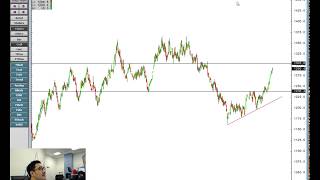
In this January 3, 2019 market briefing, the presenter delivers a rapid-fire overview of the key overnight and early‑year developments that are shaping a risk‑off environment. The core narrative begins with Apple’s unexpected cut to its sales outlook, driven by a sharp slowdown in Chinese iPhone demand, which triggered a broad sell‑off in Apple’s supply chain stocks and added pressure to the tech sector. The briefing then moves to Tesla’s 9% share drop after deliveries fell short of expectations and the company announced price cuts, further underscoring tech‑sector weakness. A stalled U.S. government shutdown is highlighted as a political risk factor, while China’s manufacturing PMI slipping into contraction for the first time in 19 months signals a broader global growth slowdown. The presenter explains a flash‑crash in the USD/JPY pair, attributing it to a four‑day Japanese holiday, thin liquidity, and forced unwinding of retail‑heavy AUD/JPY positions. This yen move dovetails with a broader sell‑off in the S&P 500, which is approaching its worst performance in a decade amid tightening monetary policy and lingering trade‑war concerns. Gold is noted for its continued rally as a safe‑haven asset, breaking key resistance levels. Finally, the briefing touches on Brexit, outlining the procedural timeline for a potential second referendum and its impact on sterling volatility. The presenter concludes by noting that normal briefing service will resume on Monday, offering a snapshot of the market’s current risk‑off bias.
Chapters
Okay, very good morning, Thursday, 3rd of January, so good to be back. Hope everyone had a good Christmas and a happy New Year to everyone. We don't officially start back with the briefings until Monday the 7th, but there's obviously been quite a lot of news flow that's come out, not just overnight, but certainly since we've come back for the beginning of the year. We've kind of just taken off exactly where we finished from last year, which is quite on a negative footing with variety of different headlines. So what I thought I'd do is, rather than really focus too much on the charts— I know you guys have already been in this morning, um, kind of putting in your various technical levels— so I'll try and focus on the news more just to get you up to speed and exactly what's been going on and give you a few kind of initial takes of what I think. First of all, a lot of talk this morning, uh, obviously looking at the Japanese yen. I'm looking at that at the moment. One of the— before I get into the nuts and bolts of why did that occur, well, let's just have a look at one of the main headlines from overnight, and that is of Apple, because Apple shares after the closing bell last night fell about 8.5%, which is a phenomenally large percentage change for a stock of that magnitude. And, and that looks to have been certainly the latest kind of major catalyst for risk-off kind of sentiment. Now, what exactly were the headlines? Well, this kind of really sums it up. They basically cut their sales outlook, citing slowdown in China and their iPhone sales. But if you kind of remember the composition of Apple and how it generates its revenue, about two-thirds come off the phone in itself. And then if you think about things like the, the music service the AirPods, the headphones, the watch, they all are an added bolt-on extension of selling of the phone. So if you're not selling the phone, then subsequently you aren't selling these other products as well. So hence the reason why it's such a net negative here. A couple of other things that were quite interesting, uh, Tim Cook specifically isolating weak demand in China which triggered a slump for Asian suppliers and a wave of lower price targets on Wall Street. We also had a lot of the other European-based tech-related shares have also come under pressure this morning. So Apple supplier such as, um, AIMS AG lost 12%, Dialog Semiconductor slid another 7%. So again, given the the size of the company and the kind of wide, far-reaching distribution chain that it has, and its component parts being predominantly made not by Apple, then them cutting back on, on this certainly has reverberations across a number of different single stocks. One of the key comments, I think it really sums it up, and just to give you a bit of a flavor of what I think is this, this this direct quote coming out of Tim Cook last night in his memo internally within Apple. He said, while we anticipated some challenges in key emerging markets, we did not foresee the magnitude of the economic deceleration, particularly in Greater China. Now, I do think this is kind of a veiled poke at the president, because if you remember when initially the tariffs were put in place in this escalating trade war between the US and China, Apple were kind of exempt to start with. This was several months ago. Cook had quite neatly navigated his way into befriending Trump in a way that protected the company. However, more recently, Trump has kind of dropped that, and Apple are now part of the, the tariff ramifications, if you like. And so this being said, you know, Apple so dependent on the manufacturing out of China, but also the purchasing of the phone in China, given its large demographic and growing kind of middle class and appetite for a higher-priced product. That being weak certainly is to the detriment of the company, but this is a company, of course, of which Trump would like to repatriate flows back into the US to help what prop up is a fairly fragile economic situation appears to be developing in the US as well as globally, but also the state of the job situation, you know, and so on and so forth. So I do think that Cook here is, is quite clearly calling out the trade war as the reason here. But one of the main things here is that this is one of the first times in a long time that Apple has put out a warning on its revenues, which is Obviously very disconcerting, and it comes after a fairly disappointing holiday season as well over the Christmas period and the various other changes that they announced in their last quarterly earnings about not providing color on the actual unit sales. So more bad news for Apple. This was the initial aftermarket kind of shock when the news came out. So you can see here dramatic fall in the, in the share price, and they do have a German-listed share price, which is trading down about 8.5%. So certainly this is going to be one to watch when we get underway on Wall Street a bit later on in the session. You would imagine this is going to provide a significant headwind to the performance of particularly the tech sector and the NASDAQ going forward. Now, as I said, this is just one piece of news. There's been a bit of a string of, of negative headlines of late, so let me just quickly get you up to speed those who haven't been kind of following markets over the Christmas New Year period. This was Tesla yesterday. Now Tesla shares, you know, although nowhere near the size of Apple, certainly they are though seen as one of those sensitive stocks to investor appetite, you know, kind of around the same of those kind of social media, the fad names, the FANG names. And Tesla shares fell 9%, yesterday. This comes after they tripled deliveries of electric cars, but that was short of market expectations on Wall Street. They also as well cut back on the costs of some of their models. When I say the costs, not the cost to build, but the sale price of the actual car in itself. So obviously probably going to impact the margins. So that's another net negative for these companies, which otherwise through the best part of 2017 Granted, Tesla's had its own individual headaches with a lot of Elon Musk focus, but more unwinding out of the tech sector. The other thing, of course, that people are talking about is this government shutdown. This has been one of the kind of ongoing headlines over the, the New Year period, and a White House meeting breaks up without deal to end the shutdown. So this is what happened last night. This was the latest headlines that we were seeing. Congressional leaders were unable to strike a deal to end a partial shutdown of federal government at a meeting with Donald Trump on Wednesday. The president invited them to return to the White House on Friday for further negotiations. I believe Pelosi, the House Speaker, has said Democrats will want to reopen the debate on Thursday. Point being is that although it's almost inevitable that they will come to some kind of compromise and strike a deal to, to kind of kick the can down the road, so to speak, at the moment until that is resolved. And obviously it's a growing negative force in that sense. Now, with the Apple catalyst coming on after a slew of negative things, the other thing of course that we had from the weekend was this, and this was one of the main features that weighed on markets yesterday. And this was because everyone is very much mindful of the ongoing slowdown in the global economy. And, you know, almost encapsulated in the fact that for China, their manufacturing PMI has moved now into contractionary territory for the first time in, I think it was, 19 months. So the government and the Caixin readings, you can see here, both moving under as measured and defined by the PMI, 50+ being expansionary, below that being a contraction. Both those figures have moved into that, so continued squeeze on their economy, which does have repercussions then for demand for, say, commodities globally, the demand for crude, and the overall kind of prospects for people's— and how optimistic they can be on global growth prospects going forward. So that's another thing just in the mix at the moment. This then leads us on to what happened last night, and this is a picture of the, um, the Japanese yen. Uh, well, actually, this is looking at dollar-yen. We had a bit of a blip in price activity last night. Now, I think in terms of timing, this was the spot reaction, so this actually materialized over the period of several minutes. But akin to what you would call a flash crash. Now, some clear things to be aware of here: Japan is in the middle of a 4-day holiday. Also, in terms of much of the Western market, particularly, particularly in places like London and mainland Europe, given the fact that the first day back to work is Wednesday, you've then got a very short week. A lot of people take off those 3 days and don't come back to the office until the 7th. So you've kind of got a double whammy there of just incredibly low liquidity. And then throw in the fact that you have a significant technical level being breached. This is kind of a longer-term trend line dating back to 2016. You can have a retest here back in March. We broke that, and obviously you get a triggered push lower. Uh, it looks— this is a daily continuation chart, so if we look on the trend line, that's a 106.34. Looks quite small, but in actuality that's a decent move of about 60, 70 pips just on the break of that point alone, not even bringing into the, the actual gap lower here we've got, because this is the futures we're looking at. So the other thing is the, the Aussie had a noticeable move. There's quite a few people, um, kind of undisclosed sources talking overnight about the fact that a lot of the retail investors in Japan were caught the wrong side of the fact that they were adding to their net AUD/JPY positions. And so when that move happened, obviously, just given the, the kind of composition, if you like, of the, the type of investors within the Japanese FX in the yen market, which has a higher proportion than we have, say, in Europe of retail investors, a lot of them having to bail on those positions, getting stopped, and that also helping exacerbate the, the kind of extremity of the move in the thinner conditions. This being here then, the AUDJPY price movement here, the white line going in the exact opposite direction of how the market is positioned, which is net AUDJPY long at this point. So hence they have to bail on those positions and you get such an extreme move. So This is the chart I was looking at here. This is the Aussie yen positions, and this is the actual net positions in the market. So you can see the breakdown here, which otherwise maps the price very closely, meaning that all these retail traders having to just get out of that trade. This of course does also come after those who were trading right until the end of the year in 2018 The S&P obviously saw some quite extreme down days, and it meant that the S&P 500— basically, it's the end of the record bull market, and we've had the, the worst sell-off. Or in fact, here you can see we have been slightly negative before, but the more noticeable negative moves since 2008. So basically, it's the worst performance for the S&P in a decade, to put it into some context. This obviously layering in not just the trade war, but in particular the policy tightening happening globally led by the Federal Reserve, who still have multiple rate hikes to come, much to the criticism of Donald Trump. You've then got the ECB ending QE. Whether or not they're going to have to turn those taps back on, yet to be seen. But a number of factors all leading to this situation. And then, Gold, obviously, under all of these things we've been mentioning, has had a nice move to the, to the upside. We kind of just basically continue what was already a developing trend since the middle of December. We've now managed to add another decent kind of $60 to the price movement, really, since we broke quite a key level, which was the, the late 2017 support point. You can see there before the breach, we acted again as support in the summer of 2018. It was a strong area of resistance in November until we broke, uh, about 4 weeks ago or so. So another push-up in gold, and, and certainly be looking up at this area here as potential targets. This of course brings into play the $1,300 handle. It almost felt inevitable we're going to get there after some of these technical breaches. You can see here the price finding a bit of a hiatus on the recent run at around the 1295 level, which is these previous levels back in 2017, uh, in both the beginning and the end of the year. Um, quick look at some of the other charts just from a broader context. I was marking up a few things for a couple of slides that I'm going to be doing from next week, and this was one of the S&P 500. So it just gives you a bit of a narrative of, of exactly what's been happening here through really the course of 2018, and then obviously the dramatic sell-off that we had moving momentarily into bear market territory for the S&P 500 before quite an aggressive bounce. But you can see here we're kind of back to a 2475.75 level, so still sub the 2500 handle. And so, you know, the extremity of the low that was seen on Boxing Day— and again, when you get these really wild candlesticks here like the low point that we did see, don't forget this comes with only really the Americans in the market, and even then it's still incredibly quiet. And so you tend to get these quite exaggerated moves in the market, but, you know, quite a If I just stretch this chart out a little bit further, you can see why the market, when these fast money moves do materialize, would want to target that level. You know, going back to the beginning, kind of end of Q1 of 2017, we bounced straight off there. So we're kind of just steadying out for the moment, but a lot of these negative factors do start to materialize like we've just discussed, then obviously today could be quite an interesting one. Not short of negative equity stories. The other thing we not mentioned, Brexit. Well, Brexit was quite quiet actually over the Christmas, New Year period, and that's because we're in parliamentary recess. That's due— they're due to come back to work essentially on Monday. That's then that week they're going to be debating Theresa May's deal, and then the actual meaningful vote, which obviously got delayed uh, is tabled to be happening the week after. Now just having a look at cable here, obviously there's quite a few different, uh, kind of narratives that we've had. This encapsulates the entire move since the EU referendum right on the top left to where we are right now. Um, just having a look, see the first near-term downside level we'll be watching. We did flirt with that actually um, even in within the recent session is down at this 1.2481. Looking at the sterling futures here at the moment would be an area of support. Now one thing, just to talk about this because it was a, an update to some slides again that I was doing, and quite a lot of press coverage obviously has been around this idea of a, of a second referendum And so what I'll do is I'll just copy and paste this and put it into the chat room on Trading Live so you can have a read yourselves. But basically, quite a few people, obviously over Christmas dinner, asking me about a second referendum. Technically, what— how did it— how would it work? What's the timings of it? What would the questions be? So basically, I've just tried to summarize this in one slide, i.e., what could the questions be? Who decides the question? And then when can the referendum, if there were to be one, be held? And one of the main things here, in a nutshell, is that when you take into consideration all of the legislative and campaigning processes of basically getting a new referendum through the House of Commons bill stages, the Lords, for eventual sign-off, for campaigning to happen, for the Electoral Commission to decide on the lead campaigners, and so on and so forth. Well, if you go back to the EU referendum in 2016, this entire process took 56 weeks. So, you know, talk about a delay to Article 50. If there was a minimum needed though, according to analysis by the Institute for Government, They reckon that they would need at least 21 weeks for a second referendum. That's an absolute minimum. But remember, it's March 29th of this year of when Article 50— so if there is a second referendum going to happen, then if that's going to be the case, you're going to have to delay Article 50, something which we were talking about last year. So just to kind of tie off some of that, I'll put both of these graphics into the the chat room. Um, for the moment though, I guess Sterling has seen a little bit of volatility. Again, a little of a net product of the, the lower liquidity at this time of year before things really get back into full flow as of Monday. I'd probably be keeping an eye on the, the more near-term range for the moment. And by that, I'd probably say probably looking at these areas here, what I've got circled on the downside, the low print that we had which was effectively the year-to-date low, was in mid-December. And on the upside, probably keeping an eye up around 1.2676, which would be the initial low in August and an area of consolidation we had just around the Christmas period. So kind of this trading band, I guess, here until we get more clarity next week as to the debate on how it's going to play out for Theresa May and her meaningful vote. All right, I'm gonna leave it at that. As I said, all normal service will resume as of Monday. The briefings will be going out every morning as per usual, but hopefully that just gives you a bit of a flavor for what's going on. Hope everyone is well, and I'll see you guys next week. Thanks.
More from Anthony


Inside the Biggest Banking Stories You Need to Know This Week (Anthropic, Diageo, Private Credit)


Inside the Biggest M&A Deals You Need to Know This Week (UniCredit, GameStop, eBay, Eli Lilly)







AI Breakthrough or Hype? Anthropic’s Claude Mythos, Tim Cook Steps Down & LIV Golf Collapse