Bill Ackman On A Potential Deal With Elon Musk's X & Birkenstock's $10bn IPO
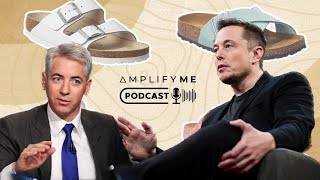
In this episode of The Deal Room, hosts Anthony Cheung and Stephen discuss several timely topics in corporate finance and capital markets. They begin by promoting their upcoming M&A Finance Accelerator simulation, a hands‑on training for aspiring M&A analysts. The conversation then shifts to the state of the global M&A market, noting that total announced deal value has fallen below the $3 trillion benchmark set in 2013, with current monthly targets of $370 billion needed to hit the annual goal. They attribute the slowdown to high interest rates, rising Treasury yields (the highest since 2007), and tighter leveraged‑buyout financing, highlighting the growing role of private‑credit funds as banks pull back. The hosts examine Bill Ackman’s recent focus on a new SPAC‑like vehicle called “Spark” and his public interest in taking Elon Musk’s X private. They explain Ackman’s activist background, his past SPAC experiences, and suggest his outreach is as much a PR move to generate deal flow as a genuine financing strategy. The latter part of the show is devoted to the upcoming Birkenstock IPO, projected to raise about $1.6 billion at a valuation north of $10 billion. They detail the share structure (new shares vs. secondary sales), the anchor investors (Norwegian Sovereign Wealth Fund, T. Rowe Price, Durable Capital, and LVMH’s family holding), and the curious capital flow between LVMH’s subsidiary L’Occitane and Bernard Arnault’s family vehicle. Demographic data reveal millennials account for the largest share of Birkenstock sales (31 %). Finally, they review recent IPO performance of Arm, Instacart, and Klaviyo, noting modest gains for Arm (+3 %), a decline for Instacart (‑9 %), and a 12 % rise for Klaviyo, cautioning listeners against over‑reacting to first‑day pop. The episode closes with a brief macro update on US equity market bounce, low ADP payroll numbers, and the Fed’s hawkish stance, before reminding listeners to register for the M&A Finance Accelerator.
Chapters
Welcome back to The Deal Room, and before we dive into this episode, just a reminder, we are running our very first M&A Finance Accelerator simulation. It's about to go live on the 5th of October. We're recording this on the 4th, but the reason why I'm pointing this out is we're gonna, after a 48-hour sellout for the first session, we're gonna drop new dates on the 5th of October for the next session, which we're bringing forward because of the incredible demand we had for that first session. And that's going to be held on the 19th of October. But maybe perhaps, Stephen, very quickly, what could you— what can students expect from that experience?
Yeah, thank you, and I'm really looking forward to, uh, to seeing as many students as possible tomorrow on the call from 4 till 6. Yeah, 500 signed up. In under 48 hours, which was, which was amazing. And so good to see the excitement around doing a live, you know, relatively high-pressure simulation where you are going to play the role of an M&A analyst in a global investment bank and do some of the types of tasks that you'll be doing when you land on the desk as an intern, or you'll be doing as you land on the desk as an analyst. And get your Microsoft Excel out, get your valuation methodologies out, because we're going to be going through all of that. But I would say it's not just for people that, you know, live, sleep, and breathe M&A. It's for people that have never, you know, they know what M&A stands for. That's a good start, but they have never really delved into what it feels like to actually do the job. And they don't really know whether it's for them or not. So this is a great opportunity to enter, to sign your name up to the 19th, and just have a go. See whether you love it. You might come away and go, wow, that was an experience that was much more enjoyable than I thought it would be, and I really want to take this further. Or you might have gone, actually, you know, maybe I prefer a bit of sales and trading. That's, you know, that's Ant's piece. So he'll be happy if you say that.
Yeah, come on over to the dark side of the bank. And, uh, yeah, but yeah, look, awesome. Really excited to get that up and running. So I'll be joining myself, convert to your banking way, Stephen. So yeah, let me just give a quick overview then of what we're going to discuss in this episode. So M&A deals have been livening up a little bit, but there was a Bloomberg headline which talked about dealmakers needing to avoid a repeat of 2013, which was the last time that total deal volume was around 3 trillion. So we're going to talk a little bit here about leveraged buyouts, private credit funds, big deals that are in the pipeline that could potentially move the needle. Then we're going to talk about Bill Ackman. That might be a name most of you are familiar with from Netflix rather than the investment community. Uh, he's rather infamous because he's an activist investor. So I'm sure Stephen will explain what that particular role in finance means, but there reason why we're talking about Bill Ackman is because he said he would consider taking Elon Musk's X public. And in particular, you might have remembered during the, the kind of boom through COVID, everyone was talking about SPACs, special purpose acquisition companies. But now we're going to talk about SPACs. So, well, what are the exact differences here? Because there's tons of acronyms in finance, but I know Stephen will break that down. And then finally, the IPO run continues. Birkenstock, the German footwear maker, could fetch up to north of $10 billion US. Unbelievable amount in its IPO. So this one's great. Family holdings, high-end fashion names, private equity firms, sovereign wealth funds. This one's, this one's got a Netflix series, uh, in the pocket as well. So, um, let's, let's start at the top, and maybe this is good place to go because it gives you a bigger overall picture of just what's going on in the M&A landscape. So yeah, why don't you kick us off on, on that side of things and why this $3 trillion number is important?
Yeah, so $3 trillion is the global volume— sorry, the global value of M&A transactions announced during a particular year. And $3 trillion is the number that M&A bankers are trying to hit because we haven't gone below $3 trillion in terms of cumulative deal value since 2013. And 2013, you know, a year is a lifetime in finance, and 2013 is a long time ago. And since then we've had all sorts. I'm looking at the skyscraper bar chart of deal volume and value from 2013 through to 2023. And obviously the standout year The big skyscraper is your 2021, where, you know, there was money sloshing around, cost of capital was very cheap, everyone wanted to lend, valuations were very, very high, and everyone wanted to do a deal with all the cash and all of the borrowing that they could get on the cheap. We talk about 2021 again a lot when we're teaching on this topic. 2022, the first half kind of launched pretty well in terms of deal values. You had the Microsoft and Activision announcement. That's when it gets logged, gets logged back in 2022, even though we know it hasn't quite closed yet. But mid-2022 onwards, as the rate hiking cycle really started to ratchet up, deal volume and deal value dropped precipitously. And in 2023, it has been tough going for the bankers. You know, we always, we're worried about them. And we know that in order for these investment bankers to have a successful Christmas party, for the bars to be full in London and in New York around Christmas and New Year. Dealmakers need to close— Bloomberg reckons dealmakers need to close $370 billion of transactions a month through Q4 if we're going to hit $3 trillion. So we are way off the pace in terms of just hitting that low threshold mark that we hit all the way back in 2013. So this is relatively concerning from an investment bank perspective. And certainly from an M&A advisory perspective.
So with $370 billion a month, I mean, when these deals get announced, you mentioned that interestingly when they get logged. So what is in the pipeline and what could be the Hail Mary that could help narrow that large gap?
Yeah, it's really, really hard to say. It's, it's, it's not like an IPO pipeline where you can see the prospectuses getting filed, the F-1s and the S-1s, and you can say, look, you know, Birkenstock's coming around the corner. It's looking like CVC might get some action before the end of the year. Because of the sensitive nature of a lot of the transactions, you're behind exclusivity and non-disclosure agreements, and you only really announce it when it's announced. You only really know when it's announced. So, you know, there's speculation and there's a few potentially big deals. The German drugmaker STADA getting sold from its private equity owners for $10 billion, and Fininc, the Italian-based conglomerate, potentially buying Autostrade for $20 billion. But this is all rumor mill. So, you know, we don't know whether there's a mega acquisition coming around the corner. Deal volume, deal value has gone up. We spoke in our deal of the week about Cisco, acquiring Splunk for $28 billion. You know, so that's pretty chunky. That's going to start to move the needle. But, but based on the last 18 months and based on the difficulty of actually consummating and completing these M&A transactions, I think we're going to be well short. Yeah.
What, what I'm then expecting to hear in the coming weeks is the major investment banks starting to come out and start to just set the groundwork for the next corporate earnings round where they'll be like, conditions continue to remain challenging, and this type of, uh, idea where we can just lower the bar low enough where it doesn't disappoint people and that the strategy's all wrong. They just pin it on the market conditions are returning, the green shoots are appearing, we need to be patient, and to manage their own stock price for these public companies, I would imagine.
Yeah, it's, it's really difficult. And banks, as we say quite a lot, the big banks are pretty multifaceted and sometimes they cut off their nose to spite their face. And what's going on at the moment is one of the main reasons why deal value is so, so, so depressed relative to previous years. See, it all goes back to cost of capital and high interest rates and difficulty putting together a borrowing package. In order to do a transaction, especially if you're on the private equity side, and especially if you're doing a leveraged buyout, you're going to need a pretty hefty debt package from the banks, from the private credit funds, from the institution, from the bond markets, et cetera, to put together this package that can fund an acquisition. And part of putting together this package is the banks. The banks tend to have a, the big banks have pretty large leveraged acquisition finance teams, sometimes called LAF, leveraged and acquisition finance. Certainly was when I was at HSBC. And if they're not putting up the cash, then the deal is unlikely to get done. So you've got your M&A teams on the one side going, gosh, we are starved. You know, we are starved of deal flow because we can't get the financing in place to arrange the package to buy the company. So there's, you know, there's, there's probably a few very, very difficult conversations going on between banks at the moment. The M&A team going, look, we need this thing financed. You know, we need to put together a really attractive package, go away and do your best. The leverage and acquisition finance teams who are very, very aware of risk, you know, credit teams are always aware, aware of risk. They'll go, you know, computer says no. We don't think that we can provide the debt that you need to make this acquisition happen because of the risk profile and because of the cost of debt and all of those kind of things. So it's a really interesting environment and it's kind of why private credit has come in in such a big way to plug the gap, providing these leveraged loan tranches in lieu of banks. But it's, again, it's cutting off your nose to spite your face. If banks aren't working and they're not lending, then the M&A teams aren't getting paid indirectly. Yeah.
I was just having a look in terms of the yields at the moment. This week has been quite meaningful. So you talked there about cost and obviously it's getting the most expensive it's been in quite a while. I was just trying to pick out the stat. Was it the 10 and 30-year U.S. Treasury yields the highest since 2007?
Now, it's remarkable. And we know that, we know that that has a direct translation into banks' cost of capital, right? And therefore the flow-through into how much they, you know, how much they have to charge for lending to, to, in the private market and for acquisitions and things like that. So, you know, obviously we, we, you know, we talk in slightly different terminology on a Wednesday relative to a Friday, but the same fundamental forces are still directing directing success and failure across different teams. And we really, really are affected by the cost of capital. You know, it's pretty fundamental when it comes to, it comes to making any form of acquisition, really. Hmm.
Okay, cool. Well, look, we're up and running. Let's, uh, let's move the show on to Bill Ackman and this idea that he's interested in a deal to take Elon Musk's X public. So what's the deal there?
Yeah. So Bill Ackman, many of you might have heard of him. He is a famous activist investor. What do I mean by an activist investor? An activist investor is where, you know, Bill Ackman owns a hedge fund. It's called Pershing Square. Now Pershing Square, they're going to spend a lot of time looking at companies that they believe are mismanaged, strategically misaligned, maybe possibly fraudulent. And they build up a stake in that company in order to be able to take a board seat some of the time to pressure the management of that company to either change strategy, to contemplate an acquisition or a disposal, to be acquired, or maybe even to root out some fraudulent behavior. I think Ackman, one of Ackman's famous ones was Herbalife. That he thought was effectively a bit of a pyramid scheme. So he took a really, really big short position in Herbalife, banged the drum to say this was all a big fraud. I think he actually ended up losing in that case. But anyway, so he is one of the probably 10 or 15 best known, quote unquote, kind of, yeah, best known investors in the market. And he liked a bit of publicity. A lot of this story, quite frankly, is publicity. Bill Ackman, he was part of the SPAC, special purpose acquisition company revolution in 2021. He actually tried taking Universal Music public through a SPAC back in 2021, which actually got blocked because I think Universal Music was also trying to list in Germany at the same time, and it was all a massive mess. And actually investors lost quite a lot of money. So he went back to the table and said, I don't really like this SPAC thing. You know, it's cost me a lot of money and maybe a little bit of reputation. 2021, after this failure, he said, look, I'm actually going to go to the SEC and suggest an alteration to the SPAC structure. And this is where SPACs come. And a SPAC is a special Special Purpose Acquisition Rights company. Exactly the same, insert rights. What does this mean? It's basically the same as a SPAC, but investors don't have to commit any capital until the target is found to take to IPO or to take public through the vehicle. You've got 10 years to complete, to find a company instead of 2 years. And the amount of capital can be a lot larger. It just got through the SEC. So it's a new thing that just got signed off. And Ackman, who's pretty pleased that it got signed off, is starting to talk about what kind of companies he could take public through a SPAC as opposed to through a SPAC. And one of those companies just so happens to be X. Yeah.
And I'm surprised Elon hasn't really bitten yet in some shape or form. I don't think he has just yet, but Musk did borrow a large amount to finance his acquisition of Twitter at the time. So is the— would, would the play on Musk's side be to kind of de-risk on the debt side by utilizing an avenue like this, or—
yeah, it's a good question. I just wonder whether this avenue has got the liquidity, it's got nearly enough, you know, valuation to, uh, to, to compensate for some of the— for the sheer amount of debt that was taken as part of the $44 billion. You know, people don't really know what's going on inside of Twitter/X. But I think we all know that $44 billion is not the valuation, and therefore the loan package is looking relatively out of the money and a little bit, you know, the loan-to-value is looking pretty unstable there or pretty unfavorable. So, you know, I think maybe this is a bit of posturing. Ackman doesn't know what's going on inside of the company. He seems to think that X is actually doing some pretty good things from an advertising perspective. Advertisers are starting to come back. You know, Paris Hilton signed an exclusive agreement with X. I don't think that's a good bit of news, but you know what I mean. So, so it's just an interesting one. And actually, he, you know, he was— he did the rounds, you know, on Bloomberg and CNBC to tout this Spark structure. Because he thinks it's a really attractive vehicle where Pershing Square can anchor these public listings with between $350 and $3.5 billion of the hedge fund's money. But one thing I do want to bring it to is actually Ackman posted on X a call for candidates. This is a really interesting thing. He said on Twitter, Lex, if your large private growth company wants to go public, without the risks and expenses of a typical IPO with Pershing Square as your anchor shareholder, please call me. We promise a quick yes or no. So I spoke to the founders at Amplify and I said, look, here we go. Let's go public through a SPAC with Bill Ackman. But I think I got turned down, but never mind.
So basically what you're saying is that Bill's on a bit of a a PR offensive here. He likes the limelight. He's shown that before. And actually engaging, using the platform of Twitter and trying to poke the bear that is Elon to juice the story is all just tactical to try and get the Spark thing out and on the radar of other people.
Yeah, and, and, and once again, our role as podcasters is to continue to juice the story, right? We're talking about it, and therefore the story continues. Um, But I mean, it's pretty sensible, right? You know, he needs publicity, he needs really good deal flow. And also, you know, the best, as we saw from 2021, the best thing you can do is generate a bunch of hype around a particular company going public, either through IPO or through SPAC or SPAC, in order for the share price to pop due to retail investor interest. So if he can drum up, here we go, get involved, retail investors, this is the deal of the century. As soon as we put this public, off we go, we're at the races, then that's got to be, at least in the short term, that's got to be good for his investment portfolio, which when we come down to it, that's all he really cares about, right? Is he going to make money out of the SPARC? Is he going to make money out of these media rounds that he's doing? It's all relatively tactical.
Yeah. Cool. All right, well, let's go on to Birkenstock. I think we have spoken about this briefly before, But when I was reading the, the article about this, there were so many different people involved from lots of different corners of finance. So I wonder if you could kind of just bring all of those, those parts together and let us know what's going on, going on here.
Yeah. So we've spoken a lot about IPOs over the last few weeks, and we're just, we're actually going to spend the back end of this podcast just looking at some of the IPOs that we've covered and seeing how they've done. It's always good to revisit a story once we've, once we've, once we've looked at it previously. But the Birkenstock IPO, which is going to hit, we think, probably mid next week, they're pricing at $44 to $49 a share. And if recent history is anything to go by, that will probably end up pricing at the higher end of that range, probably $48 or $49 per share. Interestingly enough, they are issuing 10.75 million new shares and 21.51 million sale from El Cataton, who are the owners. So this is an opportunity for El Cataton to sell some of their shares to realize some upside, to get an exit, to get some liquidity. But it's also an opportunity for the company to raise money. And this is what IPOs should do. It should be a source of capital, not just an exit opportunity where you're transferring risk from one investor to another. So this is quite a nice example of probably the way that IPOs were intended to be. As you said, they're raising $1.6 billion at possibly north of a $10 billion valuation, which is pretty punchy. That's, you know, that's a big number and that's a good-sized company, you know, especially for a company that tends to do its stock and trade in shoes. Um, it's anchor investors. We've spoken a lot on about anchor investors previously on the IPO-related pods. These are anchor investors that commit to the IPO, commit to holding some of that $1.6 billion to make other investors feel comfortable. So the Norwegian Sovereign Wealth Fund, I think it's the biggest sovereign wealth fund in the world. I'm not sure, but it's up there. T. Rowe Price, big US asset manager, and Durable Capital Partners are all committing up to $300 million in their totality. But this one's an interesting one. So Bernard Arnault, sometimes the richest man in the world, sometimes Elon Musk, the richest man in the world. It's kind of gone back and forth depending on the value of Tesla shares, I think is mainly the reason why these two are battling it out. But here's the owner and majority shareholder of LMVH, which is the luxury goods, the luxury products company based in France. Now LMVH own L'Occitane. L'Occitane owns Birkenstock. So L'Occitane is selling shares, selling shares in Birkenstock to the public market and to investors One of which is Bernard Arnault's family holding company. So it feels slightly circular. It's kind of moving money around. And obviously he has more direct control over his family holding company. He's thinking about putting $325 million into this than he does of El Capitan, which is a private equity firm that he is the major investor in. But it's all quite Insulo. And it's quite interesting to see, all right, why is capital being released from this particular private equity vehicle and actually being bought by the same man's holding— family holding company? So there's some fun stuff going on, you know, in terms of the, the mechanics of this deal and the composition of this deal.
Yeah, I still can't believe the numbers with Birkenstock. I just can't. I can't compute Birkenstock as I know it as a company and its products with these types of numbers, particularly with that anchor investor commitment. I mean, they're not messing around here. They're throwing $300+ million at this over a company that seems to go relatively— I know they've had their moment both 20 years ago or so, and they're in having a moment again now, but seems like a lot of commitment of cash Yeah, I mean, brand.
Yeah, I'm just looking at it. So I'm just looking at their revenue in 2022. Now their revenue was up 21%, which is, which is really attractive. You know, that's, that's proper revenue growth. Um, but it's only at about $1.2 billion.
Can I ask a question from the data that you're looking at there? Can you see what their revenue though was if you were to step back 5 years? What was the percentage growth? I know they've had a fashion-led, uh, rejuvenation in the last 18 months. What about before that period? What's their growth pattern look like? I'm sure it definitely hasn't been 20%, and I definitely don't think they can keep momentum of 20%.
I agree. I mean, I can't find it in this date, but I will come back to you on this. Um, I would, I, I would share your sentiment 21% seems like a little bit of a, this is in vogue, it's on trend. It's pretty quick growth, but even with 20% growth, $1.2 billion of revenue, it's still, you know, it's going to be 8+ times enterprise value over sales, right? That's kind of SaaS tech valuation territory, not flat footbed shoe territory. I'm going to give you another couple of quizzes because I know you like a quiz. You told me that you wanted more quizzes on the pod. So which age demographic do you think is responsible for the largest percentage of Birkenstock sales? We've got the Gen Zs, we've got the millennials, we've got the Gen Xs, And then we've got the baby boomers. Who do you think, who do you think's responsible for the largest percentage? And who do you think is responsible for the, for the smallest percentage?
Okay. So the intel that I do have is that I know from a prior podcast episode that you own 3 pairs. So you're probably the perfect demographic of the average buyer, I would say. So that kind of 35, 40-year-old is probably sweet spot. And then my other piece of information I've got is I heard you in the office having a bit of a back and forth with one of the younger members of the team yesterday, and he was putting you in your place saying that Crocs is where it's at, not Birkenstocks. So I'm gonna say that probably Gen Z is is smaller than, um, you know, you're a millennial. Um, so I think older than millennial, like if I start to think about my brother, I can't see him. Well, yeah, maybe he would have worn Crocs 10, 20 years ago. He won't, he doesn't wear Crocs now. Um, doesn't wear, um, doesn't wear Crocs, doesn't wear Birkenstock so much now, did before. So I'd probably say you can't go north of millennials and you can't go south to Gen Z. So millennials.
You absolutely nailed it. You absolutely nailed it. So 31% of sales is millennials, myself included. Uh, 30% baby boomers. Oh, just quite interesting. 27% Gen X. So basically me and older are taking the lion's share of Birkenstock sales. Only 12% of Gen Z. Now obviously, you know, maybe there's an affordability thing there as well, but it's, you know, it's fashion, isn't it? And I'm very happy to be on the wrong side of fashion in this instance.
So if I work for the Norwegian Sovereign Wealth Fund or T. Rowe Price, big asset manager, do I get a discount card for putting up my anchor investment?
Yeah, you'll get some pretty snazzy IPO-specific Birkin stocks. Yeah, you'll see them. You'll see them on the streets. Well, let me just, maybe let me just finish with a bit of an update on IPO performance. Performances in general. And maybe I can give you one little, one more little challenge. I think we've spoken about 3 IPOs over the last few weeks. We've spoken about Arm, the chip designer, Instacart, the grocery marketplace, and Klaviyo, the hard-to-pronounce marketing automation platform. I, you know, Arm priced at $51, Instacart priced at $30, and Klaviyo priced at $30. Can you hazard a guess as to the order of performance of those 3 IPOs? Which is performing best a few weeks later? Which is performing worst relative to its opening price? So you've got Arm, Instacart, and Klaviyo. How would you rank them?
So I think Arm is by ARM's in a different ball game to the others as a, as a business, I would say, and its maturity and its necessity in terms of the general ecosystem it operates in. So by default then, I would say it's probably lesser unknown, so lesser subject to like that euphoric nature of initial trade, but probably holds a better center of value over time. So, uh, Arm would be top.
Yeah.
Um, now with the other two, I really don't know enough about their businesses other than what you and I have discussed. Um, but I think Instacart is a bigger business. So just on the premise of the fact that I've never heard of Klaviyo before this IPO discussion, and the fact that Instacart is pretty big already, I'd say probably Instacart is holding better value than Klaviyo on that basis.
Interesting. So the best performer, and I know that this is only a few weeks afterwards, so we shouldn't get too excited. The best performer out of the three, Klaviyo, 12% rise since— yes, now, now trading at $33.47. And this is interesting because we spoke about it on the pod. Klaviyo is probably the most probably the frothiest, techiest stock out of the three in terms of feeling a bit—
Yeah, come on. Look at those yields. Those yields can crush this company. Come on.
Well, look, actually, I'll tell you what I did. I took this 2 days ago before—
It's all changed, Steve.
Yeah. I was going to say before the big sell-off of yesterday. So maybe it has changed. Favier number 1, Arm is still up. Arm's 3% up relative to its 51. Opening price. And I think you're right in terms of the size, in terms of the story, in terms of the liquidity, you know, it's a bigger, it's a bigger block. It's probably going to be subject to slightly smaller oscillations. So a 3% rise. Then Instacart's well off. It's a 9% drop, which is interesting because all of these firms had at least double digit, well, double digit pops on the first day. It's just a cautionary tale to say, look, double-digit pops, good news story. Let's see what's going on a few weeks later to see actually how the dust settles. I think, again, the arm, 28-armed banks that price the IPO would be thinking that $51 is probably about right because it's now trading a few weeks later at $52.41 as of the 2nd of October. So just a word of caution on the first day pop. As much as we enjoy the euphoria of the clanging of the bell and everyone piling in, let's just wait and see what happens.
I was just having a quick look at your Klaviyo shares. They brushed on $30 yesterday, touched it.
So, yeah, this is a man that doesn't like to be proven wrong.
However, all the US equity markets have bounced back today, um, just when we're recording this. It's midweek, but at the end of the week there's non-farm payrolls, uh, obviously hawkish Fed being the macro context of late. And actually the jobs data, ADP, which is private payrolls, came out today and it was a low number. So it kind of pushes against that narrative then for the Fed to hike. And actually stocks have rallied into what was a sizable decline See, it's quite, it's quite typical to see a decent move back up. So they're back up to 32, so you're okay for now. Just don't check your, your stocks app every day, Stephen, and you'll all be gravy.
I think that's good advice for anyone.
Cool. All right, well, look, great conversation as ever. As we said at the top of the show, if you want to join Stephen and the team for the M&A Finance Accelerator happening later on in October. The dates will drop on the 5th of October. Look out on all of the social channels that we have, the newsletter and so on. You'll see the registration link. The first session did get fully booked in 48 hours. The sessions are capped just so we can keep the quality super high. That's where we want to always deliver our sessions at 500. So it'll be a first come, first serve basis. But thanks everyone for listening. And Stephen, thank you again.
Thanks, Ant.
More from Anthony


Inside the Biggest Banking Stories You Need to Know This Week (Anthropic, Diageo, Private Credit)


Inside the Biggest M&A Deals You Need to Know This Week (UniCredit, GameStop, eBay, Eli Lilly)







AI Breakthrough or Hype? Anthropic’s Claude Mythos, Tim Cook Steps Down & LIV Golf Collapse