BREAKING: Brexit Minister Raab resigns
In this commentary Anthony Cheung walks through the immediate market fallout and political ramifications of Dominic Raab’s unexpected resignation as Brexit Secretary. He first grounds the discussion in the sharp 200‑pip drop in the GBP/Cable pair, detailing key technical levels (weekly low 2845, daily pivot S2, October low 127.24, potential support around 2740‑2735) and the risk of further downside if more cabinet members quit. He then explains the mechanics of a Conservative Party no‑confidence motion – the 48 letters already submitted, the two‑thirds parliamentary threshold, and the historical rarity of such votes since 1979. Cheung assesses the likelihood of Prime Minister Theresa May’s resignation, outlining the subsequent leadership contest process, the timeline for candidate narrowing, and the impact of the looming Article 50 deadline. He surveys betting markets, noting that Raab now leads the odds to replace May, with Michael Gove positioned as a pivotal figure whose potential exit could trigger another wave of pound selling. The commentary concludes with scenario analysis: May staying in power (making her bullet‑proof for a year), May losing and a snap election potentially ushering a Labour government, and the broader implications for Brexit negotiations and the pound’s trajectory. Throughout, Cheung advises traders to monitor political developments, technical chart signals, and market sentiment to manage risk in a highly volatile environment.
Chapters
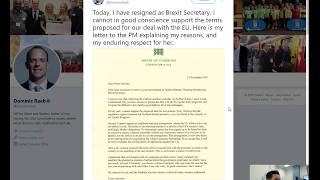
Restore some order, please, and let's just remain calm and considered about what exactly is going on here, because it's quite easily— or quite easy— you get a bit caught up in the headlines. The pound's moving quite violently, and, you know, all rationale just goes out the window. And, you know, it can be quite a tough situation to manage from a trading point of view. So let's just take a bit of a stock check on how the land lies and what the trigger points have been and what to look out for going forward. And I'll be keeping an eye on Twitter as I'm doing this, mindful of, you know, this is a very fluid situation if we get any more resignations. So to start things off then, all initiated by the Brexit Secretary, the second one now gone in the last two-year period. Obviously David Davis already gone, now Dominic Raab surprisingly resigning unexpectedly earlier this morning. He then saying, I mean, his letters here, I'm sure you've read it by now, explaining his reasons. And obviously Dominic Raab, critical to the negotiations of Brexit, and so immediately we saw aggressive selling of the pound on the back of this. So his resignation kind of came up at the top of this move and And we've fallen a good 200 pips on the back of that. Not only him, but as we'll discuss in a second, there's been lots of other cabinet resignations as well, as well as Northern Irish minister. And there's some talk now about Michael Gove as well, potentially could be the next one to go from the bigger, more critical names to supporting of Theresa May and her plan. Looking at the cable chart at the moment, obviously we busted through the weekly low earlier at 2845 in the futures. We kind of initially tested— that's actually S2 on the daily pivots and the handle at 128. Got there and we're just sitting beneath there at the moment. So technically we have gone through that level, and if more resignations come, then in the short term at least you might see a bit more further pressure and downside. Then that brings into context a test down at the late October lows, which would be 127.24. Looking at a daily continuation, so just backing out a little bit, there is that trend line from the, the summer low that we printed in August with the October low, and that would come in just above. So you'd be looking more around the kind of, uh, 2740, 2735 level ahead of that October low at 22, uh, if we did push lower in the pound. You can see where we've kind of— we're gravitating at the moment in the pound is an important level because you can see lots of prior occasions this has been a real kind of pivot of direction for the currency. And so this is quite important here of whether we break lower or not. Now let's have a look at the news. So beyond that of Rabb's resignation, what else have we had? Well, apparently so there's 48 letters required to trigger a no-confidence vote. Um, 159, so two-thirds though of MPs would need to vote in favour of a no-confidence. Now, I just want to be absolutely crystal clear here. It's been apparent that there's been enough political will within the Conservative Party for about 10, 12 months that there's been 48 letters. I think that's not really that much of a surprise. I mean, politics is all about timing, and no better time to strike than right now. But the fact that a no-confidence vote has— the letters have come forward, that's always been the case. They've always been sitting there waiting. It's not a new development in that sense. The point here is still the same, is that you can have enough people putting their letters in for submission, but ultimately you need two-thirds of UK Parliament to back then the fact that they want to get rid of Theresa May. Now, the last time that you had a no-confidence vote go through, i.e., a letter submitted but then Parliament on majority backing that agreement, you'd have to go back to 1979, the last time a UK confidence vote actually went through. So it hasn't happened for a long time. And one thing you got to say about Theresa May through this entire post-Brexit era, she has been like Teflon. She has been the immovable object, even though she's been highly criticised for really lack of no real credible alternatives, to kind of call it more plainly. So even though the letters have been submitted, you would need another 111 MPs to decide to move May. So it's not a slam dunk at this point, albeit it does kind of feel feel that way, of which the way the news is coming out this morning. A few other things to consider then. If we did have a Conservative leadership context contest, this is the kind of format of which normally happens. Now, the reason why a no-confidence vote hasn't happened for many, many decades is because when there's such pressure on the Prime Minister, typically what happens, the Prime Minister resigns. Because, you know, you know You know when your time's up when your entire party calls a vote of no confidence. However, we are in an unprecedented era. Brexit has not happened before, and Brexit is incredibly divisive in terms of a subject. And so I don't think she's gonna resign, personally. Obviously, tail risk is she does. If she does come out and the next headline you hear in the next couple of minutes is Theresa May resigns, you've got to get short the pound short term because it's going to drop like a stone again. Even though we're down 250, we're going to bust through that October low. That does bring in a— into sight here technically on the charts a couple of really interesting levels because then we'd be threatening the yearly low. That opens up space then for further downside. Be looking to target on an intraday, uh, under May's resignation down towards the 126 handle. So, you know, if you haven't seen it before, better buckle in. You're in for a 400-500 point day, uh, or pip day. So a 5-point day for cable. But I would say, in my opinion, that's incredibly unlikely to happen. So following this through on the right-hand side, you get this no confidence letter being submitted to the 1922 Committee. That's the process. No confidence vote amongst Conservative MPs. Now, if you follow this through, then if Theresa May wins— so if there isn't enough of Parliament to shift to back then these more pro-Brexit people who are unhappy with her deal— if she wins, you are not allowed to call a new confidence vote for the next 12 months, the way that UK parliamentary law works. So, you know, they've pulled the trigger now, but if this was to go to then the vote and they get voted down, well, Theresa May is bedded in now for the next year and she's effectively bulletproof. So flip side, May loses, she's got to go at that point. So then the way it works within a Conservative or Tory party, you need to then go through a leadership contest, of which then you have basically a number of candidates put forward, that gets narrowed down to 2 people, then this then goes down to the final 2 candidates which the Conservative Party then vote upon. This normally takes a long period of time. We're talking weeks, if not longer. And don't forget, we've got the small issue of Article 50 looming in March, and so the prospects of a no deal, if she was to go, increase exponentially And the pound has got to be an outright sell at this point. So, you know, there's a lot, a lot of mechanics to this. I don't think that Theresa May— it's a foregone conclusion that she's gone, even irrespective of what's happened. I mean, if you think about her government, she's had 17 resignations since she's been in power. Everyone from Amber Rudd, Justine Greening, Boris Johnson, David Davis, Dominic Raab now, so some pretty punchy people, but she's still here for the moment. Other things to be aware of then is I was just looking on Betfair to get a sense of what the bookies are saying. We've had a, you know, they're hedging themselves, and obviously a lot of people will be betting now that Theresa May is going to go this year. Obviously, the next general election's not till 2022, and so we've had a big pop higher in the odds of her now exiting this year. And actually, in terms of who would replace her, well, actually, guess what? Dominic Raab is seen as the most favoured at the bookies. He's shot up into first place just above Sajid Javid and Boris Johnson. So I'm trying to be as objective as possible. I won't give you my genuine personal thoughts about what I think of Dominic Raab's move this morning. I'll leave that for some pub chat later on. But Dominic Raab now up at the top and looked as the most favorable potential replacement. Michael Gove though, I think, is quite pivotal. If you think of Michael Gove, he is in effect a Brexiteer in the sense that he's been not exactly completely on side with Theresa May and her Chequers plan. He's kind of wanted to be a frontbench member, part of the kind of the senior cabinet. And so he's a little bit reluctant, it seems, to give up that post, even though internally I'm sure that he's a little bit more minded. You'll remember it was him, of course, and Boris Johnson that were running as teammates before Theresa May became Prime Minister on the back of the mandate of having a hard Brexit, so on and so forth. So he's definitely one to watch because Theresa May really needs Gove to keep some of that kind of Brexiteer vibes within within the party to appease them. If he goes, then you're kind of really just left with more kind of pro-European politicians, and that's difficult for her to manage then, this process going forward. So reports have been that Gove has basically cancelled some, some meetings. I think he was due to travel up north, and he is apparently one to watch, is what all of the, the journalists are indicating this morning. So just keep a close eye on that. If he goes, I think you get another wave of selling pressure in the pound. I'm just seeing some Sam Coates of the Times tweeting that Team Gov have told him that they will not give any guidance on the future at this time. Asked if he is resigning, I was told no comment. That's the latest, literally just come out right now. Just had a junior Brexit minister resign. That's to be expected. If the head honcho in RAB is gone, the junior Brexit minister also needs to go. So that's unsurprising. Other things then to be aware of are, because a lot of people will probably be asking, well, who are the Brexiteers within the cabinet? Who are the more May loyalists? And who are the people we need to watch? Well, here are the, the Brexiteers. And obviously this is a little bit dated, but it will give you a sense of some of the names. So Liam Fox, Boris Johnson we know, but Michael Gove, the environmental Secretary, of course, you can put in that group. And that's why he's quite key to keep this, this deal alive for May, because he— you do need a bit of a presence of a Brexiteer within the fold. Otherwise, Esther McVie has also resigned just a short while ago, but again, she is part of the Brexiteer camp. So what I'm saying is, from a trade execution point of view, what you need is here— these are Eurosceptics. Pro-EU compromises, if one of these guys or girls was to flip, or even worse, you get a May loyalist flip and go against the PM, the show's over at that point. Because these are loyalists, these are your main through thick and thin, thou shalt follow my leader type people, and if they go, show's over for May. So If you were looking for names to follow, I would say these pro-EU compromisers and May loyalists are definitely one way to tackle it. If you hear these names being mentioned, again, it's an immediate sell in that respect. Okay, quick look at this chart. You may have seen me share this on, on Twitter last night, but here is a couple of things that— I mean, this is a little bit broader context because To be quite frank, I'd say a lot of this has been superseded now by what looked like positivity in getting a deal done and moving forward has all been called into question given the series of resignations. But I won't dwell on this too much. This is UK Parliament approval process, whether or not the, the vote itself then gets voted through or gets voted down, and then the subsequent reactions thereafter. So I will share these infographics with you, but really I would say this isn't much of a conversation right now because we've got to get through today, and will Theresa May survive is the biggest question. On that point, one of the main things here is about— this is the Brexit timeline, and if you were to go down the route then potentially of, of Theresa May, we— she, if she were to leave, let's say, in summary, you do heighten the the risk of a general election, a snap election, ahead of the scheduled one in 2022. Now, for me, this is incredibly problematic for the Brexiteers because the polls would indicate a very mixed outcome. But obvious risk here is that, you know, the people of Britain look at the shambolic performance and this pantomime that's unfolding in British politics and goes, you know what, I'm just going to vote Labour irrespective of the fact whether I agree with Labour's policies, just because I do not like the establishment and the way they've handled this situation. Therefore, then, you've got a Labour-led government under the most left-leaning politician since the '70s in Jeremy Corbyn. This would be absolute disaster for the Conservatives. Not only that, you know, the faith in negotiating Brexit would probably be diminished. That's what public opinion suggests with the type of character of which then Jeremy Corbyn would be going into Brussels to negotiate a better Brexit. That then brings about the whole idea of a second referendum. The whole thing then gets reversed. These are the potential scenarios, and these Brexiteers will be fully mindful of that. One interesting play I think that could happen here is this, and this is what I think is going to happen. I'll put my neck out there, I could be wrong, of course. This is a very rapidly changing environment. But if I was to give my view, I think what will happen is these resignations will come, they will go to— if they do go to a vote of no confidence, I think what will happen here is that they won't have the amount of people to see May leave. She then remains in place And then what happens is all they've done is delay this. We get closer to the cliff edge of March 29th, 2019. So basically it's a drawn-out process where politicians then have to fall in line and back the deal at that point. This then, from a negotiating point of view, might even create a little bit more concession from Europe because they also have a lot to lose in a no-deal situation. And so I think political will will then still get the deal done. At least that's how I side at the moment. So politicians being politicians, causing headaches right now, knowing well that they've got time. But obviously this is pushing it right down to the wire. So in the short to medium term, could create then some downside pressures for the pound, only then for the whole thing still to be able to go through come the end of Article 50 to move us into the transition period. So that's it, gonna leave it at that. I mean, obviously keep your eyes peeled, the pound still remaining heavy. As I said, there's a few outcomes here to be aware of which could instigate large rapid moves, probably the most significant of which would be an outright May resignation. Of which you got to think potentially is a seed in her mind, but she's come this far. What I would genuinely love to see with Theresa May, and my advice to her as an advisor would be, call a press conference, take the bull by the horns, and while everyone else is jumping off the ship, steer us through and show some leadership. I think people would respond to that from the public's point of view. We shall see. Okay guys, be careful out there.
More from Anthony


Inside the Biggest Banking Stories You Need to Know This Week (Anthropic, Diageo, Private Credit)


Inside the Biggest M&A Deals You Need to Know This Week (UniCredit, GameStop, eBay, Eli Lilly)







AI Breakthrough or Hype? Anthropic’s Claude Mythos, Tim Cook Steps Down & LIV Golf Collapse