Breaking into Asset Management: Advice from a Boutique CEO
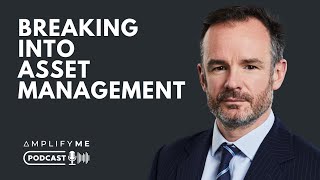
Ben Heywood, CEO of 24 Asset Management, started in art history and advertising before nine years at Citi, then co-founded a fixed-income boutique during the 2008 crisis. He explains the firm's three product lines, why they avoid hierarchical models, and what he looks for in hires: research the firm, show up on time, take on responsibility early, and find ways to deliver impact beyond what you're asked to do.
Chapters
Hello and welcome to this Career Insight episode. I'm joined by Ben Heywood, the founding partner and CEO of 24 Asset Management here in London. Ben's journey took him from studying history of art with ambitions of working in creative advertising to 9 years at Citi in alternative investments before co-founding 24 right in the middle of the Lehman Brothers collapse. So in this conversation, not only will we talk about those things, but we're going to look to unpack how to simplify complex credit products, what makes fixed income How's Income and Entrepreneurship So Rewarding? So plenty of practical advice for anyone starting out their career in finance. So Ben, great to have you with us. How are you?
Thank you, Anthony. Yeah, I'm all good. Thank you. How are you?
Yes, great. And we're both back from holiday, so we're both pretty fresh and ready to go. So maybe we could start from the beginning, so you could briefly introduce yourself and what you do at 24 Asset Management?
Sure. So as you said, my name's Ben Hayward. I'm one of the 7 founding partners for 24 Asset Management. And as you said, you know, we launched it in the depth of the global financial crisis. So from launch in 2008 until the end of 2021, I was one of the portfolio managers leading our asset-backed securities business. And then in January '22, I stepped into the CEO role, and I've been doing that since then. So I don't have an investment role specifically anymore. I do sit on our asset allocation investment committee, and I am responsible for the finance and HR parts of our business. I sit on various internal committees, and so some of those are functional ones like the risk and compliance committee, but I'm also on our executive committee. Obviously, I lead that, and our board of directors. And then I sit on various committees as well at our parent company, Vontobel, such as their investment management committee. I guess the sort of core part of my role is that I'm responsible for delivering on our business plan. And I'm responsible really with a few others for the day-to-day management of the business on a holistic basis. And that obviously includes a fair amount of client work as well. And then really, I suppose I'm the main conduit between 24 and our owners, Fontobel. So that kind of summarises, I guess, what is a relatively sort of far-reaching role.
And maybe just a quick word as well about 24 Asset Management themselves in terms of what you do from a product investment perspective.
Sure. So we are a fixed income fund manager. So I think, you know, we would probably define ourselves as being a boutique. I, we specialise in one thing and everybody at 24, whether it is our, obviously our PMs, but also our risk people, operations, marketing, sales, you know, whatever function at 24, everyone is only focused on doing that one thing, which is managing that sort of fixed income business. So we have 3 broad business lines. We have multi-sector bonds running strategic income funds. We have what we call outcome-driven. It's basically investment-grade credit, and that is trying to define and deliver an attractive return, but for a measured volatility target. And so it's kind of a Sharpe ratio type strategy. And then we have our European ABS business, the one I used to run. So 3 kind of core businesses, relatively discreet, never jumping too much into new markets or trying to do things too different. And so within those 3 business lines, we run pooled funds where a bunch of clients are putting money in together, taking it out, and so on and so on, as well as what we'd call segregated mandates or managed accounts where you have one client and doing a version of one of your main strategies just for that client. So 3 business lines, and I guess 2 main types of business that we're doing there, pooled and segregated, and doing that across the whole world in terms of client base. So we have a pretty large focus on the UK because that's where we started our business. But via our parent company, Vontobel, we now distribute through EMEA, Asia, US, LATAM, US offshore. So a pretty global business now, I'd say.
Right. And yeah, we'll definitely dive into some of those words. So if anyone's listening and haven't quite come across some of that before, we'll definitely look to go into that for sure. But I mentioned at the very top in the intro, and this is always where we start, which is right early on to align with some of the people listening, which is when you were a student. And I remember when we caught up, I was just so interested looking before I met you in person. I looked in your LinkedIn and you studied history of art at Bristol. And I was like, okay, so how's this guy CEO? And a co-founder of this successful asset management firm. And then you started talking about your original intentions to work in the creative advertising industry. So I guess explain to me that period and then the kind of where finance popped up and how that came about as a young person.
Sure. I mean, I think it really sort of started with course choice at university. I wasn't very decided on what I wanted to read at university until I actually had to make a decision. And so I chose something I was interested in, which was art, not as a practical subject in terms of being an artist myself, but in terms of studying things that I liked, which took me through a wide range of art from Renaissance all the way up to modernism. But when it came to to sort of start thinking about careers into my second year. Because I was doing that kind of an arts course, there were no natural leads into what I would do afterwards. So I kind of started thinking from scratch and really sort of started looking at where I could get some experience that summer. And I interned at an advertising firm, Bartlebogle Hegarty, and also at KPMG and as it was then, Coopers and Lybrand. And they were all very interesting and offered very different things. I mean, advertising was very cool, very creative, you know, very interesting. A lot of things that instantly appealed to it, to me. But then by the same token, the time I spent at KPMG, they took me through the whole business at every different level that you could be. So I followed everybody from a graduate on one day to a partner on another day and saw that the breadth of what they did and, you know, what they were doing for clients, the range of services they were providing for clients. And that also was intriguing. I'd say that I probably had a sort of slightly stronger preference for advertising. Applied to 8 advertising firms, didn't get a single interview. Applied to one accountancy firm, got an interview, got a job offer. And so the decision was almost made sort of slightly by accident, I guess, at that point in time. But it worked out. It worked out well. I was at KPMG for a year, so I didn't finish the 3-year training course because having graduated, going straight into the 3-year sort of enforced exam process that you went into then wasn't what I wanted to do. So then started looking again for a different role and decided that having worked in the financial institutions part of KPMG, that banking or financial services was of interest and ended up at Citigroup. Not massively by design, it has to be said.
No, I think that last comment's probably a good one for people to hear because actually, of all the people I interview, it's incredible. It's like, it's almost 100% hit rate. It's everyone says it wasn't by design. And I think that's a good message for young people because I think there's a lot of pressure for this perfect journey from start to finish at the age of 21 through to your entire working life. But I think You get to understand that that's not the case for almost everyone. So let's talk about early career foundations at Citi. And I know you were there for 9 years, and I did see as well in my notes when I was researching that you were managing over $100 billion across ABS and credit. And I just wondered then, you know, that role, maybe a little bit of a chance to, you know, bust some jargon in terms of what are some of those things. But also, what are the biggest takeaways from working at such a large structured institution like Citi?
Yeah, I mean, it was an interesting time. I had 3 different roles at Citi, culminating in the investment role when I was managing or co-managing with the team that large portfolio. But I think the interesting thing really was that while Citi— well, I joined Citibank and it was a big institution, and quite quickly it became Citigroup, merging with Travelers and became an even bigger institution. We were a very small and quite a discreet team within that. We literally had closed, locked doors to the rest of the bank. So we operated on a very identifiable basis. We knew what we were doing, we knew how to do it, and we were responsible for delivering that. And I think there are a lot of things that were very positive about that experience for me. You know, the There was a very high-calibre team there. There was a lot of pride and responsibility taken in the quality of what they did. And I think as a young person, you really feed off that desire for excellence. And I know that taught me a lot, and hopefully they're lessons that I've kept with me today. But also, I think the fact that it was quite small and left to its own devices, and also very creative. It was always striving to do things that were novel and entrepreneurial. And I think that really also created that awareness within me that it was perfectly possible to go away and make a real difference within the business that you were working with it. So, you know, it was responsible for setting up a certain part of, it was the creator of a certain part of the fund management industry back then, what became known as structured investment vehicles. They originated out of that department. So that was definitely a key takeaway. It was also a very good business at progressing people internally. It recognized that even if you, you know, just because you hire someone in a middle or back office role, and that's where I started, that was a possibility that you could take those people and move them through the business into front office trading, investment management type roles. And they were very good at identifying people, moving them on, supporting them, changing their career path in that way. And again, I think that's something that has stayed with me, and it's something that we do look at trying to continue doing at 24. I'd say the flip side though is that there were parts of my time there where you could really feel the big business hand that was guiding what was going on. And while I say they were very good at progressing people in their role, they had a very, very structured way that they progressed people from a title and level point of view. So literally there was a a file that had a tick box exercise running through saying whether people could be promoted from assistant vice president to vice president to director and so on. And that wasn't something that sort of resonated particularly well with me. I mean, you know, I made it work for me, but it wasn't something that I thought made a lot of sense. It always struck me that people's careers and their progression should be more bespoke than that. I get when you're running an entity with probably hundreds of thousands of employees, that you probably feel you have to provide some kind of framework, but it was a little bit too structured and unorganized. And that really led on to sort of pushback against having people focus on titles and progression in that way, because it isn't really anything real. We would much rather focus on on progressing people and developing them from a career and a responsibility, and obviously with that, a compensation point of view.
Yeah, that's a really good analysis and description of that. I think it's a good way and insight for people to see when they're considering these types of places to go from big business to startup and everything in between. So maybe we can jump then to, and we're going to kind of circle back to some of those themes that you were covering. Which is then the leap into entrepreneurship. 'Cause some might say, you know, you're in this seat, you're managing a large amount of money, you are going through those, I'm assuming those hurdles up to, you know, directorship, MD type levels. So the decision comes to go, okay, I'm going to do this on my own. And obviously there was other founding partners with you. So talk to me about A, that decision, the decision to then leave what in some respects, I guess for a lot of young people, at least they'll be thinking, why would you leave that scenario? So that's part one. And then also just, you mentioned as well that Lehman's just happened at the point of when all, I'm assuming that came after the decision to leave Citi. So yeah, just that little period of your life. I'd love to know the rationale and what was going through your mind at that point.
Yeah, I mean, they're really good questions and I think you've got to be quite, when you're answering this kind of question, you've got to be quite focused on not having some kind of survivor bias to what the answers are. But I think that, you know, I remember being at Citi and recognizing all of the good things and the frustrations that were there at that point in time and the opportunities that were in front of me. But when you get approached by the caliber of people who approached me to set up our business and saying, look, you know, this is a group of people we're putting together to launch this business. This is what we want to do. And recognizing how that had happened really, you know, within Citi, but the same kind of thing starting from scratch and building a business. It was a very attractive call to answer. You know, the, my sort of co-founding partners, I was the youngest of the group. But the, you know, the other people were people I either knew relatively well, one or two of them, but the rest of them were people I'd heard of and heard of for good reasons. And you know, it was a little bit like being scouted by a Premier League football team. You, you know, you have to ask yourself the question, why would you turn it down? So that was really, I guess, what pulled me out of Citi. I mean, there were a couple of sort of more minor pressures that were pushing pushing me out, but it was really the pull of going to do something that was very attractive with a group of people who, you know, why wouldn't you want to go and work with them at that point in time? I would also say, I mean, you know, Lehman hadn't happened at that point. Nothing had happened at that point. We were at the, probably at the back end of a pretty stable run in markets that had gone on for several years. I mean, the last sort of big tumult really was probably LTCM, and the tech bubble. And that was many years before. So, you know, you probably were thinking at that— well, I was probably thinking at that point in time, well, how could this go wrong? You know, there were various businesses being set up at that point in time that were raising significant money and doing very well. Not all of them obviously lasted through the next couple of years. So, it was probably for those reasons I'd say that I just sort of decided to make that move. That picture changed relatively quickly. It wasn't long after we founded 24 that Lehman's happened. I think it was about 3 days, 4 days. And yes, that did put a relatively different spin on things. It wasn't obviously that one event, you know, that sort of was the, you know, a big ripple that sort of continued in various other ways, came through, you know, with the rest of the global financial crisis. Unfolding. I think, you know, the first thing, the main thing that was in my mind and our mind at that point in time was to keep focused on what we were doing. And in particular, keep focused on what we were doing for our clients. You know, whenever we spoke to our first client, second client, and sort of subsequent through that period of time, largely the reason they were coming to us was because they were worried. They had problems they needed solving. They had, you know, advice they needed. They had, our services they were after. And so while we were in this environment that nobody had experienced before, nobody who was working at that point in time had experienced before, we had to keep our eye on what we were doing for the clients. That was absolutely a key thing. And that was A, in terms of performance for them, but B, in terms of communication, explaining and giving them the comfort and the transparency that that let them continue with what they were doing at that point in time, I think. And that was definitely something that paid dividends for us and really became part of our ethos as a business. No, it's all very well and good performing from an investment point of view for your clients, but the communication, the education, the transparency remains absolutely a core part of what we do. To this day. So that was probably, you know, the, I guess what was the main thought process at that point in time. Obviously number two was from a personal point of view was, oh my God, have I made a massive mistake? You know, I think everybody was thinking at that point in time because it was such a tumultuous period and there were so many sort of seismic changes happening in such a short period of time that you do, you did step back when you got some time, which anybody who's launched their own business knows is kind of relatively scarce. But it does happen. You find that 5 minutes and you sort of think about what you're doing. And there were certainly sort of thought processes which were, if I'd stayed at Citi in a comfortable seat with management who, you know, you sort of trusted and knew rather than being the manager yourself, of a nascent business, would that have been a better place to be? But that has been borne out to not have been the case. So I think it was a very challenging time, but certainly one that I think taught a lot of lessons and really set the foundations of a very strong business.
Yeah. And as you explained that, I was just thinking, when we spoke prior to this recording, you were telling me that not only was all of what you've described happening, but you got married, you'd had a child. There's all these other major life events all happening at the same time. I just wondered then, could you explain a little bit about handling stress, not just stress during that period of uncertainty, but I guess now you've had a career and grown a company through, I'm sure, several challenges throughout this period to achieve the success that it continues to have. So, any kind of routines, mindset frameworks? Because although students might not have had commercial experience at this point, they still have challenges and pressures and expectations to live up to. So any advice on that side from what you've learned about yourself through some of these life experiences?
Yes, definitely. I mean, I think one thing that I've learned along the way That is whenever, you know, you're trying to do something, whenever you're identifying an outcome that's, or a task or, you know, a project or whatever it might be, very thorough planning is absolutely key to doing that. It's key because it lets you take a more structured approach and therefore you're significantly more efficient about how you deliver what you are delivering. But also, I've found it very good from a sort of mental resilience as you work through a challenging process, because if you're putting in place a plan, you know, it typically will have deliverables staged through that gets you from start to finish, from A to B. And as you look at your plan through time and you're ticking off those deliverables, that gives you a significant significantly sort of positive, you know, mid-process result to grab onto. And I apply that from everything from work through to sort of personal life. You know, being able to see how far you are down that journey is a very comforting thing. You know, watching your progress and evaluating that through time. What I would say is, you know, when in particular with careers, as you've already alluded to, you know, you might think, you want to plan everything from A to Z, from grad world to sort of retirement, but it won't work out that way. And so, having the flexibility, having the ability to sort of step back, reevaluate, assess what you've done and where that's taken you and where you want to actually go. Is it to A? Is it to B? Or is it actually to C, D, or E? Things will change and that flexibility and a bit of distance at times is very useful. I think, from a personal point of view and specifically talking about stress, you know, and having been through some pretty horrible periods of dealing with that, I know what works for me. I know that when I get very, very busy and I'm in that kind of environment, it's very hard to see the wood for the, from the trees. And when that happens, it's very hard also to take a look at yourself and figure out how you're dealing with it. You feel anxious, stressed, uncertain, all of those sort of negative connotations. And you kind of are quite inwardly looking, but you don't step back and actually look at how you are treating yourself. And so, I know when I start getting into that kind of environment now, it is, okay, I need some distance. I need some distance from my headspace. And that's, for me, that starts with sleep. Okay, so it's making sure that I'm sleeping properly, giving myself enough time to sleep, giving myself enough time to prepare for doing that. And I also know I don't sleep well unless I exercise. I don't sleep well if I've been drinking. And I don't sleep well unless I've been eating properly. So, you know, those might sound quite obvious and simple, but there's no, there's nothing better than having an obvious and simple plan, to be quite honest. But it comes with that sort of self-awareness to sort of say, okay, I'm probably getting to the point now where I'm not operating at an ideal level. Okay, you know what you need to do now. Just stop. Postpone things till tomorrow or the day after, whatever it needs to be. Step back, treat yourself properly. And with that comes the balance that lets you look at things with a more considered mindset rather than the internal voices sort of shouting at you to to do this, do that, do that. Oh, you're late. And all those negative things I was talking about beforehand.
Yeah, I couldn't agree more with the, as I've got older, I think those three things, sleep, exercise, food, and drink, the impact that those three things have on me as I've aged has certainly got progressively much more meaningful, I would say. And yeah, I think that was really, really interesting. Like the, so rather than saying, I want to be here, 'Cause I know my job dealing and interacting with a lot of the students, it's like, I really want to work in this role at this institution. But then thinking about, okay, the steps to success and the markers to self-reflect and see progress. I think that's a super important thing and a really strong message. But having that ability to have these little stopgaps, self-reflect, am I meeting these goals? If not, why? And yeah, so that's really Really cool advice. All right.
Well, look, I think it's interesting that students want to plan so far ahead in their career. And I understand why, because it's quite exciting. But businesses don't plan more than realistically, sort of probably 3, maybe sort of 5 years ahead. And I think when you sort of sit here and you run businesses, you then figure out, you know, why are you trying to run your life on a longer timeframe than you can actually run a business? It's just a relatively simple analogy. So, you know, it is that be reactive, you know, have a plan because you'll deliver better, but then be reactive to what the situation evolves into.
Moving into that management seat then and having the ability to build to your design of what you would want a culture of your own firm to be like. So creating those rules, creating that atmosphere. So all that learning that you described and you'd had in your former life at Citi as well. What were the things, what's integral now to 24 that really kind of is your DNA, if you like, that's in that environment?
That's a really good question. And it's one that we do think about quite a lot here. And I think when we started the business, it was perhaps the best, most rewarding, most fun, enjoyable, challenging period. I mean, yes, obviously the global financial crisis made things difficult because of the market environment we're working within. But notwithstanding that, you know, being able to start something from scratch and really imprint yourself, you know, who we as a team were and how we wanted to run things and why we wanted to do them, you know, was, you know, without doubt the best part of my career at all. And I'd say actually correspondingly, probably now it is the biggest or one of the biggest challenges we face as a business. And I mean this from a positive point of view because we want to retain that. And as I think, you know, quite understandably, when you grow and are successful and spread and hire more people and do more things and have more clients spread around the world and have a team in the States and have a couple of colleagues in other geographies, retaining that identity and sense of of who we want to be and why we want to be that way round is fundamentally very, very important. So we do try and spend a fair amount of time considering that and trying to execute it. But I would say it is a challenge, undoubtedly. I think the things that we sort of characterize as who are we and what do we want to do, we A lot of that comes out of our prior experience, I would say. So we want to try, we'd all worked at very big businesses before, Citigroup, Barclays, Wachovia, and a number of other places. And I think what we recognized is that those places had been at times very good places to be for a number of reasons. Let's take those, but let's also try and remove the things that weren't what we wanted to be and sort of create our own mark on them. So we didn't want material hierarchies. We didn't want a lot of processes and box ticking. We wanted to remain nimble and entrepreneurial. We didn't want people to be distracted, as I said before, by things we didn't deem to be relevant, like titular progress rather than responsibility progress. We didn't want to have a blame culture. Like, we know we make mistakes. We all make mistakes. I make mistakes. You know, the youngest grad that we have makes mistakes, and that's absolutely fine. You know, you want to look at that, make people comfortable that if they have done something which didn't provide the right outcome, that A, they can own it, B, we can discuss it, C, we can figure out what the right correction is. And And what order of corrections we put in place. And D, we learn from that and try not to make that mistake again. That's the right way of dealing with problems. And so it was just the opportunity really to sort of imprint those kind of characteristics on the business. I think, yeah, when I talk about the comparison with big businesses, I'd characterize it as being, you know, we wanted to make it somewhere that worked for us. And for us, I don't mean, you know, the founding partners of 24. I mean, at the start, that was pretty much all there was. There were 7 partners and 3 staff members, but I mean us, like everybody here at 24. And so, you know, we really want to recognize that, you know, the most important people at 24 are our clients. But after that, it's our people, partners, staff, whoever they might be. And so, that might be a hard thing to always communicate. People might not always believe that we are acting in the best interests of everybody in the room. But that is certainly something that I think we took away from our previous experiences. I think when it is sort of opaque, for example, and this is a good example of that, when you work at a Citigroup, the corporate body is relatively opaque. You might know what your department's doing very well, but the rest of it's relatively tough to figure out. So we have very regular town halls at 24. We will talk through everything about the business. Anybody who's got something relevant can bring it to us. But for example, you know, we run through our financials in a fair amount of detail, telling people what the wins have been, what the impact the business has been, you know, why there is a lag between assets coming in and us, you know, making profits and things like that. And so I think it's just that those sorts of features that we've really tried to imprint on the business. But as I said at the start, it's quite easy to do that when there's only 10 of you in one room because you are all talking about everything anyway, retaining that is key. We know we want to do it. It's just the question of trying to make sure that everybody gets all the information that will keep them informed and keep that progressing.
I'm going to ask, have you had people join then, given that the business now is, is it 14 years old or it's been well over a decade? Is that correct? Has there been any hires that you've made earlier on that are now quite senior and have gone through an organic internal journey?
Yes, certainly. I mean, we have a couple of people who joined us at grad level or a couple of years into their career who are now partners at 24. Certainly, I think one of our first sort of grad level hire who had maybe one year's experience when he joined us, he's a partner at the business. And that's been very rewarding for us. It makes us feel good that we can attract people who are good enough, they make partnership, and take them all the way through that process to being part of that group who are guiding the business at 24, taking that responsibility for it. Obviously, again, as the business gets bigger, more complex, more people, you have to put more thought into how you do that and structures around it. But I think again, this is kind of key to try and communicate, and certainly to your audience, that I've seen how that works at a big business like Citi, and it's very sort of by the numbers and box ticking, as I already said. While we might have to put more thought and more process into it, we do try and keep it as bespoke as possible. It's much more about the people. And creating something that works for them than it is around, you know, just trying to do it because we need to do it as a business, if that makes sense. And we continue to evolve those processes, those solutions through time. We added our first dedicated full-time HR resource when I stepped into the CEO role, and she's revolutionized what we're doing there. You've met her. But we continue to push and we continue to make sure that we are doing things in the right way for the people and in the right way for 24 to retain sort of who it is.
That's great. Thank you. And I just want to move on now to talk a little bit more about something we mentioned at the top of the conversation, which was Asseback Securities and some of the different business lines you were talking about. And just conscious of two things. One, that might not be completely crystal to everyone. But secondly, when you and I were talking before, you know, I was kind of interested of, okay, you start a new business, like what is your unique proposition? And you've kind of mentioned it lightly, which was about your ability to communicate with your clients. And I remember when we were speaking, you were talking to me about during the subprime crisis, for example, big cornerstone of that crisis was that no one really understood a lot of the complex vehicles that were being used at the time. And you're explaining how actually simplifying it and being able to communicate it and change the storytelling aspect depending on who the audience is was the unique thing. And I just wondered whether you could elaborate on that a little bit as to make it clear to maybe people early in their careers about this being quite a key strength, particularly when the perception might be that we are moving to a wholly quantitative world, but actually some of the things that you're articulating to me were much more on the storytelling side.
Yes. I mean, it has proved to be sort of invaluable and the, I mean, it's not just about asset-backed securities, but I will focus on that. But one of the things that we have continually received significant sort of positive feedback and praise from our clients has been how we communicate and how we explain things. So, you know, ABS, yes, it was where we started. And, you know, I think there was, bear in mind, there was an environment then of significant fear because of what people were obviously seeing in the US ABS market. And that was creating a lot of stress in portfolios and performance and the like. But also with particularly with European ABS as well as with the Europe, Europe, Europe, as well as with US ABS, there was this sort of complexity that people attributed to the asset class. They didn't get it. And I think that that's a really interesting viewpoint that a lot of them had this, there was this sort of misapprehension that they understood some things and didn't understand other things. And there was, and ABS was was complex and it was in this world of acronyms and sort of, you know, specialty specialisms and so on. So how did we deal with that? I mean, I think one of the first things we did was emphasize the commonality between ABS and other parts of the bond market that people did think they understood. So what do I mean by that? I mean, you know, liquidity, how they trade, how they're priced, you know, how you structure a portfolio out of these types of securities. You know, you're kind of saying that this is just part of the bond market. It's just not a part that you've had a lot of experience with. So you really try and strip back and identify reasons for them to feel more comfortable by linking it to something else that they are comfortable with. Then I think you deal with just some of the words that are being used. It's not a complexity premium you get paid for buying ABS. It's a specialism. That's all. It's not, it's no more complex. Like, believe me, looking at a portfolio of prime residential mortgages in a special purpose vehicle is a lot easier than it is looking at the whole of a bank's balance sheet. And why is that the case? Well, because it's one set of loans that doesn't change, right? You know, they're not rolling over, they're not turning from a residential mortgage pool into a credit card pool, into an auto loan pool. It's just residential mortgage loans and there's no management team that's going to do something stupid, right? There's, they're not going to go and buy another business and sort of lever up the balance sheet and all the rest of it. So you really start taking things back into words and language that people can appreciate. And then, and this is one of the reasons why I think, you know, the way we did it with ABS was so successful is then you say, okay, If you understand all of that, think about residential mortgages. You know, have you got a mortgage? Yeah. Okay. Well, you know, your mortgage might be in one of these pools. Are you going to default on your mortgage? No. Okay. Well, how many people do you know have ever defaulted on their mortgage? Well, no one. Okay. So why do you think we are suddenly going to get so many defaults in this Prime High Street bank residential mortgage pool? And again, what you're trying to do is trying to get people to appreciate that they actually understand the risks that are fundamentally driving these investments. And then you often sort of see the sort of light bulb moment when they kind of go, okay, yes, I get this. Actually, I've got a lot more experience in this kind of thing than I realized, a lot more knowledge that's pertinent to make an investment here than I realized. And you then, you know, essentially boiling it down to the one or two things they don't understand, like how does the SPV work? What are the beneficial things about it? You know, what is the reserve fund? And a lot of that, a lot of the way we treated that was to change the words that our industry used and put it in layman's terms. So, you know, a reserve fund, well, it's loss-absorbing capital. Okay, excess spread. Well, that's just the bank's profit. It's their net margin in the transaction. So it's really a case of of demystifying, changing words, getting people to realize they probably know more about it than they thought they knew. And we ran sort of content pieces, for example, I remember one which was 5 ABS deals you didn't know you knew. And a lot of that was about saying, well, look, you know, an ABS transaction issued by Volkswagen financing their auto loan book. Won't be called Volkswagen Auto Loan Financing. It'll have a, you know, a, it was called VCL. And people don't appreciate that, that is Volkswagen. And, you know, yes, I know them, they make good cars. They are probably bought by, you know, middle-class people who pay their auto loans. So it was just making people appreciate that actually have a, they had a better understanding than they thought they did. We changed some words to make it more accessible. You boil it back. I think one of the big hurdles, the big sort of mindset changes we had to get over was, how much detail you give. Because if you try and educate people to the level of understanding that we have, they're not going to understand that because it's not their job to do that. And so I think the first, certainly some of the earlier conversations we had with people, I was really trying to get them to a quite advanced level of appreciation for what was going on. And all it did was confuse them. And that's when we sort of figured out, okay, there has to be a a middle ground between informing them in a way that they can find accessible and importantly portable. They have to be able to take it back to their colleagues and be able to explain it to them. That middle ground versus not giving them enough information and making it too salesy.
Yeah, that word portable, that's really interesting actually. Yeah, because often it's a case of they then need to take it back to their board to get sign-off for whatever transaction. So yeah, That makes complete sense. And maybe as a segue then, we could talk a little bit, we could step out of the ABS market into a little bit more the asset management industry at large. Because actually, whenever we survey our student community of 100,000+ students, asset management actually comes out top more often than not. Because I think a lot of people think investment banking, they might think trading or sales trading at a a bank, but actually asset management seems to be where there's a lot of attraction for potential talent. And I just wanted to get a sense of the landscape of asset management, both where 24 sits. Could you describe that? Is it by asset class, geography, whatever the split, as you, as someone in the industry would describe it to someone thinking about it?
Well, I think your asset management in general, If I go sort of top down, the business is, the industry is based around providing investment services to a really wide range of clients, anything from retail through to sort of sovereign wealth funds and sort of governmental institutions encompassing intermediary wealth, all of those institutional pension funds, insurance companies along the way. And those products are by and large offered as pooled funds where you have a whole lot of clients in a single entity. But as I said before, we all, you know, you also will do sort of derivatives of that where it's a single client in a managed account. So there are a couple of different, there are loads of different wrappers that the assets sit within. The way of breaking down the industry initially is probably to look at passive versus active. So an investment in a passive fund you are making versus an underlying index. So, you know, you might invest in a fund, for example, that is against the FTSE 100, and it is aiming to not do anything other than give you the same return as the FTSE 100. And it will be focused on, for example, tracking error. So how close is it to that index? So that's a passive fund. It's not trying to do anything clever other than deliver what what it says it's going to deliver. Whereas active management, the fund manager is actually looking to create a strategy where they add value in some way. Now that might be versus an index. Corporate bond funds be measured against the corporate bond fund index, for example, and the manager earns more because they should be outperforming that index on a regular basis. So the active versus passive. And then underneath active, well, actually underneath both of those, you have probably asset classes are the easiest thing to go to next. So equities, fixed income, commodities, derivatives strategies, property, other types of assets, and they'll have sort of sub-asset classes. So fixed income, obviously government bonds, investment grade, high yield, securitized, And so on. Some of those might be sectoral. So you might have, for example, an emerging market corporate bond fund. So that is sort of geographical to a certain extent, but EM's probably more of a sector really than a geography, but it's sector because it's EM, it's sector because it is corporate bonds. Or you might have things that are thematic, so sustainable type funds. Or you might have funds that are trying to be a solution, trying to deliver an outcome. And as I said before, one of our main investment-grade funds is trying to deliver a set return over cash, but for a volatility target. So trying to keep, in that case, it's trying to keep volatility under 3%. So that's an outcome that it's trying to deliver, a solution that it's trying to deliver. So I think that kind of gives a bit of an overview of how the industry is kind of organized. You've obviously got a load of specialisms in there as well, hedge funds, private equity, private debt, all of those sorts of things. There's a very wide range of risk. Obviously you can go all the way from money market funds, instant access, just trying to beat cash by a little bit, all the way through to locking your money up for 8 years and hoping you get a really attractive return at the back end of it. So it's a very, very broad— our space is only fixed income and really majoring in developed markets. So what do I mean by that? I mean EMEA, the US, other sort of core geographies, and around those 3 business lines I highlighted earlier. That's our place in the market.
Is there any kind of characteristic alignment where fixed income would come in as opposed to other asset classes? I ask this because not a lot of students perhaps listening will have any experience of any of these asset classes perhaps at this point, but what they do know is what am I like and what skills do I possess? Would you say that fixed income has any type of profile that would be unique to that, that would be maybe different to equities or currencies or so forth?
Yes. I mean, I'm going to simplify sort of massively here, but I have always said that fixed income appeals to me because I'm quite a sort of cautionistic, cautious pessimistic person. And what I'm sort of joking about there is that if you are an equity fund manager, you are looking for the upside, right? You are buying an equity in a firm, you're buying a share in a firm, in a business that is perpetual. You have to see growth in the business for your investments to grow and pay you increased dividends. But really the upside is that the share price goes up and your investment's worth more. So you've gotta be positive. You've gotta believe in that growth. And you know, the very simplified flip side of that is In fixed income, you don't get that growth upside. The best outcome you can get as a bond fund manager or bond investor is you get your coupons along the way. So your interest payments, however frequently they may be, and then at maturity of the bond, you get your money back. That's as good as it gets. So, you know, that's why I say being cautious, cynical, pessimistic, because you're always trying to look for the downside risk. What could go wrong? I know what the upside is. I want to minimize the downside. So that is way too simplified really to be of much use for your colleagues. I don't want a bunch of unhappy, miserable, sort of pessimistic people applying because fixed income isn't that way around. There is so much opportunity for growth and positive returns, but it is about trying to identify. And this is actually, I think, the better words for what is the kind of the key part of fixed income. It's about analyzing and identifying the risks, the cons and the pros in the investments. And so, you know, it isn't all about just trying to make sure bad things don't happen. It's also about trying to identify the positives of portfolios you can put together that provide really good outcomes for clients. But it does come down to, I'd say, to sort of key analytical skills if you are in a PM role, if you're in a portfolio management role, and what those skills really look like. If you are looking at high yield, for example, you've got to understand how a relatively fast-growing corporate works, what their USPs are, what their balance sheet looks like, what their access to funding looks like, and what their chances for upgrade look like. And if that's part of their business plan, that's growth. Okay. I'd say the analytical skills for an ABS transaction are probably slightly different. There it's more quantitative, more structural, more in that kind of traditional analytical type role that those skills will perhaps come to the fore a little bit more. But I would say that when your listeners are thinking about jobs in fund management and in fixed income fund management, there is a very wide range of roles within these businesses. We have everything here under one roof. Obviously, we have investment people, But we have risk, we have technology, we have marketing, sales, compliance, operations, finance, all of those other roles as well. And I wouldn't say that those sort of comments around skills that are needed there are at all the same. So it really depends on the role rather than the specific sector within the industry that people are in. Great.
Well, we're coming towards the end of the conversation, so I thought what we could do is some kind of more practical takeaways for people's kind of self-development going forward. One of the things that we have kind of spoken about, particularly during that period, if Lehman's is starting your business, was resilience, but confidence and resilience and building that as a young professional. Any tips around that?
I mean, I think the first thing I would say is that not everybody comes with significant amount of confidence or resilience, or don't have it on a broad basis, you know, across what they will be required to do, you know, when they first come into their role. I'd say the industry has changed significantly and is now a much more respectful industry, I mean, financial services in general, than it was when I started my career. You know, I know a lot of the resilience I developed was because of circumstances or trials I was put through, through people I worked with. And that made me quite a robust person. You know, that doesn't exist anymore. But we are very focused on giving people all the relevant skills and experience in an environment where they are free to take it on, where they are free to make mistakes, they're free to ask questions of everybody, not just one person, where they have a structured support network around them that will help them and give them access to outlets where they can go and ask, you know, the stupid question, for example. So I think it's probably more It's more incumbent on the business now to provide that environment and support for people to progress at the right level for them. I think that is, as I said before, it's much easier in a business like 24, for example, than it is in a big business because our whole process of taking people in, identifying what they're good at, identifying where they want to go and what they want to do. And helping them achieve that or pointing in the direction of what they are good at. So I think that it's much more of a partnership basis now around how we work with people to do that. But invariably, and I think this is one of the advantages of being at a business like 24, that will come with experience at the right time. Everybody becomes better at what they do through doing it more than once. The first time I stood up in front of a crowd to present, you know, I could hear my heartbeat, let alone feel it. You know, it was, it was now I love it. I really enjoy it. But experience made me, gave me the confidence, gave me the resilience to go and do that. And so we do feel that rather than focusing on book training and sort of structured courses, And people do better at 24 through letting them get their hands dirty early on, probably significantly earlier than they would in other businesses and evolving that, letting that grow, tailoring their experience, expanding it through time. When they get too much, taking off the earlier stuff they started doing 3 years ago, giving them something new to grow into. That's what makes people, you know, better, more confident and more resilient.
All right. Final question then. So a bit of a hypothetical one for you to finish. If you were graduating, like many people are right now, knowing what you know, what would you focus on?
Well, it wouldn't be advertising for a start. I think I've learned a lot from that. Do you mean in terms of how would I approach the sort of postgraduate job.
More for setting yourself up for success, so whatever shape or form that might be.
I think that everybody comes with a view that they know what they're getting into. Everybody is very impressive and very competent. And this is true at a graduate level, but actually, you know, all the way through our business. You know, there are a lot of people out there who are very good at doing what they're asked to do. What would let people sort of stick out at a graduate level, I think, just being well-researched about the business they're coming into, being well-researched about the industry. So if they're coming to us, you know, know that we're a fixed income boutique, know what our main strategies are, know what they have done recently. So, you know, read some of our views. They're all out there publicly available on our website, assuming that you're a professional investor, but they are out there or they're covered in the press. I think that kind of research lets people know that you are engaged, you are sensible, you've thought forward, and you've planned for the process you are about to go to. I do find it interesting. There are still people who get the easy things wrong and you know, that is while you're going through the grad process, but also in your first couple of years afterwards. Be keen, turn up on time, look smart enough. I mean, you don't have to be in a three-piece suit every day, but those sorts of things are definitely key. While I said everything I said about trying to give people confidence and resilience, and tailoring people's development for them. You know, it is a two-way street. And our business is not just built around trying to make sure you have the best career, the easiest career, the sort of smoothest that we have. Our business is going to give you that as long as we're successful as a business. So, you know, fitting into that, you know, as I say, do the easy things right, you know, is definitely going to be key to people. I'd say on a more long-term basis, then as I've said, there are a lot of smart people out there. There are a lot of people I can give tasks and projects to who, when I give it to them, will deliver it far better than I ever could have done. But what we really want to see from people, the people who are, who are, who get to partner at 24, the people who are super successful are the people who can go and figure out what they should be doing. So I don't need to tell them, what can you do that's different? How can you make an impact on our business? How can you create a positive experience for our clients, for, you know, for your colleagues within our business? Identifying that, that kind of creative responsibility of identifying it and then executing it. I mean, it'd be nice if they told me first what they're going to do, but, but actually that is, it's a different skill. That is a different outlook and mindset. And I think that is where I typically see, something I typically see less of. And it's something that we look for in our people. We try and identify it. We try and give people the opportunity to step into that. But it is interesting noticing when people do deliver it or don't deliver it.
All right. Well, look, Ben, we've hit the hour mark, so we will wrap this up. I found that really interesting. Some great practical points as well as, yeah, such an interesting experience that you've had through this journey with much more to come, I'm sure. So thank you very much, Ben.
Thank you very much.
More from Anthony


Inside the Biggest Banking Stories You Need to Know This Week (Anthropic, Diageo, Private Credit)


Inside the Biggest M&A Deals You Need to Know This Week (UniCredit, GameStop, eBay, Eli Lilly)







AI Breakthrough or Hype? Anthropic’s Claude Mythos, Tim Cook Steps Down & LIV Golf Collapse