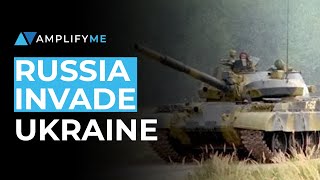
In a live briefing recorded on February 24, 2022, the presenter provides a rapid market‑focused analysis of the overnight escalation of the Russia‑Ukraine conflict. After expressing condolences for those affected, he outlines the geopolitical developments—Russian troops crossing from Belarus and the eastern front, attacks on Kyiv’s infrastructure, and Putin’s rhetoric about “denazifying” Ukraine. He then shifts to market reactions: the Russian ruble plummeted ~10% to a historic low before a modest rebound; the Russian stock exchange fell ~45%; European equities (e.g., the DAX) saw sharp declines and partial recovery; commodities tied to Russian supply (oil, natural gas, wheat, palladium, aluminium) surged 5‑7% with oil hitting a 7‑year high above $100 per barrel; gold broke $1,900, marking a technical breakout; Bitcoin showed a weakened but not broken correlation with equities, hovering above its yearly low. The presenter draws parallels to the 2014 Crimea annexation, speculates that Putin’s likely end‑game is annexation of eastern Ukrainian regions, and warns that any advance on Kyiv could trigger a further market downturn. He concludes with a risk‑management reminder that volatility is extreme and traders must monitor news minute‑by‑minute.
Chapters
Good morning, uh, it's 24th of February, um, and we've just got 9 AM here in London. Jumping on here to give you an update after there's been a pretty significant escalation of the Russian-Ukraine situation overnight and in the early hours of the European morning. I'll show you the charts, which have been— pretty volatile would be an understatement. But first, I want to say, you know, anybody that's directly impacted by this, my You know, feelings and condolences go out to you. This is a conflict. And of course, there's in the end never any good that comes out of this. So my, my thoughts are with you. What I wanted to do, whilst the humanitarian side of things is certainly obviously the most important, what I want to do is just kind of step away and have a look at how markets have behaved as a result of this. And I want to talk about what might happen next in terms of market reaction, obviously trying to predict what might happen next from a sort of conflict point of view is incredibly difficult. But just a quick update on some of the developments that you'll have already known about. And I'm just looking at my chart, actually, before I run through those, because the, the chart on the far right is the ruble, which just fell off a cliff overnight as things escalated. It's actually rebounding pretty sharply here. You're not quite seeing the same rebound. Let's move over to the DAX, obviously more impacted than, let's say, US stocks. So this is the DAX where we were heavy into the close last night anyway, but obviously a sharp extension lower. And we've bounced a little bit and stabilizing. I've got nat gas down here at the bottom left, and you can see that's jumped significantly higher. Oil's up. I'll go through these figures in a minute. We've got Bitcoin on the bottom right. We've got gold also that's punched pretty strongly higher. But look, let's take a step back. Quick reminder of what the developments are. So overnight, according to reports— and a lot of these are Western reports, I might add— But bombardments of artillery, heavy equipment, small arms, and Russian troops launched attacks from Ukraine's northern border with Belarus. And as I talk about this, maybe I can just bring up— it's often quite a good sort of reminder to kind of remember the geography of all of this. So yeah, apparently then Russian troops have come in from the Belarusian border, which is the one people are more concerned about in terms of this crisis escalating. To a full-on war or a full-on invasion of the entire of Ukraine, because obviously that's very close proximity to Kyiv. The two kind of regions that Russia earlier in the week, um, recognized as independent states, where you've got this sort of, uh, military sort of standoff between the Russian separatists and the Ukrainians in recent years, this is kind of what we, we think that Putin is after. Obviously, Putin annexed the Crimea back in 2014, and a lot of analysts are speculating that perhaps this is really the endgame for Putin. That's kind of what we're hoping in what would be the smaller kind of situation here. Obviously not small in any way for the people in those regions. But concerned that we have seen movement across the border in Belarus, and we've seen movement across the border right across that eastern side, and we see movement across the border. When I say movement, I'm talking about tanks and artillery and so on. And so you've got this kind of three fronts that the Russian army has been kind of moving over. I guess not a surprise because where these troops have been building up, as has been heavily reported in recent weeks, is on those three fronts. And so what's happened overnight is that troops have moved across the border across all three fronts. And I think ultimately that's why the Western media and particularly financial markets are alarmed this morning. If I go back to the charts, I mean, other stuff that I guess has got the Western media pretty riled up, and you're getting a lot of sensationalist headlines like full-on invasion of Ukraine. I mean, what's happened? The roads coming out of Kiev have been gridlocked overnight. Civilians are trying to flee the capital. Apparently in Kiev, before dawn this morning, some Financial Times reporters heard explosions. Apparently there's air raid sirens going off in Kyiv. I think that's what's really got the media riled up here because they're worried this is actually a full-on attack, including a move to try and secure Kyiv. There's been a lot of missile strikes around a dozen or so airfields as the Russians look to try and disable airfields across Ukraine. And that's across the Ukraine, and that's including Kyiv's airport. Boryspil. So also facilities in the Black Sea, you know, the city of Odessa, airports around there being targeted as well. This is what Putin said early this morning before the move into the country. He said, we seek to denazify Ukraine and defend victims of genocide despite there being no evidence of such crimes. Warned other countries against the temptation of meddling in the ongoing events and said Russia's response would lead to consequences that you have never encountered in your history. So obviously very aggressive, um, you know, very— when you're reading them, quite obviously very worrying, very sensationalist rhetoric. Um, I, I want to just take a step back here, and maybe the ruble is going to help me in my line of argument. And, and I want to just make it clear, this is a very live situation, and obviously in a live situation of this significance markets can turn and react incredibly powerfully. And from a risk management point of view, this is about as hard as it gets. Okay, I mean, markets have panicked this morning. Probably the best example, the ruble's dropped to an all-time low against the dollar, down about 10% overnight. If I go to a daily chart here, you'll see the daily candle, you know, just taking out that low we have back in January, and it's just dropped through the floor. Although rebounding now, I would say. Other sensational numbers are things like the Russian stock exchange is down 45%. Oil is an important one that spiked up to a new— another new 7-year high. Brent crude's above $100, by the way. I think topped out at $103. I'm showing you WTI crude down the bottom left here. And actually, the commodity complex more generally is well bid in certain pockets. So oil for sure up 7%. Natural gas up 5% or 6%. You've got stuff like other commodities like wheat, for example, where we know Russia's the largest exporter of wheat. The Ukraine's the second largest exporter of wheat in the world, that is. Wheat's up 6%. Got stuff like palm oil and soya beans are up 5% and 7% respectively. Palladium is up 5%. Aluminium is up 5%. All of these commodities where Russia is quite a key global producer are obviously showing some pretty sharp upsides here. From a safe haven point of view, well, gold is a good example, which has been pretty slow to kind of get going, I would say, this year, having lagged around down the $1,800 handle despite things like Omicron and things like that. But this has really woken gold up, and certainly over the last couple of weeks it's been well bit. But a powerful move here as we spike back up above $1,900. We go to a weekly chart to give you context. $1,900 is a pretty important price point because that was the high that we saw right in the middle of 2021. Okay, so an important move technically here on gold. What's happening on stuff like Bitcoin? Well, Bitcoin's had a seemingly pretty positive correlation between, um, well, between it and stocks, let's say. Crypto and stocks have had a positive correlation. Certainly that's been the case as you've seen this big sell-off as the Russia-Ukraine crisis has escalated. What's interesting for me is it may be this correlation is just breaking down a little bit, even though we did get a big move lower last night. I will point out the key level, mind. So before I get too carried away with my theory that the correlation might have broken down— I don't think it's broken down, I think it's weakened— the key level for Bitcoin, of course, is the low of the year that was set back on the 24th of Jan. And the move last night was a move down, but not quite down to that level. But that's a key line to be looking out for So I think what's important— and I've traded through these events many times, and I guess the closest example would be the Crimea annexation that took place back in 2014. And what I would say there is it feels quite similar in the one hand, where Russia piled into Crimea. We were worried about a full invasion of Ukraine, but actually it was Putin's strategy was just to take Crimea and then kind of step back. I think what's happened here is because the Western sanctions were particularly onerous that they rolled out earlier this week, I think that's the signal for Putin to get in here. I still believe that his endgame is just annexing these eastern regions. I hope that is the case. Obviously, any kind of movement of Russian troops properly rolling into Kiev means my theory is wrong. So we do need to be looking out for that. And that's the worst-case scenario from a global market sentiment point of view. If you— if today we're going to see tanks in Kiev, then sure, I think these markets, whilst they look to have just kind of bounced and perhaps back to finish with that ruble, they look to have bounced a little bit here. Making up maybe half of the losses. Any kind of tanks in Kiev, and I think you've got another wave to the downside. If there are no tanks in Kiev by the end of today, then maybe things can settle. The West are going to come out fighting in terms of threatening more aggressive sanctions, of course, and then we'll have to see. But look, if you're trading this, be careful. Volatility is extreme, and you've got to be all over those news channels and making sure you're fully up to date second by second as this very live situation unfolds. Okay, that's a quick update from our side, guys. Good luck.