BREAKING: Theresa May faces vote of no confidence
In this live market briefing Anthony Cheung (Speaker A) provides a real‑time analysis of the Conservative Party’s no‑confidence vote against Prime Minister Theresa May on 12 December 2018. He explains the 1922 Committee’s trigger (48 letters, 15% of Tory MPs), the voting window (6‑8 pm) and the threshold for May’s removal (158 of ~300 MPs). Cheung assesses the immediate FX reaction – a 30‑pip dip in the pound followed by a rapid recovery – and argues that the market’s short‑term bias will be bullish if May survives, given cabinet support and the likely delay of Article 50. He outlines the possible leadership contest if May falls, naming likely candidates (Sajid Javid, Dominic Raab, David Davis, Boris Johnson) and the multi‑stage election process. Cheung also reviews broader market conditions: muted news flow aside from Brexit, flat equity‑index futures, T‑notes and gold, and the impact of US data (CPI, Fed rate‑hike expectations) and crude‑oil inventory (10.18 m bbl drawdown). He offers trading advice – stay on the sidelines until the evening result, avoid choppy pound trades, and focus on less volatile assets. The briefing ends with a quick calendar preview and an invitation for audience questions.
Chapters
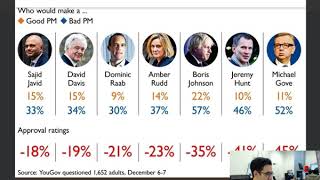
OK, very good morning, Wednesday 12th of December. Hope you are well. Bit of a delay on the briefing because we just heard live from Theresa May speaking outside Number 10 about how she will contest the vote. The vote being this: a press statement this morning from the 1922 Committee in the House of Commons where finally the Brexiteers have managed to get their 48 votes together to trigger a vote of no confidence in the leadership of the Prime Minister, Theresa May. So the threshold of 15%, remember, of parliamentary party members seeking a vote of no confidence— this then means that the ballot will be held between 6 to 8 PM today. So it does happen pretty quickly in terms of the no confidence procedure. So you're going to know or not pretty much immediately after that period. So looking at the press statement, the votes will be counted immediately afterwards and the announcement will be made as soon as possible in the evening. So given that that voting ballot takes place between 6 to 8, you're probably going to get a result, I would say, pretty prompt immediately after 8 PM this evening. So quick look at how the pound has initially reacted here, because obviously on my charts here you've got a real cross-section of different assets and it's particularly the pound that's seeing the action. Everything else is quite quiet. There's not a great deal of other news flow pertaining to things like the trade war or Italy or France. Things are quite quiet. Everyone's kind of latched on to this Brexit given this situation developing at the moment. So if I put this on a minute, let's just have a quick look at some of the price action this morning. Welcome to the roller coaster that is trying to navigate the Brexit headlines. And the first headline that came out was pretty early. This was the dip when we got confirmation. It's obviously been speculated for a while about this eventual enough letters going in to push for a no-confidence vote in May. The confirmation of that actually saw the pound dip by about 30 pips pretty quickly first thing this morning. However, you know, this is what makes it quite difficult. It's not a complete slam dunk of what this means. Is it a, is it a heavy short if she goes? Is it a buying opportunity? And then we've got to look at, you know, what's the probability of her actually departing? Because as we'll discuss in a second, there's a, there's a hell of a lot more votes that the Brexiteers are going to need in order to actually cast her aside and commence a new Conservative leader race. The point being here is the initial knee-jerk reaction. This is pretty typical of any news-driven event, particularly political. Anything that creates uncertainty, the initial reaction typically is a negative one for the local currency, i.e., heightened uncertainty increases risks in, in the immediate fashion. And so we dipped lower. However, as you can see here, we recovered very quickly. and one of the talking points here is about, well, okay, if she goes, then we start going into this process of appointing a new Conservative leader. Now that process does not happen very quickly. With that in mind, what will likely have to happen is that Article 50 needs to be pushed back. And so this kind of diminishing timeline that we've got, and so the pressure picking up and the negativity for the pound increasing about this risk of a no deal becoming more of a likely scenario as time goes on and nothing moves on, that's basically pushed aside because Article 50 ultimately will get delayed. This then was solidified and helped that pop in the pound in the second phase move by the Brexit Justice Minister says that we'll have to delay Article 50 if May loses. So therefore, you kind of— this isn't, you know, don't get me wrong, this doesn't change the situation. All this would do though is it alleviates the tension right now, and so the negativity is lessened, and so therefore the pound moves higher. Now you get this seesaw third phase of the move, and this, for you guys trading, I think you've got to be so careful of today. Today's going to be a real tricky one. You're going to get lots of rumors, you're going to get lots of journalist commentary, um, you know, tweets, things of this nature. I think then really it's, it's going to be probably more prudent unless something completely obvious materializes to just sit on the sidelines and just wait for this evening. If you're looking at the pound, potentially look or other assets, you know, look for something less volatile. You know, this is an incredibly high-risk asset to be trading right now, particularly when there's a lot of back and forth in the price movement. So if you didn't manage to get hold of the two moves this morning, which I think were actually two of the more clearer defined moves, now as you can see, it's going to get pretty choppy. So yeah, don't be in a situation where you're kind of giving back to the market little pieces at a time, which cumulatively at the end of the day, when potentially by 8 PM where the best opportunity might come, you're completely out of ammunition at that point if you're going to be looking at the pound. So this is when you kind of need to deploy a large dose of patience to the approach to the to the pound situation. If you're new, obviously this is quite tough because it feels like you're getting drawn in because of the, the kind of media fanfare that's created. So, you know, control is definitely warranted in this situation. Let's have a look at a couple of things then, and let's just break down what exactly could happen from here forward. Here is a table of the Conservative— let me make it a bit bigger so you can make it easier to read— the Conservative Party leadership election process. So a challenge is initiated, 15% of Tory MPs, so at present that would be 48, and that has happened. They've demanded a confidence vote. So we've now— we can tick point 1. Point 2, all Conservative MPs now vote for or against the leader. This then, as discussed, happens this evening, 6 to 8 PM, results thereafter. Now what needs to happen here is this: the leader wins a simple majority, which would be 158. Now this brings about some very interesting points. Now, having 48 letters, if you remember, after the string of resignations that we saw after the Brexit Secretary Dominic Raab resigned, there was quite a big push for the no-confidence vote. This was about 3 or 4 weeks ago and it failed. They had an incredibly tough time. The European Research Group, the ERG, led by Jacob Rees-Mogg, of getting enough letters. So it's been very difficult for them to get just this far. The problem is now that 48 needs to increase to 158 votes. So 158 of the 300+ MPs of the Conservative Party now to now vote against Theresa May. So statistically, I'd say, looking at the press, as my basis for my analysis, uh, there is— seems to be support beyond the 48, but I've not read anything that would suggest that we could go beyond, say, 100. The problem is you're still 58 short of that. Big problem then. The reason why there's been such a lackluster push before behind triggering of our— of this letter of 48 of the no-confidence vote is because if they fail, if Theresa May wins, this means then that you cannot challenge her for 12 months. That means then the control is right back in her hands. And if you're a Brexiteer, I'm sorry, you gotta fall in line now. The vote's happened. 'You now need to vote and back Theresa May's deal.' And that would lead to a soft Brexit delivered, and that means then the pound rallies under those circumstances. So on the balance, on the numbers, although we had an initial net negative reaction, I would say my view for sure is that Theresa May is going to win tonight, and that in a sense is a sterling positive, at least in the short term. Because the numbers are incredibly difficult. 158, incredibly high benchmark to hit for the simple majority to go against the Prime Minister. Supporting this argument and this view, and again, very important here, this is not my political view, this is an objective assumption based on the facts of the statistics that I'm seeing. I just want to make that clear. Now, this is a recap of— let me just make my transition, my screen, to make my video a bit smaller so you can see the percentage numbers. This is what then the Conservatives could be voting for if Theresa May goes. So if Theresa May goes, here's what happens. Let's go back. So let's say she loses. MPs who secure nominations from 2 Conservative MPs can stand in election. So in a sense, if you look at all these MPs, all of them could run technically if they then get nominations from 2 Conservative MPs. I would expect then pretty much, you know, Sajid Javid would put his hat in, Dominic Raab, David Davis, Boris Johnson. So you'd have at least 4 for sure. Then the process is, is that this gets whittled down through a round system where 2 candidates are basically eradicated at each point until you get down to the final 2 candidates who participate in a postal ballot for the Conservative Party membership. Now already, as you can imagine, this process, unlike the no-confidence process on the vote tonight, This process does not happen very quickly. In fact, as history is a precedence, this can take several weeks, which then means, again, although this could be negative in its outcome on who became prime minister, it could mean in the short term, well, Article 50 has to be delayed. Hence then the comment from the Justice Minister. He knows this process obviously very well. If this was going to happen, this is kind of the problem that you have for the Conservative Party. This is the most recent YouGov poll that we've had, which takes a question of who would be a good and a bad PM. So you can see here who would be a good PM. Well, on balance, most people think Boris Johnson. The only problem is most people think he would be by far the worst PM, so his approval rating is a negative 35%. He's actually one of the worst. Sajid Javid is probably one of the— on the balance, let's say he's bad but not as bad as the rest in terms of favourability with the public. But let's get things quite clear: Sajid Javid is on the fence, very much in a Theresa May-esque style. And so you just remain back in exactly where you were. More kind of harsher Brexit-minded, obviously, would be someone like David Davis in that type of situation. What is important here, and I think one of the key reasons why you're seeing quite a few people coming round to this idea that actually Theresa May is quite likely to win this vote, and the reason why the pound, as you can see here, has been recovering and moving slowly higher, is because we've had the cabinet members out in force backing the Prime Minister. Now, this is incredibly important if you think about it. Yes, these kind of backbenchers are pivotal for support and confidence of the Prime Minister, but the cabinet officials should be technically the senior people of the party. And if they're all on board strongly backing their Prime Minister, that's an important signal within the party in itself, because now you're going against a whole group of people, not just an isolated individual. Michael Gove, and he's obviously been one who's been in the past someone who's been questionable about his support for the Prime Minister. Obviously, he even challenged and was in his hat in the ring back after Cameron's resignation. But he said, I am backing the Prime Minister 100%. She is battling hard for our country, and no one is better placed to ensure we deliver the decision of the people to leave the EU. That's a little play on words there to kind of cajole support, obviously. Penny Mordaunt: The Prime Minister has my full support, not least because she's always done what she firmly believes in the national interest. There's a little bit of a, uh, a kind of collective way of obviously spinning this to the public who, you know, dissatisfaction of the inability of Parliament to really just get Brexit done Absolutely, if I was the spin doctor for the Tory Party in May, I'd be saying, "You've absolutely got to take a page out of Trump's book here and start talking up the national interest. And you want to do the will of the people. It is actually these other people that are causing disruption to this process." Not only that, Liam Fox, another senior cabinet official who otherwise has been, again, quite critical of May before, has said, "I will support the Prime Minister." totally inappropriate to have a contest. And now you've seen arguably one of the real key ones, because it wasn't long ago where Andrea Leadsom was seen as a real challenger for someone of Theresa May as the leadership of the party and somebody much more favourable to Brexit. But she says it's vital to support Theresa May today. She's again, she's working hard in the interest of the UK. Here we go, same thing again. Interestingly, I saw this tweet, and I think this wraps it up quite nicely. This is one of the most— this guy Alex Wickham is a senior political correspondent of— and this is for the new millennial world— BuzzFeed have actually been breaking a lot of the big Brexit scoops, and he's your main man on the ground on Twitter. And he tweeted this morning that Tory MPs on WhatsApp expressing surprise at certain cabinet ministers' tweets backing May, all the ones I've just shown you. "That's not what he's been saying in private," said one guy. "Assume that means he won't be running after all," says another. So it's all kind of falling at the tilt for those guys who might have then been of the belief that now was the right time to trigger this vote. Of no confidence. So all of this, I think, for me spells that she's going to survive. And if she survives, think of this tactically then for, for her internally, domestically. I think this then means that really the power swings back in her favor. The deal that she has, should she then now go to Europe and use this as a little bit of leverage get these reassurances on the terminology or legality on the backstop on the Northern Irish Agreement, then she'll come back. These other members now need to fall in line, and second vote will have to happen. This will most likely, one would think, would be in the January period after Christmas, of which then it goes through and we move into the transition period as planned. If that is the case, this is a sterling positive. A soft Brexit, a removal of a no deal, that certainly is not what's being priced in. What has been priced in, as you can see here on cable on a longer time frame, is all of this mess happening and not progressing on the deal has heightened the possibility of a no deal. Hence the reason why, with the combination of a technical breach of a very key support kind of zone that we were looking at in cable, of the mid-August of this year low, and also that support point of the summer of 2017, which has also been resistance in 2016-17, that broke and that saw that very quick fall as we had always been anticipating. This is 1.25. So this is not pricing in— if, don't get me wrong, if May does go, then you might see an initial confirmation dip, but the delay and extension of Article 50, it then recovers. And so what I'm saying is, if all things go as I've been saying as planned and we do have a smooth passage into the transition period, well, for me, that's then the signal that this pound's gonna not only recover this move, we're gonna recover way more than that. Because ultimately, if we go into transition, which is the end of 2020— there's already been lots of talk about a transition on a transition, which sounds ridiculous, it is absolutely essential given the complexity The fact that we've not even talked about the line-by-line tariffs of the trade deal yet. And so ultimately, I'd say then Brexit becomes the long burner of several years, and that would be the clear fire sign then for a strong recovery in the pound at that point. But that's talking a few, a few twists and turns in the road down the line. The biggest pressure or pivot point now of the future of the pound in the, the medium term really does come in the coming days and weeks. So that's the kind of view on Brexit. Just to recap in short, the ballot of the vote of no confidence in the Prime Minister will happen between 6 to 8 PM, results immediately after. And so if you are going to stick around, that's going to be, um, the time. If she wins, my view is the response in Sterling will be a pretty aggressive rally if she wins the vote. Remember as well, she then cannot be challenged as per the process for a period of 12 months. Okay. Let's get away from Brexit. I know you guys are probably sick of it by now, so let's have a look at a few other different things. Now, this is quite typical of how financial markets function. Obviously, my job is to kind of interpret news flow, and if you're looking at intraday markets, very pivotal to kind of give yourself a hierarchy of what's the most influential stories on any given day. Now, given what's just happened, Brexit basically is now consuming nearly all of an intraday trader's attention, which means then by default all of the financial newswires only want to feed that narrative, and they're only really reporting Brexit. So things like Italy, things like France, nothing's changed. The French spread still looking fairly precarious, having seen the widening given what Macron announced the other day. Italy, still same situation. The point being is, is that for the short term, attention is very much derived now from Brexit. So the actual news flow on these other subjects understandably has got quite quiet. There is really not a lot or great deal else for me to mention, and I think that is really reflected on the charts. Equity index futures pretty flat, slight positive. T-notes basically flat, have done really nothing. Gold flat. So, you know, it's kind of a reflection of what we've just been discussing. One article I did want to quickly show you as a headline. This is a Reuters exclusive saying that Trump says the Fed should not hike rates but calls Powell, quote, a good man. It's very nice of Donald to make that statement. Now obviously this is all, you know, kind of classic Trump approach. We have the Federal Reserve, the final FOMC meeting next week. This is the final rate hike of this year, execution of the full plan. It will be the 4th interest rate, the 9th in the cycle. Now the question mark here is of course with the Fed, not so much the rate hike, that's pretty much priced in and that is the baseline expectation. It's about the number of rate hikes thereafter. How many in 2019, first and foremost? At the moment, the current communication is 3, but we know that's now out of date. The Fed have turned dovish, the economic data for the US in some metrics has started to soften. They're gonna have to need to change tact, particularly with the ongoing trade war risk. And so that, with European risk, with Brexit risk, means are they going to do two? Are they going to do one? As far as Trump's concerned, could you do none please? Because then we can cultivate this delayed Santa Claus rally, and obviously then I can validate me as a president and my policies by moving back up in equity markets towards record territory. So I wouldn't make too much out of this. This is completely as to be expected. The point is, is that he's kind of got what he wanted because the Fed have already changed tact. Whether it was in response to him, I think that's not the case. It's more the economic conditions, both internally US, externally for the other things discussed, that are going to prompt the Fed to turn a little bit more shallow with their rate trajectory going beyond 20— beyond 2018. Okay, finish things off, quick look at the calendar for today. Very quiet this morning, in fact. So it will be interested to see how things play out when the US come in. What's their interpretation of this UK situation? Quite frankly, I think Americans will have little interest in understanding the internal Conservative Party conference mechanisms for a vote of no confidence. They will probably just want to sit on the sidelines and wait for the end game. All the more reason then that it could be a fairly tame session, certainly this morning, until we wait for that. This is what the Americans are going to be looking at, and this is why I'd probably want to be fairly conservative with the morning strategy, really focusing on this afternoon and this evening, is because this afternoon, 1:30, you get the CPI data out of the States. and obviously this is one of the key components for understanding what is it that the Fed could do next week. We've obviously seen a dramatic collapse in crude oil prices over the last several weeks, and so what's the read across then for the inflationary conditions? And that, you know, with that being a key metric moving away from target, is going to mean the inability for the Fed to continue hiking at an aggressive pace. So This could be quite telling to build or formulate those, those ideas for next week. Otherwise, you've got the crude oil inventory data coming out later. I did— let me just— I tweeted this myself last night. I haven't got this prepared, so let me just bring it up. We did have the API crude oil inventory numbers last night. This is a brief summary. After last week's shock surprise draw, the biggest in 5 months, ending a 10-week string of builds, API last night reported a large 10.18 million drawdown, which is the biggest since July. So let's just flick over to the crude chart for a second. It's kind of, uh, relief, I would imagine, for someone like Saudi Arabia seeing at last some sizable drawdowns to help bump the price back up. So Here was when the data came out. We have started to rise overnight. So for the moment, and obviously this was a technical setup we were looking at yesterday, you got this rising trend line of the price action over the last couple of weeks. You've got the $50 handle here sitting around the S2 as well, and we continue to pull away with that given the implementation, or let's say the commitment to the 1.2 million cut agreed at the end of last week for OPEC. So I still think overall that, you know, that's gonna be questionable. I still feel fairly bearish in a sense that if we— even if we did move any higher, I'd still be probably looking at only a maximum of potentially, again, this trend line and this price action to be around the top of any recovery we want. We might see a lot of this, of course, depending on the trade war outcome. As well on the demand side. But yeah, oil moving a little higher, not really the dollar move, that's basically unchanged. But the drawdown was, was a pretty decent size last night. I mean, this was the response if you were looking at crude oil last night, nice little pop on the upside. Okay, that's it, gonna let you guys crack on with the session and wish you a good one. I'll be in the chat, as will Sam, throughout the day. Any questions, obviously please do let me know. Happy to help. Okay, thank you very much.
More from Anthony


Inside the Biggest Banking Stories You Need to Know This Week (Anthropic, Diageo, Private Credit)


Inside the Biggest M&A Deals You Need to Know This Week (UniCredit, GameStop, eBay, Eli Lilly)







AI Breakthrough or Hype? Anthropic’s Claude Mythos, Tim Cook Steps Down & LIV Golf Collapse