Brexit: Change strategy or fire me!
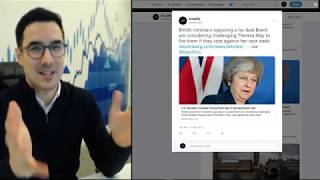
Anthony Cheung breaks down the macro landscape on February 21, 2019: the Fed turned dovish and ditched rate hike forecasts, US-China trade talks progressed on agriculture and tech, and up to fifteen Tory ministers threatened to force Theresa May to either fire them or drop her no-deal Brexit stance. German manufacturing PMI fell sharply, raising eurozone concerns.
Chapters
Okay, very good morning, Thursday, 21st of February. Hope you are well. Briefing, gonna be me and Sam, so covering off some of the, the kind of general macro themes this morning, and then Sam will go through the charts in more detail as per usual. I'm just having a quick look at things just while I'm talking, actually, because I know you guys are in the market already. Gold just testing the bottom end of the range that have been holding some of the price action well, for this week, I guess. So just keep an eye on that, just breaking a bit of the, the range and a bit of an extension here. You've got S1 downside at 1337. But overall, although it's quite, quite choppy at the minute, the broader kind of stories are that a little bit of positive development still about an MOU on various different points towards getting more detail on a US-China trade deal, and also a patient Fed evident in the minutes last night. That's the overall summary, and that's what's led to a little bit of an equity appreciation in the index futures from overnight. And initially, uh, European futures followed suit, but a bit of a pullback more recently. But there are lots of other stories at hand, and we just had some European economic data which I'll look at in a second. These are flash PMI numbers, and these are very important, and they have had an impact. And then there's a few other things to be aware of, particularly volatility in the Australian dollar overnight. So let's just get straight into the news, and I can leave the bulk of the charts review to Sam. Starting off with— let's go chronological order, I should say— starting with the Fed. Overall, if you're looking at the candlesticks at the time of this release, which was 7 PM last night, this isn't really a big story at all. We thought this— the minutes are quite dated. If anything, Friday, I think there's 5 Federal Reserve members speaking. That ultimately will be probably way more important to give their insight in the current context of the present day. You've also got ECB President Mario Draghi is speaking as well on Friday. And that will come after the ECB minutes later this morning, of course. But just to give you a bit of a summary of what was actually said in the, uh, the minutes, there was widespread agreement for the FOMC to end the shrinkage of the $4 trillion balance sheet by the end of the year. Remember, this is probably the number one point of which markets were looking at, this kind of explicit nature of the wording around the balance sheet runoff. Is it going to end? End of this year, and what's the consensus over that. So that looked to have been ratified. The FOMC essentially said it's throwing out the December forecast for 2 rate hikes this year. I don't really think that that's particularly surprising. We know this. And actually, while I'm on that point, I wanted to show you this graphic just to make sure why the markets are so comfortable with that type of comment. This here is the implied federal funds target rate. What you have here, really two lines to focus on. The green one is— well, let me just explain the axis you're looking at here. On the, on the left you've got the implied federal funds target rate, so basically the US interest rate is on the left-hand side, and then on the bottom is the corresponding interest rate that each member sees at the end of each subsequent year through 2018, '19, '20, '21. Remember, this is taken from the last time they issued dot plots, which was back in December. Now the green line is when you connect basically the median from the last or existing projections as they stand to this day. So you can see here in 2019, we're looking for 2 more rate hikes taking us up before we plateau and then come back down in the longer term, which is an expectation of the overall longer-term economic cycle. Now the big thing about this graphic is look at the green line, what the Fed projections officially are, and look, this bottom line is how markets are currently priced. So if anything, where the Fed is saying they're going to hike, markets are actually pricing in a rate cut at this point. So the fact that in the minutes they came out and essentially threw cold water about— we might as well forget the December forecast, although that is dovish in itself— that's absolutely managed by market expectations because we already know that given the comments that they've made of recent weeks. Other things then. I'll keep this up visible for the moment. Point 3, the committee is taking a patient approach in the light of increasing downside risks, and some FOMC participants were cutting their estimates for 2019 US growth. So growing pessimism. The Fed was also becoming more dovish on its view on inflation, even in spite of the US labor market that's been tightening. So all in all, uh, very dovish, cements then, um, everything that they've been hinting towards. Nothing really radically new there, and as a byproduct, very limited market movement. Moving on then, let's not dwell on the Fed, let's talk about China. And this is some of the key things that people are looking at at this point in time, and this is about China drafting a series of different memorandums for possible trade deal. Now, the actual detail here is that US and Chinese negotiators are working on multiple points according to people briefed on the talks. Of course, this is never official commentary, this is the sources at major newswires. Uh, the MOU would cover areas including agriculture, non-tariff barriers, services, technology transfer, and intellectual property. No breakthrough is expected during this week's talks in Washington on major structural issues. However, China's chief negotiator, Li Hu He, is expected to meet with US President Donald Trump on Friday, according to those familiar with the matter. The one point, though, I do want to make crystal clear is that although this has given some relief to kind of risk over what is arguably still the biggest macro event despite the short-term focus of on, say, PMIs in Europe this morning. This is a positive. However, the Chinese Ministry of Commerce has already come out and basically said there's no information regarding the MOUs. So I guess that's probably a sensible and official party line to follow from the Chinese Ministry of Finance. That's typically what they often say to market hearsay as a normal kind of legal routine, not commenting and so on. But one would think there's no smoke without fire, and certainly it does seem like we are making some traction, at least with some finer actual clarity and points, rather than just, you know, a comparison would be Brexit, which is there's really no details. This China trade war stuff seems to be moving along, which is a positive development. However, one thing that we have had overnight is for China, turning our heads away for a second from China-US fighting it out. What we've had overnight is China has delayed customs clearance of coal imports from Australia by as long as 40 days, and the timing spurs speculation the delay is linked to political frictions between the US and China. Now, this isn't such a big deal for China. This is a massive deal though for Australia, given how influential as a trade partner China is. Now, a lot of questions I've had this morning about what's been going on with Aussie overnight because it's been a bit all over the place. So what I thought would be way easier and more efficient for me to explain this is I've marked up this chart of the Aussie from overnight because it's been a real roller coaster of price action. So the first move came on the back of official data. If you remember, we had the Australian employment, unemployment rate, um, these were actually strong numbers, and the Aussie shot higher, broke above, uh, the R1 and also the high print that was seen in the prior day's session, got all the way up to R2. Big problem though, an RBA watcher— so this is one of the— I can't remember the actual bank, one of the major Australian banks, but essentially the guy who called, uh, an interest rate cut going against the grain, kind of contrarian view, and got it right. I think it was— this was back in 2011. He's basically come out again. Yeah, he's from Westpac, this economist. He's come out again overnight and he said, actually, the RBA gonna cut. And him saying that, people listen because he's got it right before and he's way ahead of the pack at the moment. He's become the outlying uber dove, if you like, on the Aussie street. And so the Aussie immediately responded to that commentary. We then had a period of consolidation, but then this story broke on Bloomberg, and as soon as that did, that was actually the biggest move of the day. So this is that Bloomberg one about China delays coal imports from Australia as their tensions are simmering, and we dropped. However, then we've had a slight recovery back to find some resistance at the S2. After that last comment, I said that China's Ministry of Commerce has said they deny any talks on an MOU with US on the trade side. So yeah, really lots of fundamental news-driven events that have influenced that price, and very conflicting, um, from positive situation initially, then an about-turn given now further fueling expectations that the, the RBA will have to cut in the near term. Then this idea about trade relations breaking down with China, which would be absolutely detrimental to, uh, the Australian economy? And is this coal situation on imports just the tip of the iceberg of things to come? Uh, but then the denial— excuse me— on the trade side with the US helping alleviate at least some of the tensions. But net-net, Aussie is quite sharply lower for the moment. So hopefully that makes sense of what was going on. All right, back to the headlines. A few other things. Let's just quickly wrap up where we are with Brexit, the saga goes on, I'm afraid. So what have we got? May— well, the UK inching toward a fresh compromise on Brexit. Now what this is talking about is the Brexit Secretary Stephen Barclay and the Attorney General Geoffrey Cox. They're due to be back in Brussels today looking at the kind of more finer detail on the legally binding binding text, or how that will be included within the agreement on the backstop, which is going to be quite key. Also, you've had UK Chancellor Philip Hammond has come out this morning and said the UK is making progress on the temporary nature of the Northern Irish backstop, was a comment this morning. He also said Brexit talks with the EU were good and constructive, adding there may be an opportunity for a meaningful vote in Parliament next week. Remember, that's what was speculated yesterday. Theresa May reckoning she could get a vote in before then having to return back to Parliament next Wednesday on the 27th. So Britain's still sounding quite bullish. And of course, this comes after yesterday we heard from the Spanish Foreign Minister that an agreement is being hammered out. One thing you did have overnight, just so you're aware, Fitch Fitch, one of the major rating agencies, did say it may cut the UK's AA credit rating, citing economic disruption a no-deal departure could cause. Now, I'm just pointing this out so you're aware of it. This absolutely is not market-moving. And just to give it some clarity, because the papers will probably latch on to this if they were to promote Project Fear, so to speak. Because let's not forget, a no deal is a very low probability, and of course that would have economic consequence that would result in a credit rating downgrade. The point being is the possibility of that happening is very small. So I think it's time to be aware of, but not something that's really going to move markets. Timeline going forward, as I said, Barclay Cox looking to iron out the legal points in Brussels today, so keep an eye on that. Otherwise, from the Prime Minister's point of view, she is attending an EU summit in Egypt on Sunday. Talks on Brexit are expected on the sidelines. It's not, though, a European Council meeting, and not all leaders are expected to attend. And so therefore, by default, no major decisions are likely to be made. So that's the timeline we're looking at on that side. The other headline with Brexit is that Theresa May is facing a new threat now on her authority, and this is coming from the inside within the Tory camp, with her own ministers considering voting against her Brexit strategy and challenging her to fire them. So there's about 15 ministers— 1, 5, 15— who oppose the UK's drift towards a no-deal Brexit and could force the PM to choose between accepting their open revolt or dismissing them. The officials want to back a cross-party effort to stop the UK leaving the EU on March 29th with no agreement in place to cushion the blow. If you think about this quite simply, there's 15— these are ministers now, so this is getting right up to the Tory seniority, not like the backbenchers. But the point being here is that they're kind of leveraging the situation because Theresa May needs them. A, for the parliamentary arithmetic to support her potential, uh, plan that she might bring for a meaningful vote next week, um, and then also to stop the rot of other people then taking flight risk if ministers were to leave. So now it's kind of like, in a traditional sense, what would normally happen is as a minister you toe the line of the party and the PM, or you resign. Whereas now, given this unprecedented context and situation, what they're saying is, well, you can't realistically fire me because you need me. So basically, you either do what I say, or I'm going to leave you and you're going to have real massive problems on your hands not having any type of support in Parliament. And obviously now there's this added threat of a new independence party who are basically picking off members at the moment to join their new kind of political view, which of course is eradicating a no deal. So it's kind of up to Theresa May now. Does she, does she call their bluff? Does she now go back and say, actually, we need to take no deal off the table? The ministers want to support a move coordinated by Yvette Cooper, of course, of Labour, who, remember, about a month ago brought around that initial amendment. So her, Cooper, and now Tory Oliver Lettwin have forced, or are planning to force, a delay to Brexit if there isn't agreement with that new amendment, which would come next Wednesday as a table motion. So that's Brexit. Um, this morning, obviously, there's been a little bit of fluctuation, nothing too much. Again, I'd leave Sam to look at the chart for you. Net-net, everything I've just gone over is to give you the latest what what's been happening. Nothing's really outright going to be making you want to pull the trigger either direction, I'd say. This is though slightly more interesting. I'm going to fly through 4 graphics or charts, and these are from the PMIs we've had this morning. Now obviously, Purchasing Manager Index is particularly important because it's forward-looking, and so what we're looking at is an economic slowdown. We know this, which is happening in Europe. What's very important now is what is the confidence— or I should say lack of— going forward, given countries like Italy are in a technical recession, Germany flirting with that at the moment, economic pressures in France. And so what is the underlying situation? Now, in France, you've had this manufacturing held relatively actually robust, well above 50, and a slight improvement from where we were 2 months ago. And actually, on the service sector, you remember we had an absolute dramatic fall, and we kind of hit a trough in January right in the midst of the Yellow Jacket protests, which severely hampered the service sector. So kind of, you can expect that type of sharp decline in these readings. However, it has bounced back quite sharply. Now, initially this morning, if you were looking at the euro, the euro liked this and it did move higher. France has been a particular focal point, just given the pressures now that have been created by these protests and the kind of disenfranchised public with the establishment, and the way of which has forced Macron's hand to now borrow more and spend in further social reforms, putting France essentially in into greater debt. But this does come as a little bit of short-term relief, and the euro actually moved higher all the way up until the point where— well, let me just bring this up for a second. So this was the initial move. Euro moved higher here. You can see on the right-hand side, we got up to that level on those two previous ellipses from the price action from the prior day, and then we had Germany come out. Now, with Germany, we've had a different situation, and this is a little bit more worrying. And this is when we had that— you can see on the last wick, if I just put this down to a shorter time frame, you can see here we pulled off that initial high and back towards pivot. And in fact, the, the high print that was seen kind of latter part of the Asia-Pacific fixed session. So this is because the German manufacturing PMI came in at 47.6. Now expectations were for 49.7, so actually if we're looking at a chart, we should have been up here, like towards 50 essentially. And in fact, the situation has got increasingly worse. And as I said, this comes from a country that that is absolutely walking the tightrope of falling into a recession at the moment. And this isn't just any country. This is the real heart and soul of economic performance in the euro area, given how critical they are. And manufacturing, being an export-related nation, this is somewhat concerning. So definitely things like when Draghi speaks on Friday, it's going going to be really interesting. So manufacturing was particularly weak, services maybe a little bit better on that side, at least 55.1 versus expected 52.9. So by the size almost that manufacturing missed, services beat, uh, so just kind of mitigates a little bit of the negativity. This is a pretty sharp recovery here, but obviously given the composition of their economy, the manufacturing one is the one people tend to focus on the most. All right, looking then, finally we had oil inventory API numbers last night. I'm not going to go into this in great detail because we'll cover this later. Obviously these information or data points from the API and DOE is delayed owing to the President's Day on Monday. So as we'll see in the calendar, we'll get the DOE's later this afternoon. But you had a headline build of 1 1.26 million. Gasoline draw 1.5 million. Distillate draw 758 million. Cushing— that's a pretty big Cushing number actually, um, a build of 3.24 million. Oil though still is remaining fairly bullish. This is a chart unaltered from what we were looking at, or myself actually, if you did join me on Sunday night, if you didn't have anything better to do with your life than listen to me on a Sunday night. Um, this was the areas we were looking at because we managed to just briefly break above quite a critical area technically, and also the 38.2% fib retracement of that 45% sell-off from October to December. Having got above there, and all things remaining equal, and with a positive developing story with the US-China trade war on the demand side, you know, we felt quite bullish actually about oil. And I still kind of stand firm that there's no real reason here to not get up and test that $58 mark, that being the low point back to Feb of 2018. And then you got the 50% fib and the $60 handle higher up if we were to even push higher beyond that point. All right, quick look at the calendar, and then I'll hand you over to Sam. So Aussie data obviously done, PMI is done. German state CPIs, just checking that we've had a couple. So Saxony -1%, previous 0.4%, year-on-year 1.4% 0.4%, previous 1.9%. Uh, looks like that's the only one that's come out so far. But again, inflationary conditions dropping in Germany, weak PMIs, weaker growth. Yeah, things are getting interesting for sure in the eurozone. And, and I have to give credit where credit's due, our head of trading, Piers Curran, he did— if you remember in our 2019 outlook we did just before Christmas this was one of the major things that he said was an underplayed risk in financial markets for 2019 in Q1. And you know, that's why he's the boss. So good call on that, and definitely a developing situation which we're gonna have to watch very closely. Going further forward, 9:30, public sector net borrowing UK. That is second-tier data. I won't be be really looking for anything too much out of that, to be honest. Not particularly in the context of Brexit. ECB minutes— is there going to be anything really interesting, or could it be more so a bit of a rerun of what we've had, um, with the FOMC last night? I'd say probably the latter point, actually.
Just—
yeah, so probably the latter point. I definitely would keep a close ear out for this. I wouldn't be expecting though too much from it, not given as well the fact that economic conditions have deteriorated further since this point. And so the markets I think would be fairly comfortable with this. And if there is any kind of interpretation that, wow, maybe they weren't so dovish, that's going to be short-lived because of the dated nature of them. US durable goods, weekly jobless claims, Philly Fed existing home sales and all infantry numbers. So you've got a full jam-packed calendar for the rest of the session. Speakers, you've got Bank of England's Haldane at midday, the ECB chief economist speaking at 1:30, Fed's Bostic, as well as the Bank of Canada governor and the RBA governor. And then finally, if you're looking at bunds, bunds have traded lower this morning despite a move lower in the Dow DAX. But do bear in mind you've got a massive amount of supply coming to market, which does often lead to short setting in Bunds as you have this competing supply coming into market. And this is pretty large size as well, looking at a cumulative value of close to €15 billion worth across the kind of curve. All right, let me hand you back to Sam and he'll go through the charts. But otherwise, from me, I wish you a very good day.
Thanks, Anthony. Yeah, morning guys. Obviously got about, well, just under 3 minutes until the data out of Europe, so I want to keep an eye on. I'll do a brief pause. Obviously if you're trading or in a euro-related trade, obviously probably want to come out of that position ahead of that time as well. Let's have a quick quick look, um, I will start with pound. Obviously had that push higher this morning, and, and really it's, it's been pushing since then. Let me just remove a couple of these lines, uh, for you. Uh, to be honest, same as what Ant is saying, I don't know whether if you're in a sort of medium-term position whether you would want to be, you know, a buyer or seller right now, because, you know, one comment comes out either way and it's gonna, gonna be pretty tricky with, you know, the dollar weakness that we've seen last couple of days. And, you know, euro showing that as well, um, you might perhaps favor the upside. We're on a pretty interesting point now, 1.31 in the futures, but also the initial high that we had from the, uh, from, well, yesterday morning. So potential point to keep an eye on that. You can see we've, we've come and tested that 1, 2 times this morning. So, uh, should we get a break above here, you might get a bit of a push to R1. But in, in truth, not something I favor too, too much to be focusing on at the moment. I saw a couple of comments in the chat yesterday, um, you know, that's why I don't trade cable, was the one that really stuck out. So it is an interestingly, you know, poised situation with Brexit, but market opportunity-wise, uh, might be worth waiting for something more substantial. Other key level though, just below the peak pivot. You can see this morning, if we make that a bit clearer, where we had resistance once, twice, push, push through, uh, uh, on the, the EU open. Might be worth keeping an eye on rather than the pivot should we come down. But we're pushing higher for now. Obviously euro in a minute's time or, or less than, you have the data out. A couple key points I would be aware of, uh, should it be worse than expected or we continue to sort of drift lower from that, that top that we've had. The trend line from the 15th to 19th to yesterday, uh, you can— or today, this morning, has been fantastically well respected. So for, uh, the market that has been pushing higher, and we've gone through this a couple of times about how that trend line held fantastically well on Tuesday morning, or the 19th, yeah, Tuesday. You know, if you're looking for the dollar strength to come in against this pair, a break of that trend line might well be the way that we get this market to come a bit lower. Just going to pause for a couple of seconds while we've got this data to come out. Coming on the wires now. So a bit mixed.
49.2, 49.2, below the expected 50.3. Services 52.3, Factory above the expected 51.4, composite 51.4 above the expected 51.1.
Yeah, so the manufacturing mentioned the German sort of miss of expectations there, but the composite and services slightly better. So a bit of a tricky one there. If you're looking to get into a new trade, it might be that you're identifying perhaps really the pivot as the key sort of point. And now we're, you can see we're sort of stuck in this sort of sideways range for now really since, uh, half 8 where we had, uh, the German numbers out. But yeah, going back to just that bigger picture, the euro, they got the free test of that trend line. A break of that would be more interesting. Aussie dollar, got to favor the downside at the moment. Every single creep higher that we have is brought back down to reality, I think. And a couple of, uh, sort of good opportunities if we were to potentially, uh, trace a bit higher. The S1 looks quite good technically. You had a double sort of area of support, I mean a good price action point. So if we could get back up to there, yeah, I think not a bad area to consider the short. Um, trend channel, I know people were looking at this yesterday. Uh, let's make sure I get the right sort of one on. You can see the top of that was, uh, it was fantastic. Whether, you know, you could have got in on that off the strong employment numbers or not is up for debate, but we're just sort of retesting the, the back end of this trend channel now. And while we are below that, you've got to favor a move lower, although it is starting to get slightly messy around this point as well. Similar, uh, in terms of looking at a trend channel here for the yen against the dollar, you can see we're contained quite nicely, uh, in that. And I'd almost prefer the, the premities to look at this for an area to get in, unless looking at this more sort of closer to where we're trading, could argue there's a bit of a trend line worth keeping an eye on from yesterday's low to the overnight low to this morning's low as well. So favoring this market to continue lower as well, as in yen against the dollar rather than the other way around. But that trend channel and trend line from those lows. It's something that I would, uh, would be aware of. Having a quick look over at gold, we had a bit of a push down this morning, can you believe it? But, uh, following on from yesterday evening's push, the lows of the, uh, the day which have been tested one, two— I mean, you can argue four times— a bit of a knocking, uh, on the ice effect and getting that breakthrough down to the S1. More medium-term, longer-term opportunity. I think, you know, I wouldn't be surprised to see a bit of a retracement go, much like we had after getting to the initial sort of 13.30 in the futures. Uh, could we get back to that point? That would be a good opportunity, I think, even intraday of, uh, sort of the first retest. Not necessarily think we can get there today, but I'd like that to be the place to, to get long for then a final push higher. Uh, And can we get the 2018 highs or not? Well, we'll have to, have to wait and see for that one. I think there's a, you know, a good case for it, but each time we come to that area, you can see we come all the way back down. So yeah, it's not a foregone conclusion at all. Bit of a trend line as well if you want, from I think it's the sort of November lows. So anyone that, you know, is a favor of of gold really actually starting to come a bit lower. It might be that you're waiting for the break of that 1330 area and this trend line, and that's where you get a further push lower. But, you know, remains to be seen. We saw a couple of good opportunities for gold last year on breaks of trend lines, so, uh, that's definitely one I'd be keeping an eye on. S&P, you know, my view, I do think we we're going to continue to go higher and higher. But, uh, yeah, this trend line, we didn't have it on. Now is, is the time, you know, potential opportunity to have taken profit for anyone that's medium term long, $2,800, just above. But then, you know, the way I think this could work, whether it be today or not, is almost you're looking for that break above, retest down to this area, and then getting that further push. And the next real key key level is the, the lows that we had before that 10th of October sell-off. So yeah, I think it's a matter of time. Personally, wouldn't be surprised to see a bit of a, you know, a battle around here. We've had that on a couple of key, key levels before that 12th of December highs. That's it here. Yeah, you can see we sort of tested it, came back down. The 200-day moving average, uh, was also providing quite a bit of support and resistance and and that's when you get that final push. It wouldn't surprise me to see a bit of a break higher, slow grind, bit of a chop, maybe come back down to test it before another push higher. Uh, and you know, I don't think it will be too long until those all-time highs. Let's have a quick rough look at the percentage we are away— 5.5%. Um, yeah, I think, I think within a month, but obviously anything I think can happen in that time. Any questions, obviously please do get them in the chat. As I mentioned, we'll run through the oil data in a bit more detail. If we just have a quick look over the sort of the main charts, how they're trading as a sort of bigger picture. Euro just now below that pivot, so taking a lead more of that manufacturing one. Obviously German manufacturing worse, European worse. The Pound struggling to get above yesterday's initial high. Gold continuing its sort of trend low. I wouldn't be too, you know, keen about a long S1 here, if I'm being honest. I think gold is, is just starting to, you know, retrace back to a better area to get long. Equities been coming down this morning. Yesterday's highs in the Dow, uh, and, uh, the NASDAQ, I think I was looking at, um Let's have a quick look at the NASDAQ. Aren't too far away. Oh, this was a morning sort of, uh, overnight low, uh, high in the NASDAQ. But yeah, yesterday's high in the Dow, quite close. But equities is coming down a bit as well. But any questions yet, please do get them in the chat. And if not, I hope you have a great day ahead of you.
More from Anthony


Inside the Biggest Banking Stories You Need to Know This Week (Anthropic, Diageo, Private Credit)


Inside the Biggest M&A Deals You Need to Know This Week (UniCredit, GameStop, eBay, Eli Lilly)







AI Breakthrough or Hype? Anthropic’s Claude Mythos, Tim Cook Steps Down & LIV Golf Collapse