Brexit deal or no deal - what happens next
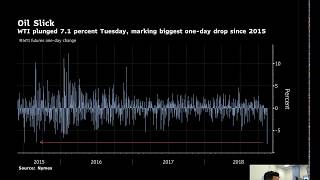
In this November 14, 2018 morning market briefing, the host reviews three headline developments and their ripple effects across global markets. First, WTI crude oil suffered a historic one‑day drop of over 7%, the biggest decline since 2015, driven by a mix of technical breaches (the $55‑$58 support zone), options settlement pressure, and weakening fundamentals such as higher OPEC‑plus production, muted demand, and a softer OPEC demand forecast. The slide hammered US equity futures, with the NASDAQ and S&P 500 showing weakness, especially in basic materials, oil‑related stocks, and technology names that faced recent downgrades from Goldman Sachs and JPMorgan. Second, the briefing turns to the Brexit saga: a cabinet meeting scheduled for 2 pm London time could determine whether Prime Minister Theresa May secures a deal, with sterling volatility spiking to its highest level since the 2017 election. The host outlines possible outcomes for the pound, ranging from a 100‑200 pip move on a deal collapse to a gradual rise if the deal is approved, and notes the timing of the parliamentary vote and the broader political risk. Third, the host provides a quick European update – Italy’s budget dead‑line and the EU’s potential fine process, Germany’s first quarterly contraction since 2013 driven by the auto sector, and the day’s CPI calendar (UK and US) with expectations for modest inflation readings. The briefing concludes with practical trading advice: stay alert for Brexit‑related rumors, watch the oil technical levels, and treat the CPI releases as background rather than primary drivers.
Chapters
Very good morning, Wednesday 14th of November. Hope you are well. I'm just taking an overview of what we're going to cover. Look at oil, given the big drop in prices, multi-year low one-day drop that we had yesterday. Also taking a look on the impact that had on the US stock market. And then of course talking about Brexit today being a pivotal day for the future of the negotiation and consequently the movement for the pound. So starting off, just having a look here at the NASDAQ, as not just US but European equity index futures just seeing a little bit of weight here at the open. Uh, just, just looking at the NASDAQ, it just ran through that low print, the weekly low that was printed kind of overnight Monday going into Tuesday. You can see that level breaking here on a minute chart. The break of that level just exacerbating some of the downside in what typically for US index futures is, is normally quite a quiet part of the day, but does come after a relatively mixed to, if anything, slightly lower close on Wall Street. The Dow actually, rather than NASDAQ, was a little bit of an underperformer. Boeing, which is such a large component of that index, in fact the biggest constituent, was down after some reports about their training and technology that could have contributed to the issue with that plane crash in Indonesia recently, and that significantly weighed on their shares. But otherwise, the main kind of story of the day yesterday, and certainly had an influence on that of the respective sectors within the S&P 500, was the biggest one-day drop since 2015 in the price of WTI crude futures. So if you I just wanted to show you this graphic. So from left to right, going from 2015 all the way up to the present day, and you can see here defined by the red dotted line that the market loss by percentage yesterday at just over 7% hasn't been seen since going back to, I guess, Q2 of 2015. So one of the biggest drops that we've seen in a long period of time. As a net result then, as I said, if you were looking at the heat map of what does— what was the— or where was the weakness on the US equity market. You can see here basic materials. So the good thing about heat maps, you can see here, so the oil and gas equipment services, refining, marketing— if you're looking at independent oil and gas names, even the majors, Exxon Chevron, so on, all of the kind of deepest red color concentrated in this area. The other factors as well, Apple, They were subject to further kind of bulge bracket downgrades in terms of their iPhone unit sales, and then as a knock-on effect, their, their revenue generation going forward. It was Goldman Sachs that downgraded them. This followed JPMorgan the day before, and a lot of the negative comments that have been coming out either from their technology and the issues with the iPhone X now reported 2 days ago, or the kind of downbeat outlook they gave for the holiday season, of course, just about about 2 weeks ago. So overall equity weakness again, and a little bit of a follow-through into this morning with the technical breaches of those levels. As I just said, it's not just the NASDAQ, the S&P kind of going through a similar point of the low from yesterday. If we just bring that up, you'll be able to see, and a little bit of a, an extension on that push lower, but nothing yet to say that that might remain the case because we haven't definitively got below there in the case spoos as yet. Other thing, of course, though, that the market is looking at with, with great interest, of course, is the Brexit move. But before we get to that, let's just have a bit more of a drill down into oil, because what we had yesterday was such a meaningful move. And, you know, let's just quickly mark up the percentage of how quick it's been in what, a 5-week period? We've managed to go from multi-year high to where we are at the moment, about 29% the sell-off is now in, in WTI crude. So quite incredible actually, um, you know, it's not often in recent history that you've seen such a persistent move to the downside. Now obviously we're aware of the kind of fundamental narrative, we've had quite a few ongoing things, whether or not the market got caught a little bit the wrong side of the the fact that those Iranian sanctions not as impactful as expected because of the waivers issued by the US, and this coming in the context of Saudi and Russia who had already upped the production values to near record levels, and of course the US doing the same, now kind of north of 11.5 million. That coming in the backdrop of the trade wars and the effect that that can have on global economic growth, which has been downgraded. Now, That's the kind of stuff that we know of and the stuff that's contributed to this overall downtick through the month of October, of which when at the time the equity market globally also came under severe pressure. S&P, of course, seeing a correction. The latest, though, that we've seen, there's a couple of things to be aware of here that would probably help exacerbate some of this recent movement. One is technical breaches of key levels. So yesterday we were watching with great interest that $58 handle on You know, I was kind of saying and have been throughout this week about how $55, I think, is, is kind of the real key area of support. And you can see here on the chart, I've already got marked up with the rectangles on the left how it's played an important part of the price action going all the way back to the beginning of 2017 and late part of that year before then the move and push higher. But what you tend to see in oil can be quite similar to what you see in the gold market. Is once some of these technical levels get breached, then you can see very quick price movement and it can escalate quite quickly in terms of the selling pressure. So once we broke 58, and then if you actually look a bit more of a tighter time frame, this is a daily continuation chart. The price of oil really just dramatically dropped after we left the office, so into the, the latter parts of the US session, and then chased it all the way down to the, that psychological and important technically $55 handle. Now a couple things here as well that obviously help, uh, kind of the move become somewhat self-fulfilling is the fact that options on WTI for December delivery are due to settle today, and large positions remained outstanding for put options conferring the right to sell WTI at $55 a barrel. That gave holders an incentive to drive futures toward that price and forced option sellers to take short positions to hedge their exposure. Something that's just being noted by— in the FT this morning. So this idea about some monster-sized hedging risk going on. Not only that, the snowballing losses for oil, which have been, you know, we've gone from +75 down to 55, so a $20 swing has meant that a lot of money managers are feeling some extreme pain at the moment because they're still holding on to net bullish positions in crude futures. In terms of an overall market positioning point of view, we're still in the futures market— there's net positions of futures equivalent of about 400 million barrels. So when the price keeps going ever lower and lower and lower, some of these firms could be required to liquidate their positions. And if they do so, again, you get this dramatic drop in prices as those positions get cut. And then the other kind of catalyst from yesterday's was the— we already are fairly sensitive to weaker demand prospects under the kind of cloud of trade wars and so on. But yesterday that was kind of validated by OPEC, who put forward their monthly oil report and said that the producers of the cartel forecast world oil demand growth would grow by 1.29 million barrels a day next year. That's about 70,000 barrels per day lower than its prior forecast. So a lot of things all coming together for this oil move to make sense. You have had the OPEC president speaking on Bloomberg TV this morning. So I would suggest that you're probably at the $55 handle now, likely to hear from him. And I would imagine probably the Russian oil minister has been speaking and just checking my newsfeed right on cue. Novak, the energy minister, saying it's not correct for the market participants to react to one-off fluctuations in oil prices. So again, in terms of this kind of graduated verbal intervention process that the OPEC ministers tend to go through, You know, this is the first noises now coming out of Russia. Again, should we break below 55, then really there's nothing too much in the way technically till we get down south of 54 when we start looking at the April 17th highs and the kind of September highs. So lower we go, the more you can expect them to start upping the rhetoric to try and counteract this, this movement. But Again, a pretty spectacular move yesterday, which if anything does give me a bit of a feeling that we might consolidate and find a bit of a floor, at least for today, at the 55 mark or around that area. That's not to say we might not push lower in the days, weeks after, but given such as the dramatic size of the fall yesterday, and if that was a byproduct of a couple of fund managers just cutting their positions then, you know, that move might be a little bit overdone, maybe a little bit of a pullback. The overlying or overwhelming fundamentals though is still negative. So if we did come back up, and let's say even if we got up to the 58, I'd still be favoring more for that to be restrictive on the upside, just given those, those reasons we just discussed. Looking short term, I was just having a look this kind of pennant, if you like, in the price movement from yesterday. The, the selling pressure we had last night, recovery that was seen kind of all the way up to what defined the top end of the range, just short of the $56 handle of the Asia-Pac session. We've managed to actually break that then as Europe's come into the market, and actually that trend line has provided a bit of support now. So on any move lower, potentially that could provide an area here, I guess, just looking at that trend line and 5524 level from what was the early entrance for European markets, um, at that point, which we've just retested a short while ago. Only push back up to the upside, gonna be looking at the Asia-Pacific session high and range of the last 12 hours or so, 5590. Okay, let's have a look at the pound. Obviously a strong rally in the pound yesterday, and we've had a significant gap up this morning because it looks like Theresa May finally has managed to get some kind of deal done. She reportedly was speaking with cabinet members one by one last night. My feelings are actually the fact that there's obviously a bit of a risk today that she could lose some further senior cabinet officials, which could be then obviously destabilizing if this was then to go through to a parliamentary vote, because she'd be losing less support from those closest to her. But the fact that she was meeting with them overnight, I just think that if they were going to resign, they would have done so already. And the fact that hasn't been forthcoming I am kind of leaning towards the idea that I think that they'll just support her at this point. Something similar has been said by Laura Kuenssberg, the BBC political correspondent, this morning. But lots of headlines still coming out. I can see Robert Peston's on the— on Twitter right now. So let me just read out what he's just tweeted. Even if no cabinet minister resigns over the Brexit deal, which I think likely, So again, he's just saying exactly what I've just said. That does not mean Cabinet will and should approve it. As I asked, they— can they in good conscience collectively approve a deal which they don't see getting through Parliament? Remember that time is massively of the essence. Brexit Day is at the end of March, and to approve a deal that Parliament is expected to reject would consume invaluable time, which could be better filled either preparing as effectively as impractically for a no-deal Brexit Brexit, or trying to stop the Brexit clock. So what Peston's saying, and this is an important point for our discussion, is that the reason why you had a decent move yesterday is that there's just not enough time to have this agreed now for it then to fail in Parliament. Irrespective of whether you're a Brexiteer or a DUP member, there's far too much at stake for the possibility then of having a no deal in time for March, end of March 2019, when Article 50 lapses. That's the reason why today's deal is so pivotal, is because by getting this over the line, it means then that ultimately the prospects of it going through Parliament, I would say, are relatively high because there's no alternate wiggle room. If there is going to be some kind of rebellion, it does need to happen today. So if you were tackling the pound, then a couple things to be aware of. For one, obviously volatility is picking up exponentially. Implied overnight sterling-dollar vol hits 23%, the highest since June 2017 general election, and on track for the biggest weekly rise in 5 years, more than the Indy referendum and Brexit referendum and 2017 election. So obviously the one thing that you've got here, an ability for the weekly change, is that this build-up to these dramatic moments like this rather than the unexpected event of the actual referendum that we had in 2016. So further, you know, quite spectacular moves can be expected, the biggest of which I'd say is given the way that the comments were coming out yesterday, they've all been erring on the side of being positive. And the fact that Theresa May now— the cabinet meeting, to give you an idea and update your calendars for timing, that's going to commence at 2 PM London time. So obviously keep an eye on Twitter for any rumor mill up till that point. And Laura Koonsberg has reported this morning that that cabinet meeting could be expected to go on for 3 hours. So 3, 4, we're looking at 5, possibly 6 o'clock by by the time we start to get real definitive noises as to whether or not it's been acceptable to the cabinet officials. So could be a bit of a late afternoon, early evening situation for the most meaningful move in the pound, not unless we get rumors and leaks coming ahead of it. Biggest point here is that actually, given the positive developments newswise and market positioning that occurred yesterday, I do think that there's a decent— you could be in for a nice move if we get the comment that, you know what, resignation's come, the deal's no good, we reset the button. And anything positive may— and the market was pricing yesterday— gets completely unwound. So you could be looking at a decent 100, 200 pip day. That would break us down through the weekly low under that type of scenario. I think that's more than doable under those conditions. In that scenario. On the flip side, if it gets agreed, I would be expecting further kind of gradual moves higher in the pound. So let's say the cabinet agree, then I think you will get up and test and break through— I would be expecting probably that upper bound of yesterday's price activity around 1.3067. This starts to open up the door then for 1.3131 and above a targeting of the last week's high at 131.98, or effectively the 132 handle. Another important point to also understand here with the Brexit situation is that the parliamentary vote, just to be crystal clear, that does not happen immediately. And actually, there is no set definitive date of when the parliamentary vote on Theresa May's deal will be heard. The one couple things that we do know, one is, is that the House of Commons has recess periods, and the upcoming one for Christmas, the House goes into recess between the 20th of December and the 7th of January. So any parliamentary vote is not going to happen over that period because nothing gets in the way of UK politicians enjoying their Christmas dinner and eggnog. Doesn't matter if it's Brexit or anything else. So the vote's not going to happen in that period. The question mark then becomes that if she gets the deal done today, well, effectively she's got about 4 weeks to get that hearing underway and the vote then to follow. Now, a couple of people I've spoken to, some other journalists, have, have kind of mentioned the date of around December 10th. Obviously in the case of the markets, and Theresa May may be fully aware of this, she'll want to get it done sooner rather than later. You would imagine if she waits until January, all the more time it gives for these kind of disgruntled politicians to really dwell on what's occurred and maybe then, you know, kind of gatherings against Theresa May it just kind of builds up in the background, and then come January vote, could be very difficult to push through. So I would say she's— it's probably in her, um, her mind that she'll want to get this done, potentially at least to be heard in discussion in the House before the 20th. But it could be the realistic case is that the actual vote doesn't happen until the new year. So that being said, you know, this isn't an event for now, the event for now is all about does this deal get agreed today? And my baseline expectation is that yes, it does. The tail risk, of course, is that it all— and we've seen this obviously many times before— that this time does feel a bit different because she's already also called key meetings with senior industry officials and corporations for after the cabinet meeting to also discuss the details with them as well. And I would have it a guess that she wouldn't have called that type of thing unless it was pretty convincing that the deal was, the deal was almost done in that respect. So at this point, obviously the second battle would be that parliamentary vote, but I'm not going to spend too much time going into this at this point in time because this really is an issue for a latter point in a few weeks' time. And as we know, the problem will come then is that Theresa May needs to have some of the people who have contrasting views about her management of Brexit to back her at that point, including all these different areas. One of the things you probably read this morning is about how if there is, uh, kind of the Brexiteers within the Conservative Party going against her, well then if she can get enough of the Labour Party and Labour rebels on side to vote for her, then that could well do the business. And I think the DUP will be forced into supporting her, just given the ramifications it could have on a knock-on effect with them being isolated away from Britain and the risk of an own internal referendum of Ireland. I just think the DUP will fold in the end because they've just got too much to lose. So that's your update on Brexit. Other things, just a quick overview. Italy. This is something I mentioned in the weekly strategy on Monday, in that I didn't really think today's deadline or yesterday's deadline for Italy was going to have too much in a way of a meaningful impact for the euro. My reasoning for having that view is that there's no real need for the League or the Five Star, so Di Maio or Salvini, to really give way to the European Commission's demands So they basically just resubmitted the rejected paper again. Now, the point is, is that what happens here— and you can read some of the articles this morning— is that now the EU are left with the choice of whether they decide to kickstart a long and complex process that could lead to several billion euros in fines for Italy. The only problem that Europe has here is that if they start pushing, saying, "We're gonna fine Italy," This only supports the kind of narrative domestically that the likes of the Five Star and the League are pushing to the Italian public, which is that, "Look at these European bureaucrats trying to bully us." And then it's just a bit of a face-off and a showdown because realistically, given the legal process that has to happen for European fines to be imposed on Italy, it can take several months. Up to 6 months. So if I was an Italian politician, it's a perfect time to cement further populist support. In my mind, I would be doing exactly the same as Di Maio and Salvini. I'd be saying, you know what, I'm not gonna budge. And also, the fact that Moody's and S&P have come out, done what they've done, and not downgraded to junk, that buys you another couple of months until their next review comes up as well. So I think the market participants are aware of this. And hence the reason why you've had a fairly tame response, even though the situation remains as dire as it was before. Other thing this morning you've had is some German data. Um, German economy contracted for the first, or the most since the first quarter of 2013, as you can see here on this graphic. Just to make a little bit of sense of this though, and I kind of said this before, I think, with a, with one one of the corporate earnings that one of the major news agencies was reporting. Whenever you see this type of headline and graphic, you do need to put this in context because obviously statistics can be massaged in whatever way that you want the information to be conveyed. And the point is that this isn't particularly shocking. Expectations were for a contraction quarter on quarter. The miss was only by 0.1, and the key reason of this miss is really down to the automotive sector which has been the recipient of tariffs and has been having to also adjust to new regulation change due to the emissions criteria that's coming in Europe and affected a lot of the German automakers. So for me, this isn't surprising, and this type of news is not something that I'd be making a conscious decision to trade the euro on. If I was trying to find a conscious decision to trade the euro, I'd be looking more towards the Brexit talks And let's say if the Brexit talks were to fall apart, that doesn't just increase the risks of a no deal and its economic consequence on Britain, that's also a net negative for Europe. And so that would be something that's more probably on my radar in that respect. All right, quick look at the calendar. It's a CPI-focused day. We've got the UK coming up, CPI coming out in about half an hour's time, US CPI to follow this afternoon at 1:30. Um, again, usual rule, and just to reiterate, UK CPI obviously an important economic indicator. We've got a range on the year-on-year 2.3 to 2.6%. 2.3, uh, if that was to materialize, that would put us down at the lower levels we haven't seen since really, I guess, latter 2016, early 2017. Uh, the fact that energy prices are dropping, demand still remaining relatively tame given the political uncertainty and lack of consumer confidence. I don't really think though anyway that this is much of a, much of a difference, certainly for the Bank of England. If anything, then inflation expected to come back toward target. This is all in fitting with their plan, I think, for the moment. The only consideration here is that obviously wage data, as we saw yesterday, continues to remain very robust actually. So if it wasn't for the sake of Brexit, then you could say if there was, uh, consumer confidence and spending was still particularly strong, then price pressures could well be building. So I just think that either way here, I wouldn't be looking for much in the way of a reaction from the UK data. And second to that, the fact that there's just way too much headline risk to hold a position for too long And remember, the cabinet meeting does not begin until 2:00, and expectations from some of the tweets this morning is that that could take several hours to complete. And so the bigger, better move might come later. And I would say there's two ways to approach this. I'd say if you're looking at the pound, keep your ammunition, keep your gunpowder dry. Wait if there's a rumor, take advantage of it if it is something meaningful. Otherwise, wait for later on, late afternoon. If you're going to be specifically focused on the pound. Okay, that is it. Going to leave it at that. Sam is back in his hot seat, so welcome back, Mr. North, from your world tour of— where have you been? Bath, Birmingham, Dublin, Las Vegas. Yeah, but he's back, and so expect lots more technicals and trade strategies to be shared in the chat. I'll get him to to post a couple charts for those interested. Okay guys, have a good day.
More from Anthony


Inside the Biggest Banking Stories You Need to Know This Week (Anthropic, Diageo, Private Credit)


Inside the Biggest M&A Deals You Need to Know This Week (UniCredit, GameStop, eBay, Eli Lilly)







AI Breakthrough or Hype? Anthropic’s Claude Mythos, Tim Cook Steps Down & LIV Golf Collapse