Career Insight: Devraj Bhattacharya, Flow Traders Head of Emerging Markets Trading in Asia
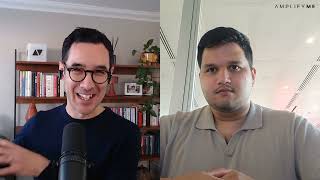
Devraj Bhattacharya, Head of Emerging Markets Trading at Flow Traders, explains how the market-making firm hires traders and quants. Flow looks for pattern recognition, coding skills in Python, and problem-solving ability. The graduate program starts with a boot camp in Amsterdam, then rotates through regional hubs like Singapore and Hong Kong.
Chapters
Hello and welcome to this Career Insight episode where I'm joined by Devraj Bhattacharya, and he is the Head of Emerging Markets Trading at Flow Traders in Hong Kong. If you're exploring a potential career in trading, I hope you're going to really enjoy this conversation. We're going to talk a little bit about Flow Traders, what they do. We're going to talk about Devraj and his journey. We're also going to talk about things like key characteristics of what he and his colleagues look for when they're hiring for their team. So without further ado, we'll jump straight in. I do know at the point of recording this, Dev, it is a mainland Chinese holiday, but you're in Hong Kong, so I'm assuming you're still working. It's been a busy week for you.
Yeah, it's certainly been quite busy. For those of you who've been following the news, I'm not sure when this will get recorded, when this will get uploaded. But China's announced quite a bunch of stimulus to support the market. So that paired with mainland Chinese holiday means that all of those, all that conviction and risk appetite is kind of flowing into Hong Kong with varying levels of liquidity in the market. So definitely makes for a pretty interesting couple of days.
Well, I know it's been busy times and also it's the end of the week for you on a Friday. So I super appreciate you giving up time to be with me today. So I think the first thing we could start with is that I think a lot of people, when they think trading, they typically think of a sell-side investment bank and trading. I don't think they necessarily think about what Flow Traders do, for example. So perhaps we could start with just a little bit more of an insight of what Flow Traders does and what its core businesses are.
Yeah, so, so Flow Traders is a, is at its core, a market maker. So we provide liquidity in just about everything that we think that we can come up with a fair price of. I think we're probably mostly known for our ETF market making across the globe. So yeah, where that fits with just trading versus sell-side trading, it's a little bit of both, to put it, put it one way. Like, we don't have any clients, but We certainly provide a lot of liquidity to a whole bunch of participants in the market. So let's say that whether it's a retail investor or a hedge fund or a superannuation fund or another bank or something like that, if they want to trade an ETF, they'll often be trading with firms like us to source that kind of liquidity. So besides ETFs, we're also quite active in a whole bunch of other markets. So cryptocurrency, commodities, FX, bonds, just to name a few. So we try to take a pretty holistic approach to markets in general, come up with systematic ways to price assets, and then try to build a market around those pricing points. Yeah.
So the sorts of people you'd have in your team then, would they be all those different products that you have? You'd have specialists within each individual area. Would that be right?
Yeah, so I mean, most of our hiring starts off, um, just at the graduate level. So very few experienced traders, uh, coming into the firm, which means that we take a very general approach or, or, or a method which can apply to several different markets. So in terms of like specialists for a specific product, sure, once someone's graduated and come into the whole program and been with the firm for several years like myself, then yeah, I would say I'm a specialist in emerging markets. But the team buildup can really vary between having traders that are much more content-focused, others could be much more technology-focused, others could have a higher lean on macro or fundamentals or flows. So the buildup of the team really varies depending on what the asset class is and what the current skills, competencies, and requirements of the market are as well.
Okay, so that sounds super interesting then. So you can come in a fairly vanilla format in terms of you get the grad training and what then you can kind of branch out into what sounded like quite a few different roles there.
Yeah, in the more longer term, I think, I think maybe more recently specifically for crypto, we have maybe separated the streams coming, coming for, coming in for graduates. I think a lot of university students these days are probably more knowledgeable about crypto markets than your most veteran of traditional finance people. So we have kind of separated those streams to some, to some extent. But yeah, it's, it's really when we, we really don't require experience when they're coming in, when people are coming in, we're more looking for aptitude and skills and attitudes as well that could fit a wide variety of applications.
We'll definitely unpack those characteristics because I think everyone will be very keen to know what they are. But before we get to that, perhaps we could just find out a little bit more about you, and perhaps I could take you back, if you can cast your mind back that far, to when you were at university And when you were kind of on campus, what were all your peers thinking? What were you looking at as potential options? Was it obvious to you at that point that you thought this is where you're going to go, or was it, was it not?
Absolutely not. Um, I, uh, so I'd gone into university, um, and I, I first studied engineering. I actually enrolled in engineering and law, but then I decided to skip the law and take up finance just as a bit of a side gig at the time. So yeah, in terms of like in campus, I went to university in Melbourne, and Melbourne's not particularly known for being like a financial center. And especially back in 2015, '16 when I was graduating, trading as a whole wasn't even very high on the list of desirable careers, which at least to the extent that it might be now. A lot of the firms were much less known, there wasn't much information about them, and yeah, it wasn't anything that I was aware of until very late into my university time. So I always thought I was going to be an engineer. I started some jobs here and there doing like, you know, like engineering research, also did something in sustainability. And while I was doing that, I kind of realized that maybe I liked a bit more action and more fast turnaround problem solving, and maybe being a bit more commercially aware compared to what a typical engineering graduate might be. So some of the other stuff that I was doing during university was I was part of a startup called Atar Notes, which is an Australian education company. I think this was like pre-Facebook and Instagram, so we had like a lot of, um, we had like something like 100,000 people under 18 in Australia, um, on our forum and online discussion board. And we were creating study guides and online tutoring and content and stuff like that. And I think that kind of entrepreneurial mindset kind of followed through to what I wanted to end up choosing as a career. Um, found out about trading actually just through like an on-campus math test, uh, that some of the firms do. And, uh, yeah, I found out about it and then realized that this was a bit more aligned to some of the stuff that I was looking at, um, at the time. So I played a bit of poker, I was trying to arb sportsbooks as well, basically anything I could do to try and get a bit of extra pocket money. So I realized that all these things kind of may have been more suitable for a career in trading as opposed to one in engineering at the time. So it definitely wasn't something that I had my eyes on for a long time. I think these days, like, especially when we go on campus, like, I think kids know that, or know that they really want to be a trader quite early on in their career and then will do all kinds of things to build their total profile to suit what they think is suitable for trading. Whereas I think back then, I think the trading firms, maybe even to some extent now, they're looking for more like raw skills and aptitude and not necessarily knowledge or particular passion or desire for trading. So Yeah, it's a bit difficult to put it all together, but Flowtraders popped up. It was 6 months in Amsterdam at the time and then a grad job in Singapore. And having lived in Melbourne for most of my life, I thought, why not? Let's try and get a job overseas. And then, you know, now I've been with the firm for almost 8 years now. I thought it was just going to be a couple of years abroad and then I'll come back home. But life Life doesn't— isn't always like that.
Yeah, yeah. Well, look, there's a couple things that I'd love to, to ask you about. Um, one was you said about— it sounds like you're almost a bit of a hustler back in the day in terms of lots of different things going on. That entrepreneurial kind of skill set or mindset, I think a lot of people often think that companies almost demand the opposite, which is more corporate. So just thinking about those transferable skills? Because you mentioned like engineering or STEM subjects, you had your own business that you were doing. And so how have all those things, how do they translate into core fundamentals of what's useful when it comes to trading?
Yeah, that's a, that's a, that's a great question. Well, I'll start with the maybe the technical side first and then maybe a bit more on the soft after that. So at the end of the day, financial markets are in some way to do a lot with the numbers, statistics, risk, all of these kind of things, and also pattern recognition. So maybe a very long time ago, much before my time or yours, that pattern recognition was even in trading firms, just like hedge funds or banks, you know, you kind of just sit in front of the market for a very long time, or you're maybe in the pits and you notice a lot of things and you spot some patterns, and eventually that translates to an intuition that is then actionable. And that's obviously had worked for a very long time and still does for a lot of seasoned traders. But, you know, now with, you know, financial data and other alternative datasets being so— it's so widely available, maybe not always easily available, but widely available. You don't need to rely on that intuition and experience all the time in order to spot patterns and understand relationships and correlations and so forth. Now, once again, I think like having the mathematics background whether that's applied in engineering or physics or financial maths, whatever it is, that's really just there to give you the toolkit to be able to process a very large amount of numerical information and narrow that down into something that is actionable. That's, that's ultimately, that's, that's what trading is about. I think maybe some of the other ways, like, I still think about some of our pricing models almost like engineering systems. You've got a variety of inputs that are subject to certain conditions. There's a certain uncertainty related to the conditions will be subject to. And then, you know, there might be some bends and turns at different temperatures and whatnot that apply to the inputs. And then you're going to get a range of outputs with some certain certainty. So thinking about markets like that, is something that's just come quite natural to me, but probably was built a little bit in university through studying various process systems and computer systems and so forth in my academic coursework. It's not directly transferable, obviously, because you're talking about very different things, but actually a lot of the mathematics is quite similar. I think the— so that's maybe more on the technical side. The pattern recognition, I think some people have it or they don't, but I tend to think that maybe some of that is very trainable if you either very— through a lot of very hard work in a short period of time, or maybe a background which lends to, uh, helping that out. So you'll find that a lot of, um really good traders might be great sports players or poker players, chess players, whatever strategic game which may require some kind of pattern recognition and then adjustment in strategy once you recognize that pattern. So maybe that's a second part. And then I think linking it back to the entrepreneurial side, I think there are a couple of ways you can go with it. You can have a desk which exists and a strategy set which exists. And you— maybe a certain type of trader might be really good at understanding the current system and the problems associated and the limitations and possibilities of that system, and then mastering it. But others will be more looking for what the next system that could be built in a different asset class or in the different market conditions or whatever that is. So It's not always that all traders need to be very entrepreneurial and always thinking outside the box and always chasing the next opportunity, because if everyone were like that, then you wouldn't refine some of the existing stuff, which is, which is very much required in this competitive landscape. So, but the entrepreneurialism can certainly help a lot, especially in, you know, trying to push for more market share, push to new products. If you spot something that's happening in the news or certain data that you want to go out and actually chase and see if there's something that can be found in there that, that you might be able to benefit from. So, entrepreneurialism certainly helps. It's not necessarily required. The requirement of that can vary depending on what you're doing in trading firms.
Okay, cool. And then the last bit that you were saying before was about you managed to travel a little bit having never left Australia. So tell me a little bit about that. Is that quite normal for a grad at Flow Traders to go to Amsterdam, Singapore, and then Hong Kong, choose a location? How does that work?
Yeah, so very quite normal actually. So our graduate program for APAC and Europe starts in Amsterdam. So they'll be starting in a classroom environment. And then be doing simulated trading, understanding theory, playing some games which might help build their trading intuition, that kind of stuff. So everyone that has traded in Asia has started off in that process. I specifically moved to Singapore after that and then was there for a couple of years, and then we moved some of our operations to Hong Kong later on. So that's, that's why, why never on Singapore, Hong Kong happened for me. Aside from that, we're also quite positive on like inter-office teamwork and rotations and things like that. So I've gone dozens of times out to Amsterdam, New York, visited some of our smaller operations in Milan, London as well. Just get to go and see some of the colleagues face to face and And I think that that relationship part can actually help quite a bit, um, when you're in a multinational company, because you can also just lever on their knowledge, resources, experience, all that kind of thing, and vice versa as well. So there's— I think what— I think probably that is one of my favorite things about Flow, that, um, that, that, that, that is certainly possible, and it feels very global in nature. We're always speaking to people in New York and Amsterdam daily, basically. Um, it really makes you feel like you're part of something bigger than just your immediate desk and team.
Yeah, I mean, that sounds like an incredible thing as a young person to satisfy some of these different things that you're looking for, for your professional, personal life. But because I was going to ask next about— I know that in Australia there's a pretty big historical kind of prop scene cause I used to work in the kind of prop scene in London back in the kind of 2010s. And so I'm aware of a lot of my colleagues at the time went off to Sydney and elsewhere to go to Australia. So it's, I'd imagine it's quite competitive with hiring within that region amongst you not being the only player in this field. So we talked about the travel, uh, and the kind of some of the structure of the grad program, but what else is there that you think makes Flow quite unique? Against those other competitors?
Yeah, I think there's a, there's a couple things. I've thought about this quite a lot. Um, it's obviously pretty competitive out there, but I think that, okay, the travel is, is one thing, but it's maybe more of a symptom of the, the broader culture that we have within the company, which is highly collaborative between not only desks, teams, offices, different business functions. Um, but we don't really have any silos, uh, per se. So what that means for someone that's coming in, especially early career, is that you can lever off the knowledge of people at any kind of level within the firm, um, setting up calls, having collaborative discussion, um, and, and learning. And that, that really happens, like, it's very flat in, in nature from that perspective. Um, and I do think it's generally quite different here compared to other firms because it's like the, the level of collaboration that we see that happens between, um, just our grads coming in, studying, um, researching things and then discussing that openly, um, and given a platform to the rest of the trading floor. That's something that, you know, knowing quite a few people in the industry over time, it's not really something that is as replicated elsewhere. Um, so some of the things that we do is that, you know, we'll have sessions for research, uh, whether that's on quant stuff or technical or macro, and then the, uh, juniors will be able to present and then have a collaborative discussion with people who might agree, disagree, have inputs on it. And that whole aspect of collaboration, I think, really helps propel, um, your own knowledge. Um, and, uh, and I think that really helps with the development early on in, in one's trading career. I think besides that, I think the responsibility that you get at Flow for sure, um, supersedes, uh, other firms. We're probably slightly younger on average age. I don't have the numbers to, to, to compare, so, um, don't hold me to it too tightly. But what that does mean is that Um, our traders are given responsibility from early on. Um, they are encouraged to come up with creative ideas. Um, entrepreneurialism is something that is encouraged, especially in the Asia office. Um, we've got a whole bunch of assets which, you know, we're looking to expand to, and we're always happy to hear out ideas. So I think having that kind of autonomy, um, early on in your career while also being able to lean on that collaborative nature of the firm presents a pretty unique opportunity to someone that is more like, lends more to wanting to, to have more responsibility, make more of an impact earlier on in their career. Whereas other firms will have you as a trader assistant or desk assistant or junior trader and have super high turnovers within the first 1 year. Flow's numbers on that are probably a bit more favorable for grads because we invest quite a lot into them early on. So I think what I think that are the genuine benefits are if you're hungry, you're keen, you want to, and you're smart, obviously, and you want to implement stuff pretty quickly and you're always hungry about that kind of thing, Flow is probably one of the best places for actually being able to see your ideas translated to something actionable quite quickly. Maybe one thing specific to the Hong Kong office is that, yeah, we've got a very relaxed kind of team-oriented vibe here. We're not too many people, which means that people— and also a lot of expats as well— which means that people are, you know, more than just friends with each other. Everyone gets along with each other very well. We have a lot of social stuff. It's not just that you come to work and finish work and then go back home. Which is the case in a lot of corporate gigs. I think the Hong Kong office is a bit more like one big family compared to some other finance roles you could be doing.
Yeah, anyone who's ever been to Hong Kong, I'm sure would have experienced Hong Kong is a fantastic city for sure. So perhaps we could talk a little bit more. We mentioned near the top of the episode when we started talking about characteristics And that's something we talked a little bit about. You, I'd love to know, you, when you're hiring people, building out your team, what are the kind of key characteristics, skill sets that you're, you're fundamentally looking for when you're, when you're going through that hiring process?
Yeah, um, it's a good, it's a good question because I think we often get the question like, what is the ideal candidate, um, for, for a trading role? And there are certainly a lot of things that are in common between almost all good traders. But I tend to take a bit of a slightly different thought process towards it. And, and often the best trading team isn't necessarily just the product of all the people with the, with equally strong attributes in the same skill sets. If we had the same people who are really, really analytical and really good with maths and, um, super good coders, and that was everyone, um, you might not be able to achieve as much as if you had a slightly more diverse range of, um, team members, but with some minimum standard across all the multiple different aptitudes that you have. So what does that mean for a like a grad these days. I think the key thing there is actually like, don't be too afraid to be yourself in an interview. If there's something that you're really passionate about and you really, that's something that you really like look into and try to drive yourself to push better, whether that's in whatever it is, like sports, gaming, technology, whatever it is. Like, I think hearing about that and, and understanding that, that passion can often lead to a better perception by whoever's across you, uh, across the table from you in an interview. And that actually gives you a bit more insight as to what kind of level of energy and passion could you bring to a trading setup as well. Um, I know I've kind of ventured a little bit beyond to the next step beyond your, your initial question. But in terms of the minimum and characteristics which would be elevated compared to any other job, I think it really is having the ability and the tools to identify patterns, put together pieces of information and relate them to each other, and that's almost always going to require either, um, sorry, it's going to require good problem-solving skills and good problem-solving skills within the arena of data, numbers, statistics, and so on. So I think, and then that, that's, that's maybe a bit more on the aptitude, but the specific skills, you need to be able to do that on scale. Now it's pretty difficult to do it unless you're, you have a minimum level of data and ability to analyze data via some kind of coding or programming, basically. So I think in 2024, it's going to be pretty hard to land a job unless you're quite relatively competent in being able to be able to do that. So I think getting large datasets, finding patterns within that dataset, and being confident that you're able to do it, maybe not to really heavy level of complexity, but the ability to do it quite naturally, I think that, that is a minimum skill set.
I think just on the back of that, can I, can I just ask what, when it comes to programming, say if someone was, um, a fairly elementary level, is there a preferred language that you'd like to see them experimenting on, or does that not really matter? It's just the kind of logic of how that's constructed, it applies to all.
Yeah, I think, I think, I think the logic isn't necessarily— sorry, the specific programming language is not really something that we look for. I think more the ability to think algorithmically when needed and think about systems and what operations are happening to the system. That's a bit more important. So I would say that generally speaking, there's some— languages that are preferred over others. I think just familiarizing yourself with Python for data analysis is probably one of the better ideas, but certainly not— if you, if you only know MATLAB and R and C and Java, it doesn't mean— I'm not saying that you should go, you have to go out and learn Python. Definitely not. If you're, if you're comfortable with algorithmic thinking and look at the end of the day, at least reading code and understanding what it's doing. It's pretty straightforward across multiple languages, right? So if, if, if, or it should be straightforward across multiple languages. So being able to do that is, I think, more important than knowing one specific programming language.
Cool. Could you just explain to me a little bit more about the actual lay of the land of the members of a team? Because I think a lot of— there's a bit of a misconception that it's like everyone just thinks everyone's just trading or they're, they're a dev. Yeah, I'm assuming because you mentioned before about there's other people who are thinking more macro and there's other— so I'm assuming there's researchers, there's other people pulling on different skills to get the greatest output as a team. So other than just a trader executing, let's say, using the tools, or the dev creating the tools. What are the other elements and players within that team?
Yeah, it's a good question. So we, um, broadly characterize a lot of our traders into a couple of different categories. Um, for products which are maybe a bit more like speed sensitive and highly competitive, um, but the pricing is very obvious. Let's say you just have the gold, a piece of gold in one country and a piece of gold in another country. They should be roughly— they should be the same at any given time, assuming there's no costs. So if that— if the price moves in one place, it should reflect elsewhere. Now, that's not necessarily requiring really, really good data, data analytic skills. But may require a lot more in terms of processing information quickly and then turning that into a trading decision, um, at another venue, for example. So it might require a bit more on the technology side of things, like understanding how data is transmitted, how do you most efficiently, um, get that data. Do you want to predict something based on whether, um, on just some of the information that comes in a little bit quicker than the others. So that might be one set of skills where it's like technology-driven trading, and they should also be very familiar with the technology behind what exactly is coming in and what is going out. So it can get a little bit complex, so I won't get too much into it, also because I'm not one of those. The other is that there are I would say a bit more quant-focused, where understanding the fair value of an asset, it might be a function of a whole bunch of other things, whether that's whether it's something very simple like an ETF where all the underlyings are open. That's a bit straightforward. But an ETF where some of the underlyings are not tradable, meaning that there is some uncertain factor in the pricing and Nobody knows what it is exactly. Having the statistical skills to come up with what the fair value for that is might require a higher level of data analysis and so forth from that perspective. And similarly, if you— if there are patterns in the market and you spot them, you might need to have the skills to identify that pattern, test it, figure out what you would want to do if you, if you think what kind of, what kind of strategy you would want to trade around it and, and having the skills to backtest it in a very robust way. So that would be more on the quant trading side. And then while there aren't too many traders that in firms like ours that do this exclusively, but then there's also like a bit more of like a fundamental macro flows-driven side of things as well where something is very difficult to predict, it's not very well modeled by things that I described in Category 2, but it might be outside, might have an outsized impact due to the behavior of other market participants, due to news, due to particular flows that might be occurring. So processing information at a maybe lower frequency but then making having the conviction to make the appropriate pricing adjustments or make the appropriate pricing decision based on new information that's coming in. So that's a bit more on like the spread macro fundamental side of things. Now, in reality, some traders— almost all traders will have some blend of all three of these. Maybe some of the tech guys won't have any of the fundamental and they just want to keep everything super systematic, but for the most part, some blend of all of that is quite useful in the ETF space, especially in the international ETF space where, for example, you're sitting in Hong Kong and you're pricing things where the underlying could be in a whole bunch of different countries. Yeah.
Cool. So I think that's set us up quite nicely then to talk about the opportunities at Flow. So with those kind of 3 categories, would you go into those 3 categories or do you go in a center grad where you have a bit of exposure of all and then you kind of build out from there? What does that look like?
Yeah, so once again, like, it's not a necessary component of our hiring that everyone that's coming in even has like a very strong conviction of what kind of career that they want to take. But if they find it super interesting to make contributions, look at problems, look at data, spot patterns, like, we can try and bring them into our, our grad program and then try and they can kind of work through together what their strengths are. And maybe not just where their strengths are, but what, what kind of potential they have to branch out into different things. So it's not really that every single candidate comes in, it's like, all right, we know this is gonna— this person's gonna be a quant, this person has stronger macro aptitude, this person's going to be better with technology, it can really change. Like when I, when I first came in, I definitely thought I was going to be much more on the technology side of things. I was very interested in how, you know, data was sent between exchanges and how to make, make accurate predictions based on how, how that data is sent and whether there's any advantage to be had there. But then as time progressed, I definitely developed much more of an interest in just things that were going on in the world, whether that's from politics, news, or maybe like individual companies as well. So making that, that, that those kind of one-off applications to, to a broader systematic structure, I found to be something that I enjoyed more. And obviously that's a lot more applicable in emerging markets compared to your developed markets, for example. So, um, yeah, there's kind of two ways it can go. Someone's come in and it's very obvious they're going to be a quant. I think that is certainly possible. I think there are a lot of people with certain backgrounds that, you know, that they're probably not going to be the ones to, um, perform excessively well under pressure and take on a whole bunch of risk in a very short period of time. And they may be more suited to looking at a problem holistically and making a structural solution to that problem. So, and then likewise, um, sometimes it just works out different to what, what you might think. And I think the grad program, and any grad program, not just a flow traders, like, there's no way that just out of university that you're going to go into your job, whatever it is, and it's going to work out exactly how you thought it was going to work out. I just don't think that that happens unless maybe you start your own thing, and even then, probably not. So I think, I think it's important for uni grads to recognize that, you know, it's not just uni and then getting the job. There's a whole, there's a whole array of things, array of things that can happen from there, and things might not go as you expected, or either in a very positive way, or, or maybe you just like really don't like being in a trading environment or a high fast-paced environment, and it really doesn't have a reflection on your overall capability or worth, right? So, I think it's important to have an open mind and not have too narrow a focus when you're just starting out. It's good to have an open mind and figure out and just learn as well, just soak in what people are saying and what's out there as well.
One question, because I get to talk to also kind of senior traders. And as you were describing about, um, problem solving, being able to take risk, all these different types of things. So resilience is a word that comes up quite a lot when it comes to the field of trading, but resilience can have lots of different forms. Doesn't necessarily need to be you're in the trade, so to speak. But as a team leader now, how do you try to build out in a young person a resiliency factor to help them progress and improve individually?
Yeah, that's a great question. I think resilience is probably one of the most important things in trading. I think that, you know, if you're in this role, no matter whether it's at our company or anywhere else, like the number of situations per day that you put yourself in or your work puts yourself in and the outcomes that you could be subjected to are pretty, pretty varied in nature. So you can, you can do all the right things and have a very bad outcome. You can do all the wrong things and have a really good outcome. And those kind of things can persist for quite some time. Um, so kind of understanding that, you know, best that we can do as individuals, okay, is to understand our process, um, and understand that, you know, if we got— if something happened that was out of the ordinary, whether on the good or the bad side, that you don't just kind of like dismiss it being like, okay, well, if it's good, it's all skill, and if it's bad, it's all bad luck. But having that kind of like that, that lens to think about, um, the process and improve continuously is far more important than always just guaranteeing really good outcomes. So it's really, really easy to make mistakes in trading. And I'm not just talking about mistake as in losing money. You can make a mistake and make money. But— and we should be equally critical and equally willing to improve and reiterate and learn. Regardless of what the outcome is. I think that's super important. So I often have the junior that has made a mistake or has even maybe come up with a great idea and we've signed off on it and had a very bad outcome. And they might be very worried about what the consequences for them. And what I always say is, and what the reality is, it's not some hyper cutthroat environment where it's like, okay, well, that's gone wrong once, that's going to keep happening, we're ending this here. That's definitely not what trading is about. I think where the resilience comes in is kind of picking up after a situation or after something that's really busy, for example, these last couple of days, and having that kind of presence of mind to say, 'Oh, there's a lot of interesting things happening today. Do I need to review something? Do I want to go back and look at some of these spots that happened? What would I do differently?' Maybe the answer is nothing, but having that kind of mentality of kind of always wanting to improve and think about process and opportunity and potential I think that is what's more important than always just saying the right thing and only, only making trades or only making decisions that, that profit. Um, because I can guarantee you that if all of your trades only ever make money 100% of the time, it means you're leaving a lot of money on the table, or leaving a lot of market share, or whatever it is on the table, because it means you're not taking enough risks. So I think having that resilience, uh, is certainly super important, and picking yourself up and, and trying to be constructive about the negative things that happen at work or in life even, um, is, is quite a strong characteristic, a strong trait to have.
All right, great to get that, that insight. And the final question to, to wrap up: let's say, let's say you are the 20-year-old version of yourself listening to someone, i.e., you now, if you could be that looking back and thinking, what word of advice do you think that would have been super useful for me, or encouragement, or, or insight to just help at that juncture in your, in your life?
Uh, within the context of just being looking for a job, or looking for a job at Flow, or just in general?
Just, just, just in general, because I think the general probably applies to, to Flow as well.
Yeah, I think maybe before career and everything, I think you should, if you're in university, you should really enjoy and enjoy that time that you're having there. There's nothing really quite like it. And, you know, everyone that's a couple years out of university would probably tell you the same. I think maybe one thing that maybe not a regret, but perhaps like something that that I would give myself the advice is just to try and learn more about different things that different people are good at, no matter what that is. I definitely in university thought that, okay, ah, I've got to do this stupid subject, this is not going to be useful at all for me. Like, but you might have a professor or reading materials, whatever it is, that would still be quite insightful to to know as an individual, and you never know how the expertise of someone in one field might help you in building your own specific context in another field. So I think leveraging the resources that you have in university, your lecturers, your student associations, companies that come and visit you, just hear them out and try and have some conversations with people And if someone is, particularly if someone's like quite passionate about something and they're willing to share a lot with you about how they view it, having an open mind to that is super, super useful, whether that's in trading or in general. Like, I will, I've got friends out here in Hong Kong that are chefs or bartenders at these like top 50 cocktail bars in, in Asia or whatever. And the way that they look at whatever it is that they're doing is really quite inspiring in terms of how I can try and apply a similar mentality and mindset, um, to— on that, on that side as well. I think maybe a bit more, um, maybe a bit some more formulaic advice is that, uh, um, there are some things that maybe don't necessarily help you get your foot in the door, but will— not having that might exclude you or delay opportunity going forward. So I do recommend that, you know, if you're looking at trading firms or even Amplify partners with a lot of investment banks, hedge funds, and so forth, like at the end of the day, any firm that is a good graduate package is going to get a lot of applications. If there's a lot of applications, our lovely colleagues in HR and recruitment will need to use some rules-based methodology to narrow down that field. And I think, I think students know what that is. You should, if you should try and get good grades where possible, you should show— you should have something to show for the time that you spent working on other things or spent on other extracurricular activities or sports or whatever it is that you spend your time on. You should have something to show for it, I think. And if you don't think you have something to show for it, really take a step back and really think about why that's the case. And maybe you're actually just missing something out of the things that keep you busy. So I think maybe that's, maybe that's another one. So take what you're doing seriously at the time which you're doing it. You, it can be very difficult to repair things like not having the right grades or not having any programming or coding skills whatsoever, or not having not read a newspaper for like 4 years. Like, you will, it will reflect, you will look silly at some point. So definitely try and make the make the most of that time that you have in university. And aside from that, have fun. Like, you know, you're only going to be young once. Don't get too bogged down in just studying all the time or just tailoring everything that you do towards one company or one industry. I think people at the end of the day also want to work with people, and, uh, you should— it helps a lot to just come across, um, a bit more personable and conversational and have things that people want to connect with you for as well.
Yeah, I think that's a really great kind of sentiment to finish on because that culture, you know, I love. And as a young person, I would have been absolutely, you know, like being told by someone who I'd aspire to be that actually I can be myself and have experiences more than just focusing like laser-focused on finance, for example, to become a round individual. It sounds like Flow is a great place to flourish.
It might be a bit specific to Flow. I don't necessarily recommend if you're going to go into a hyper client-facing kind of gig to be overly yourself because that might reflect on how you might communicate with clients. You might have different sensibilities and so forth. So obviously, I'm speaking from the lens of someone that's just worked in this kind of environment for my entire career, basically. So try and understand, uh, how it might vary based on who you're talking to as well.
Okay. And then the, the Flow APAC team, they're hiring right now, is that correct?
Yeah, so, um, we're, we're always hiring, uh, for traders. Um, some of the other stuff that we are hiring for are quantitative researchers, who rather than trading the market or implementing strategies into the market directly and monitoring them and adjusting them, they would be researching the ideas behind what goes into those strategies. So that, that's, that's both on the graduate and experience level. And also macroanalyst is something that we're always looking for, people who are able to process what's going on in the real world and understand how that impacts our overall trading systems. And obviously, you know, we also got an intern, intern program which is currently open for APAC students. That'll be next summer in Hong Kong, so June, July. We have tailored it such that it also fits people in the southern hemisphere as well for their winter, winter vacation. So yeah, there's an intern and grad trader, and then Quant researcher and macro analyst, which is all available to potential graduates as well. All right, cool.
Well, what I'll do is wherever you're listening to this, whether it's Spotify, Apple, YouTube, just check the comment section or the bio of the episode and we have all of those links that Dev's just mentioned that you can click on. But Dev, thank you very much. I know, as I said, it's the end of the week. It's been a busy one, but look, absolute pleasure talking to you. Some great insights. Thank you very much.
Yeah, thanks Anthony Cheung, and yeah, it's been great talking to you as well.
All right, all the best.
All the best. Take care.
More from Anthony


Inside the Biggest Banking Stories You Need to Know This Week (Anthropic, Diageo, Private Credit)


Inside the Biggest M&A Deals You Need to Know This Week (UniCredit, GameStop, eBay, Eli Lilly)







AI Breakthrough or Hype? Anthropic’s Claude Mythos, Tim Cook Steps Down & LIV Golf Collapse