CAREER INSIGHT: Tanya Tracey, CEO GAIN (Girls Are INvestors)
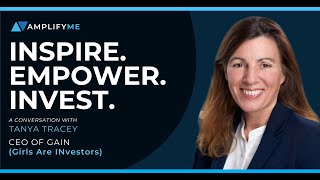
Tanya Tracey, CEO of Girls Are Investors, spent 12 years trading at JPMorgan and Nomura before founding GAIN to get more women into finance. The organization has grown to 1,000 volunteers and reached 15,000 students in three years. Tracey discusses the confidence gap that keeps young women from applying for finance roles and how mentorship can change that.
Chapters
Okay, hello and welcome to this session where I am joined by Tanya Tracey, who's the CEO of GAIN, Girls Are Investors, and really excited to talk to Tanya because we're going to talk about girls in finance and more broadly than that, the much bigger topic about gender equality and what is it, this fantastic initiative that Tanya is in charge of and what she does and opportunities on the back of that. Tanya herself worked at JPMorgan for over 12 years. She also worked at Nomura, the CFA, before being involved now with Gainsight. So she's done some tremendous things, but really thankful to have some time with her to ask her a bit about her background first. So if we can kick it off there. But Tanya, pleasure to have you with us.
Thank you very much for having me, Anthony. It's great to be here.
Yeah. So your, your background then. I just said to you offline, I was just looking, kind of spying on your LinkedIn, and I was like, wow, what an incredible resume. And maybe you could take me back to even before your professional working life. What was your childhood? Where did you grow up? Where are you from? Did you have an idea about your career? Because, you know, you spent a long time at JP, Nomura, and so on. So where did it start for you?
Yeah, so I grew up in Oxfordshire, went to school in Oxford, and I was not a maths-y, science-y person at all, so finance was never really on my radar. I was— I did A-levels in English, history, and German. I was very much on the arts side, and I went on to study German at UCL. And really, the first inkling I had that finance was where I wanted to be was when I was in sixth form and I did an Insight Day, an Insight into the City Day, and we trooped up— it was about 20 of us— and had a tour around the city. And at that time. We went into life, like they had the trading center and, and the whole thing just blew me away. The sort of the buzz of it was, I thought, this is where I want to be. But I thought, how on earth am I going to get here? Because I'm not doing anything related to finance. Anyway, so I finished university and then got sort of, I didn't go through the graduate program or anything like that. But I managed to sort of a few months after I graduated, sort of get in by the back door, if you like. And I got in a desk assistant position on the syndicate desk in the equities department. So I was in global markets and from there, and I was literally running roadshows. So when you do an initial public offering or you do a secondary offering, the company goes round and meets all the investors around the world. And that is what I organized. And I often accompanied the companies as well. Satin on their investor meetings and did everything. So it was a lovely first job and it led on to other things. And I sort of moved into investor relations advisory and then corporate broking. And yes, I was there for quite a long time and I had 3 children while I was there. And then after my third, I decided that I needed to stop for a bit because I had 3 children under 5 and I was frankly exhausted. So I did. I stopped for a bit. And then had a few years off, and then I came back and I started working at Nomura, um, so Japanese bank this time, um, and doing a very similar thing. And then I was there until they closed their European equities business and decided to focus on the Japanese and Asian side. Um, and yes, and then I went to the CFA, but I got very interested in diversity inclusion, I guess because of my personal experience as a woman in a very male-dominated environment. But also I was developing an interest in it because I had two daughters and they were coming up at that point to teenage years. And I was seeing some of the challenges that they were facing. And, you know, a lot of the careers experiences they were getting were quite— there was a lot of push into STEM, but there wasn't much push into finance. So there was very much focus on engineering and science, but not on the maths and finance side. So when the GAIN opportunity came about, then it really ticked a number of boxes for me, and I thought, this is, this is what I want to do. So, um, so yes, GAIN had been set up for, um, 3 years ago, and so I came on board 2 and a half years ago to run the charity on a day-to-day basis. So it was set up by women in the industry, um, and so yeah, who are all still on the trustee board and incredibly supportive.
Yeah, amazing to hear, um, the live floor is what kind of sparked it to life for you. I remember when— I mean, I'd started in the city in 2006, and there were some— some of the old traders from the floor were still around from the transition onto screens, but they were some lively characters, to put it mildly. And, and you— I mean, it looks— you work through like the, what, the IPO boom in the late '90s and the dot-com era in IB, so What was that experience like then? Presumably it was almost entirely male at that point in time. Would that be right?
Yeah, it was very male. And I was sitting on the trading floor and it was very noisy. You know, at that point people didn't call each other, they would literally stand up and yell. And I remember the first few weeks, months of being there, being utterly terrified most of the time and, you know, having to make a decision quite early on. You're either gonna have to toughen up a bit 'Oh, you're not going to make it,' sort of thing. And so I decided to keep trying with it. And but it was a very reward— it was a growing business. So JPMorgan at the time, X-Truth, is pretty small, and it really grew, grew, grew, and now it's the enormous, you know, department that it is. And, um, you're right, I was there in the mid-'90s and it was dot-com boom, and, you know, I was traveling around the world with these incredibly exciting organizations and meeting some fascinating people. I mean, that's the beauty of that industry, is that you are surrounded by incredibly interesting, incredibly bright people. And, you know, there is a buzz. There was a real buzz and it was great fun.
Do you— did you feel, or do you feel as a woman in that environment that you need to do, like, rightly or wrongly, that you need to do more than your male counterpart of a similar level or within the same team, for example? Does that exist?
I think there is an element of you having to prove yourself, but, you know, in that environment, everybody works hard, you know, everybody is expected to work hard and put in the hours, and you all do because frankly, everybody's doing it around you. It's not like every, you know, people are working at different speeds or anything. So, It's very pressured. There's a lot of shouting, you know, it's a lot of, you know, but it is incredibly buzzy. And it was— I think it's settled down a lot now. It wasn't quite what it is then, but it was then. But yeah, it was great fun and it was good. I think the time where things change is when you get married and you have children, start having children, right? And then, you know, responsibilities lie elsewhere and having to put in the hours that you did have to put in became more problematic. And, you know, I would often be traveling at the drop of a hat. You know, they would say, right, you're going to Geneva this afternoon. You, you simply can't do that when you've got children and you've got other responsibilities. So it was fantastic early on, but it became more and more difficult when you had other responsibilities.
So, so the solution in that scenario would be to pivot in your career to a different division within a bank? Or is it— is it— are we expecting too much for the bank to just change? Like you said, you're basically working for a client, and if they need something, you have to deliver that.
Yeah.
If there's that balancing out where you can't be at these places at a drop of a hat anymore, is it a case of then of just changing role? Is that right?
Yeah. I mean, you know, when I think back at the hindsight That's probably what I should have done. But I was, I guess I really enjoyed what I did and I was trying desperately to keep it going. And I think they were also trying to help me do that. And they, I went down to 4 days a week and I think I was the first person on the floor to be able to do that at that point. That was really unusual. I had a fantastically supportive boss, but what it actually, it affected me. Now this was sort of new for everybody at the time, but what it actually meant was you did 5 days in 4. And so it became even more pressured. But you know, you, it, hindsight's a wonderful thing, isn't it? Um, I think yes, I could have moved internally, but at the end I just carried on. And there was movement, you know, we got moved into ECM and things like that, so things were changing anyway.
So you mentioned there, um, two kind of teenage daughters, and obviously now in your role you interact with, uh, young women all of the time. Is there, is there any kind of recurring theme in those interactions you have with the sort of 15 to 21-year-old female demographic, like in terms of reservations that they might have? In terms of a lot of the female students I work with in our programs, um, I would say the issue of kind of imposter syndrome or lack of confidence, it seems more apparent often in women than men. Is that Is that a true consistent thing that you see as well?
I think that's right, and you know, there is that stat about young women not applying for a job unless they meet a minimum of 95% of the criteria, whereas if men see a job advert, as long as they meet 50%, they think, great, I've got a fantastic chance. So there is a slightly different approach. What we notice, what we've noticed with GAIN is very much that the female role model piece is so important because if young women can't see women in finance, and relate to them, they, they, how can they see themselves in that career? So we sort of say, if you can't see her, you can't be her. It's so crucial that being able to see women working in the industry and then being able to tell their journey and how they got there and the experiences they're having. Finance can seem quite a scary sector to a lot of young people. And really a lot about what we do again with our events that we put on and sort of our panel sessions online and things, it's sort of about humanizing it a bit and having a sort of series of women speaking about how they got into the industry, what they found their challenges, what the great things are about their jobs. But they are human and they're very normal and they're really nice people. And I think that comes across in a lot of these events and it starts students to start realizing, actually, I can relate to that and I can see myself being there now. So, um, it— yeah, that, that whole sort of area is difficult. I mean, the other thing is students all think they have to be studying maths or finance in order to get in, and that's simply not the case. So just to give you, um, some idea in terms of the applicants for our programs, about half are doing maths, finance, economics, a good quarter are doing arts subjects, and a good quarter doing sort of more science or engineering subjects. So there is a real spread, and companies are really looking for that diversity of background as well. They're not, not just looking for the straight maths economics students all the time.
And you, your summer program that you do, like a summer internship applications, I think, are that is open now, is that right?
It's open now, yes. So do apply if you're interested. So essentially what it is It's an internship program, a summer internship program, and it's open to penultimate and final year undergrads and master's MBA students and recent graduates. And we have for next year, so we're recruiting now for next summer, and we have 225-odd places available to, to go. So we've got over 120 firms participating. So yes, you apply to the program as a whole and then you get allocated out to a firm, and then the application application process and the assessment happens in November, and then decisions are made and offers are made in December. So you sort of know before Christmas whether you've got a place. And then we have a quite extensive training program that we put all the successful interns on, and that covers everything, all the Excel, the financial modeling, cash flow analysis, all of that stuff is covered, and a whole load of soft skills things as well. And then we allocate you to a mentor, so somebody from our network. So we have a network now of over 1,000 volunteers, so these are all industry investment professionals, and they mentor you for that 3-month period, so before your internship and then during your internship as well, as extra support if you like, somebody to ask questions of if you don't want to go to the company that you're interning with.
Yeah, it's amazing because you said about at the beginning of the conversation mentors, but a question I always get from students is like, how do I acquire a mentor? Seems very difficult, but it seems like you've got this network already.
Yeah, we have this amazing network. So we basically allocate mentors to all of our programs. So there's the internship program, which is sort of the big flagship program. Before that, we do an insight program and that's for first-year undergraduates. And that's a 12-week program which is sort of an introduction to investment. You learn how to do a stock pitch, you have a little virtual portfolio investment competition, and it culminates in like insight days with firms over the Easter break, and you get allocated a mentor. And then we also have an ambassador program, so students at university can apply to be ambassadors for the academic year, and they have all sorts of other things going on, but one of the other parts is that they get allocated a mentor as well for that, for that period. So yeah, mentoring is really, really important, and it's not just women who mentor. We also have a lot of men signed up on our network as well, and they do mentor. Um, but it's really valuable to get that, um, understanding of the industry or different aspects of the industry. So we literally cover everything from private equity, venture capital, through to hedge funds, asset managers, allocators, right through to wealth management. So there's lots of different areas. So depending on what you're interested in, interested in, sorry, then you'll get allocated a mentor according to that.
Look, it sounds, sounds amazing. And, um, what I'll do is anyone who's listening to this, I'm going to put some links in the show notes. So if you want to click through to find some information about any of what's just been described by Tanya, you can just go there. But Tanya, one thing to kind of wrap up that I always ask people in conversations that I have is if you could think back to a particular challenging point in your career? So it could have been right at the beginning, could have been later on, and you could go back, your current self to yourself in that moment. What would be like a word of advice you would give?
Oh gosh. Um, I guess the advice I would give would be to take control of my career a bit better. So I, and I suspect I'm not the only one, um, I think it's quite sort of a lot of women tend to do this is you're at school, you think, I work hard, do a good job, you know, I'll just get rewarded and it'll all just flow, and, you know, I'll just move on from the next stage to the next stage to the next stage. But actually, you do have to structure— you think about what it is that you really want and maneuver your way through to that point, because nobody else is going to do it for you. Um, so you have to really think hard about what it is that you're good at, what it is that you like, and where you want to end up being, and think about moving your career in that direction and networking with people in the direction that you want to go in. Because if you leave it up to everybody else, then it's never going to end up being in the end the way you want to go. So it's, it's really important to think hard about your career trajectory and, and how you're going to get there.
Fantastic advice. And, um, is it okay if I put your LinkedIn as well on this?
Yeah, no, please reach out, connect, um, and, you know, very happy to connect with anybody on this topic. Yeah, cool.
All right. And I, and I know for sure we've had many of the, the Amplify alumni who've been ambassadors and worked very closely with Gayne. They've only said amazing things, so I'd highly encourage everyone to to click and catch that link and have a look. But Tanya, look, thank you very much for your time. I really appreciate it. And yeah, look forward to seeing— I think you just had your third anniversary, is that right?
Our third birthday, yes, yes. It's very exciting. Yeah. So yes, we had all our companies that we're involved with and some of the students who've gone through the whole process were there as well. And it was, it was a really fun evening. And I think, you know, with over 1,000 volunteers I've mentioned now, we've reached over 15,000 students in 3 years through our events and programs. And the ambition is just to keep growing it more, you know, reach students across the whole country. So yes, if you're interested, do have a look at our website and get involved. I mean, all the events and everything is free. So please do sign up and you can receive our newsletter if you sign up for that. And that will just basically tell you about everything that's coming up that you can get involved with.
Okay, cool. Amazing mission. Absolutely proud to be working with you on certain events and so forth. And we'll speak again soon. Thanks very much, Tanya.
Thank you.
More from Anthony


Inside the Biggest Banking Stories You Need to Know This Week (Anthropic, Diageo, Private Credit)


Inside the Biggest M&A Deals You Need to Know This Week (UniCredit, GameStop, eBay, Eli Lilly)







AI Breakthrough or Hype? Anthropic’s Claude Mythos, Tim Cook Steps Down & LIV Golf Collapse