Career Insight: Will Hobbs, Chief Investment Officer of Barclays Wealth Management
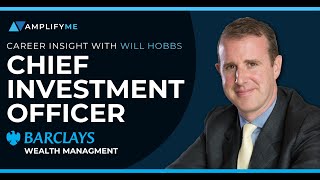
In this Career Insight podcast, host Anthony Cheung interviews Will Hobbs, Chief Investment Officer (CIO) of Barclays Wealth Management. Hobbs recounts his non‑traditional journey—from aspiring chef, through extensive travel in Turkey, Egypt, and the Middle East, to a brief stint as a commis chef, and finally breaking into finance via unsolicited work‑experience letters that landed him a stock analyst role. He reflects on how cultural immersion and language learning built confidence and adaptability, which later proved valuable in the financial sector. Hobbs discusses the balance between technical knowledge and relationship‑building in early career stages, emphasizing the importance of networks and mentorship. He offers practical networking advice for junior professionals, encouraging them to reach out directly to senior figures. The conversation then shifts to a detailed description of the CIO role at Barclays, outlining the investment value chain from client profiling to strategic and tactical asset allocation, governance, and decision‑support tools. Hobbs explains how psychological pressure is managed during market crises, citing the use of pre‑built investor sentiment indicators and disciplined processes that mitigate emotional bias. He addresses the impact of hybrid working, highlighting the value of knowledge spill‑over in office settings for junior staff development. When asked about digital assets, Hobbs expresses cautious curiosity, noting the need for more data to assess diversification benefits while acknowledging blockchain’s potential to reshape corporate structures. Finally, he recommends resources for newcomers—such as "Making Sense of Markets" and the Barclays Word on the Street podcast—to build market literacy and develop a personal investment perspective.
Chapters
So hello and welcome to our latest Career Insight episode. It's my great pleasure to be joined by Will Hobbs, who's the Chief Investment Officer at Barclays Wealth Management. In fact, probably when he starts speaking, you might recognize his voice if you follow the Barclays Word on the Street podcast, which is always one of the most popular investing podcasts in the UK. And it's definitely one I'd recommend to everyone in our community to subscribe and follow because there's such nuggets of information that'll be super useful when you're interviewing and things like that. In this episode, Will and I are going to have a chat about his career from school days, getting into finance, memories from early in his career, to deconstructing his current role as the CIO at Barclays Wealth Management. But not only that, hopefully I can extract some, some pearls of wisdom to pass on to the community who are kind of at that very starting point of making really tough decisions about what are they going to do for the rest of their life. And it feels like such a burden of that decision. Hopefully some of your experience, Will, can break that down. But I know when you and I have chatted offline, you've had a bit of a, I guess, an untraditional path at the very beginning for someone of your seniority as where you sit right now in your position. So perhaps we could kick it off and start way back to— yeah, school days and college, and what were your thoughts early on when you were starting out?
So, Anthony, first of all, thank you for having me on the show. Thank you for the kind words about Word on the Street. It's, yes, your support is much appreciated. And like I say, the team at Barclays is very grateful for all of you, anyone who listens. In terms of this, I mean, I would tend to think that my career is an example more of the role of luck and what not to do rather than any sort of particular paths to follow. Certainly when I was growing up, what I really wanted to be was a chef. I was always obsessed with food. And I mean, I didn't really do any sort of GCSEs or A-levels that would tend me towards finance. I wasn't interested in stocks and shares as a youth at all. I was obsessed with cricket and cooking primarily, I think.
Is that from your parents or were they professionals? Not really.
I mean, my old man was in the army and my mother was a sort of garden designer, is a garden a garden designer, and they dragged me around kind of, uh, you know, garden centers and stuff like that. So there was no real kind of, you know, uh, and, you know, there was a sort of a small whispering that, you know, maybe I should go into the army and learn some discipline. But, um, I hate people shouting at me in the morning. I respond really badly to it generally. So, uh, so the army wasn't for me in the end. So I was sort of, yeah, and I was sort of, I, I went eventually Having done what A-levels I did— English, history, theology, sculpture, and French literature— French, which was two— yeah, French language and French literature. Um, and I didn't do very well in them. I didn't work very hard for them either, which was a sort of excuse. And I ended up going to Oxford Brookes quite briefly After traveling, I sort of went out, so I worked for a bit and I saved up enough money to go out to Turkey and live in Turkey for a while. And I lived with a Turkish family in Ankara and learned Turkish. So I sent to a Turkish language school in Ankara, and not speaking a word, and with the Turkish family who didn't speak any English. And as I arrived, of all things, just a slight deviation, there was a military coup. And yeah, yeah. So I literally turned up my first night in Ankara in this flat and I saw these tanks rolling down the streets and I asked the guy who I was living with and he He had very broken English, much better than my Turkish, obviously. And he said, oh, it's just the government trying to persuade— it's just the army trying to persuade the government they are wrong. And I was like, okay, one way to do it, I guess. And so, you know, I spent some time out there and I traveled, you know, I was lucky enough to travel around the Middle East and I lived in Egypt for a bit and I was sort of cleaned bogs in a campsite in southern Turkey for all that while. And all that while I was kind of trying to work out what I was going to do Well, I got back and I ended up cramming into a French literature course at Oxford Brookes, which I didn't really do much of. I didn't turn up very much, so I wasn't sort of very successful on that side of things. And eventually I went out to Italy and did some cooking. So I ended up as a commis chef in a very nice sort of hotel restaurant in a place called Umbria, right next to Tuscany. It was a beautiful place, really amazing, you know, ripping off tourists with huge truffles, those kind of things, you know. And yeah, it was nice. And I sort of, during that time, I guess I sort of started to work out that, hey, I wasn't quite good enough to be a, you know, professional chef. It's such a competitive industry, um, and the work was unbelievable. Literally, you know, you start work at 7 in the morning, you finish at 3 at night, you get a couple of hours sleep, then you get back. And I'd worked for 3 months, and I think I got sort of £200 at the end of it. I was kind of like, Wow, that's not, you know, that's not gonna, that's not gonna pay the bills. And so I started writing letters to lots of chief executives, um, in the financial services industry, and one of them, and many other places as well, said, please can I have some work experience and just try, try out. And I guess that's, that's where it was different to nowadays. It was, you know, there was a way of entering some of these places without kind of going through grad schemes and so on. And one very nice chief executive called Stephen Clark said you can come and have 2 weeks work experience here. So it was Gerrard's, it was a stock analyst role. I apprenticed there a little bit, they kept me on for some reason. And yeah, I kind of got lucky. So yeah, from there it sort of, you know, that's where it kind of started, I guess. So not a traditional route, like you say.
So looking at the traveling that you did, like most people will go to Bondi Beach or go to like Thailand on the beach, whereas you've gone to, let's say, slightly different geographic areas than like traditional gap years and things like that. You've also then gone into an environment, so you've gone into a different cultural environment, then you've gone into quite an intense working environment. Do you think they were— you think you learned attributes from those experiences that were then deployed later in your career?
That's a good question. I mean, I'd— so I mean, the main thing I thought about, you know, the main thing I think I learned in Turkey, you know, which I'm sure all the listeners will learn, you know, it took me longer, you know, you aged up, but you know, is the benefit, you know, speaking English and going, you know, being an English speaker and going abroad, you sort of, the arrogance is you sort of assume everyone speaks English and most of the time you're kind of right, you know, you're lucky enough. And actually the difference in, I learned, is going to Turkey and speaking Turkish. The way that people responded to you was entirely different. And also the understanding of cultural nuances that you managed to get just because of the difference of the language and the way the language is constructed. You know, Turkish in itself is a history lesson because, you know, Atatürk, you know, westernized the alphabet and, you know, when he tried to secularize the state and so on. And so it was a good example really of sort of what you gain from actually learning a language. And traveling around the Middle East was an eye-opener, you know. I mean, I spent some time in Jordan. I went to, you know, it was, you know, it was quite a troubled time in Jerusalem, but I spent some time there as well. And so, you know, it was really, really broadened my horizons, I guess. It was a great thing. I mean, it was amazing. And I, you know, I'm so glad that I did it. Whether it was sort of, you know, I think it was important. It's quite difficult to know how though, I guess. It just, you know, being aware of the world outside and being aware of cultures and having you know, understanding about— and I think also these kind of things, one aspect I think you could sort of zero in on to your point is that, you know, once you, you know, you come from a very cosseted life in this country and you start traveling abroad on your own and sort of, you know, trying to sort of make it without, you know, your parents around or people to support you or people you know, and you gain confidence from being able to make friends Turkish friends, Egyptian friends, wherever else, and you start to sort of— it changes your view on what you can achieve, I think.
And in an early part of your career then, as you were going through different roles and getting promotions and responsibilities and things like that, how much of it was technical know-how and accumulation of knowledge as a— or in combination, as opposed to then your ability to just get on with other people, be in an organization from, let's say, in terms of the internal bureaucracy that goes on and things like that? How much of a balance is that to try and in your early part of your career?
Well, so that's a really good question, Anthony. I mean, I think, well, so I mean, I'd reframe it a little bit because I mean, when I first joined, quite a lot of my first part of my career was really about survival. The blowback from 2000, then the blowback from the great financial crisis, which really meant kind of, you know, you've just got to try and stay employed for quite a long, you know, quite a lot of that time. And so some of that was about trying to be good, but actually also during that time, I hadn't really discovered the passion for what I wanted to do. Work was just work to a certain extent, you know, I needed money to live, to eat, you know, so on and to sort of, you know, to see your friends and all those kinds of things. And so I sort of, you know, I was doing equity analysis, so I was covering consumers, consumer businesses around Europe. It was interesting. I got to meet amazing chief executives. I didn't really quite appreciate it at the time, you know, the people I was allowed into the room with. I was a little bit conceited about that kind of stuff. And I think now I look back and cringe a little bit. But, you know, it was only really, you know, I think the lesson, the one lesson that I could impart that was useful to people, I think, is that at one stage during my— quite far in, you know, I met a guy, or I was working for a guy, um, who was the chief strategist, chief investment officer. And he had said that rather than looking at the world bottom up, I should try and think about the world top down and start thinking about the macro sort of aspect. And to that extent, he sent me, you know, to do a master's degree at Birkbeck doing development economics. And it was at that point I really discovered my interest. I know that's so tragic, isn't it? My interest was economics. I mean, honestly, my 18-year-old self would be horrified that that was the answer. But it was, you know, development economics is kind of, you know, making poor countries rich or how to— the framework by which you could think. Once you started thinking about it, it's almost impossible to stop thinking about it. Which is again another weird thing to say, but that was what really changed my career in a way, because I suddenly found that I was really interested. And it made turning up to work totally a totally different experience because also outside of work, I wanted to read associated stuff. Very broadly, I mean, you know, everything from, you know, Guns, Germs and Steel to, you know, to all the sort of weirder texts that you get in economics and sociology and all those kinds of things. But it made the experience. And from that, I think, I think people saw how much I was enjoying it and how much I was learning it. The technical side came because I was enjoying it more and I wanted to do more study, more masters, you know, so it sort of gathered momentum from there. But I do think to your point though, that, you know, a lot of it is, you know, especially in big companies, you know, a lot of it is just being, a good person as much as possible. I mean, you know, there's a lot, some people do it, you know, there are political players within the business. I tend to think that gets you only so far and then gets you into trouble because, you know, what you need to do is build up networks, people who you trust and they trust you and you can act over time. And over time you sort of, the network, the bigger your network, the more your ability to get stuff done that you want to get done or that you collectively want to get done. And that makes you more effective. And therefore that makes you more effective as a leadership, you know, candidate.
And then networking, you just mentioned, and that's one of the things that we strongly encourage to all of the students we interact with, but they almost look at people like you and you're, you're kind of so senior, you're up in the ivory tower, and it's like we're just down here in the bog, and it's like, how do we ever start to then communicate with someone like yourself? What would be your advice in that respect to reaching out to people within, let's say, you're external to Barclays, for example, but you wanted to talk to someone there, what would be your kind of approach?
I always found that I'm, you know, God, I mean, I'm all for a start, I'm always delighted to kind of, you know, meet people anyway. And so, you know, if I've ever got diary time, I'll always kind of make time. And I found the same was true with much more senior people than I am now, you know, when I was kind of starting that if you sort of reach out, they won't always, but you know, a lot of them will turn around and say, yeah, sure. You know, let's, 'You know, let's have a coffee or something,' you know, and as long as it's not too onerous, and I think, you know, just sharing life experiences and whatever else and those kind of things, I think people like the feeling of passing on tips, you know. I think it's not— yeah, I found that mostly I was always surprised by the degree to which people did, you know, say yes. So my advice to people on the call would be, you know, just give it a try. I mean, you know, they can only say no. They won't be offended. They certainly won't be offended. They'll be flattered. I would be.
Yeah, I mean, a perfect, perfect example of this is, is me reaching out to you in a way. Yeah, because I mean, uh, it must have been a while ago and it's, um, just kind of been, yeah, not too good, if you will.
Yeah, exactly. I know, I know, I feel guilty.
Yeah, but like, you and I didn't know each other before and we do now, and so yeah, it just takes that leap of faith, I guess, especially for young people, I think, to just have the confidence to ask the question and be okay with the fact that you might not hear back. I mean, absolutely, absolutely.
Nothing ventured, nothing gained, as the old saying. And I think, you know, I mean, one thing that's been difficult in the last couple of years, trying to excuse myself as well at the same time, is that, you know, I think Zoom meetings are quite difficult, aren't they? You know, in a way, like, face-to-face, there's no— it's very hard to replace that. I think, you know, that's the best form of communication where you can be in a room with someone, go for a coffee, that kind of thing. Now, having said that, you know, one of the things that kind of, you know, particularly old dogs like myself have learned during this crisis is that actually you can do more meetings if you just, you know, do Zooms. So there is a bit of a sort of a trade-off there, which is, you know, you can potentially mentor more people because, you know, it doesn't take much to do a 10-minute meeting with someone. So I think that's just, you know, two things to bear in mind.
Yeah. So, so tell me a little bit more about the role of a Chief Investment Officer, because I think as a, as a student, you, you know of that in terms of a title. You don't actually know what the day-to-day entails. So maybe you can walk us through that.
Well, it's different in different places, you know. So the CIO sort of, um, you know, means an awful lot of things to, to a lot of people. And, you know, In a way— God, how would I describe my role? So, I mean, I think the easiest way to look at it is within Barclays, you know, what we've done for the mass affluent and wealthy customers, so not the ultra-net worth up there, we have organized the investment value chain into lots of distinct parts. And what I mean by the investment value chain is what it takes, all the different activities and people it takes in order to deliver a multi-asset class diversified portfolio fund that is the highest possible quality. And if you think about it along those lines, you've got to— first of all, you've got to profile the clients and to see what kind of— what's their risk appetite, what's their appetite for losses, so on. Then you've got to start building your asset allocation. So you've got your strategic, your long-term asset allocation, your tax class allocation. Then you start going into the kind of coloring in aspects. So things like manager selection, which funds to buy, how to blend them, that kind of thing. And then it's all sort of, you know, the other stuff, which is kind of people, you know, various bits of police forces aimed at stopping me being stupid and doing rash stuff, you know, quite rightly, and measuring and, you know, all that kind of stuff. And so now all of the kind of the bit that comes under me is the bit of constructing the investment, you know, the multi-asset class investment fund. So kind of from the profiling all the way up to the constructed fund, that's, you know, what I'm ultimately accountable for. Now within that, there's some decisions that I'm on the hook for. So within strategic and tactical asset allocation in particular, you know, those decisions come up to me for yes or no. But mostly what you want in that situation, if you think about it, you don't want key person risk, you don't want some kind of me turning up one day and feeling in a different mood to the next and making a different decision with the same information. So what you have is a very organized research process, decision support tools, a sort of kind of a very kind of strictly organized meetings, which take into account kind of all sorts of behavioral biases and so on that allow for a relatively consistent decision-making framework, whoever's sitting in my seat. And then there's all the sort of various governance and represent stuff that I do. So a lot of it is research, you know, making sure that I'm on top of the world's economy and markets so that when decisions do come to me, I'm able to, you know, understand and assess and handicap the information correctly. And that takes a lot of time, as you know, you know, it's understanding the world at the moment is complicated. And then there's a lot of the kind of administrative stuff. Which is around, you know, how decisions are made, making sure that I'm on top of all of the various bits of the investment proposition, where we're taking bets, how we're taking bets, the framework by which those decisions are being made, the people that are making them, those kind of things. And then there's a fun bit, which is things like, you know, talking to you, you know, doing media, you know, that kind of stuff, and sort of trying to represent the team as best as possible. So, you know, it's a great job. I have to say, I love it. I'm really tragic. It's a great fun job. It's so different every day. You know, there's times when there's huge, huge, huge, almost unbearable pressure and that's, you know, less fun. But most of the time it's great and I've got great people, you know, around. So that makes it really fun.
So you just mentioned a really important thing there that I think we need to bring onto the table, which is, the pressure? Because you did say that for certain things you're on the hook for, and so it's kind of like, you know, a lot of, a lot of students we have are going through different trading simulations and things like that, which is very just short-termist, getting that kind of black and white result. Whereas for you, it's on a different kind of level in terms of, um, the impact that that could have. So what's your process for, for managing from a psychological perspective when you are on the hook for significant decisions.
So hard. Yeah, it's really hard, isn't it? Because it's really hard to replicate. You know, it's a really interesting kind of behavioral problem that we face. So I'll give you an example. So, you know, and you know this well, but when we went back, we did a lot of risk profiling of our customers before 2007, 2008. We were like, you know, would you accept this kind of loss? And they're like, yeah, that sounds right. But when it's happening, you know, even seasoned professionals like us, you're watching the screen, you're thinking like, Whoa. I mean, it is always mind-blowing, isn't it? When you see the S&P gap down or you see something crazy happening.
I remember the people queuing outside Barclays, which is where I bank, trying to withdraw maximum deposit.
Totally. And you see scenes you haven't seen ever. And you think, gosh. And the media is telling you this is the end of the world this time around. Get ready, pack your bags. So maintaining cool is very important because what we know, and this is the slightly odd kind of position we're in, in a way, and this is why, to a certain extent, within the investment teams that I'm lucky enough to represent, we kind of try and keep the people who are making the tactical asset allocation decisions away from meeting clients in many ways, because you don't want them— you want them to be dispassionate. They need to be, to making— because the worst— emotion is a terrible kind of investing, um, or, you know, it's, it's a terrible investing aid. Uh, you need to retain dispassion. You need to continue to look at the facts as much as possible, to whatever extent they can be mustered. And I think, you know, part of that— so one way we manage this, it's a long answer to a relatively simple question, but, you know, if I look back to, um, the most recent sort of, you know, the pandemic 2020, you know, February, March 2020, One thing that really helped me and us there was we'd spent quite a lot of time beforehand building decision support tools. And one of those was an investor sentiment indicator, which we backtested, you know, very thoroughly so that we understood what the thresholds were and what the hit rate was of going in the opposite direction. So when investors were extremely depressed, if we did the opposite and bought stocks at that point, what would be the chances that we were right over, you know, whatever time period, so on and so on. And we had a very good idea of the shape of, you know, how those— how those probabilities played out. So when it came to it, you know, when the Investor Sentiment Indicator went off the chart, you know, that was one of the things that helped you say, right, okay, we need to do the opposite, we need to add to risk. We luckily had sufficient dry powder to be able to do so, which was luck, to be honest. You know, a lot of people went in over-risked and were unlucky, they had to de-risk at the bottom just because of process, whereas we'd actually de-risked beforehand, not because we saw the pandemic coming, just because we didn't see much excess return in the major risky asset classes at that point in January. And that allowed us to put quite a lot of high yields stocks exposure right at the bottom. And it is difficult because always at that moment, everyone is struggling to keep cool. So your risk teams are questioning whether you've gone off your rocker and everyone's sort of is this a, you know, a CIO throwing, you know, bad money after good? And, you know, those kind of questions. And what you've got to do, you know, what you're protected by as a CIO and a decision maker is process. You know, stick to process and make sure that before you go into any crises, stress-tested that, you're very aware of its parameters and its strengths. And you've got to have good people around you as well. And I was very lucky on both of those counts. That enables us to make the right decisions for clients. But yeah, I mean, it's very difficult to replicate what it's like in a really, really messy market when you've got positions going the wrong way. It's a horrible feeling.
Have you ever had that? Because obviously mental health is a very big thing at the moment for a lot of young people, particularly given the challenges of the pandemic. I mean, how do you separate? You've obviously got family and things like that. Has it ever been at a point where that stress has kind of impeded on personal life, or has it always been quite clear for you in this— it's segregation?
So no, no, I mean, no, definitely. Yeah, definitely. I mean, I've had— yeah, I mean, yeah, in the last 2 years. Yeah, no, definitely. I mean, I think one of the things that I learned about myself during this crisis is that I need to be around people to a certain extent. Working from home with just two small, quite aggressive dogs for company has not, as I did, did not really do me, do my mental health any good at all. And I think we've learned all of us during this crisis that kind of You know, everyone has problems, don't they? Everyone has stuff to deal with. Everyone's got, you know, no matter what appears, whatever facade they put on at work. And I think that facade a little bit, you know, the facade that everything's fine. I really, really like the fact that that the need to maintain a facade, which was very much the case when I joined the city, that's kind of disappearing. People can be much more open and honest about the stuff that they're suffering at home, the stuff that they're trying to, you know, endure. And yeah, certainly, I mean, I, yeah, I and lots of other people I know, you know, suffered quite a lot from sort of, you know, various kind of mental health issues.
Do you have, did you have much, uh, what's your process now of having interaction with the more junior members of staff? Because I know usually through circumstance of the, the, their living setups and things like that, they tend to be in the office a lot.
Yeah.
Whereas fortunately for, say, you and I, there's the luxury of having a bit more space and things like that. But what's the, um, the interaction that you see now from top to kind of down in an organization?
Yeah, so I mean, we're— it's interesting. I mean, Barclays has been quite cautious about sort of getting people back to work in many ways because, you know, you've got a huge range of experiences, haven't you? You know, some people are very nervous that's, you know, about coming back to workspaces more generally. Some people have got used to working from home and feel very comfortable, but I feel particularly the younger colleagues have suffered a good deal in this, not just from the situation you described, which is sometimes their work environments are far from ideal. They don't have a nice, you know, an office to sort of back into and working off the side of your bed and so on. You know, I'd have been in that position myself if the crisis had struck when I was sort of 18, 19, 20. Cool, you know. But, um, I think that, you know, you know, part of the huge thing about offices and the reason why big companies— or one of the reasons why big companies still exist, in my opinion— is this idea of knowledge spillover. You know, in economics, you know, you talk about if you get lots of people in the same space, it's very difficult to kind of replicate digitally, but knowledge just spills over usefully. Not all of it, you know, there's chat about, you know, Kerry Katona by the coffee machine too, which is me mainly. But, you know, it's a kind of very difficult process to replicate, and that's really important for young people. A huge amount of what I learned was just by being around senior economists who've done it all and having informal chats, which you don't— you know, you can sort of set up an informal chat. It's really— it's not quite the same, is it? I don't think it's not It doesn't have that sort of magic quantity. So we are trying to get people back into the office as much as possible. And certainly my team, you know, we are a team that need to be back in the office, you know, 2 or 3 days a week because knowledge spillover is really important in research, you know, and you can't, you know, you can have research meetings and we do, we have all sorts of, you know, you have bull bear debates where you force people to go onto the other side of the debate, which they currently sit on and things like that. And those can be organized, but otherwise I've noticed getting back into to the office and particularly with the younger team members, they really kind of relish being able to sort of say, you know, share what they're reading at the moment and send it on to you. And I do too. You know, I really like that kind of more informal process and it's just nice to see people, isn't it? Go out for some lunch or have a drink or, you know, whatever, you know, not in the office obviously, but you know, that's the benefit. So the more that we can get back to some kind of normality, well, I mean, I don't think we'll get back all the way, but I mean, hybrid working is a very good way of doing things in my opinion. The more we can get back to kind of 2, 3 days a week versus 1 day, 1, 2 days a week, which we're at the moment, we'll all be very pleased.
And just going back to the kind of target audience that you have in your role with the kind of the affluent individual or family in that respect. So for the people listening on our channel, they're kind of, I guess they could be the future affluent people given their demographic. And so They are much more of the generation of the digital adoption, if you like, where they feel more comfortable with digital assets and things of that nature. So obviously at the moment, certainly for me coming at it, I remember several years ago, it was kind of when people started talking about Bitcoin, things like that. It's kind of like, it's all nonsense. Because I was just very narrow mindset of a traditional market practitioner, I guess. But As you go further forward now, and your kind of base is— and your decision-making is about diversification, how much do digital assets do you think starts to play into that going forward in the years ahead?
It's a fascinating question. I just don't know at the moment. So I can't quite work out. So I'm really interested, for instance, in what blockchain technology could do to the existence of the company. Company, um, you know, because if you just thinking sort of sideways, you know, if you assume you go back to kind of old economic theory, famous kind of, um, Coase and Williamson, about the existence of a Nobel Prize-winning economist who decided or argued that the existence of a company is in part down to, you know, transaction costs and sort of trust issues. So because I struggle to sort of say, you know, get a stranger in the other side of the world and trust them, what I do is I bring them inside a company and therefore I internalize the transaction and share tacit knowledge, and that works that way. Now, if I could institutionalize or trust via blockchain, does that mean large companies are no longer as important, so on and so on? I struggle a bit more with some of the current very popular digital assets, just because I'm not sure I agree with some of the use cases. Bitcoin obviously is the one that everyone talks about, but there's the trade-off problem, which is that if you're going to be a currency, you've got to be boring. If you're going to be a speculative asset, you don't want to be boring at all. You can't have a currency that changes dramatically in value on your walk to the shops. Suddenly, I can't buy a can of milk, no, bottle of milk anymore. I'm suddenly a penny chew to take home to my children. You know, that doesn't work. So I'm sort of still, I'm watching with great interest, but at the moment it may have some, they may have some diversification benefit. That's something that we are looking at, but it's still too young a data set to really kind of work out. So it'll settle a bit. And I think a lot of people are getting very interested in it. I will continue, we will continue to watch at the moment. But yeah, it's interesting though, because, you know, to your point, what you're looking for You know, when we build the asset class toolkit, what you're looking for is distinct exposures, you know, so you can get equity duration, you can get credit risk. Commodities offer something a bit different as well, you know, the access to something called storage theory. That tends to be uncorrelated, as we're finding a little bit at the moment. Um, and, and anything you can add further diversification will smooth returns over the longer term. And if you think what we're trying to do, as you rightly point out, is we're trying to for the mass market, for everyone possible, what we want to do is say, look, we've got this one-stop shop, multi-asset class global fund, which is going to bring you the frontier in institutional asset management returns. You should just have it chugging away in the background. You can buy Bitcoin, you can have all sorts of stuff, technology funds, so on and so on in the background, but have this chugging away with your savings over the long term, and you'll probably be better off and have more, you know, more chance of hitting your savings goal. So it's not— I'm a buzzkill, you know, I believe relatively in the sort of efficient markets and so on. So the way we've organized our team is to make sure that, you know, that we only pour kind of expertise into excess returns where we think there is evidence of excess return, um, you know, generation. So we don't do style bets, you know, we do do single stock bets but through funds, um, and we do TAA But elsewhere, we sort of try and get the market return quite carefully. So it's really just about making sure you've got all weather returns plus some alpha, chugging away with your savings in the background, and everyone else can have fun with the rest of it, I guess.
So a lot of that terminology there you were just mentioning—
Was that too big?
Was that too long?
Oh God.
Sorry. Where would a young person who's quite green to these types of terminology, where would they go to find out this sort of thing? Is there a place to go?
I don't know, it's sort of start— the problem I always find is where to start, you know. And I do think, you know, for me the first thing is to get an interest, like what are you actually interested in? Because I think, you know, I could give you, you know, the Anthony Ilman's sort of, you know, Expected Returns is the kind of bible for this stuff, isn't it? That's where you start. And I actually came around to our shop the other day, he's a charming guy, he's absolutely lovely, and he's very accessible and talks very accessibly, but I don't think expected returns is a very good place to start necessarily, because it's big, imposing, and it's got quite a lot of financial markets jargon. Um, I mean, I quite like— my old boss wrote a book and it's called Making Sense of Markets, and he's called Kevin Gardner. I sometimes think I'd give his book a plug. I sometimes think that's quite a good place to start because I think you've just got to try in amongst it all to— I don't I don't agree with everything he says in there, but I think it's a very good way of sort of just getting an interest and starting to, you know, trying to work out what you think. And that's the most important thing is I think, you know, you've got to work out what you think and what your angle is and you bring your own, you know, my example is of anything, you know, I've made a lot of terrible mistakes in my life and all sorts of, you know, wrong turns bad stuff and good stuff. But I think there's sort of, you know, the thing that I would say is that all of that, into your first question, all of that pours into who you are and what you can bring to markets if you're going to be in markets. So, you know, if I look at who I try to hire for the tactical asset research team, I'm trying to hire different backgrounds who bring different perspectives, but at the same time, I would expect them all to have the same threshold of evidence. They've all got to believe to a certain extent in efficient markets, because I don't want to have that debate. Do you know what I mean? That should be— but what I do want is different perspectives on the outlook for inflation. What is— how different parts of the capital markets complex are reacting to it. I want their different interpretations on that so that we've got a debate. I think that comes from having different university degrees, different experiences, different specialisms. And I think you've just, you know, the way in for me was not to start kind of right at the top and sort of start reading the heavy stuff. It was really just to discover an interest. And then the terminology becomes a bit easier to understand and also remember, because what I found when I started is that I learned the terminology over and over and over and over and over again. I just kept on forgetting it. Just because I wasn't that interested, sort of, you know, in a funny way. And I think for it to stick, you've got to find a hook for it to— it's a bad analogy, it doesn't really work together, but you know what I mean. You've got to find a, you know, if you want the coat to hang up, you want a hook to hang it on or something like that.
Well, look, I mean, I've got one clear word of advice to anyone who's just getting started: listen to Will on the Barkley's Word on the Street podcast. That's a good plug for you there, Will. But that's a good place to start because I think the thing that you always do so, so well is how you deconstruct and quite eloquently explain what otherwise is quite complex situations that are happening in the world and their impact on markets. And I think as a starting point, you know, for me it's always been the global market side has always been of much more interest than, say, classic investment banking, in, in a sense, because of the fact that every day is And I'm sure that's something that you feel and share as well, Will, that every day you're learning and every day it's, I wonder what happens next.
Yeah, absolutely. And I think in this industry as well, I mean, one of the things that I've been blown away by is that during your life working in a big bank, particularly, you get access to amazing people. I mean, people like, if in normal life I went within 100 yards of them, I'd be arrested, wrestled to the floor. And you suddenly get to talk to these people at sort of semi-equals and sort of ask them about what's going on in a particular area. And so it's your access to genuine expertise and so on. I mean, it's, it's an amazing— what I can say to everyone, you know, anyone who's listening, is it's an amazing industry to work in and to have the ability to look at markets, follow markets, and try and understand what's going on in the world. It's a real— I find it a real privilege and really interesting and ever challenging, like I said.
Okay, well, look, on, on that point, we'll, uh, we'll look to, to wrap things up. So, Will, as I said at the beginning, it's been a great privilege and a pleasure to have you on the on the podcast. And, uh, yeah, hopefully you've all found that insightful. I'm sure you don't mind, Will, if people connect with you on LinkedIn and things like that.
Yeah, no, please do, please do.
Okay, all right, well, thanks very much again and take care.
Thanks, Anthony.
More from Anthony


Inside the Biggest Banking Stories You Need to Know This Week (Anthropic, Diageo, Private Credit)


Inside the Biggest M&A Deals You Need to Know This Week (UniCredit, GameStop, eBay, Eli Lilly)







AI Breakthrough or Hype? Anthropic’s Claude Mythos, Tim Cook Steps Down & LIV Golf Collapse